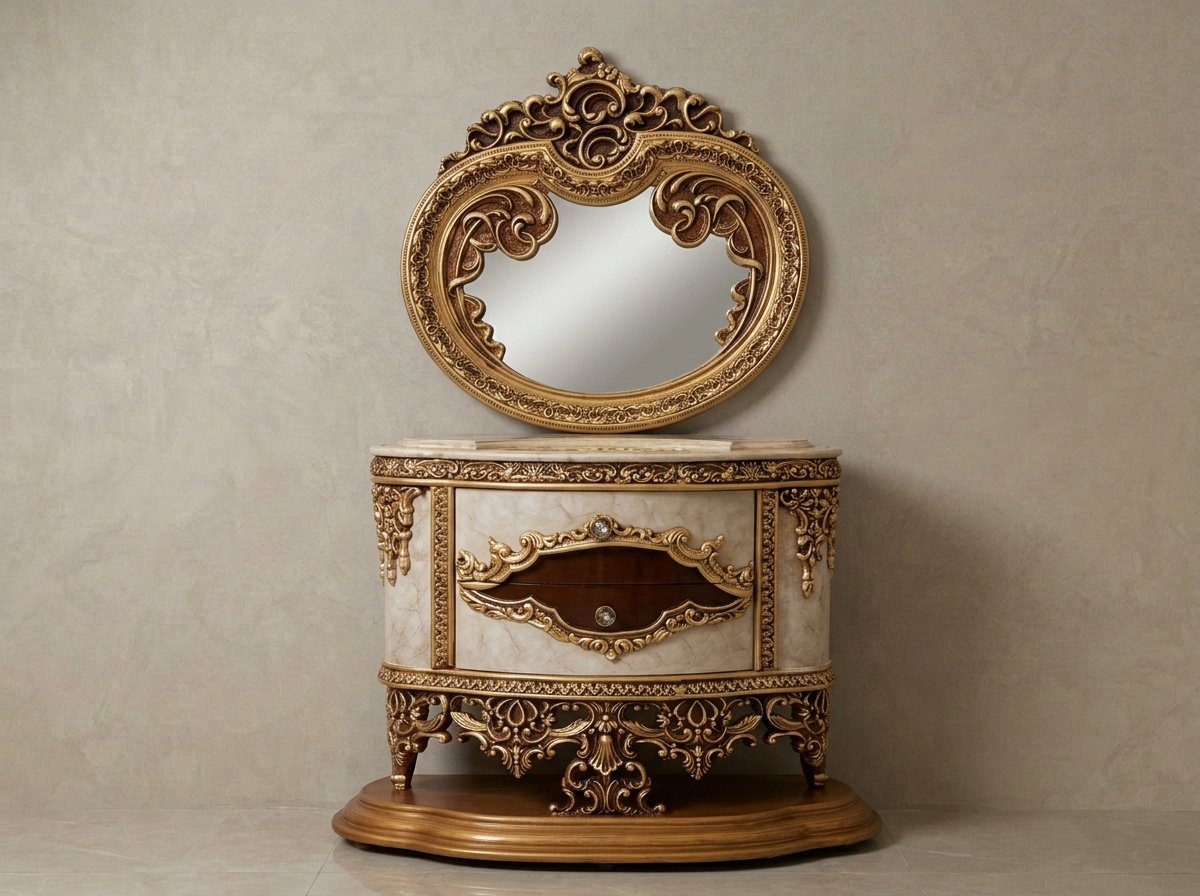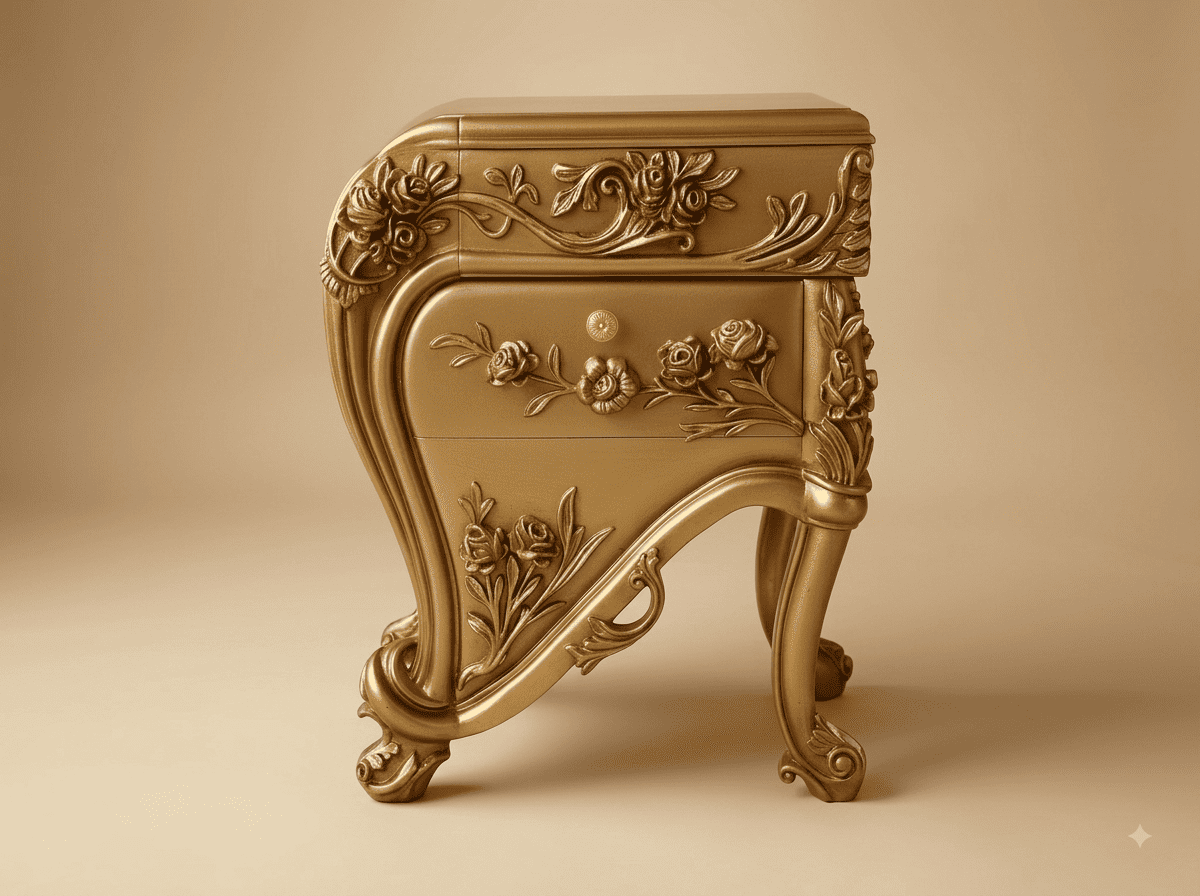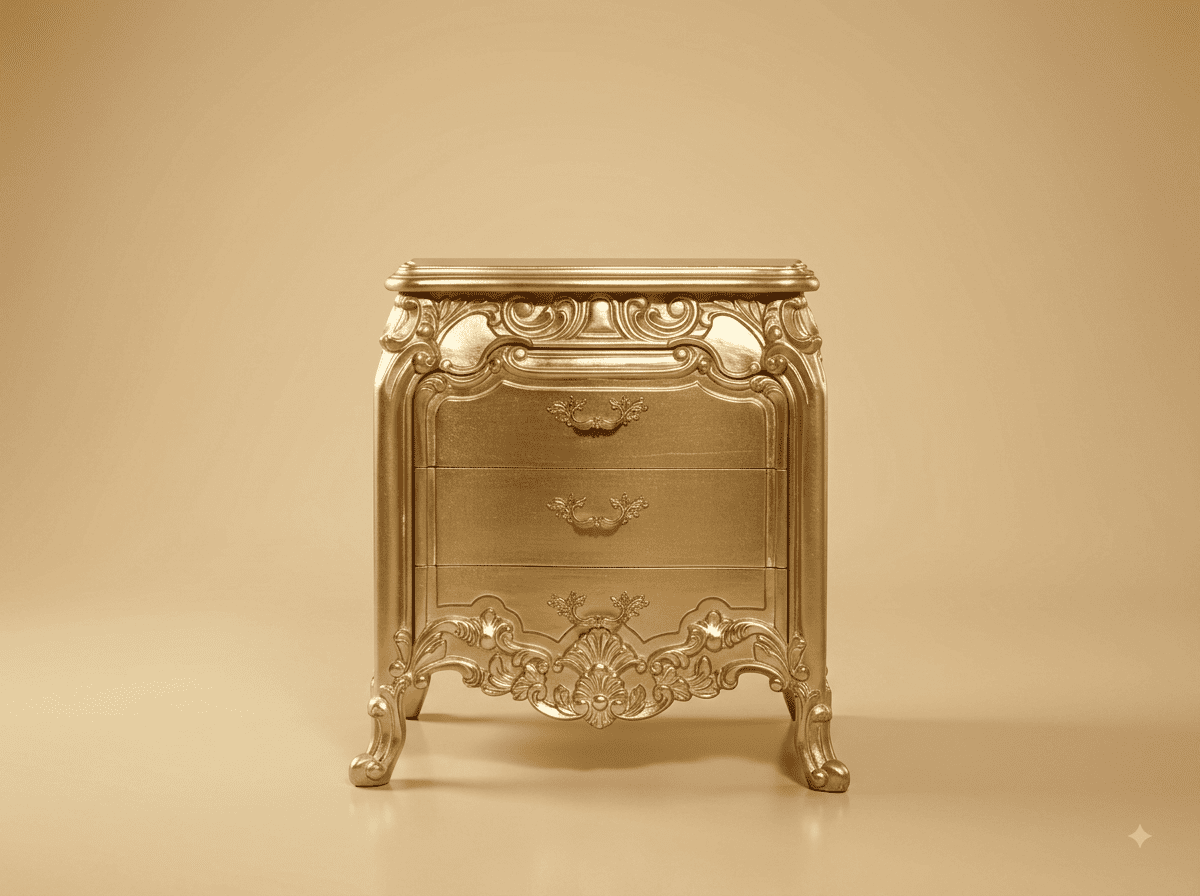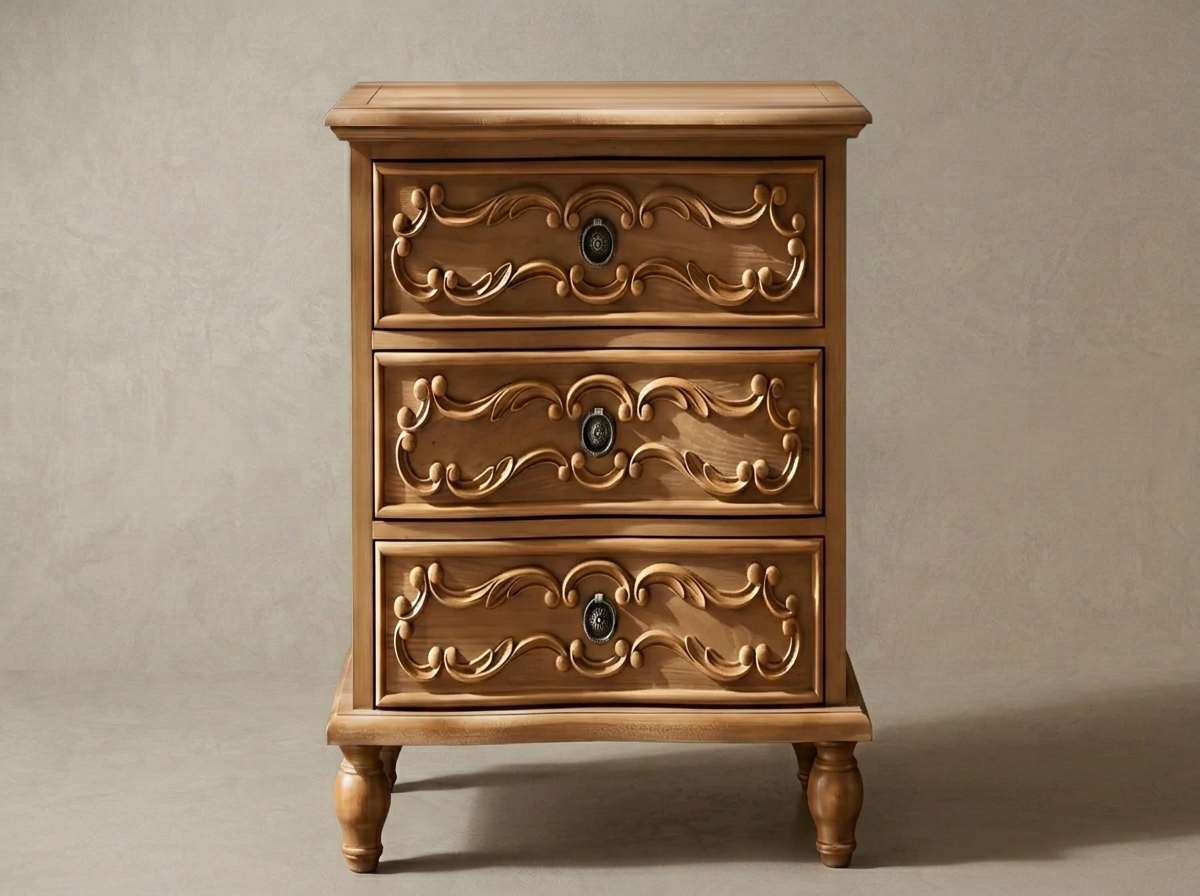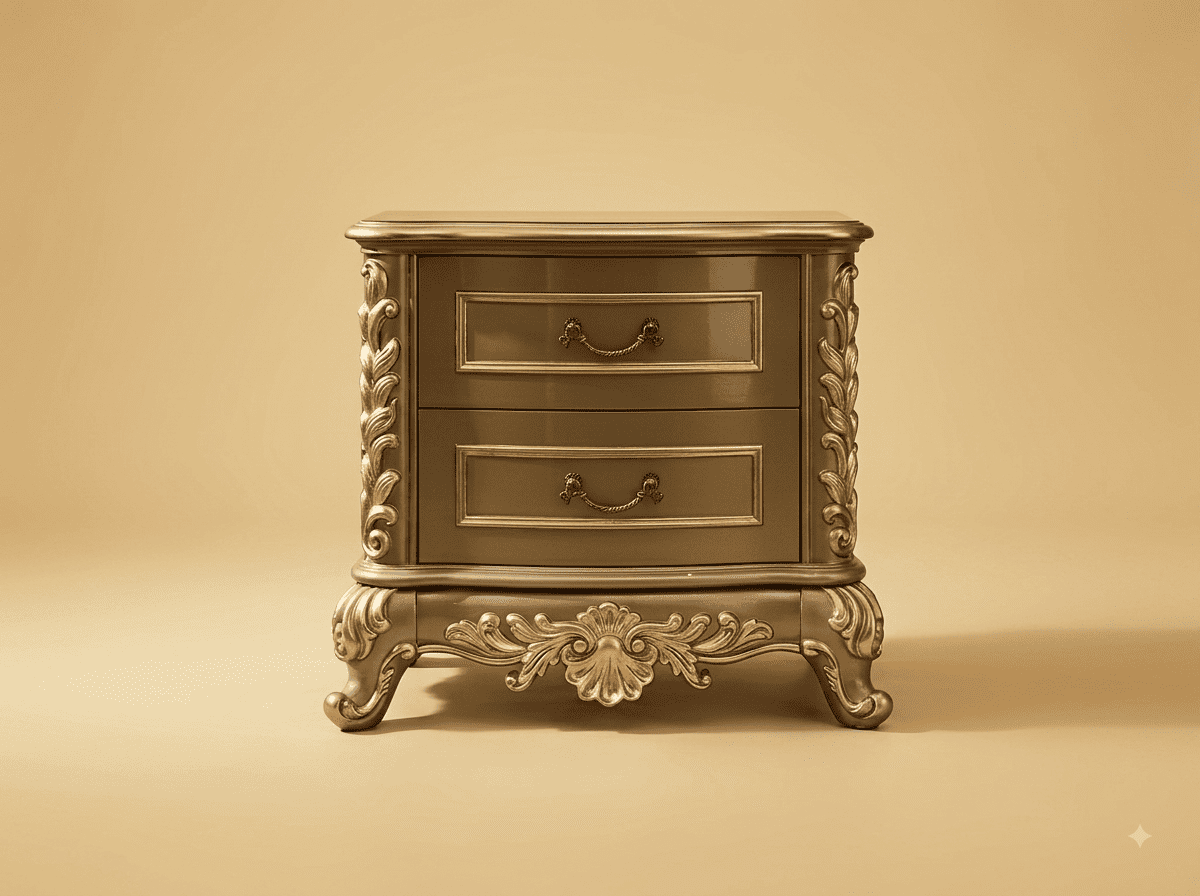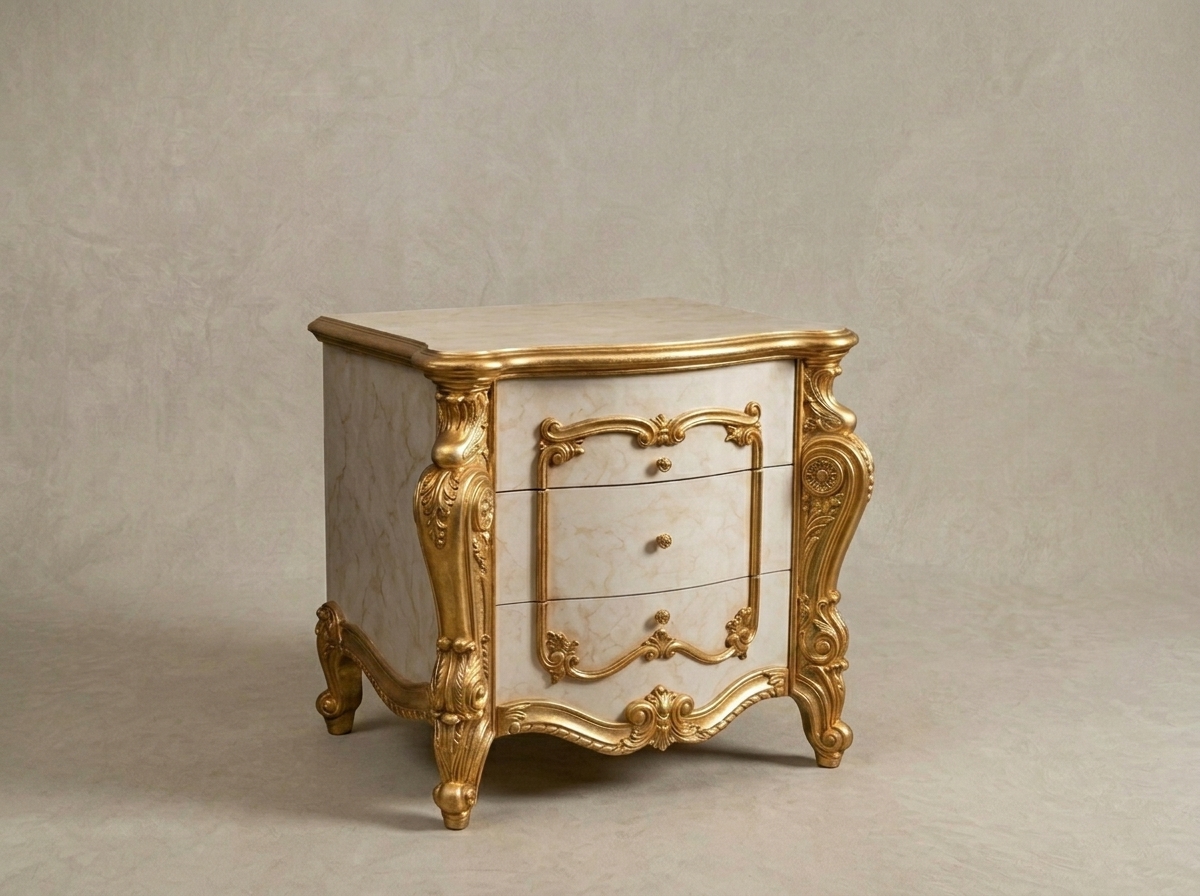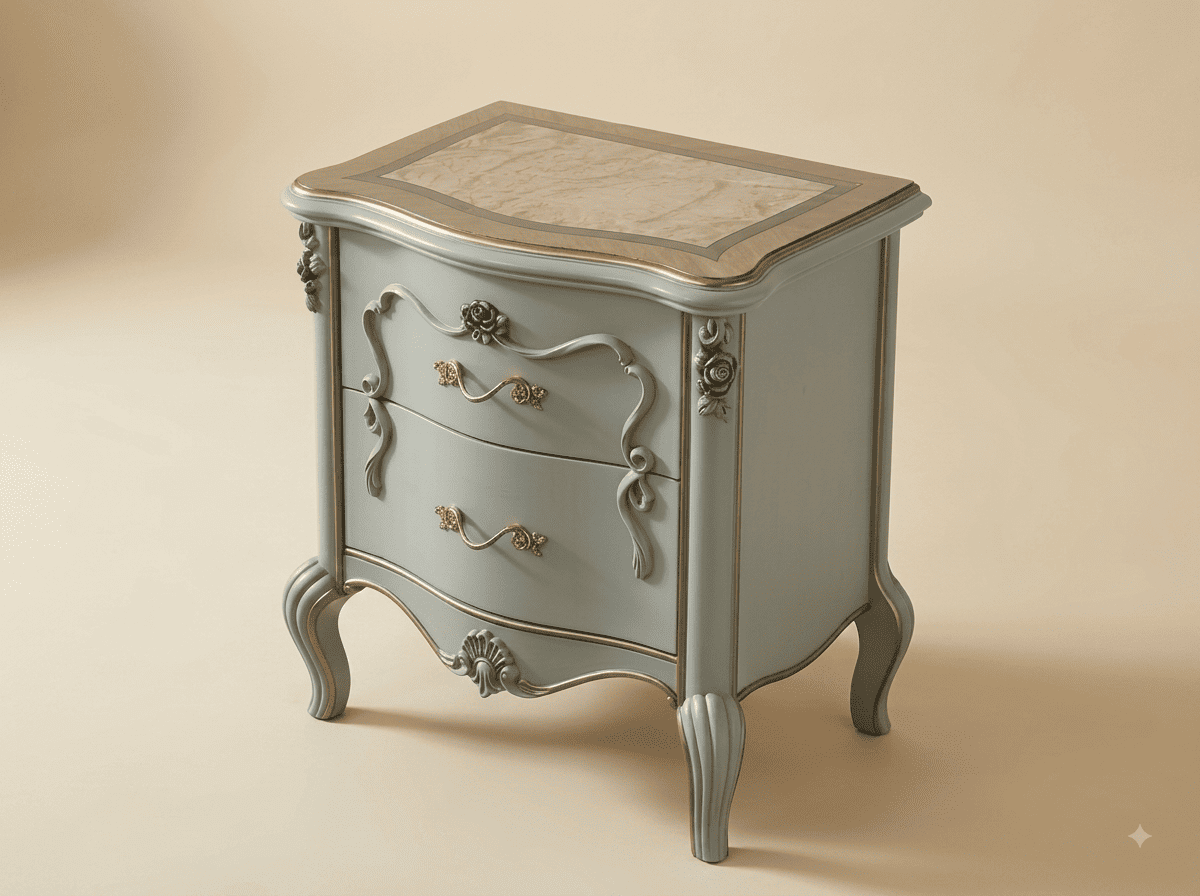
Setting a stone panel into a wooden top is more work than laying a full slab on one, and the reason to do it is what happens at the edge.
A full marble top ends in stone all the way round. That edge is the part of the table that meets doorframes, vacuum cleaners, shoes and passing furniture, and stone chips - a small chip in a polished edge is permanent and always visible.
An inlaid panel moves that job to the timber. The moulded teak border takes the contact, and if it is ever marked it can be repaired, refinished or recarved in a way stone cannot.
The fitting is the careful part. Stone and wood move at different rates, so the recess is machined slightly larger than the panel in every direction and the stone is bedded rather than glued rigid - it sits supported across its whole underside with room around it to breathe. The moulded border then overhangs the panel edge by a fraction, closing the clearance visually.
Depth matters too. The stone finishes flush with the border rather than below it, so nothing catches at the joint when you wipe the surface, and a glass set down near the edge does not step off a lip.
Done properly, you cannot see how it was done, which is generally the sign.
 Ask Price On WhatsApp