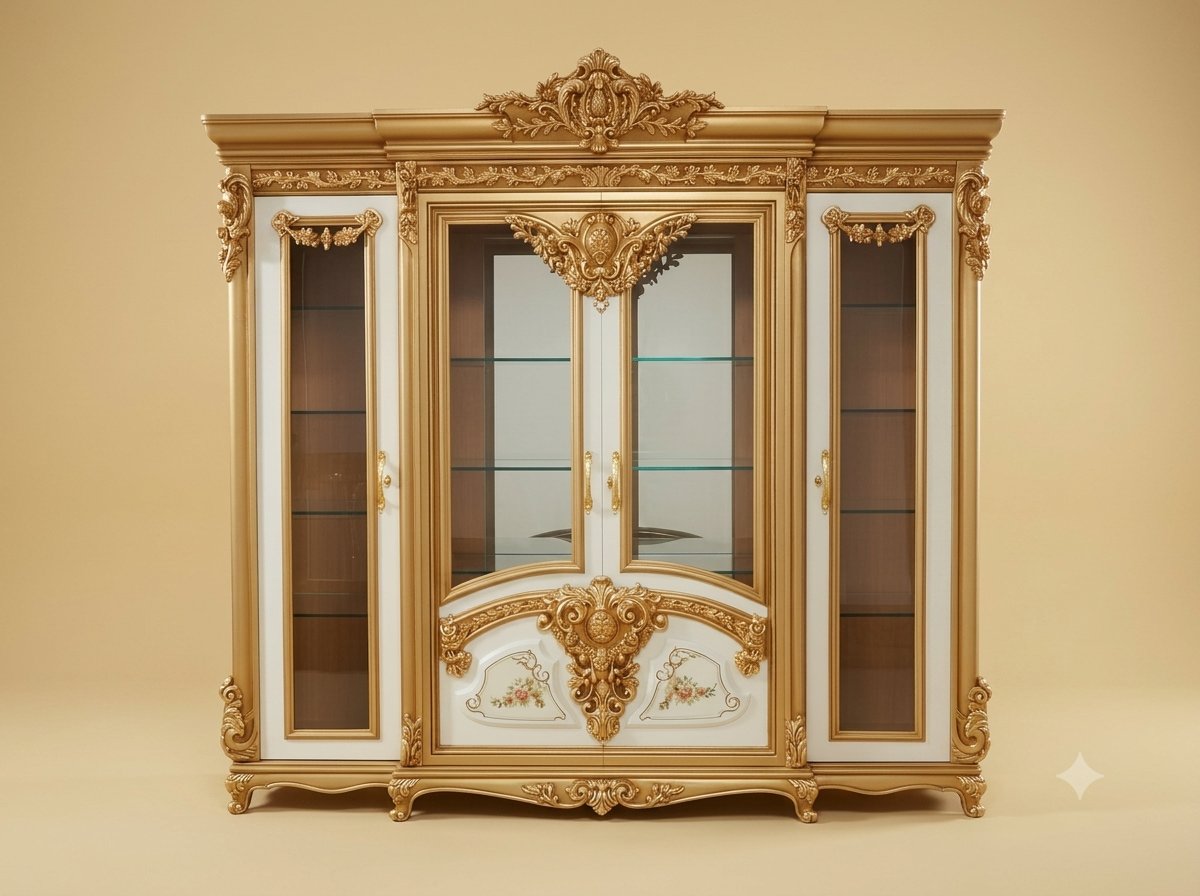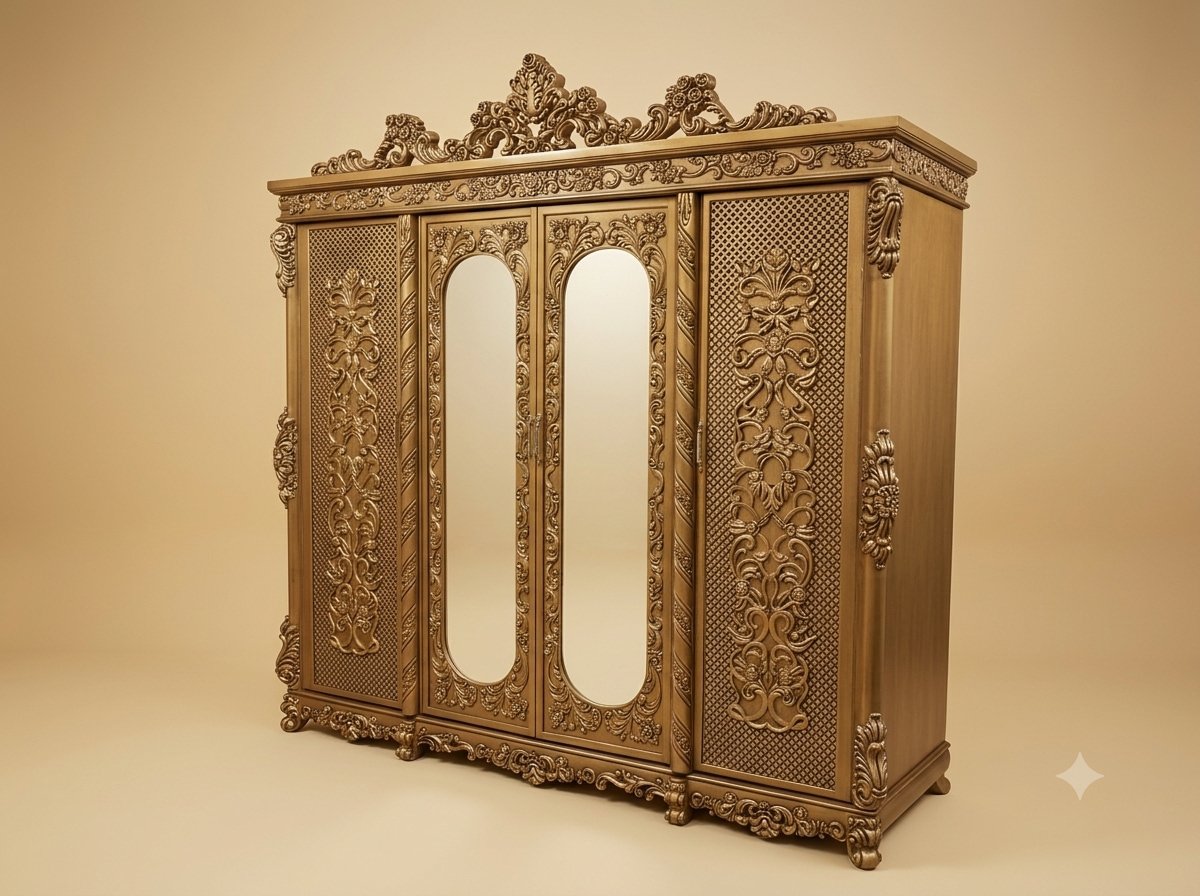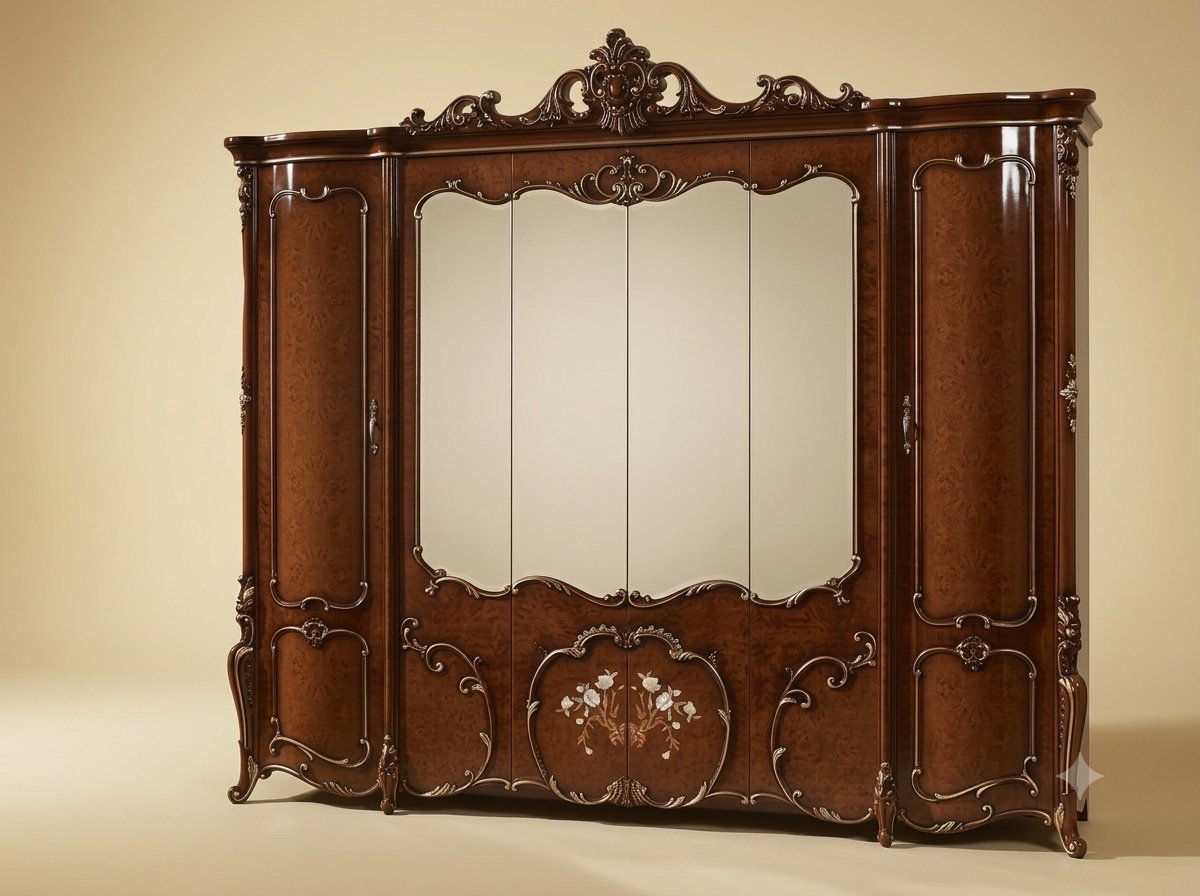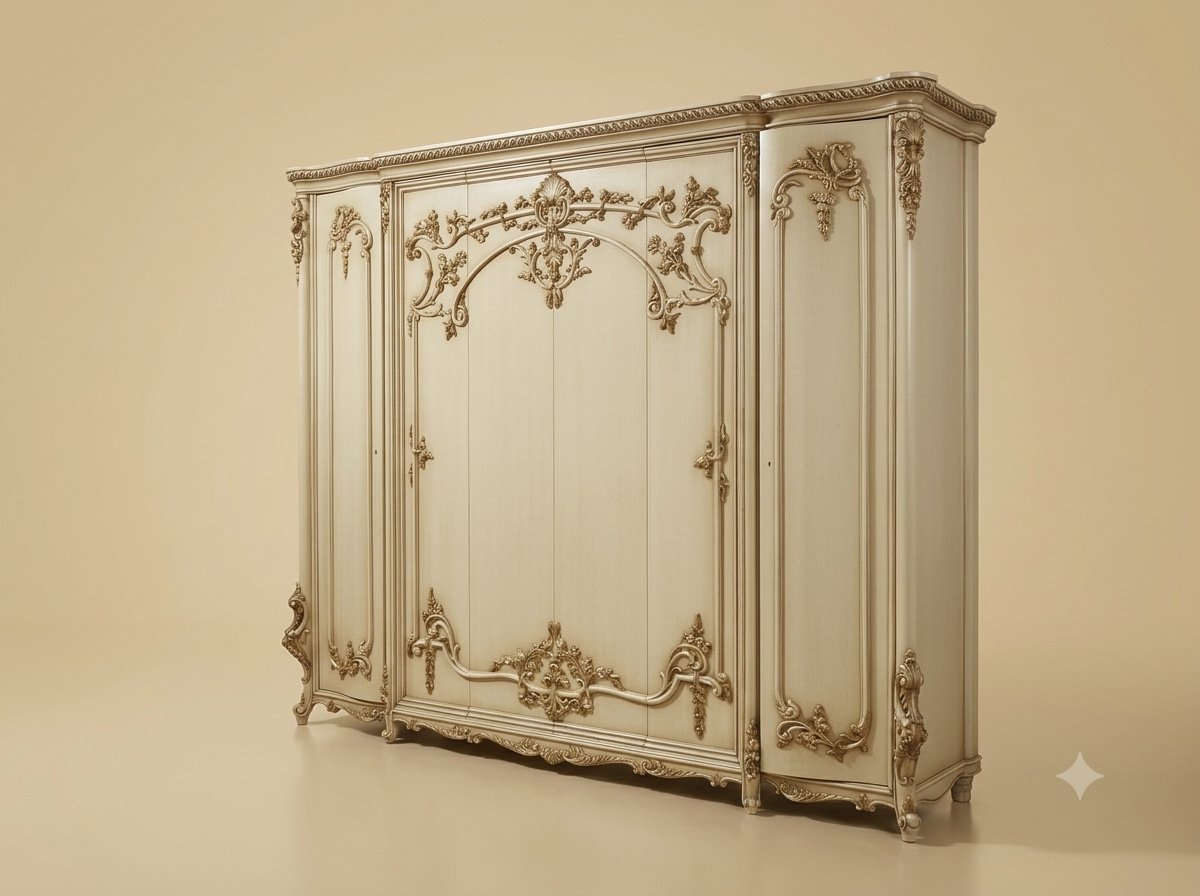
A door that stands proud of its neighbours has to be closed last and opened first, and if the wardrobe does not enforce that, it will eventually be forced.
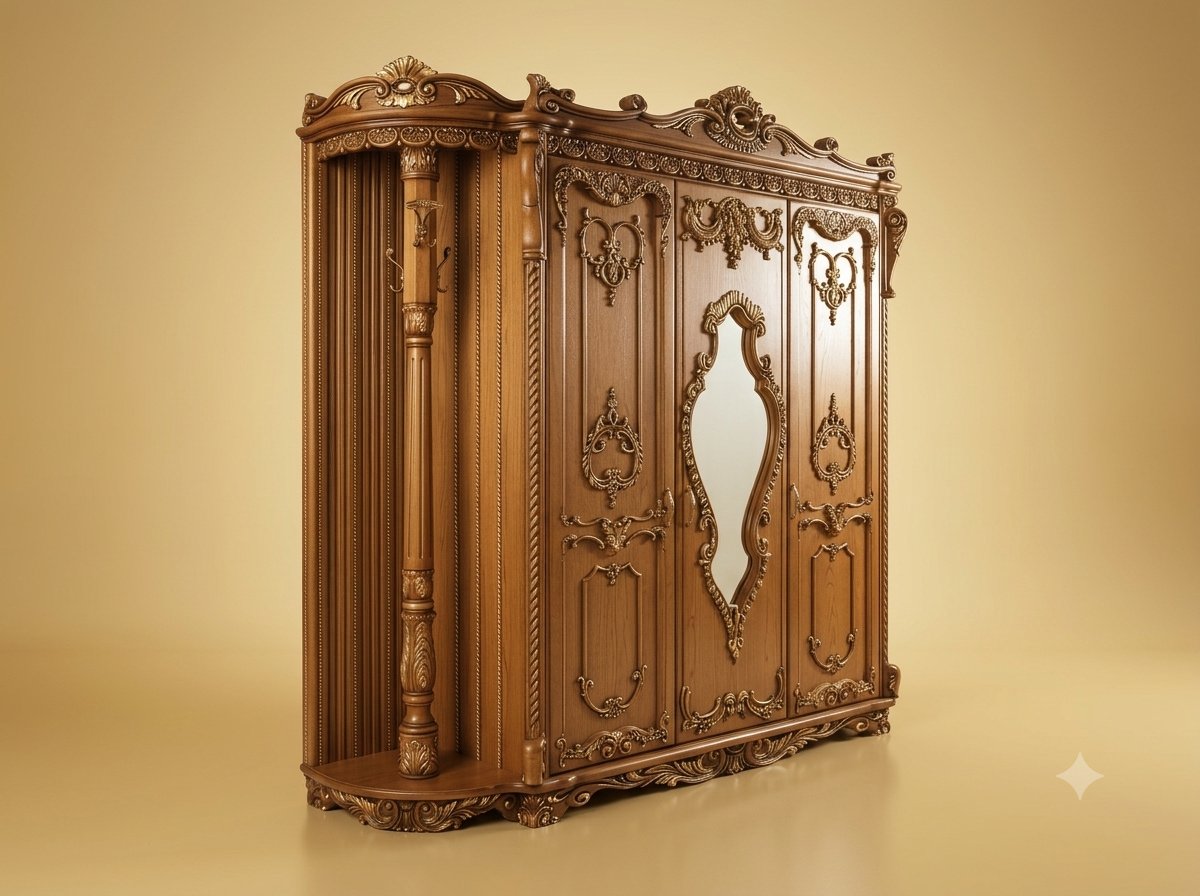
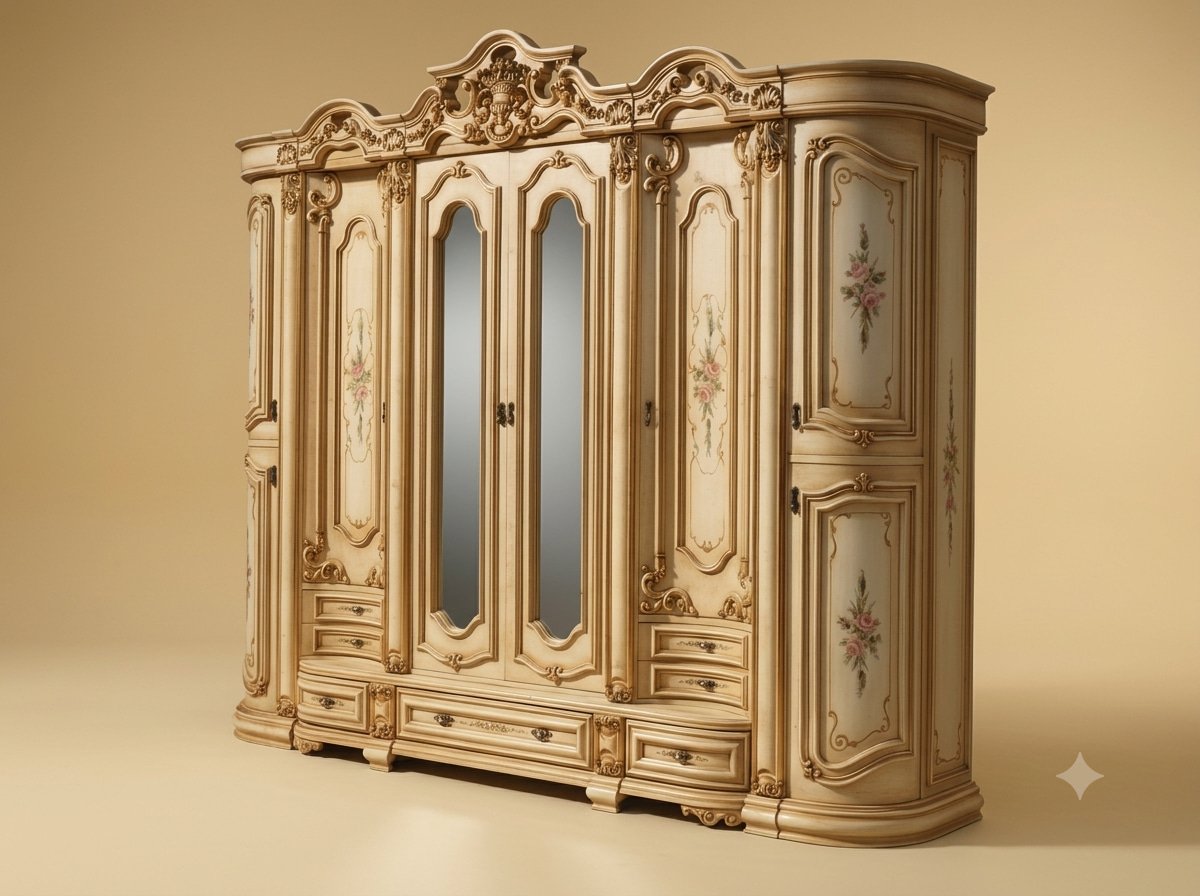
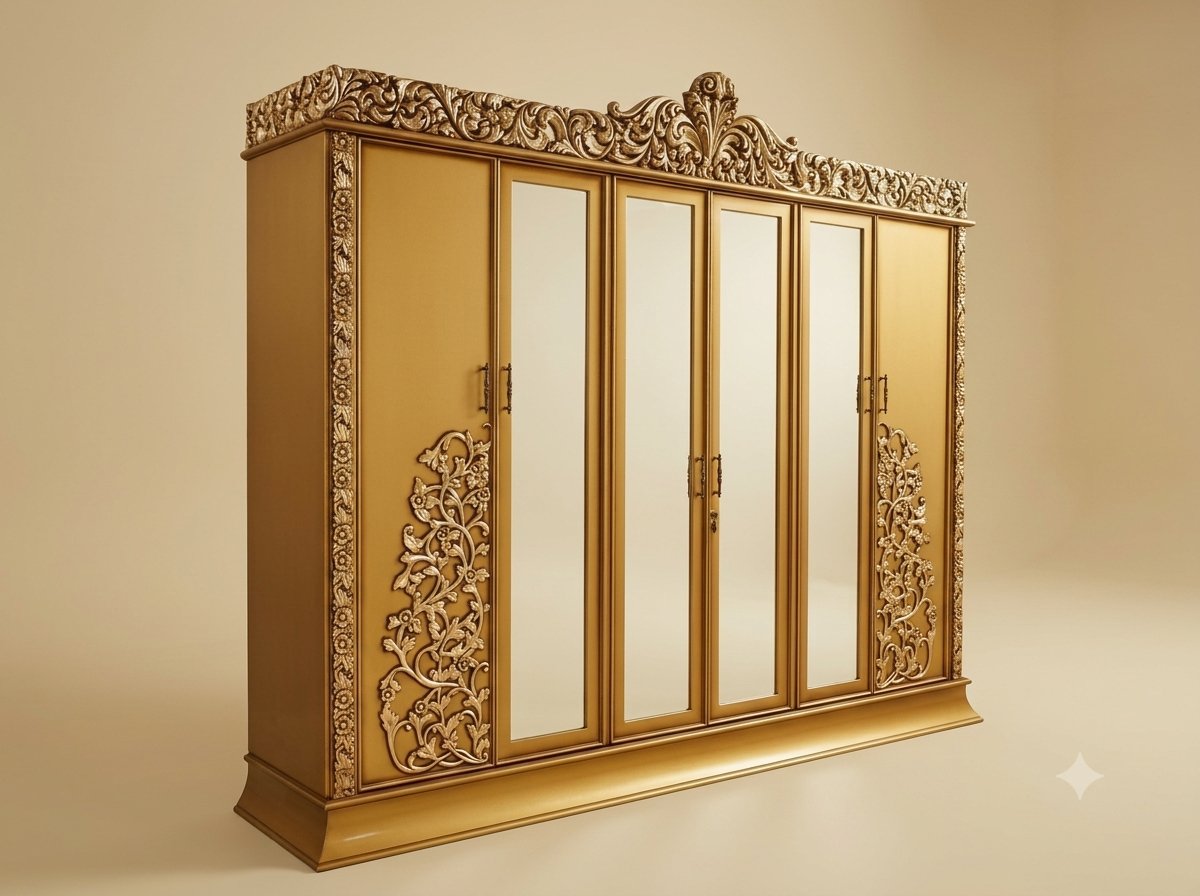
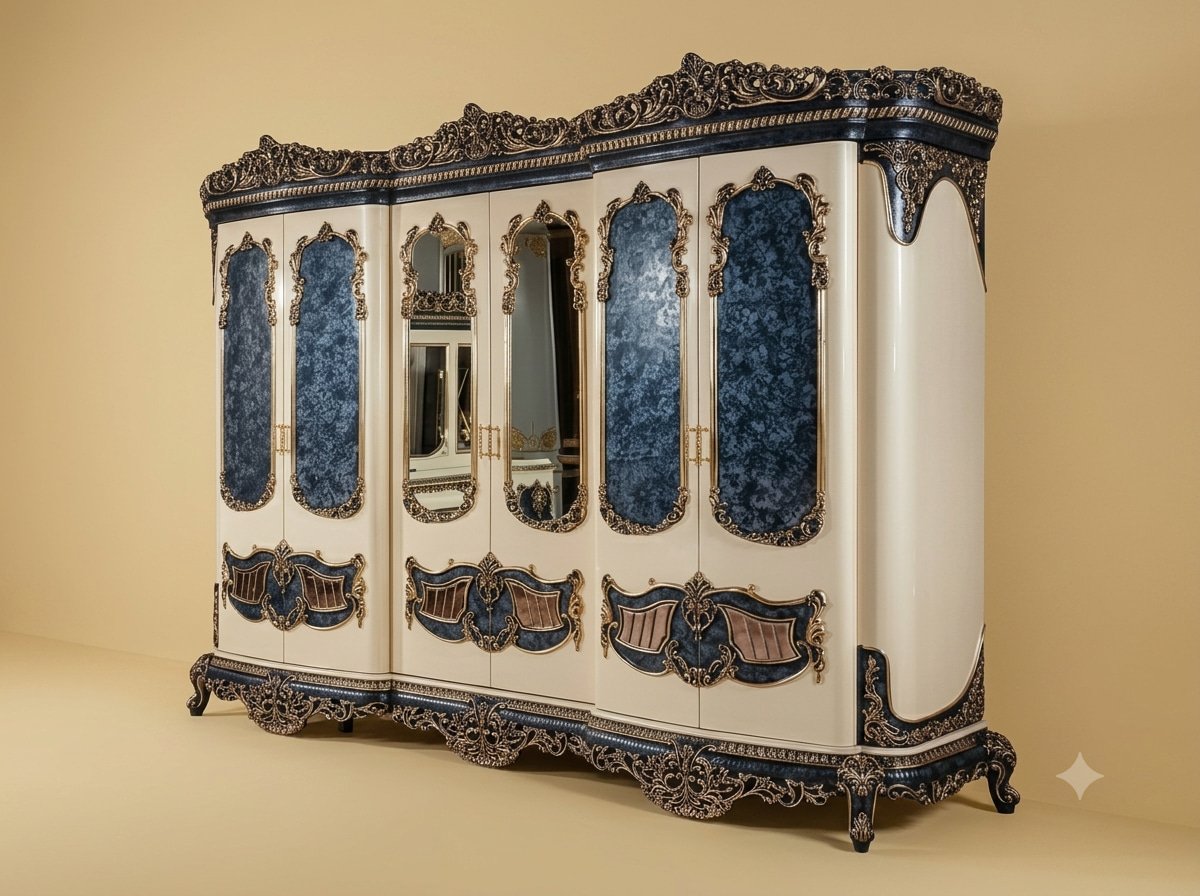
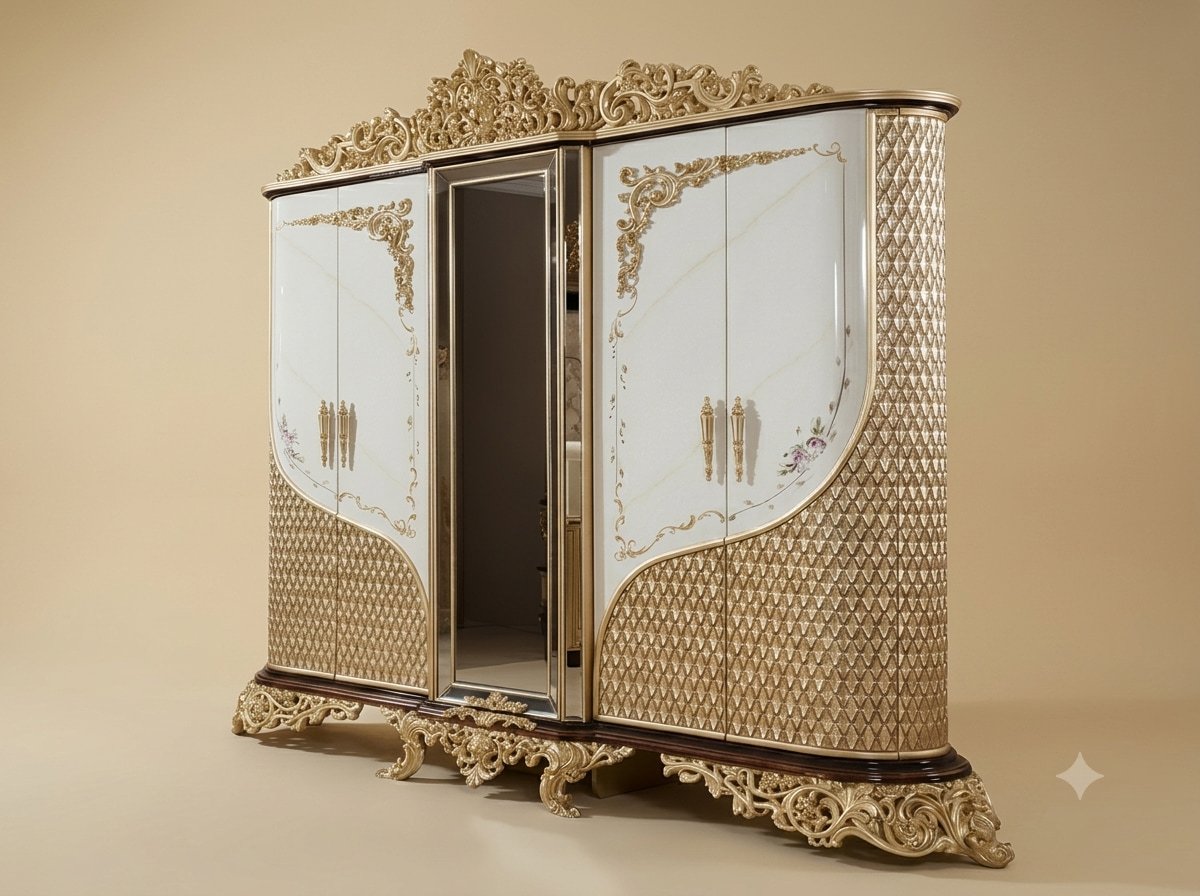
The mirrored centre door here projects forward. That means its edges overlap the front faces of the doors beside it. Close a flanking door while the centre door is already shut and the two meet edge to face - the flanking door cannot reach its stop, and pushing harder chips a mirror frame or springs a hinge.
Nobody thinks about closing order while getting dressed, so our master Indian artisans build the sequence into the furniture instead of relying on the owner to remember it. The centre door is hung to close over the flanking doors, and its own stop sits behind them, so it physically cannot shut until they are shut. Try to close it first and it simply meets the open doors and waits.
It is a small piece of design that decides whether the wardrobe is still working in ten years, and it costs nothing except thinking about it before the doors are hung rather than after.
 Ask Price On WhatsApp