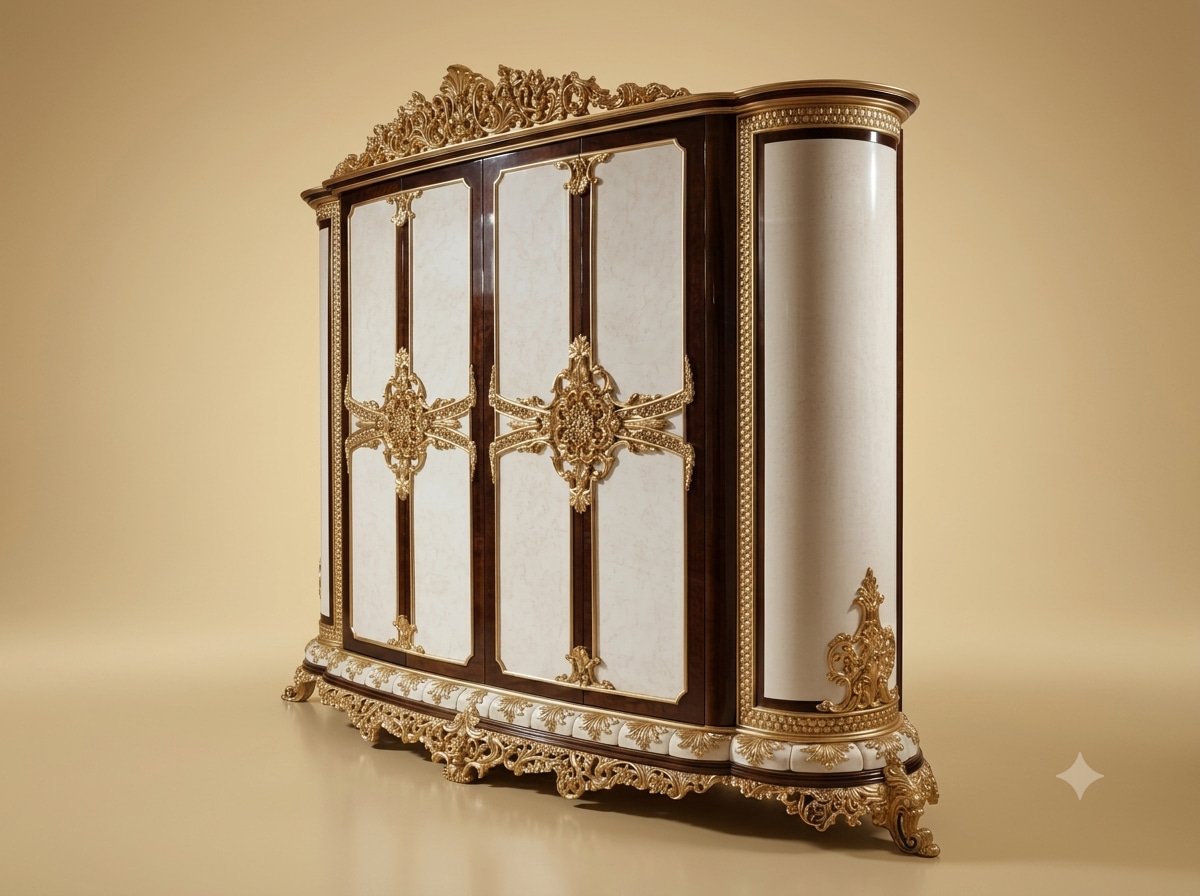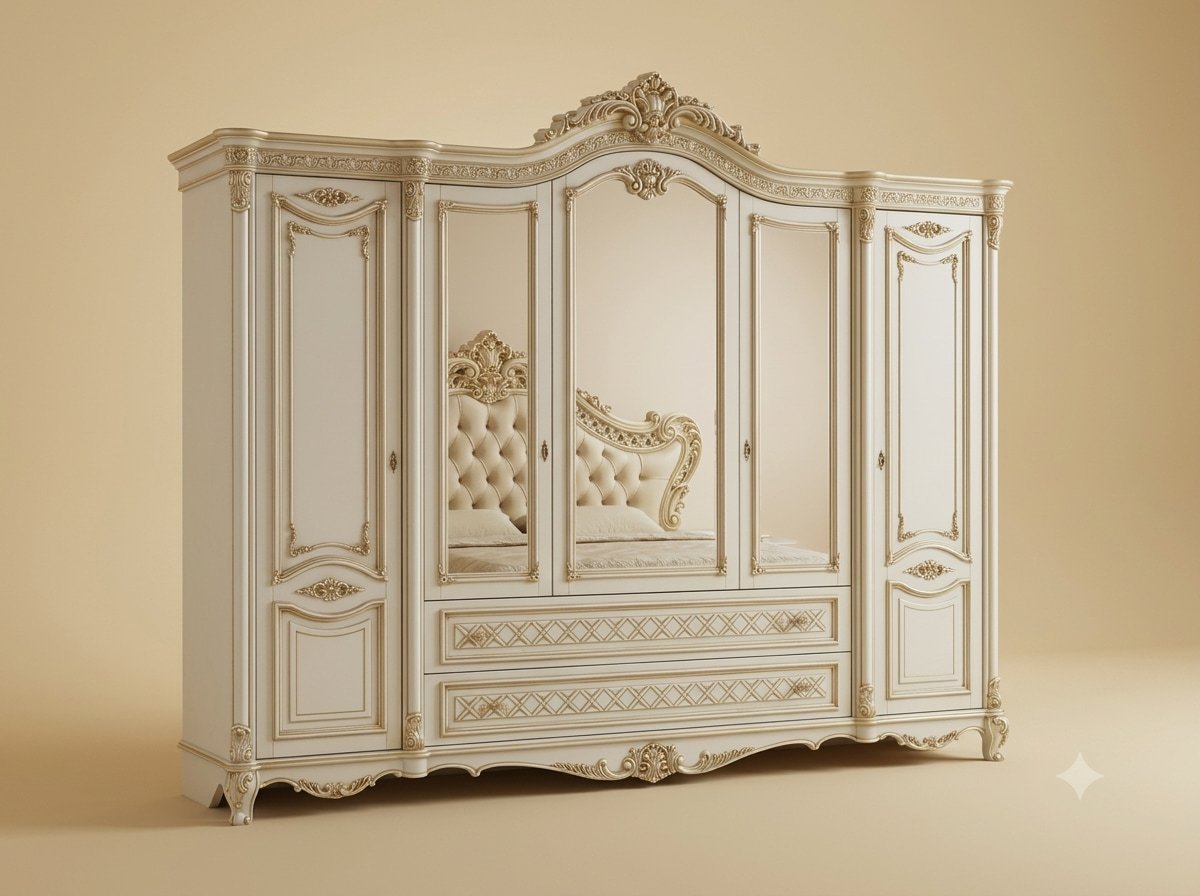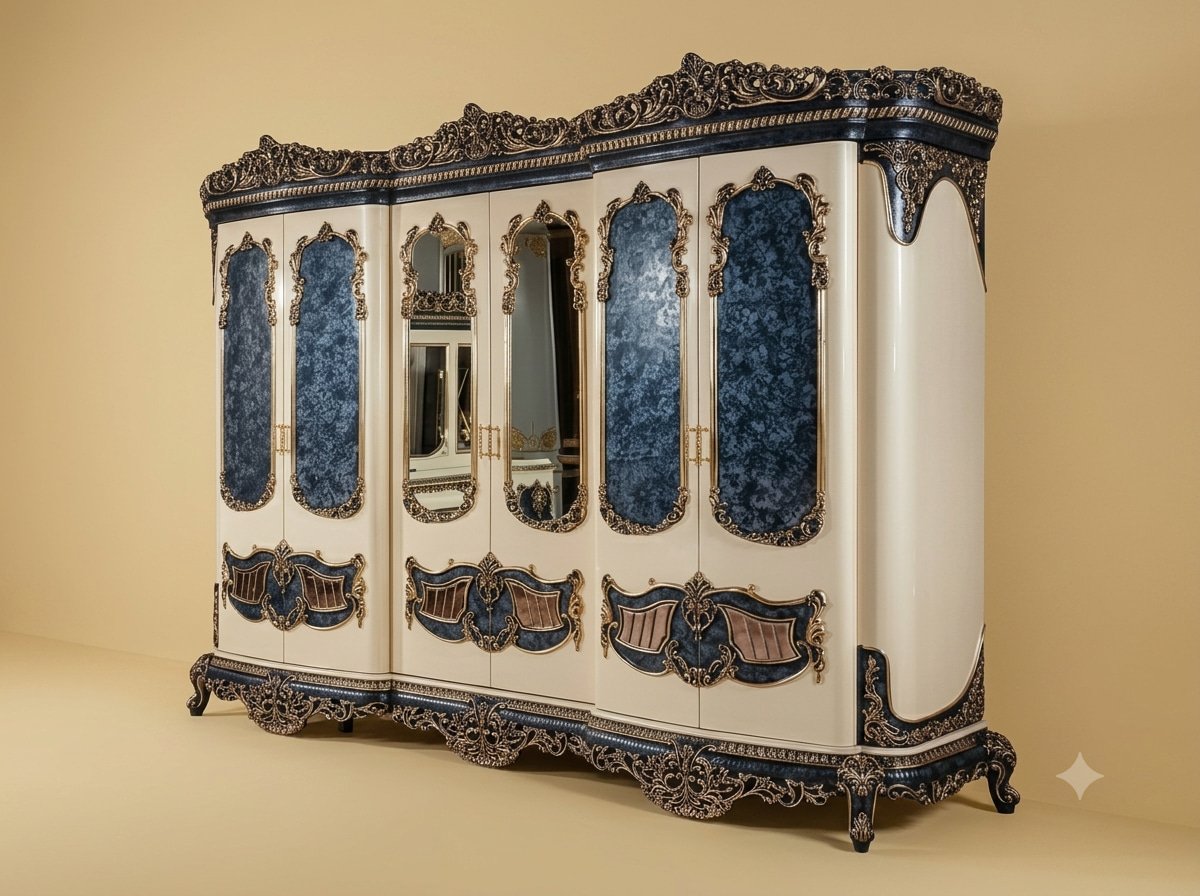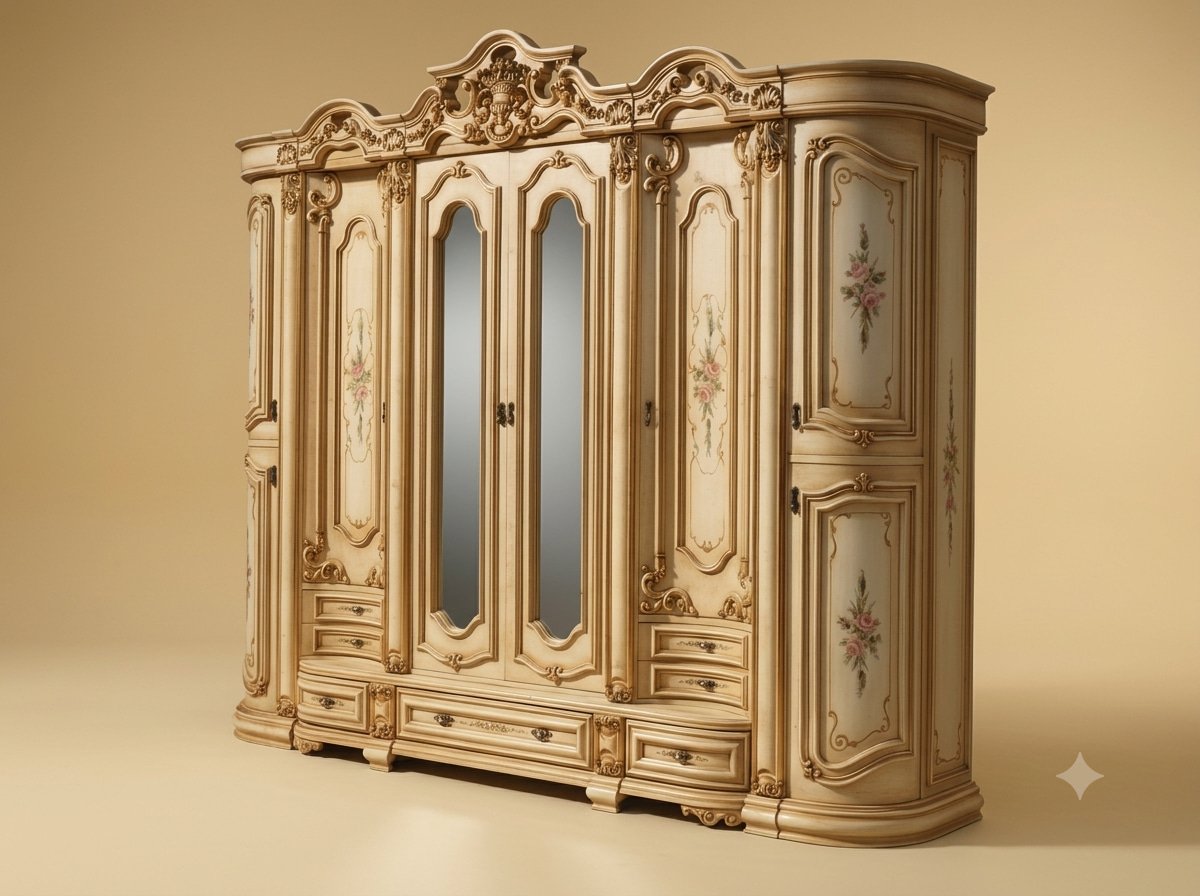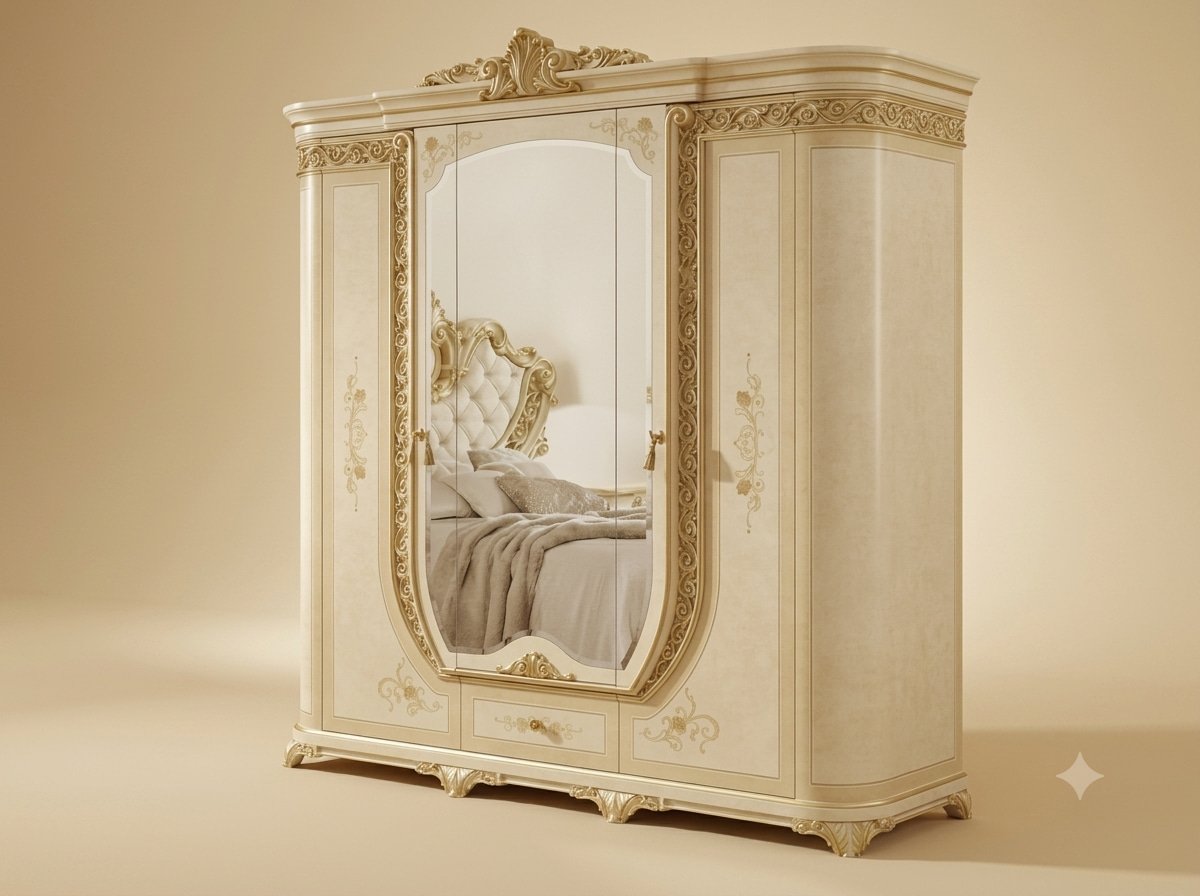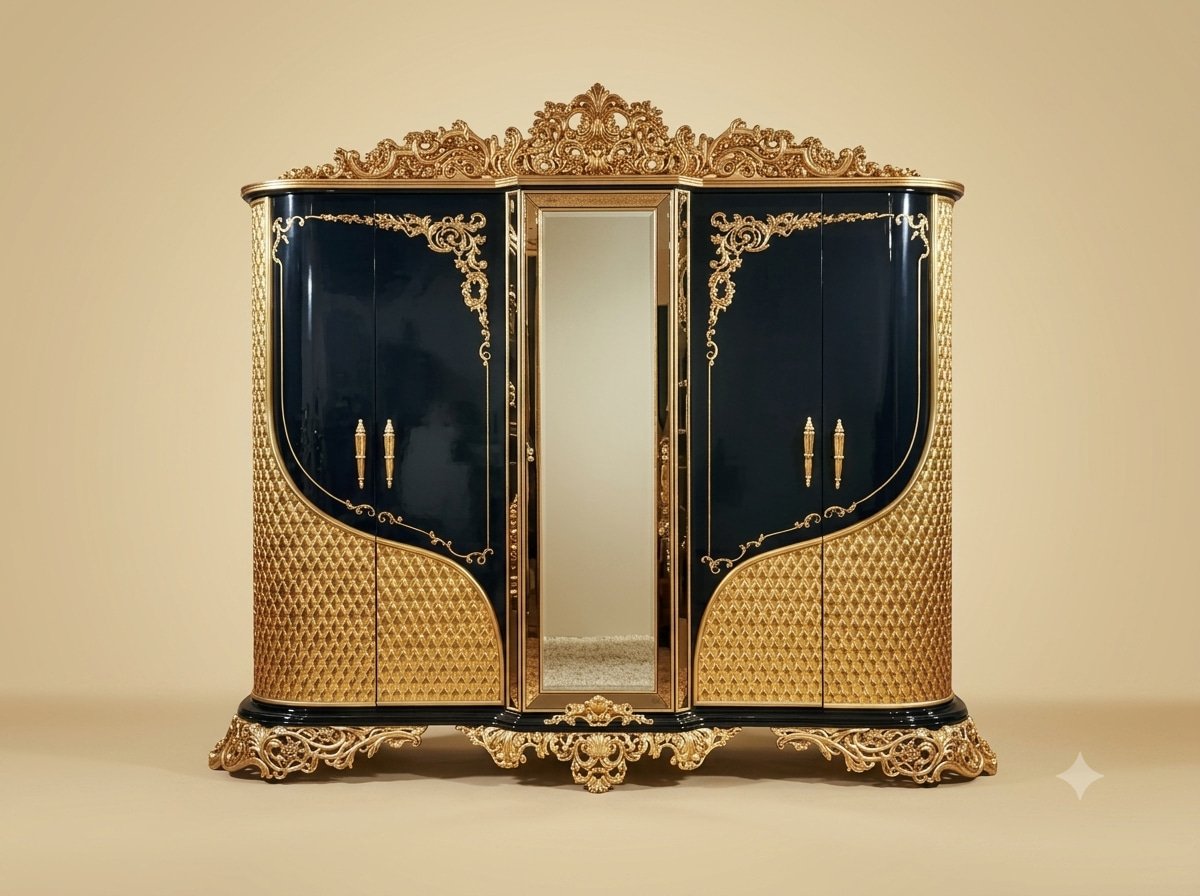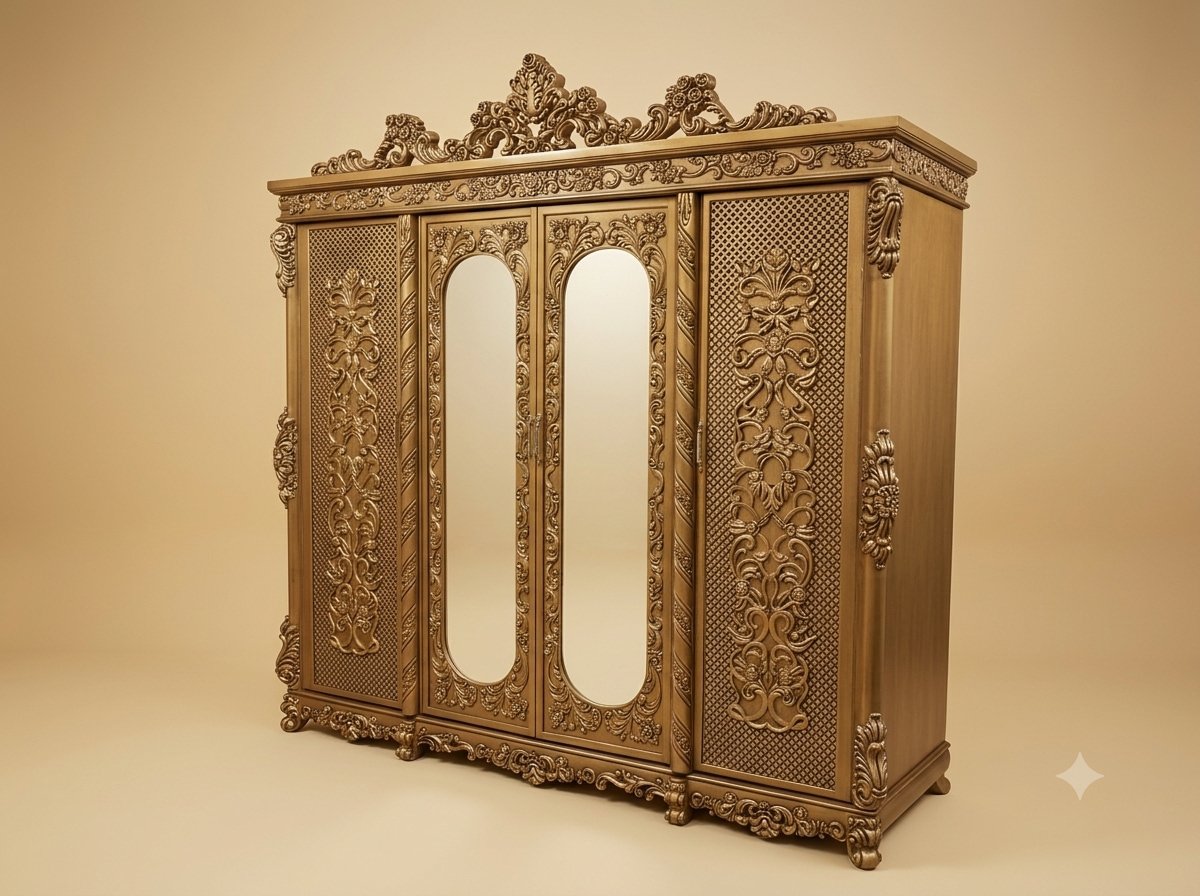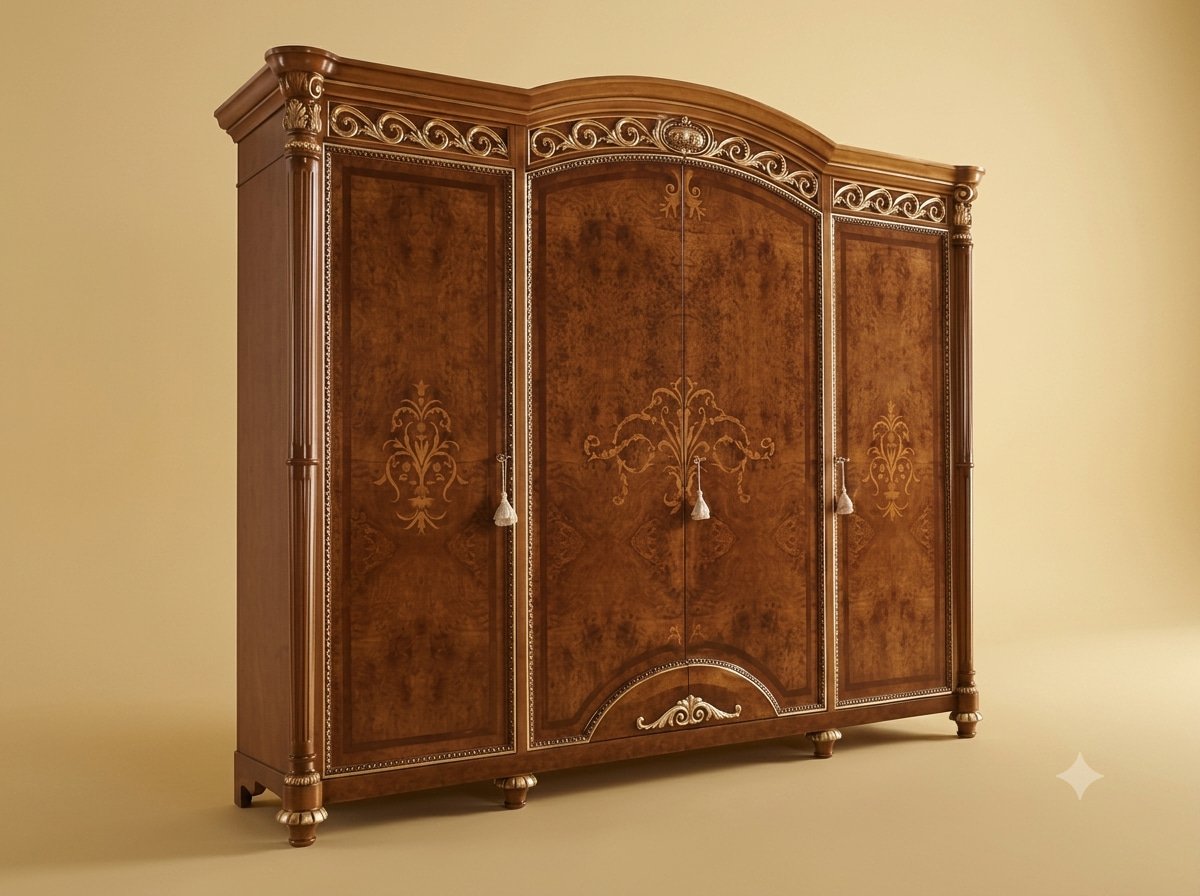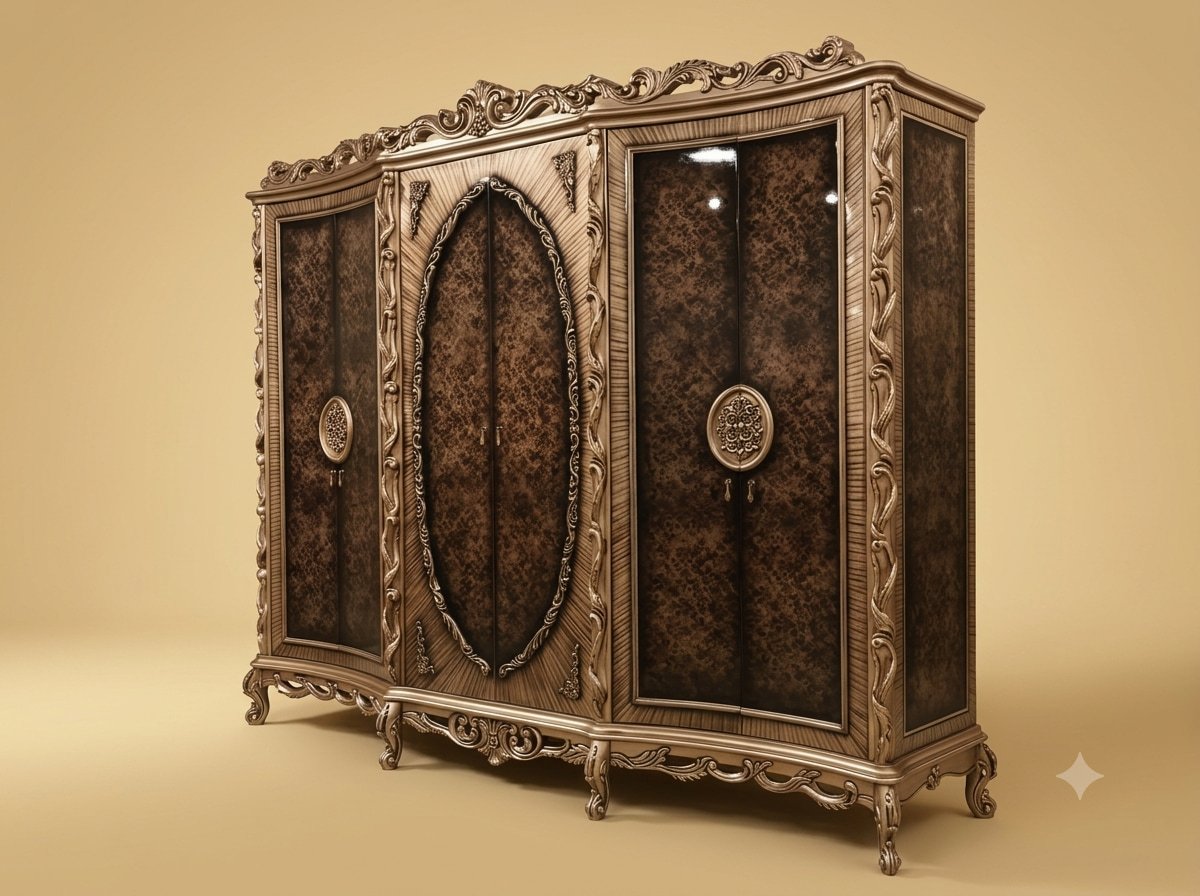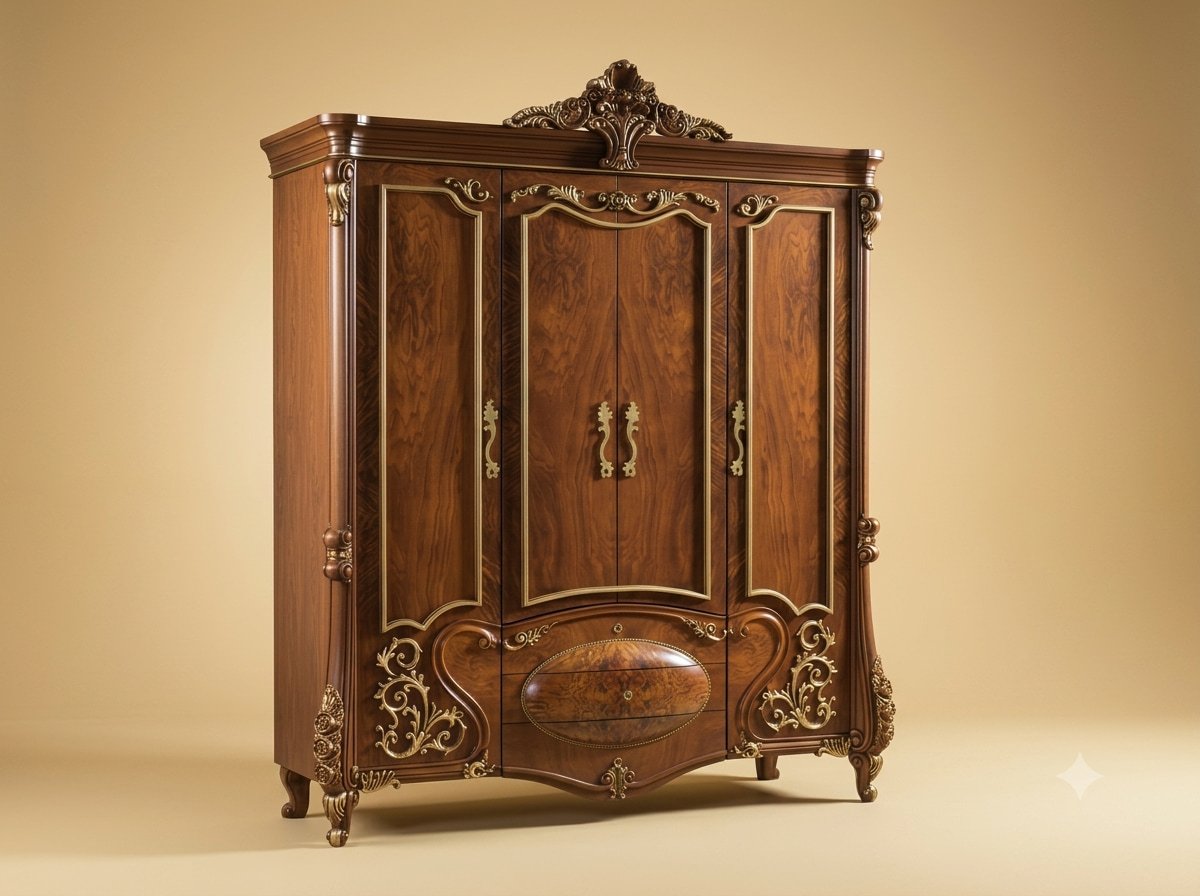
You can tell how a wardrobe was made by looking at the gaps between its doors.
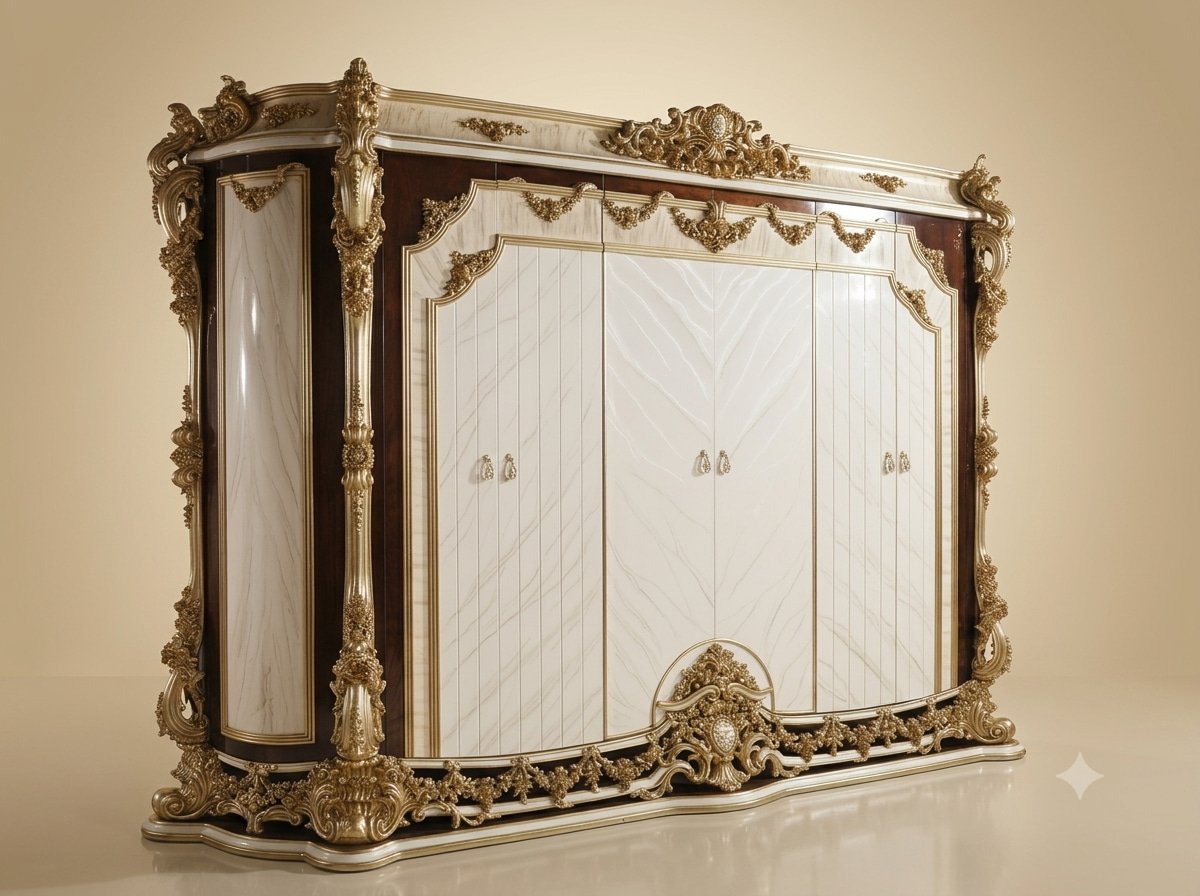
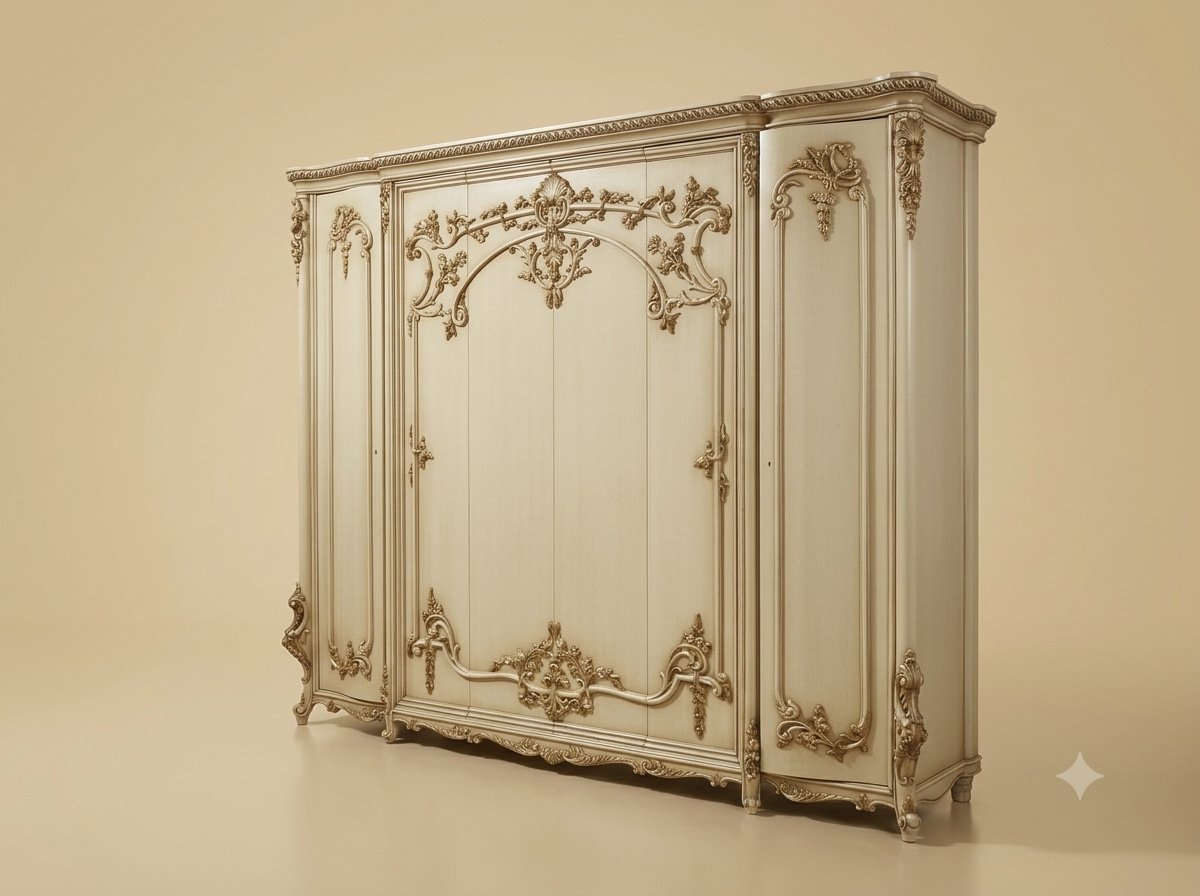
On a four door run there are three vertical lines of light, and the eye compares them without being asked to. If one is wider at the top than the bottom, or one is simply fatter than its neighbours, the whole piece looks cheap no matter how good the carving is. Nothing else on a wardrobe is inspected so unconsciously and so severely.
So our master Indian artisans hang all four doors as a set before any of them is finished, then plane the meeting edges until every gap is the same width and dead parallel top to bottom. It is checked by sighting along the closed doors towards a light - a line of light is far more revealing than a rule, because the eye that will judge the finished wardrobe is the same eye doing the checking.
Only then is the arched cartouche carved across the two centre doors. It has to be cut with the doors hung and closed, in place, so the scrollwork meets exactly across the joint. Carve the two doors separately on a bench and the pattern will be a hair out when they are hung - and a hair is all it takes.
 Ask Price On WhatsApp