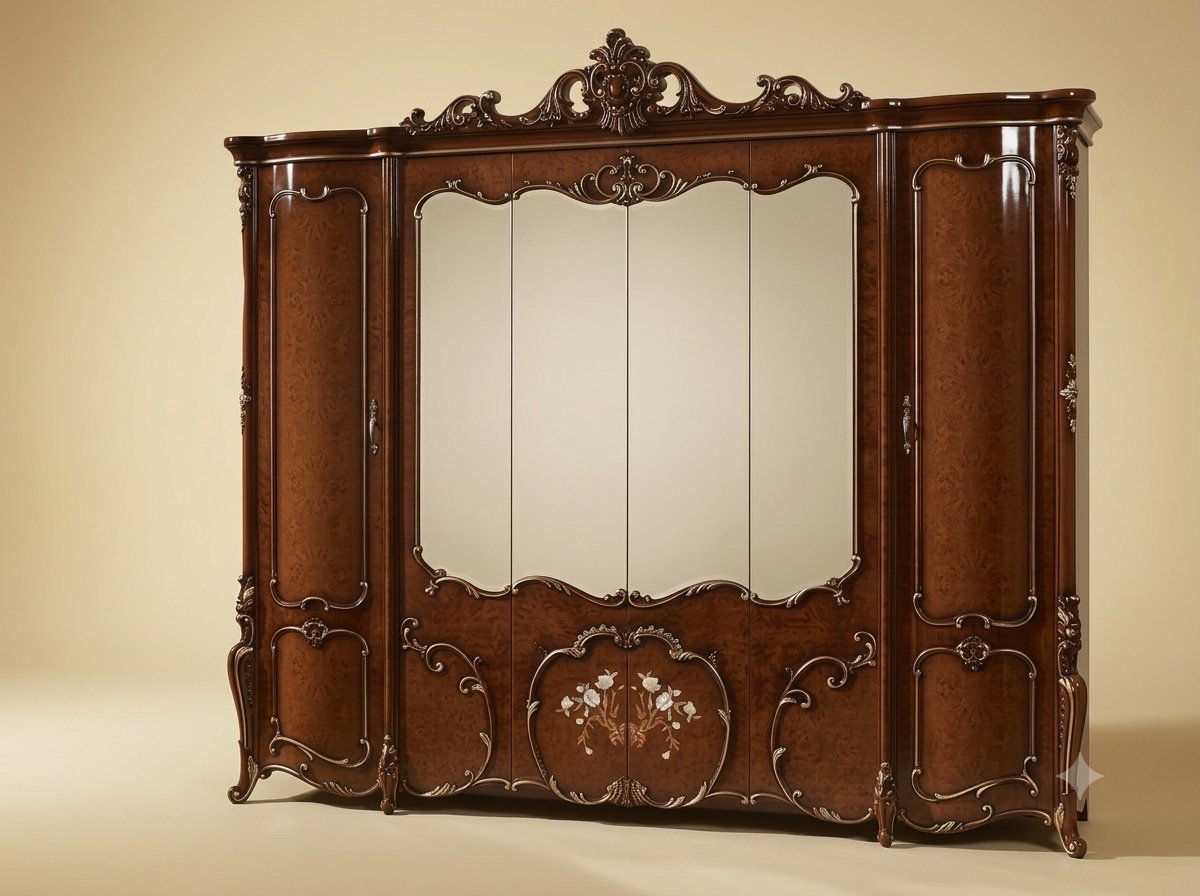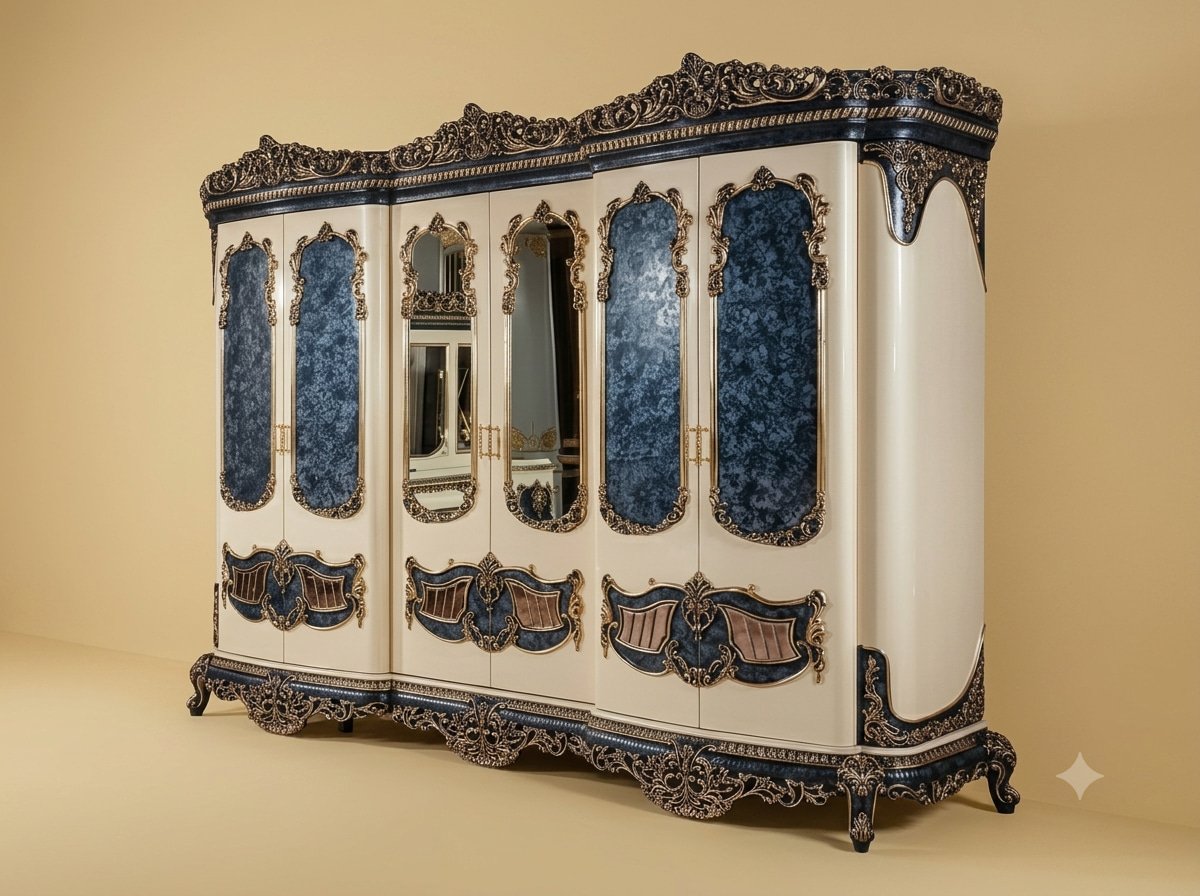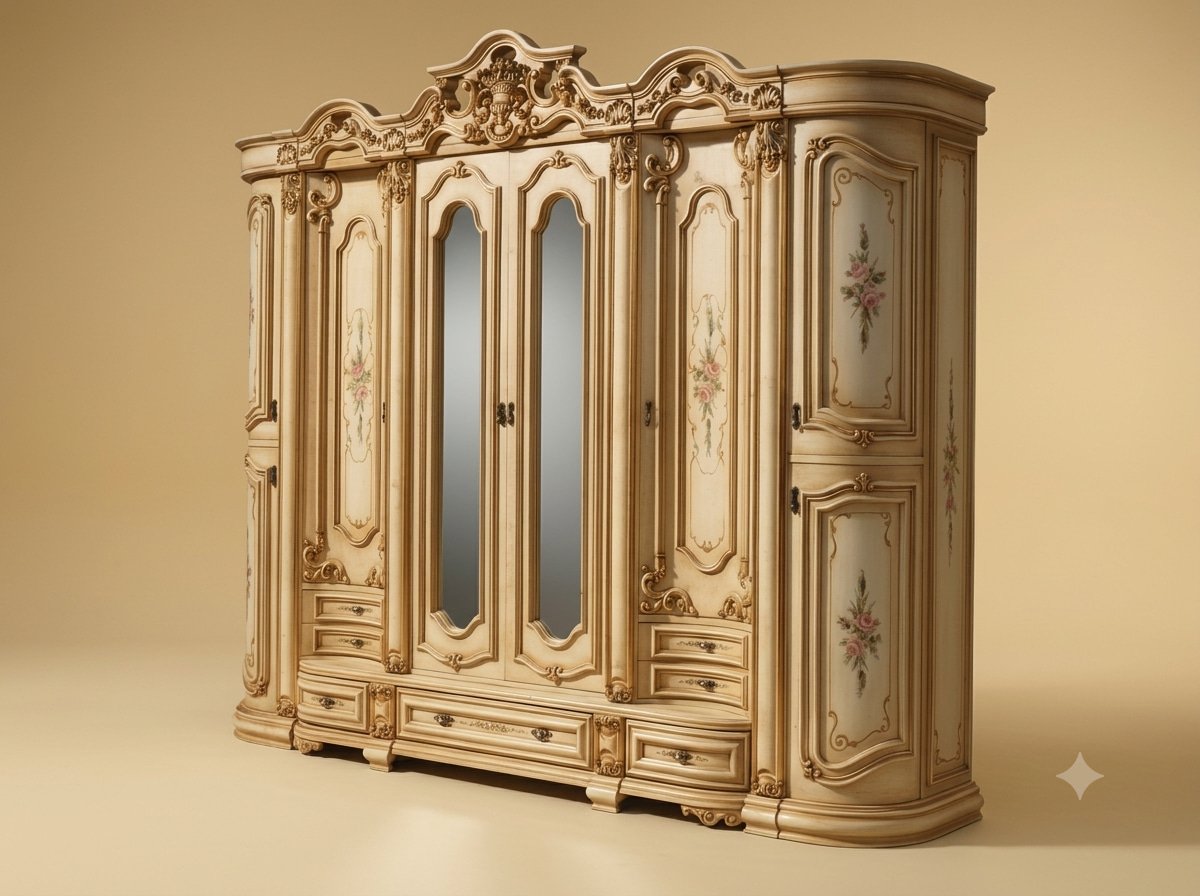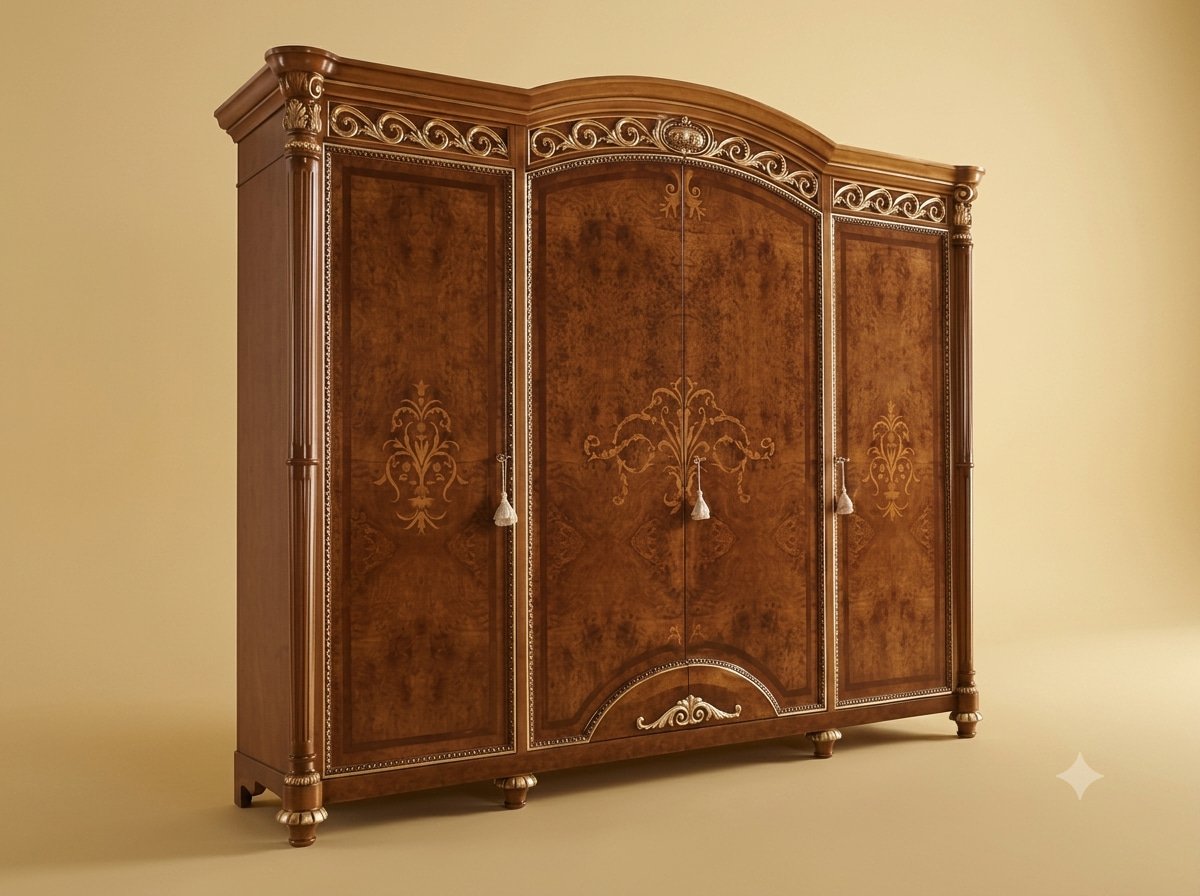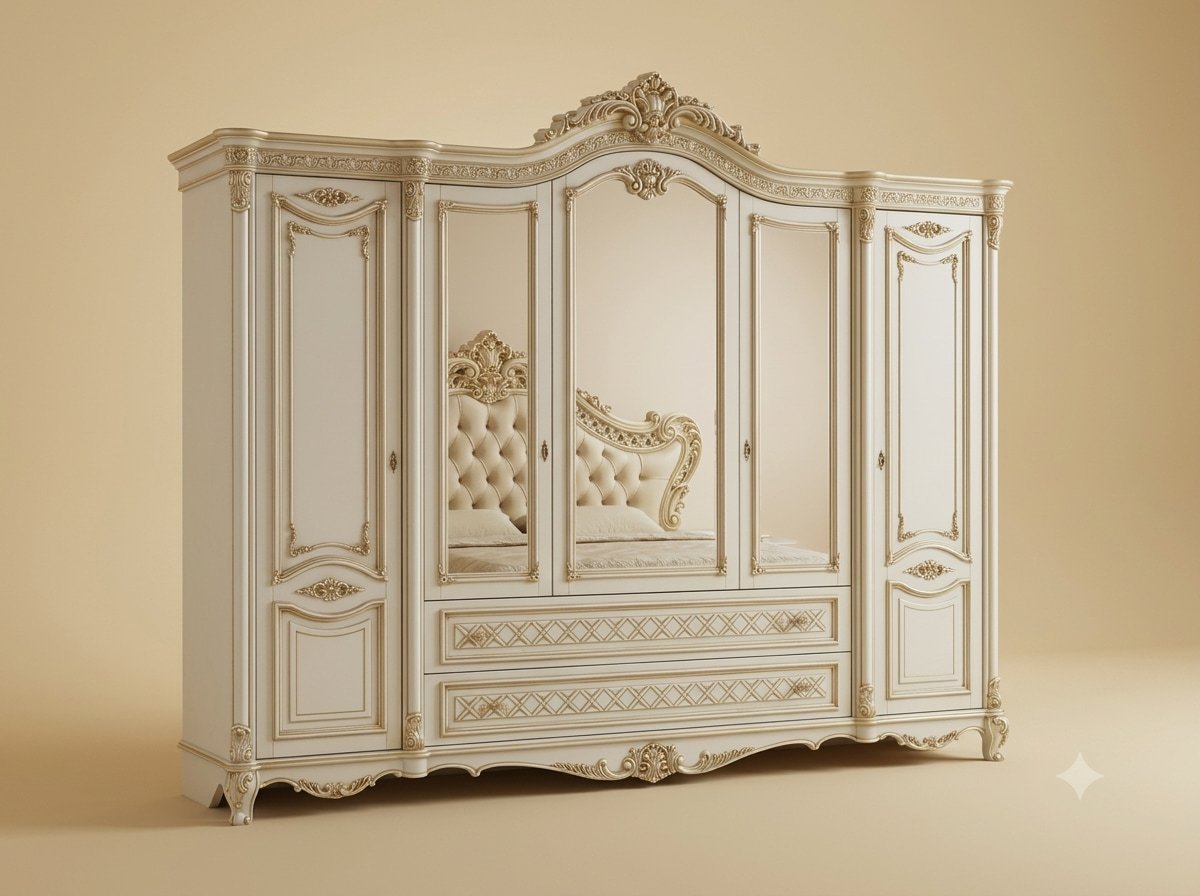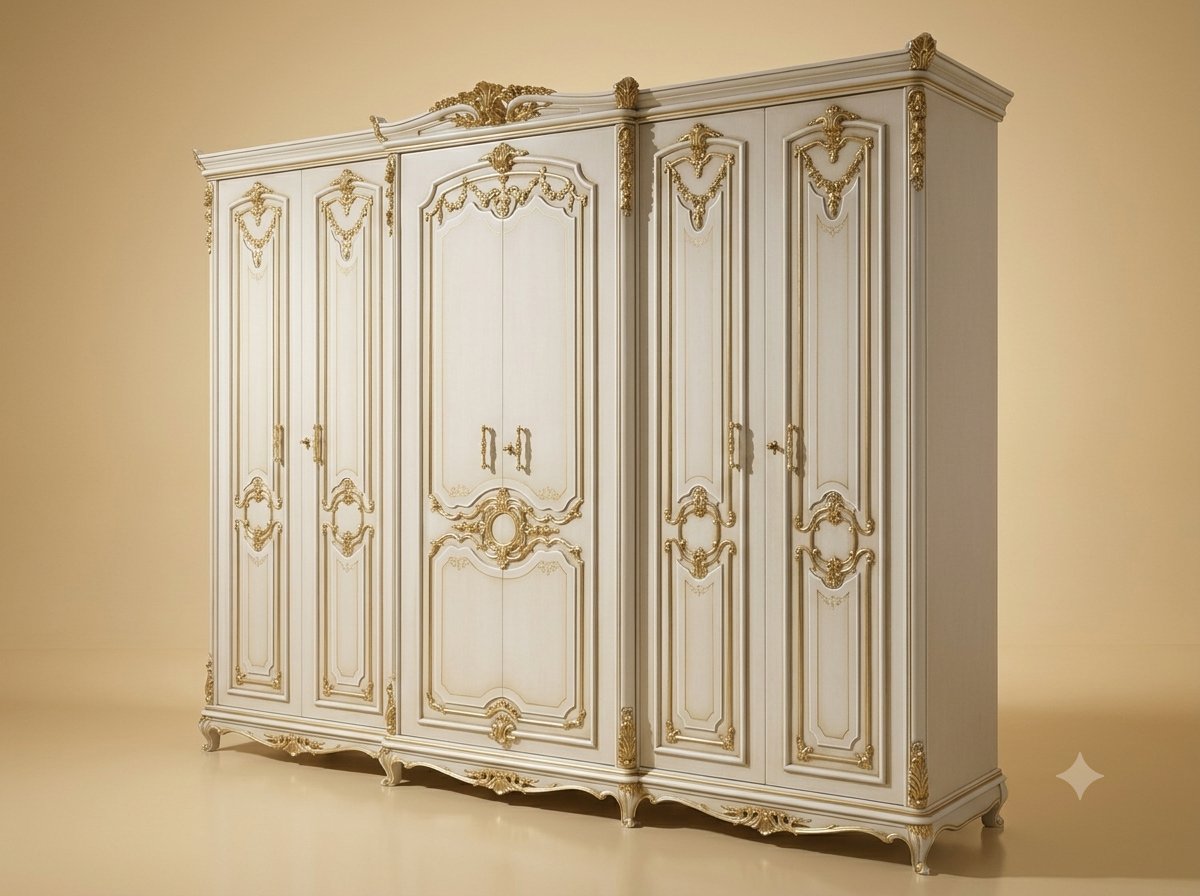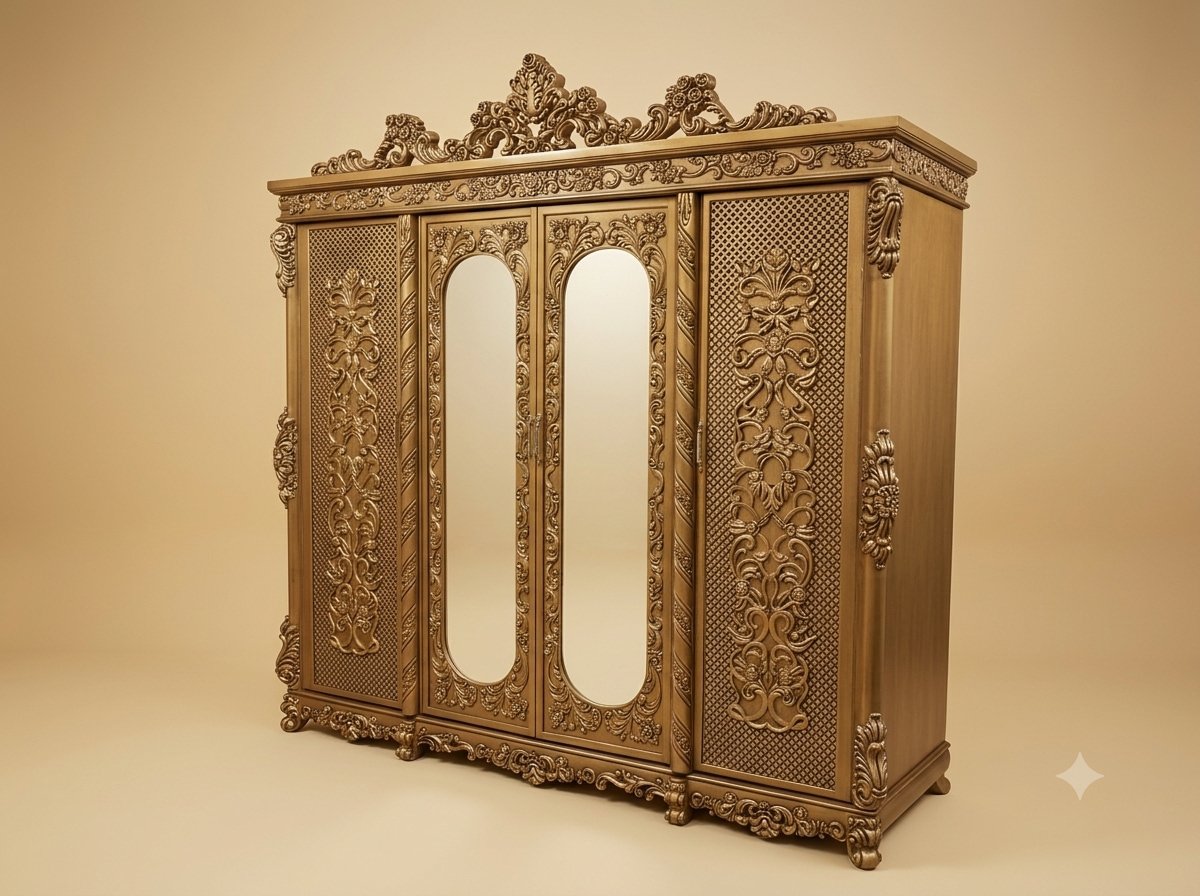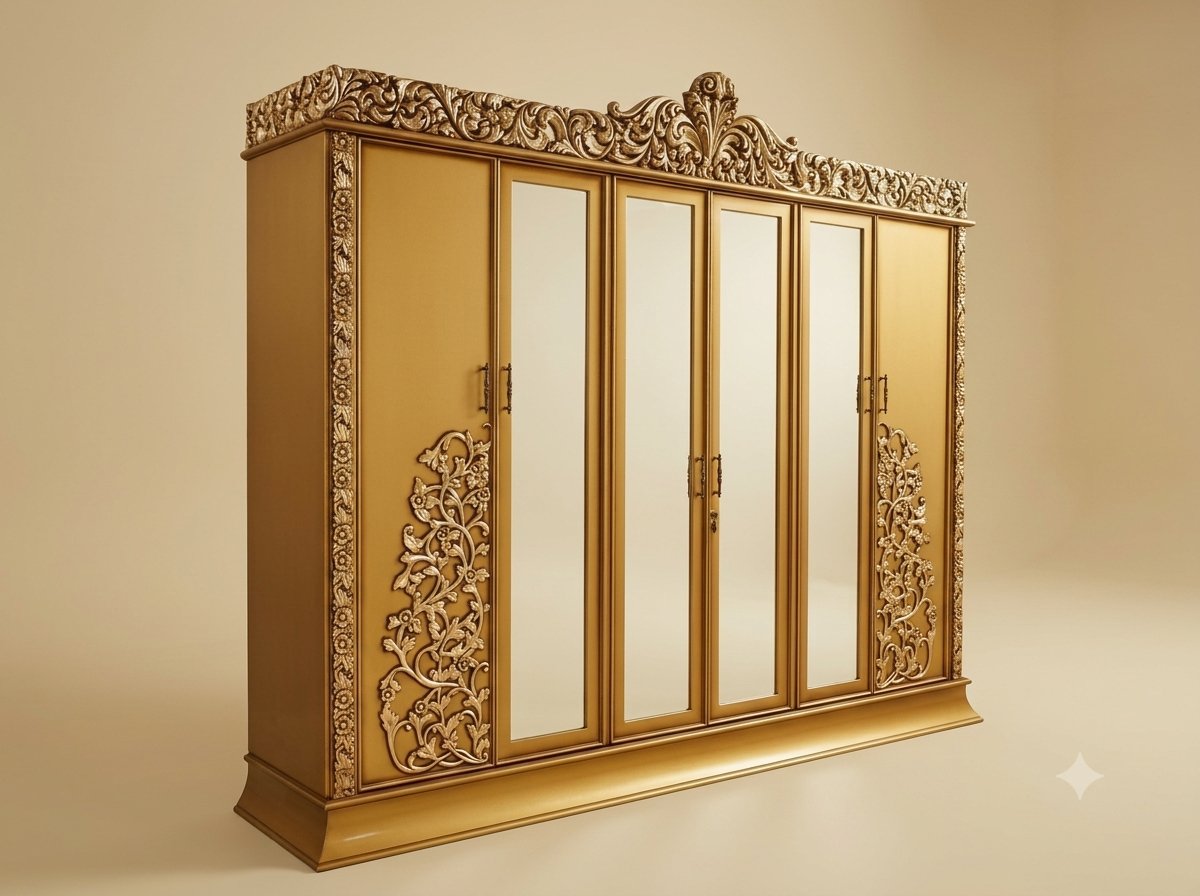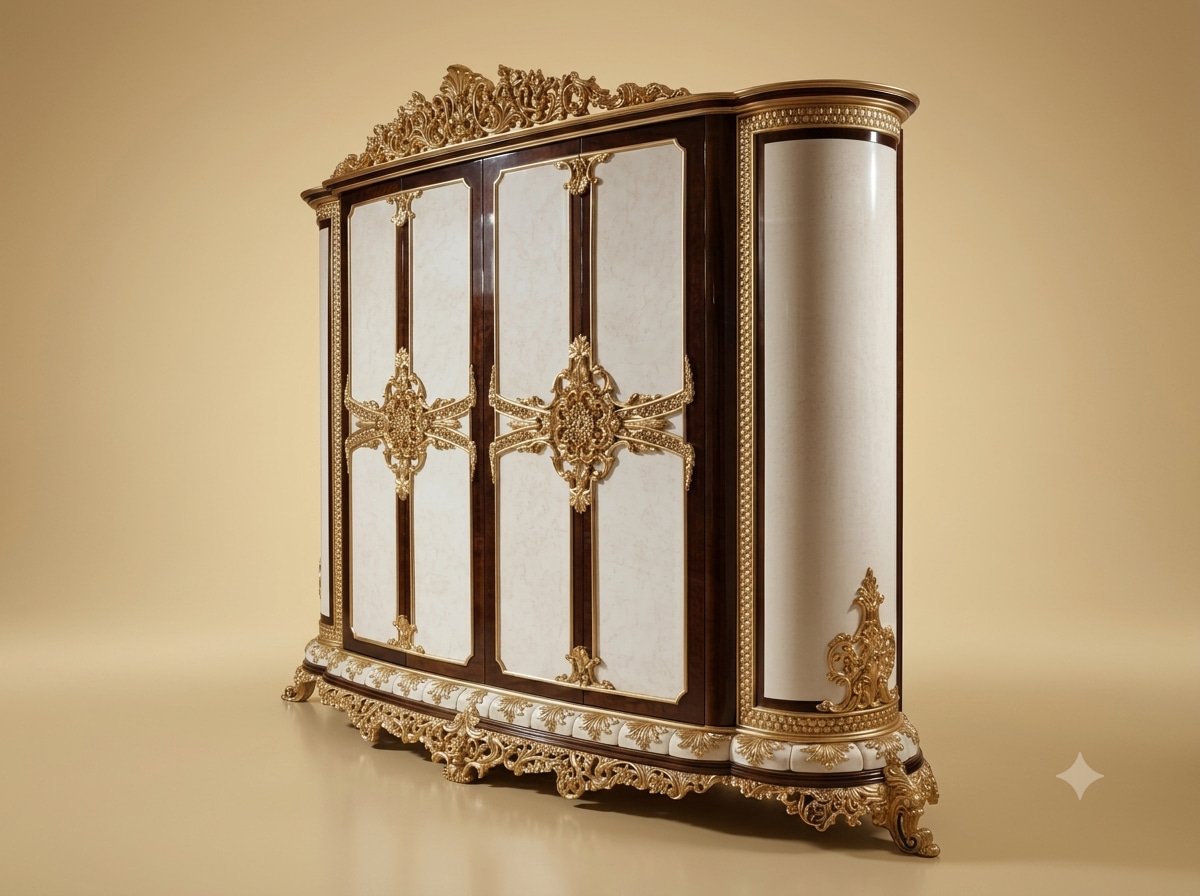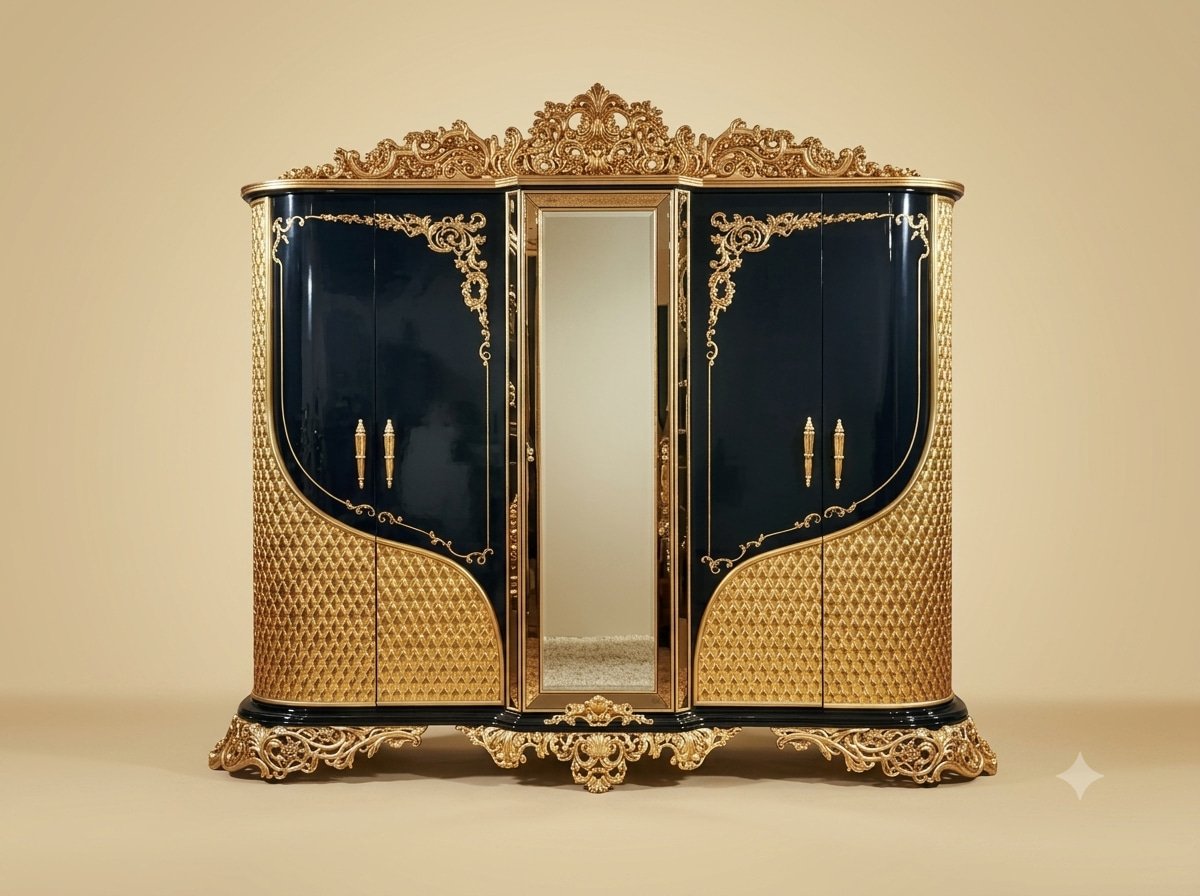
Opening one end of a wardrobe is a bigger decision than it looks, because a cupboard gets most of its rigidity from being a closed box.
A carcass with four sides and a back resists racking - that is, resists being pushed out of square - because each face braces the others. Take the front off one end to make an open bay and you have removed a whole face from that corner. The remaining structure can lean, and on a tall piece a lean of even a degree shows up immediately in the door gaps of the closed section beside it.
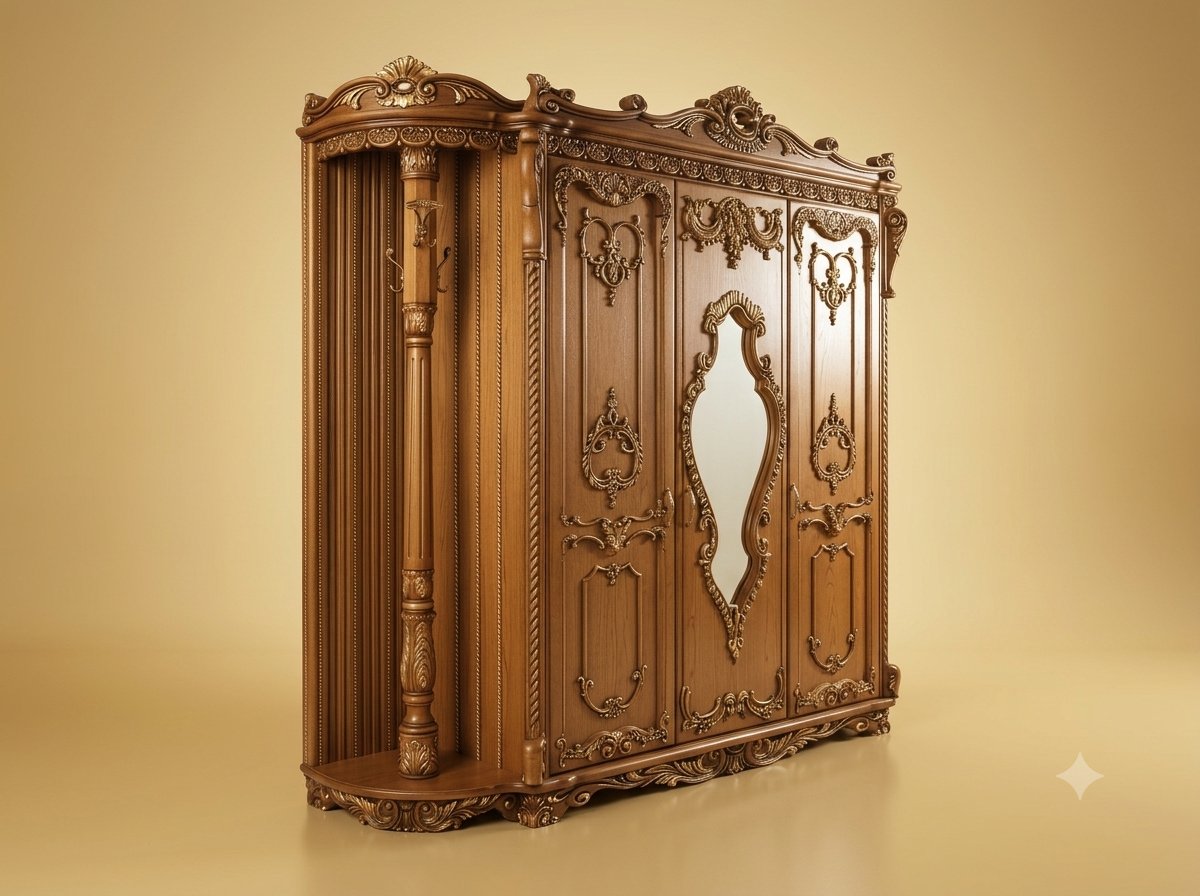
The turned column at the front corner of the bay is the answer, and it is doing real work. It runs full height from the base frame to the cornice, and it is jointed into both rather than sitting between them - so it ties the top of the carcass to the bottom exactly where the missing panel would have. The fluted back of the bay is fitted as a solid panel for the same reason, not as an open back.
Our master Indian artisans size that column from the load, then turn and carve it afterwards. It looks like a decorative post. It is the reason the doors next to it still close properly.
 Ask Price On WhatsApp