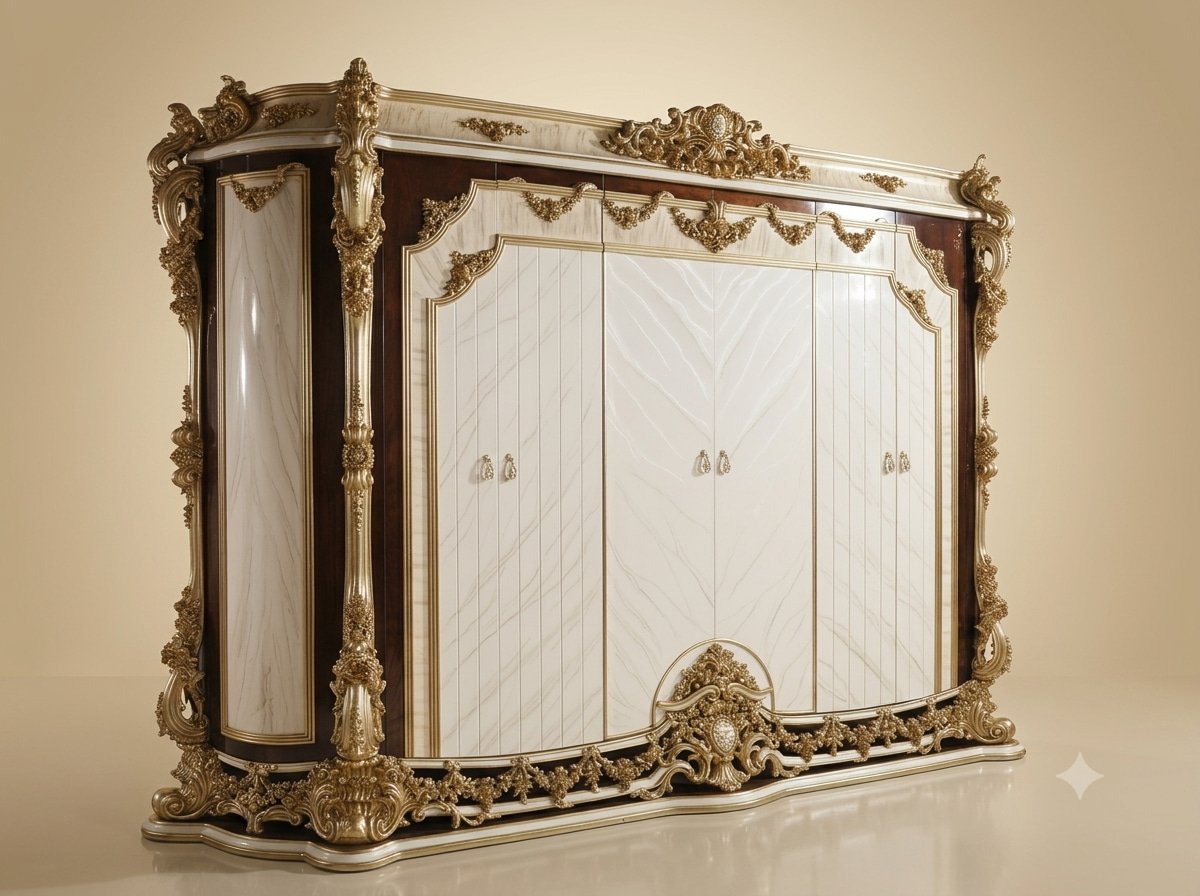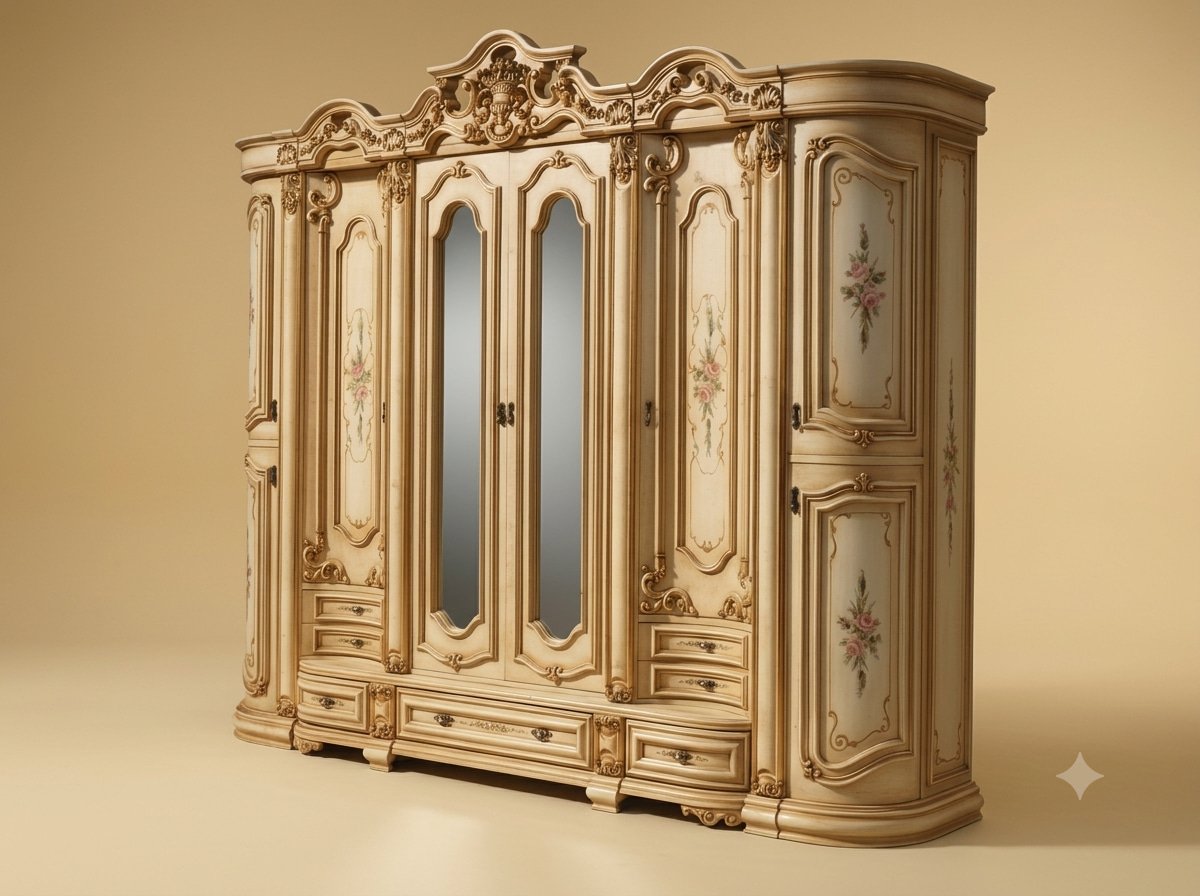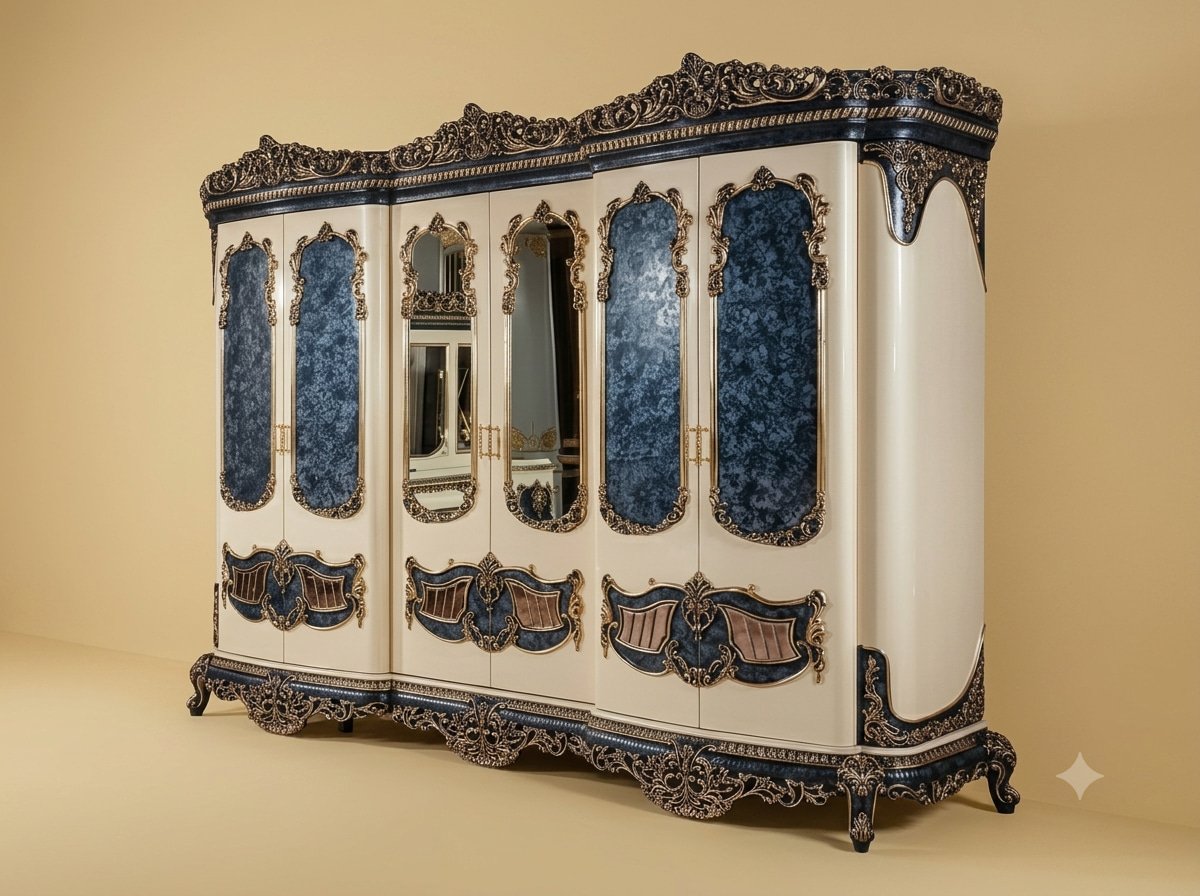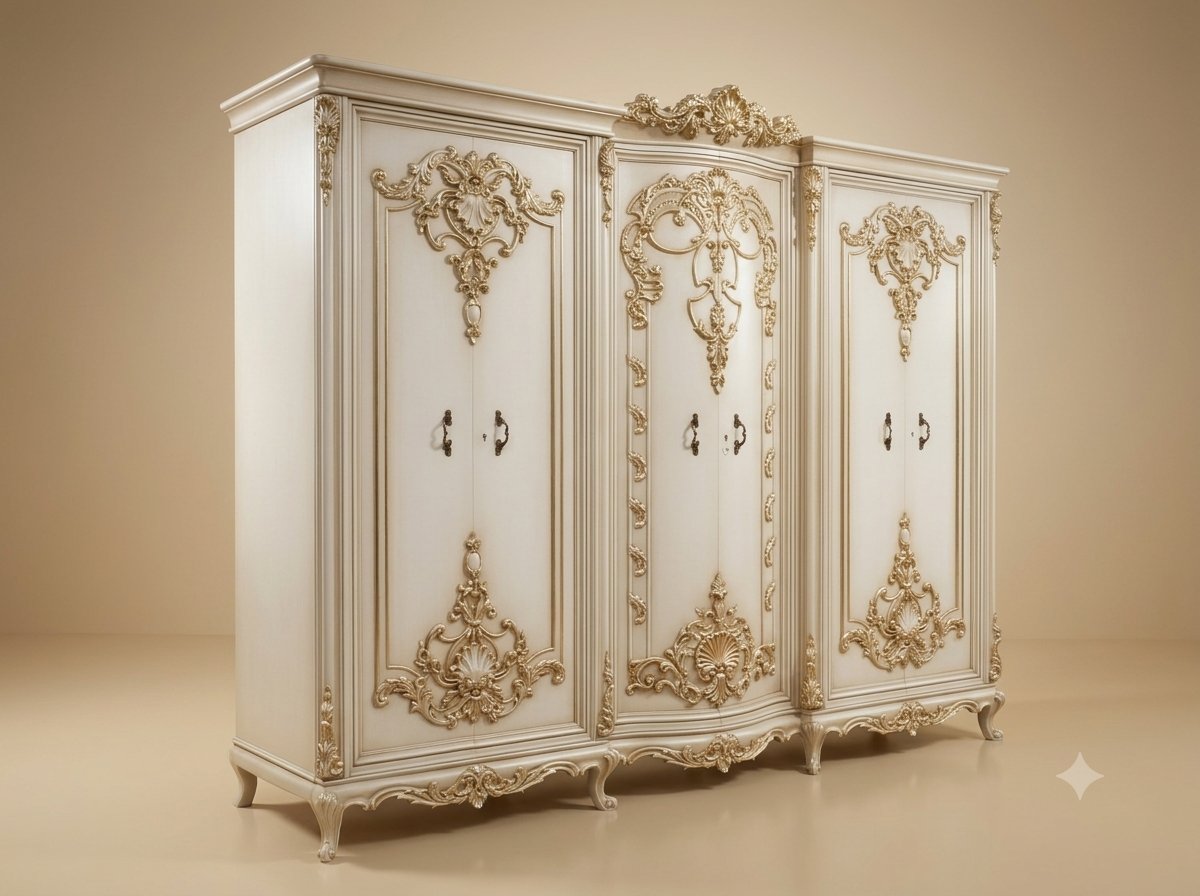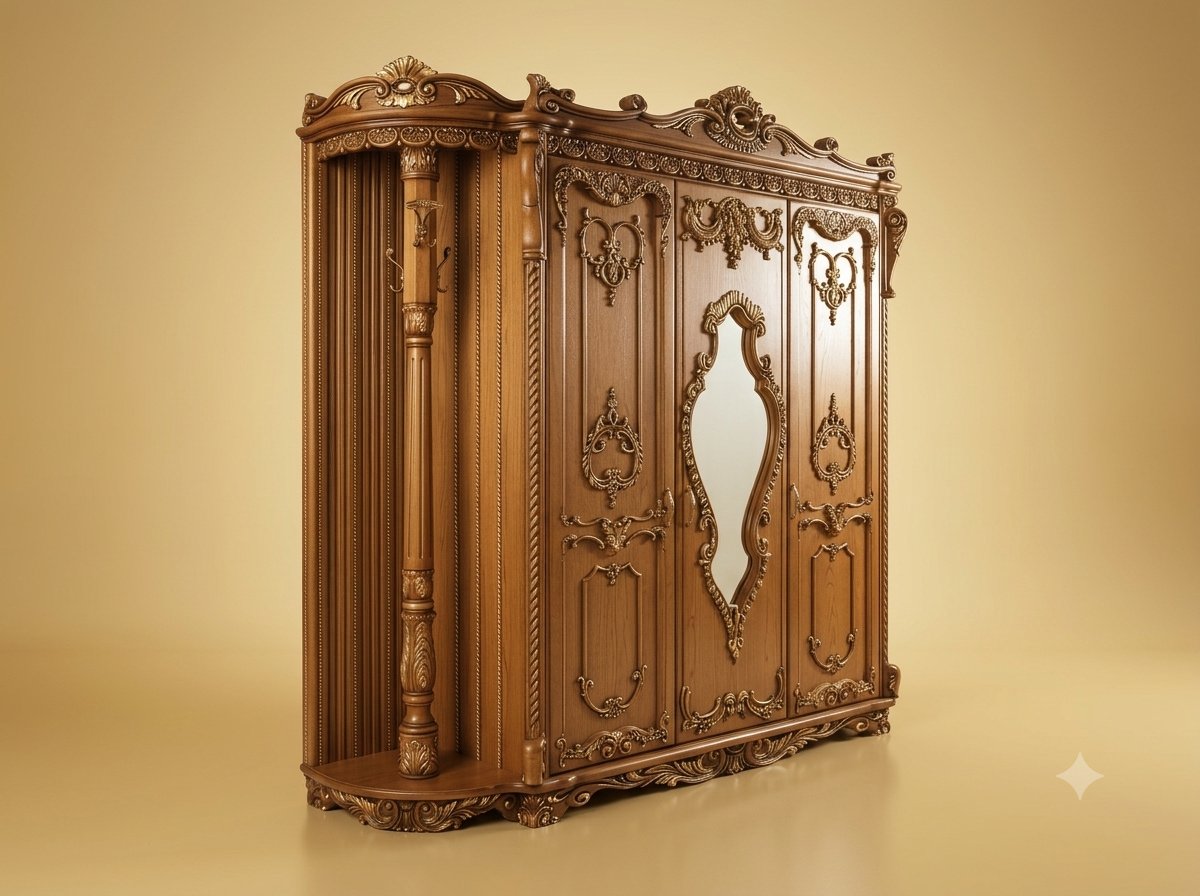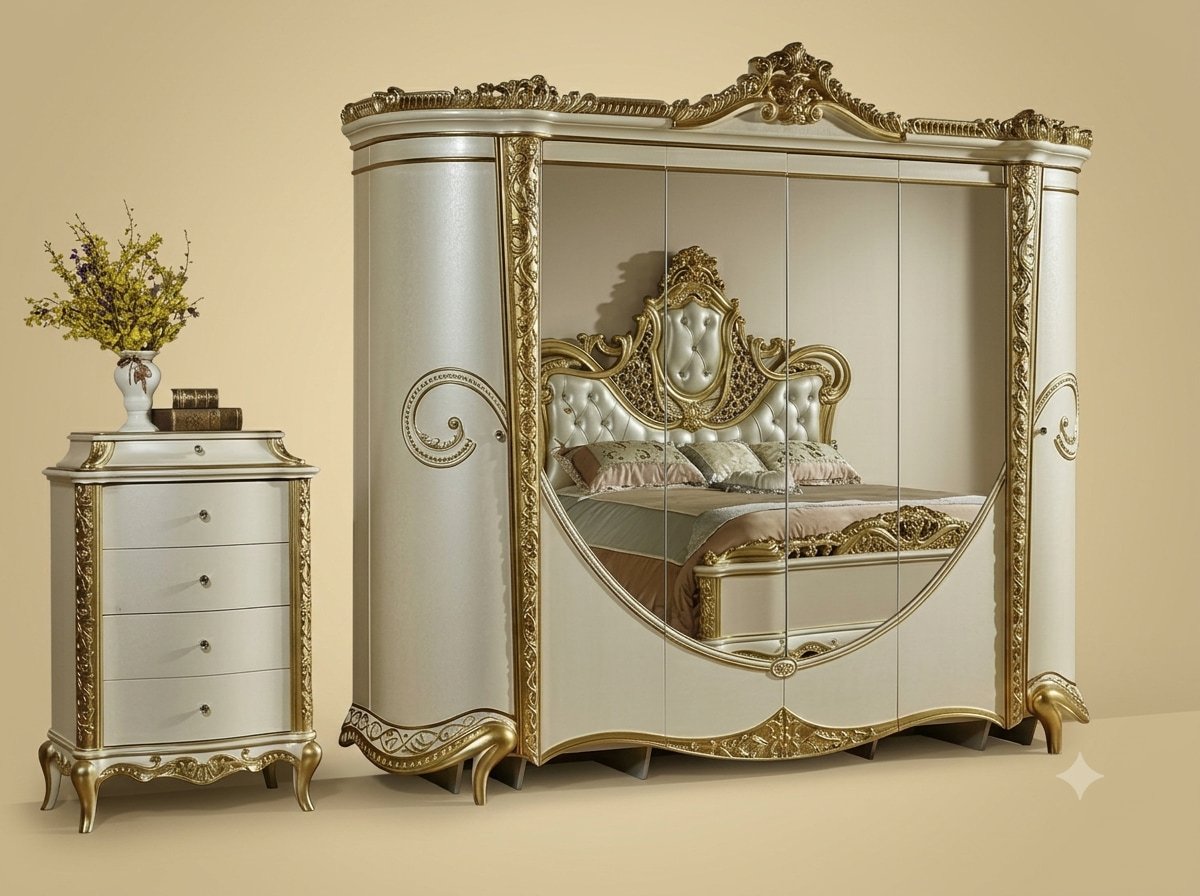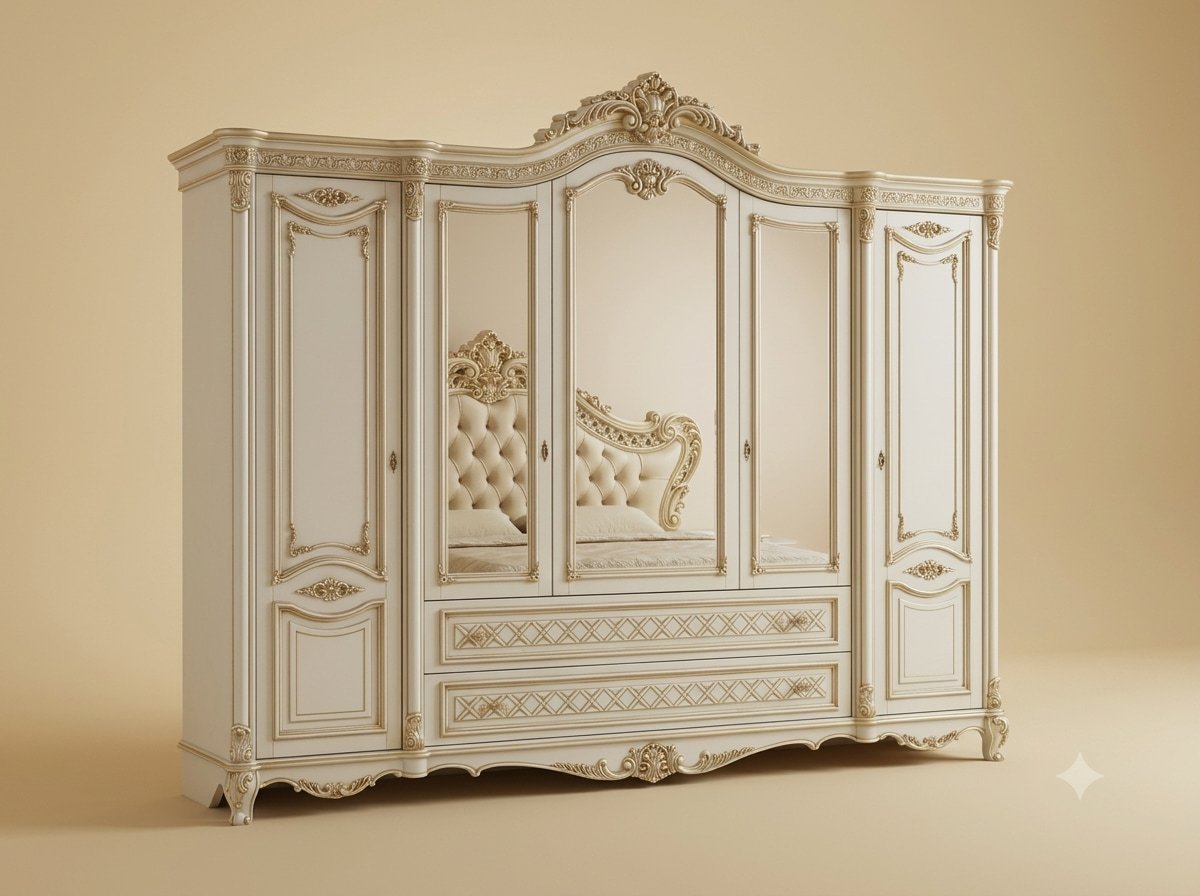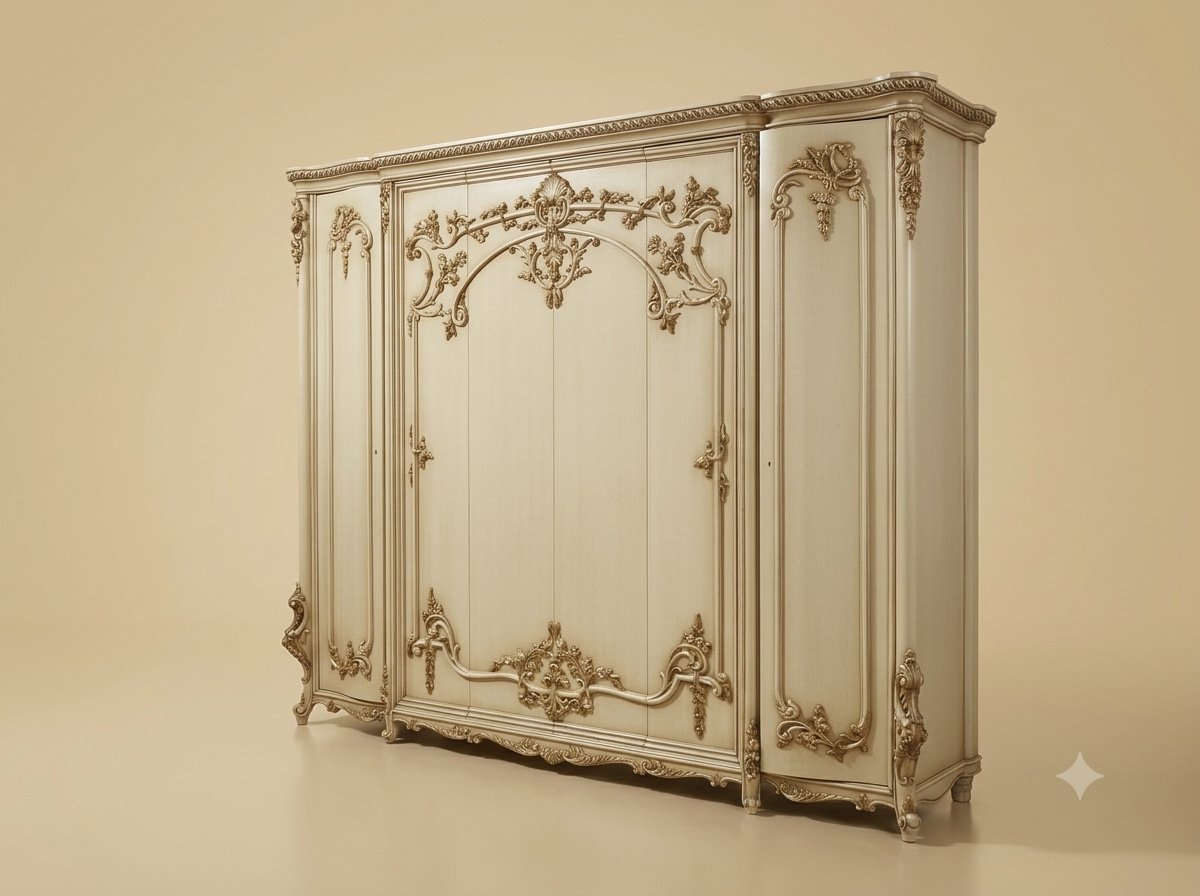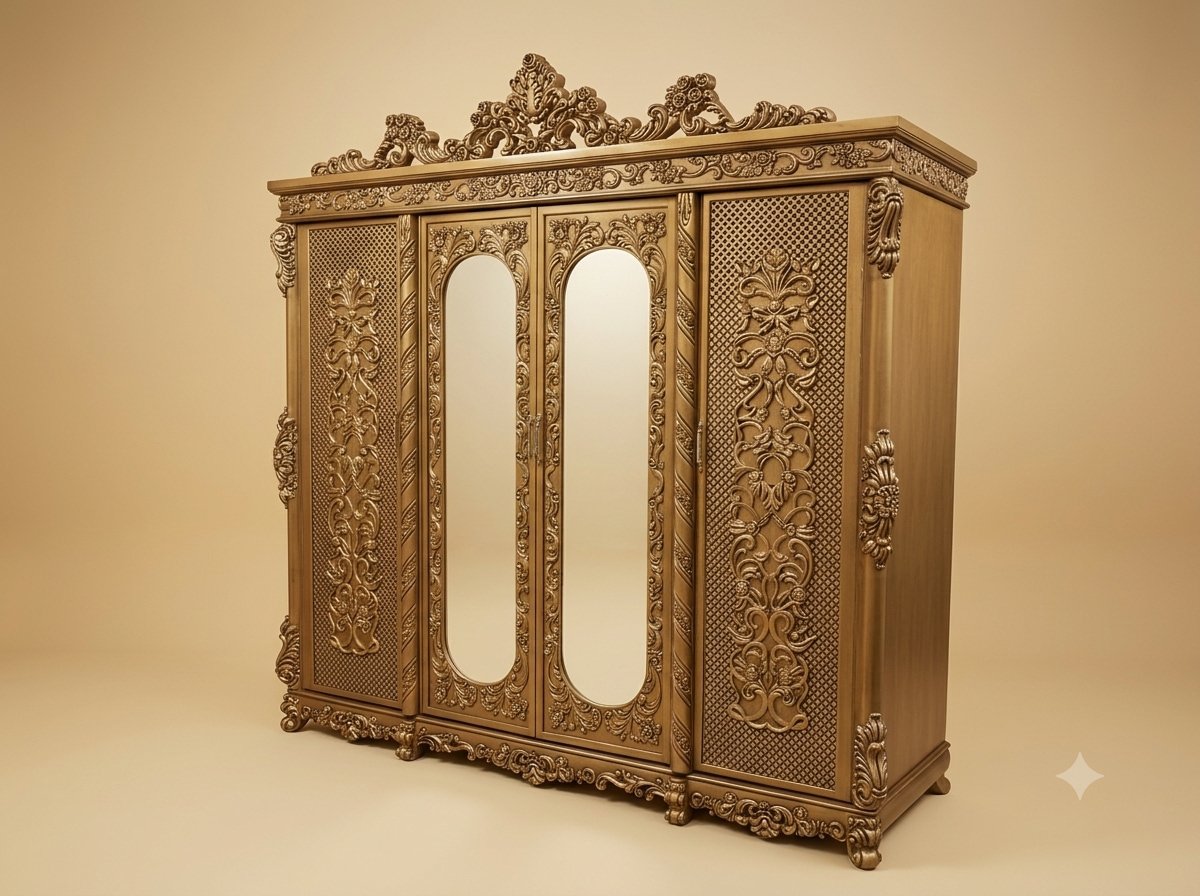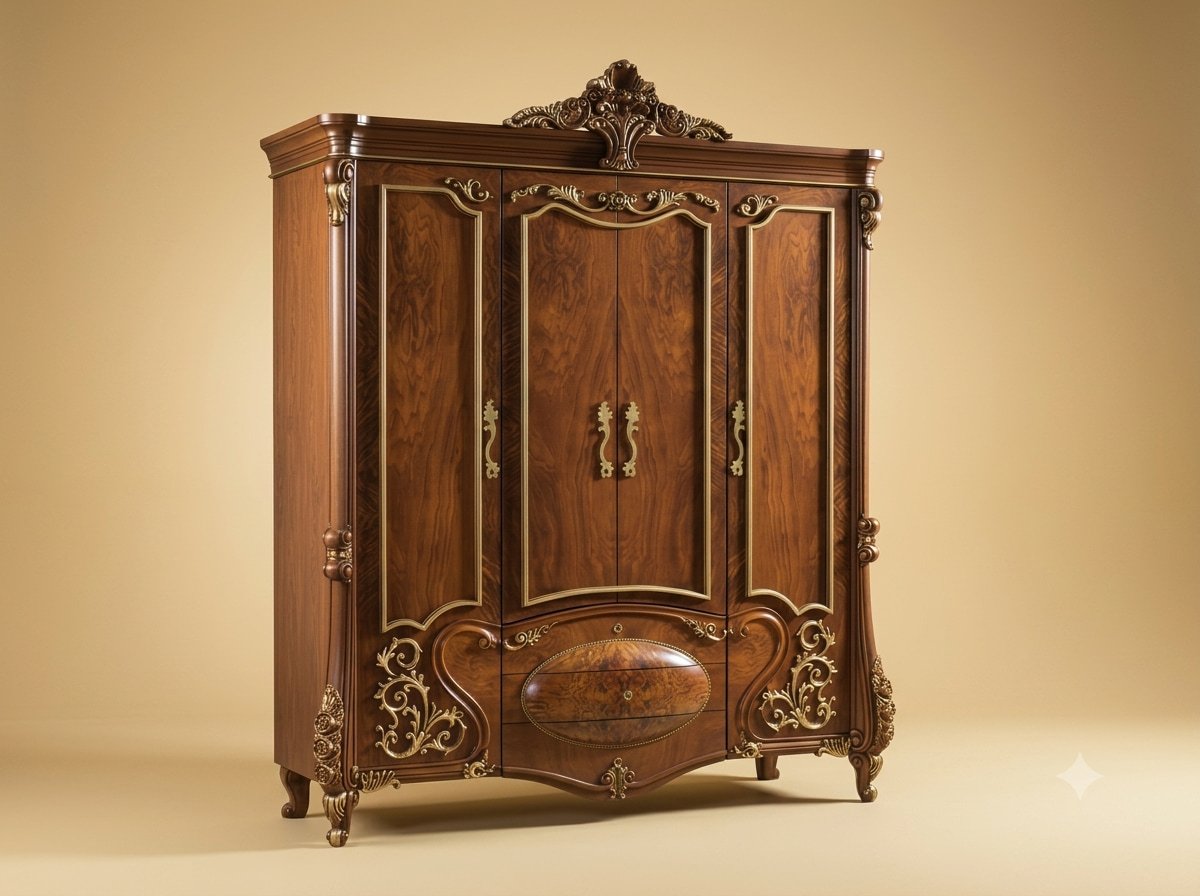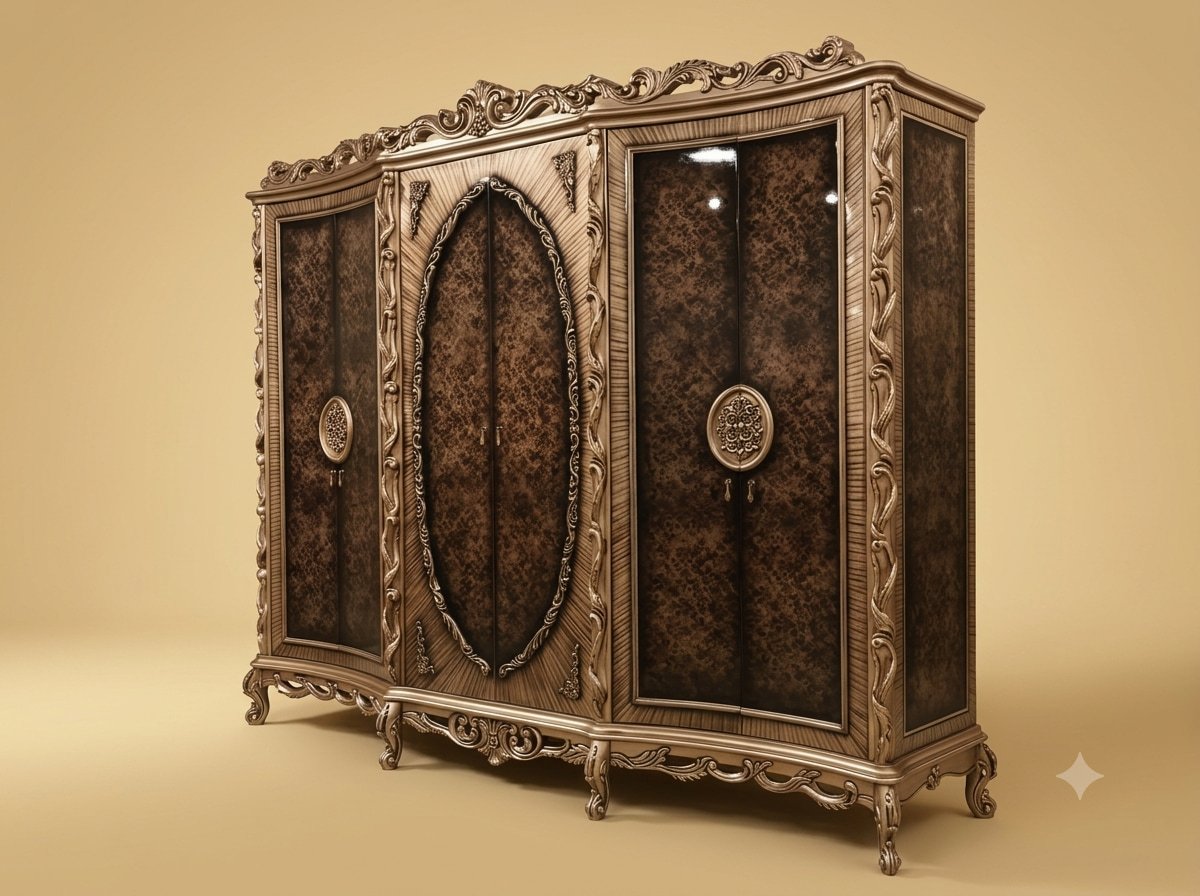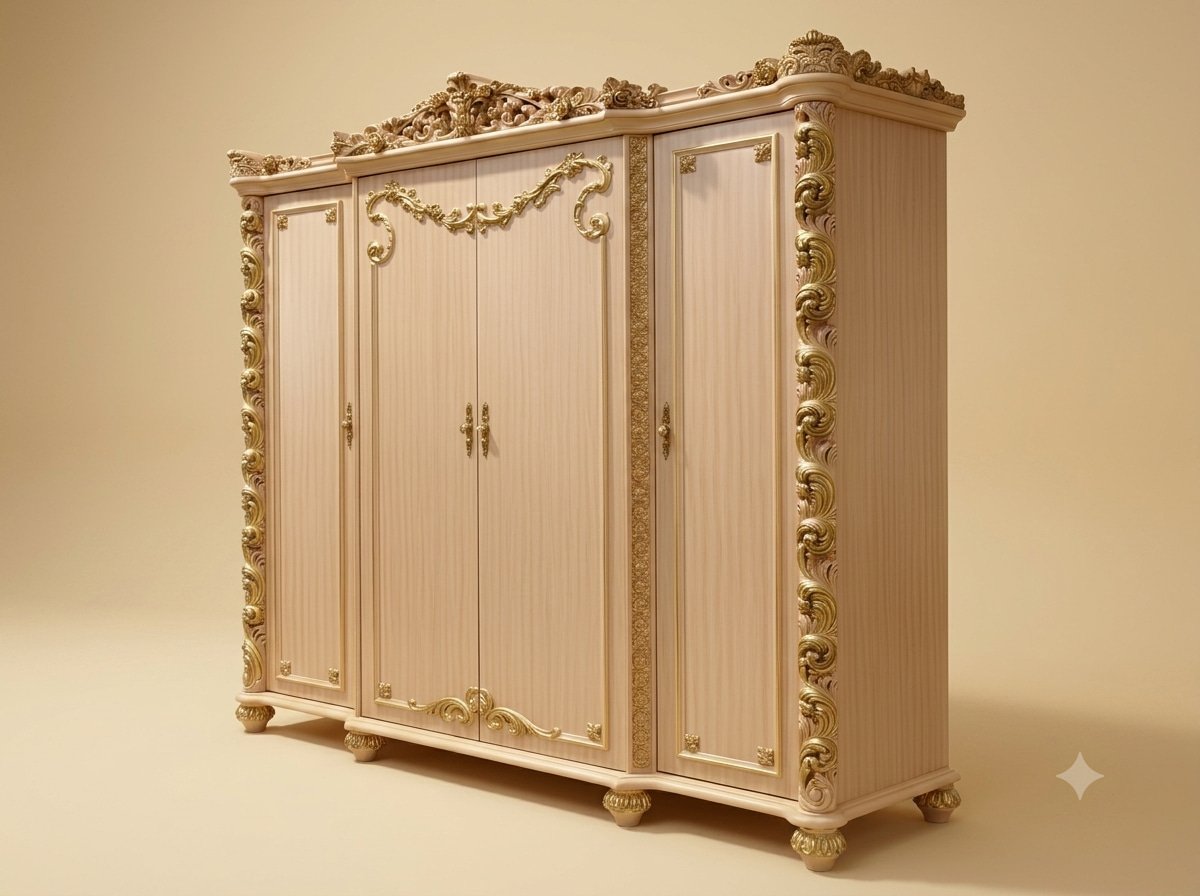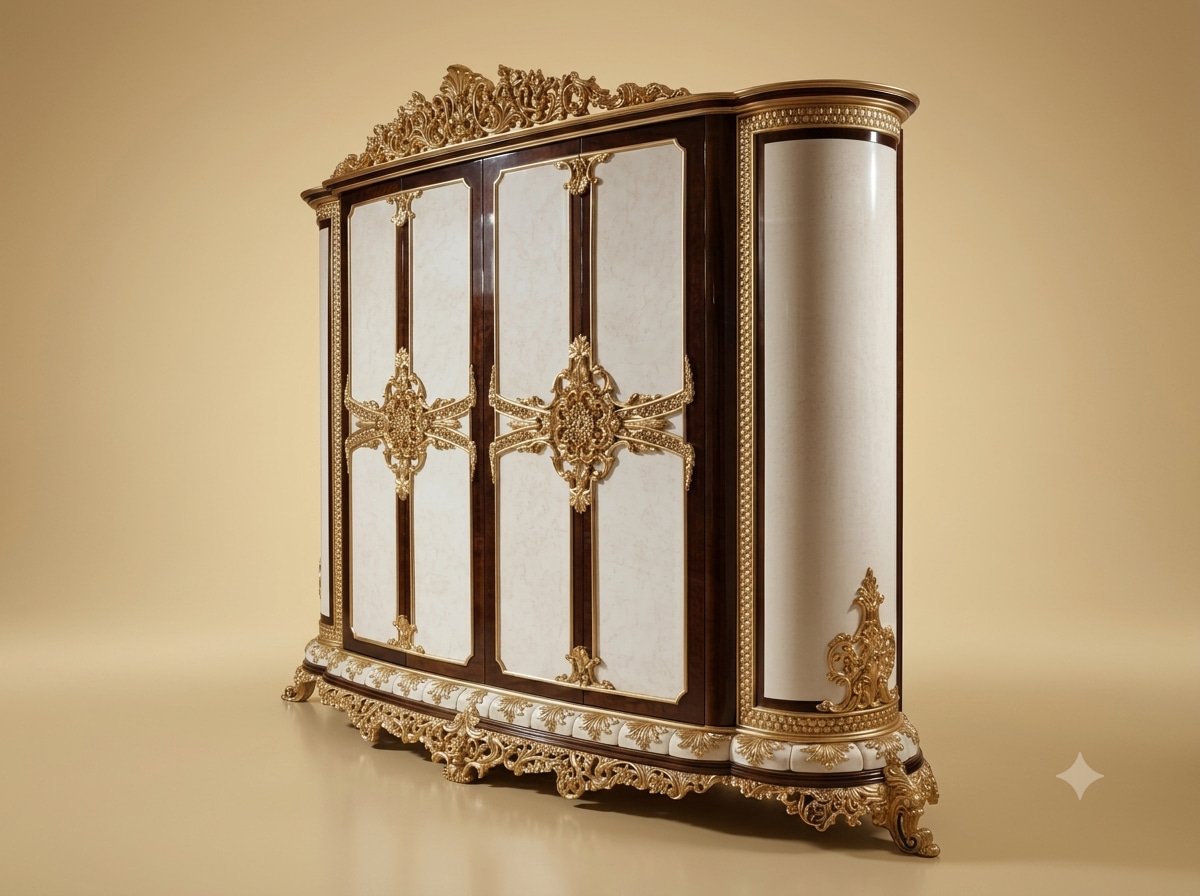
A curved door will not hinge like a flat one, and the reason catches out anyone building their first.
On a flat door, the hinge sits on the edge and the door swings in the plane of its own face. Nothing behind the hinge line has anywhere to go, so nothing collides.
A curved door is different. Its face is part of a cylinder, and its inner edge sits well behind the outer surface. Hinge it on the edge in the ordinary way and, as the door begins to swing, that inner edge rotates straight into the carcass beside it. The door binds within a few degrees and the only remedies are ugly - grinding a hollow into the carcass, or leaving a gap wide enough to hide the problem.
So our master Indian artisans set the hinge from the geometry rather than from the edge. The pivot has to sit outside the curve so the whole door swings clear of the body, and where that pivot goes is calculated from the radius of the curve and the thickness of the door, then proved on a full-size drawing before anything is cut.
Get it right and a curved door opens as easily as a flat one and closes to the same fine gap. Get it wrong and no amount of carving hides it.
 Ask Price On WhatsApp