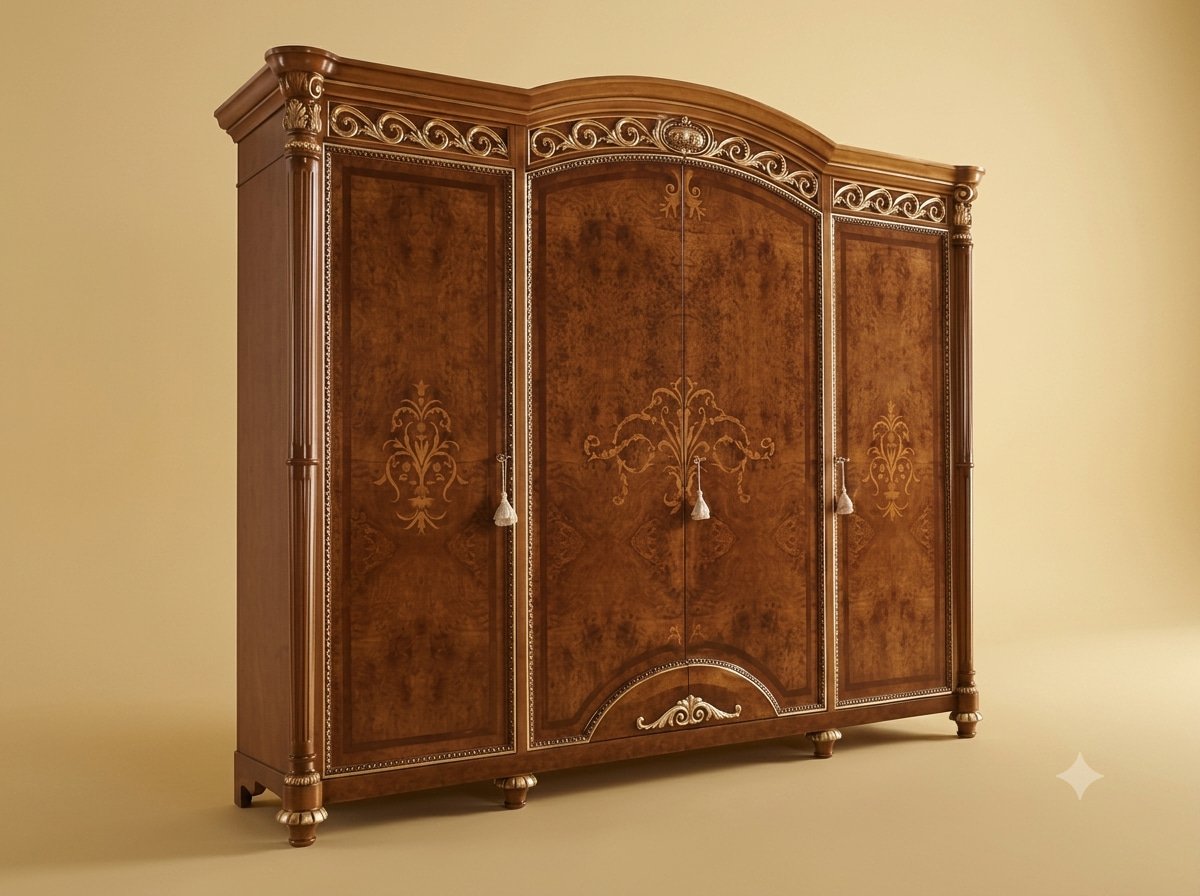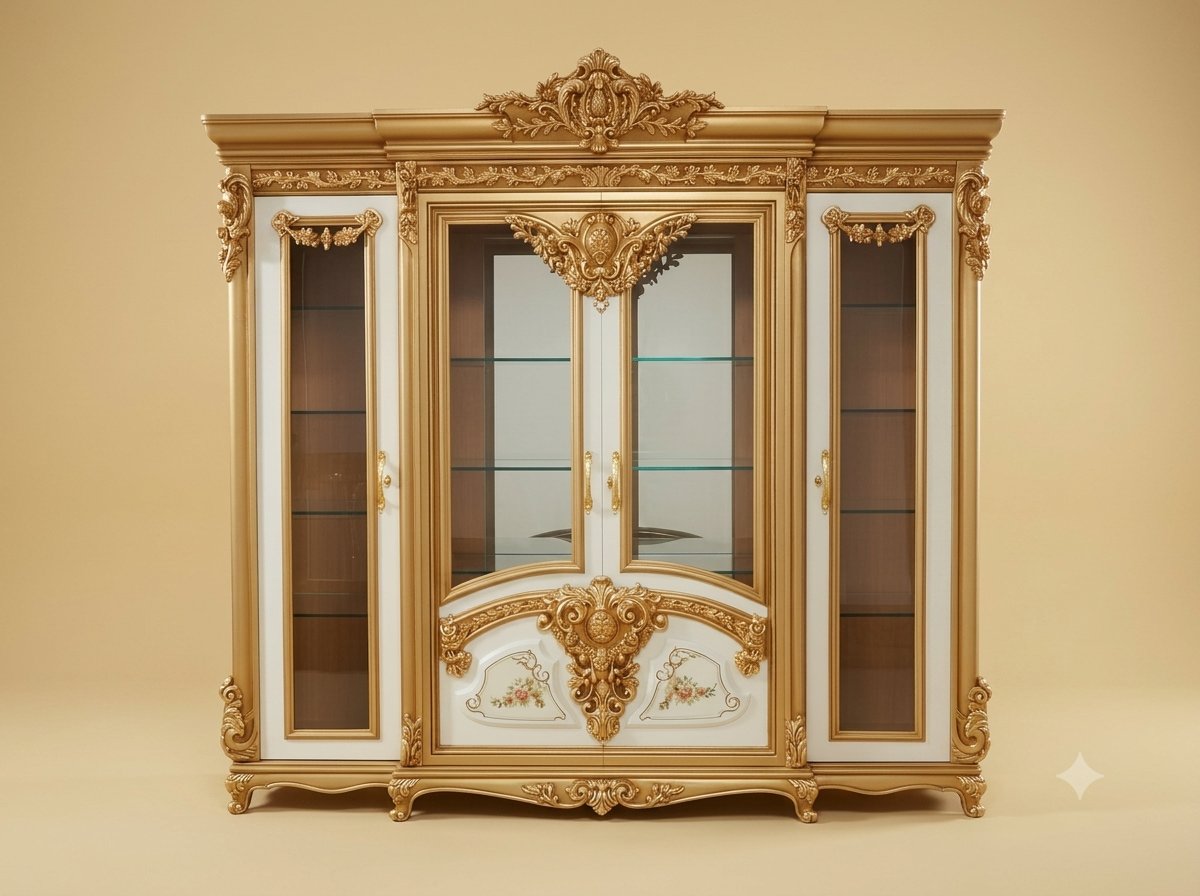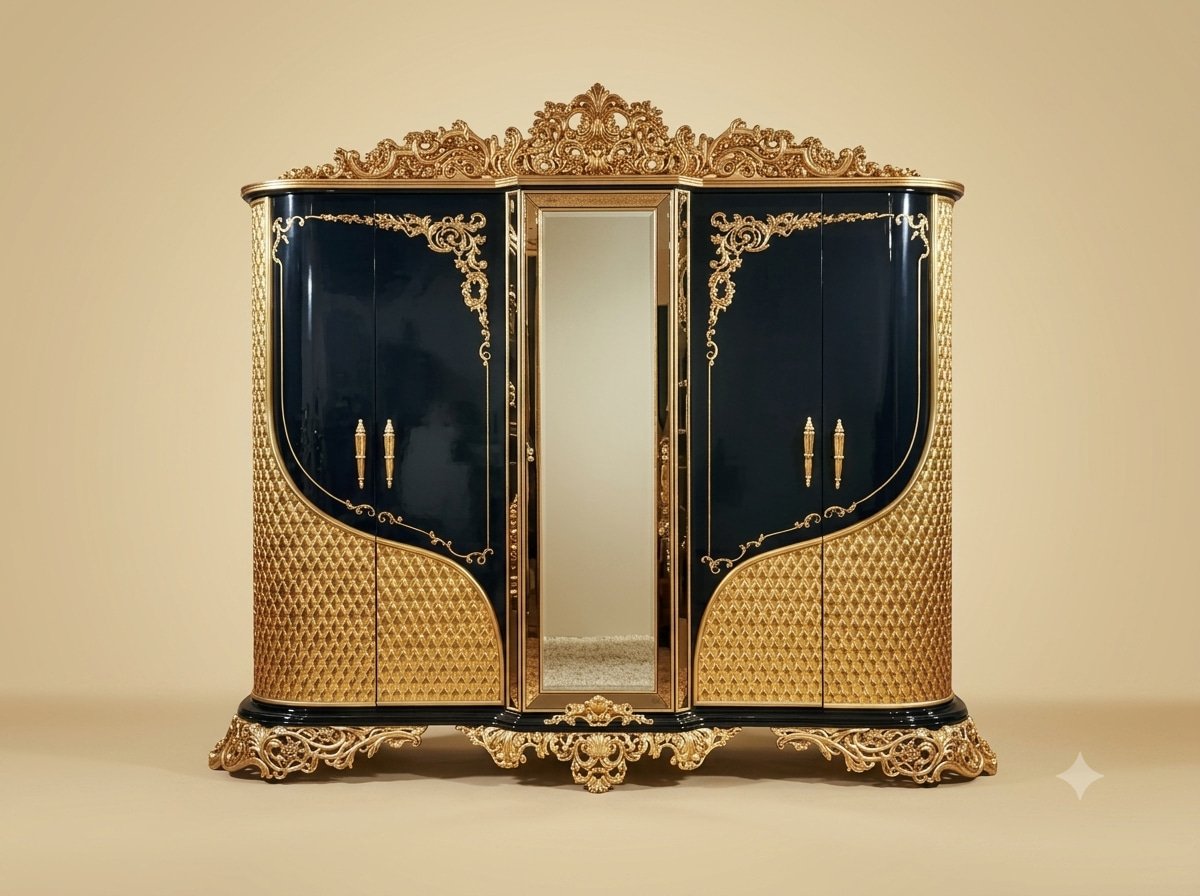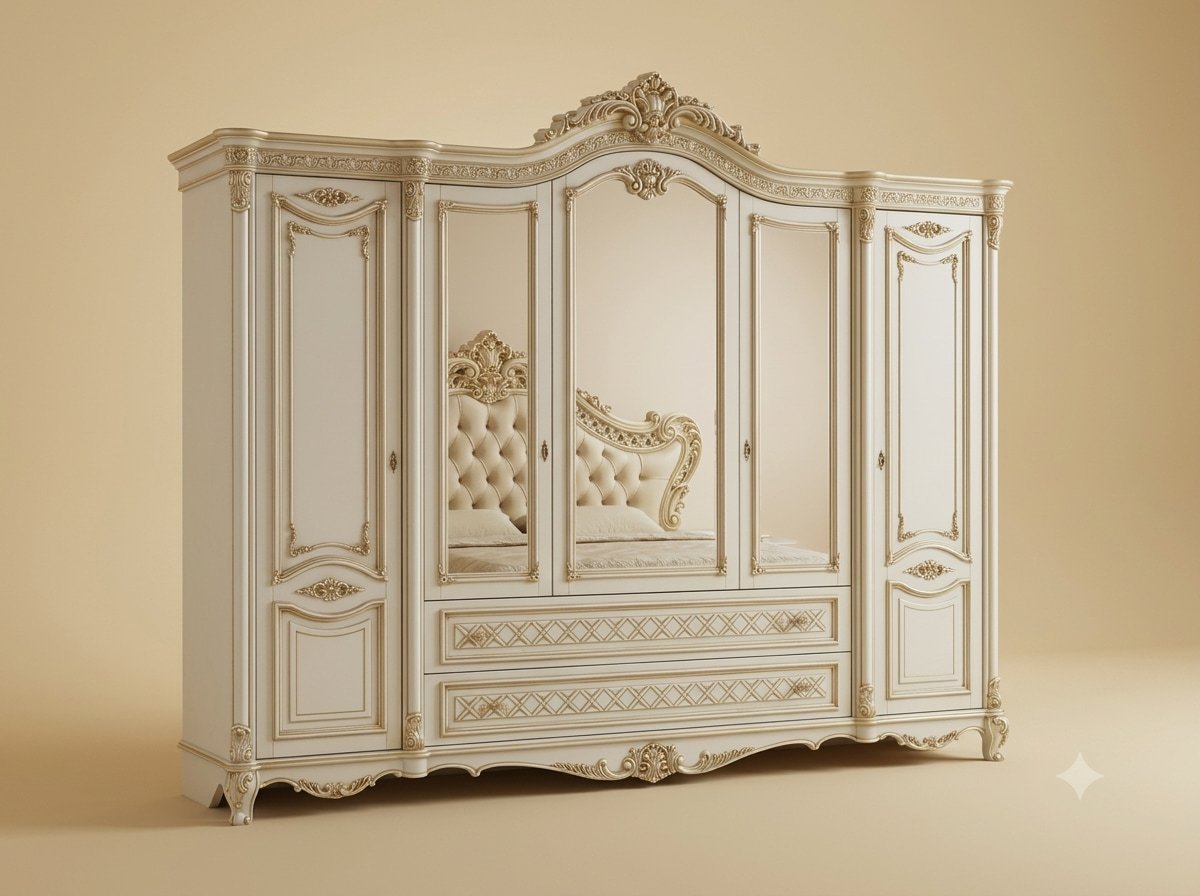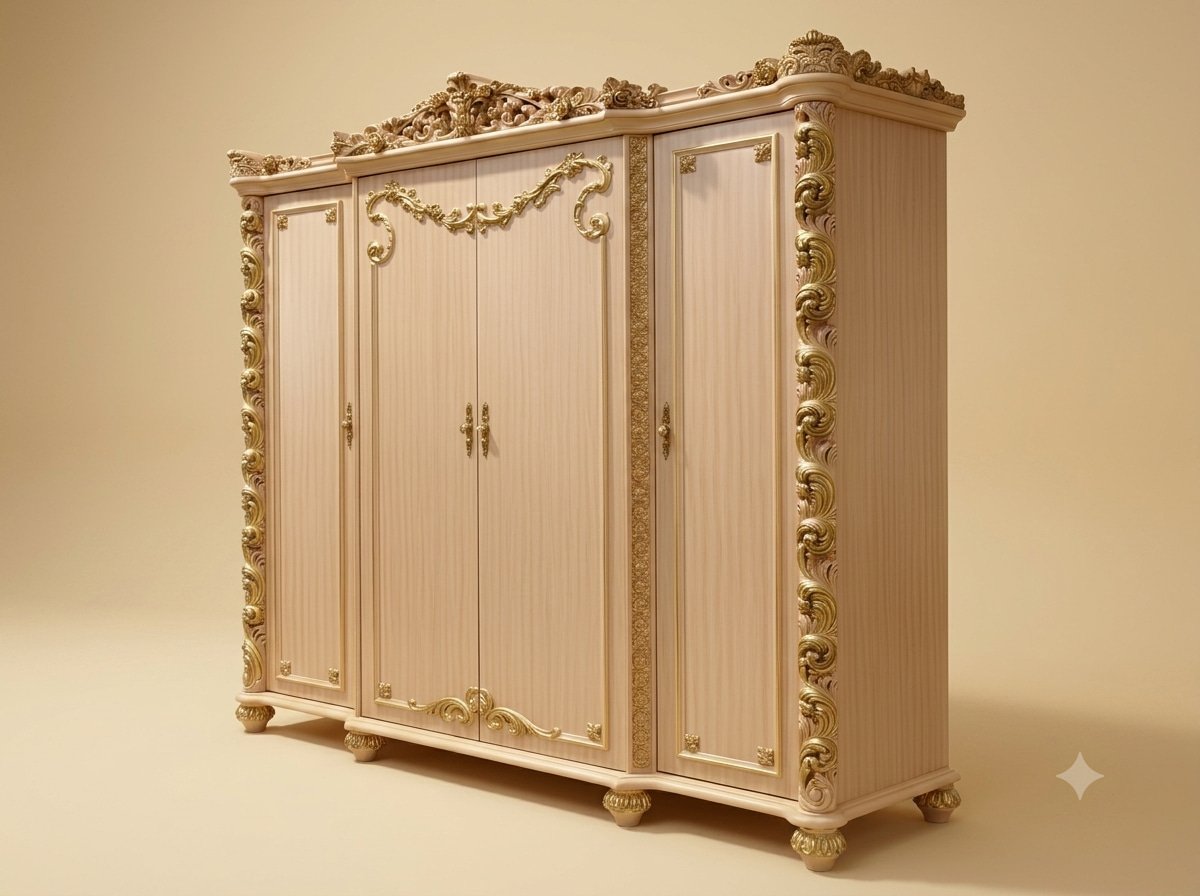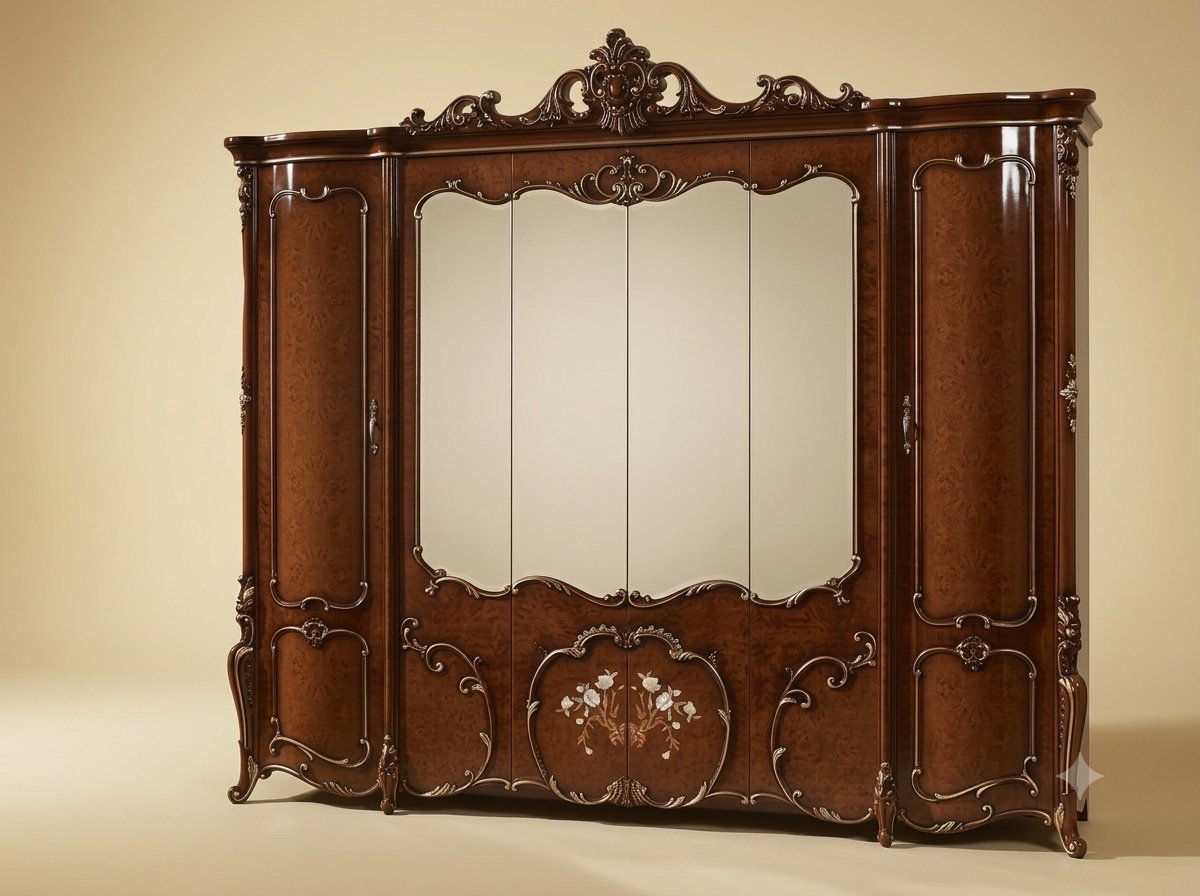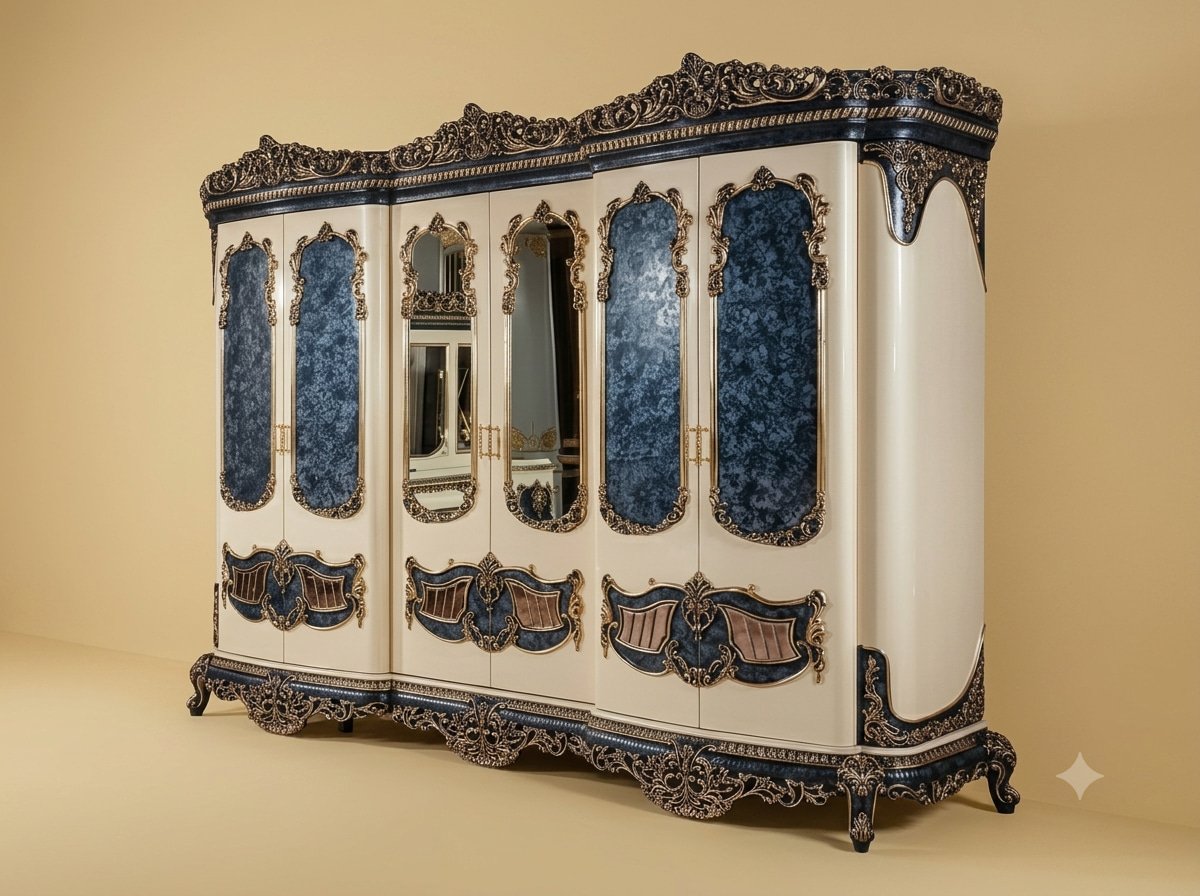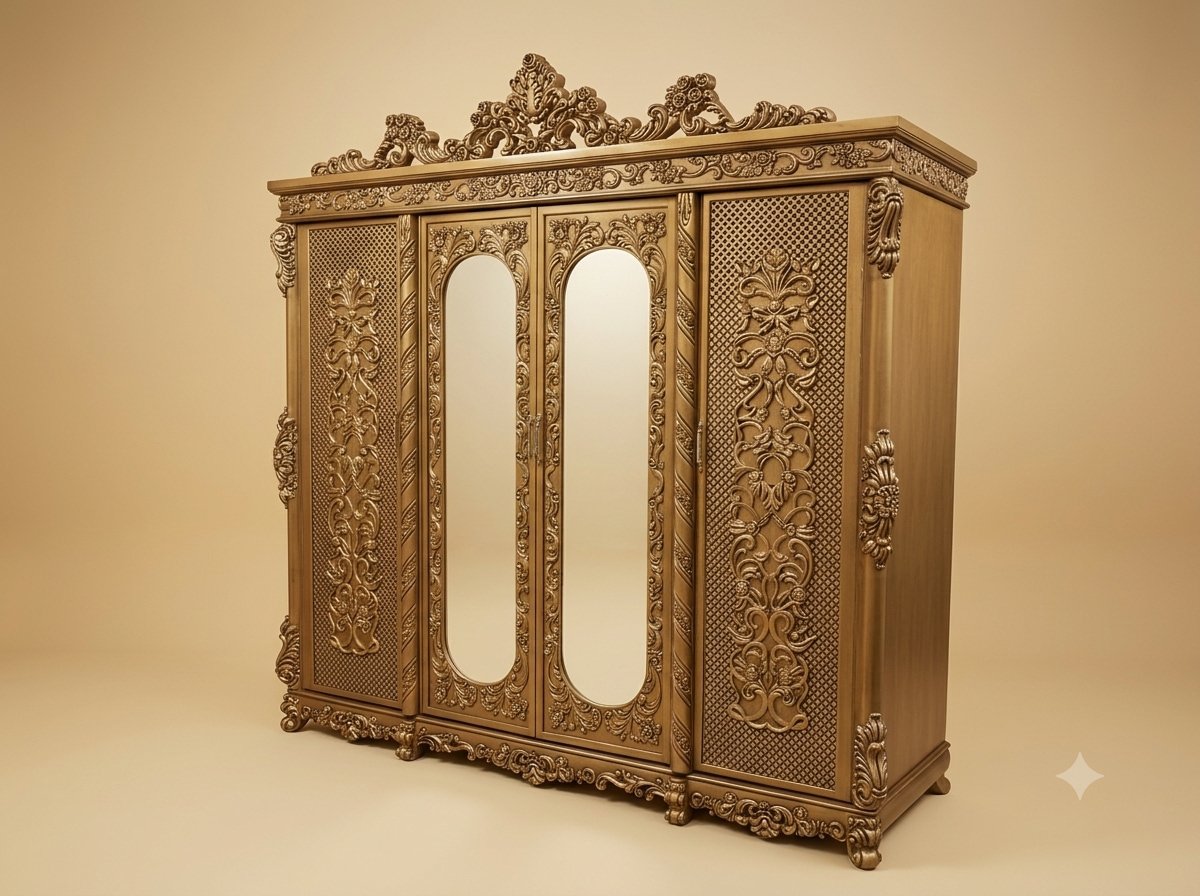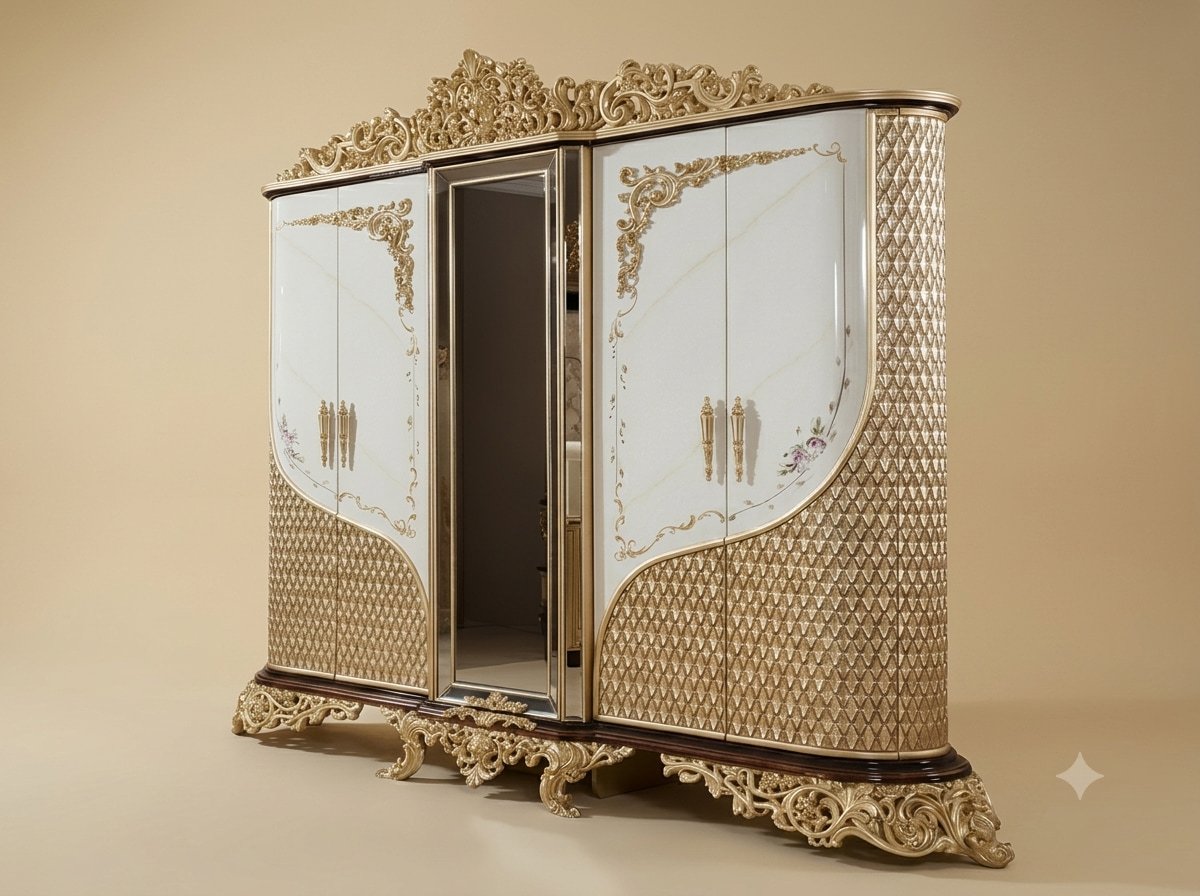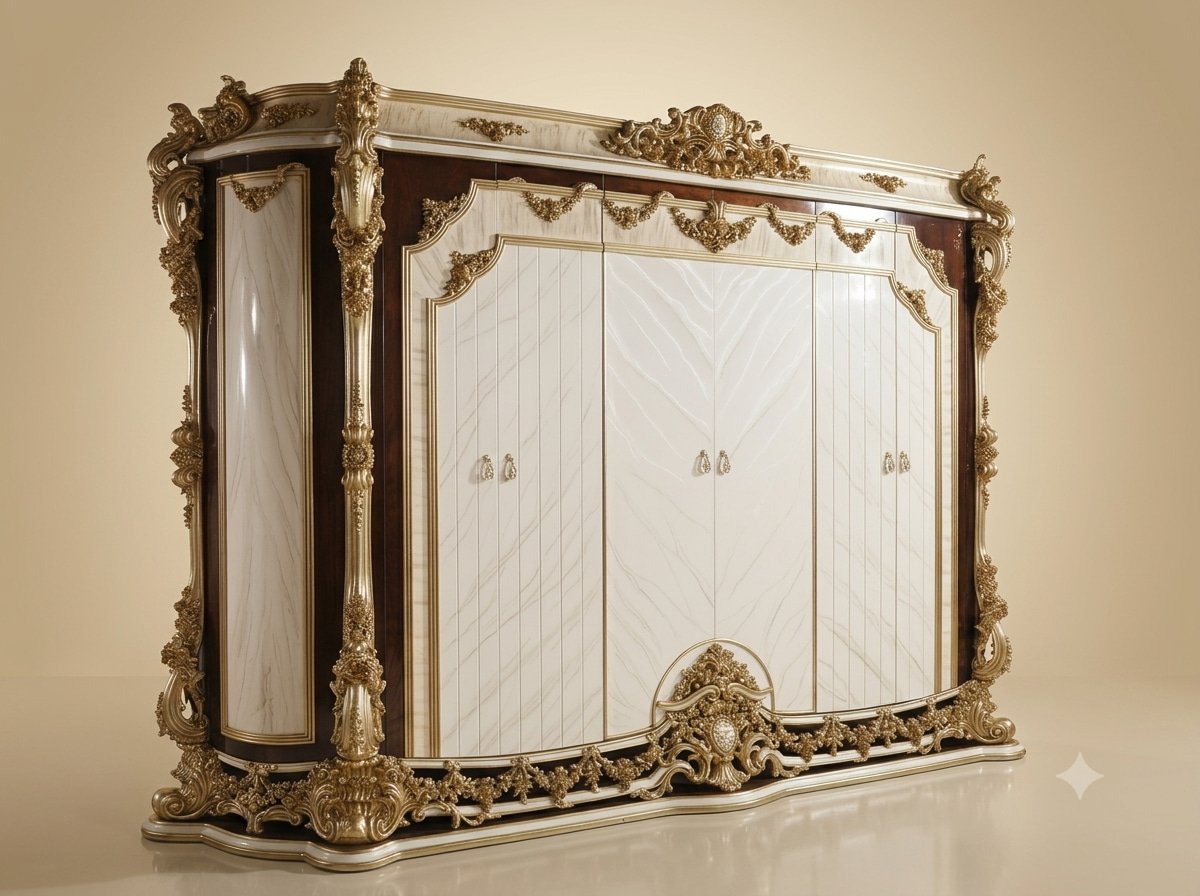
The carved swags across the tops of these doors are the one element on the whole wardrobe that cannot be drawn freehand, and every carver knows it.
A swag is a length of something hanging between two fixed points. The curve a hanging cord makes is a very particular shape - it falls steeply near its ends and flattens through the middle - and the human eye has seen it on ropes, chains, garlands and washing lines since before anyone could draw. Sketch a swag by hand and you will almost certainly produce something closer to a circle's arc, which reads immediately as wrong even to someone who has never thought about it.
So our master Indian artisans do not draw it. A chain or a weighted cord is pinned at the two points the swag is to hang between, allowed to settle, and the curve it makes is traced straight onto the timber. Then the foliage is carved along that line.
Where a swag on this piece hangs a little deeper than its neighbour, that is because the points it hangs between are further apart - which is exactly what would happen to a real garland. The carving obeys the same rule the material would.
 Ask Price On WhatsApp