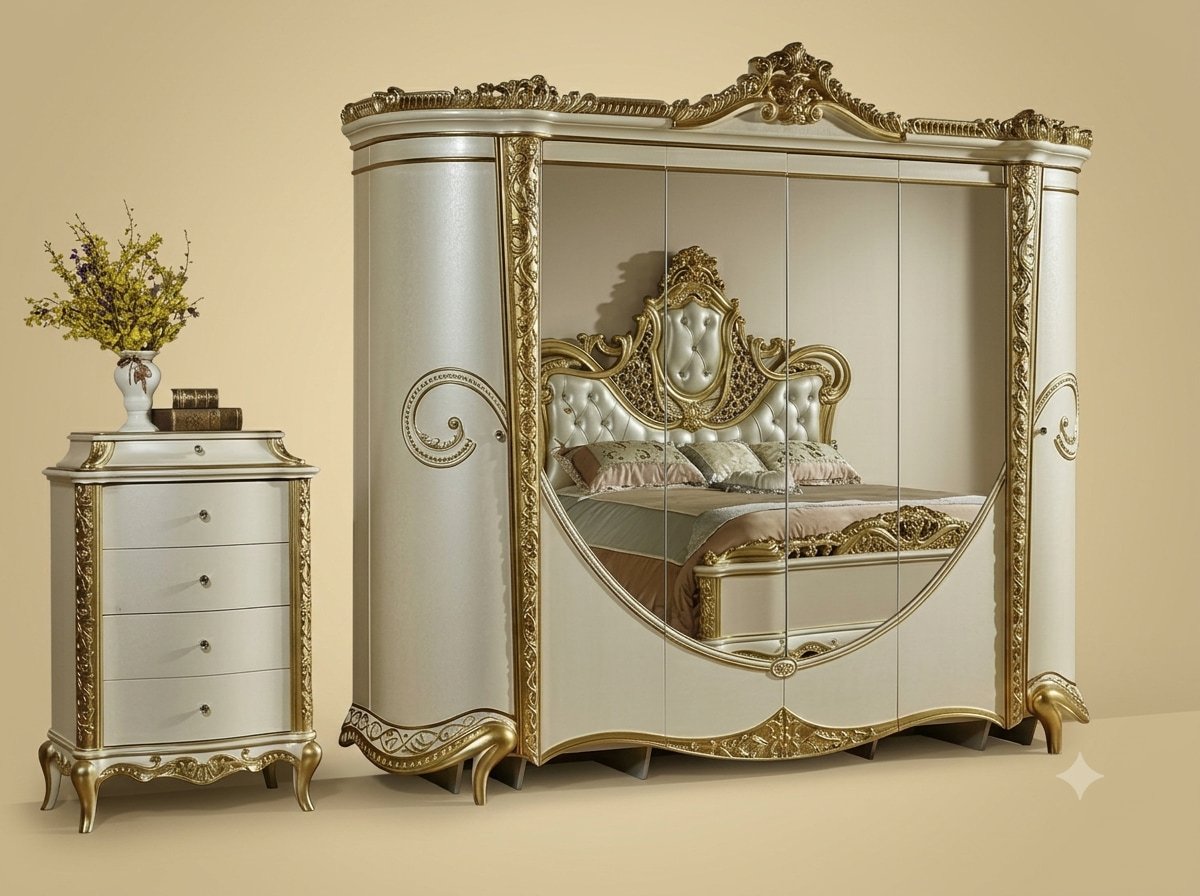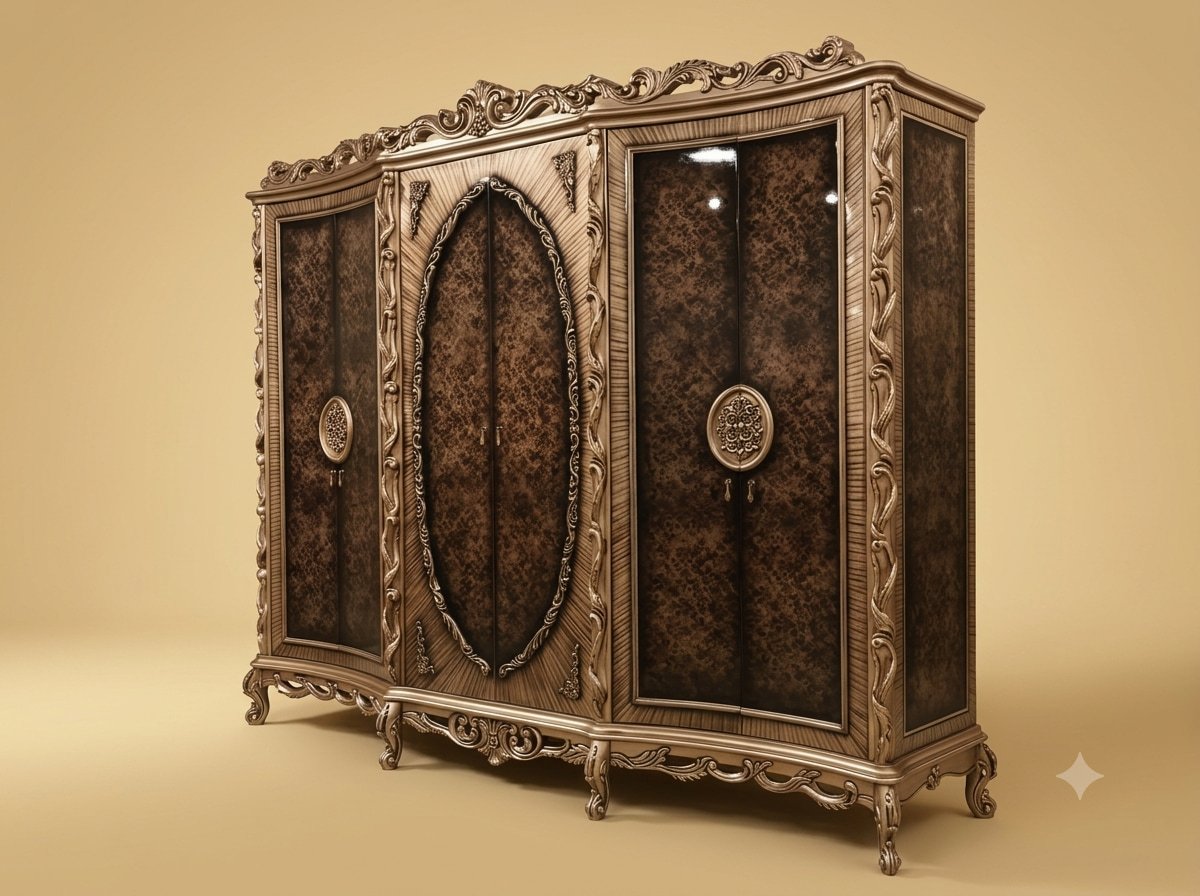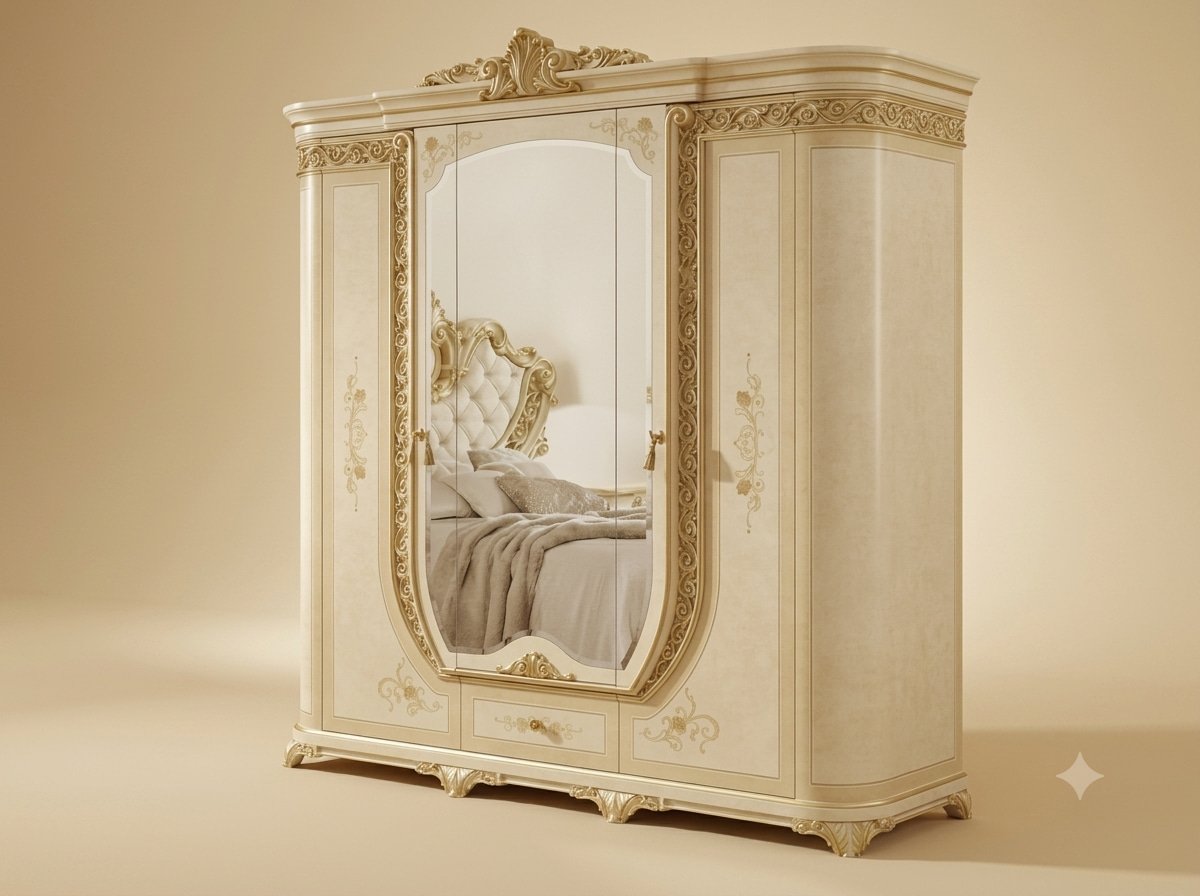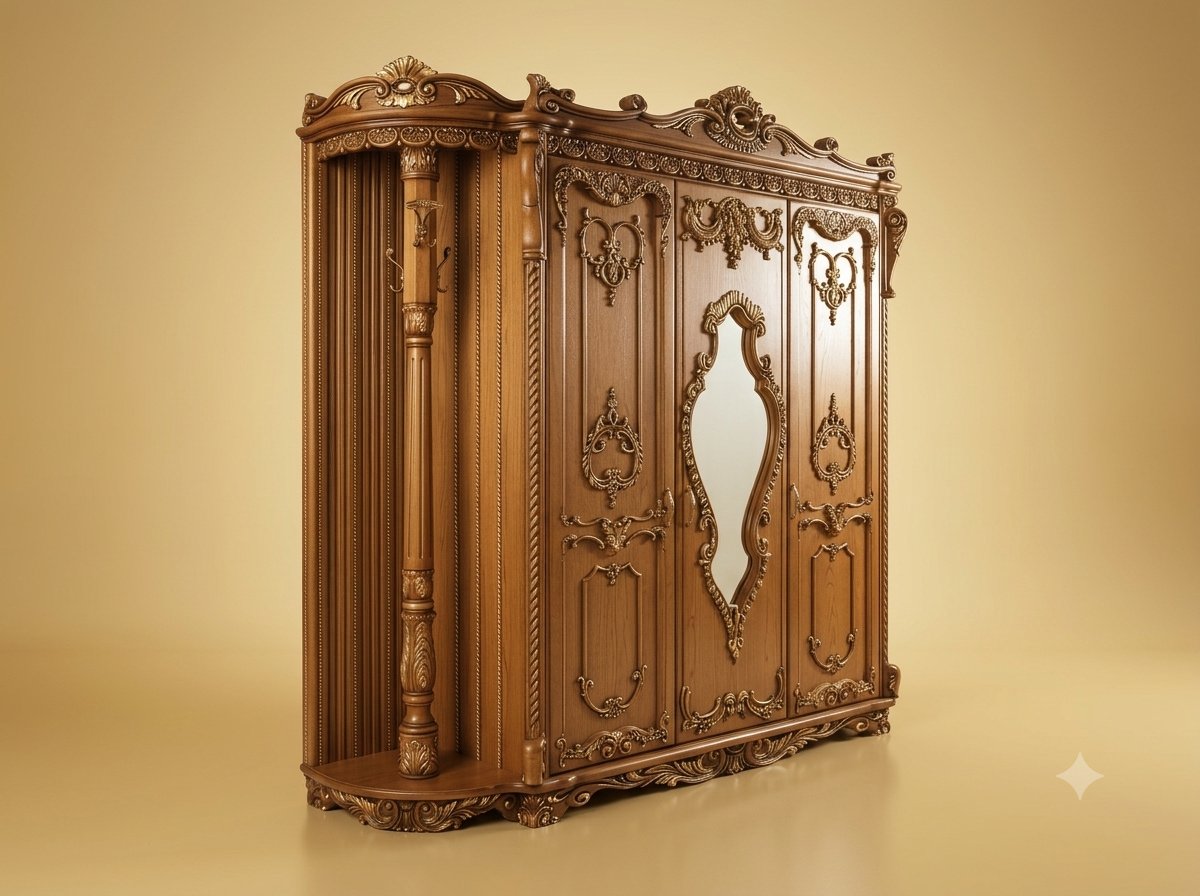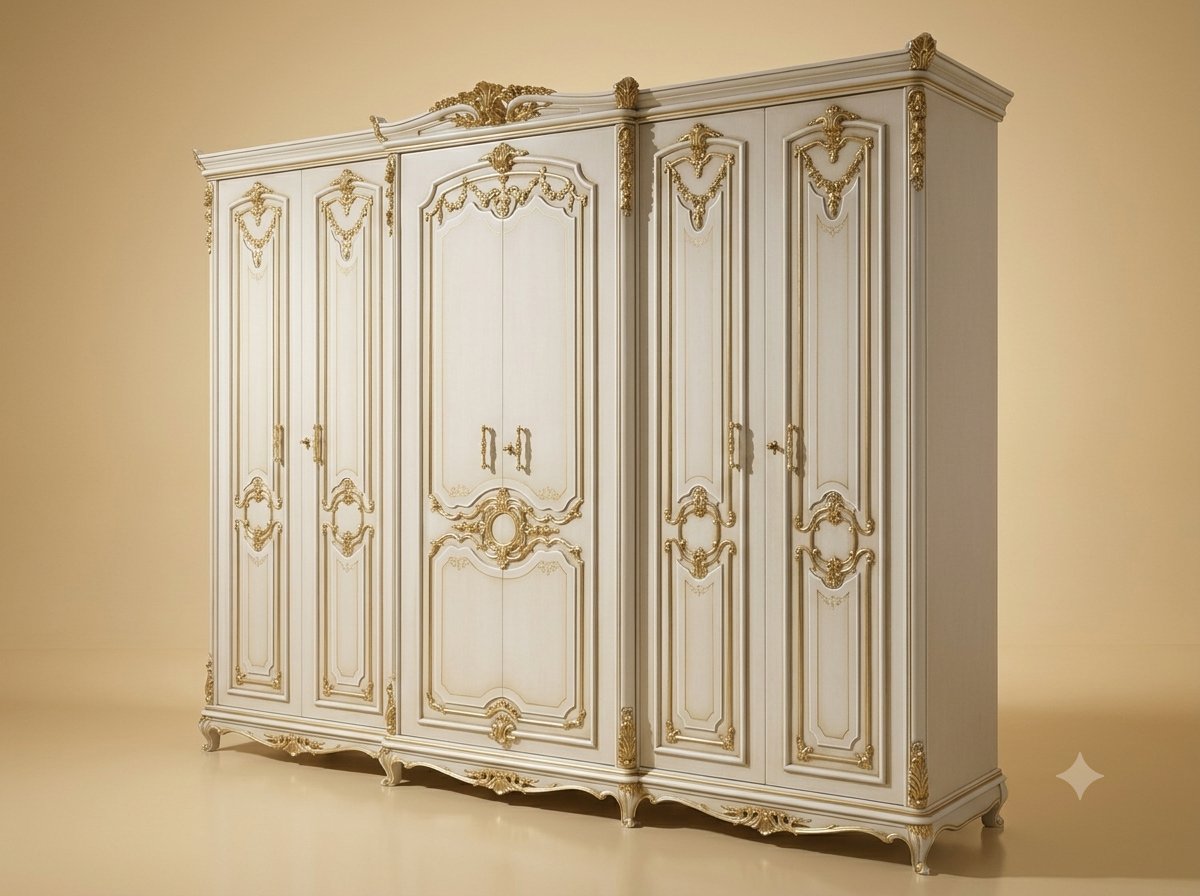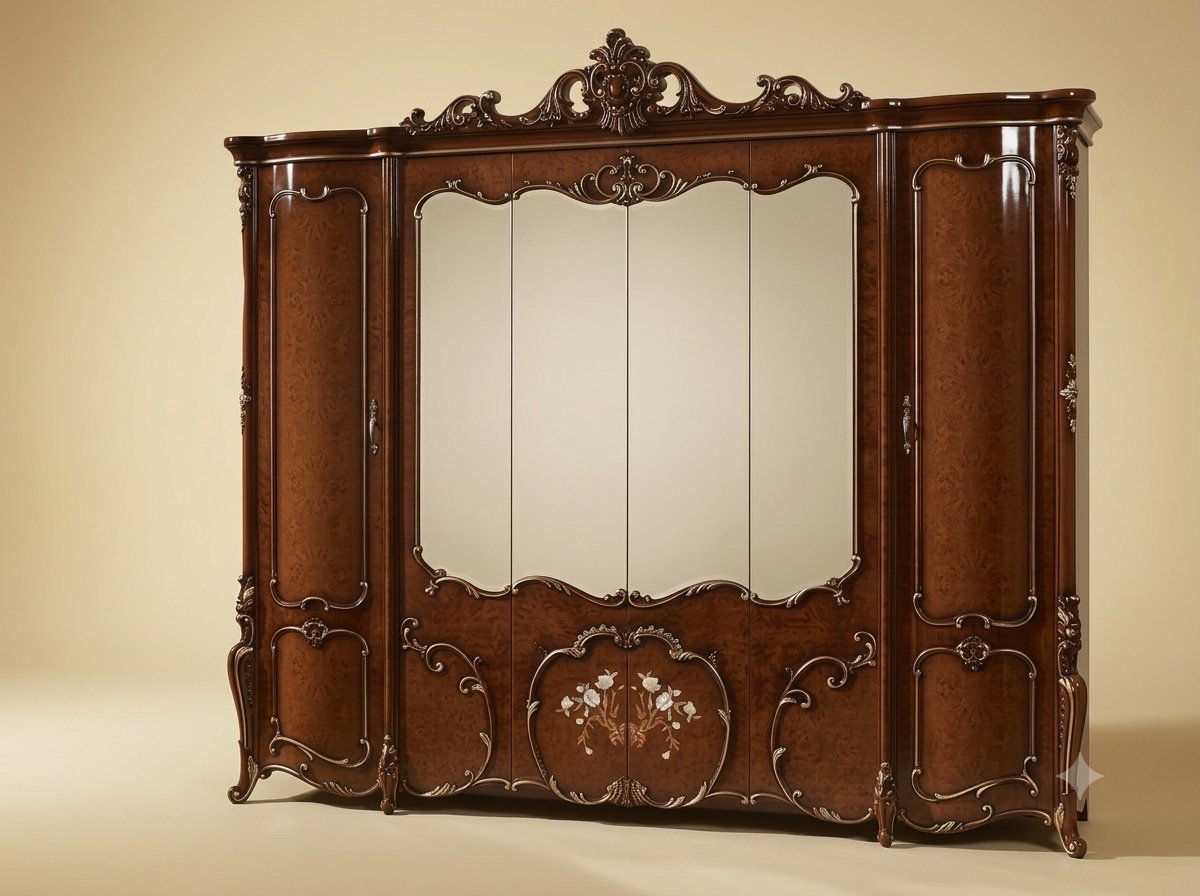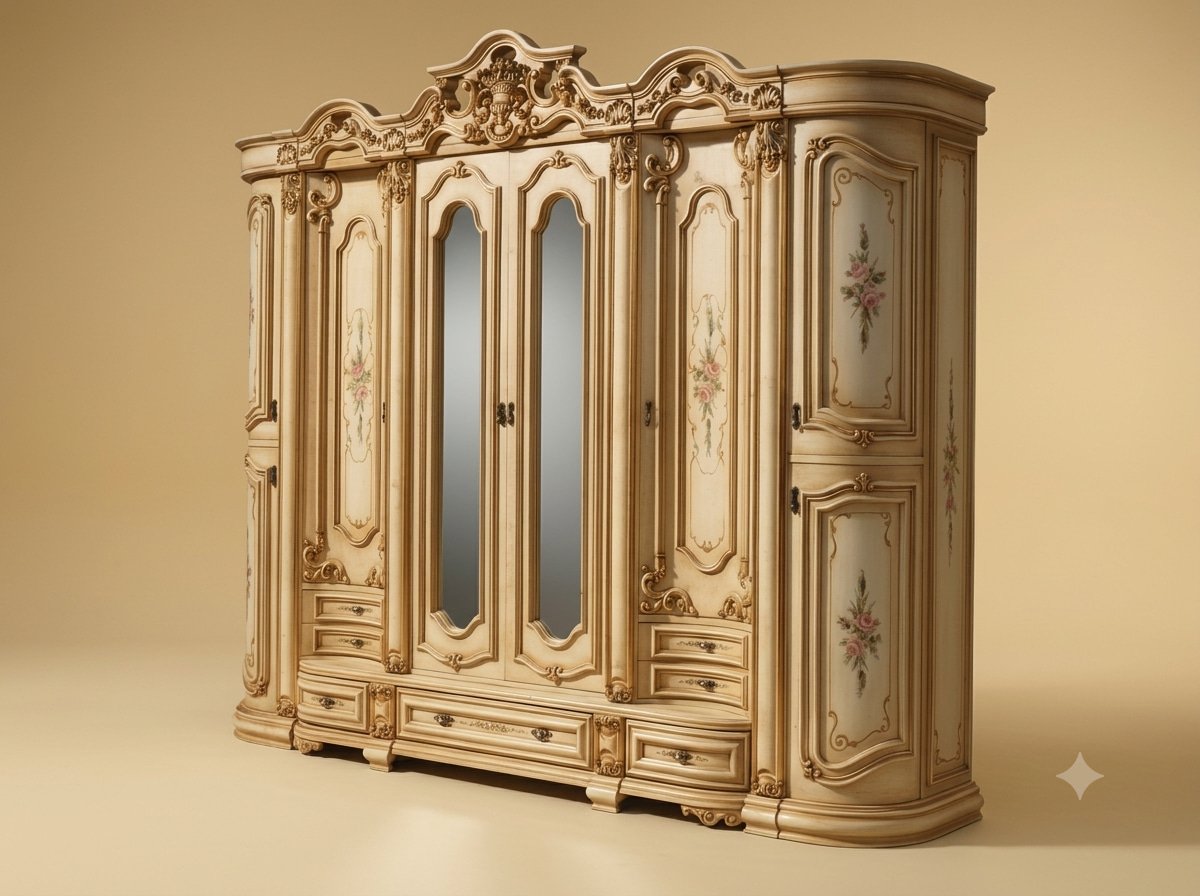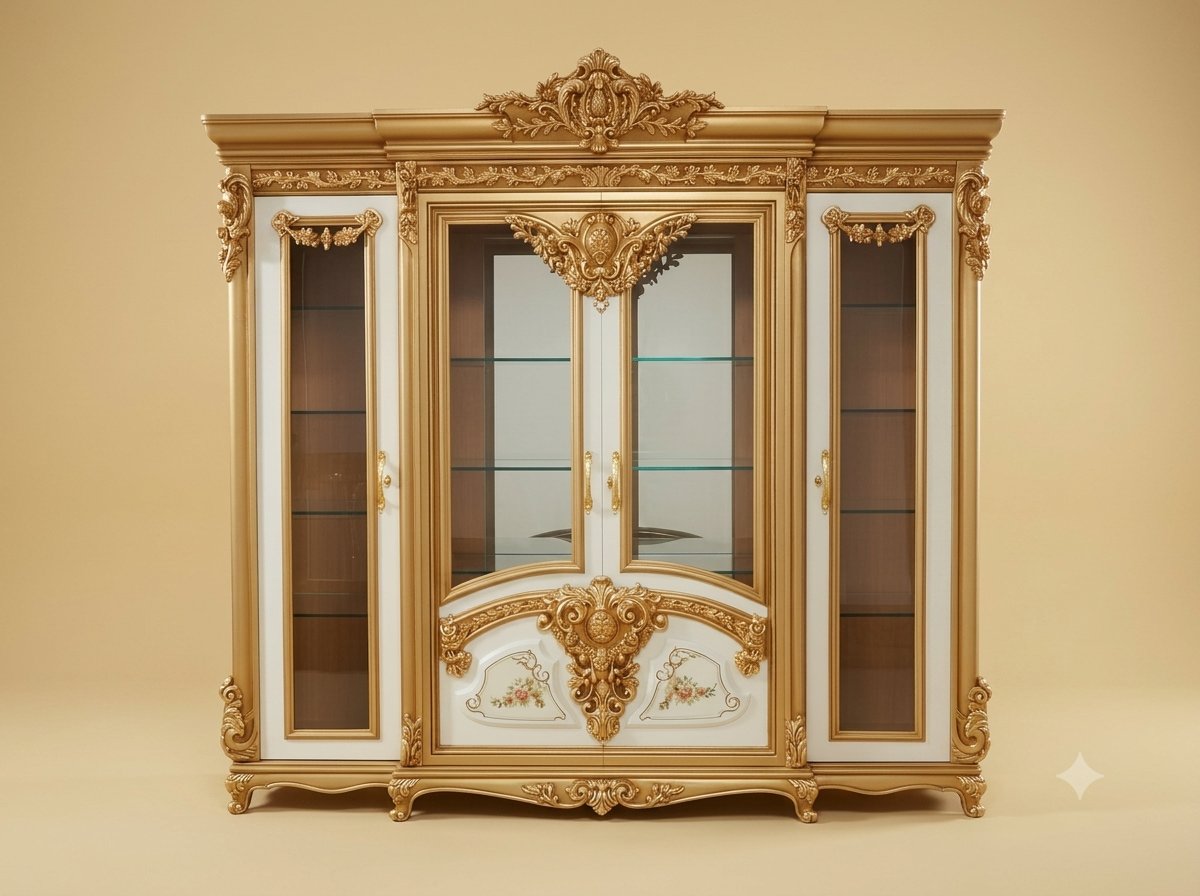
A mirrored back is what turns a cabinet into a display, and it also sets a tolerance that a plain-backed cabinet never has to meet.
Put a glass shelf in front of a mirror and you see two of it: the shelf itself and its reflection. If the shelf is dead parallel to the mirror, those two lines run together and read as one thicker line - the eye accepts it instantly and stops noticing. If the shelf is a fraction out of parallel, the reflection diverges from the real shelf as it travels back, and you get a shallow V opening towards one end.
Nobody looks at a cabinet and thinks about parallelism. But a set of shelves that all splay slightly in the mirror makes the whole cabinet look badly made, and nobody can say why.
So our master Indian artisans set the mirrored back first, dead flat and dead plumb, and then take every shelf position from the mirror rather than from the front of the cabinet. The front edge of the carcass may be shaped, moulded or carved; the mirror is the datum.
It is one of those decisions that costs nothing at the time and cannot be corrected afterwards.
 Ask Price On WhatsApp