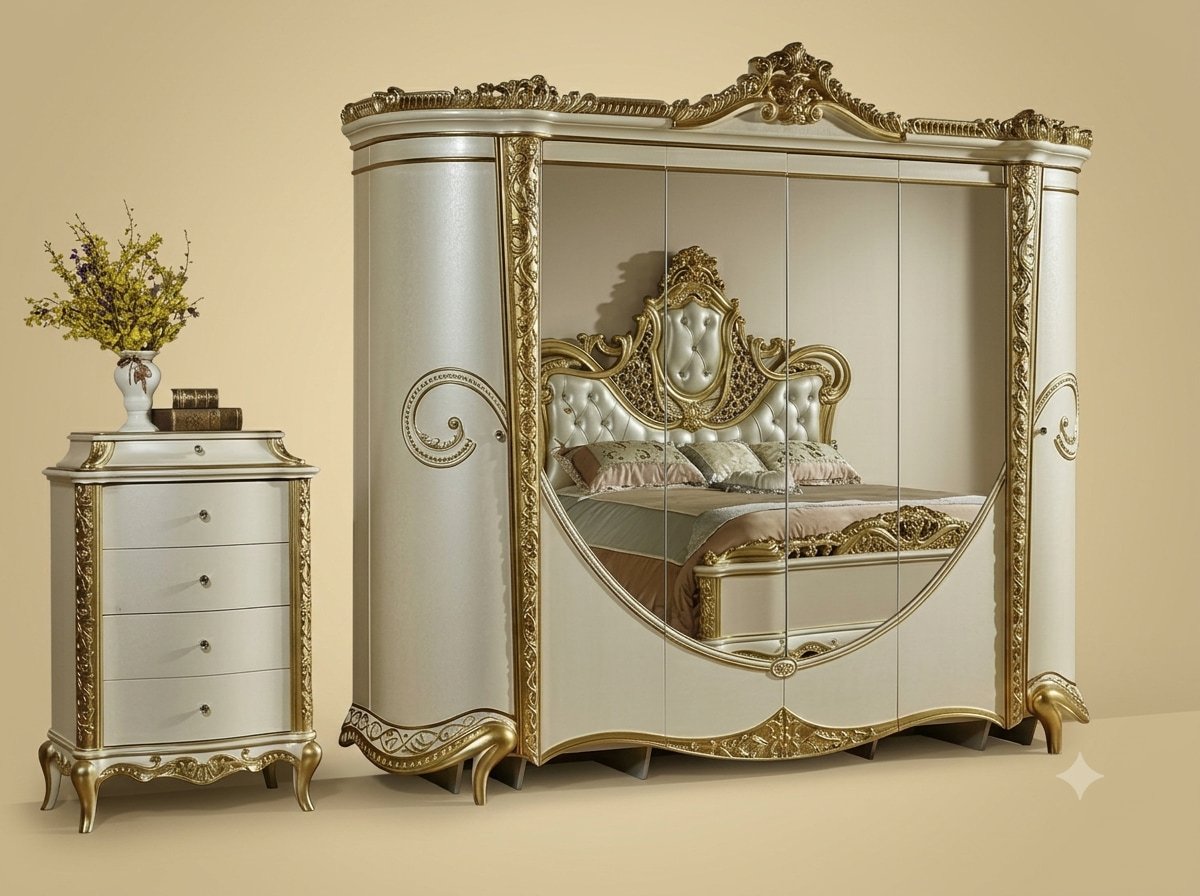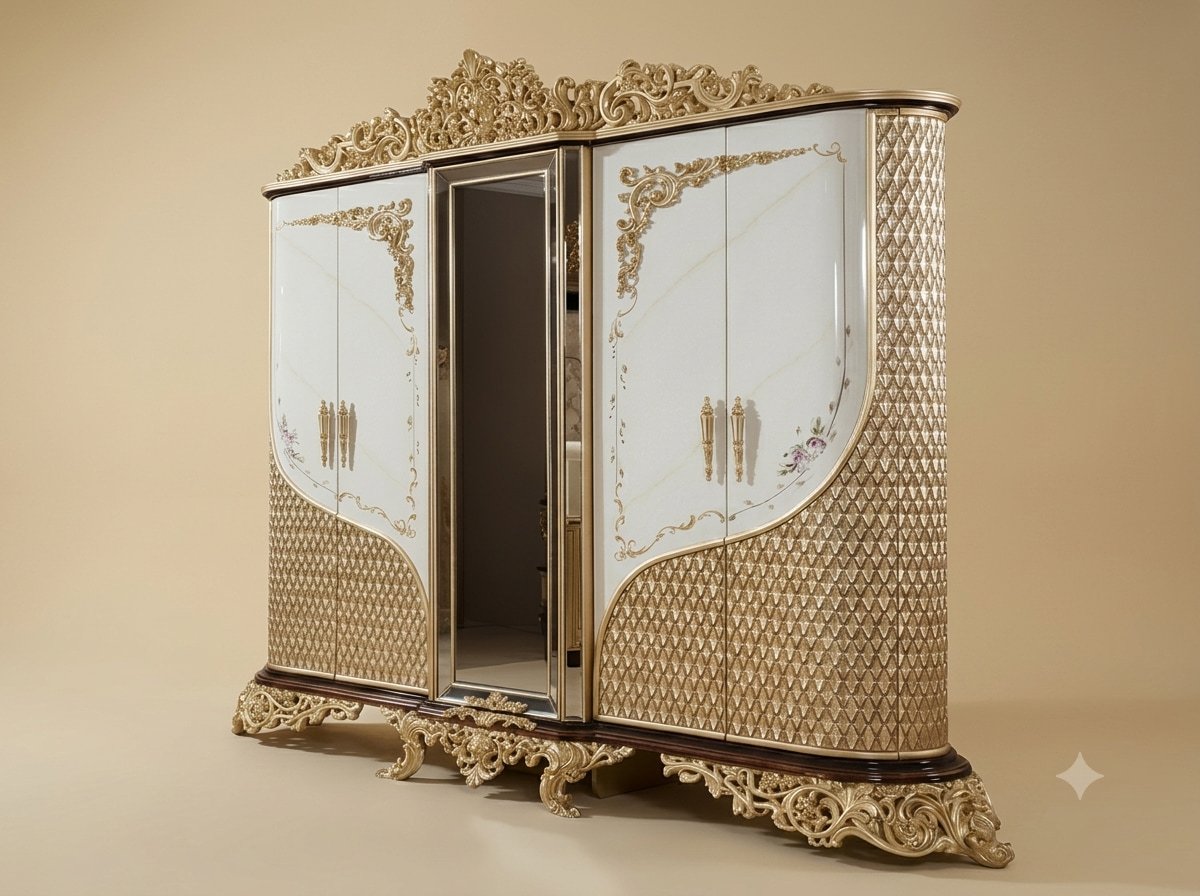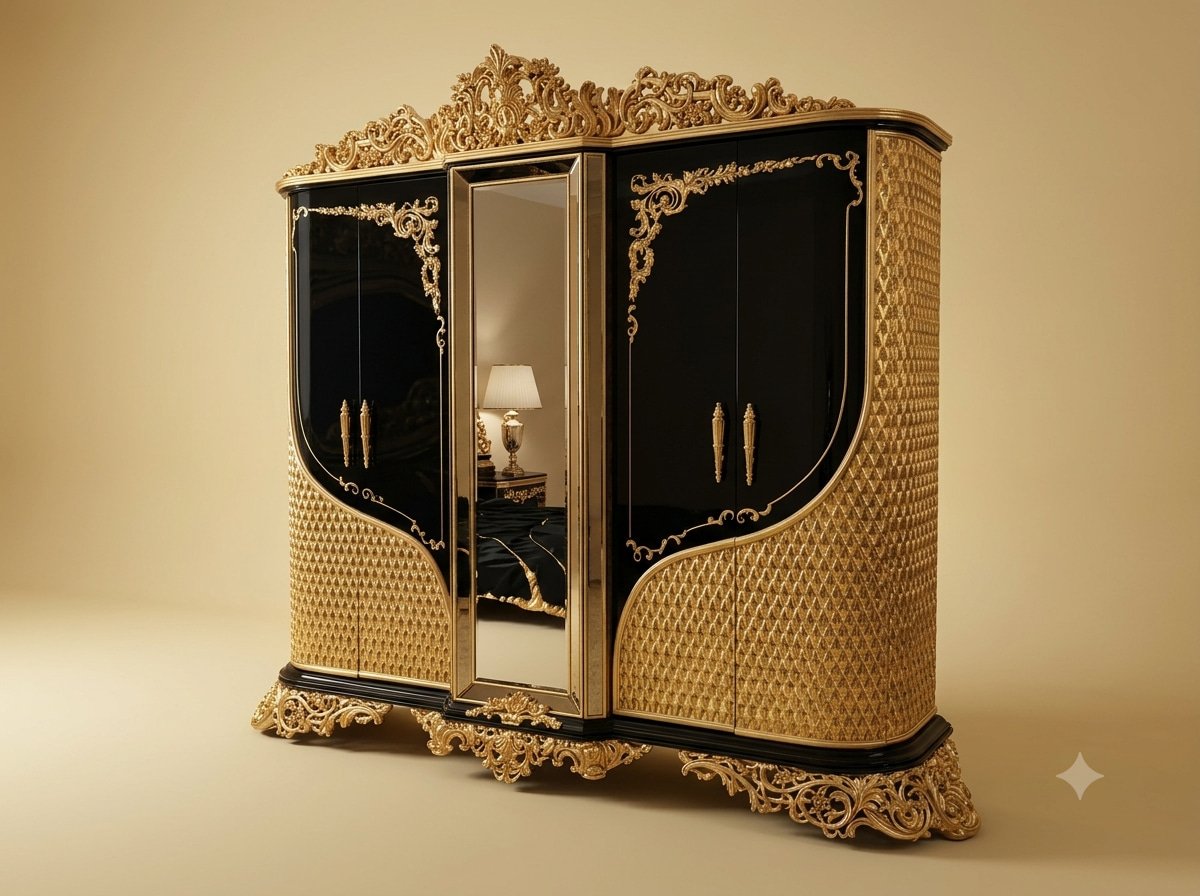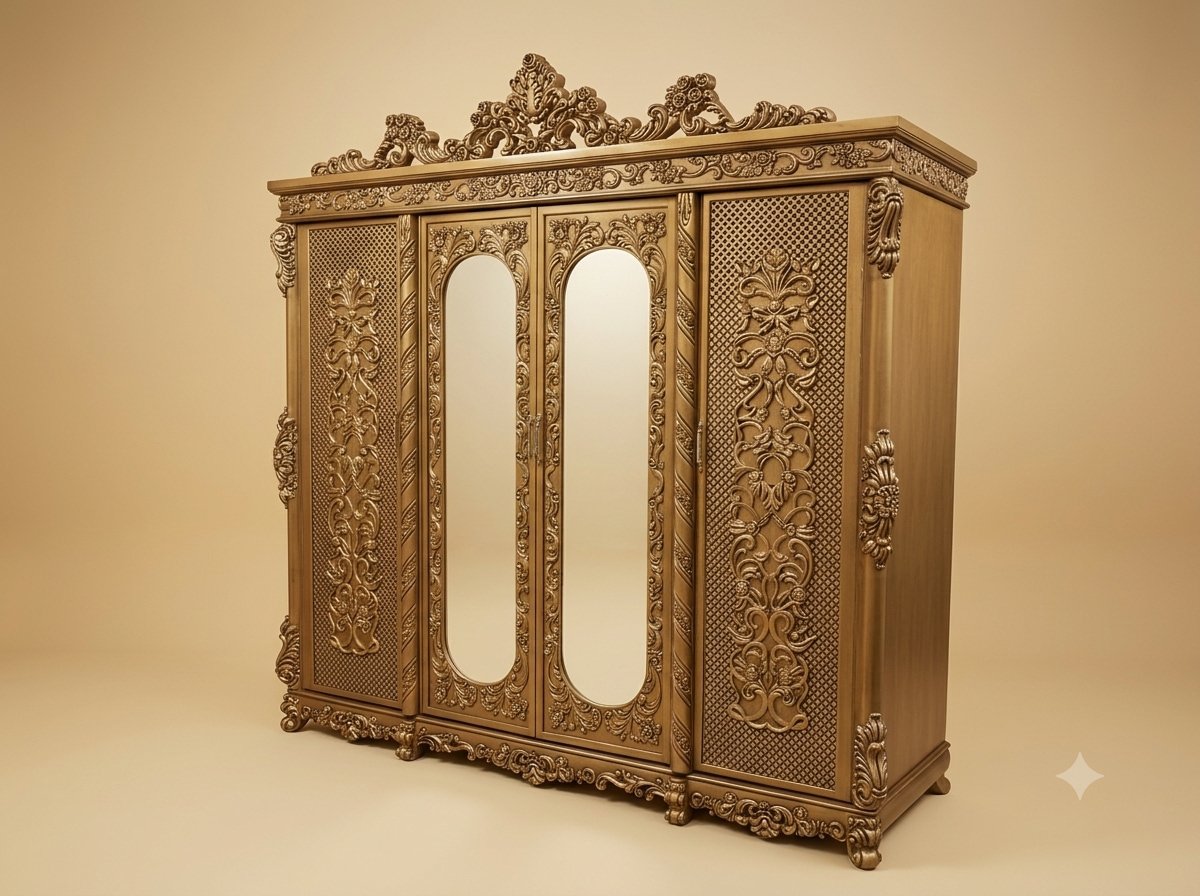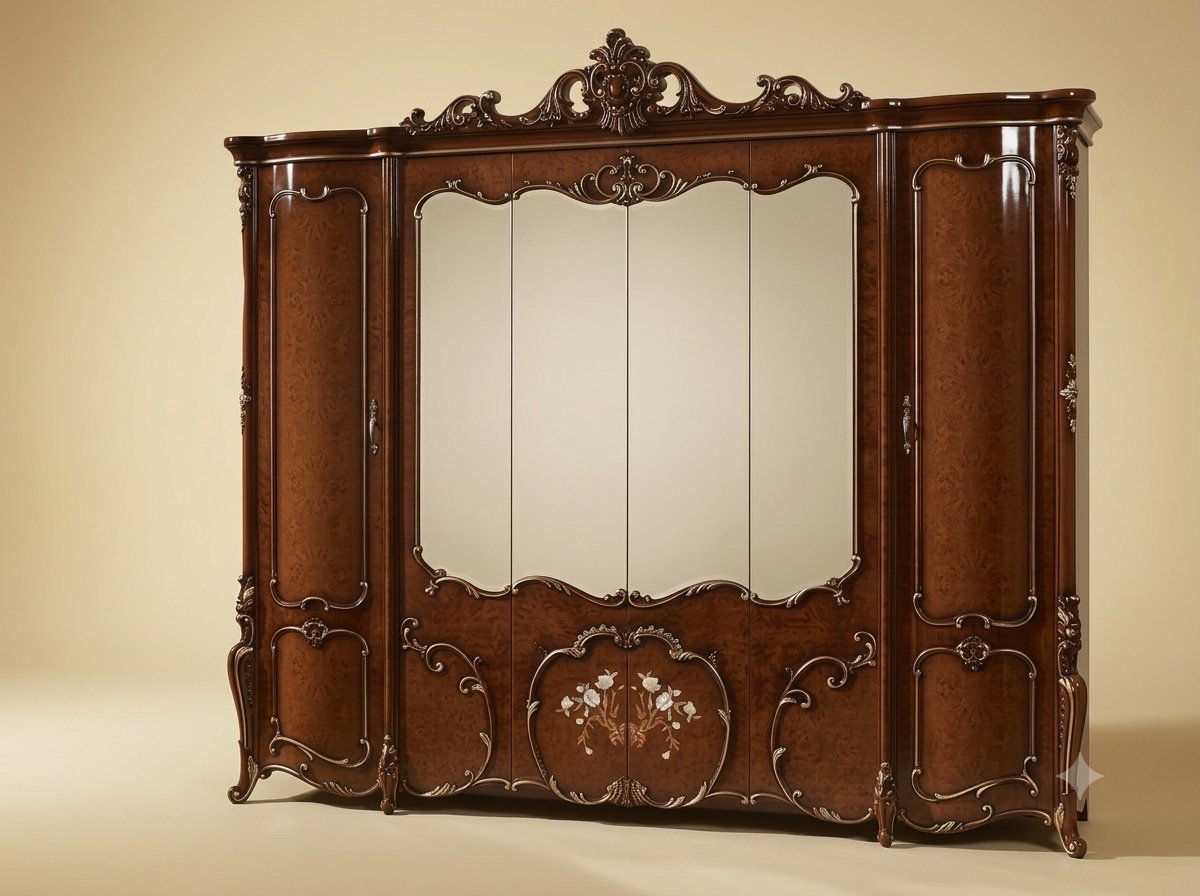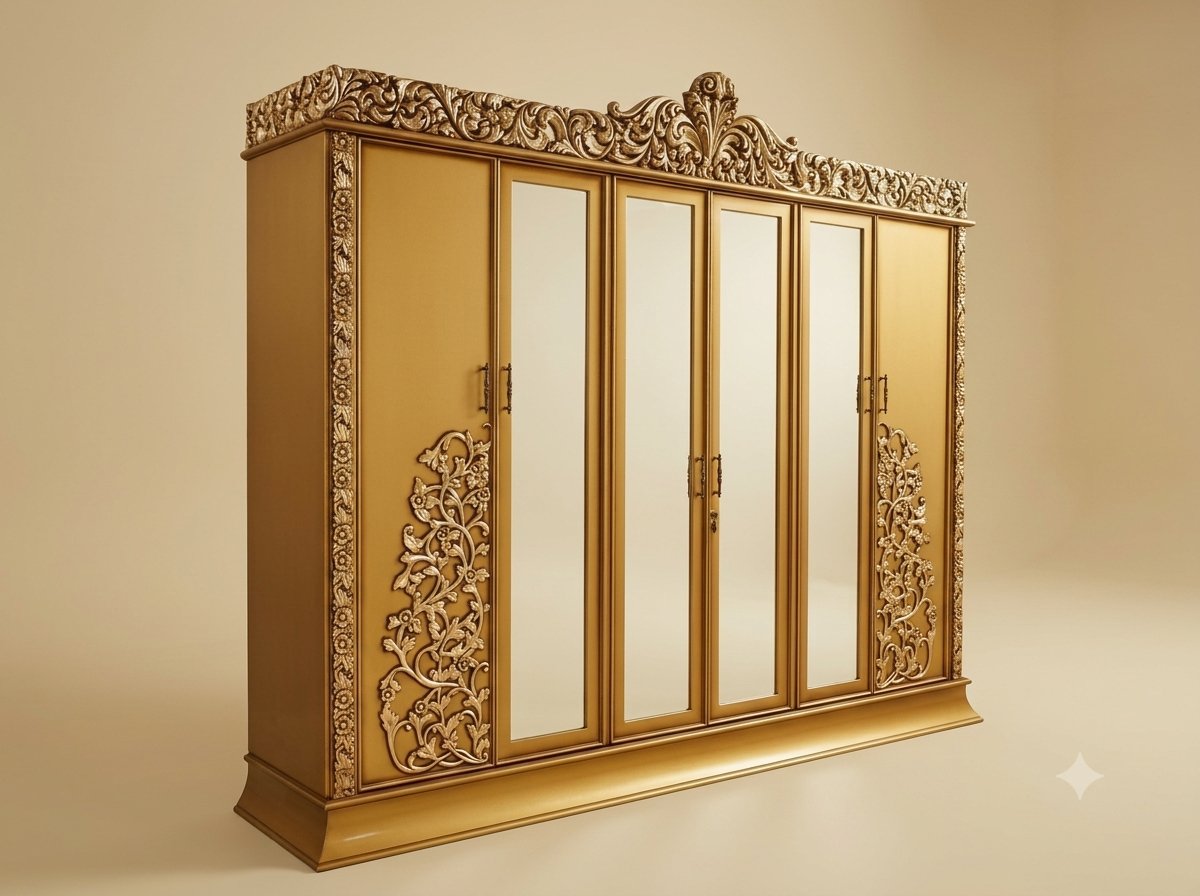
Four mirrored doors side by side have to lie in exactly the same plane, and the reason is easy to see once you know to look for it.
Stand in front of a run of mirrors and something straight in the room - a door frame, the line where wall meets ceiling, a curtain pole - is reflected across all of them. If every door is truly coplanar, that line runs continuously from one mirror to the next, broken only by the thin frames between. If one door sits a fraction proud or is hung a fraction out of plumb, the line steps as it crosses that door. Nobody notices the door. Everybody notices that the room looks broken.
So our master Indian artisans check this run by eye, not by instrument. The doors are hung, closed, and then a straight feature is sighted across all four from a few paces back. Any step tells you which door to adjust and in which direction, more sensitively than a straightedge would - because a small angular error at the door becomes a large visible offset by the time the reflection reaches the eye.
The mirror is doing the measuring. It is the only tool in the workshop that magnifies its own errors.
 Ask Price On WhatsApp