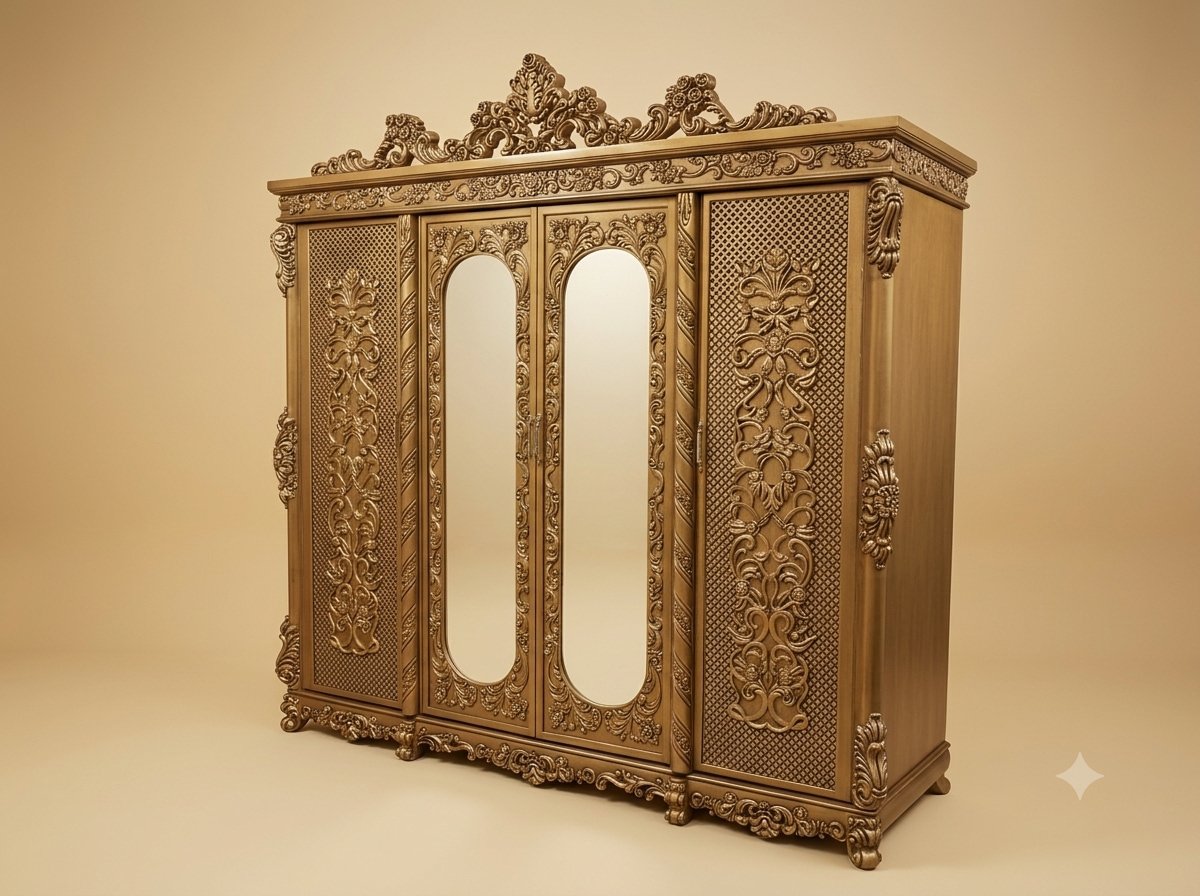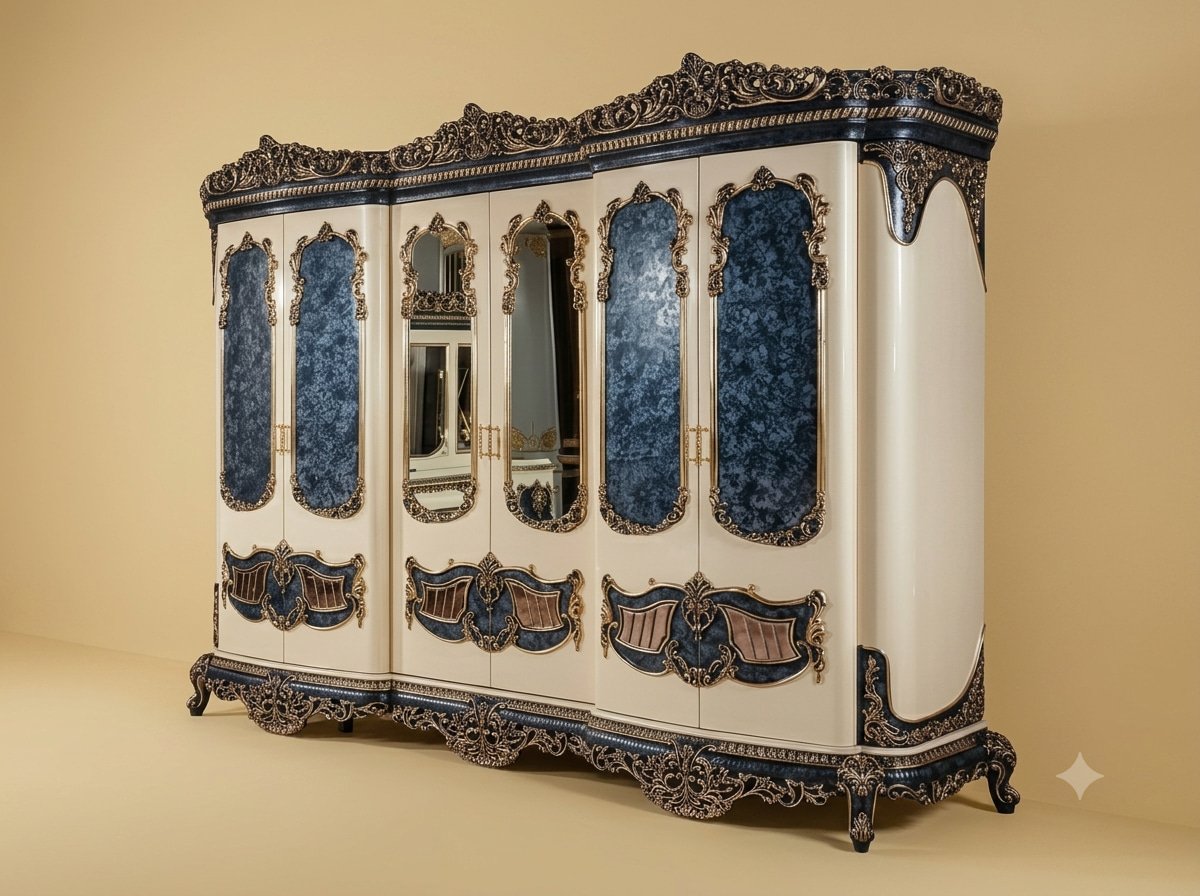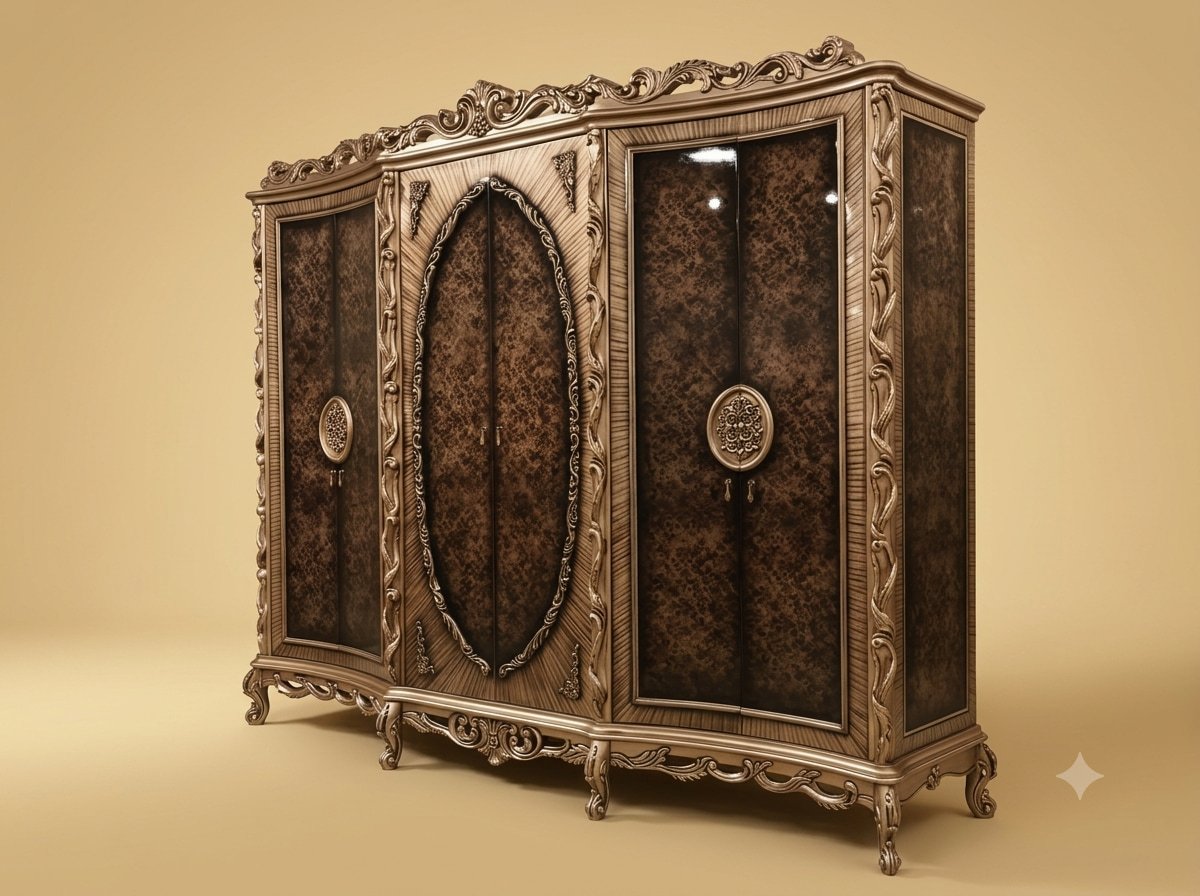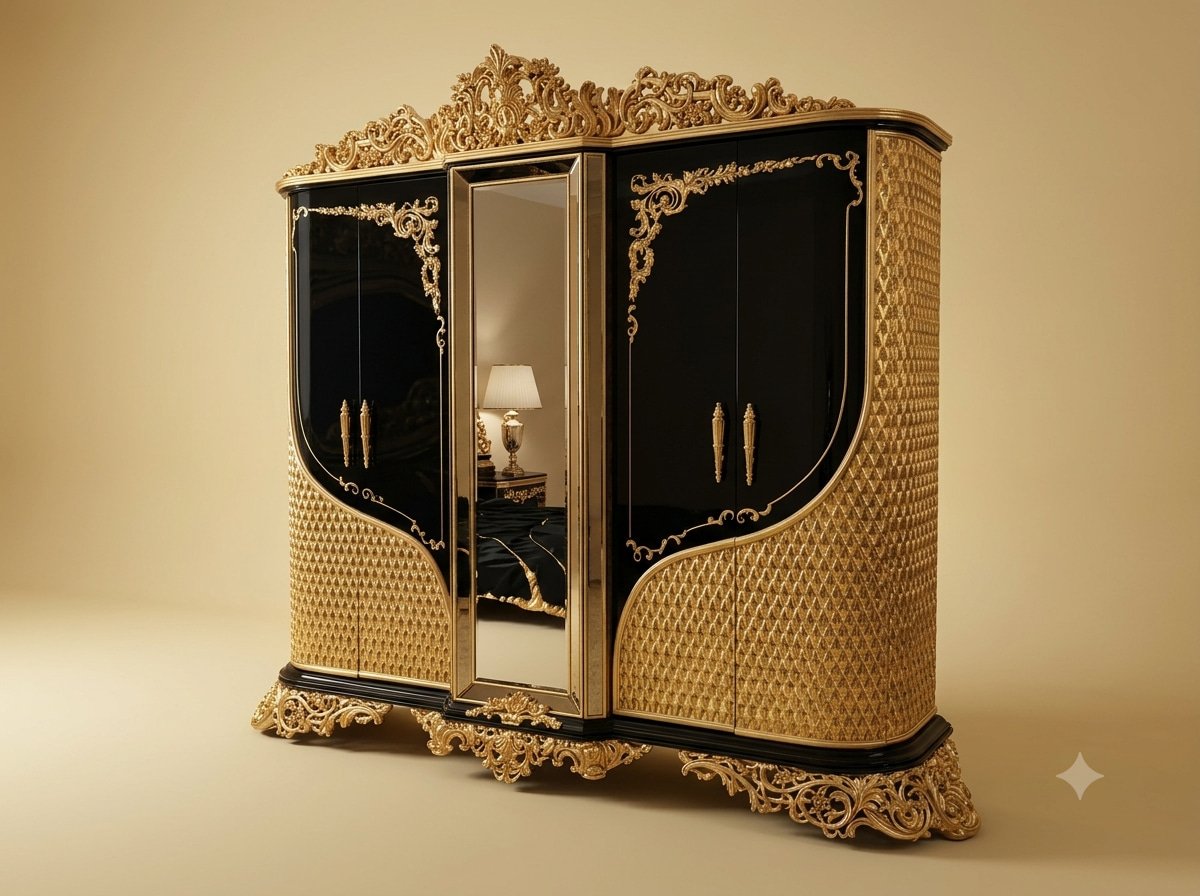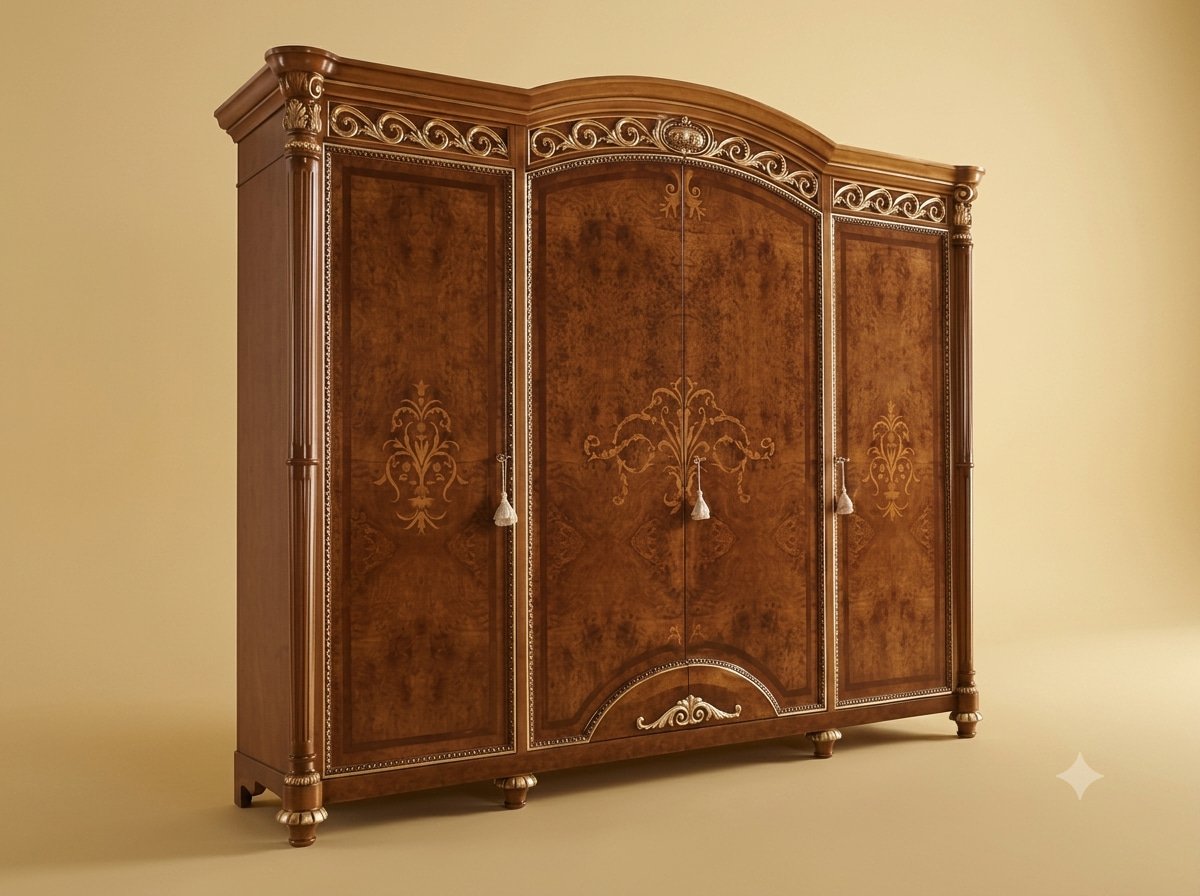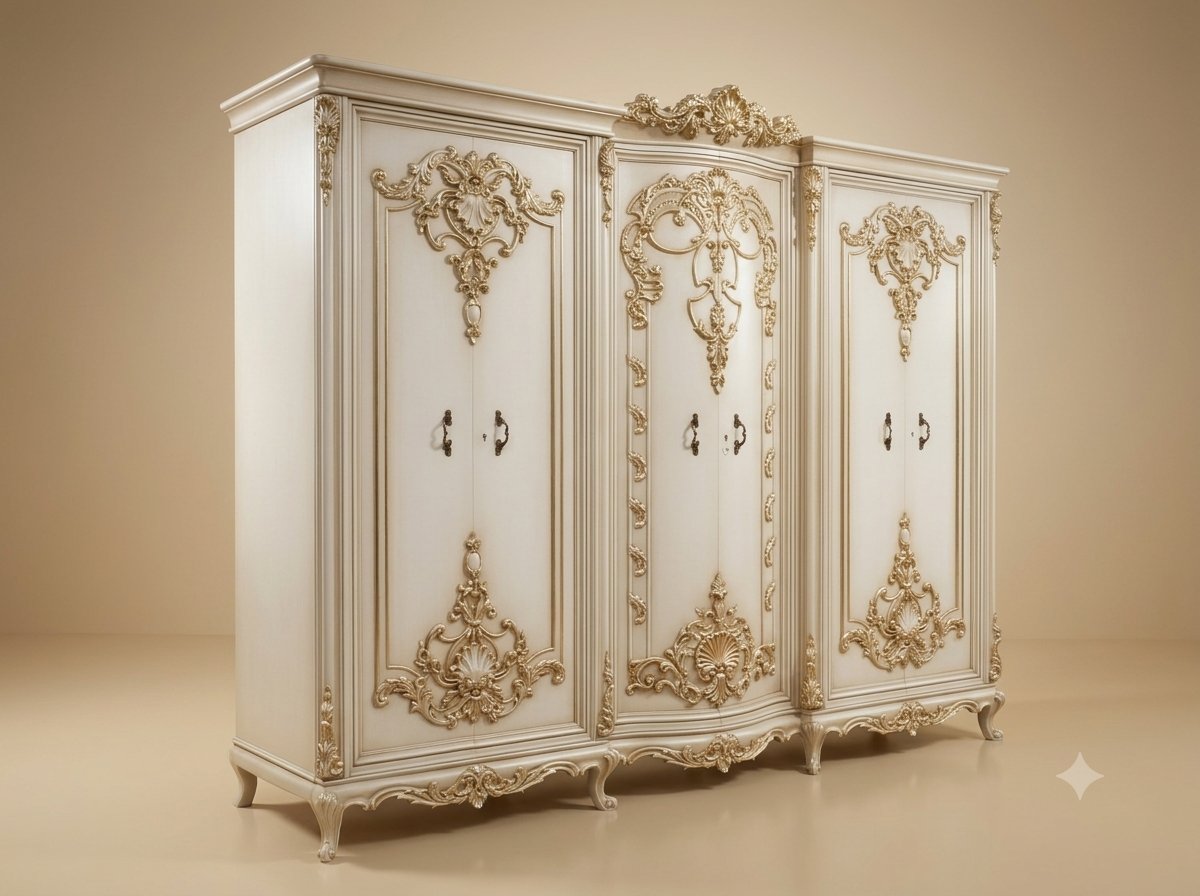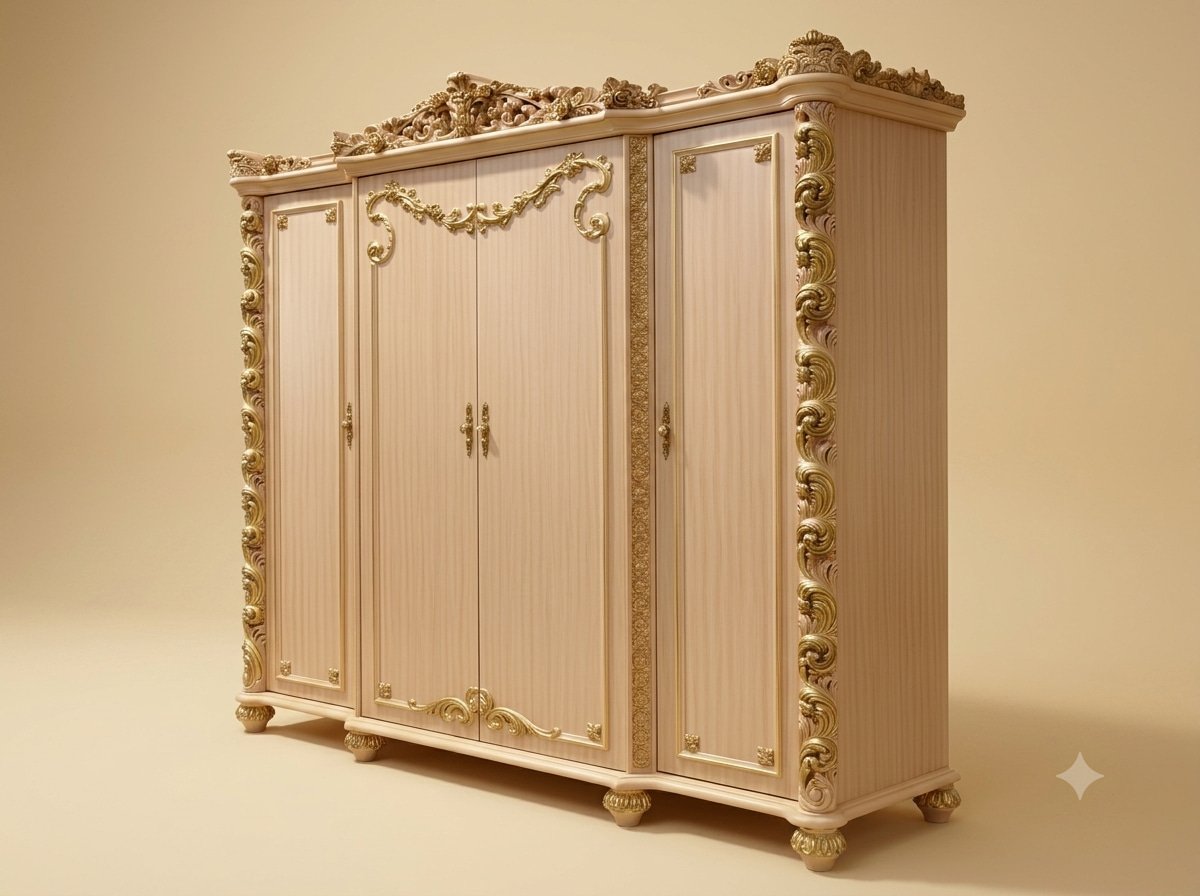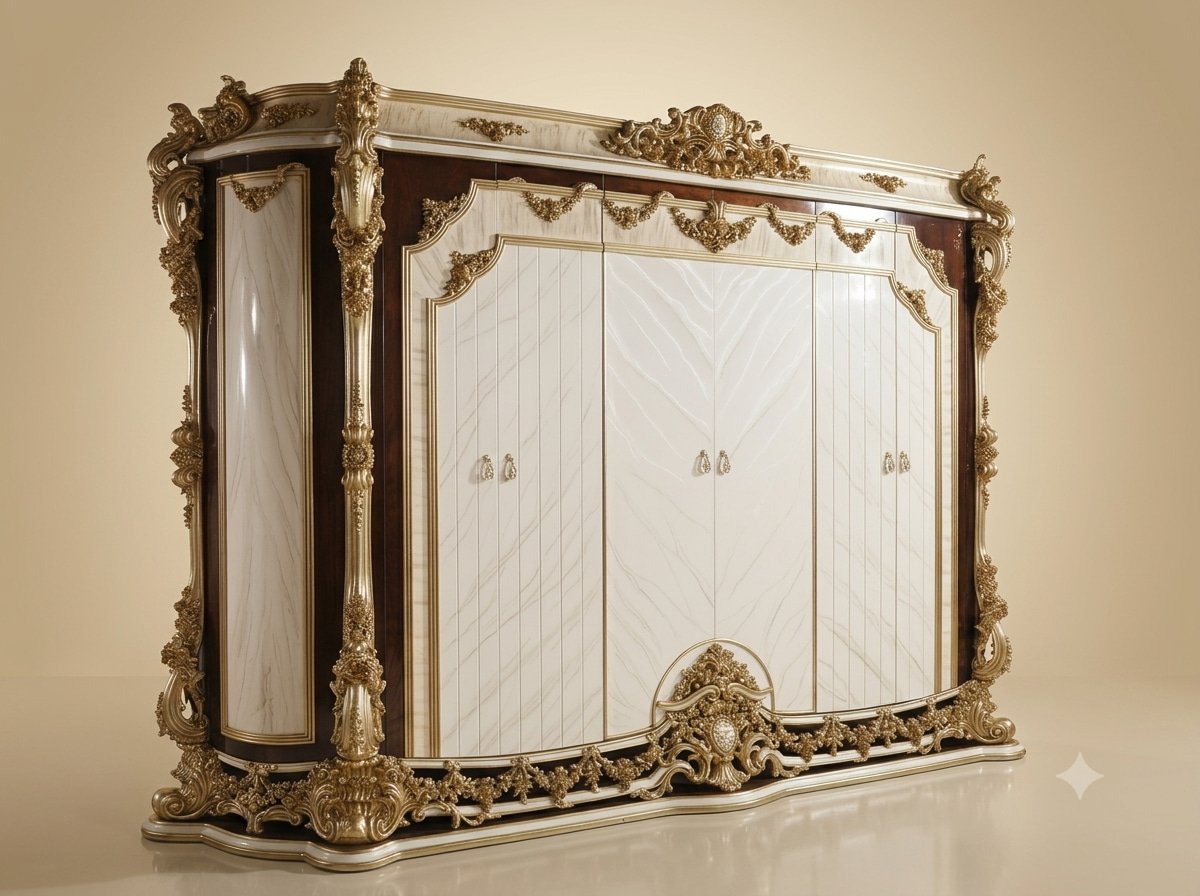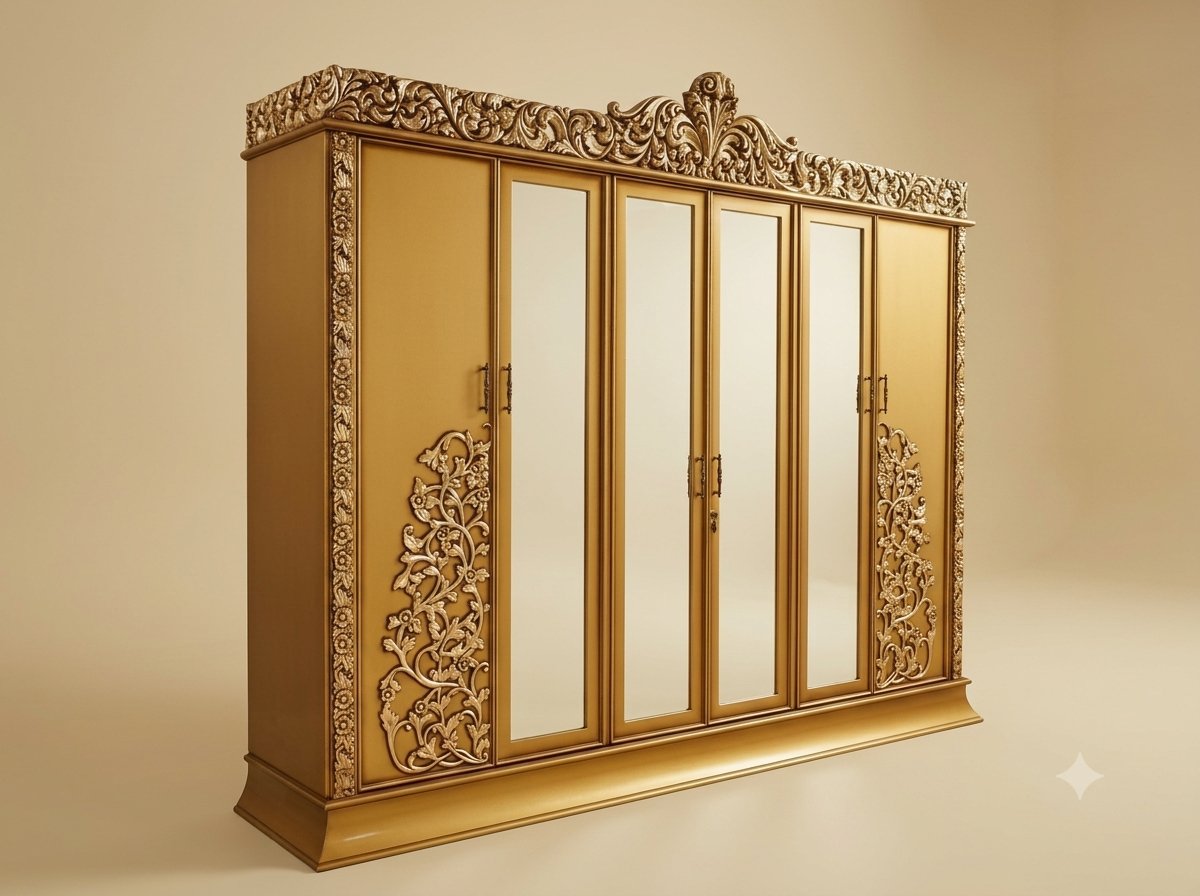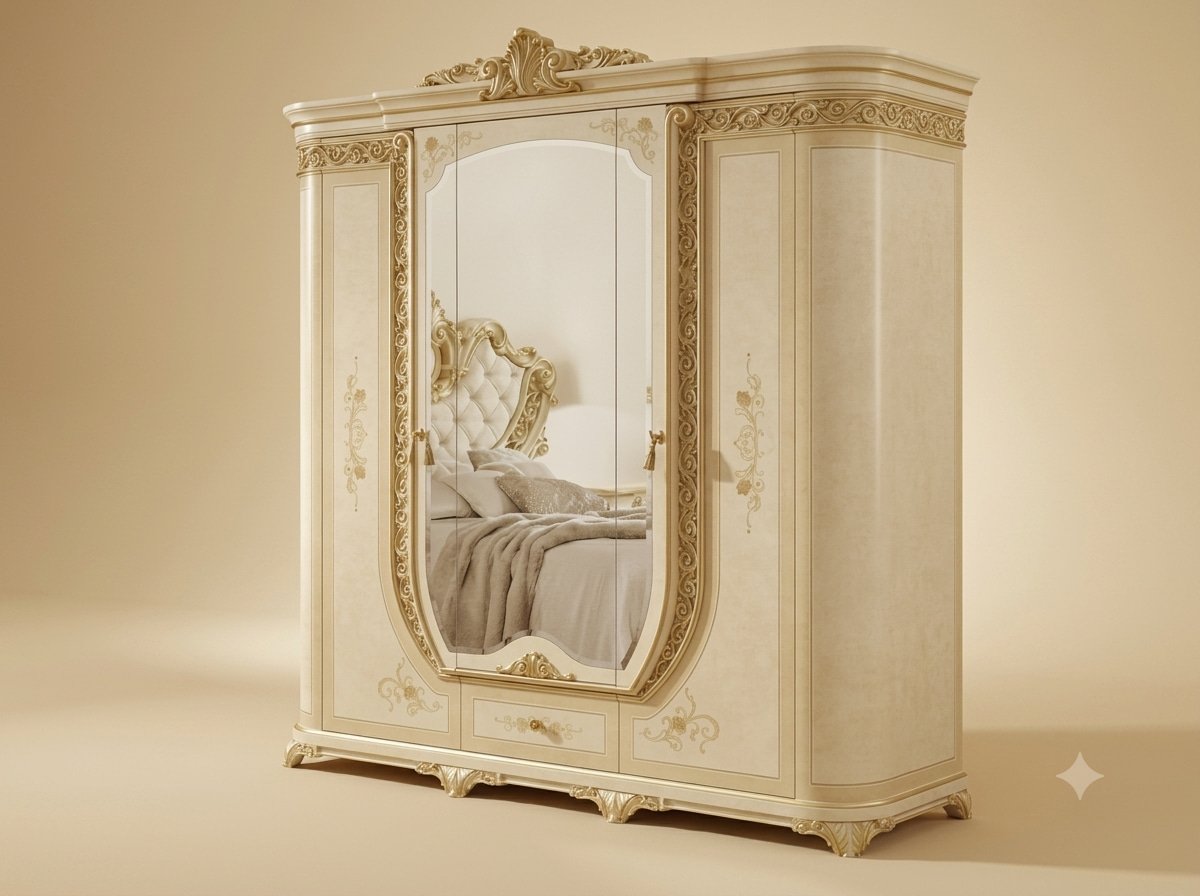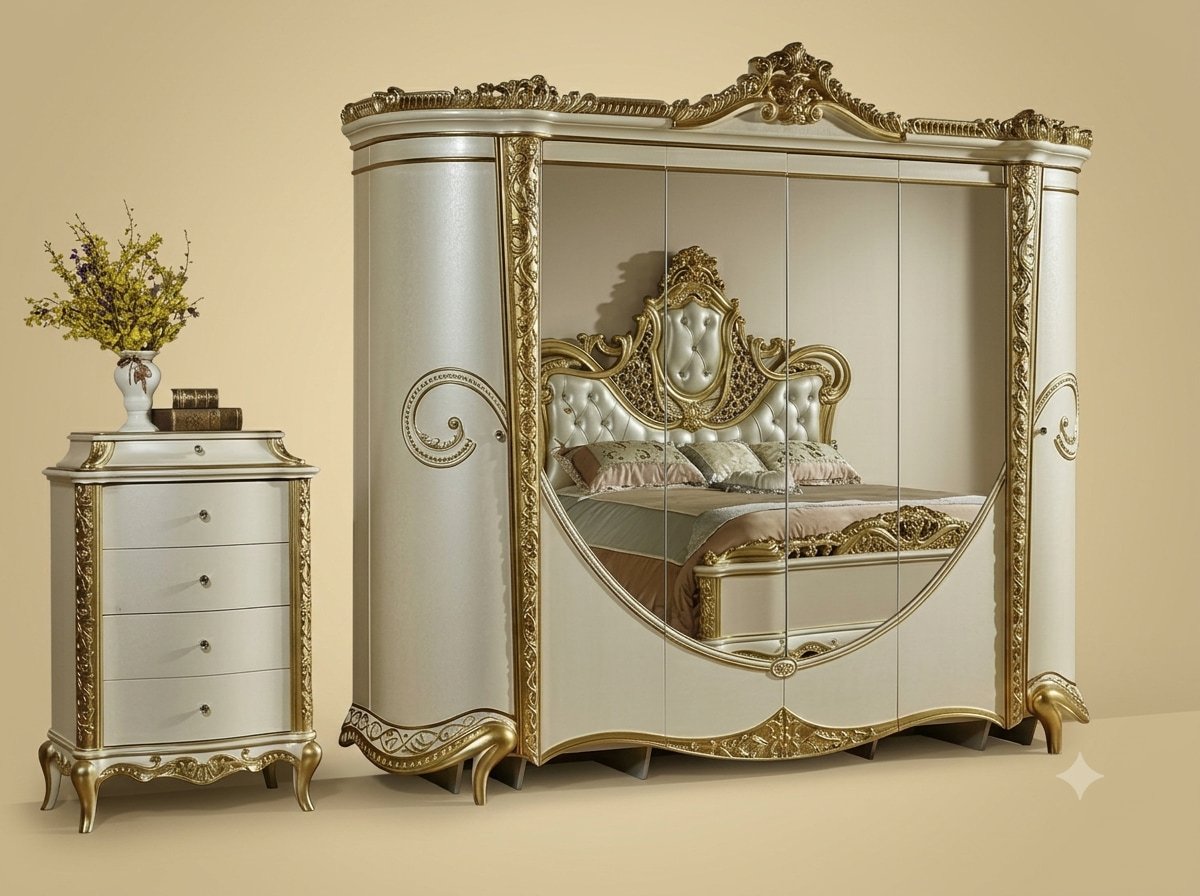
A curve that crosses four separate mirror plates is one of those details that either goes unnoticed or ruins the piece, with nothing in between.
Each door has its own plate. Each plate has to carry its share of one long sweeping curve. If any plate's curve starts a hair above or below where its neighbour's finished, the sweep breaks at that door and the eye lands on the break instead of following the curve.
Cutting each plate to its own drawing guarantees exactly that. Four drawings of four sections of a curve, cut by hand on four different pieces of glass, will not reassemble into one line.
So our master Indian artisans do not cut them separately. The four plates are laid out edge to edge in the order and orientation they will finally occupy, taped together as one sheet, and the whole curve is scored across the assembly in a single continuous pass. Then they are separated and each is broken out on its own score.
Because every plate's curve was made by the same uninterrupted movement, they cannot disagree when the doors close. The curve was one line before it was four.
 Ask Price On WhatsApp