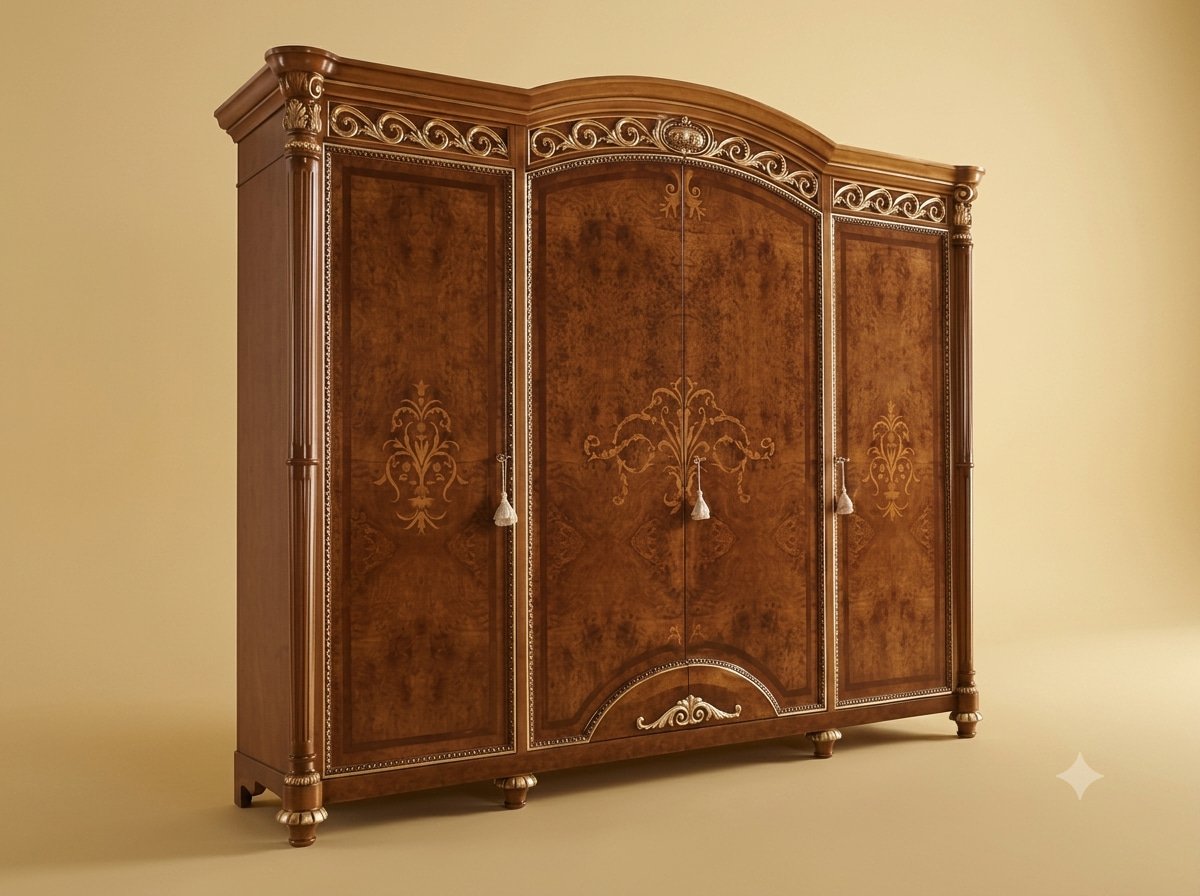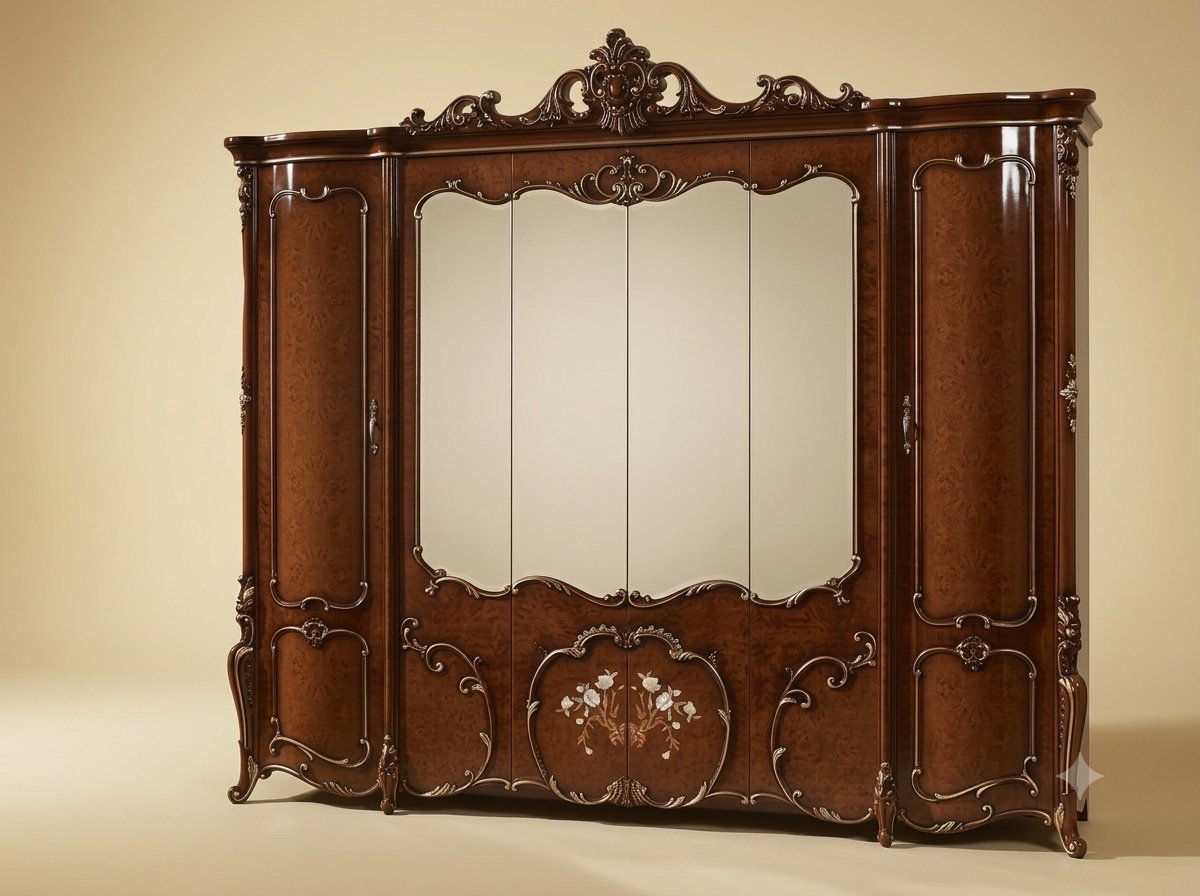
Inlay is judged entirely on one thing: whether you can see a gap. Everything else - the drawing, the choice of woods, the shading - only matters if the joint between the inlay and the ground is invisible.
The obvious method fails at exactly that point. Cut a recess to a drawing, cut the inlay to the same drawing, and the two will not fit, because a saw or a chisel takes its own thickness of material and no two cuts remove exactly the same amount. The result is a hairline gap somewhere, and hairlines fill with polish and then with dust, and within a year they are dark lines around every petal.
So our master Indian artisans cut both from a single line. The inlay piece is made first, laid onto the ground exactly where it will live, and scribed around with a sharp knife. That knife makes one line, and it is the outer edge of the inlay and the inner edge of the recess at the same time. The ground is then cut away to that line and no further.
Because the two edges were never separately measured, they cannot disagree. The flower drops in and the joint disappears.
 Ask Price On WhatsApp