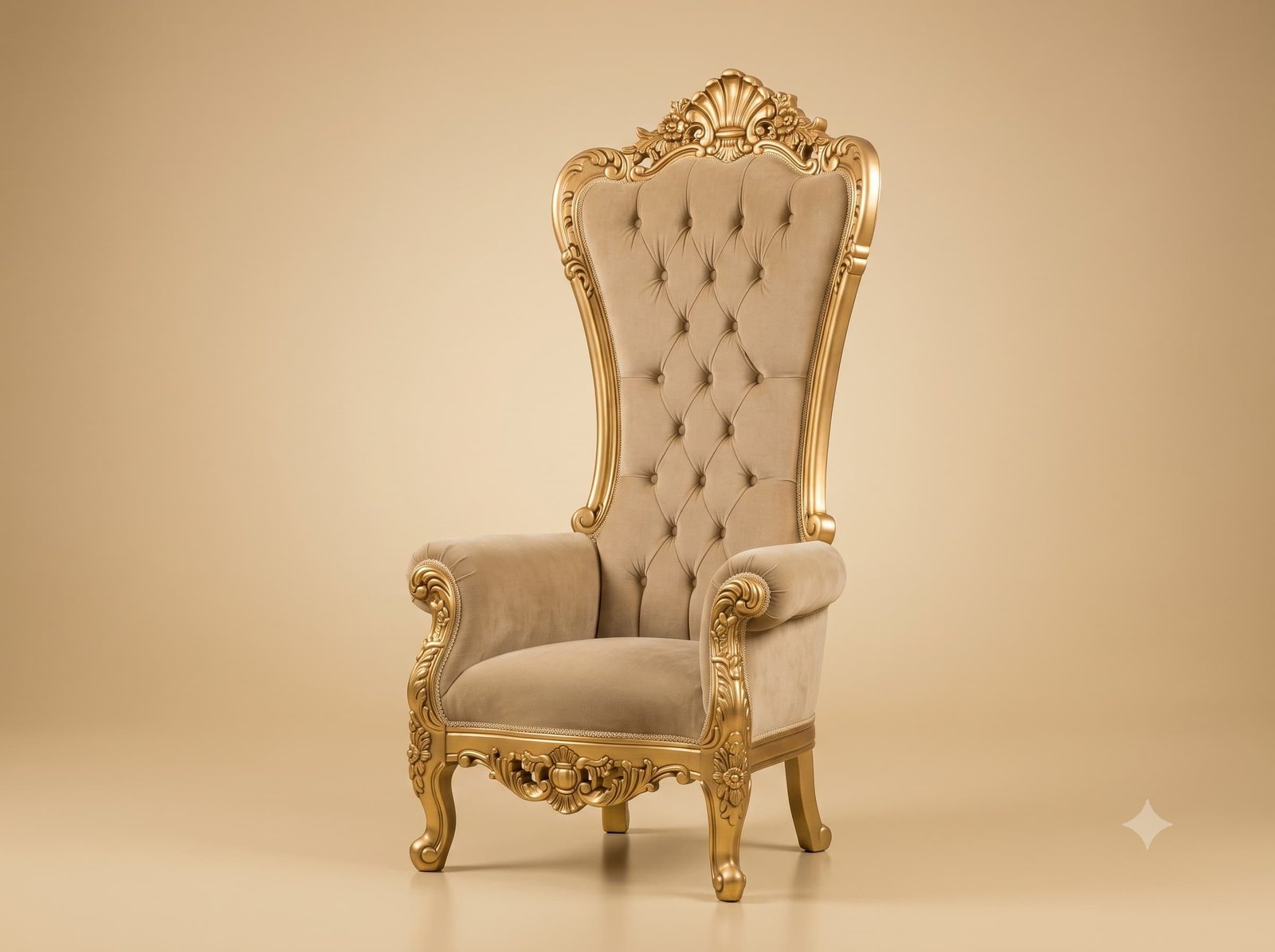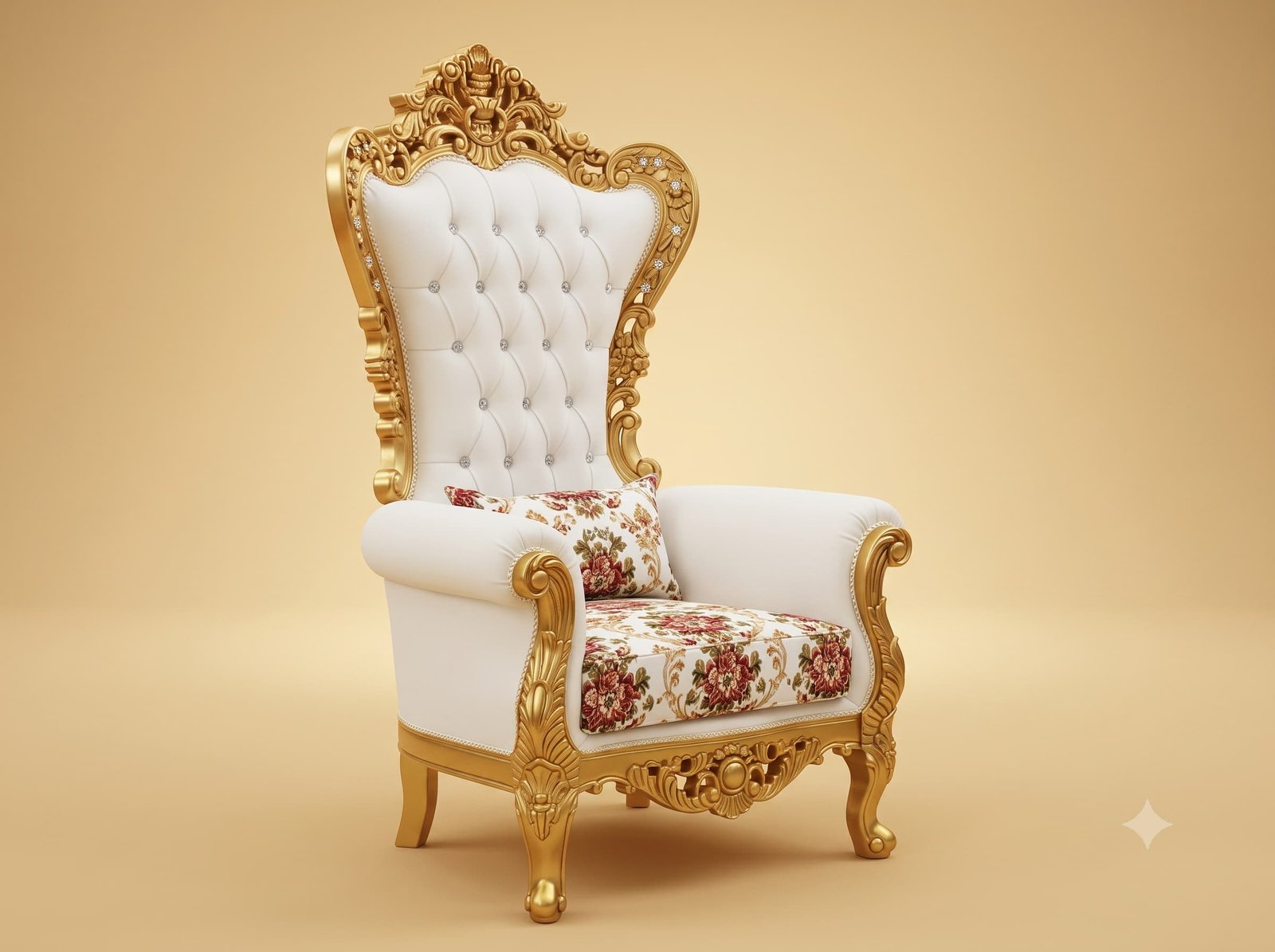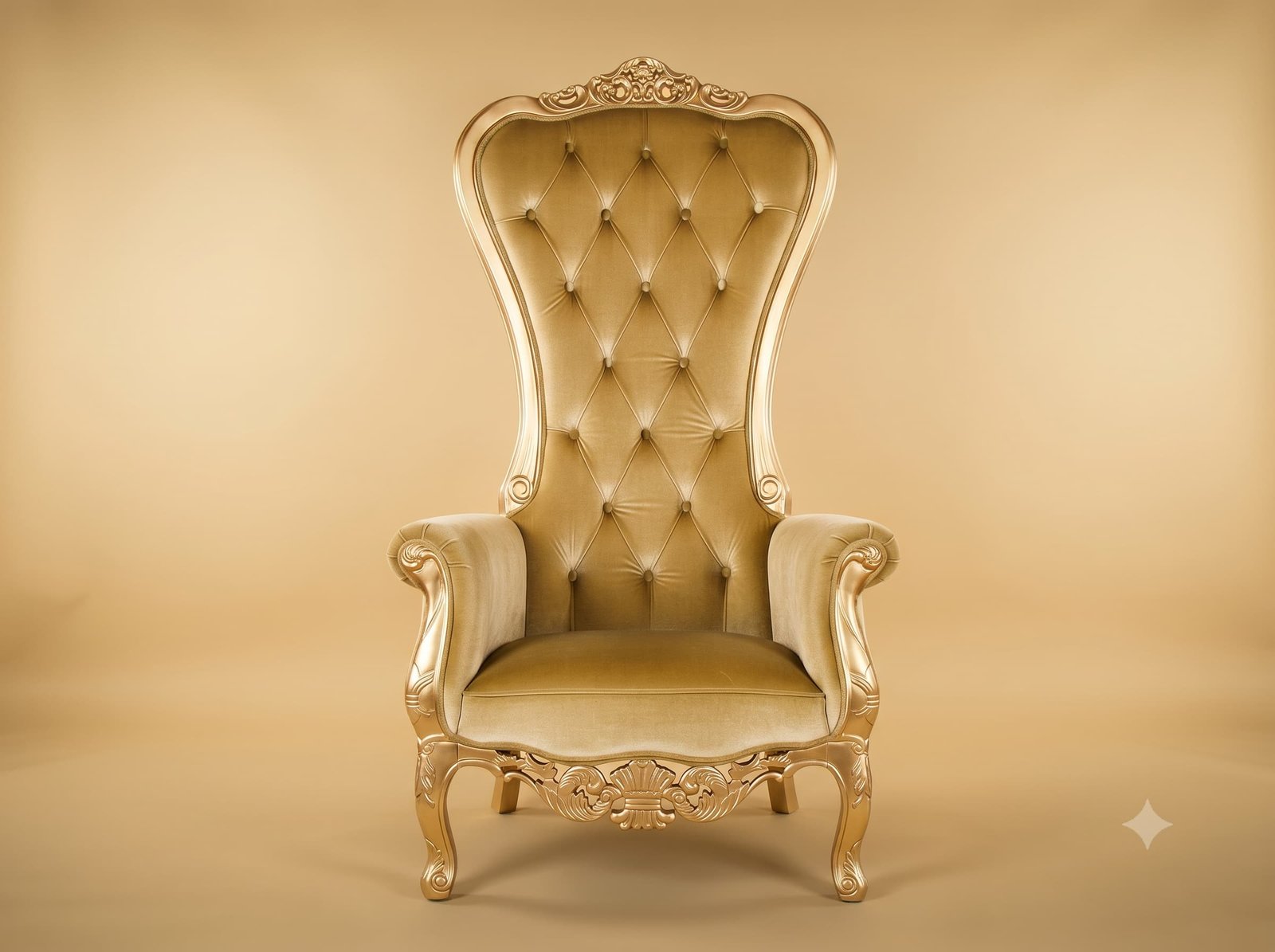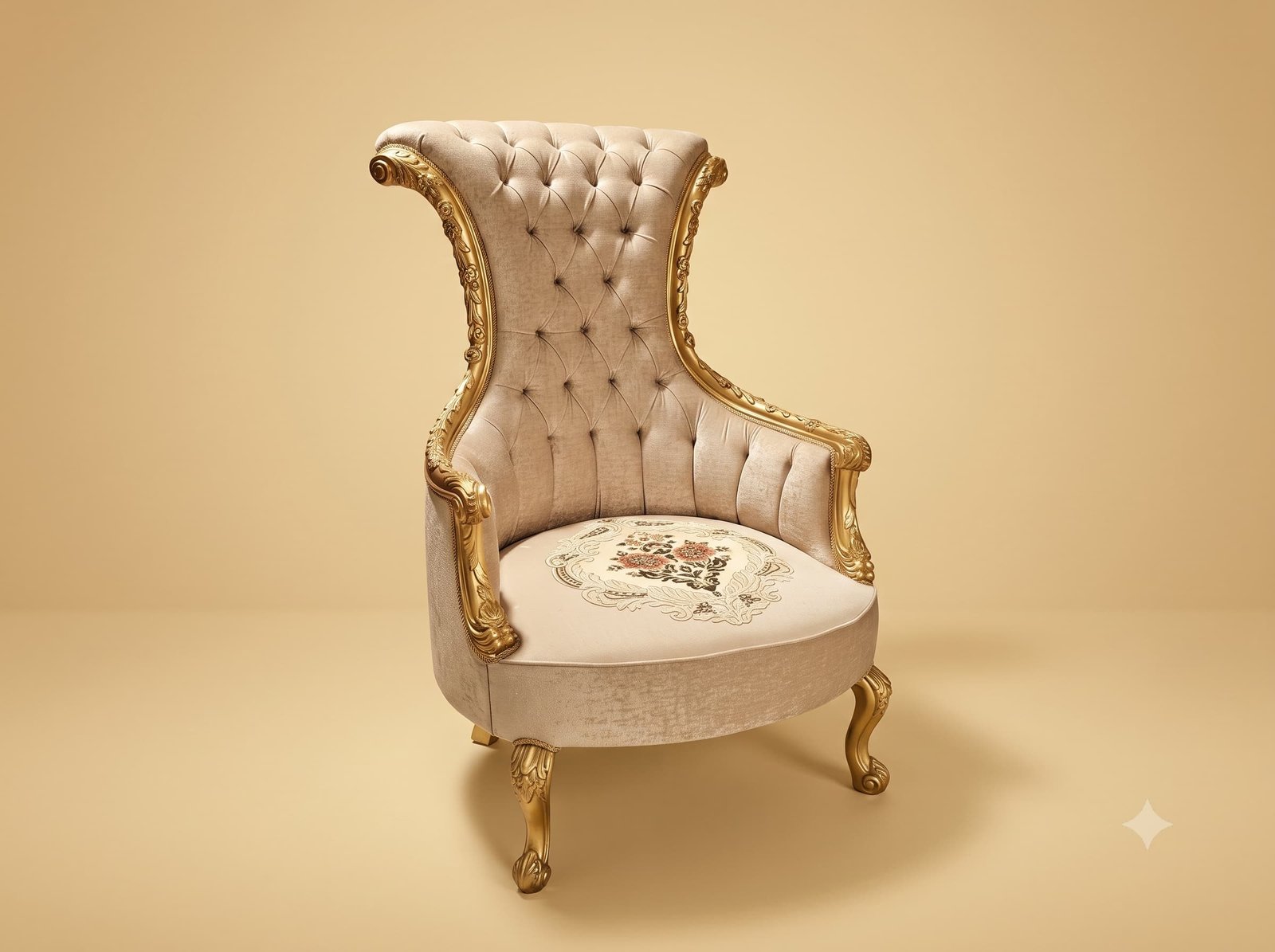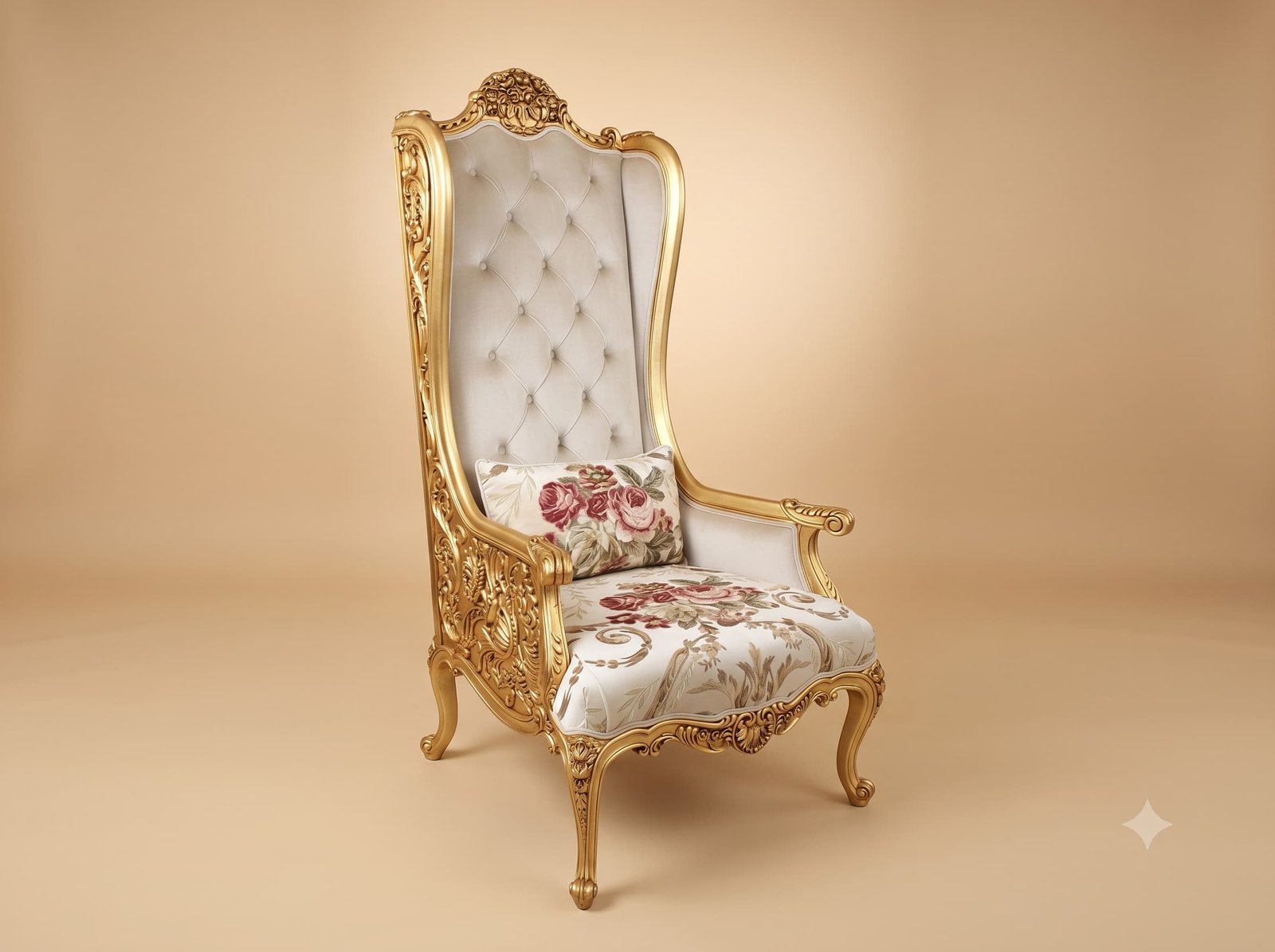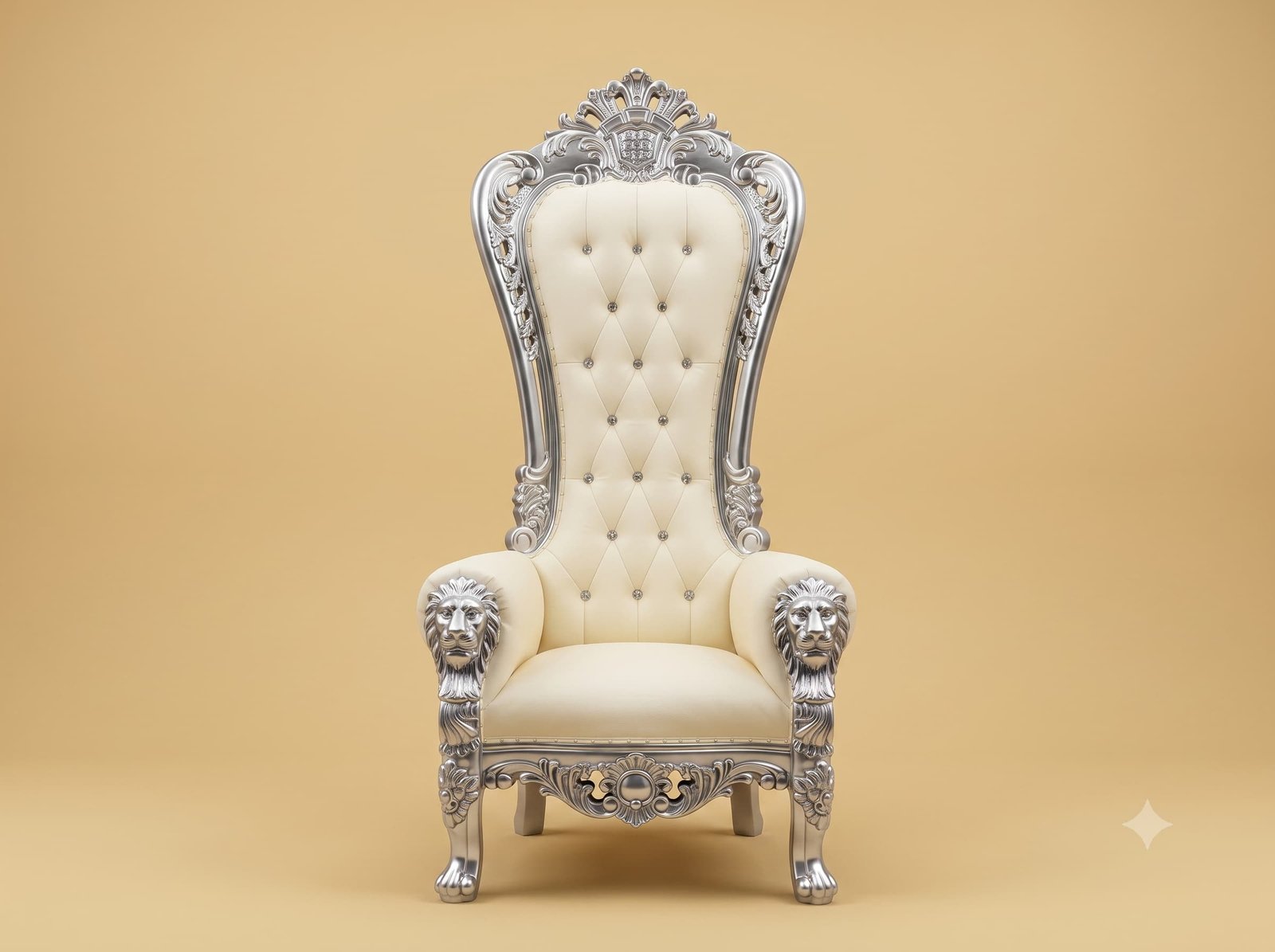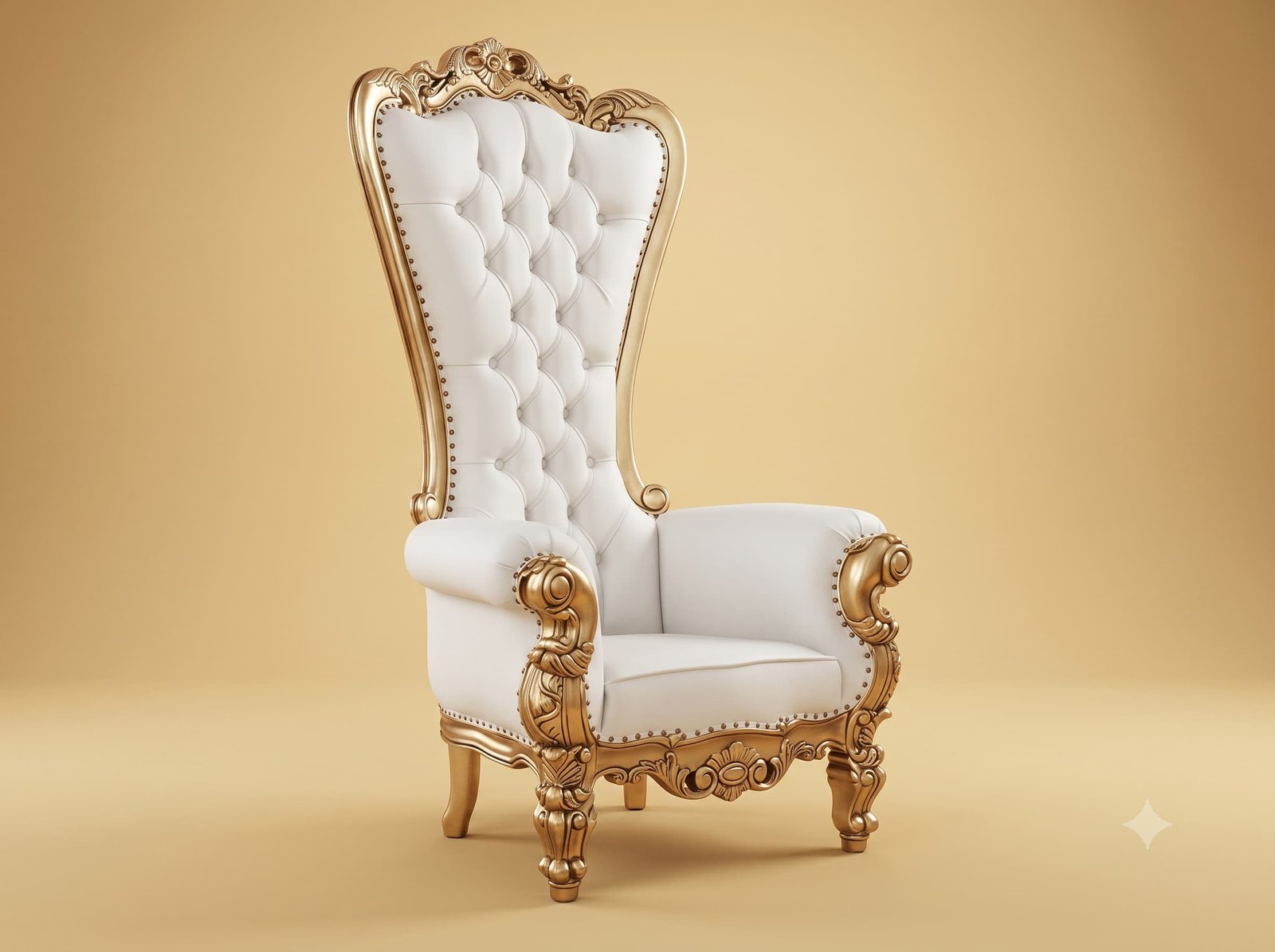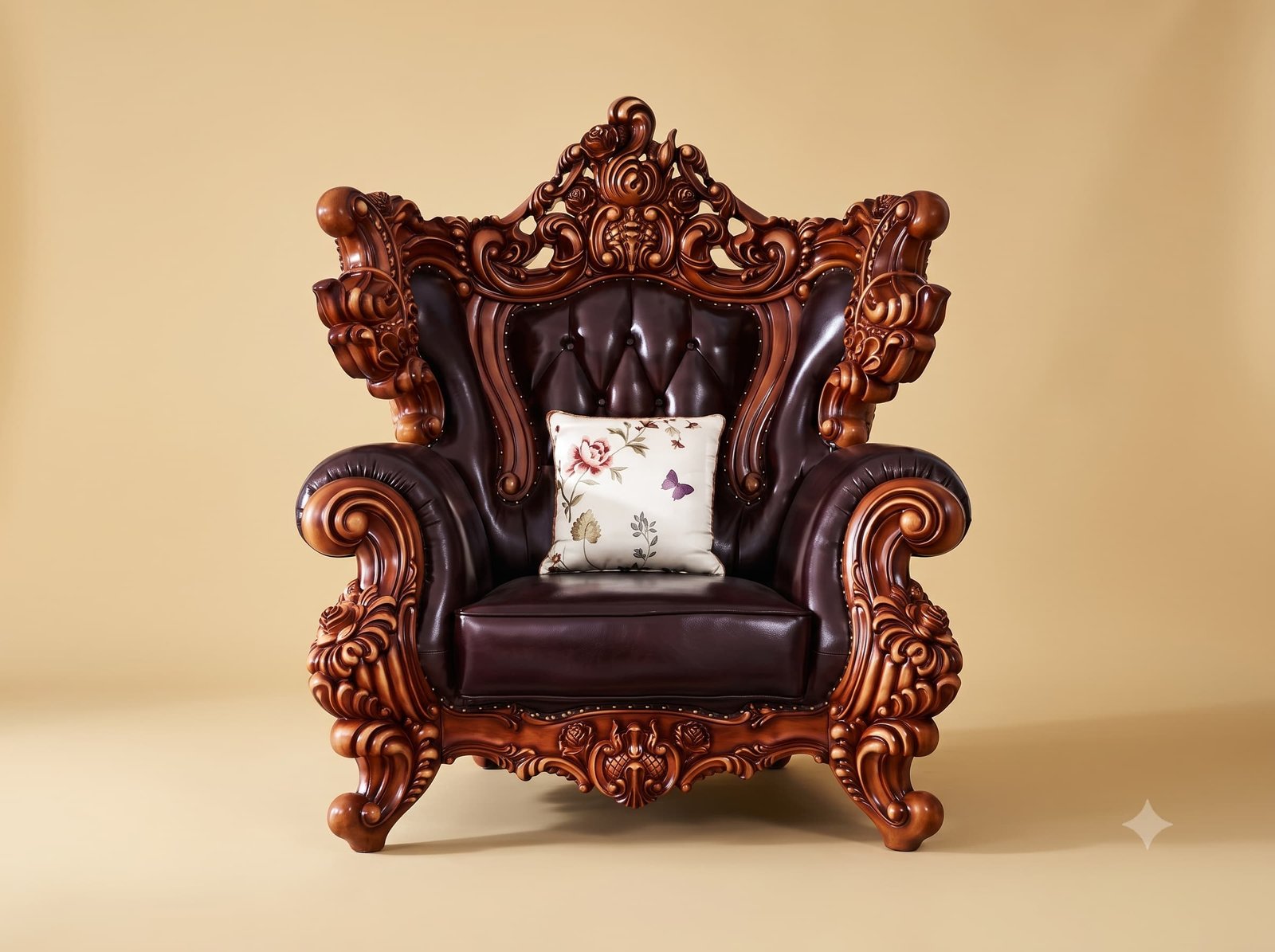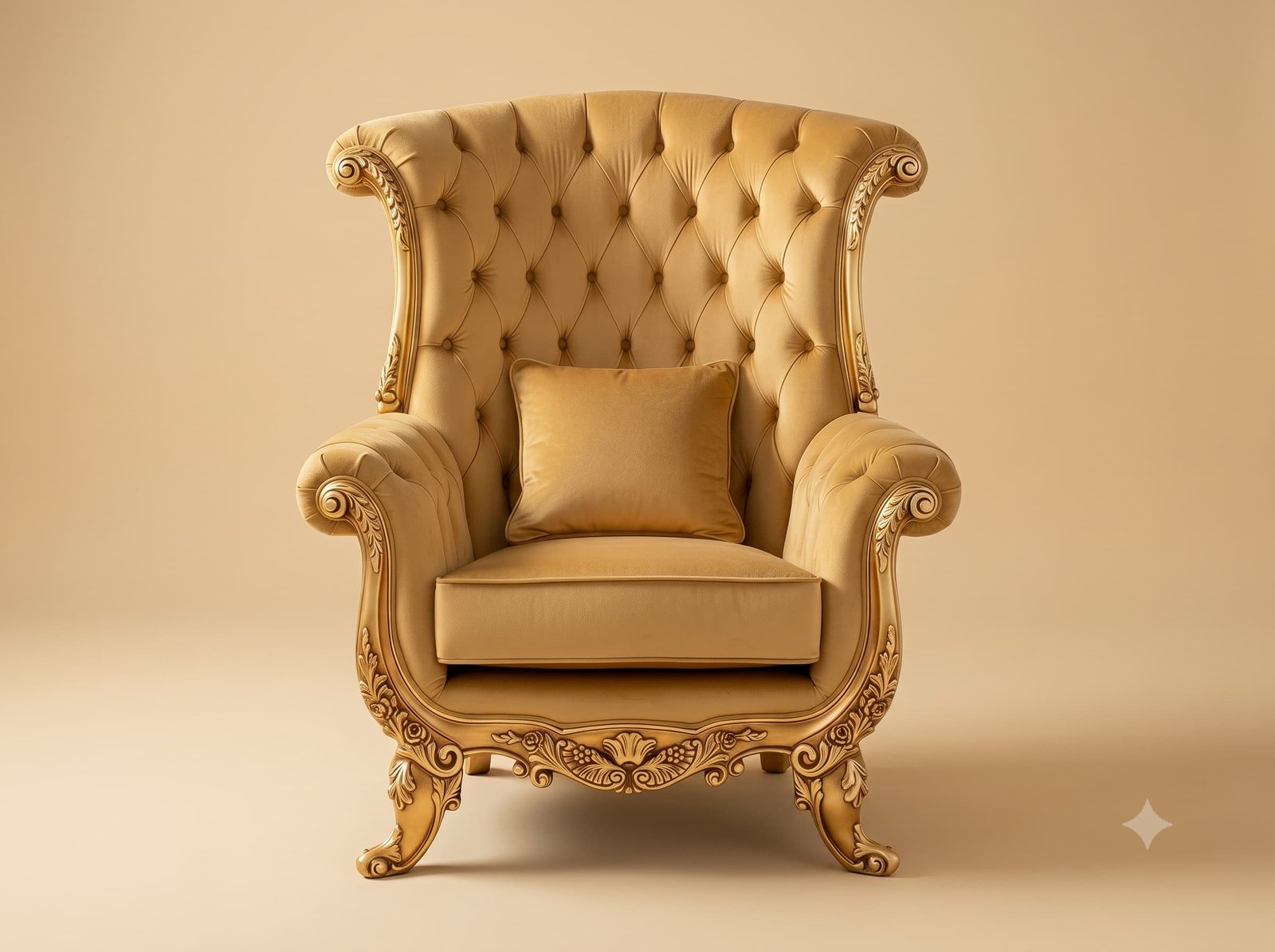
Two wings that roll outward have to roll by the same amount, and the eye is unforgiving about it. A difference of half an inch in the radius of one roll is invisible on the bench and obvious the moment the chair is viewed square from the front.
Stuffing to a measurement does not solve it, because a roll is a curve rather than a dimension - you can hit the same height and the same width with two quite different profiles. So the upholsterer works to a profile gauge instead: a thin board cut to the intended curve, notched to sit against the wing frame in one fixed position.
The gauge is offered up as the stuffing builds, on one wing and then immediately on the other, and the filling is added or taken back until the board sits flush along its whole edge on both sides. Only then is the cover pulled.
The gauge is kept with the job, so if the chair is ever re-covered - by us, years later - the wings can be rebuilt to exactly the profile they were made with. It is a piece of scrap board that outlives several sets of fabric.
 Ask Price On WhatsApp