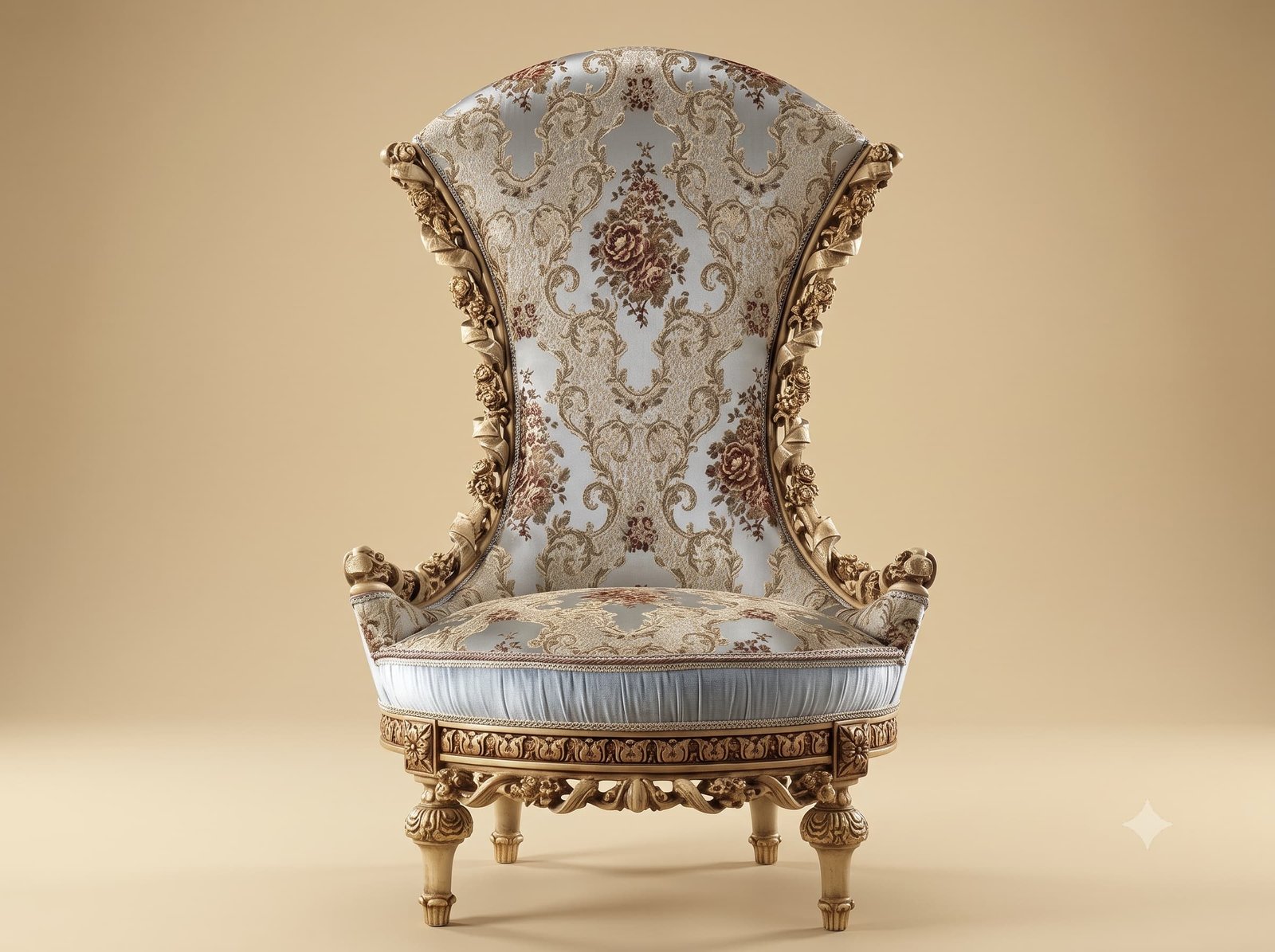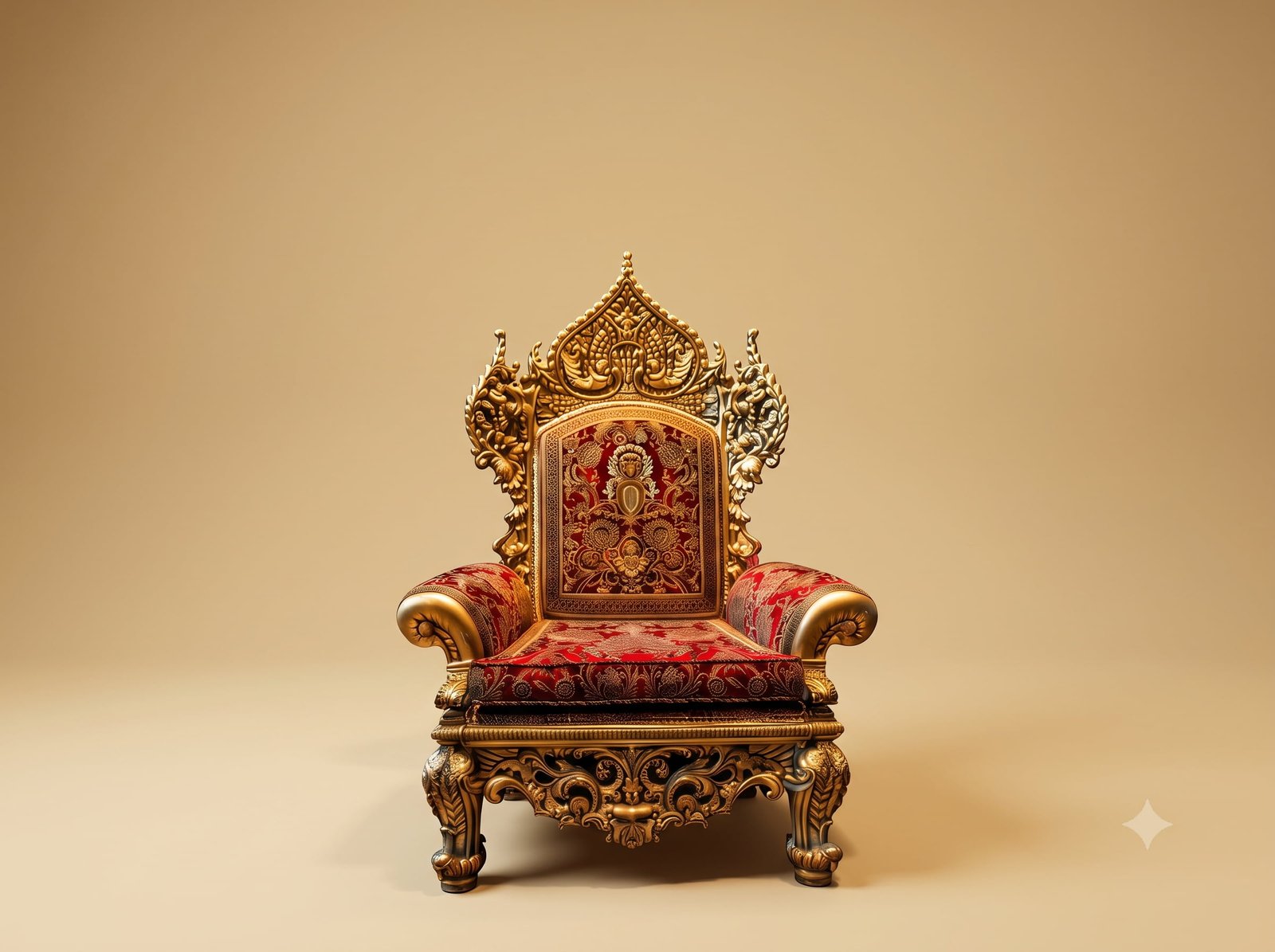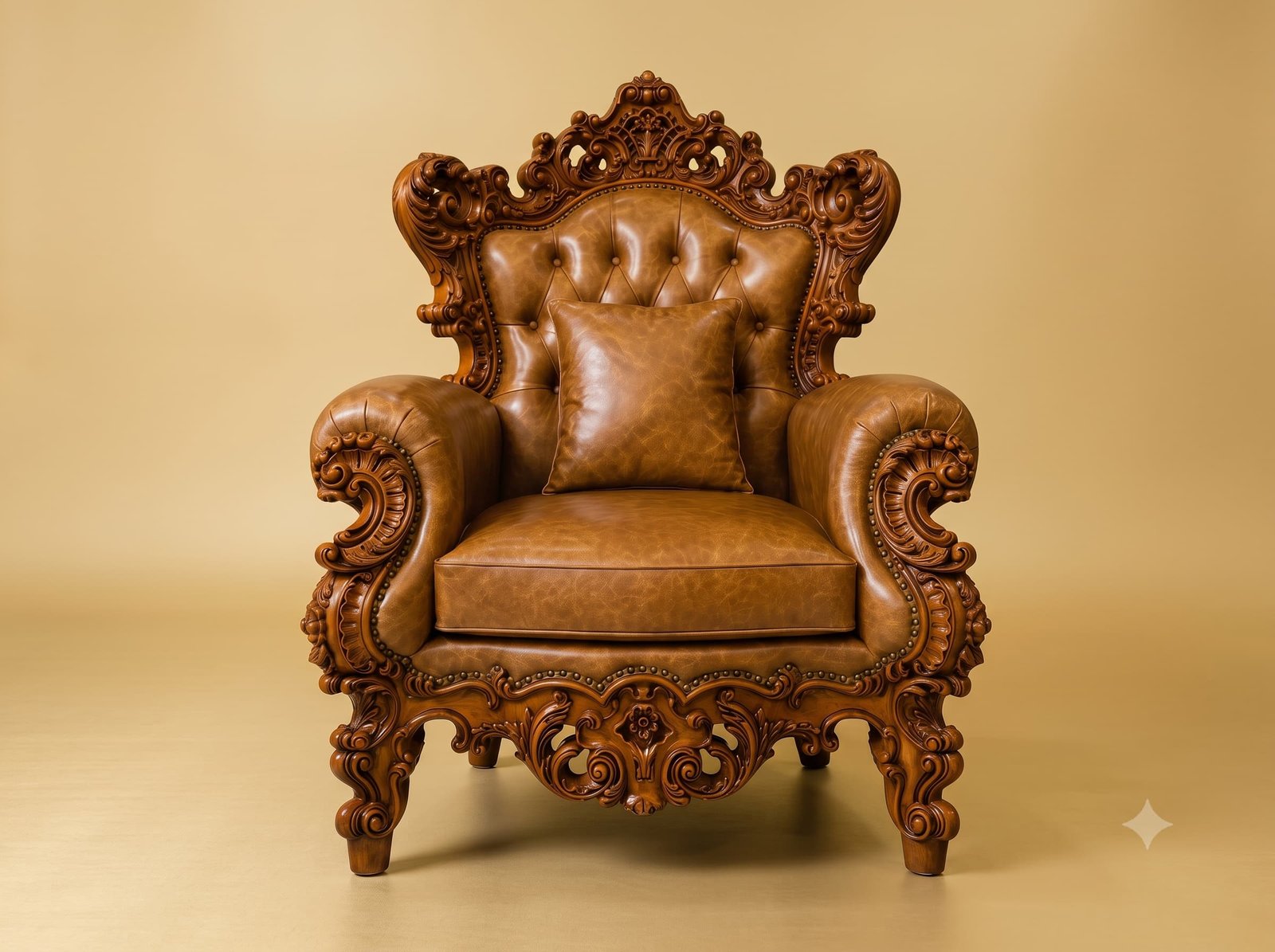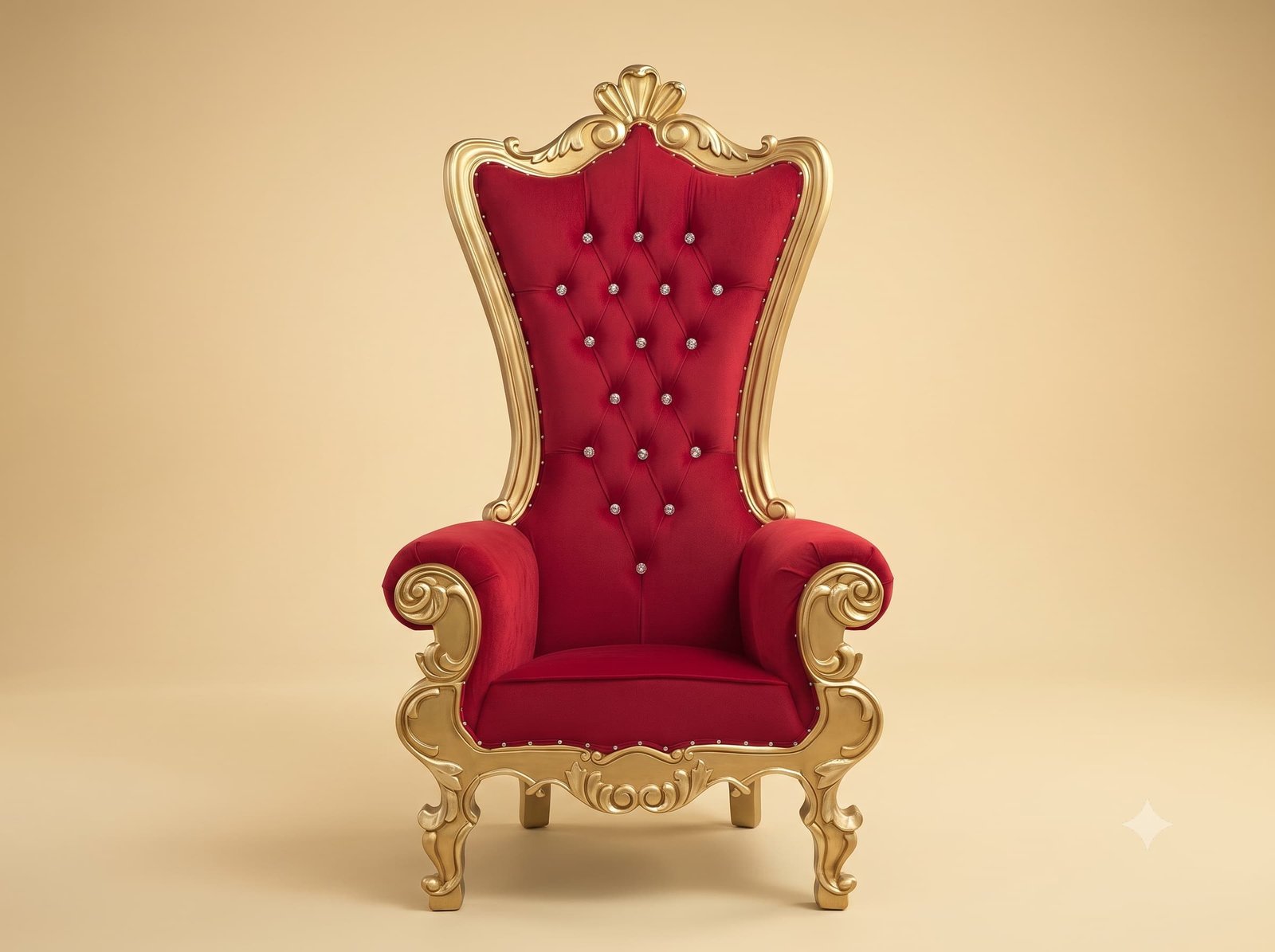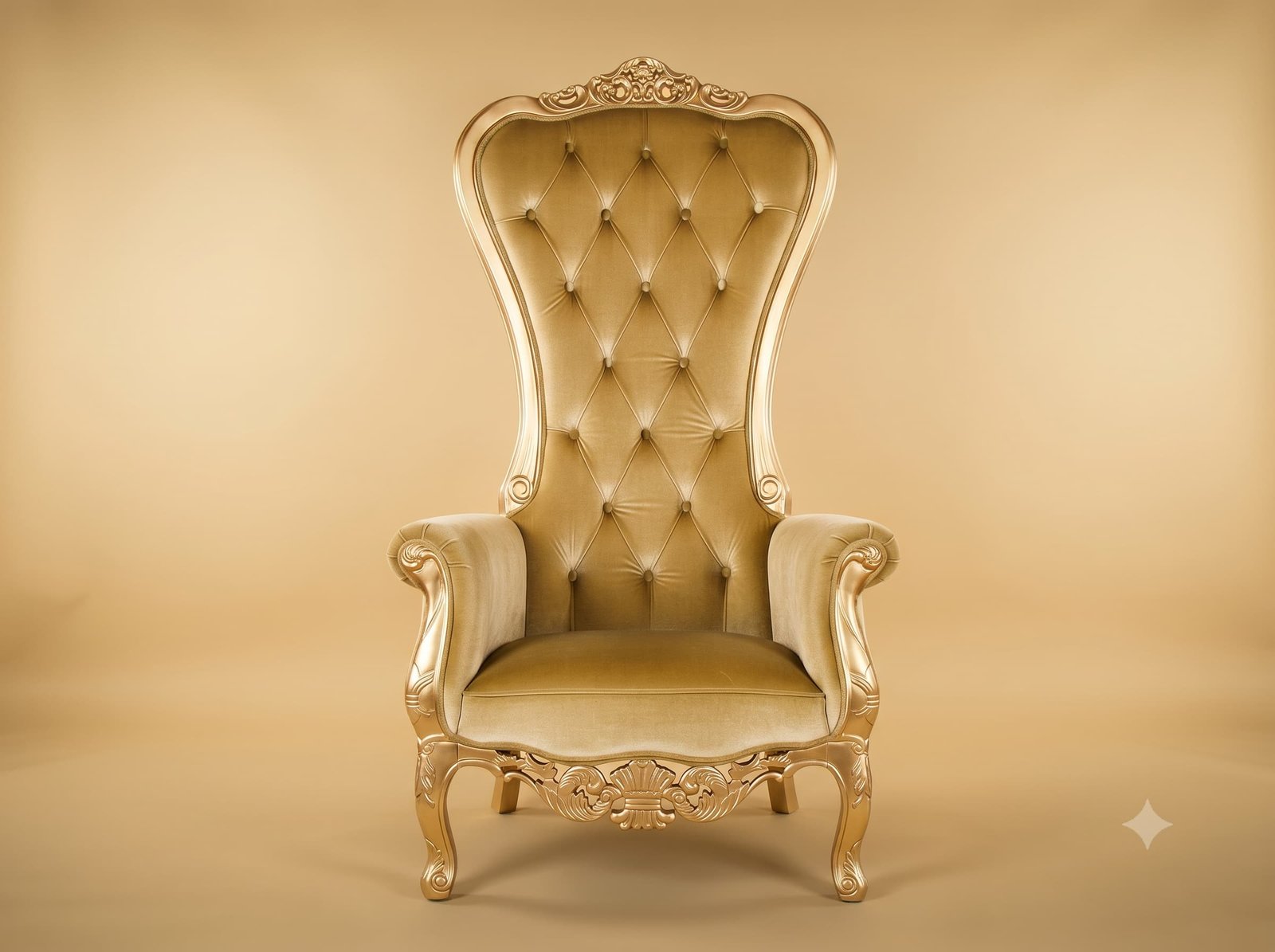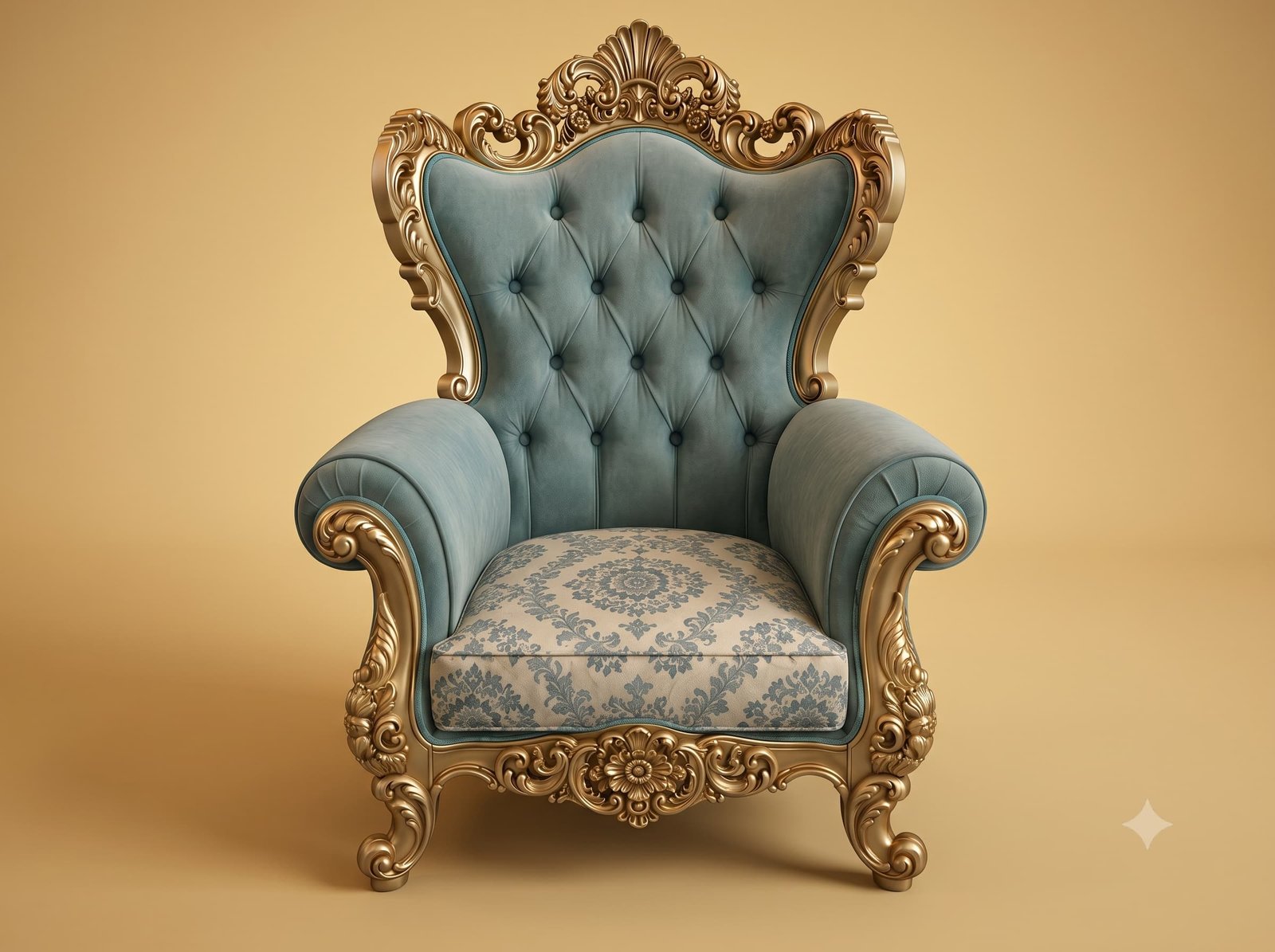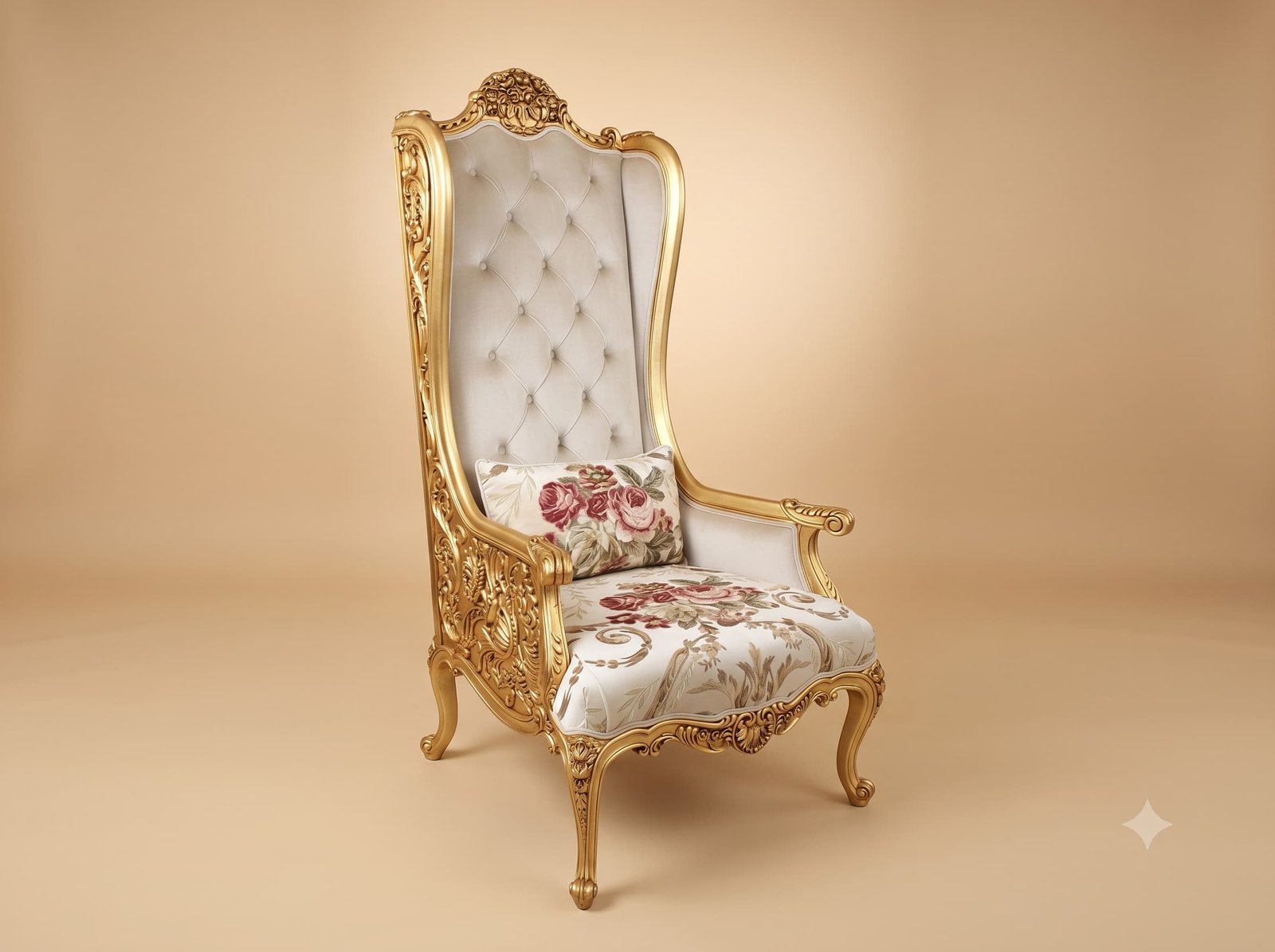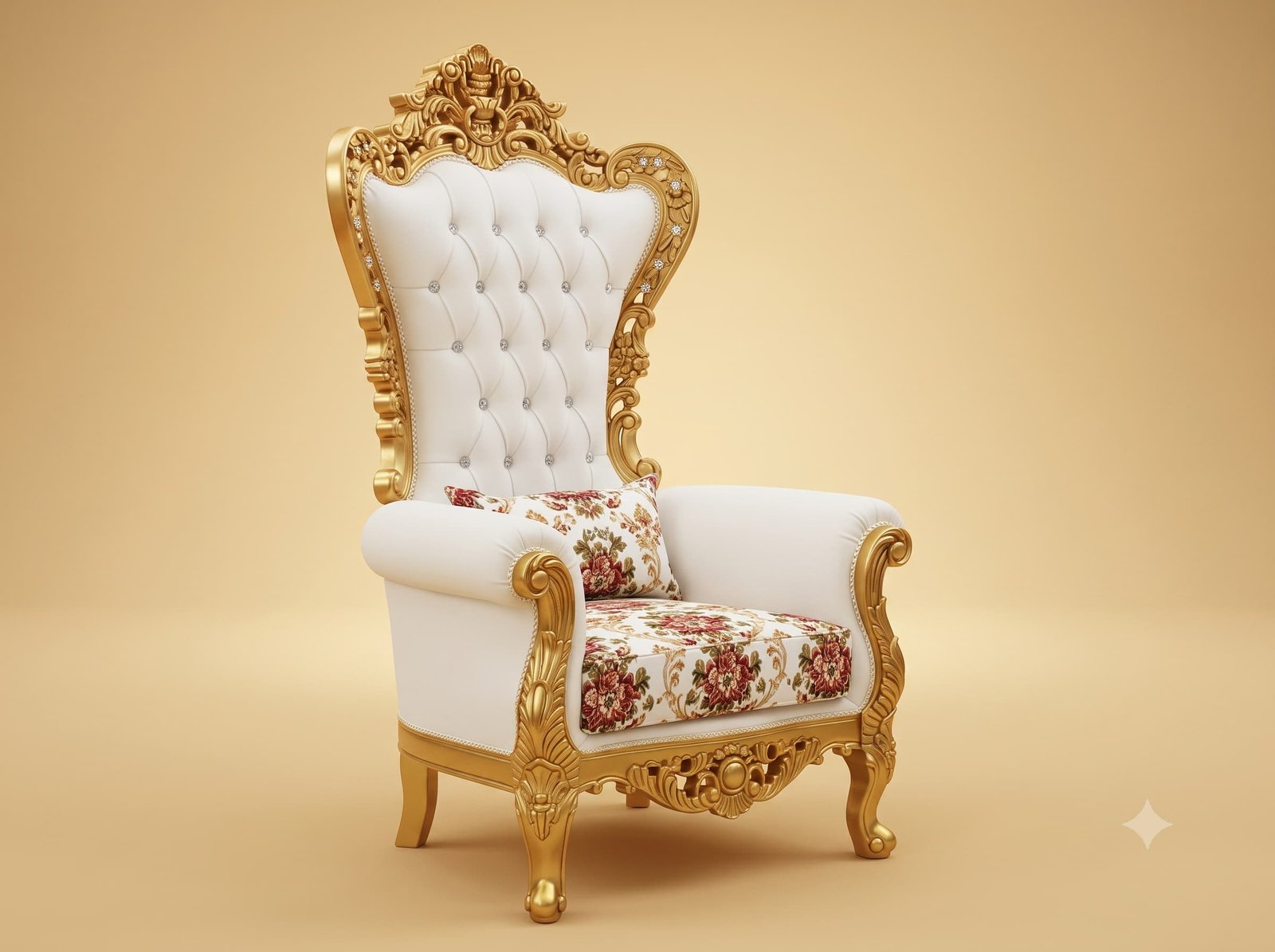
The interesting part of a chair like this is not the carving - it is where the roses fall. A printed cloth has a repeat, and a repeat that lands badly puts half a flower at the front edge of the seat and another half on the bolster, so the two read as unrelated pieces of fabric that happen to share a colour.
Our upholsterer cuts the seat panel and the bolster from one continuous length rather than from separate offcuts. He lays the cloth out full, finds the row of roses that will sit centrally on the seat, and marks the bolster panel from the row immediately following it. When the two are made up and set in place, the pattern appears to run on from the seat into the bolster, because it does.
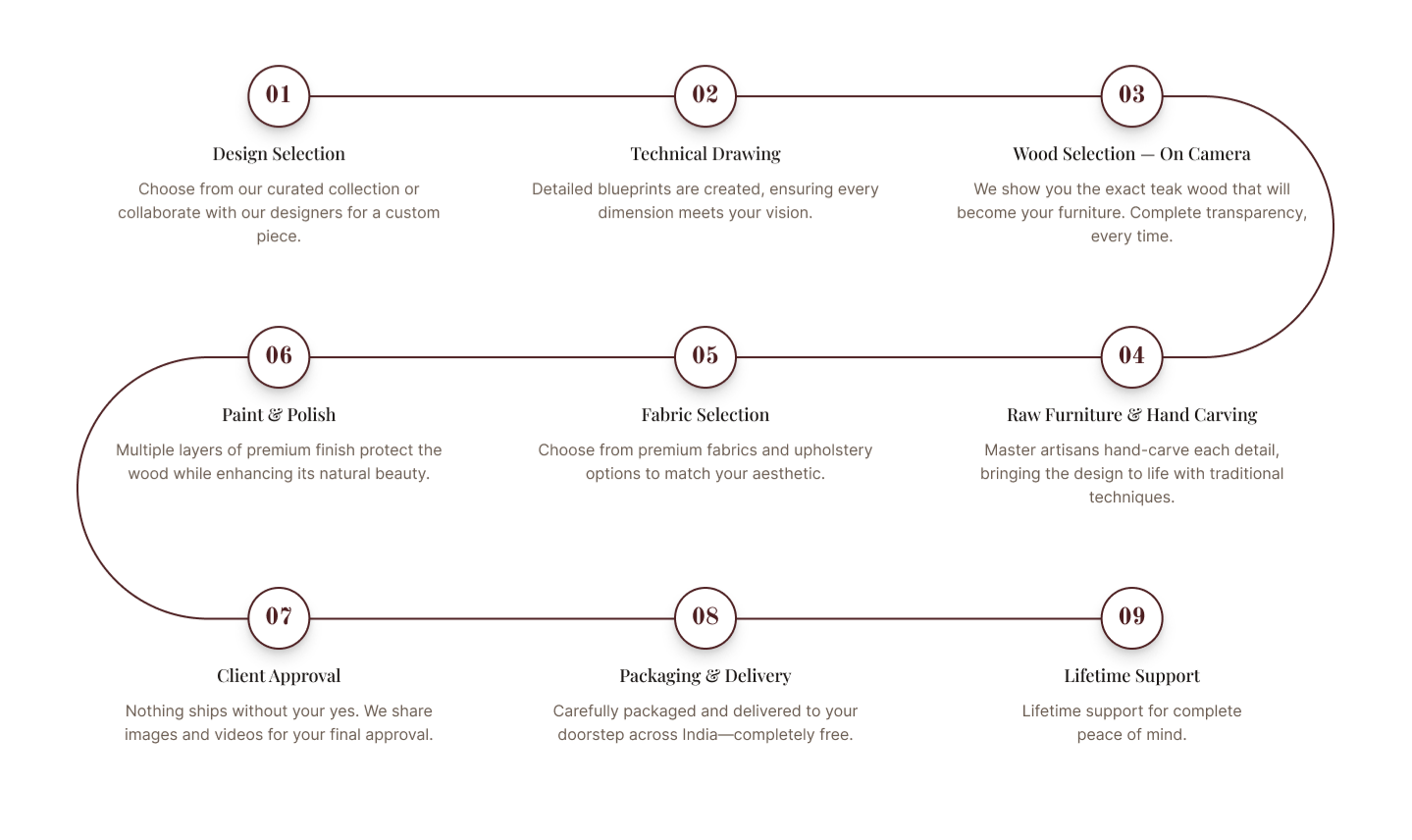
It costs cloth. Cutting for pattern rather than for economy means a length is used up faster than the panel areas alone would suggest. We buy the extra rather than nesting the pieces, and we tell the client the yardage honestly at the quoting stage.
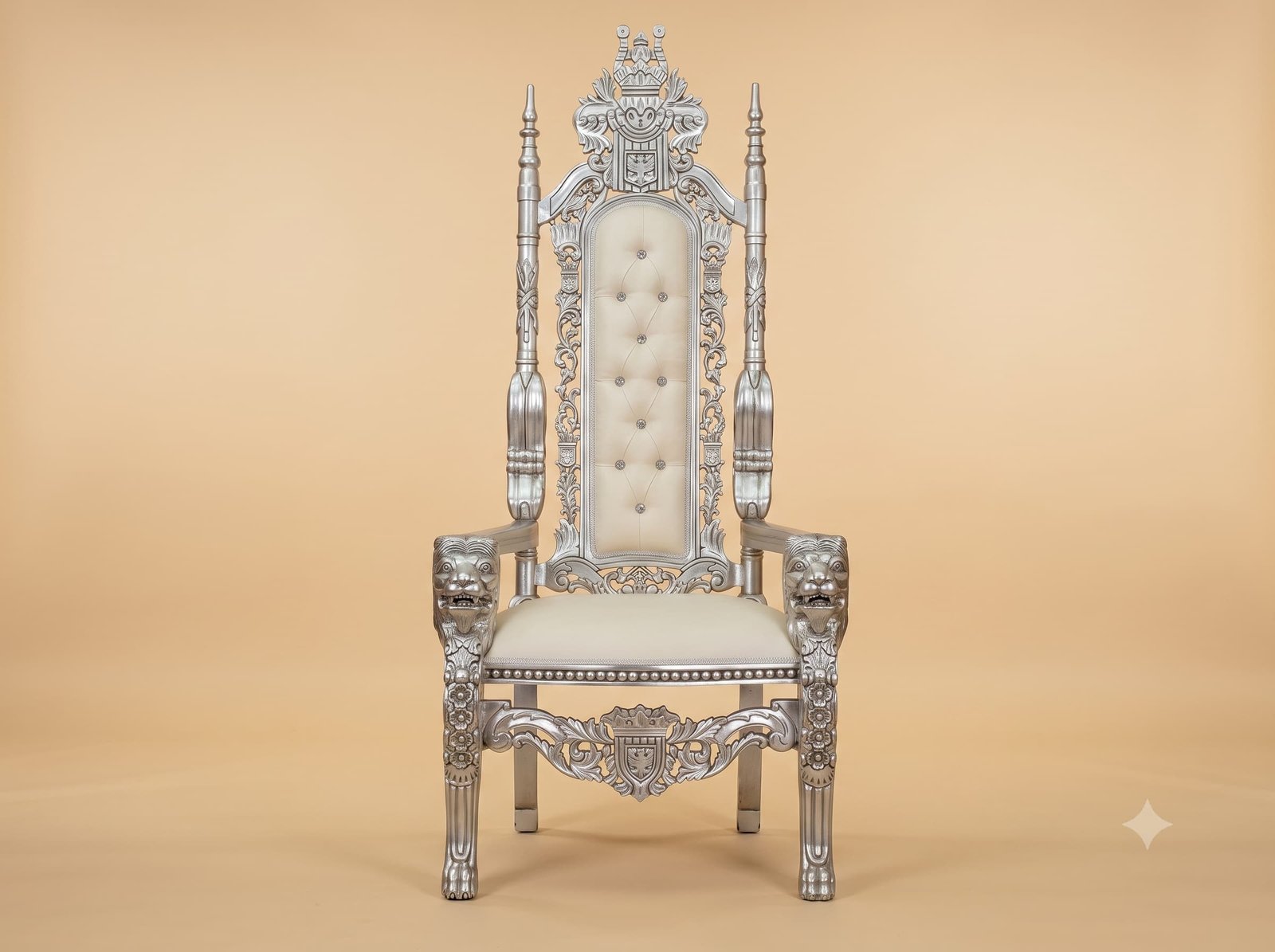
The plain white back is the other half of that decision. Print against print would flatten both; print against a quiet buttoned ground gives the roses somewhere to sit.
 Ask Price On WhatsApp