An Open Canopy, and Why It Keeps the Wood Clean
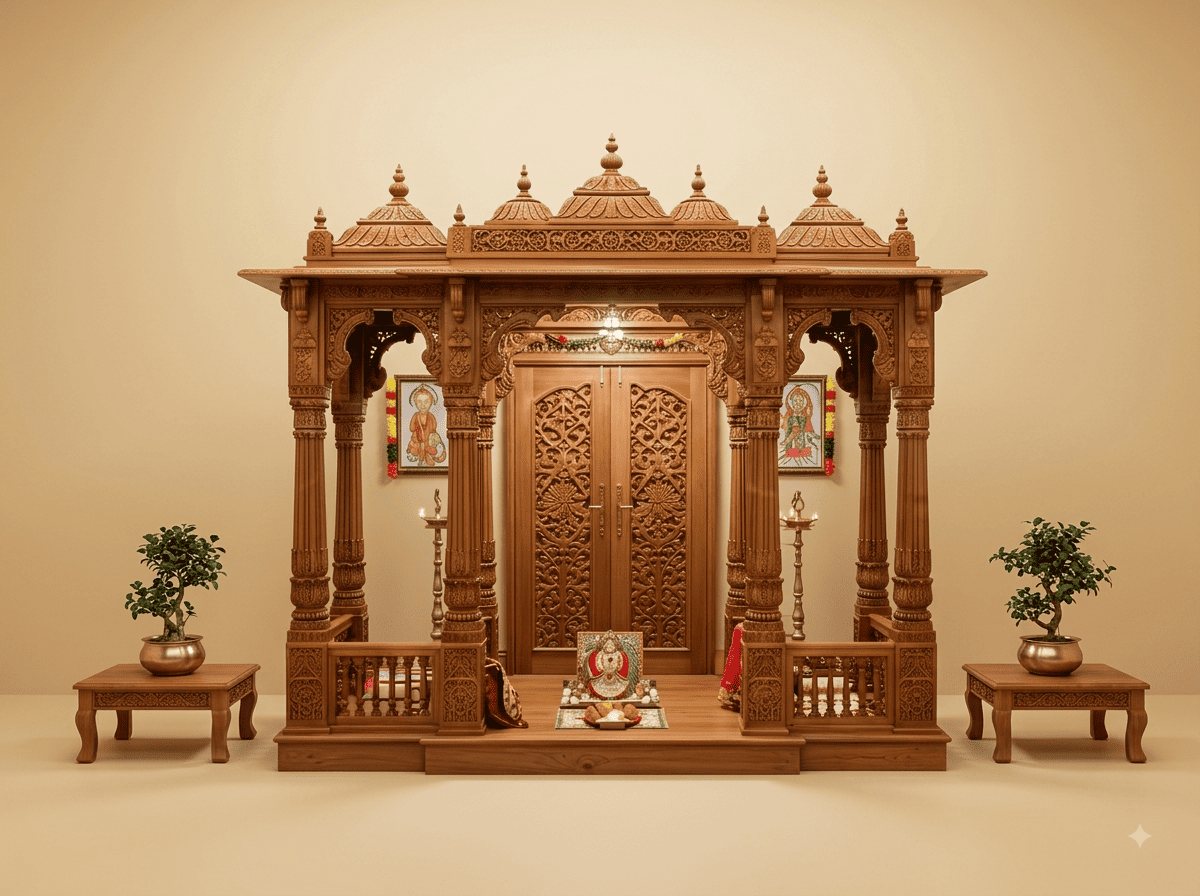
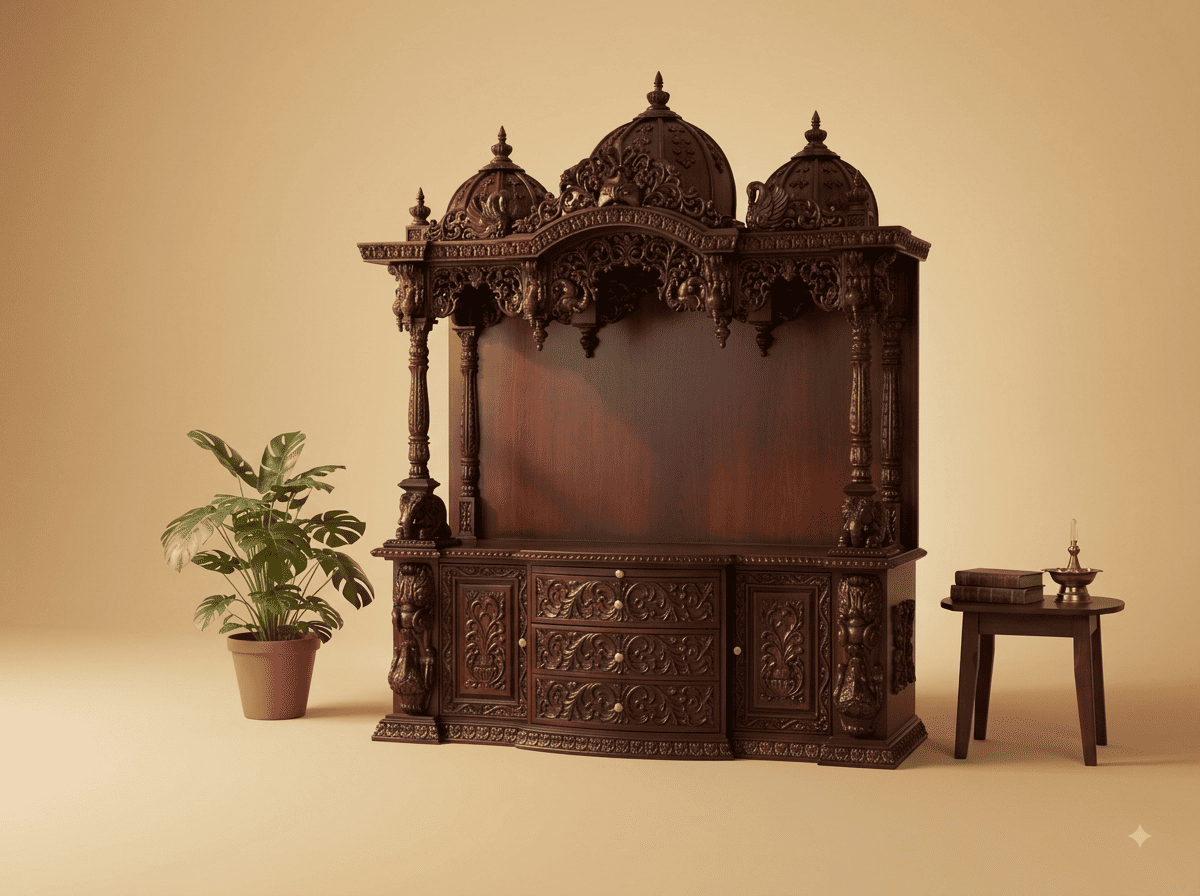
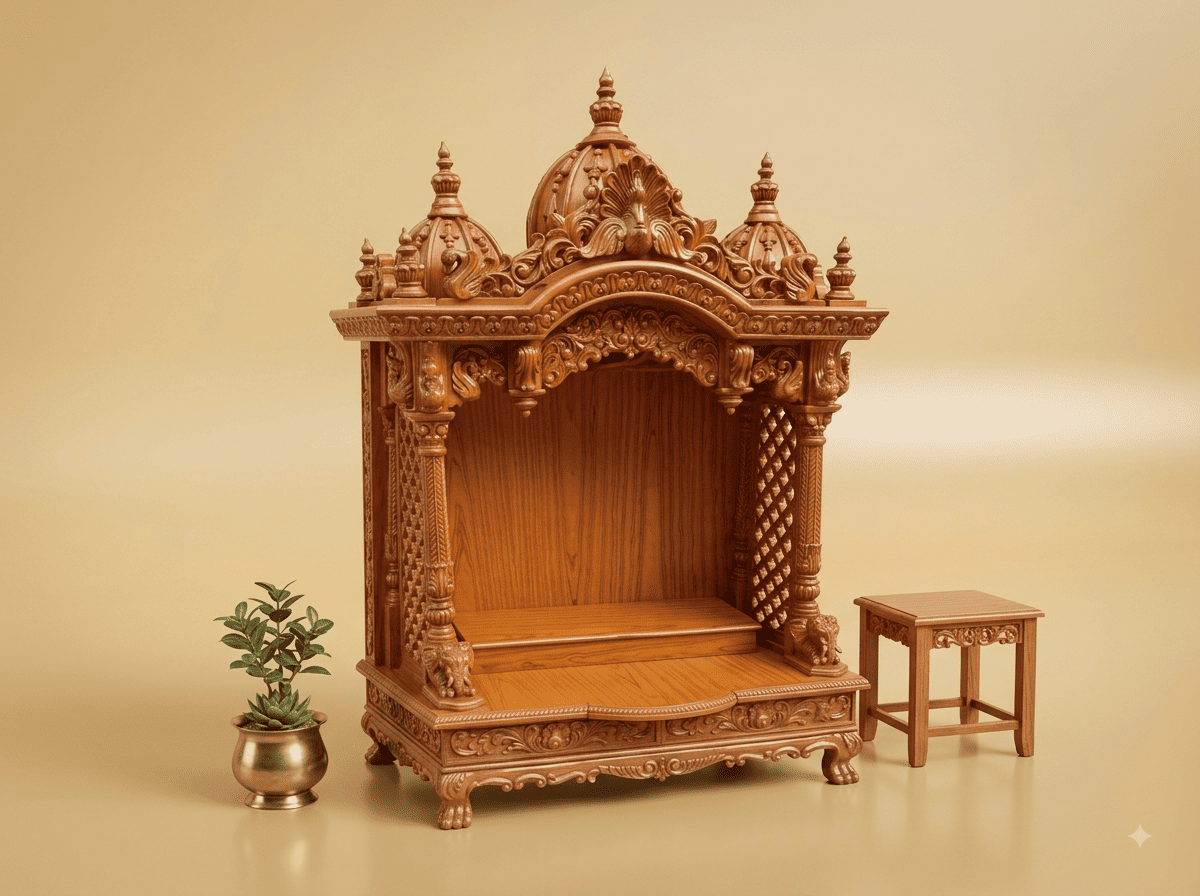
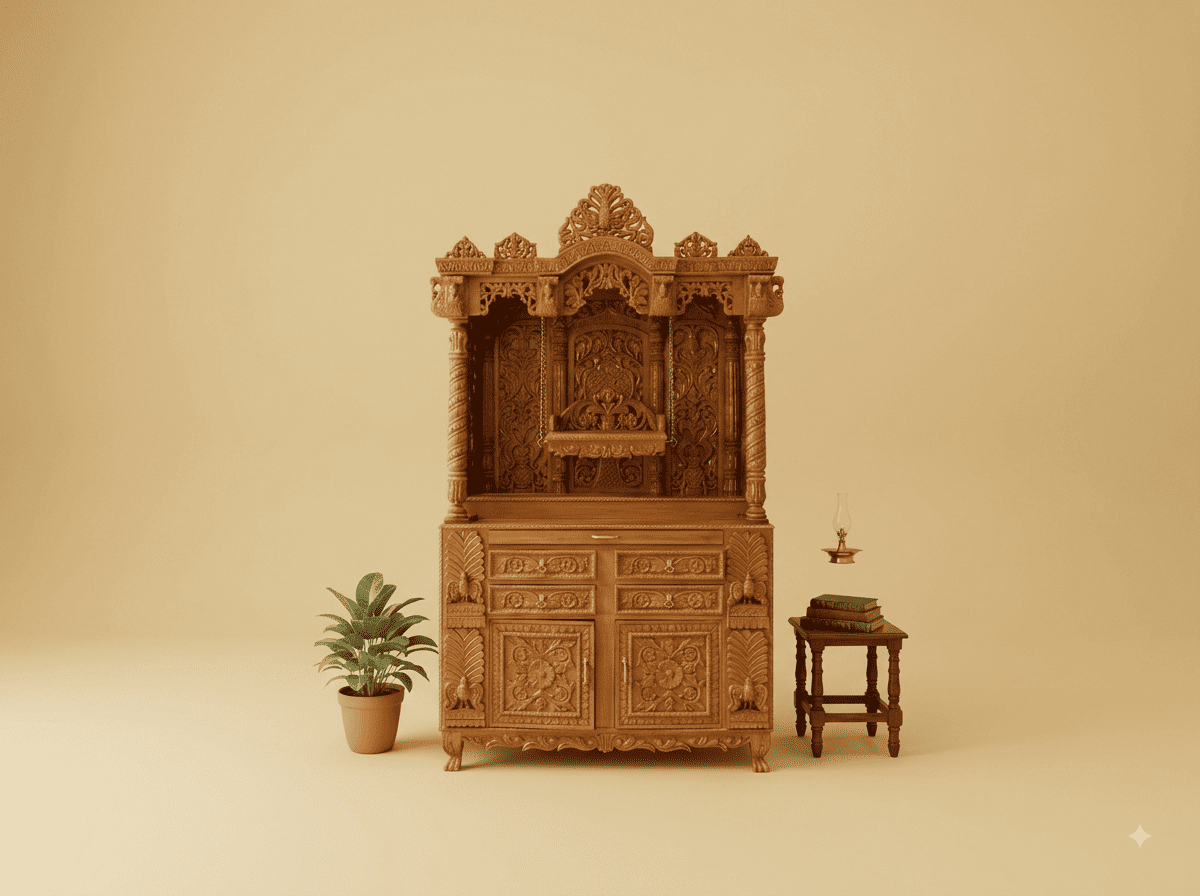
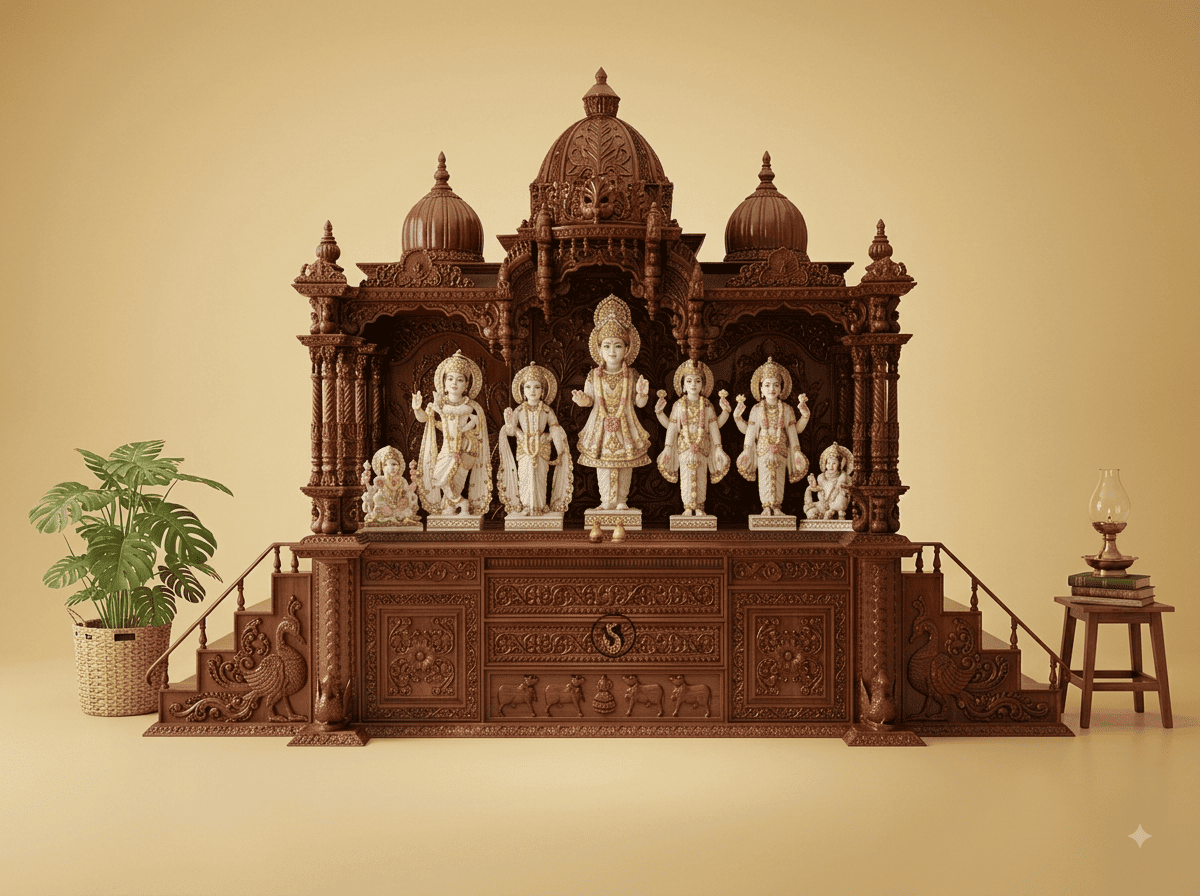
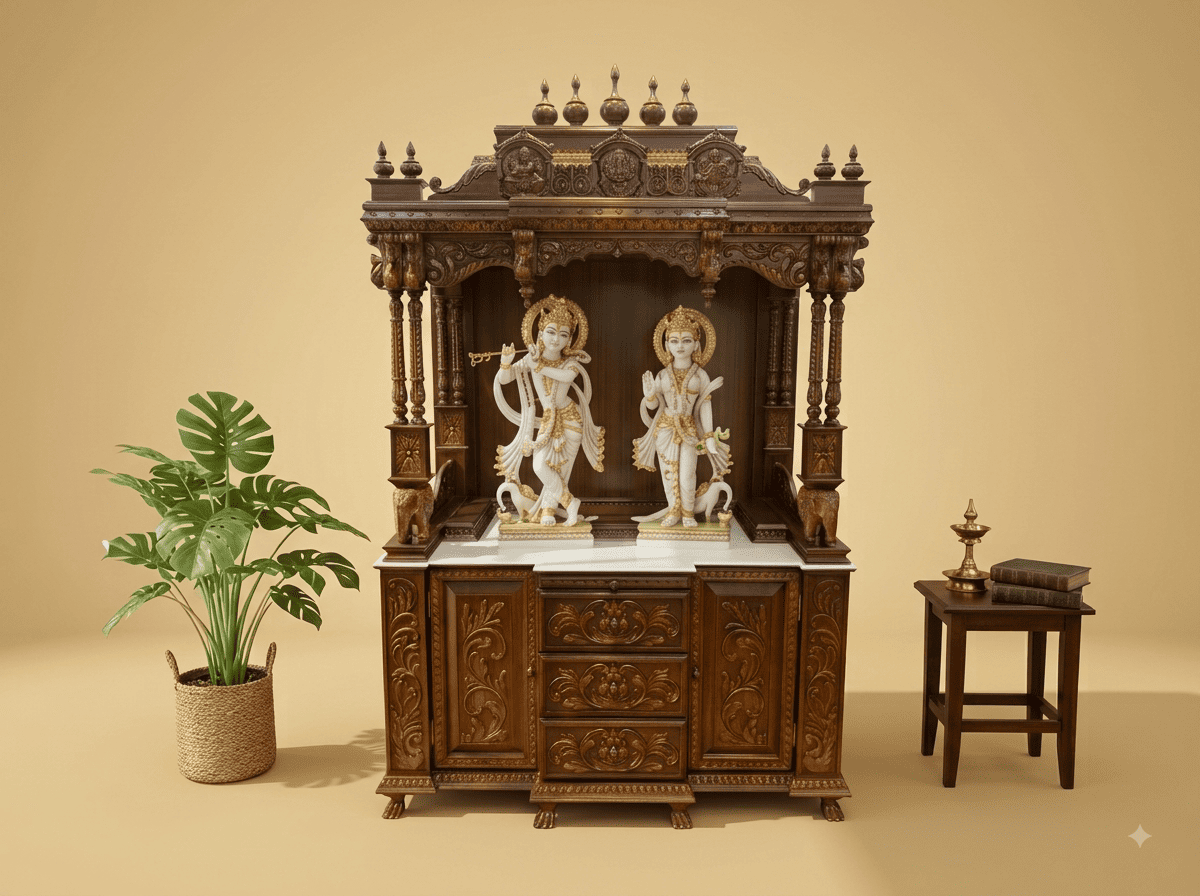
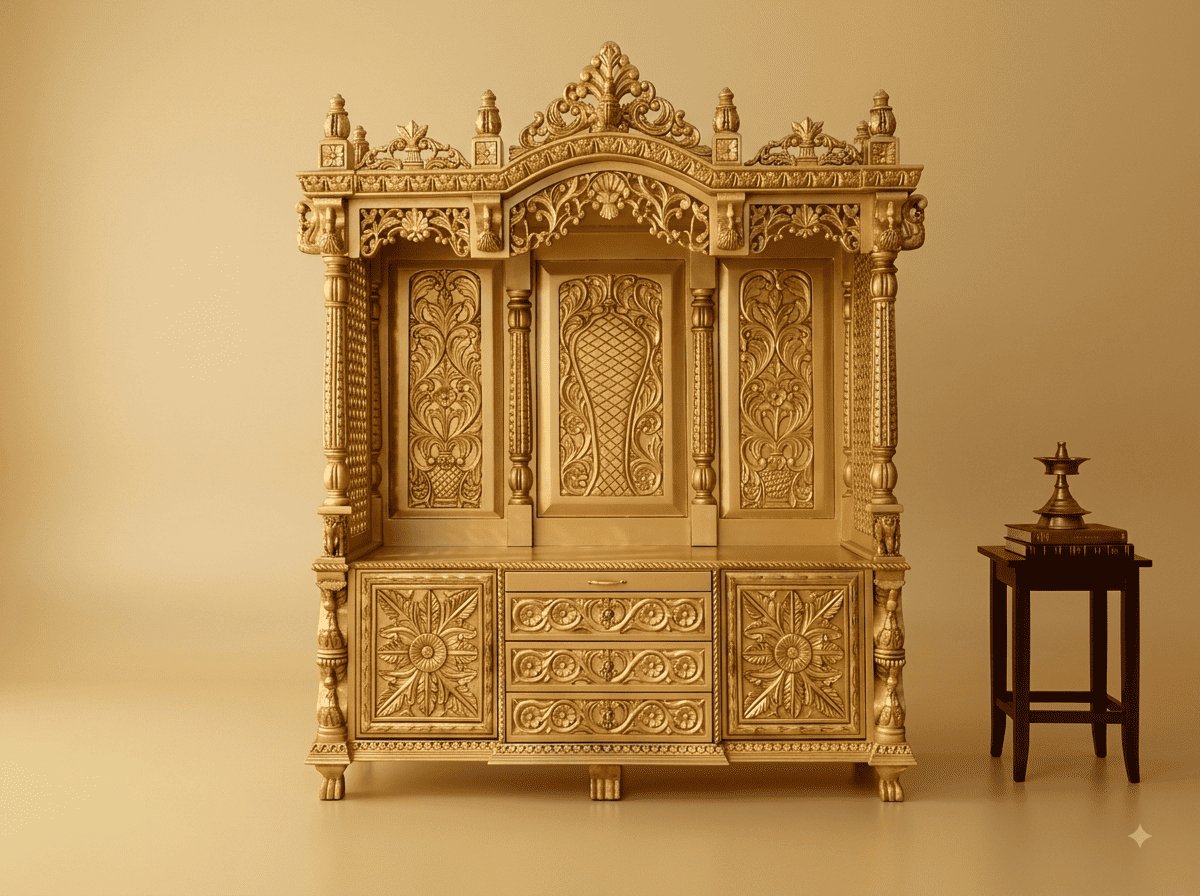
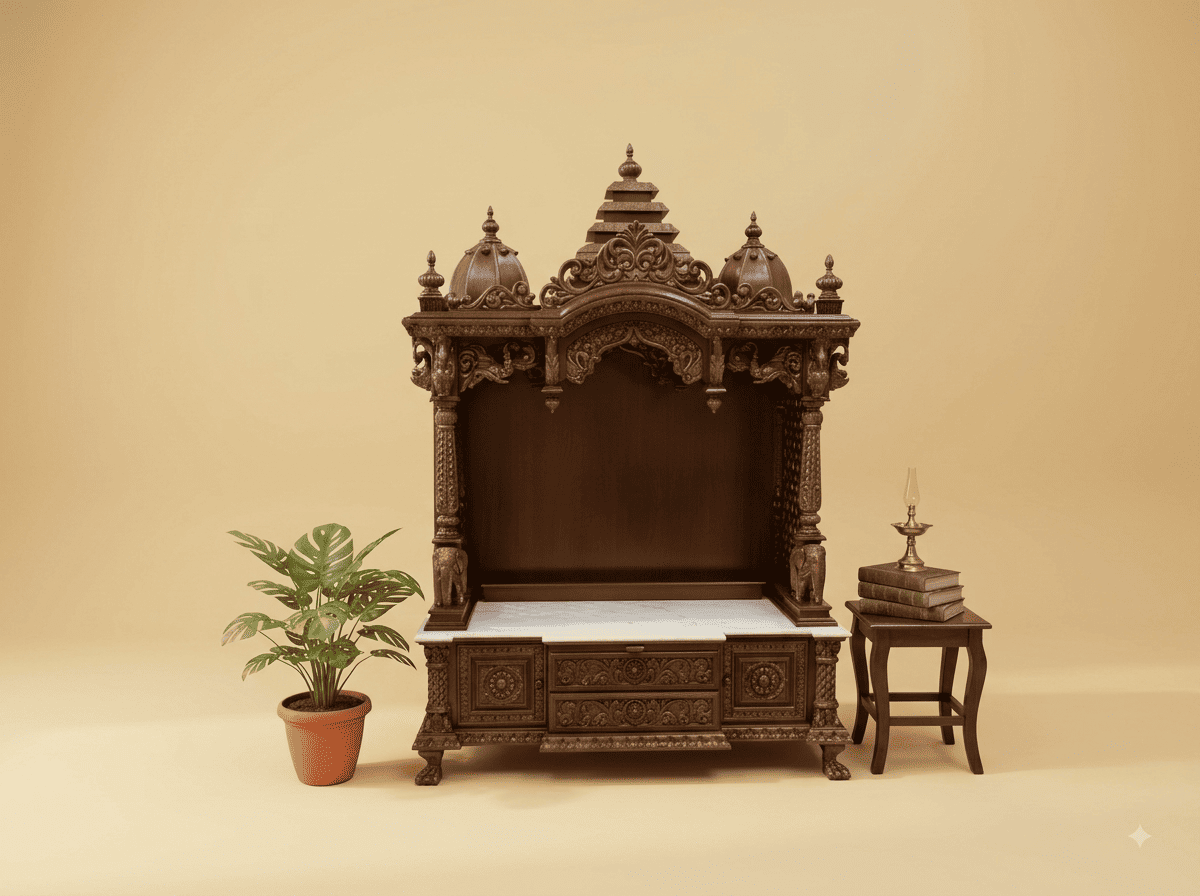
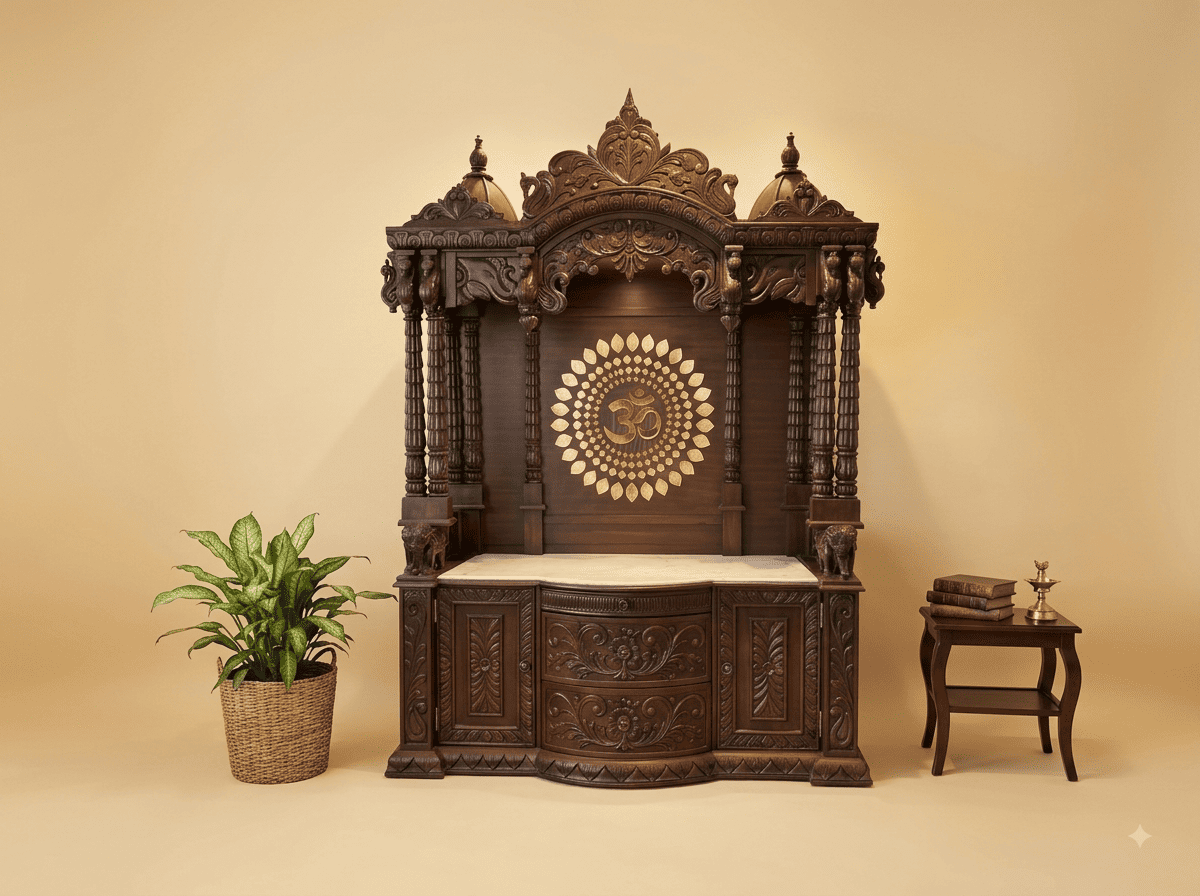
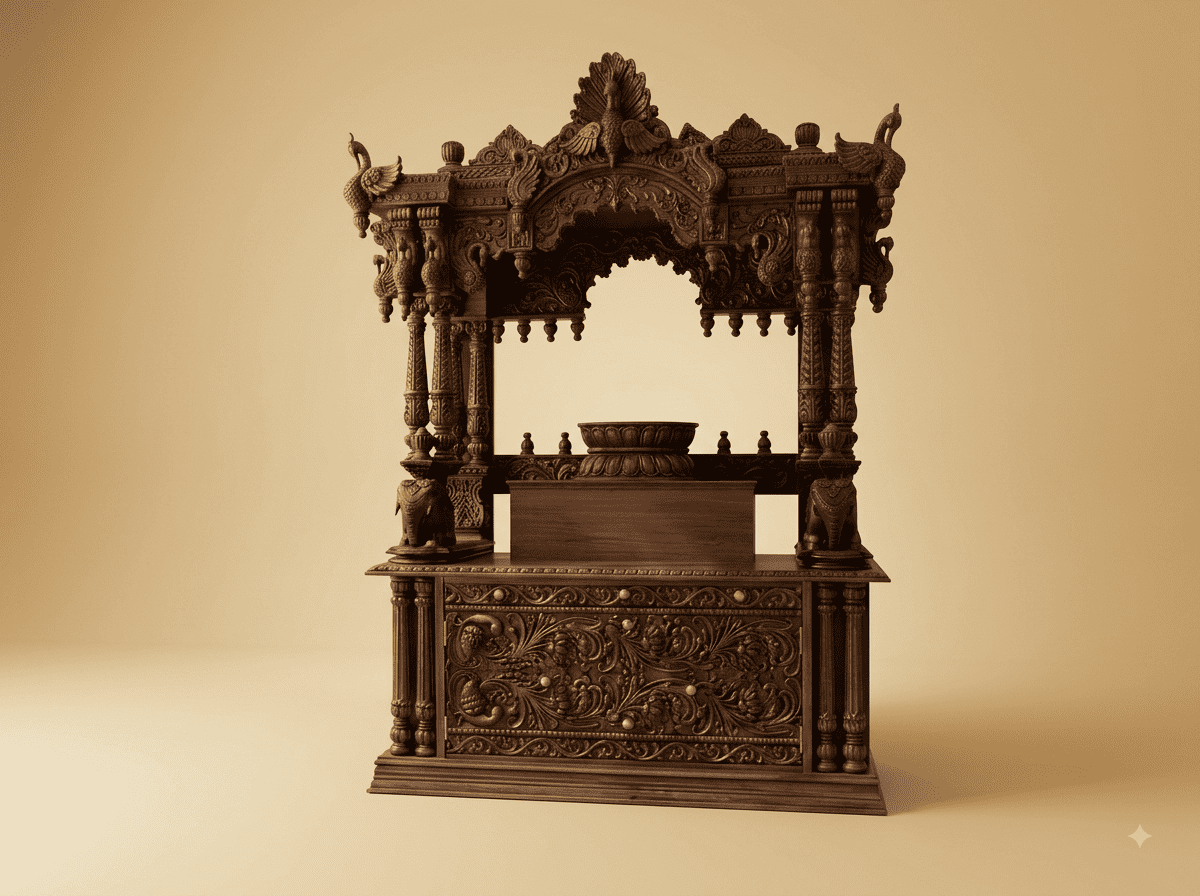
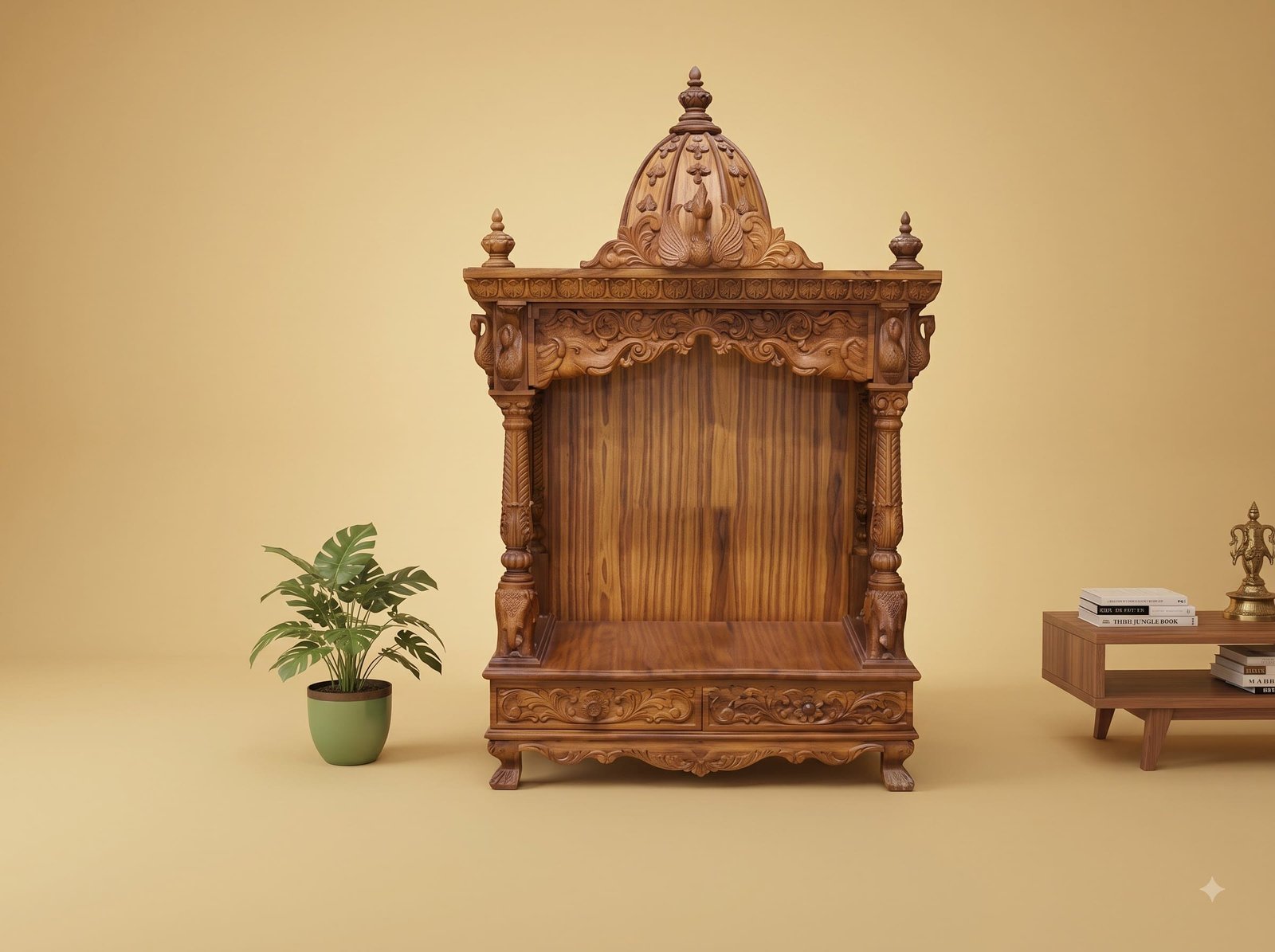
The canopy on this mandir is carried on pillars and left open at the front and both sides. That single decision is what keeps the underside of the shikhar looking as good in ten years as it does on the day it arrives. Diya and agarbatti smoke rises, and with an open canopy it keeps rising and disperses into the room instead of gathering against the wood a few inches above the flame. Families who have lived with this design tell us the difference plainly: the timber above the deities stays clean with nothing more than an occasional dusting.
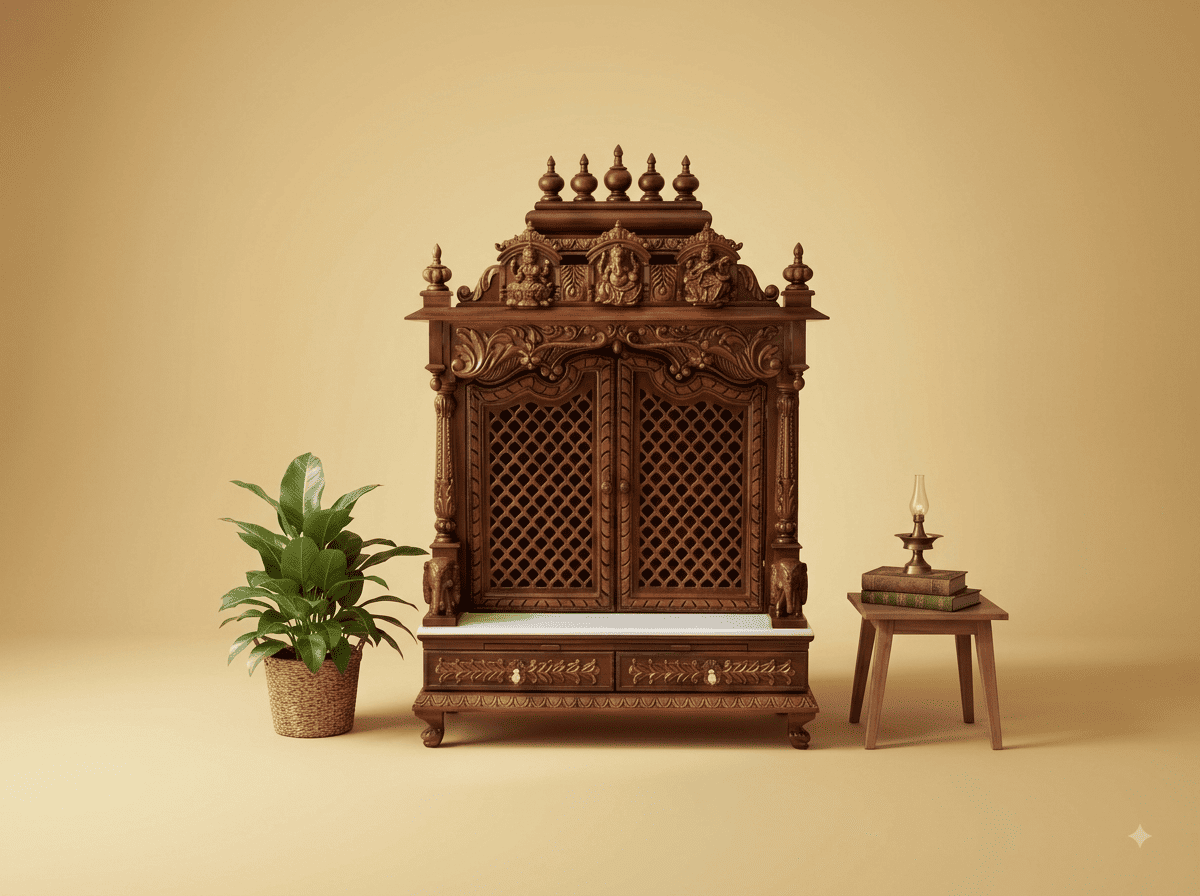
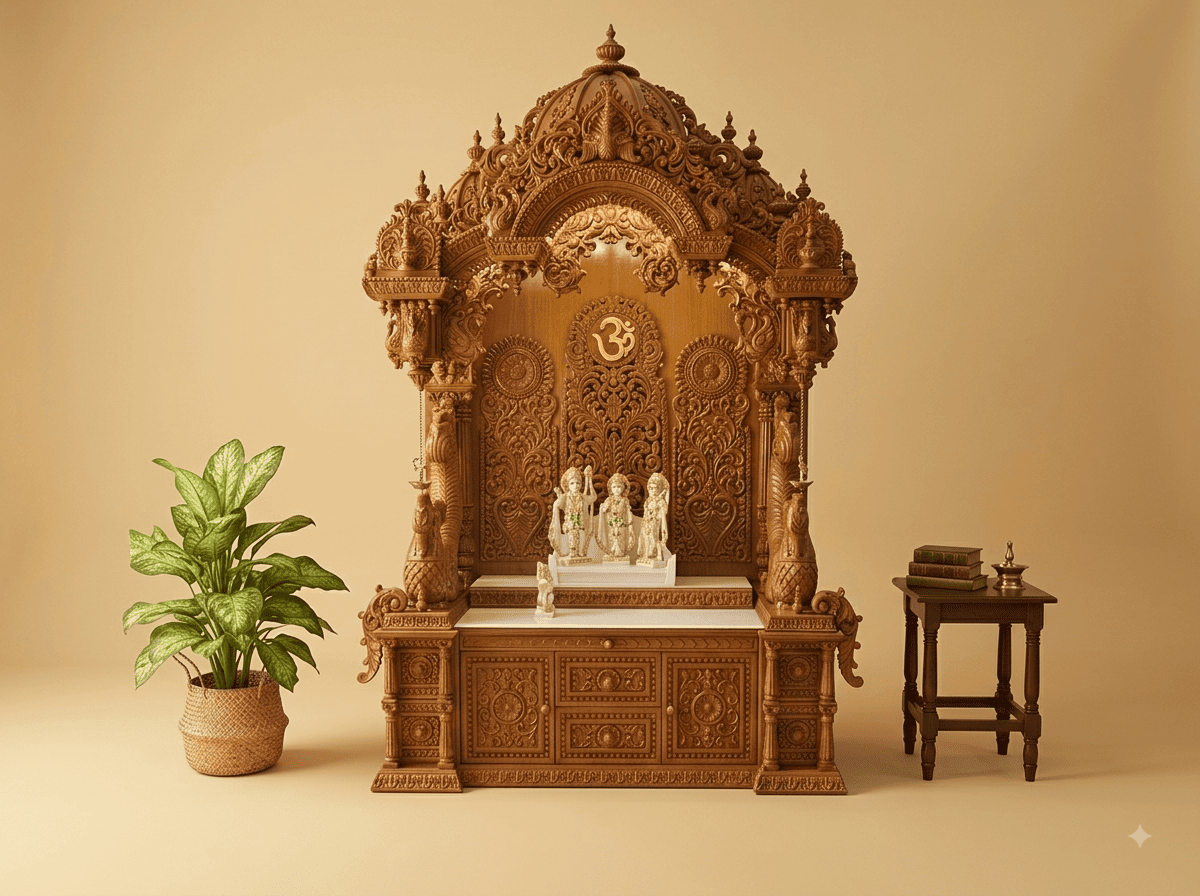
The shikhar above is solid and carved, so the piece still reads as a temple from across the room, and it is set above an open volume rather than capping a sealed one. The back panel is deliberately plain book-matched teak, which lets the grain sit quietly behind the deities and keeps the surface easy to wipe. If you would like doors, we build them with ventilation designed into the carcass so the same airflow is preserved. Every one of these is carved and polished by hand by master Indian artisans, and the photographs on this page show the actual piece.
 Ask Price On WhatsApp