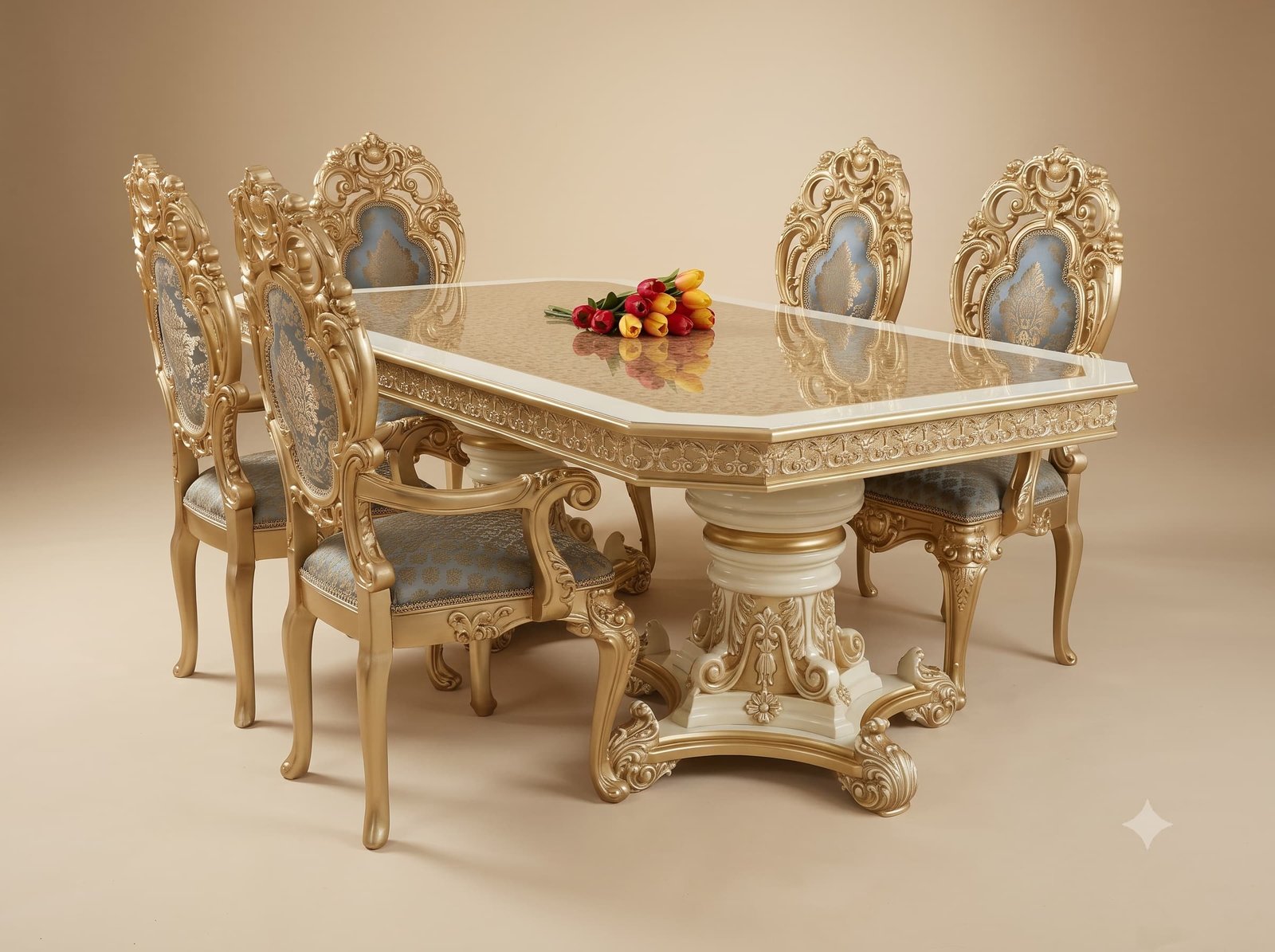
A carved frieze running round a table is a repeating pattern, and a repeating pattern has to decide where it starts. On a plain rectangle you can start at a corner and let the repeat run out along the length; the join lands somewhere in the middle of a long side where nobody studies it.
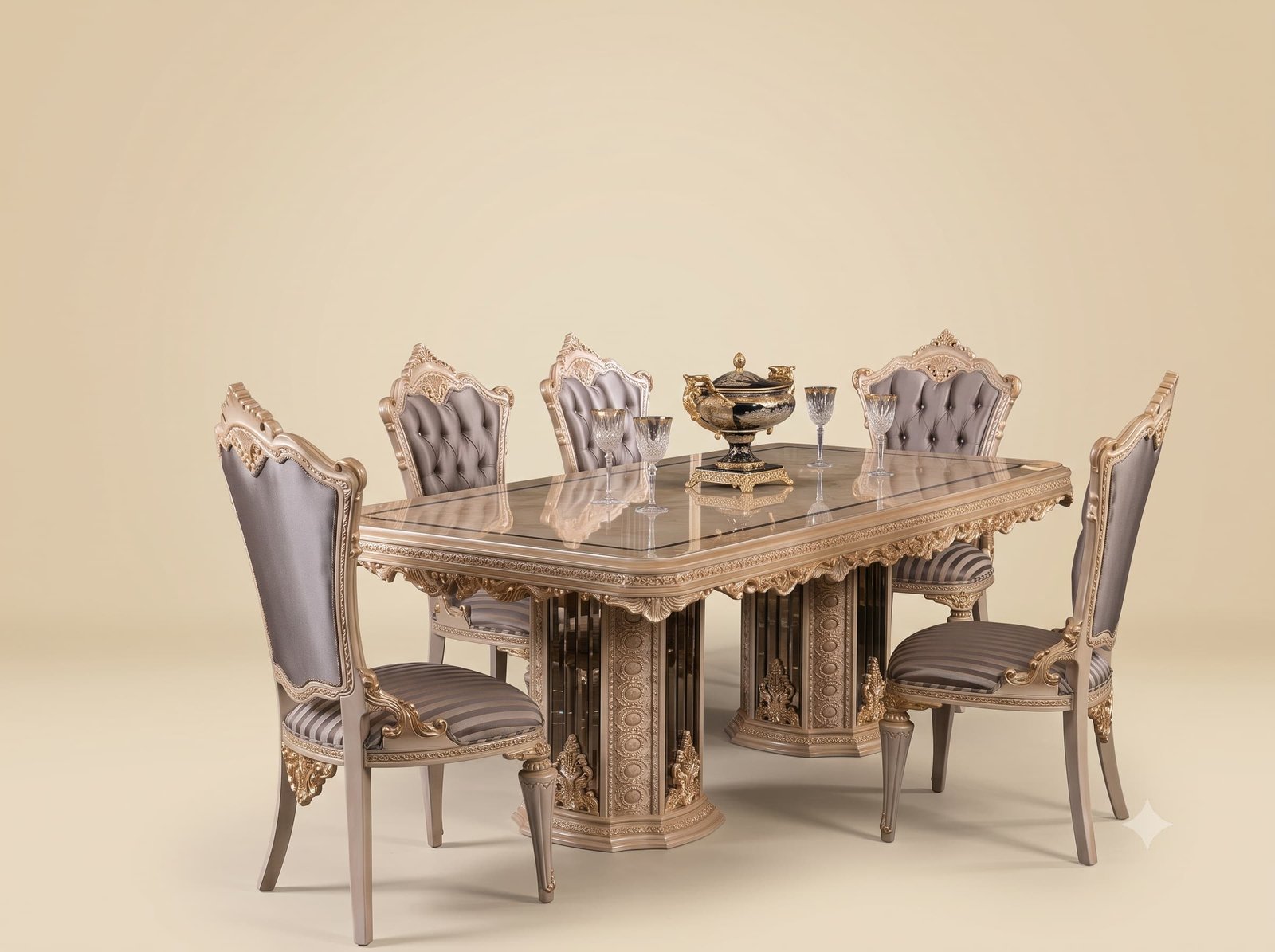
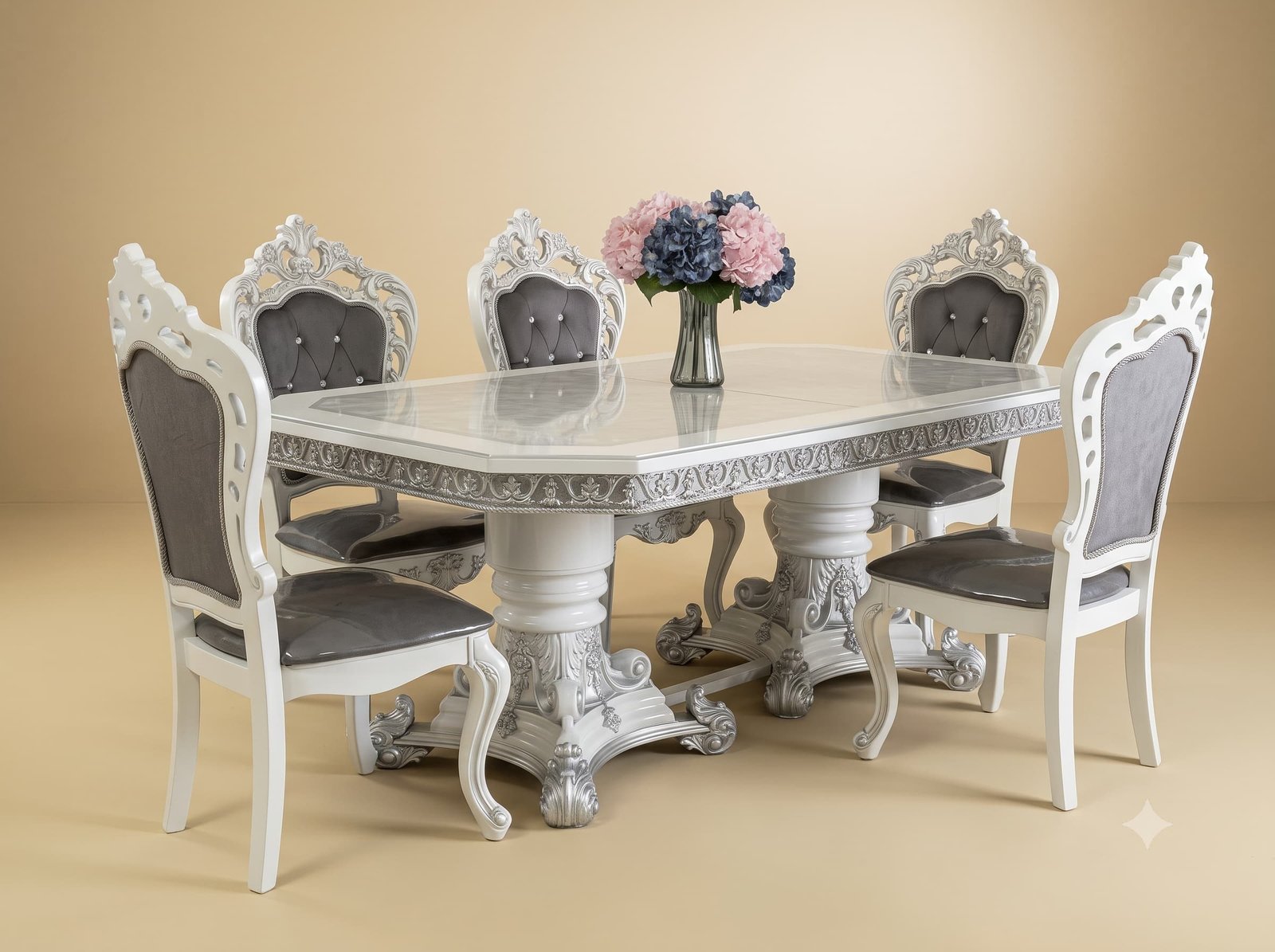
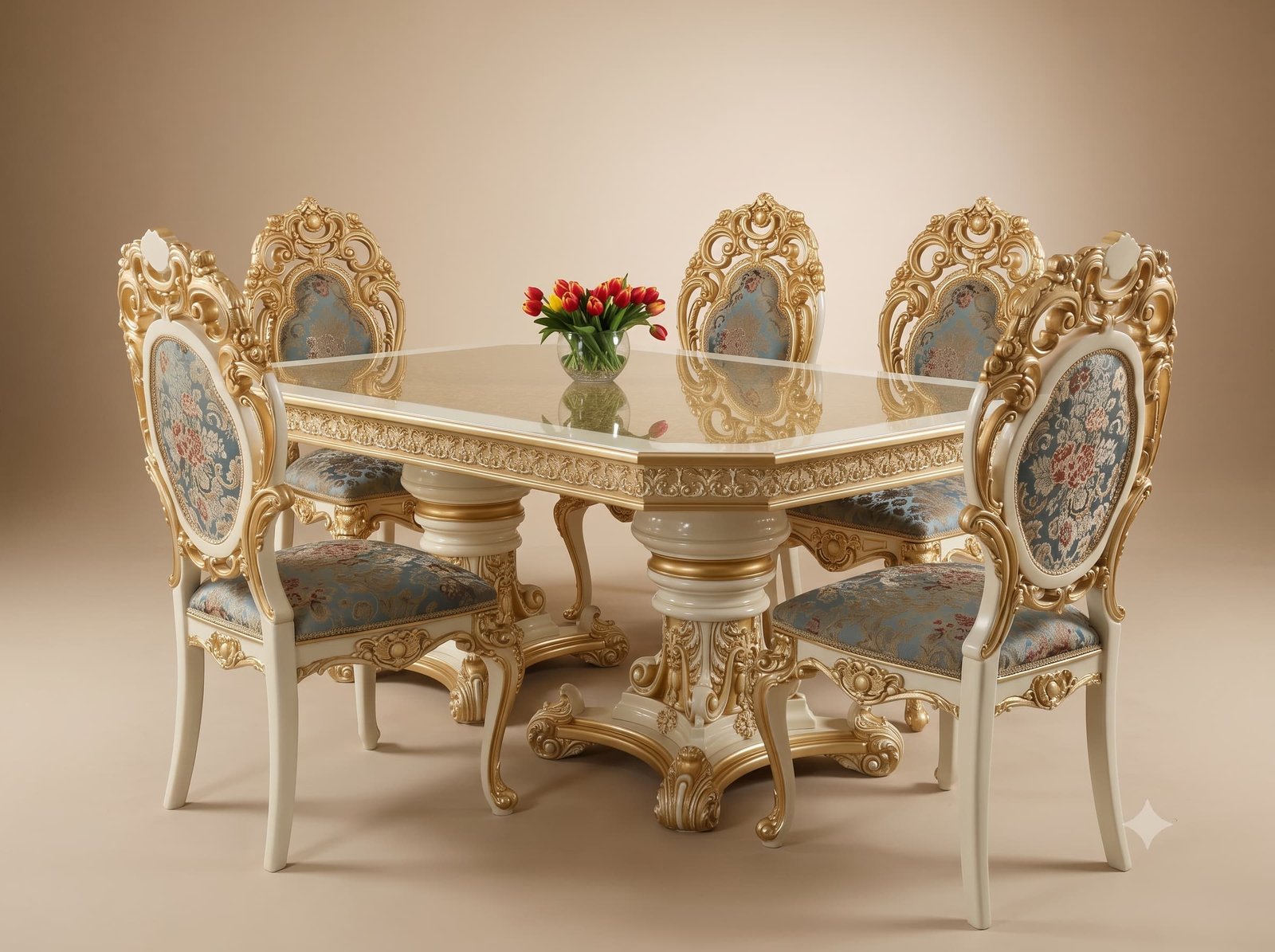
A canted corner top does not allow that. It has eight faces instead of four, and the four short diagonal faces are exactly where the eye goes - they are the unusual thing about the table, and they are seen at an angle where any interruption in the pattern shows.
So the frieze is set out from the corners inward rather than from a starting point outward. The motif is sized so that a whole one lands centred on each canted face, and the repeats then run from those fixed points along the long sides, meeting in the middle of each side where a half-motif can be absorbed into a centred device.
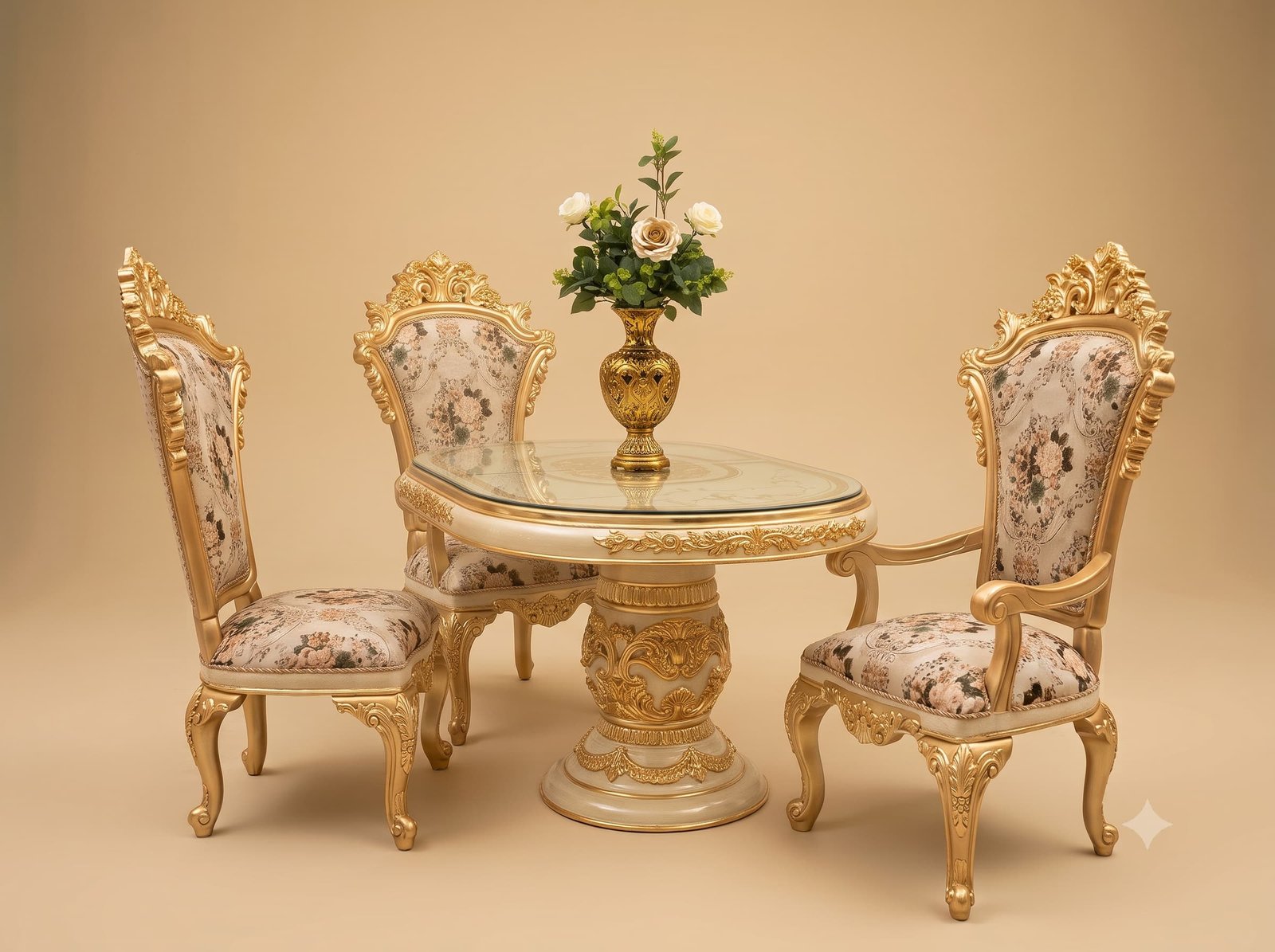
That means the motif size is determined by the table's dimensions rather than chosen in advance. On a longer table, the same design is drawn slightly larger or an extra repeat is added, so the corners always resolve. It is why the frieze on a table we make for you is not identical in scale to the one photographed here, and why it will look right on your table rather than nearly right.
 Ask Price On WhatsApp