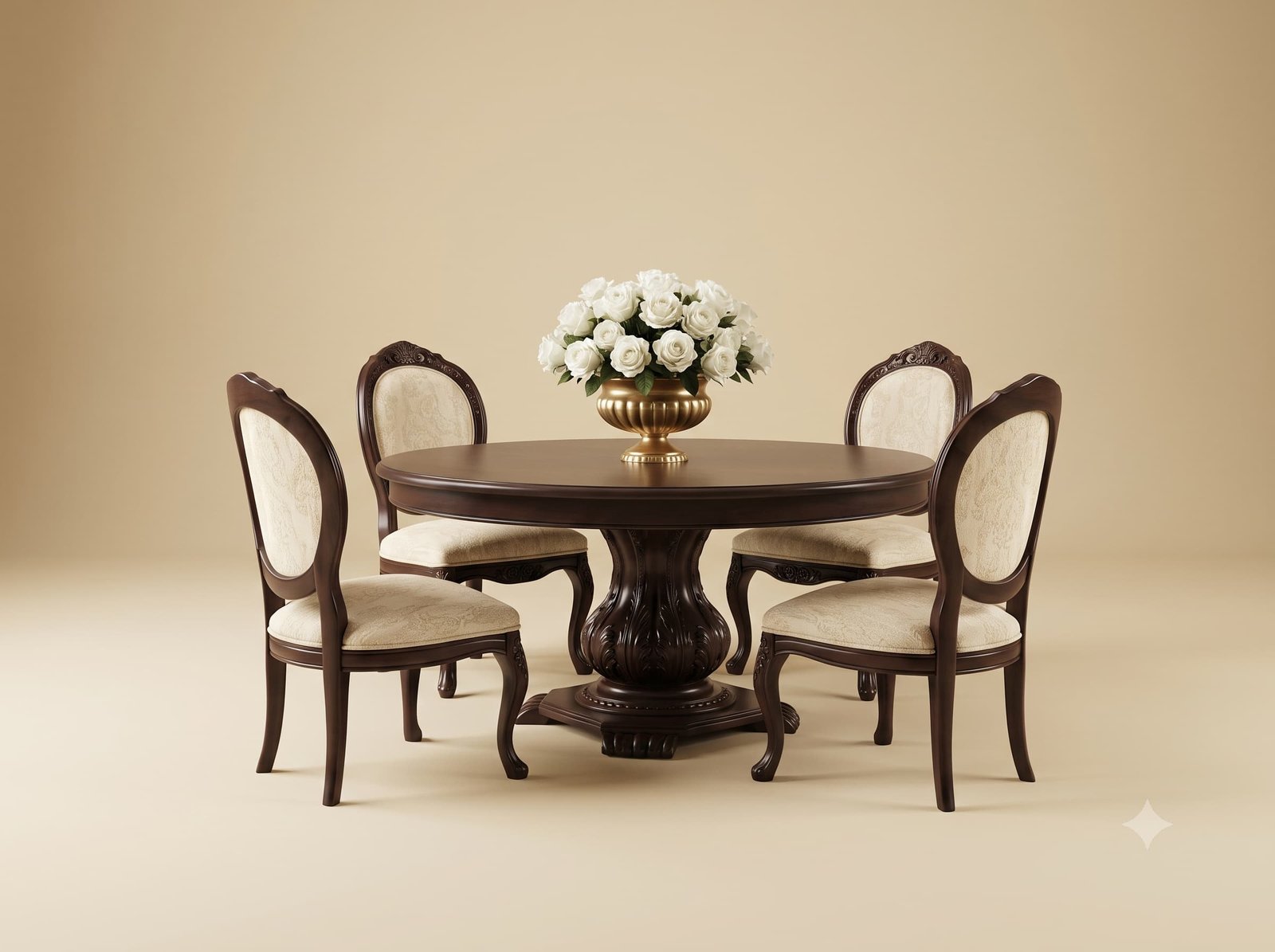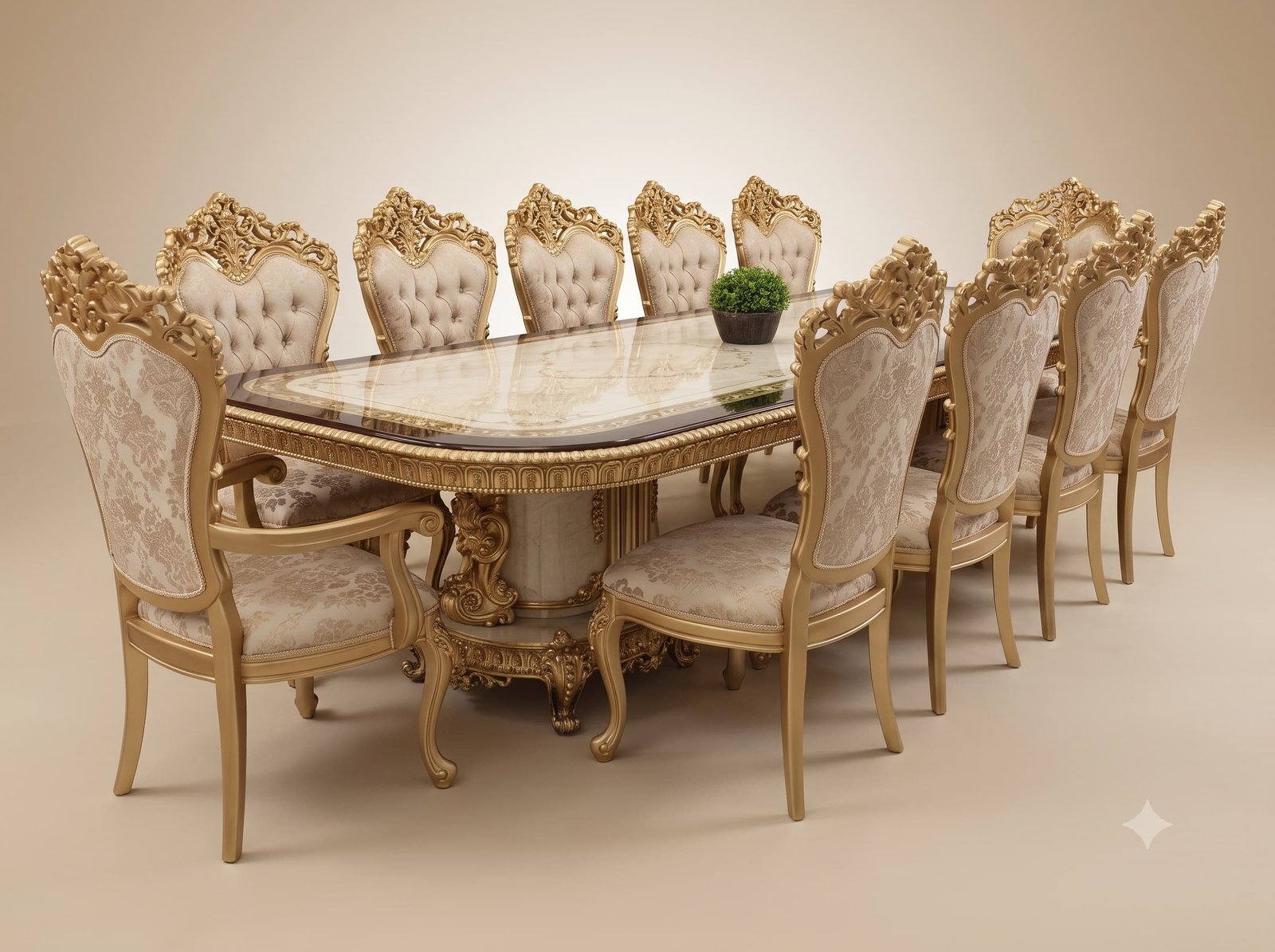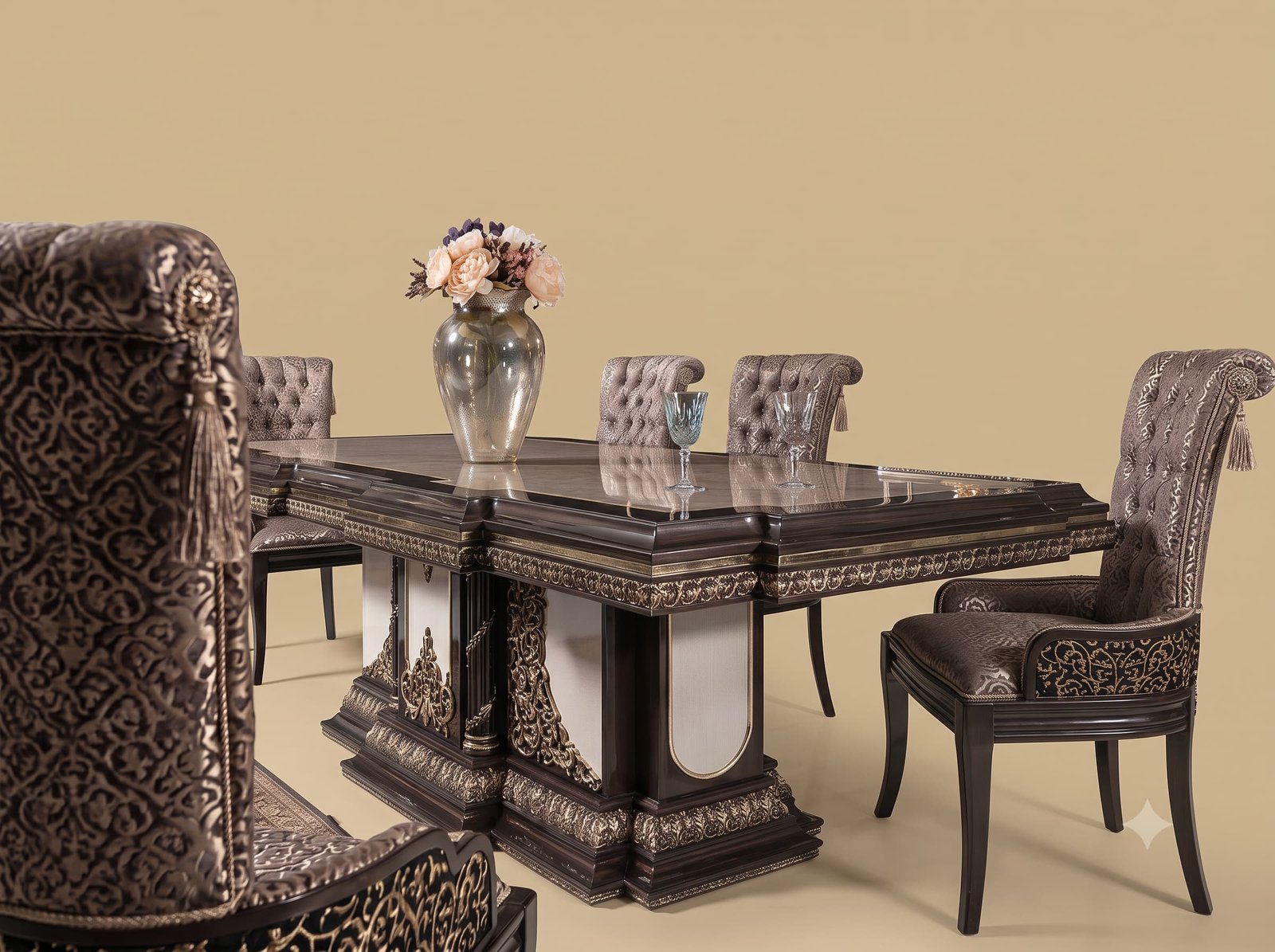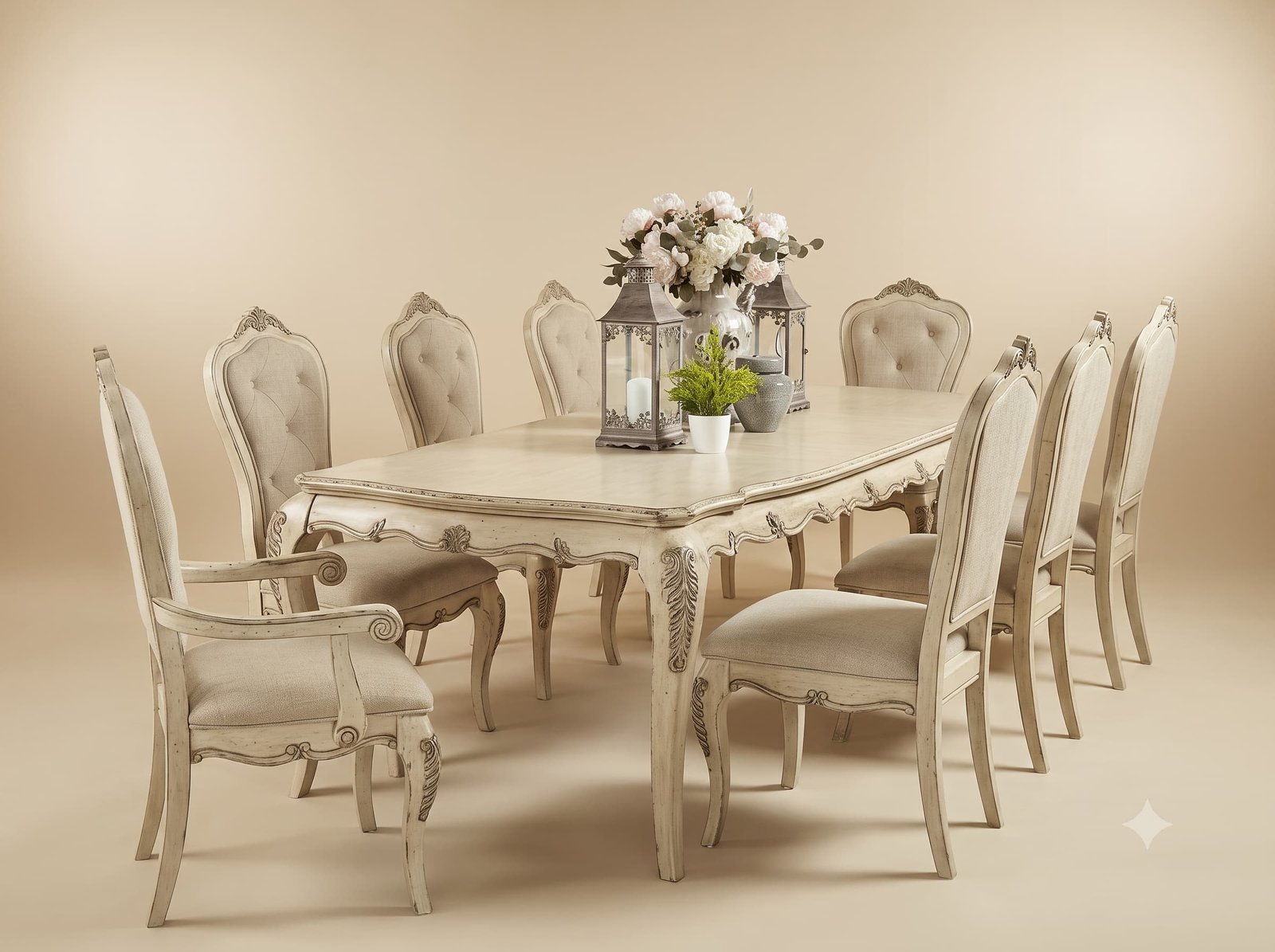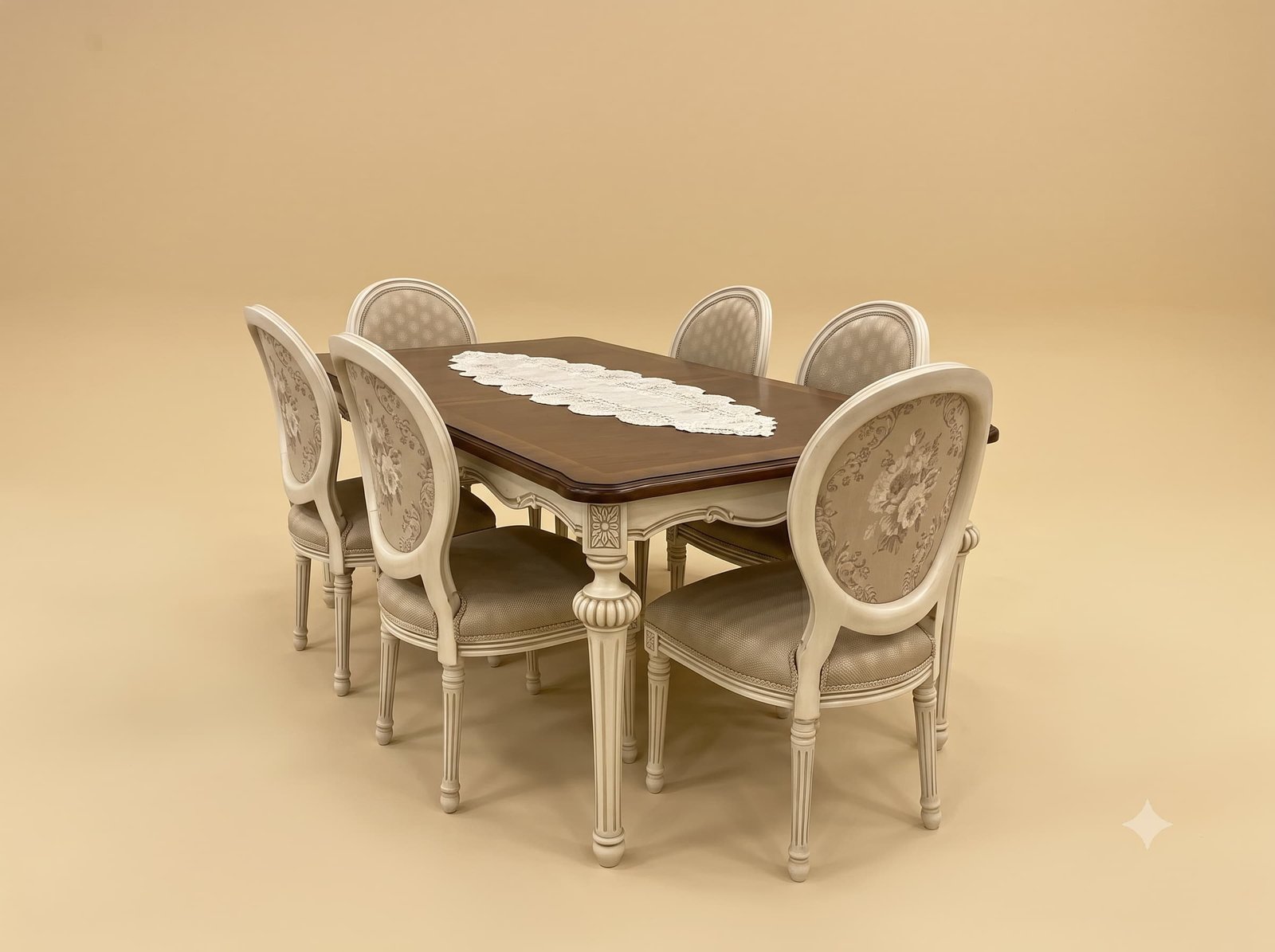
Fluting looks like the simplest decoration there is, and it is the one that exposes a workshop fastest. A flute is a straight groove of constant depth, and the eye can measure a straight groove against its neighbour without any effort at all.
Three things have to be right. The flutes must be evenly spaced around the leg - which sounds obvious until you consider that a turned leg tapers, so equal spacing at the top gives unequal spacing at the bottom unless it is set out from the taper rather than from a fixed dimension. The depth must be constant along the length, on a surface that is getting narrower as it goes. And the stops - where each flute ends, top and bottom - must line up across all four legs, or the set looks as though it is standing on different floors.
So the legs are cut in a jig that indexes the spacing off the leg's own diameter at each point and sets the stop heights from a single reference. All four legs of the table, and all the chair legs, are stopped from that same reference.
The ends of the flutes are then finished by hand, rounded off rather than left as a machine's exit mark, because that little rounded stop is what tells you a person made it.
On a set this plain, there is nowhere for a mistake to hide. That is the point of building it this way.
 Ask Price On WhatsApp