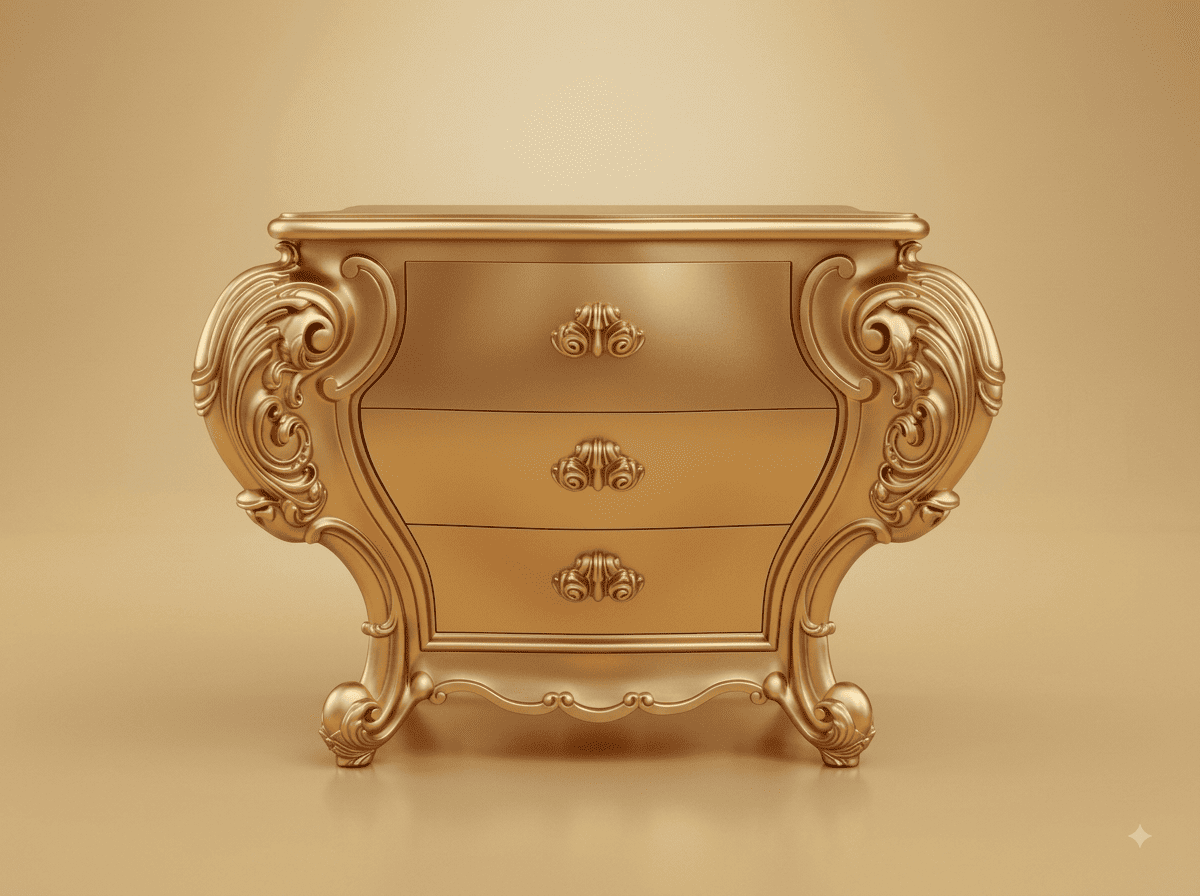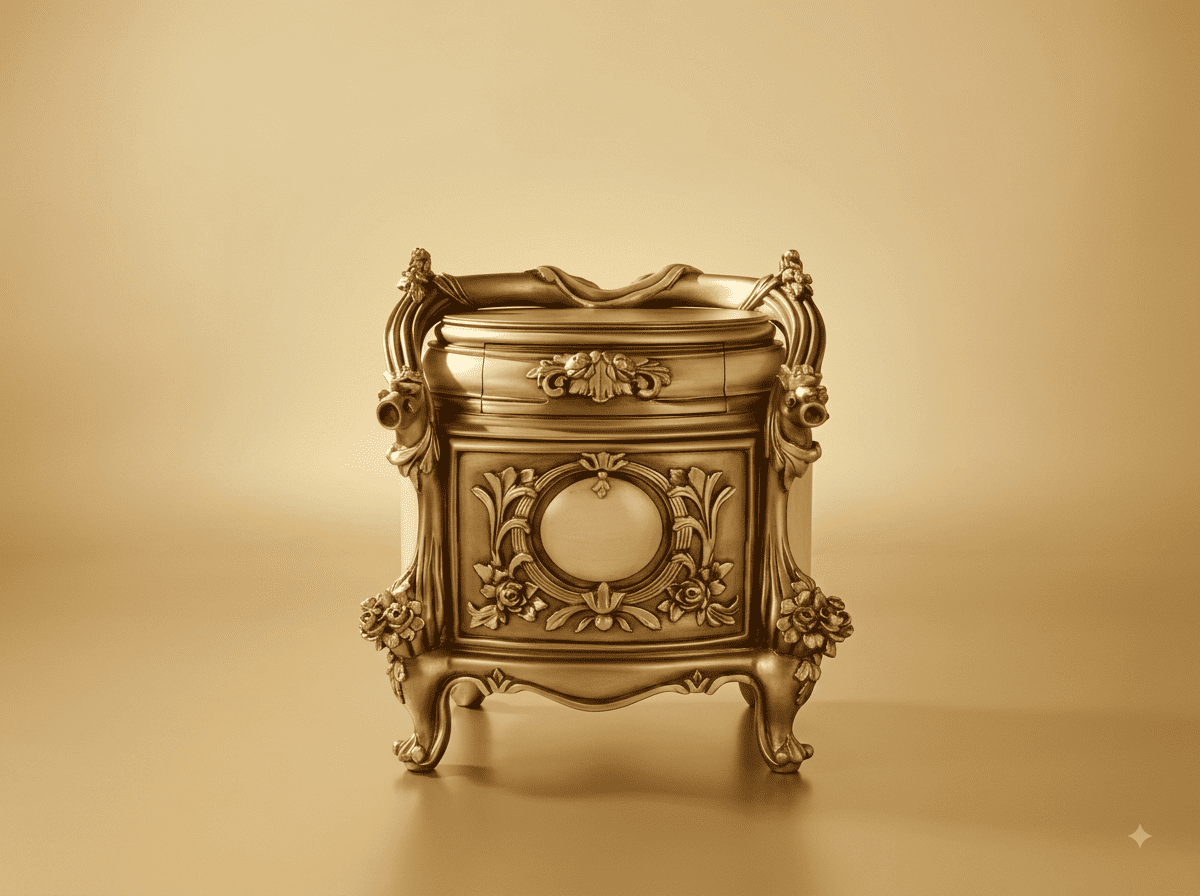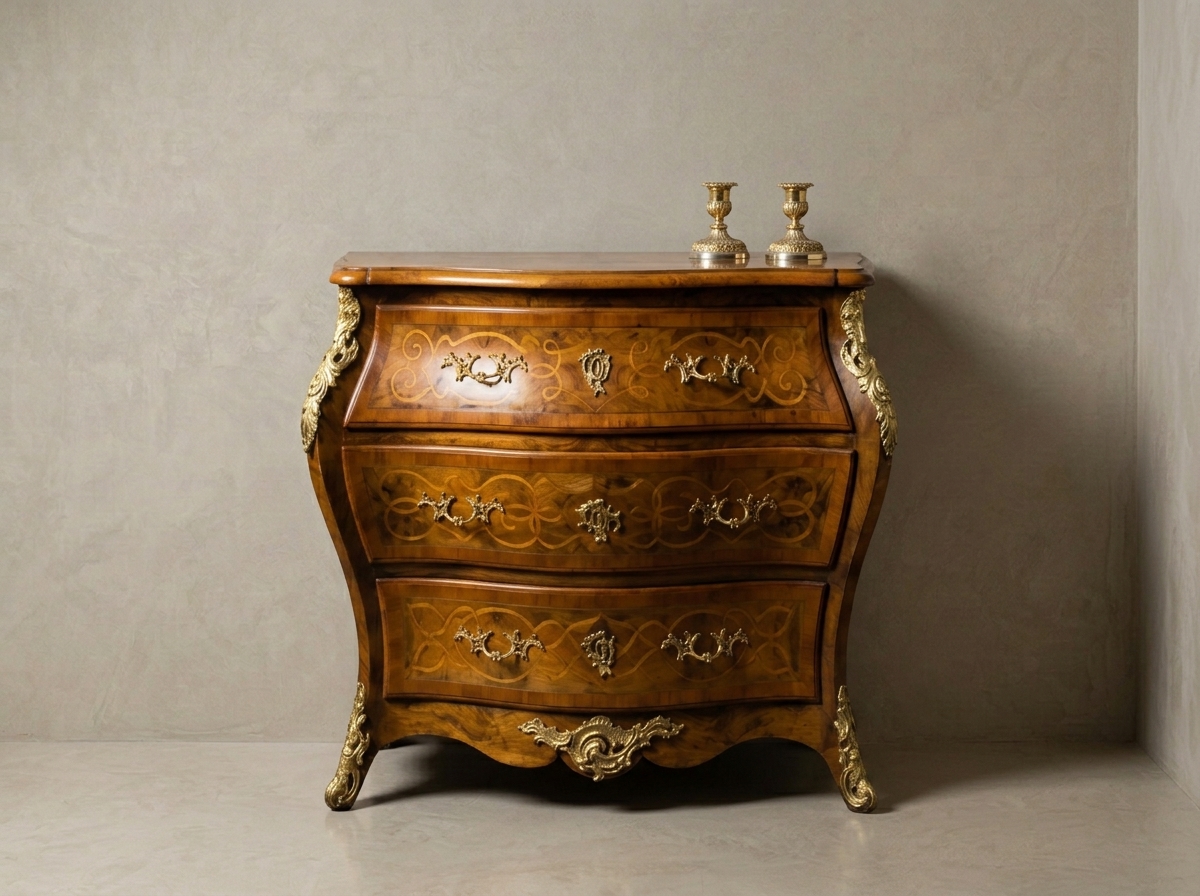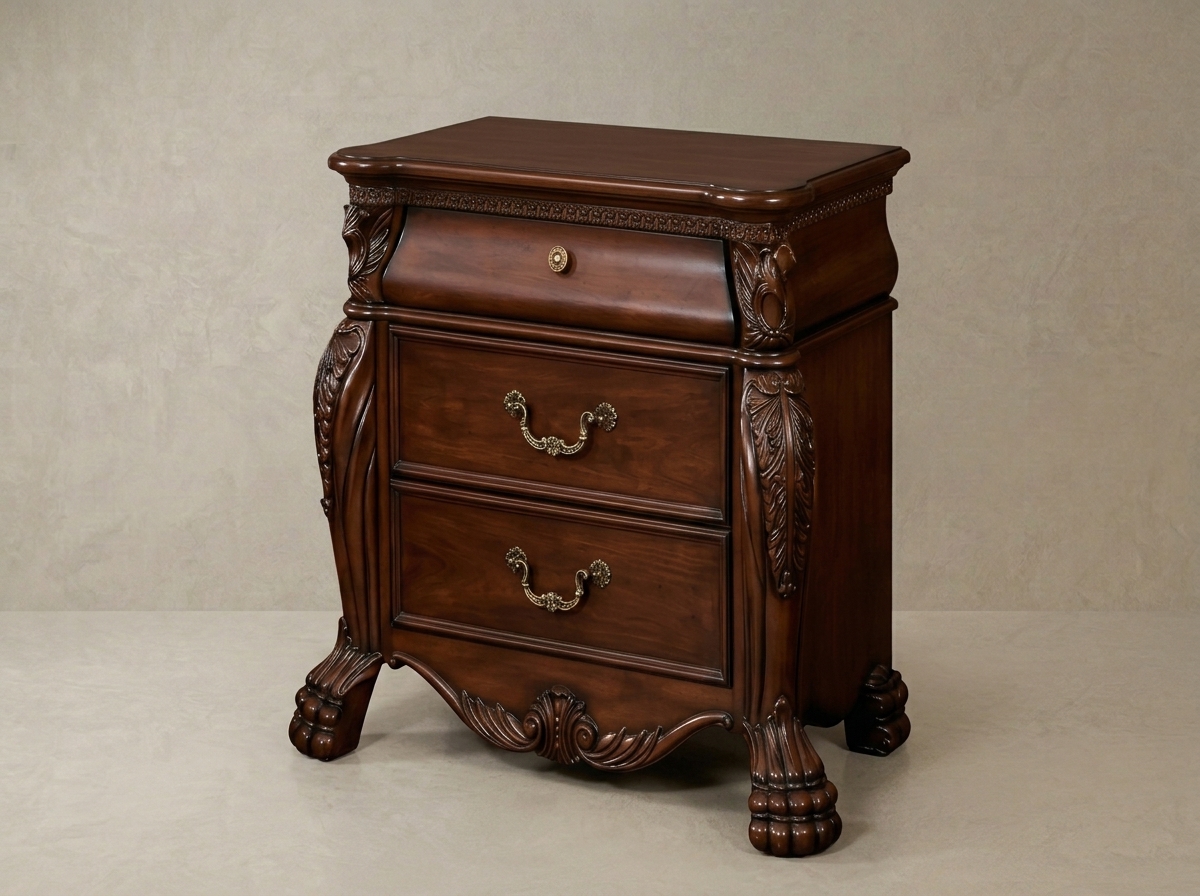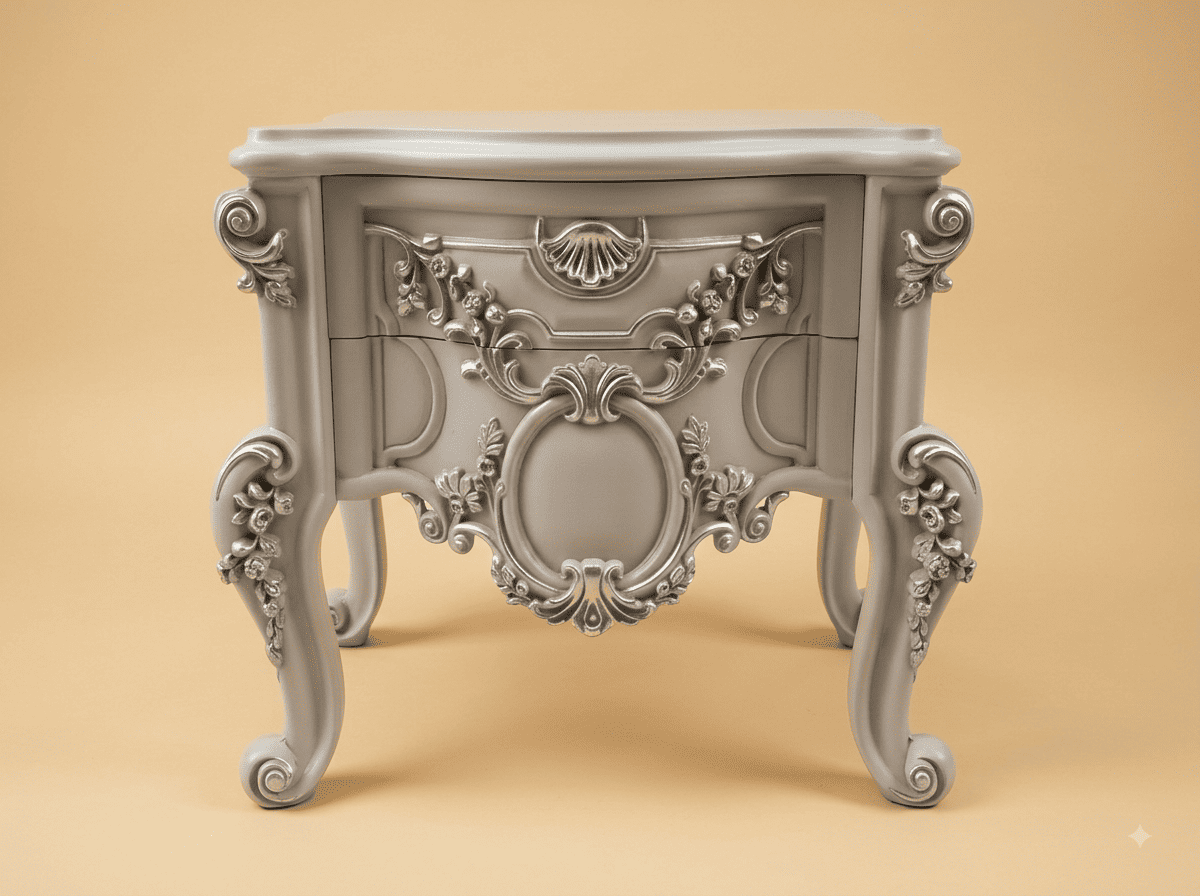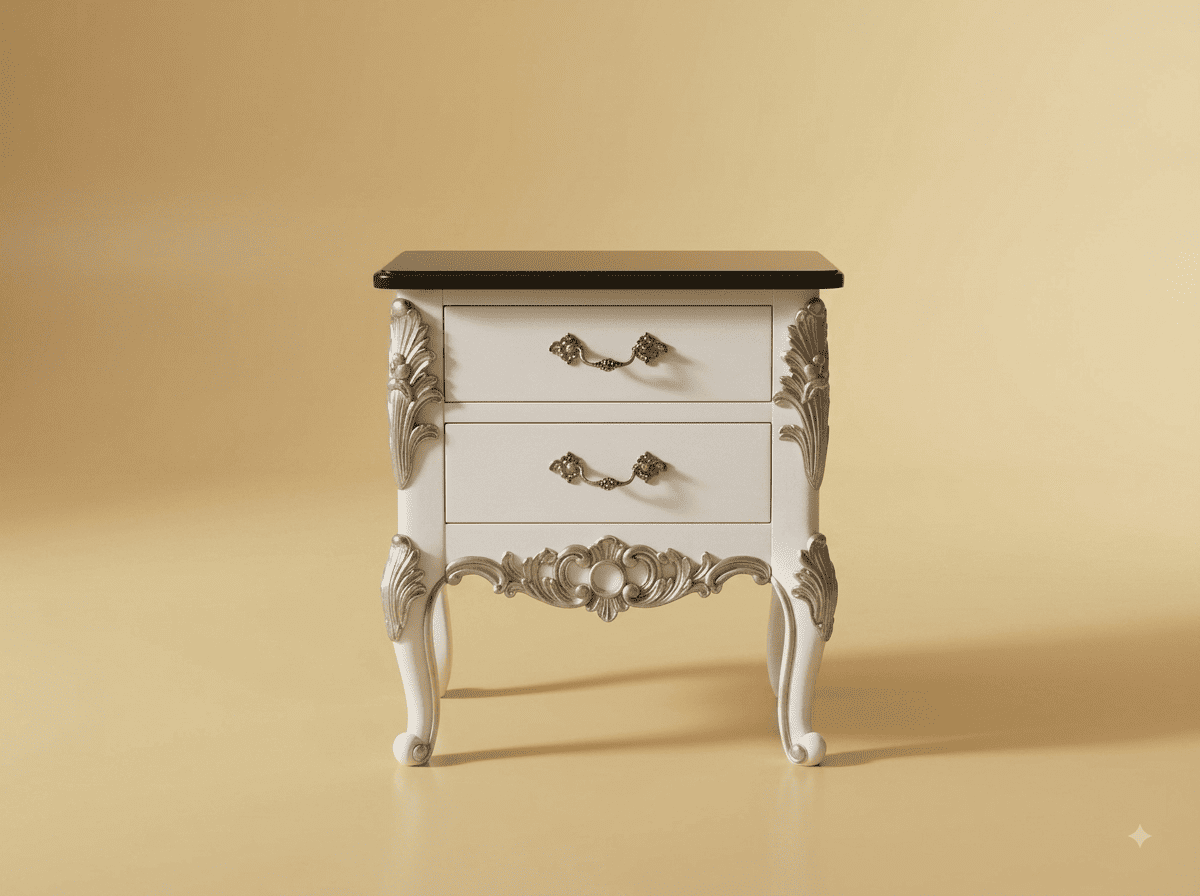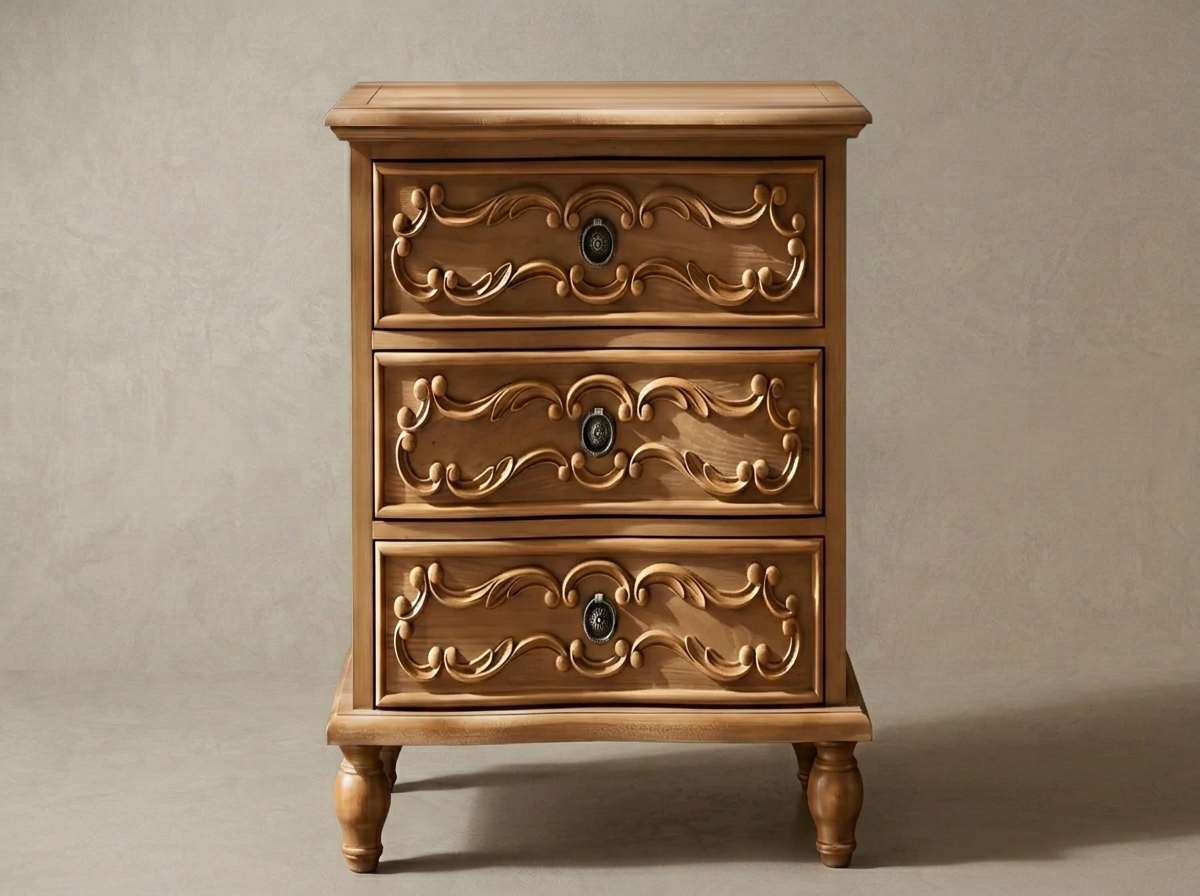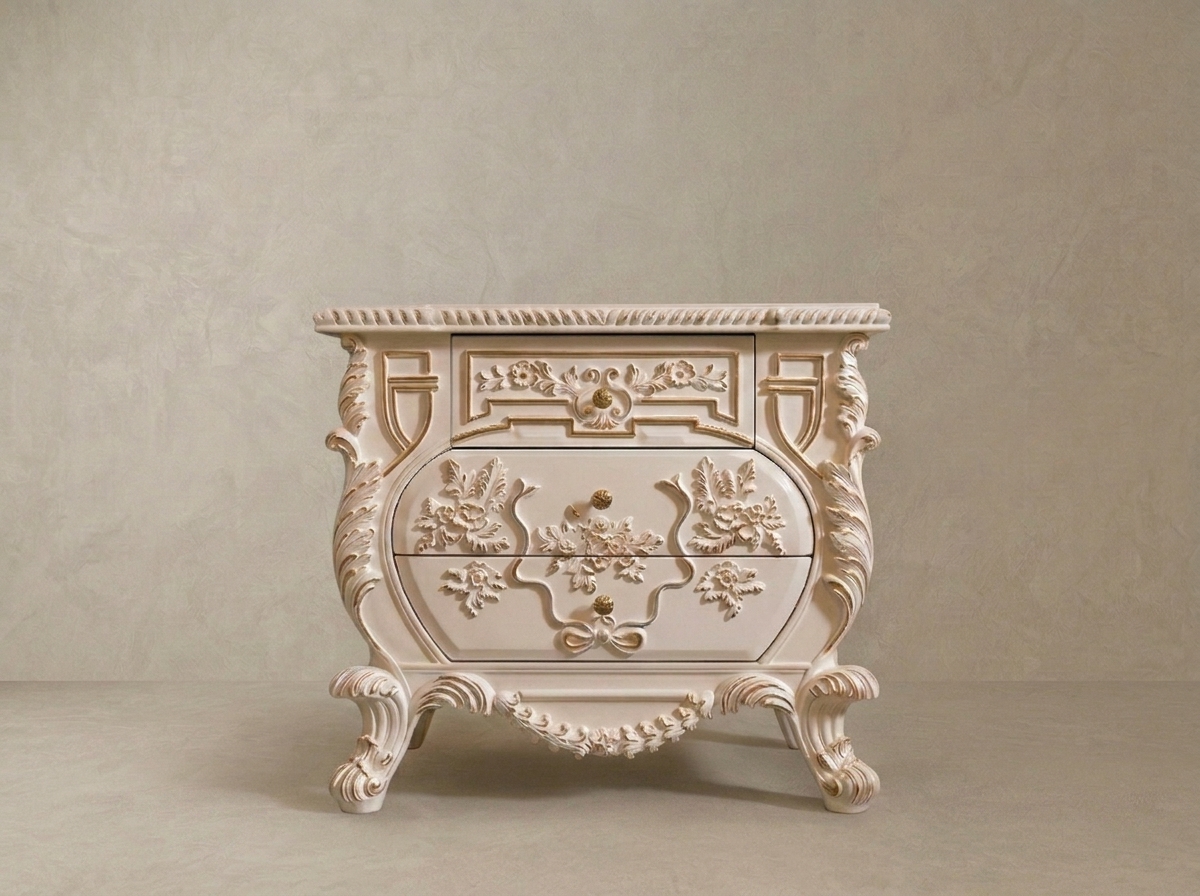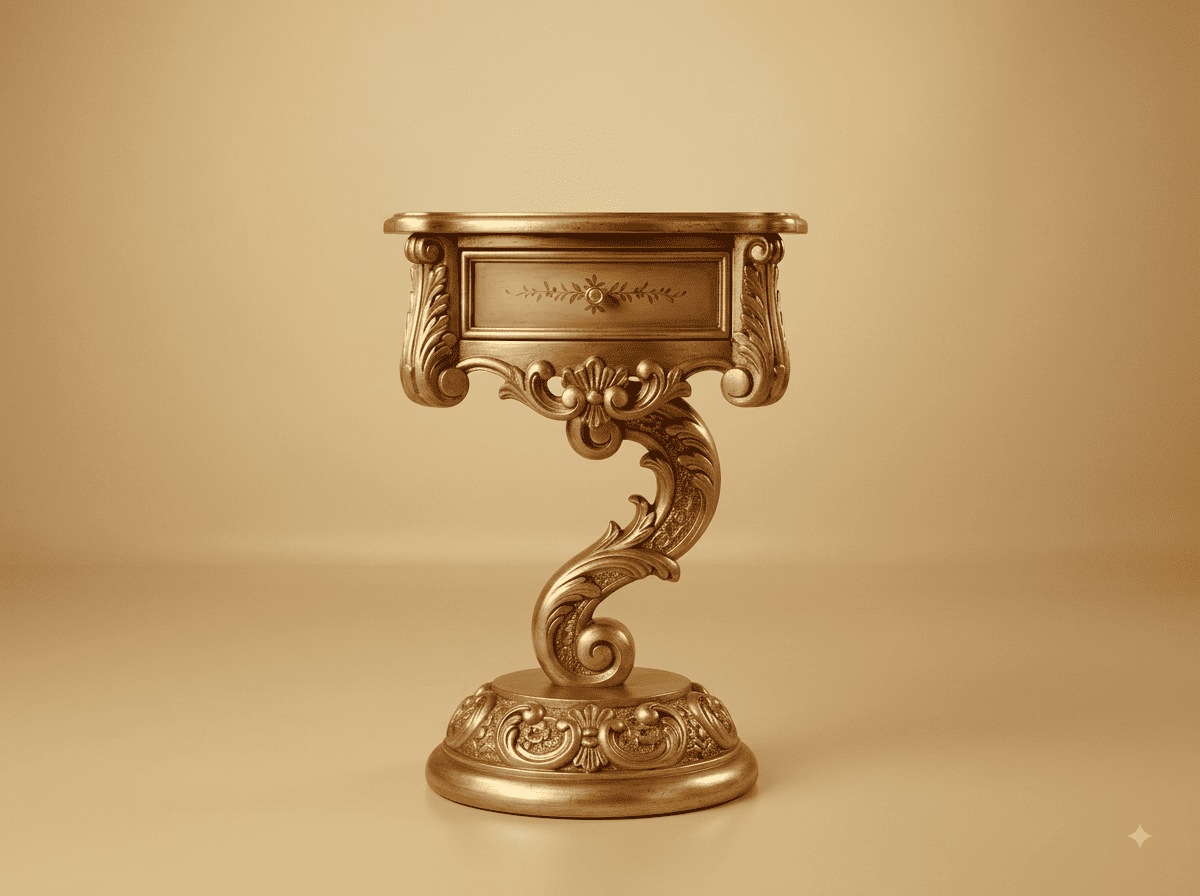
A table standing on one curved support is a balancing problem the carver has to solve before the shape is even drawn.
Look at the column. It does not rise straight. It leaves the base leaning one way, reverses through the middle, and arrives under the top leaning the other - an S. That means the load from the top does not travel down a straight line to the floor. It travels down a curve, and at every point along that curve the timber is being bent rather than simply compressed.
Wood is enormously strong along its grain and weak across it. So an S-shaped column cut carelessly - from a straight blank, with the grain running vertically - would have short cross-grain fibres at both bends, precisely where the bending force is greatest. It would feel solid for years and then fail at one of those two points.
The answer is to lay the shape out on the stock so the grain follows the curve rather than the block. Our carvers mark the S onto a thick baulk of teak at an angle, accepting the waste that creates, so that the fibre runs continuously around both bends. The acanthus carving is then worked onto that shape - and the leaves are deliberately laid along the curve, which is why the ornament seems to flow rather than sit.
Then it is weighted at the bottom. The oval base is thick, domed and heavy for its size, so the centre of gravity stays low and well inside the footprint.
 Ask Price On WhatsApp