Most of a teak log is straight-grained and even. That is what makes it good structural timber, and it is why almost every part of a well-made piece is cut from it.
But a tree does not grow evenly everywhere. Where a branch left the trunk, where the roots begin, where the fibres had to swirl around an obstruction - the grain there is wild, dense and figured, and it behaves badly. It moves unpredictably, it tears under a chisel, and it is close to useless for anything structural.
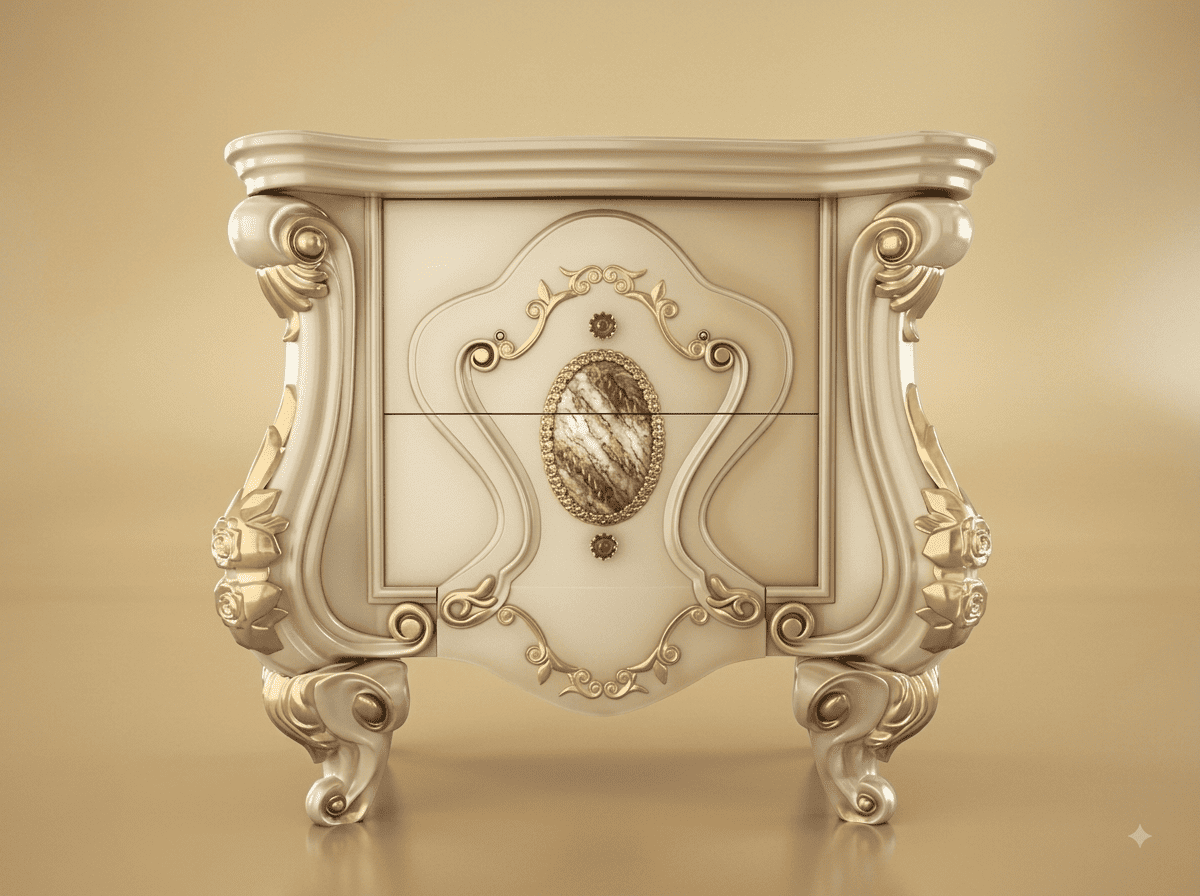
Which is exactly why cabinetmakers save it. A piece of figured timber too troublesome for a drawer front or a leg is perfect for a small reserve like the medallion on this table - a place where it carries no load, where its movement is restrained on all sides by the frame around it, and where its figure is the entire point.
Our craftsmen set those pieces aside as the stock is cut, and the oval is chosen from them rather than the other way round. It is let into a recess machined to its exact outline, framed by a carved rope moulding that both hides the joint and holds the edge, and finished clear so nothing obscures the grain.
It is a small piece of wood used well: the part of the tree that could not be relied on for anything else, given the one job it does better than any other.
 Ask Price On WhatsApp