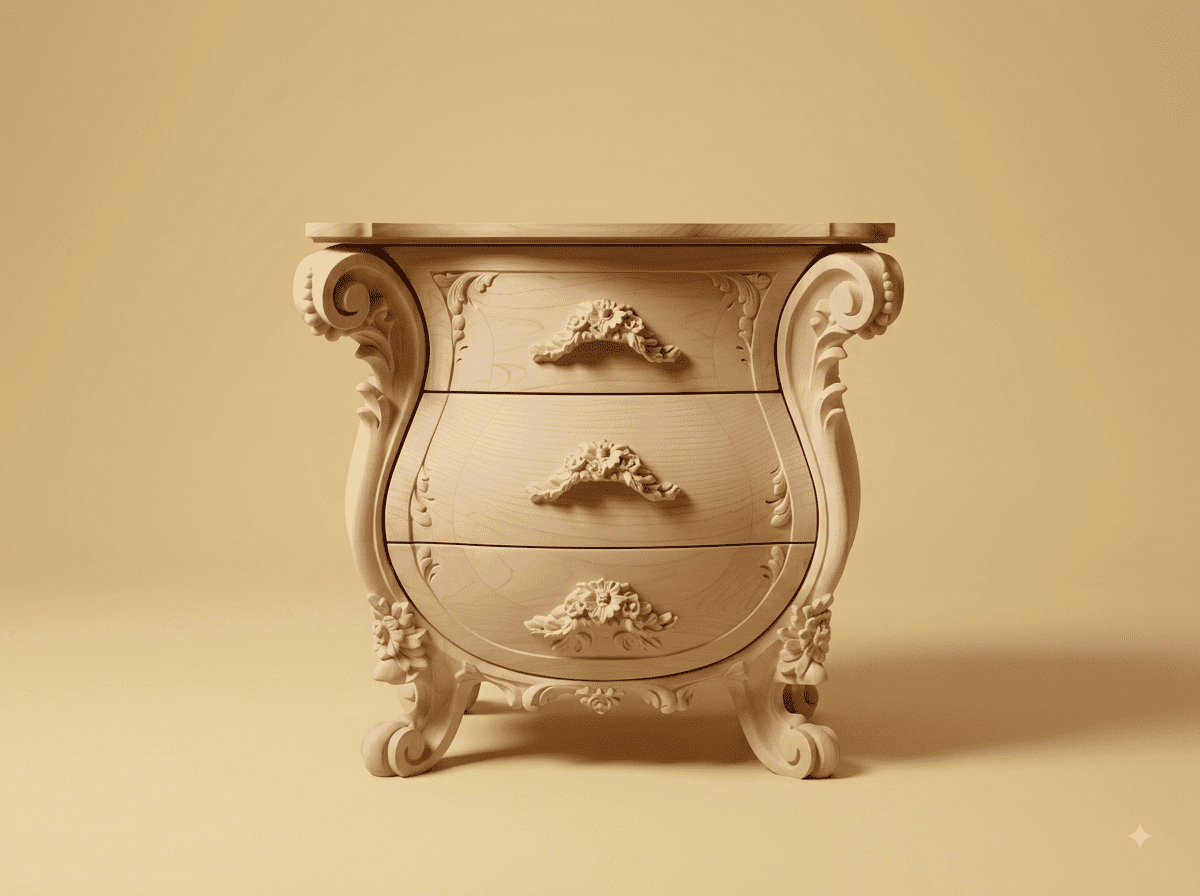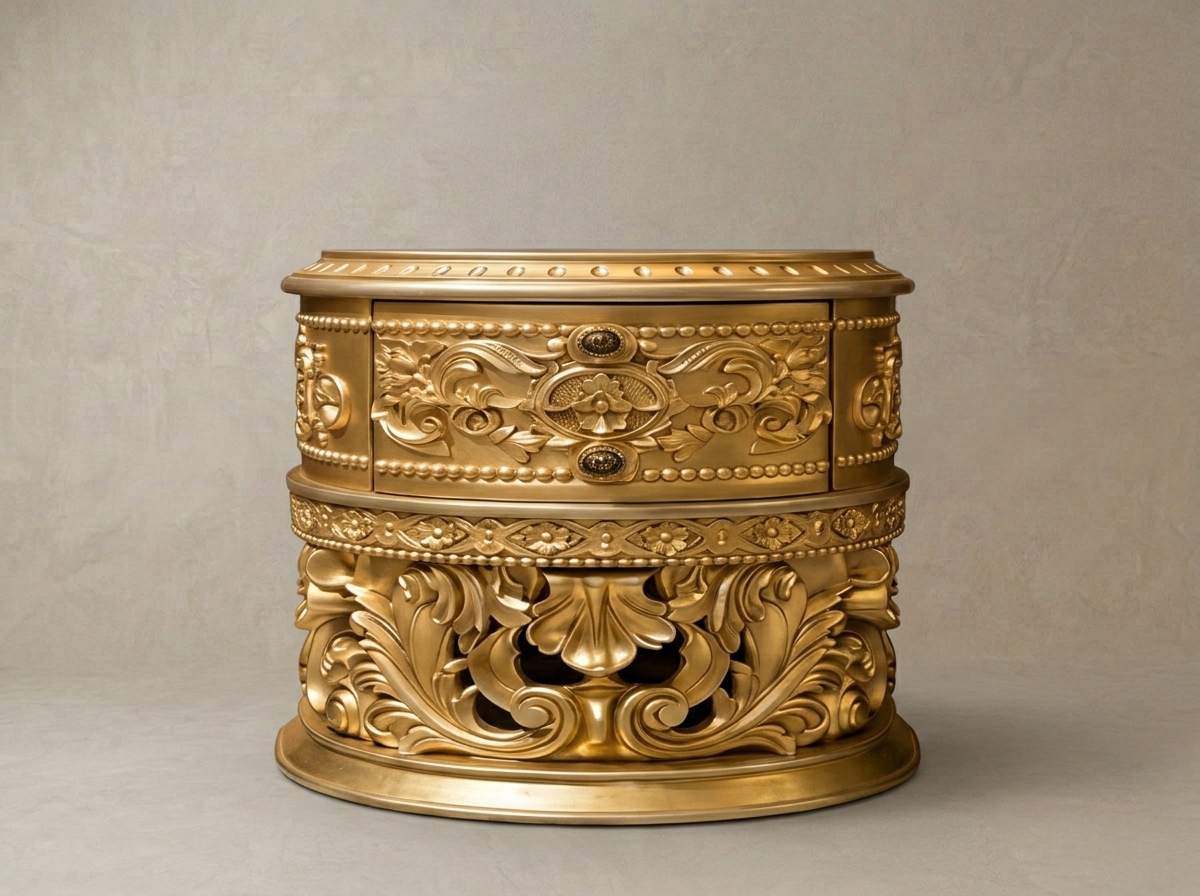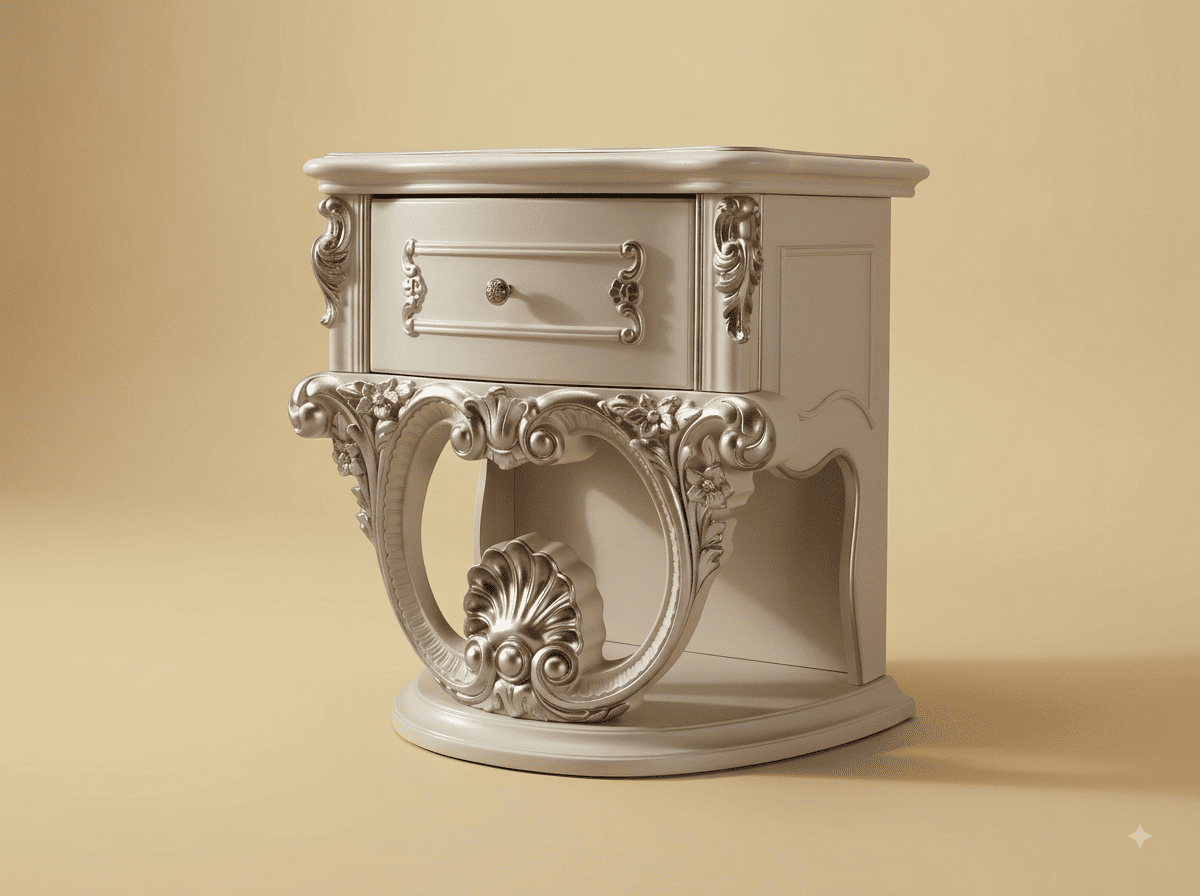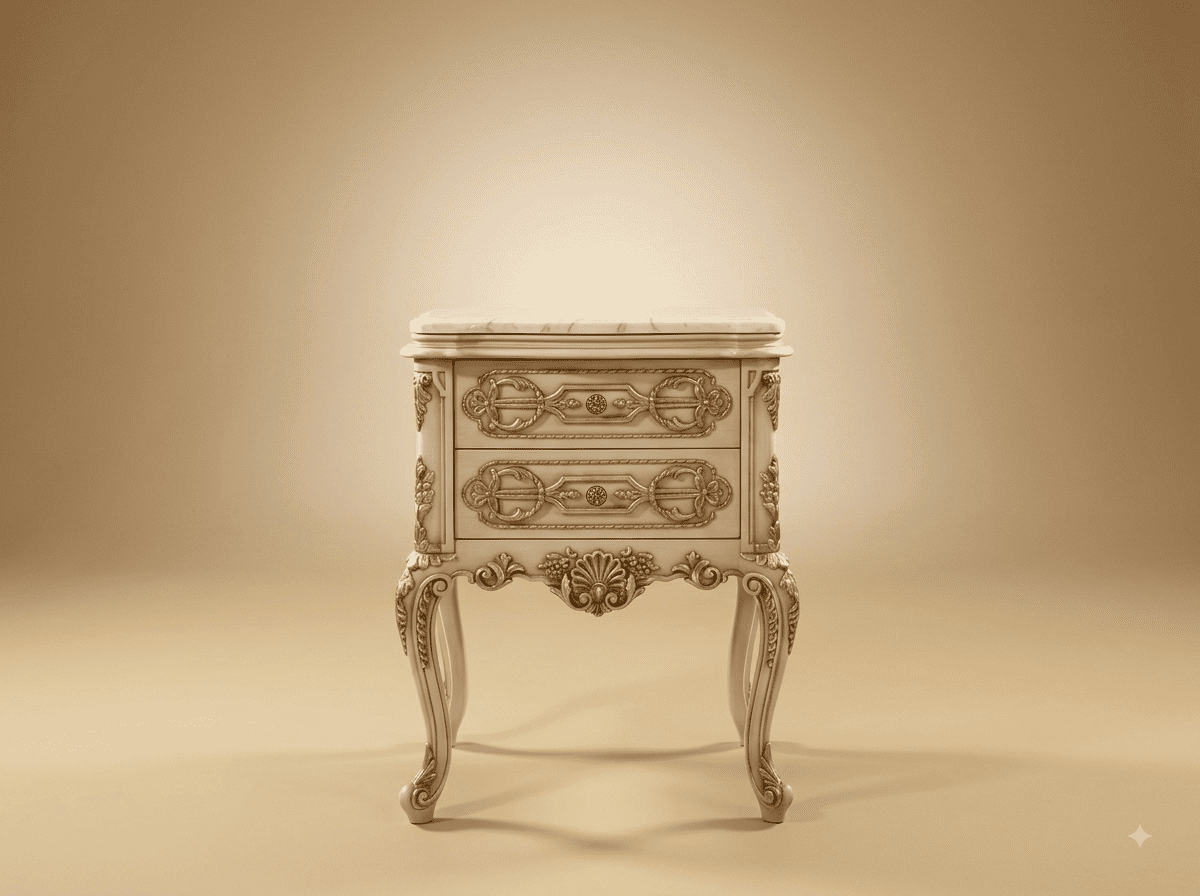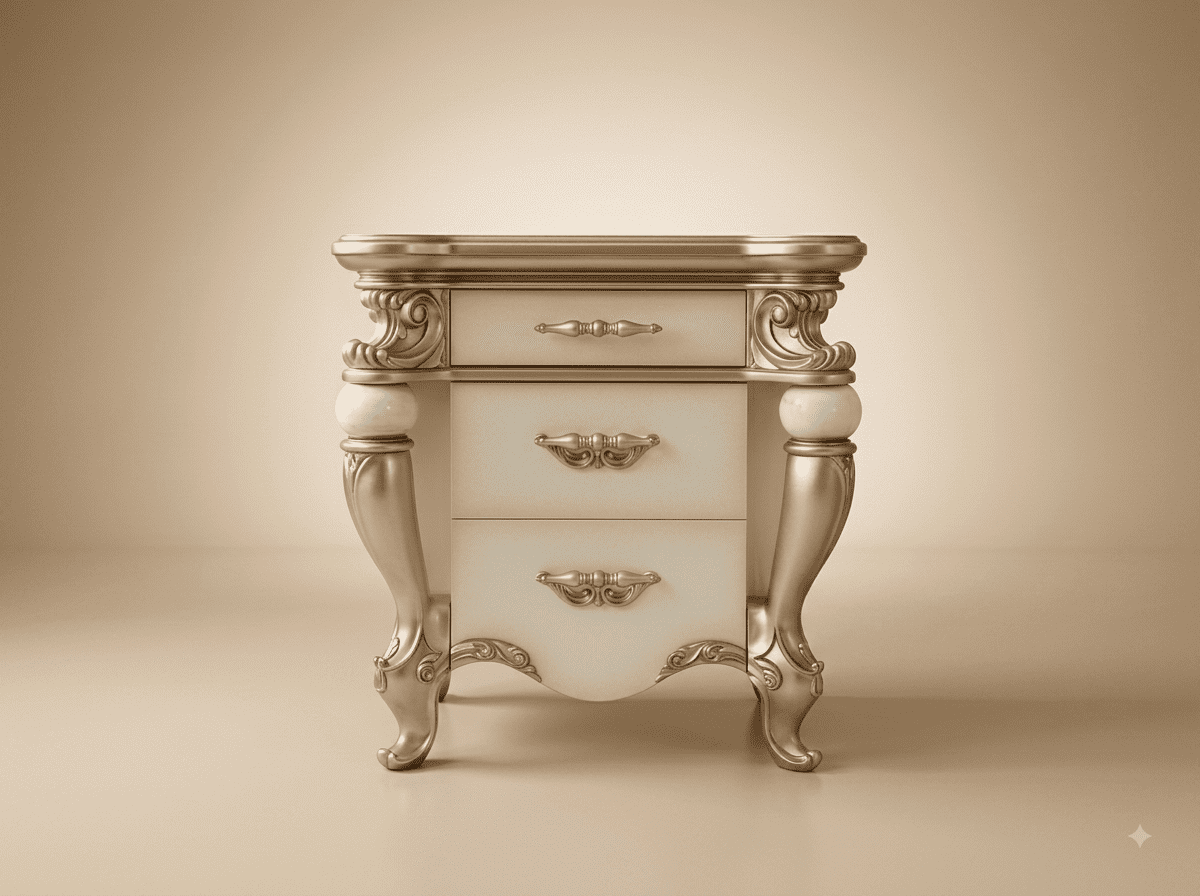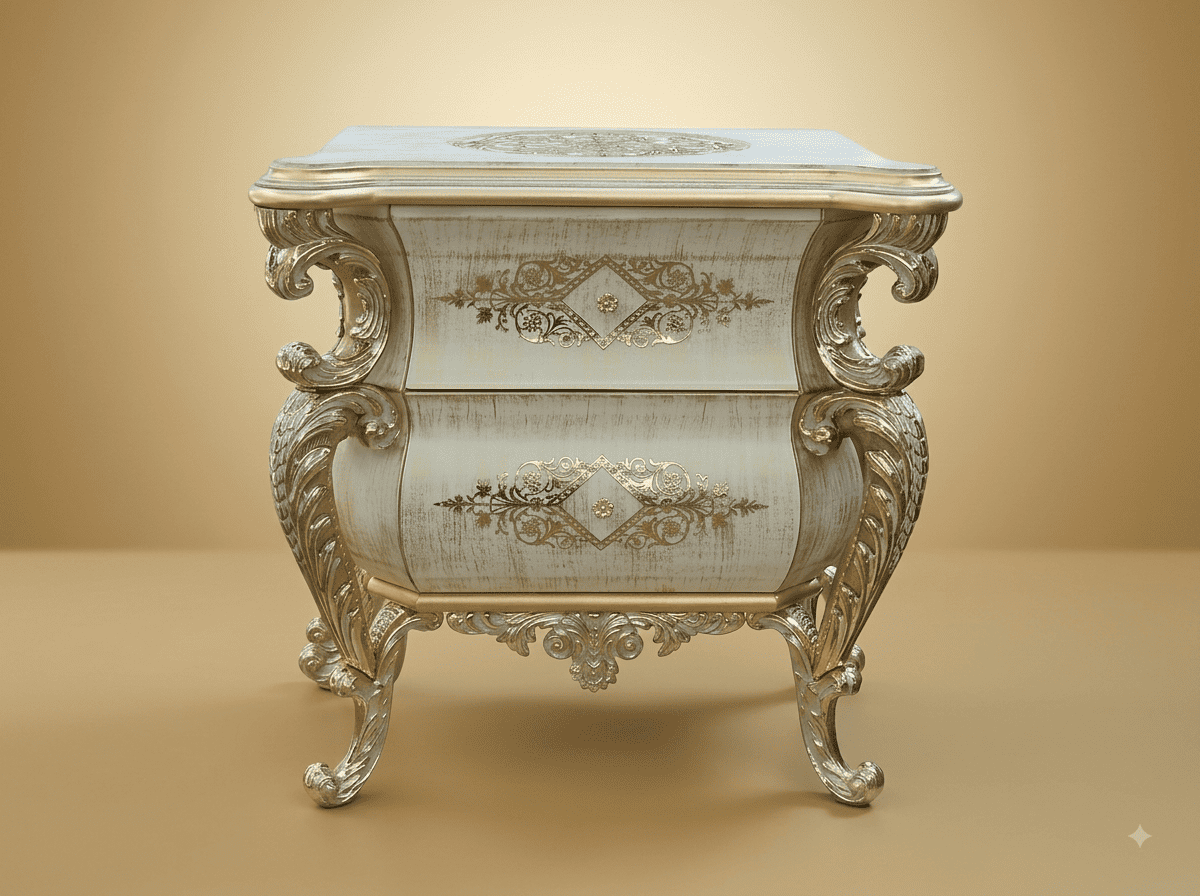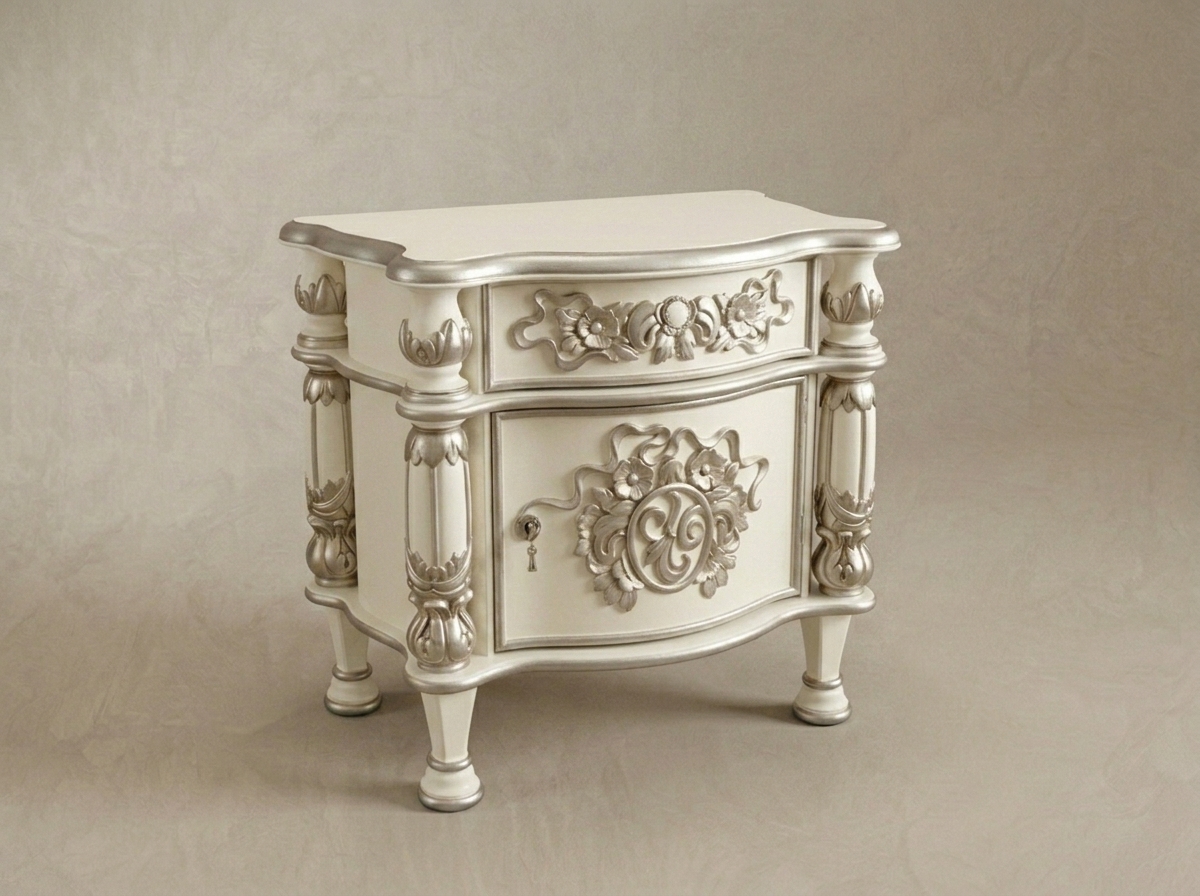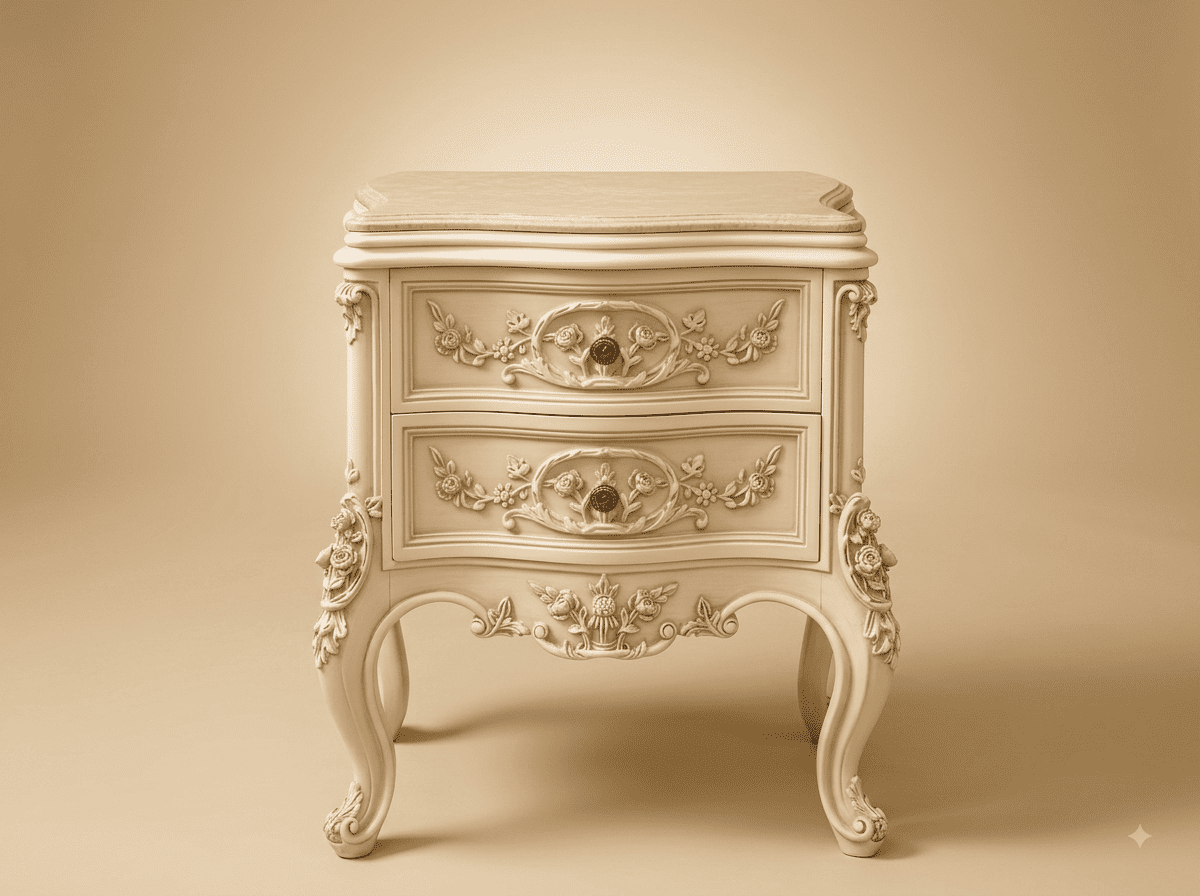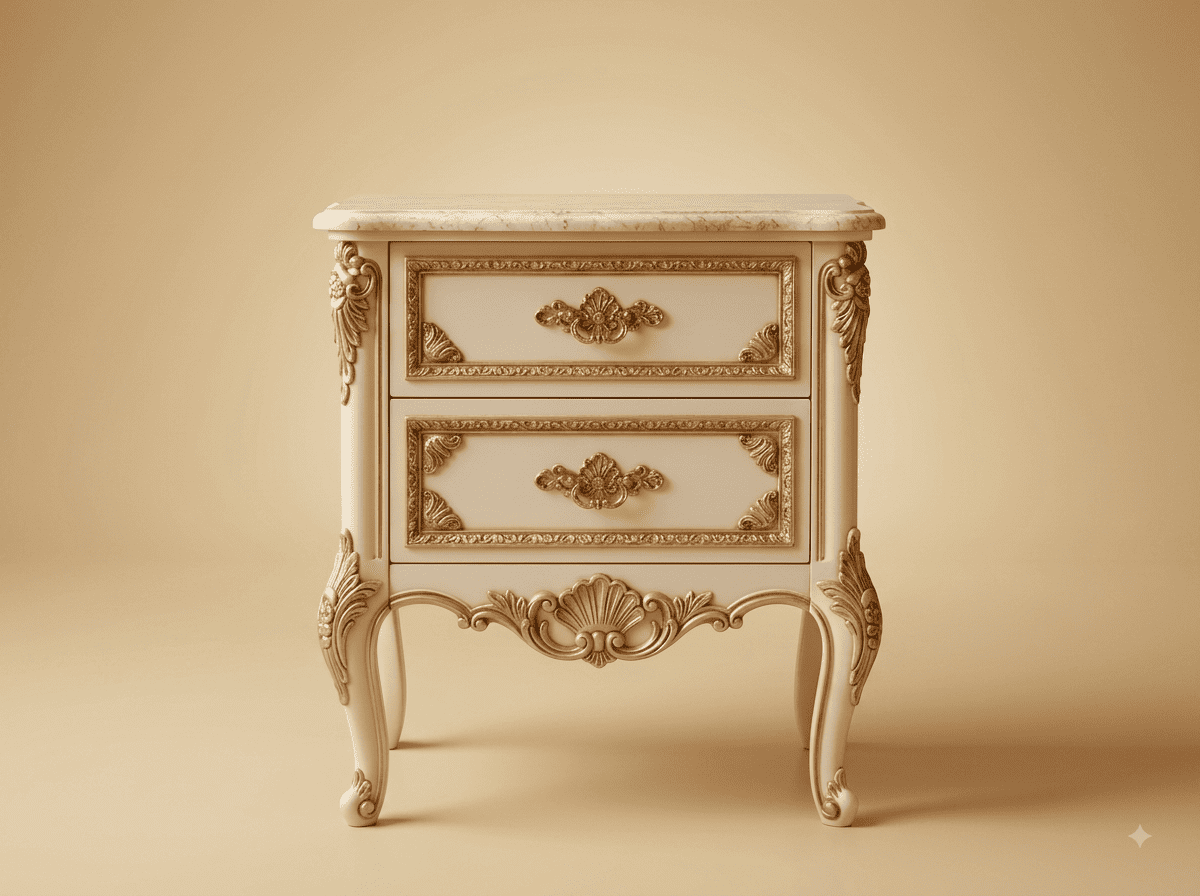
A repeating carved border is arithmetic before it is craft.
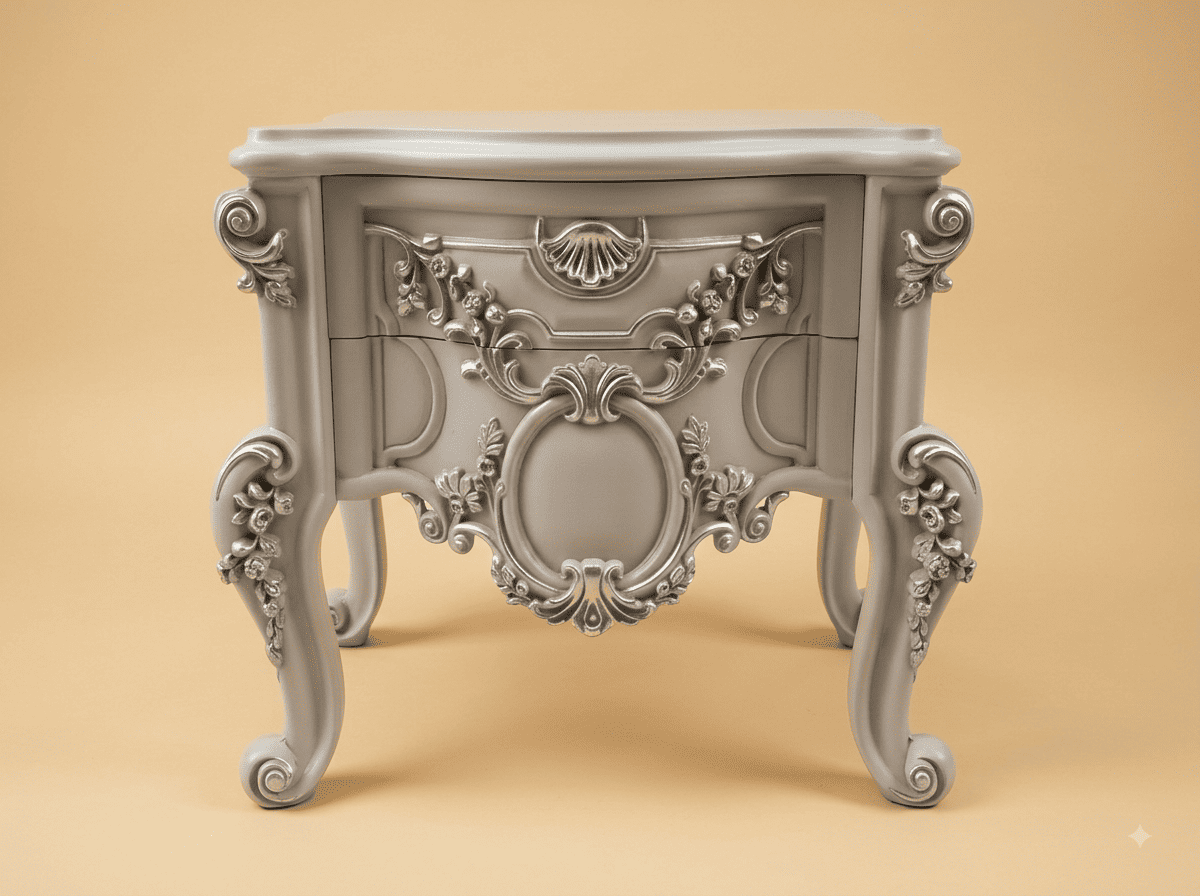
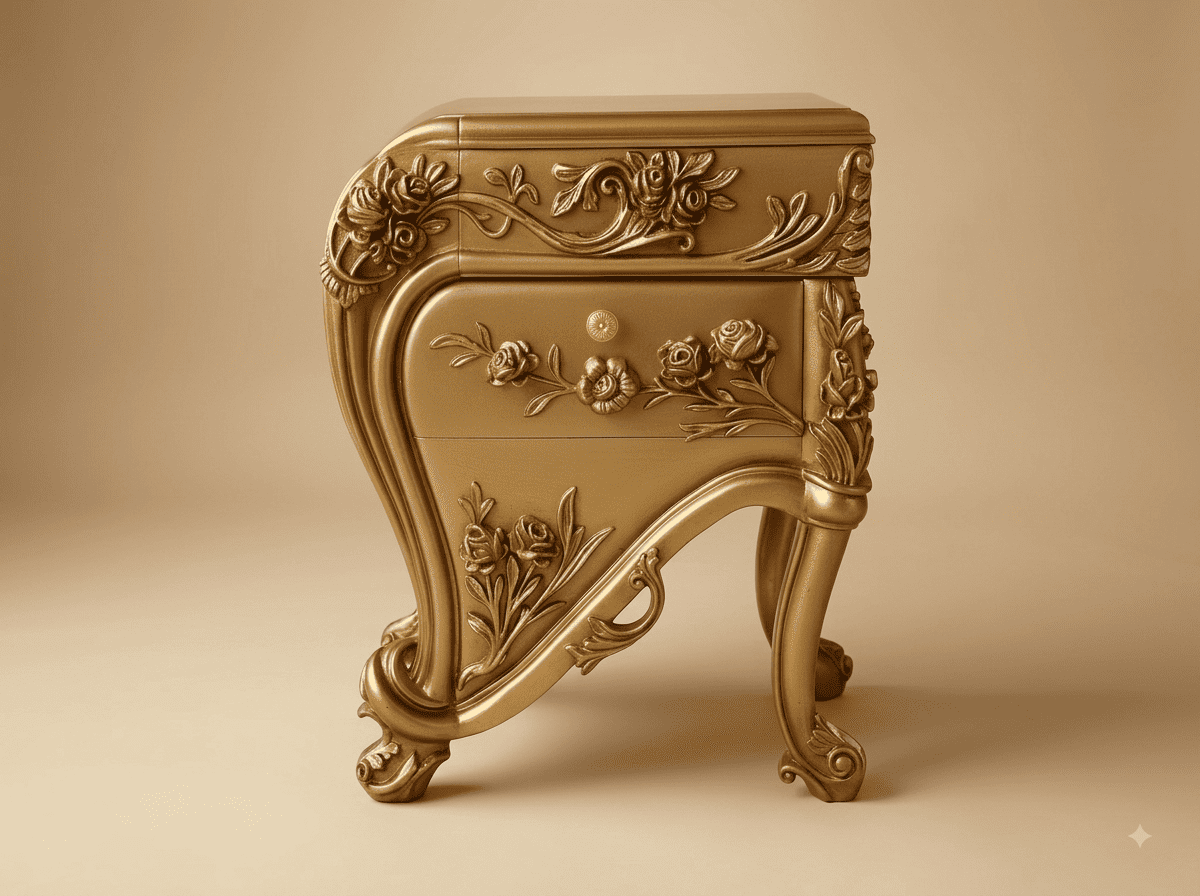
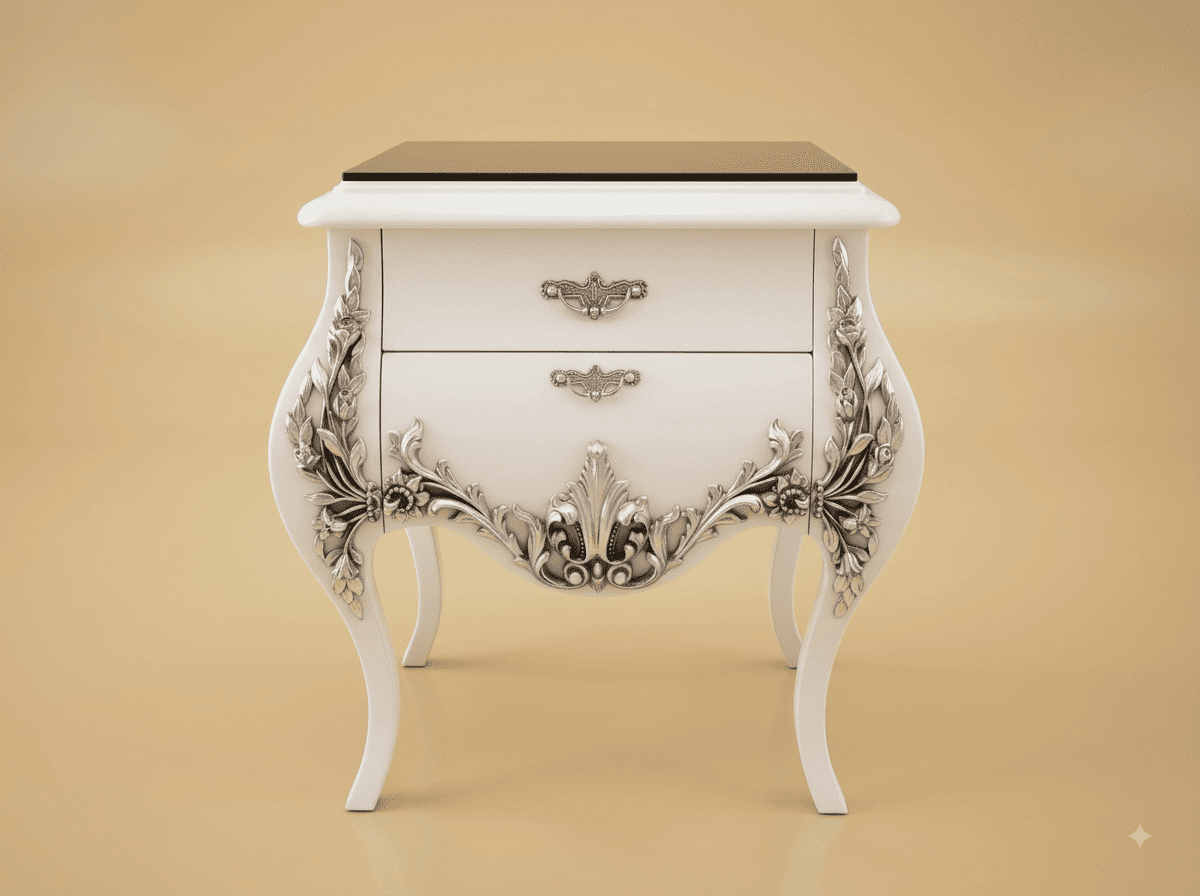
The leaf-and-bead running around each drawer front here is a repeat - the same small unit, over and over. Which means the length of each side has to be an exact whole number of units, or the pattern will not close. Get it wrong and you finish a run with two-thirds of a leaf, and no amount of skill hides it.
Worse, all four sides have to work. A rectangular border has two long runs and two short ones, and the unit has to divide evenly into both - so the unit size is not chosen for how it looks in isolation. It is chosen because it fits the drawer.
So our carvers work backwards. The drawer front is made first and measured. The repeat is then sized to divide the long side and the short side both, adjusted by fractions of a millimetre until it does, and only then is it stepped off around the frame with dividers and cut.
The corners are the last problem. A repeat that simply runs into a corner and turns looks wrong, because the eye reads the corner as a break in rhythm. So a small corner element - here a leaf turning outward - is designed in, and the runs are sized to stop cleanly against it on both sides.
Two drawers of different heights means two different calculations. They are done separately, which is why the borders look identical and are not.
 Ask Price On WhatsApp