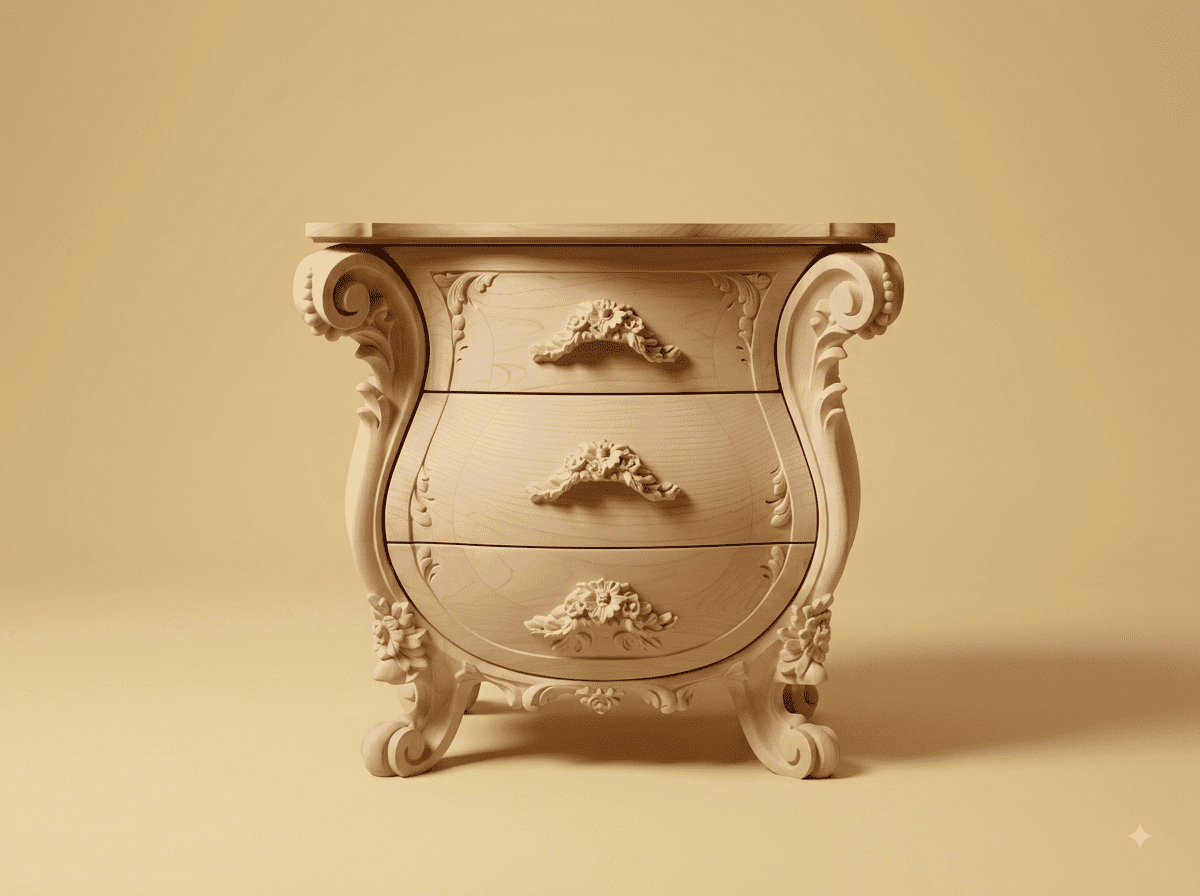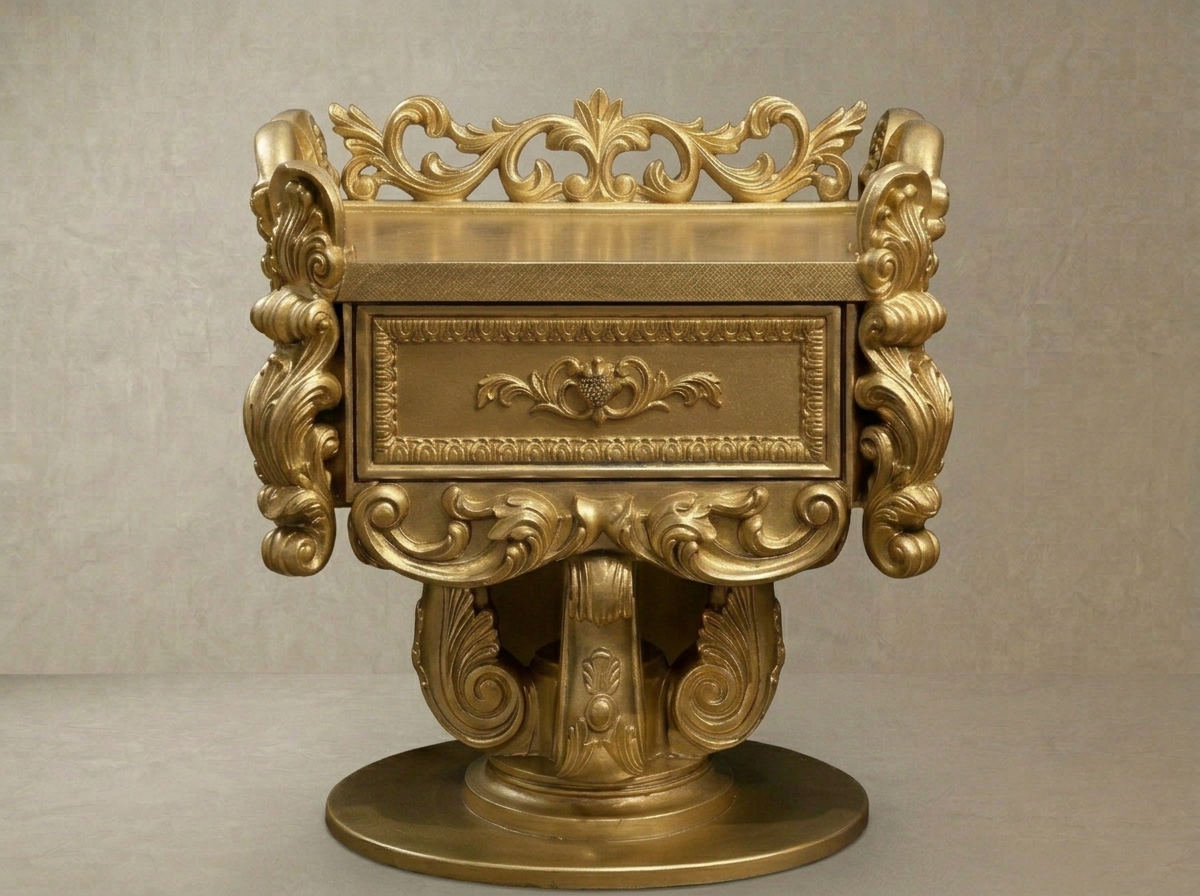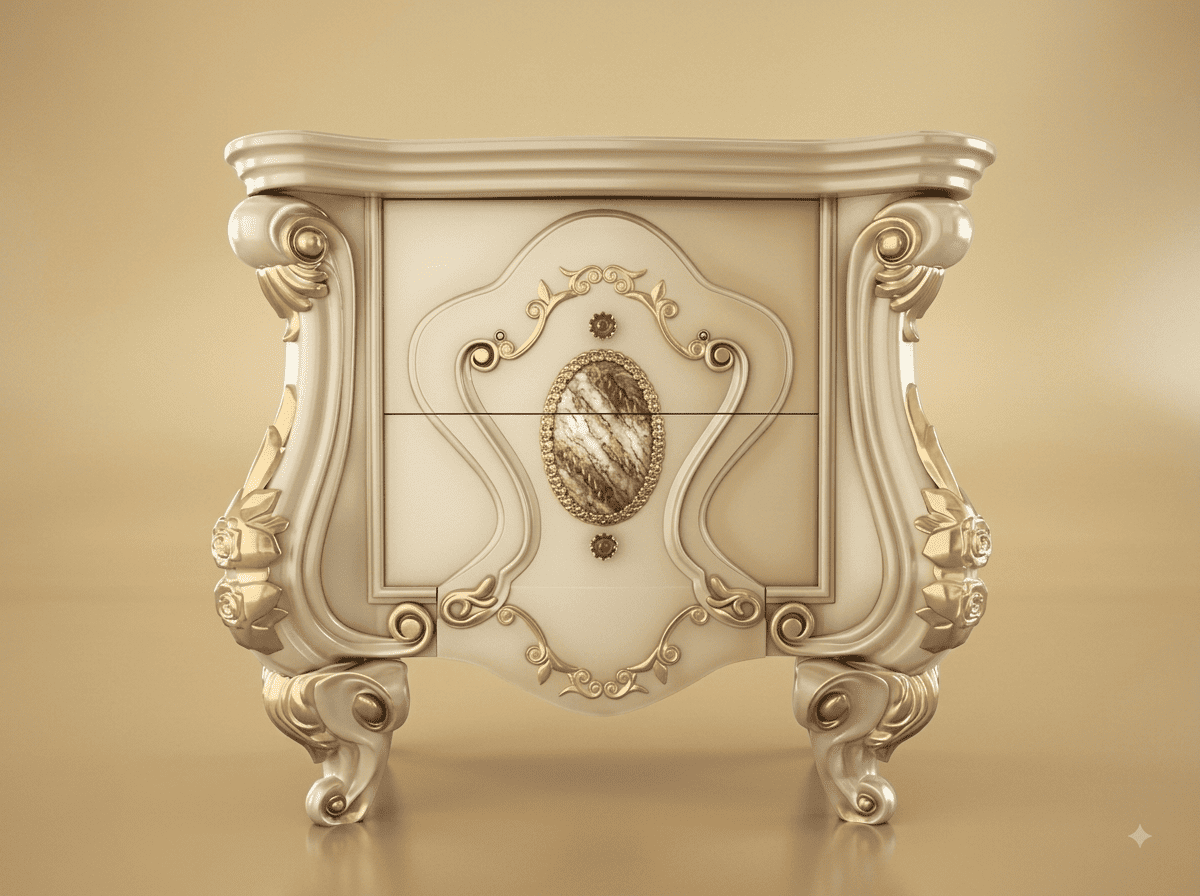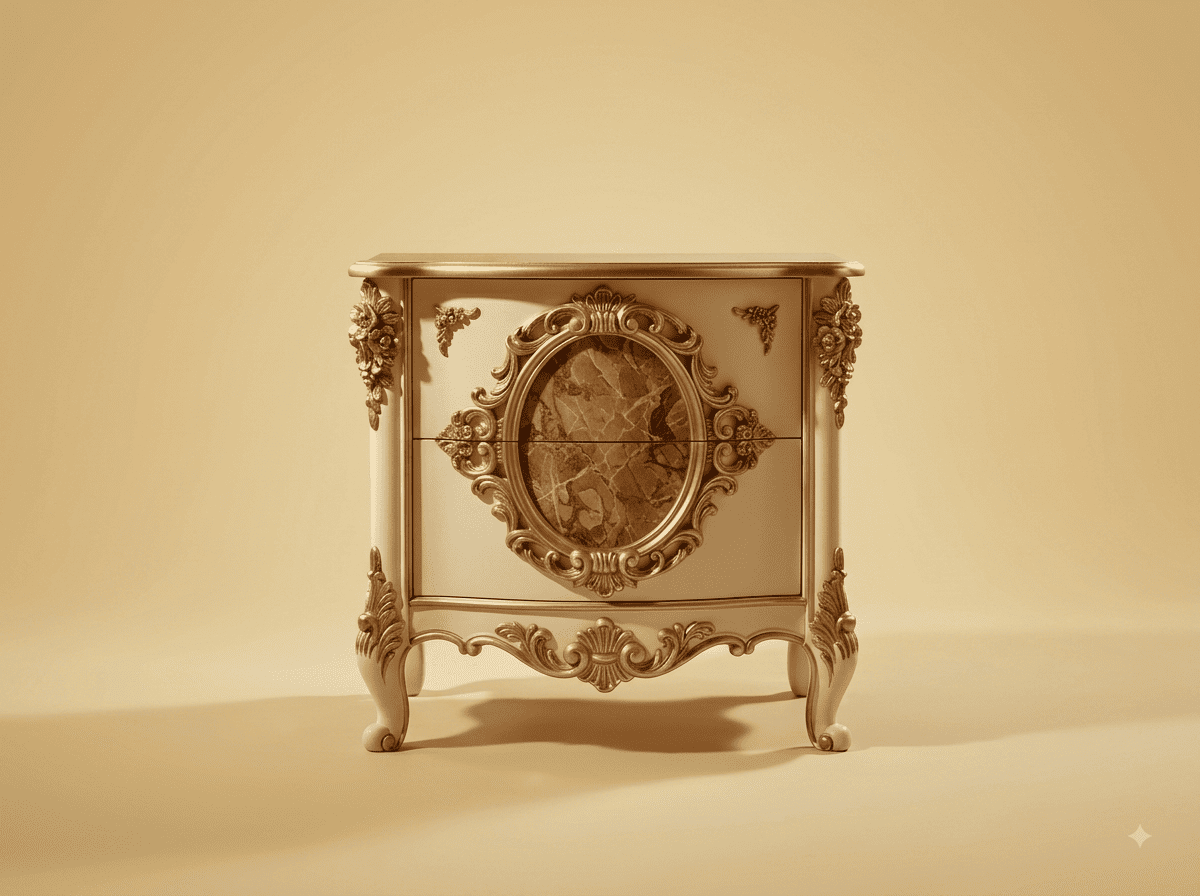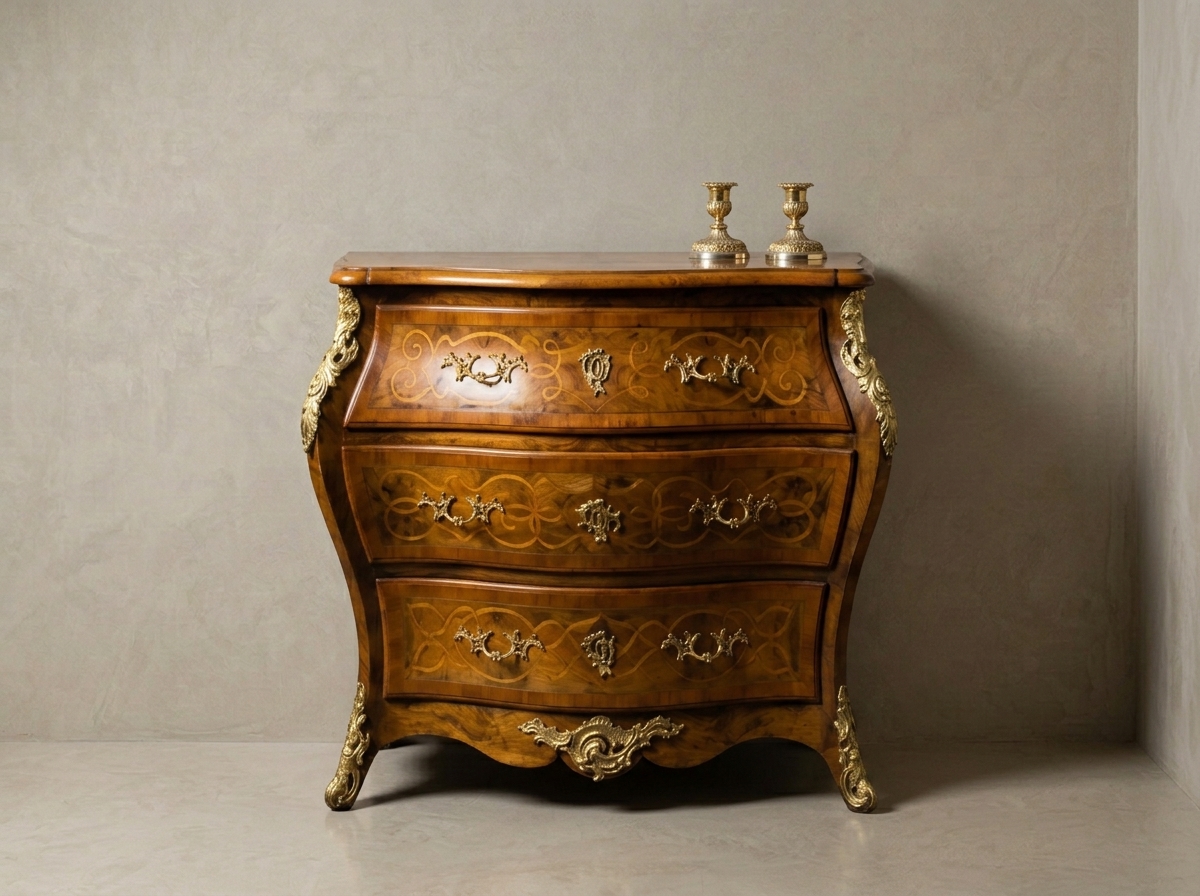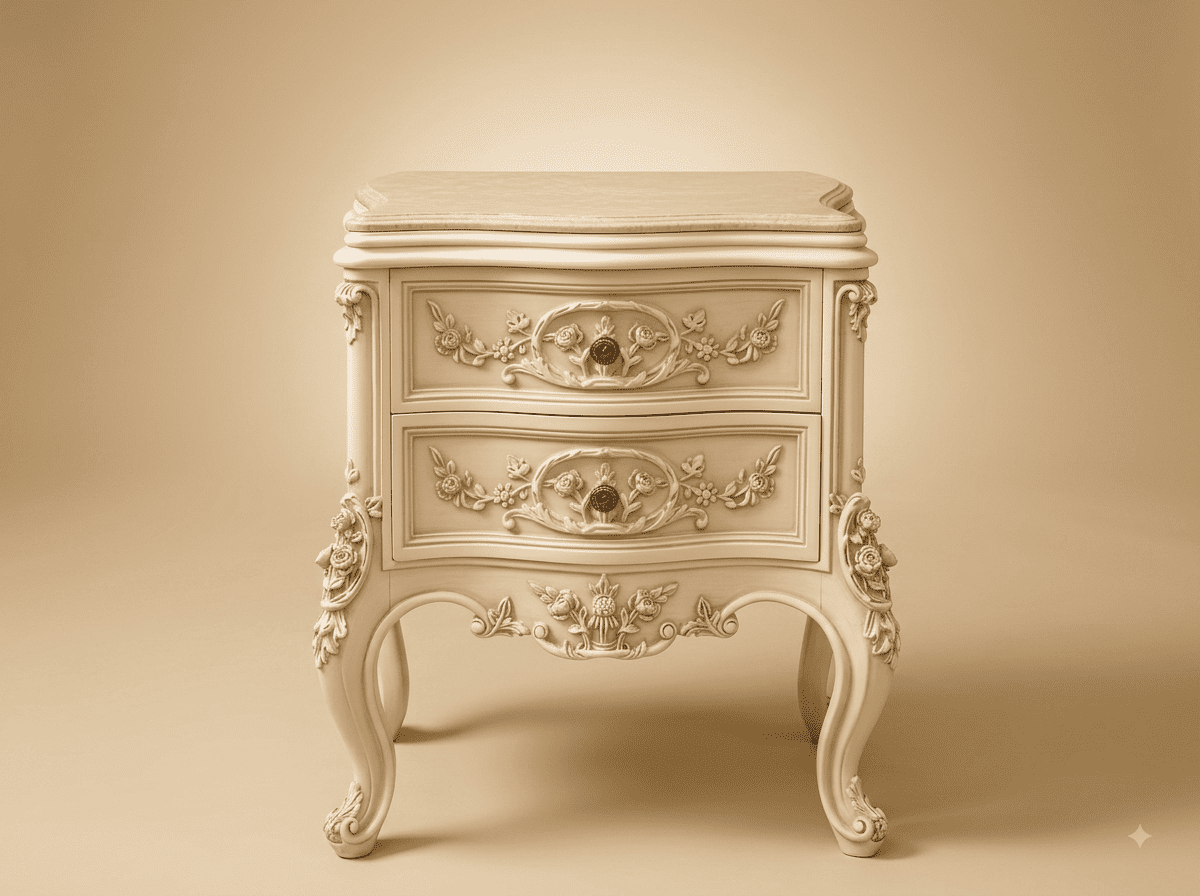
Fitting a lock into a drawer is straightforward when the drawer front is flat. Into a serpentine front carved with roses, it is a small piece of surgery.
The lock body has to sit inside the thickness of the front, behind the escutcheon, with its bolt shooting upward into the carcass rail above. That means cutting a rectangular pocket into a piece of timber that is curving in one direction, carved in relief on the outside, and no thicker at the centre than it needs to be for the shaping.
So the pocket is cut first - before any carving, while the front is still a shaped blank and its thickness is known and constant. The keyhole is bored at the same time, from the outside in, so it enters the pocket square rather than at an angle.
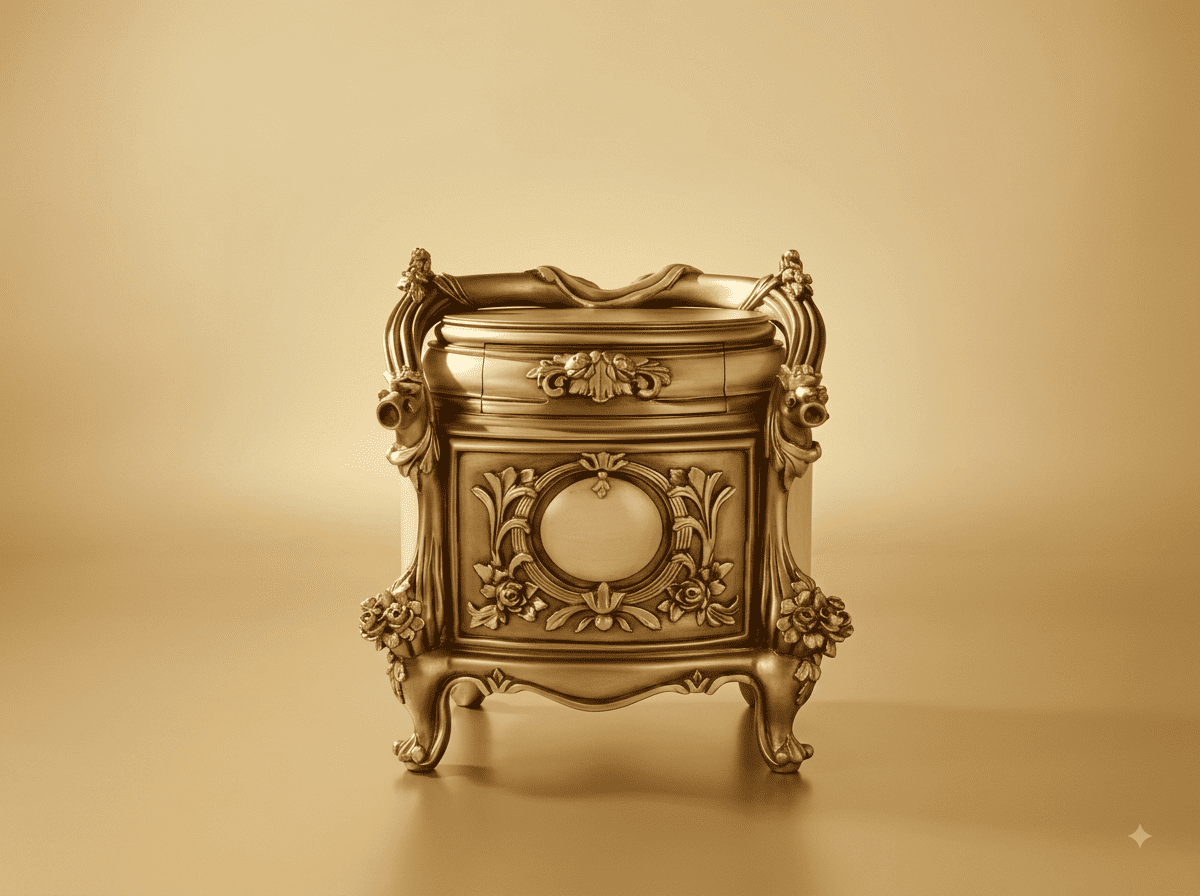
Only then does the carving begin. The cartouche is worked around the keyhole, and the carver has to model into a surface with a hole in the middle of it and a void directly behind - which means no chisel can be driven downward at that point, because there is nothing underneath to support the cut. Every stroke near the escutcheon is taken sideways, across the grain, with the tool almost flat.
The brass escutcheon goes in last and covers the entry. What it also covers is the one part of the carving where the carver had no timber to work against.
 Ask Price On WhatsApp