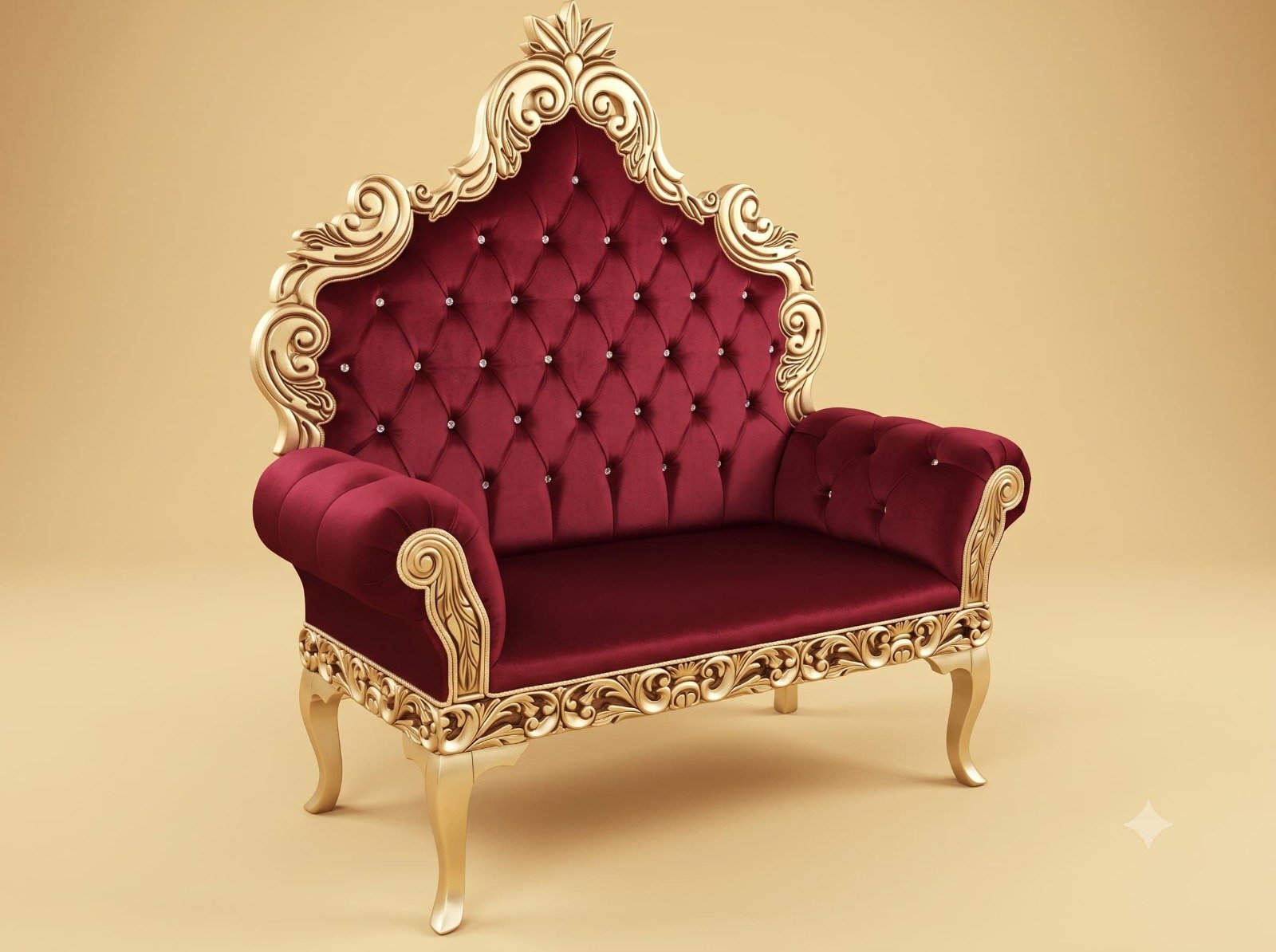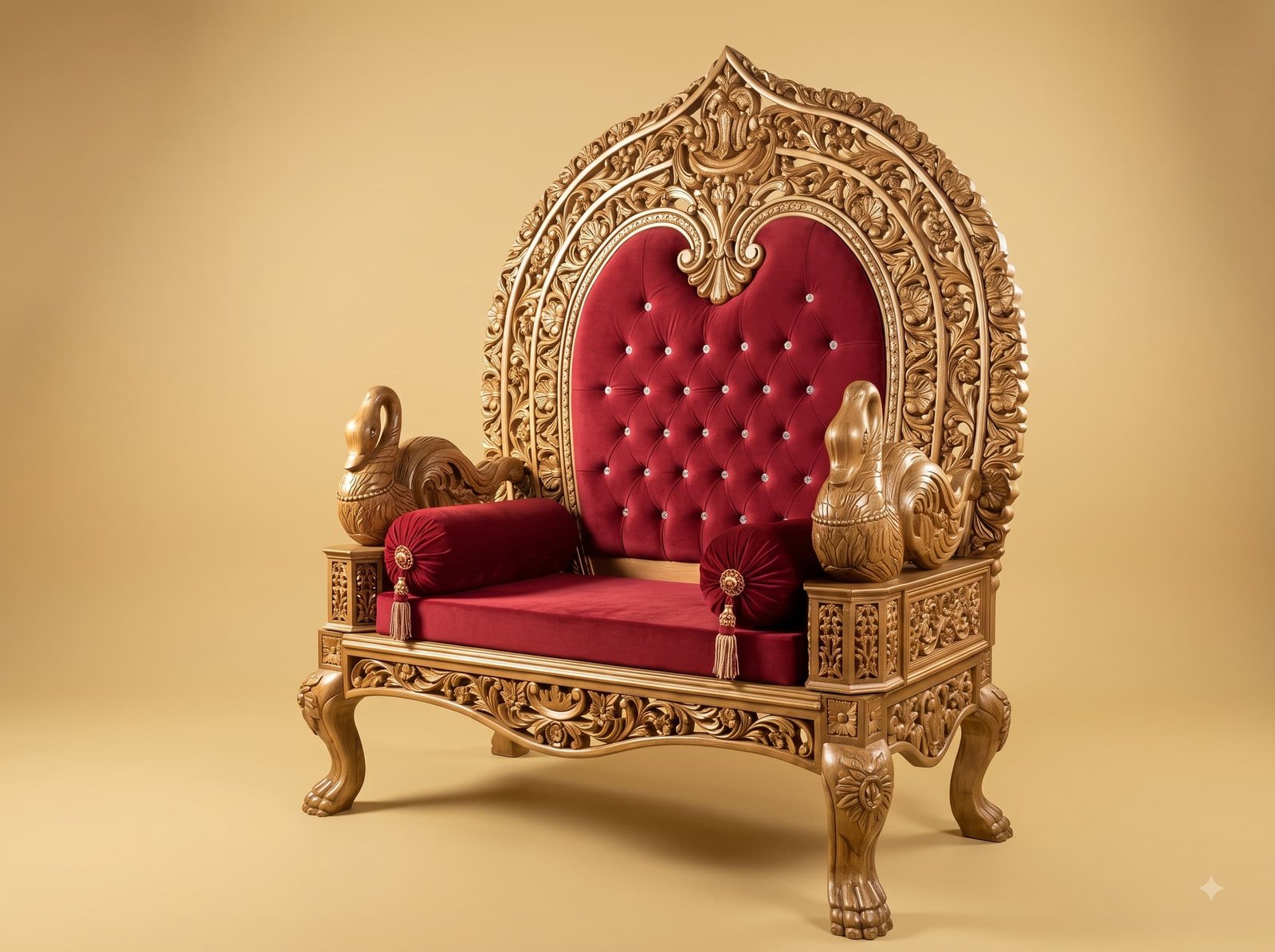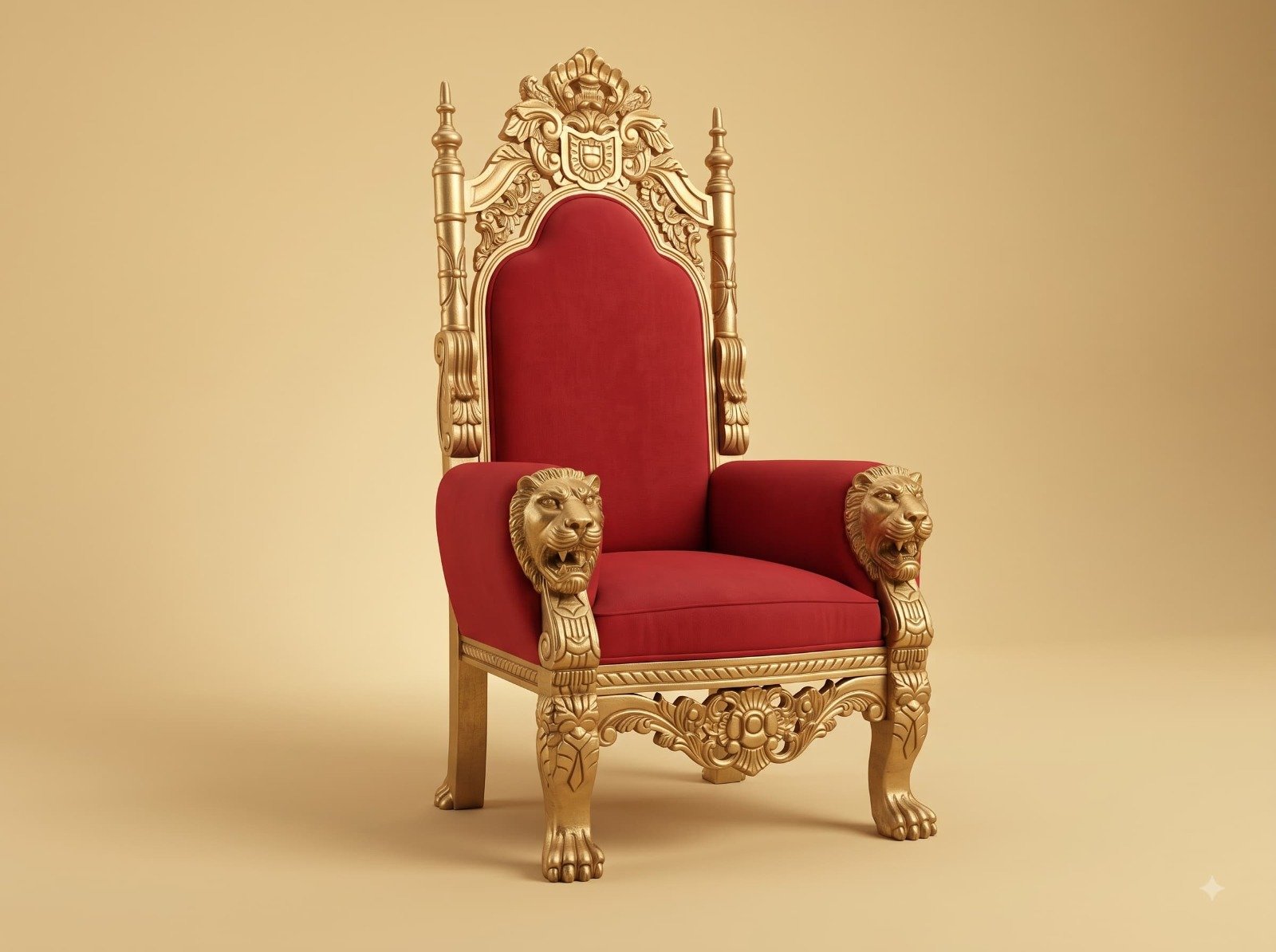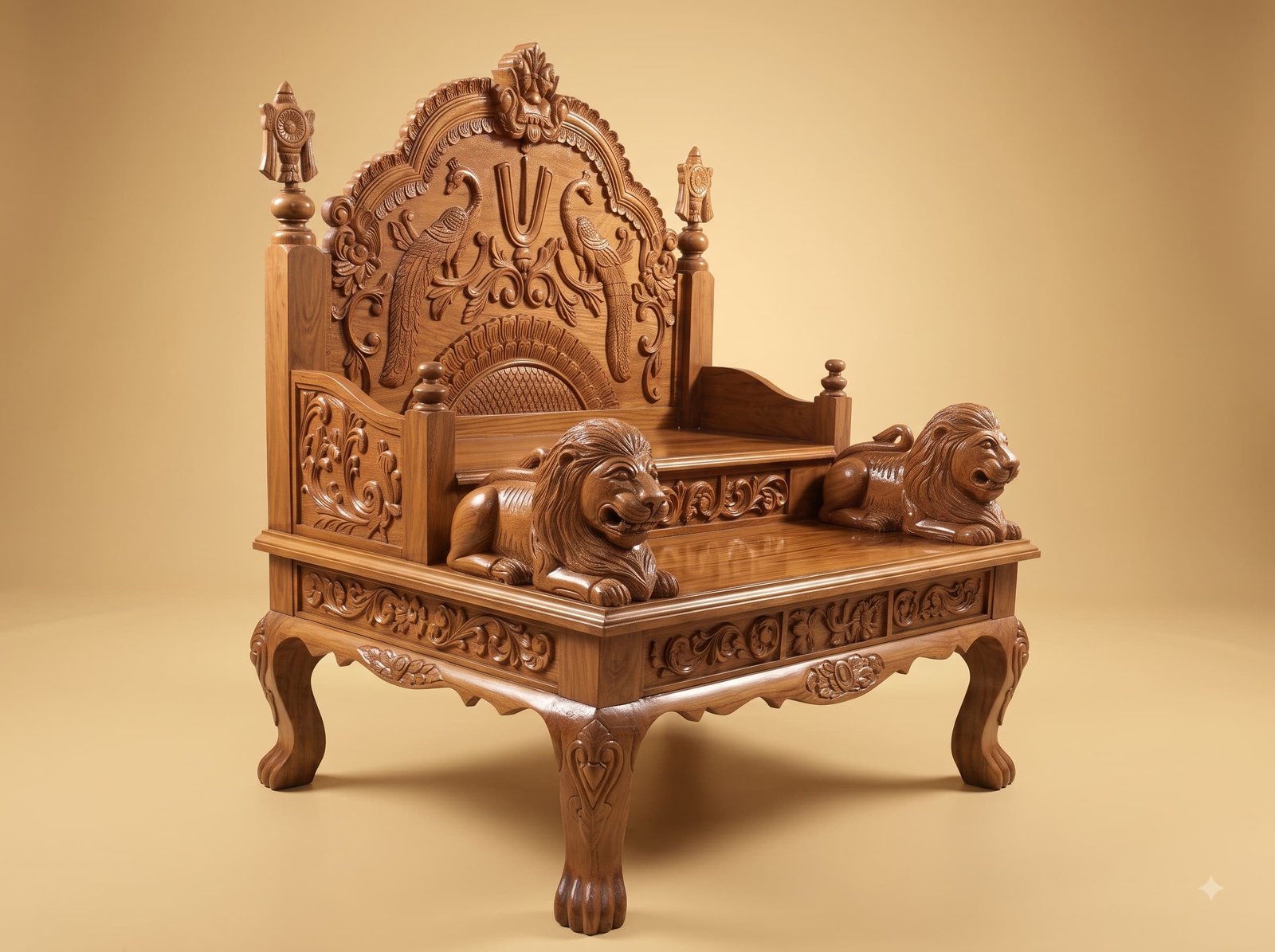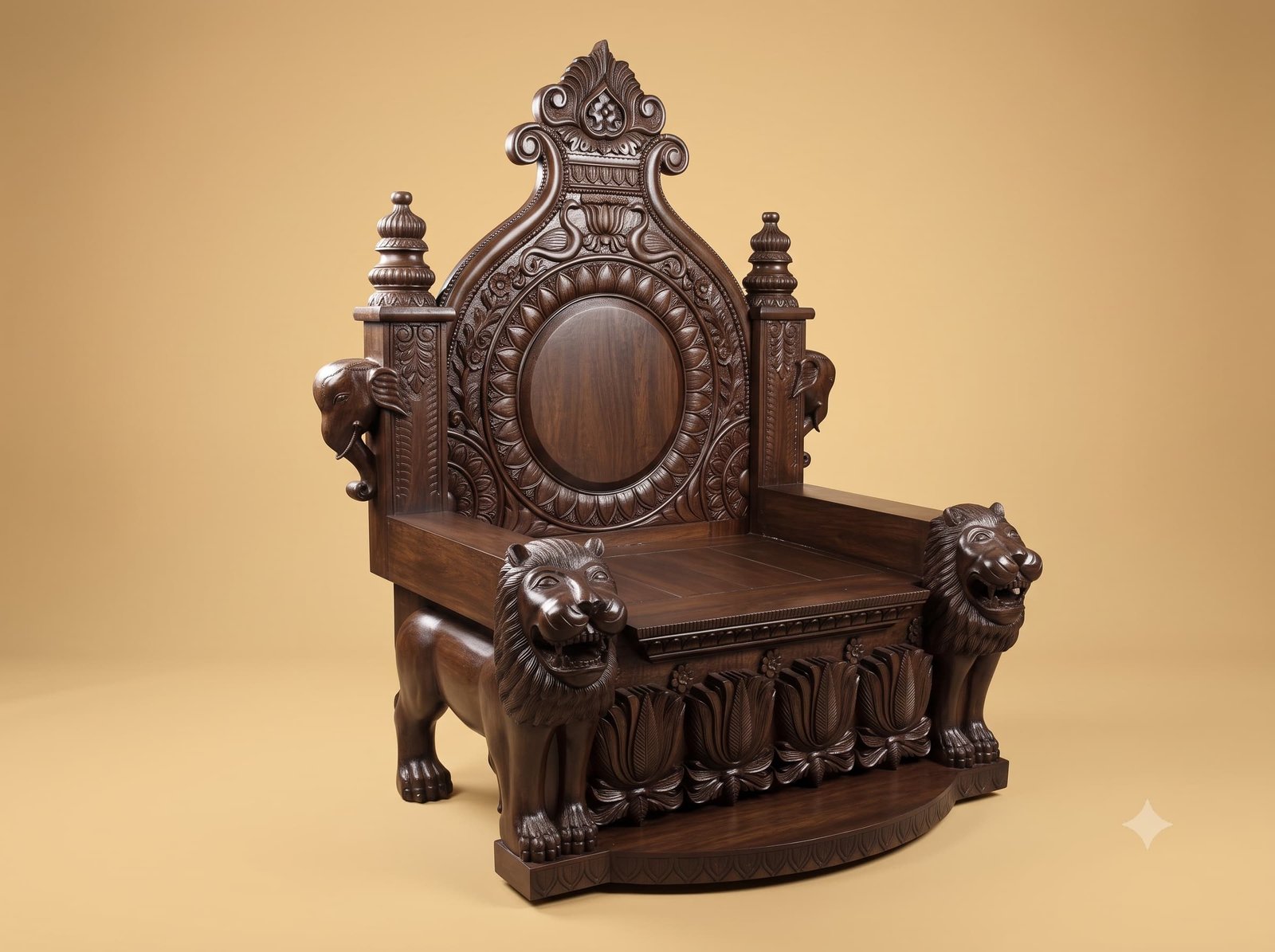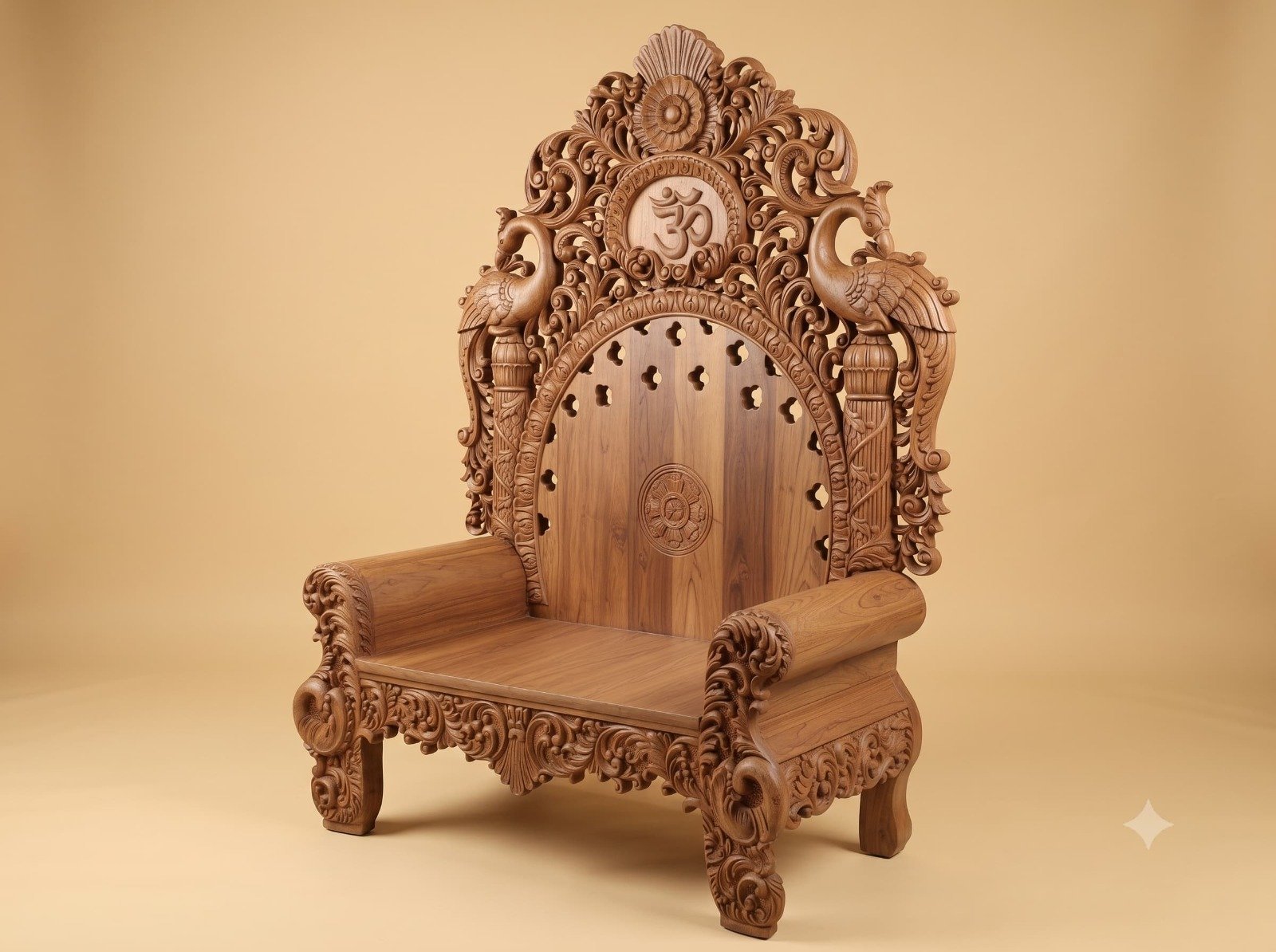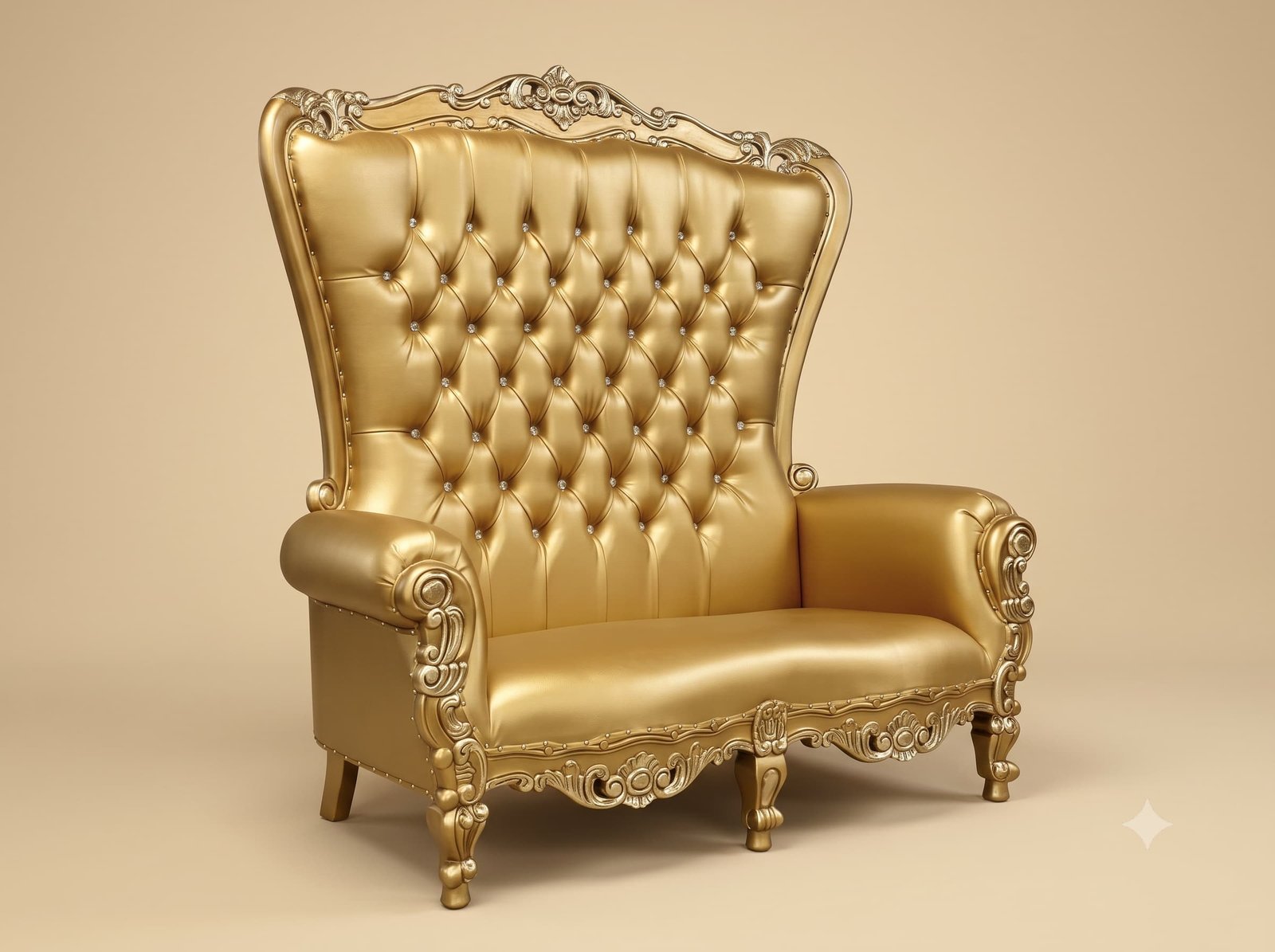
When the frame and the upholstery are the same colour, colour stops doing any work - and everything has to be carried by shadow instead.
On a piece where dark wood meets pale fabric, the eye finds the edges for free. Here there is no such line: gold carving meets gold upholstery and the boundary would simply vanish under bright light unless the making compensates for it. So it does, in two places.
The buttoning is pulled deeper than it would be on a coloured back. A shallow button on a two-tone sofa still reads clearly; the same button in monochrome disappears. Pulling further makes each hollow throw a real shadow, and it is those shadows, not the colour, that draw the diamond grid you can see from the back of a hall.
The carving is undercut harder for the same reason - the crest and the arm scrolls are cut back further beneath their edges than the design strictly needs, so a dark line sits under every raised element and separates it from the surface behind.
Neither adjustment is visible as an adjustment. They are simply why the piece still has form when the light is flat and the colour is all one.
 Ask Price On WhatsApp