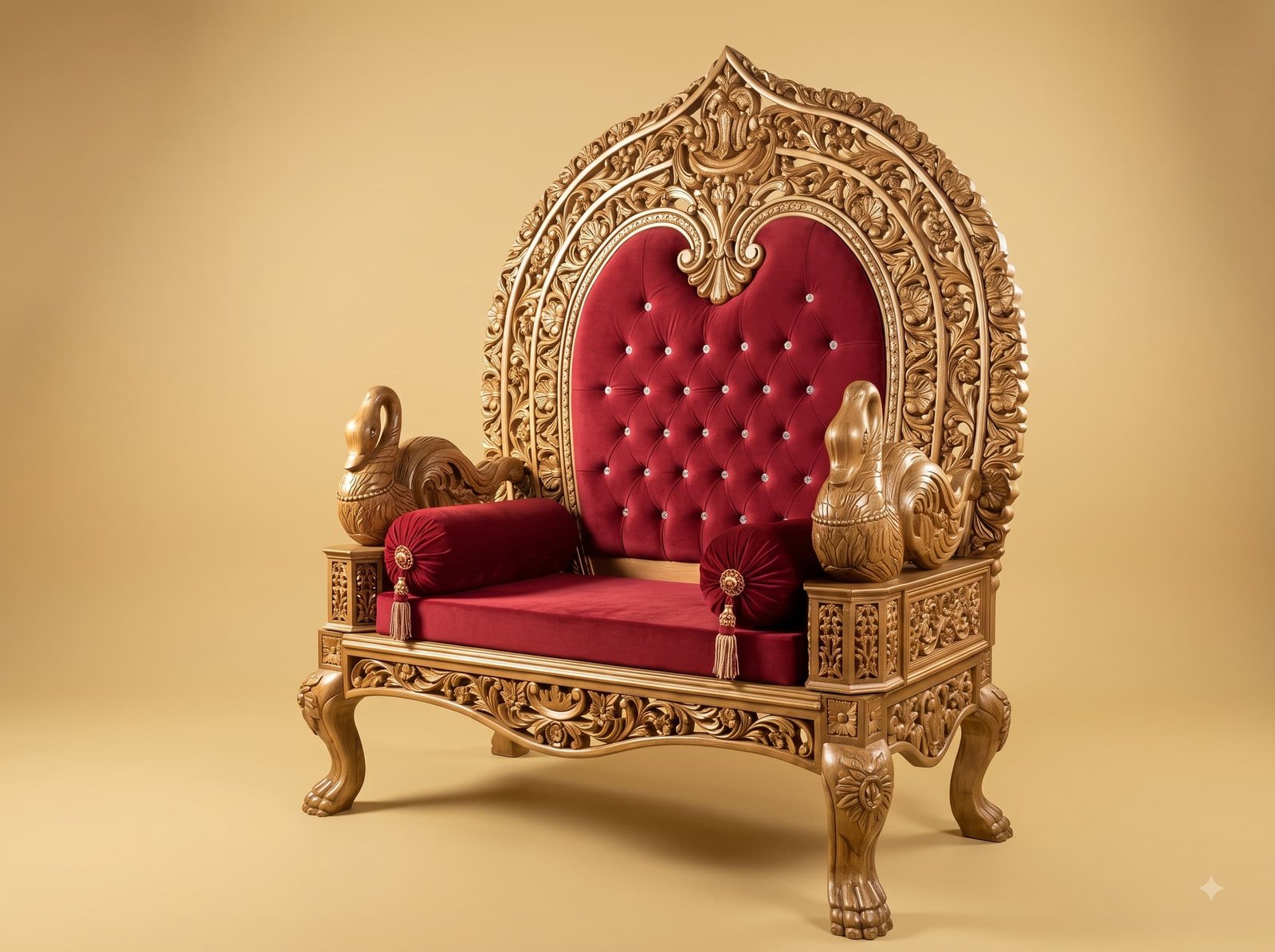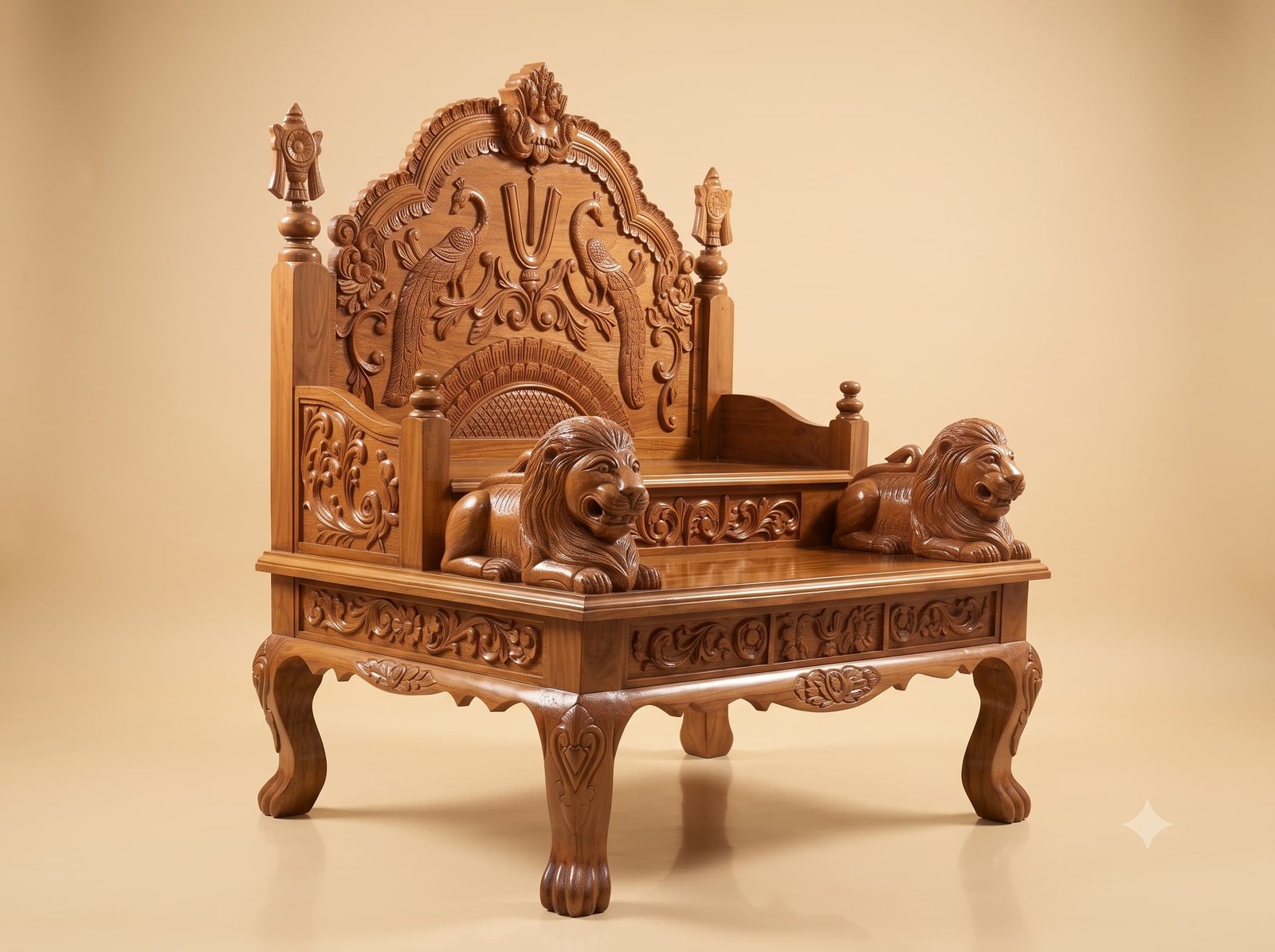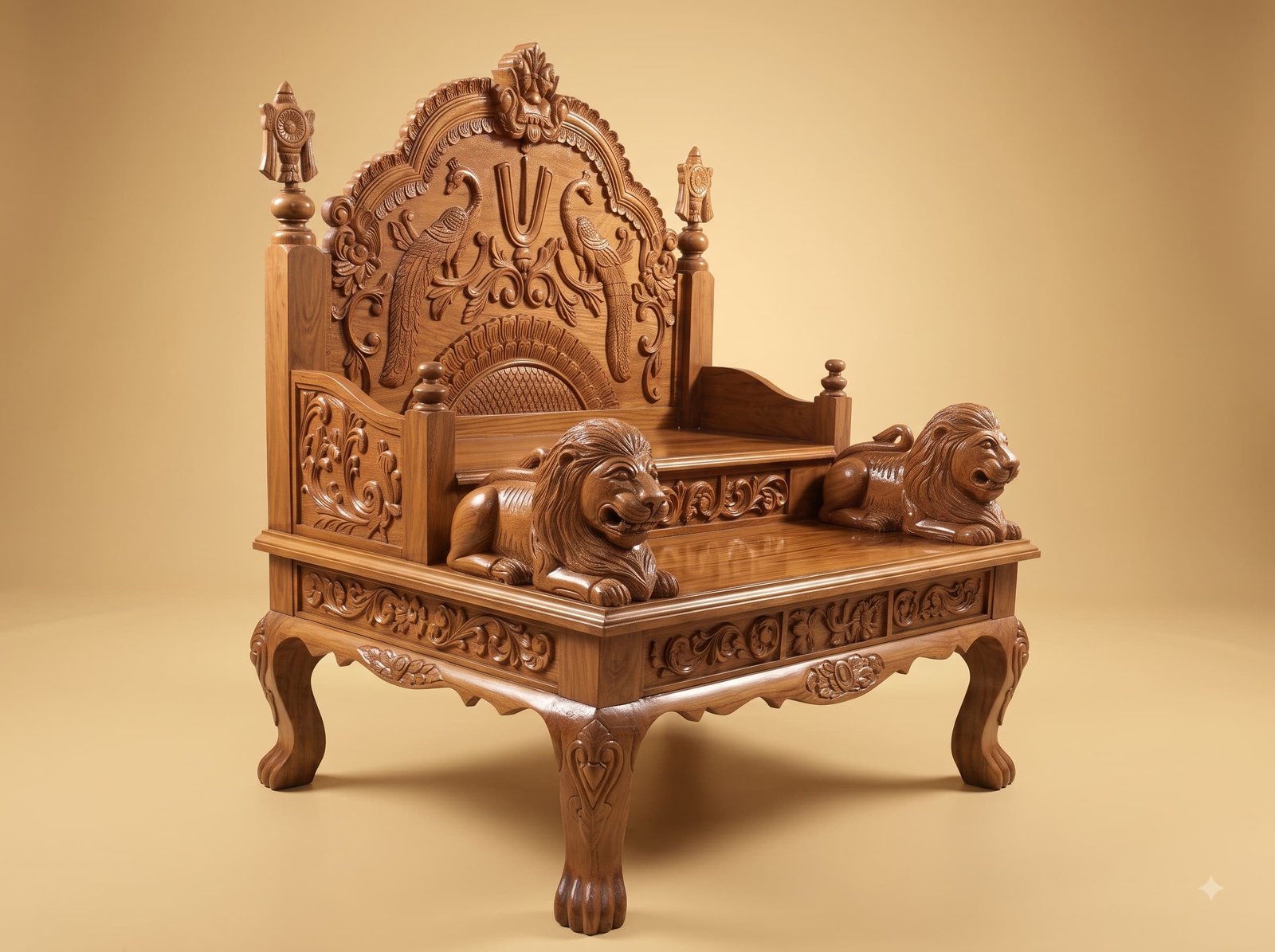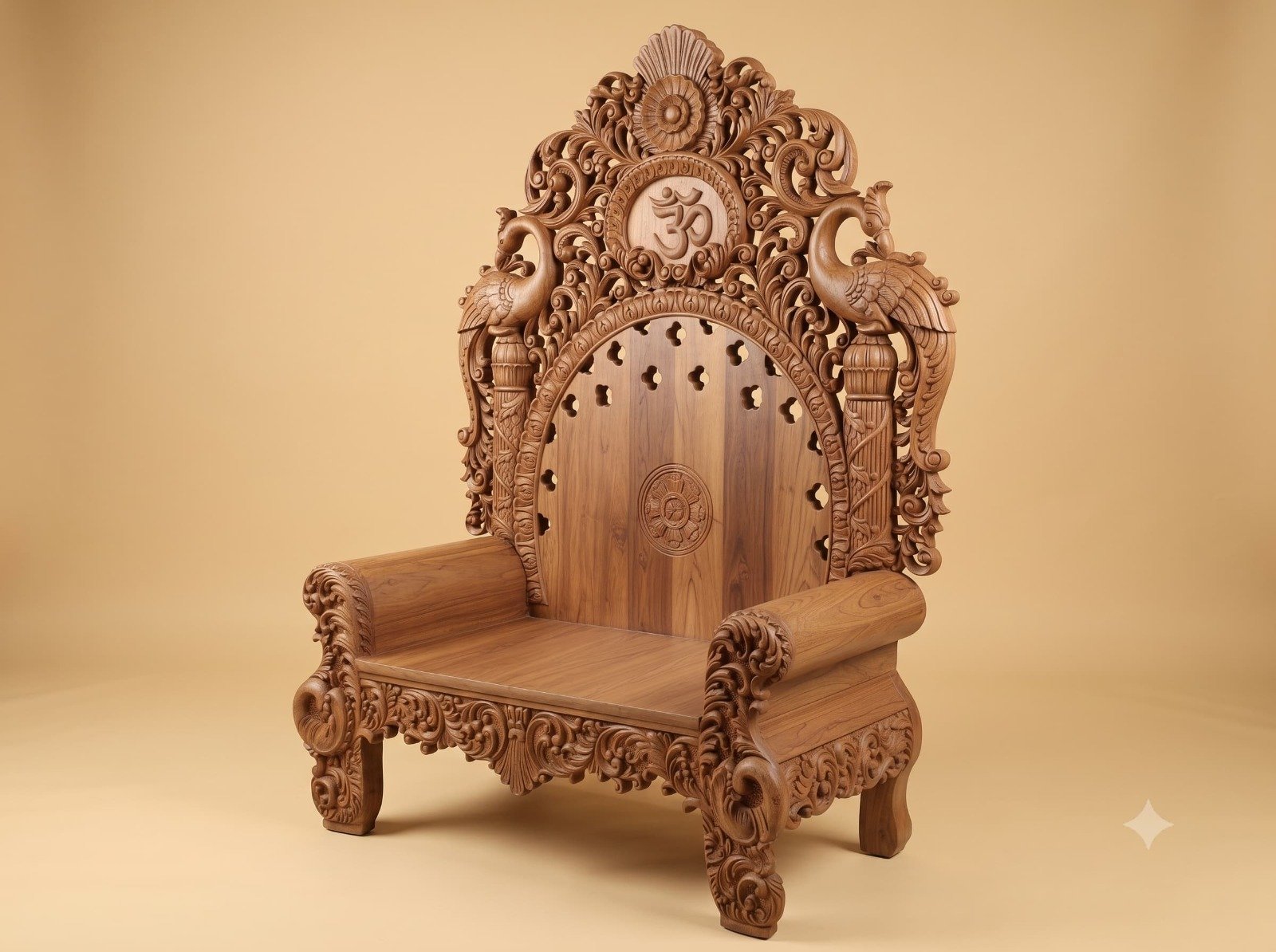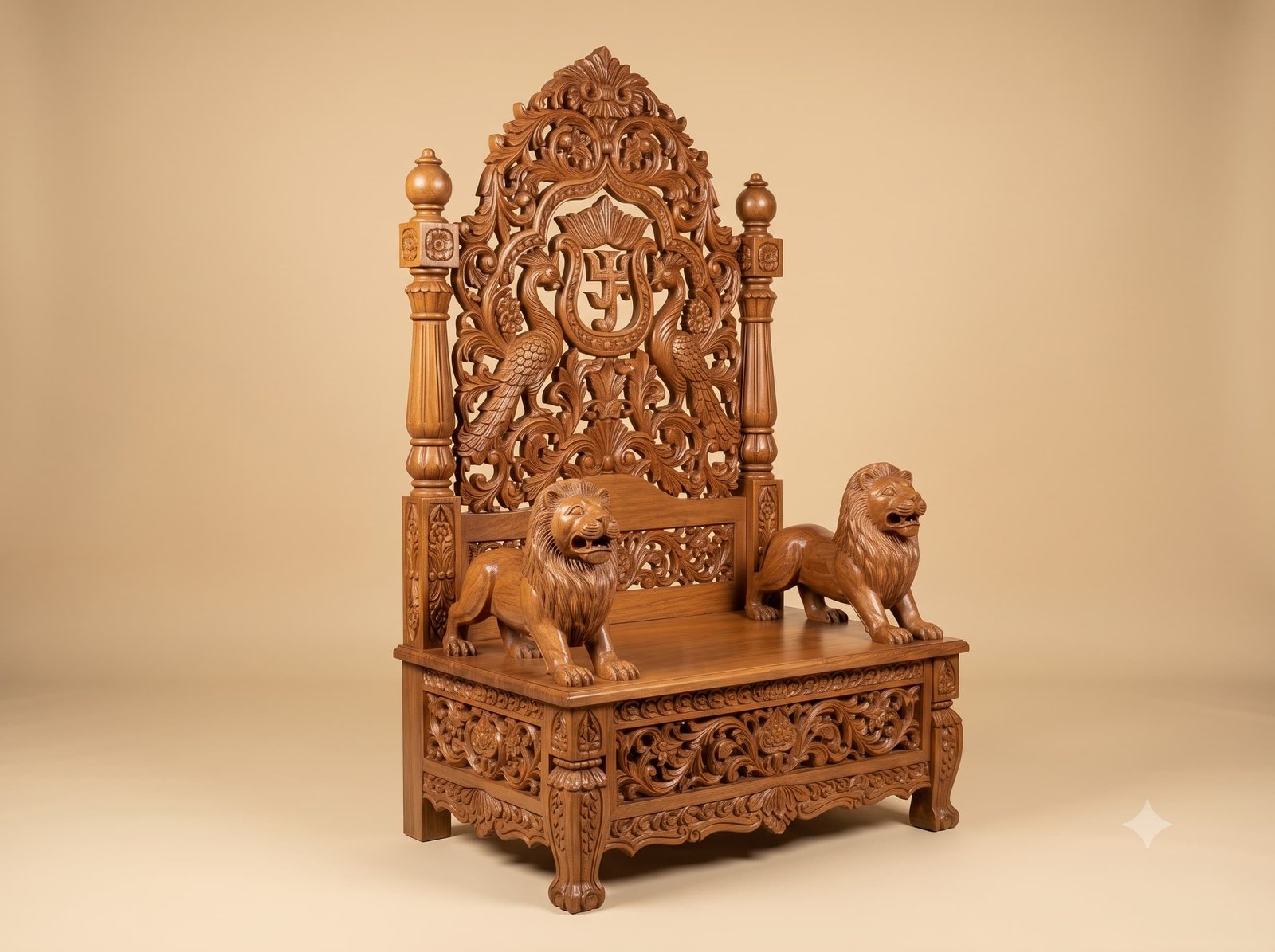
Look into the pierced arch and you will see the peacocks standing in front of the vine, and the vine standing in front of nothing at all. In a panel that is only a few centimetres thick, that sense of depth has to be built deliberately, and it is built from the back of the depth forward.
The carver decides three levels before starting: the void, the middle ground of stems and leaves, and the foreground where the birds sit. The deepest cuts go in first - the voids sawn out, then the middle ground taken down to its level across the whole panel. Only when everything behind has been established does the carver begin on the birds, which are simply whatever is left standing at the original surface.
Working the other way round is the common mistake. Finish a beautiful peacock first, and then every cut you make around it to establish the ground behind is a cut made next to something you cannot afford to slip into. Establish the ground first and the bird emerges from an area that is already surrounded by finished work, with nothing left to risk.
The result is a panel where the eye reads three distances in a thickness of a few centimetres - and it comes from the order of operations, not from the thickness of the wood.
 Ask Price On WhatsApp