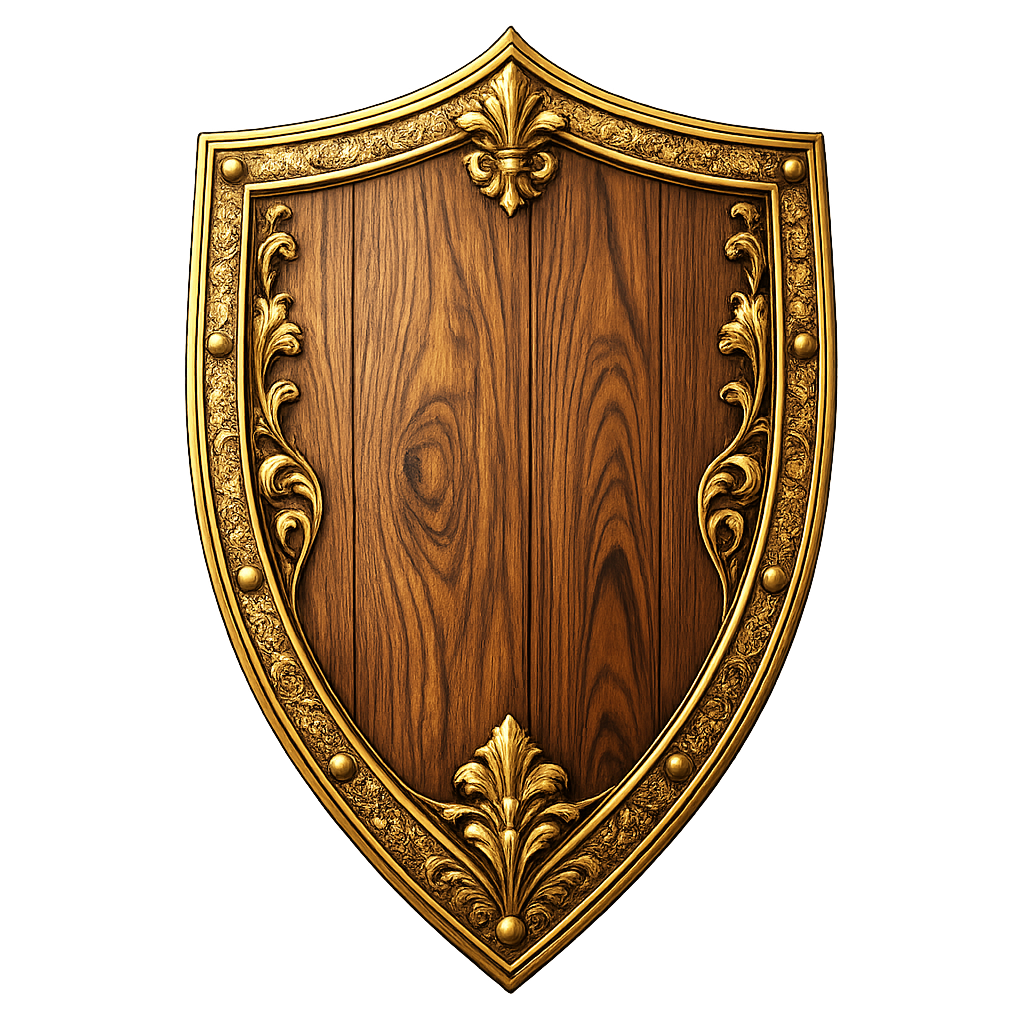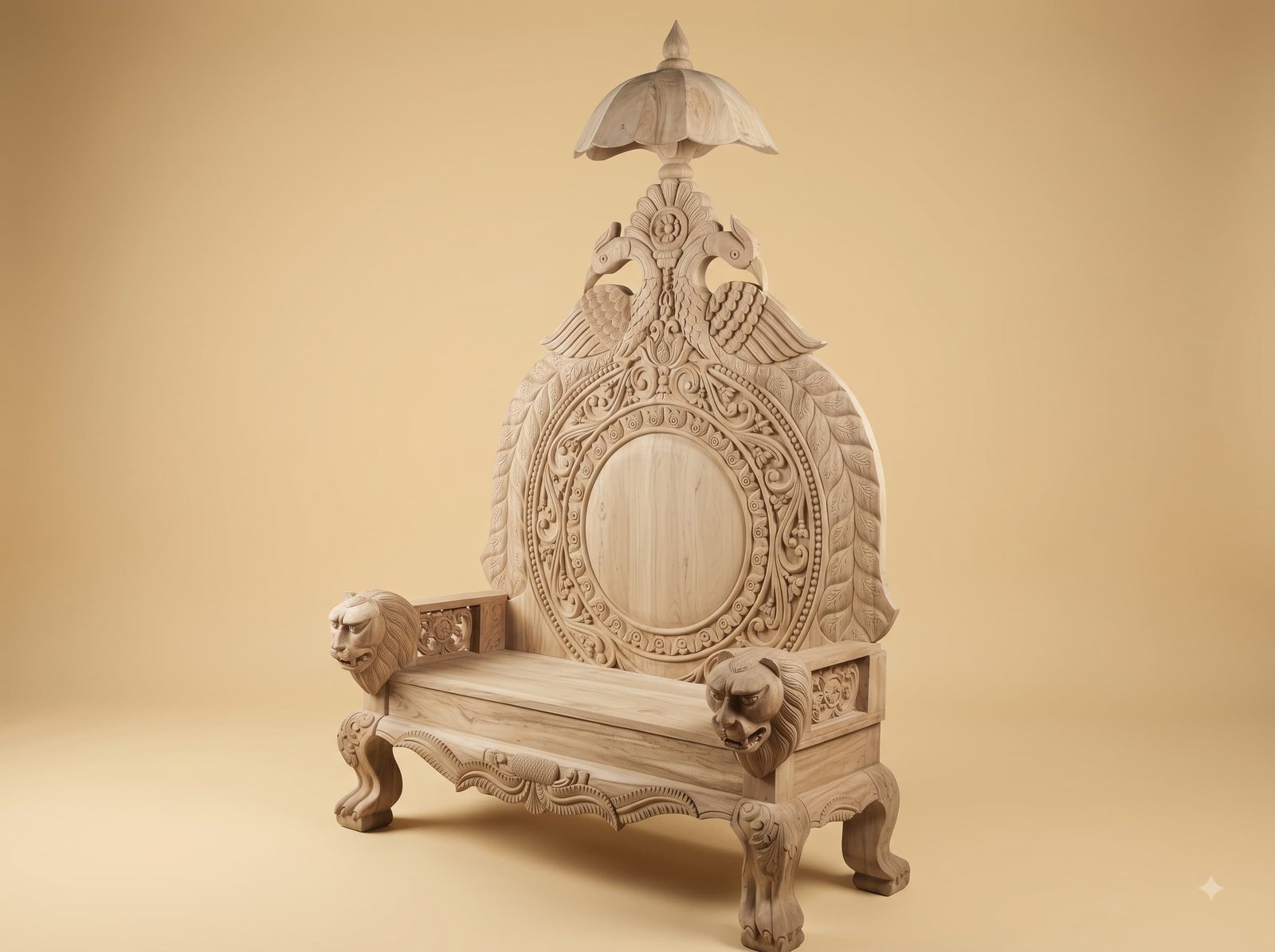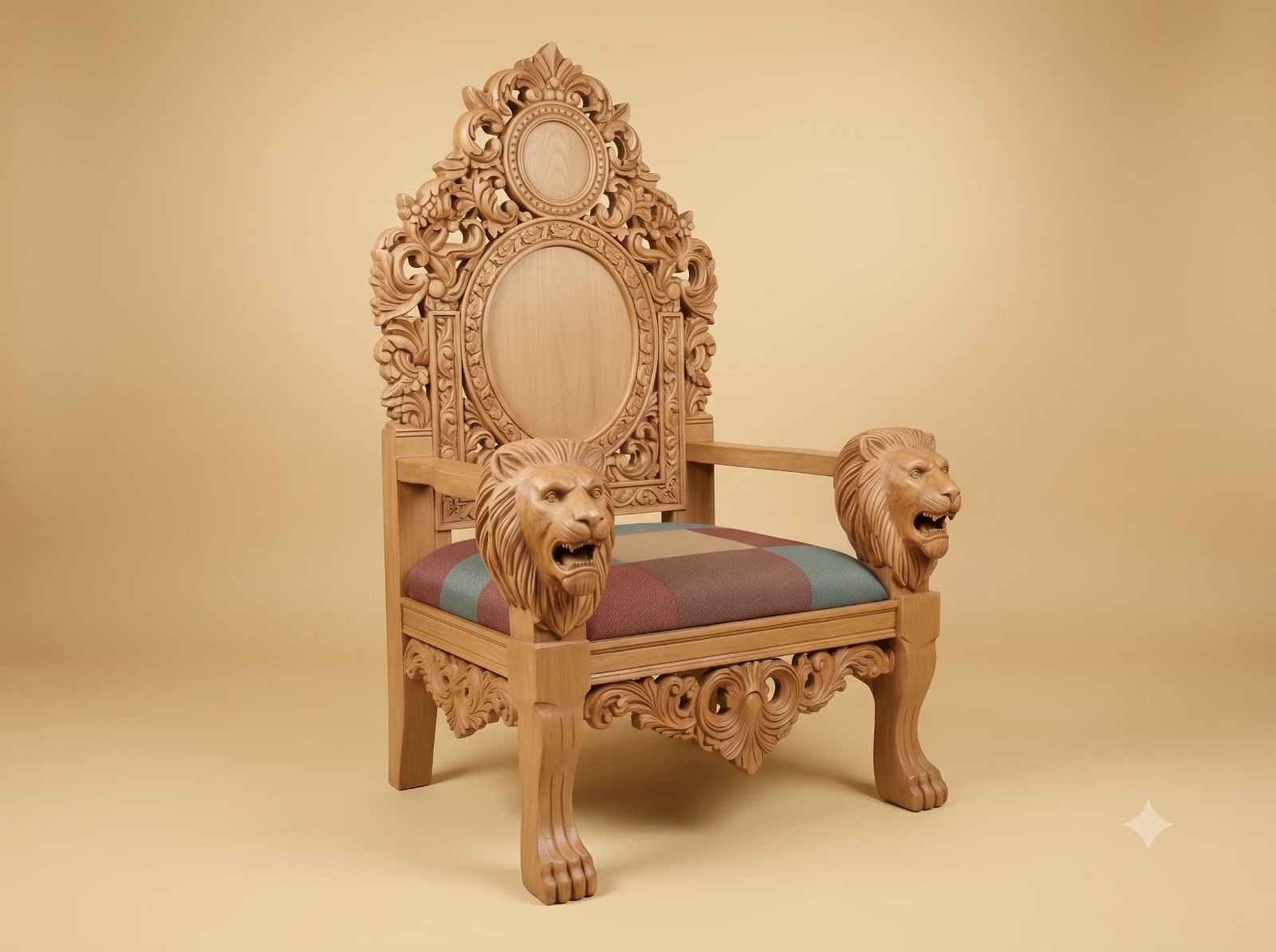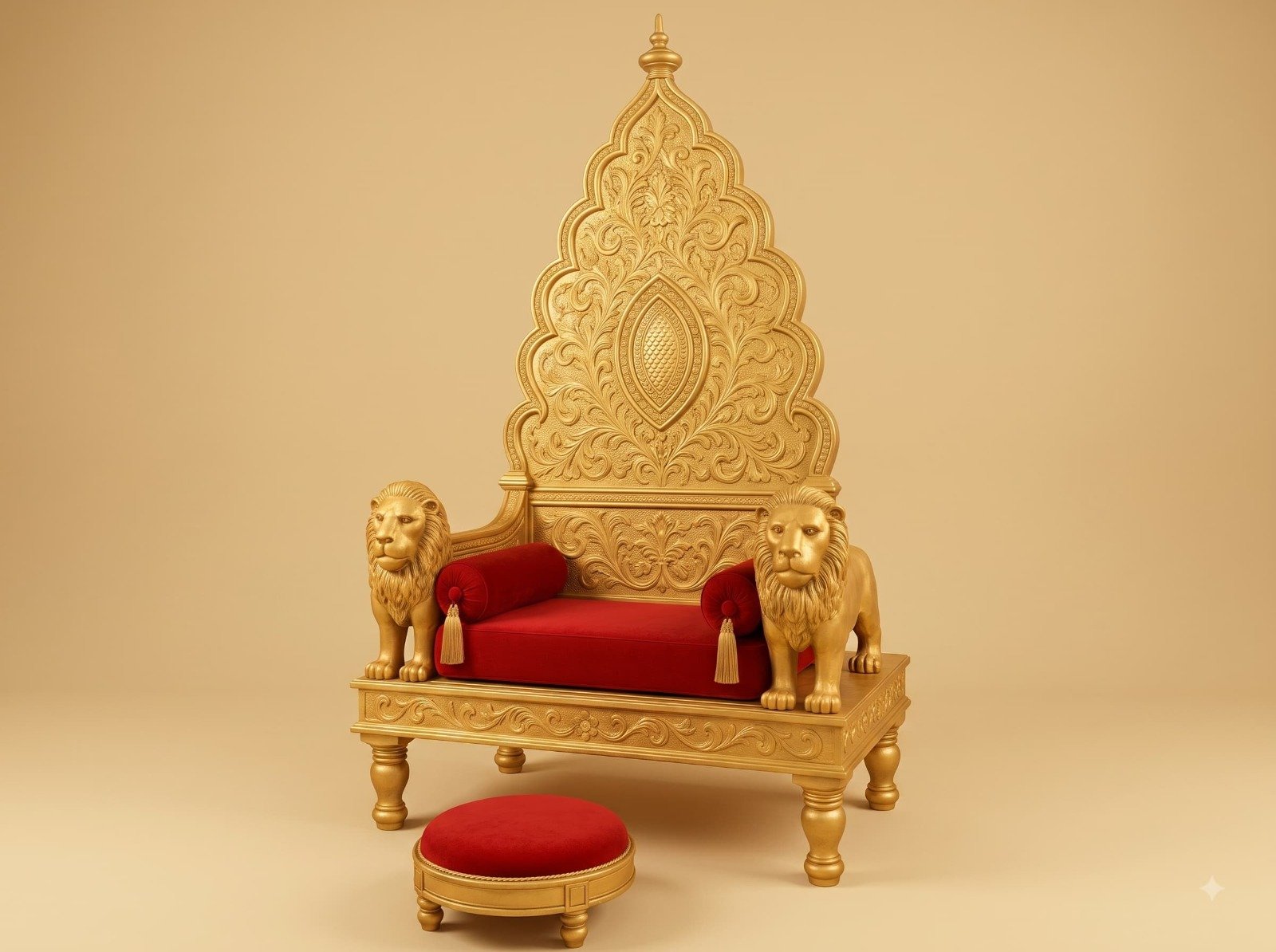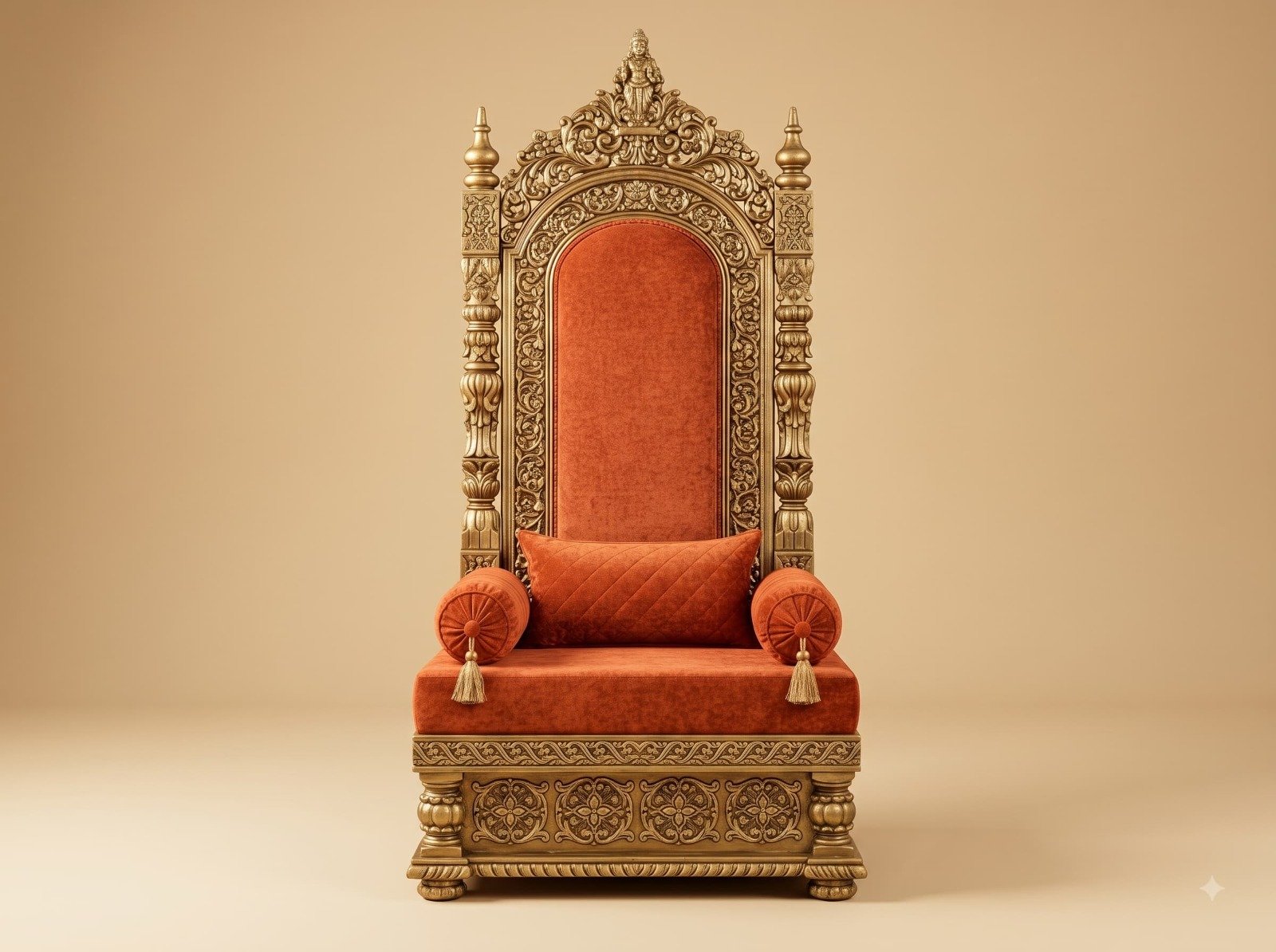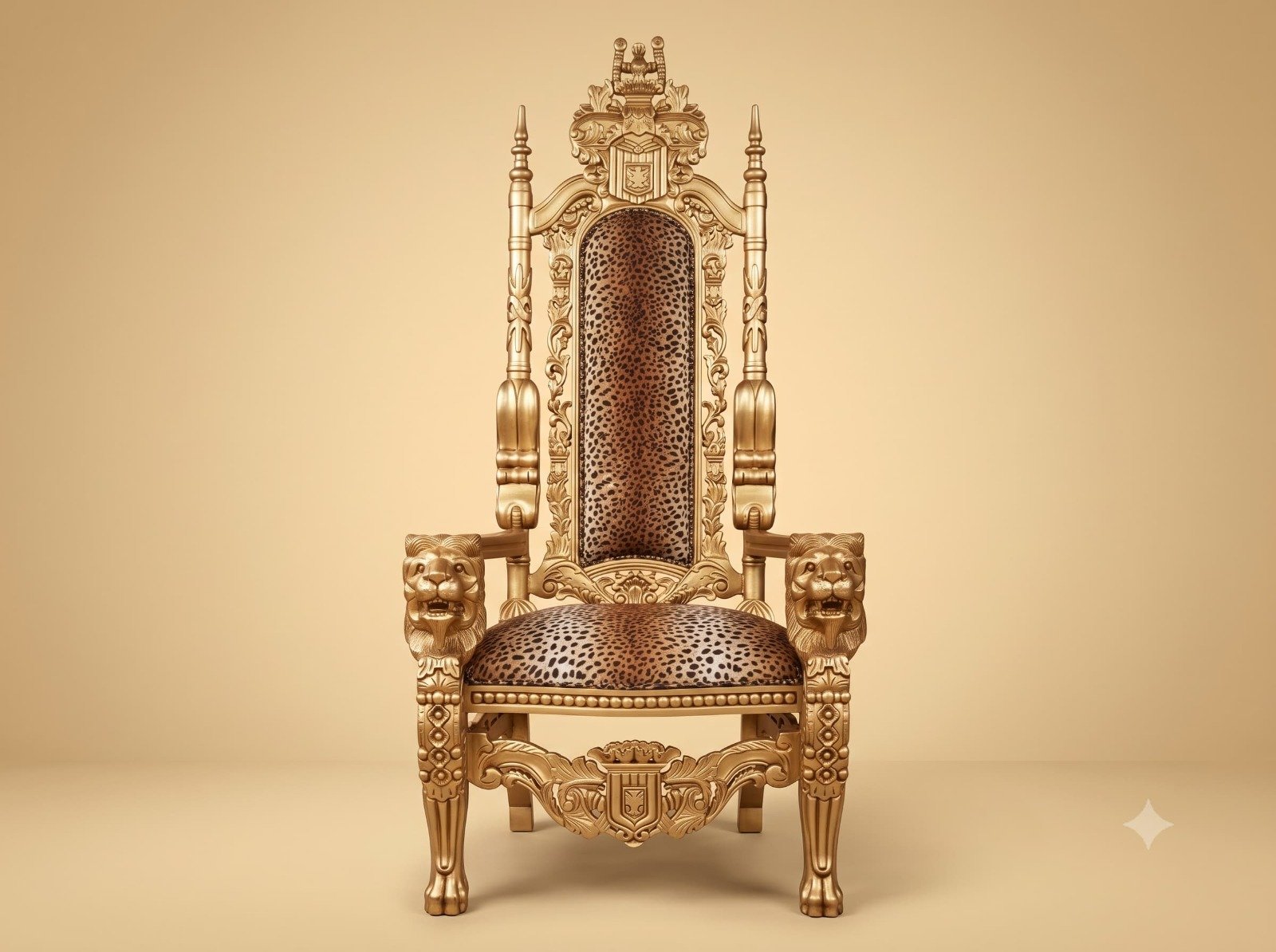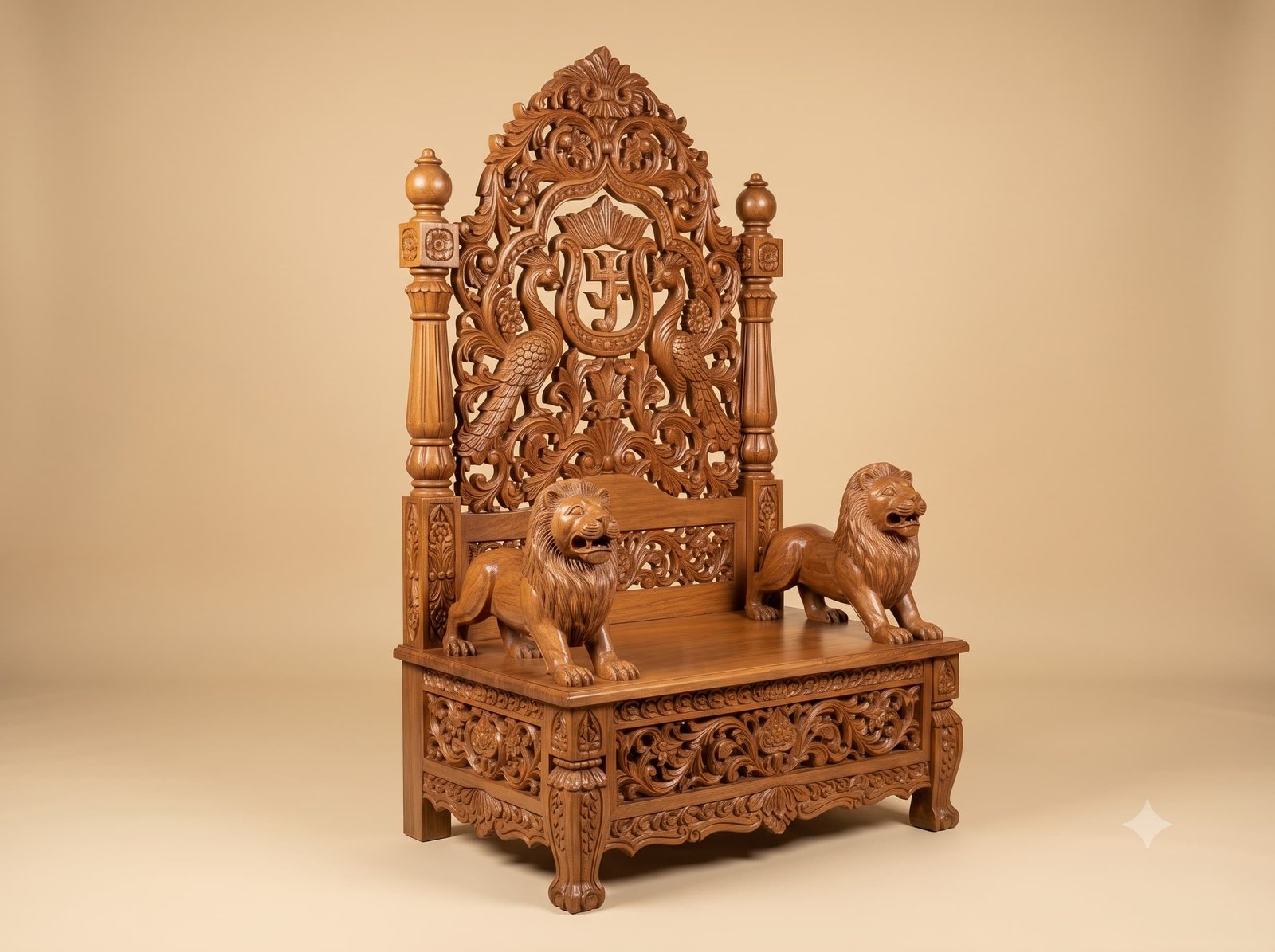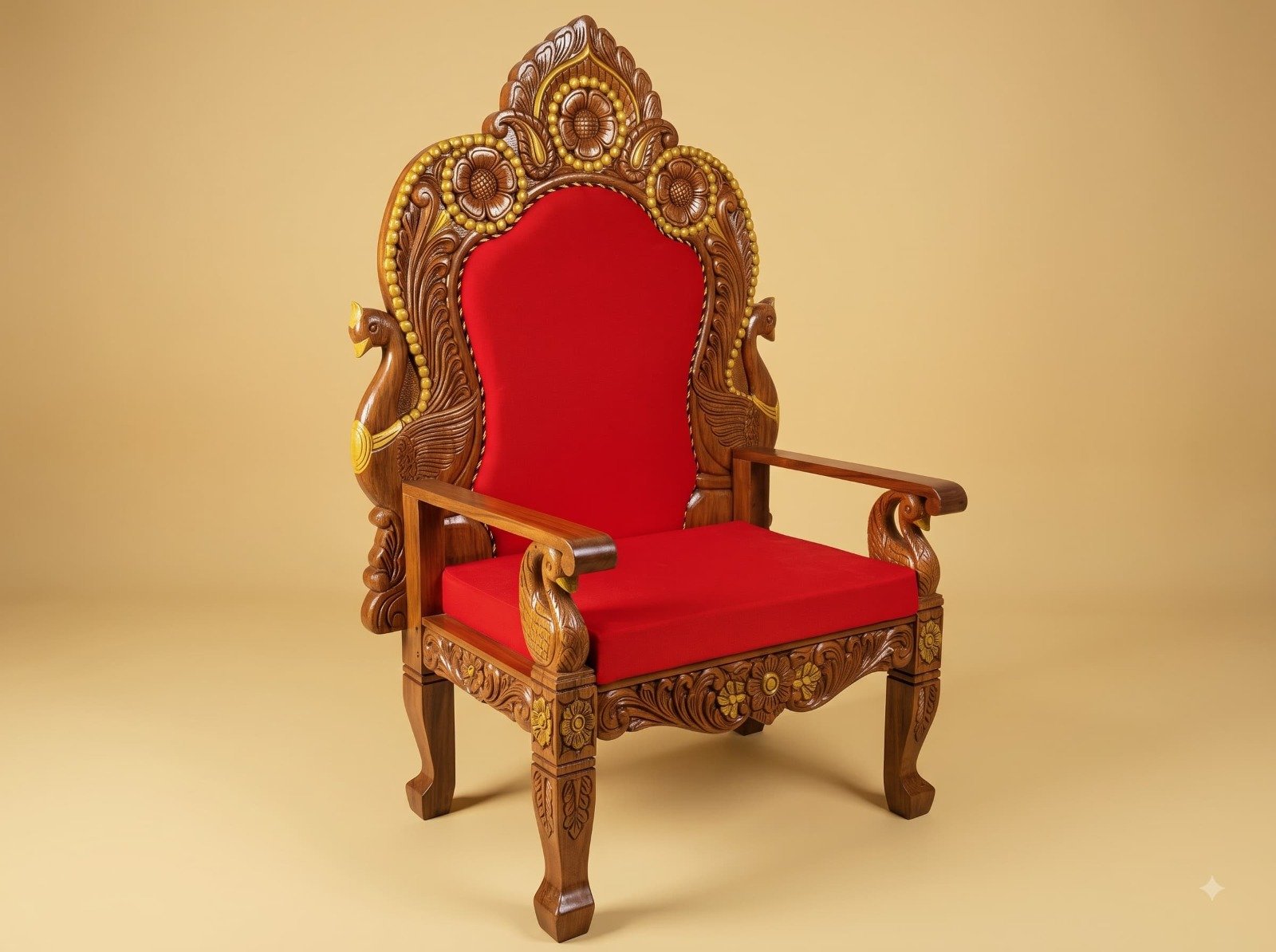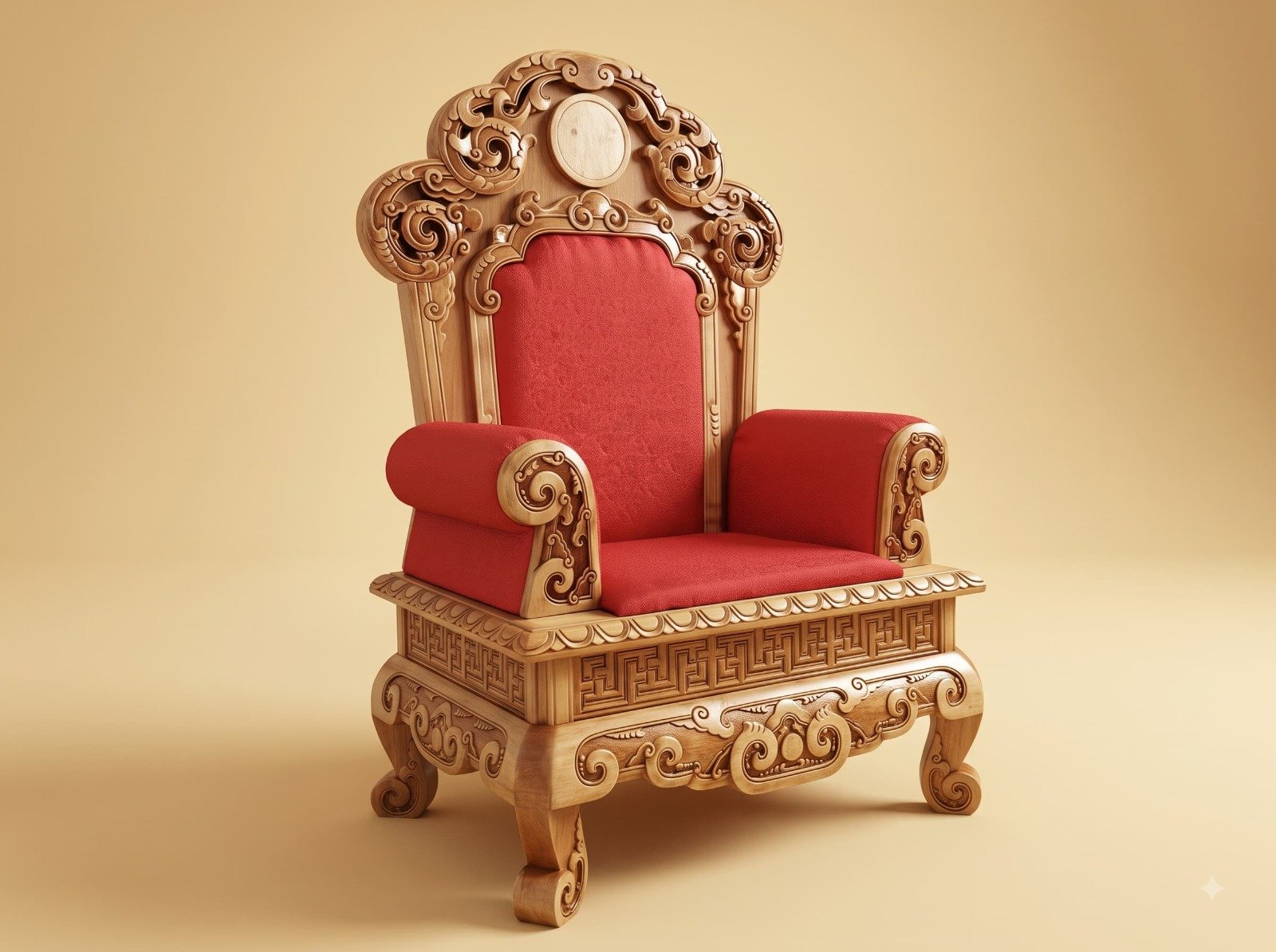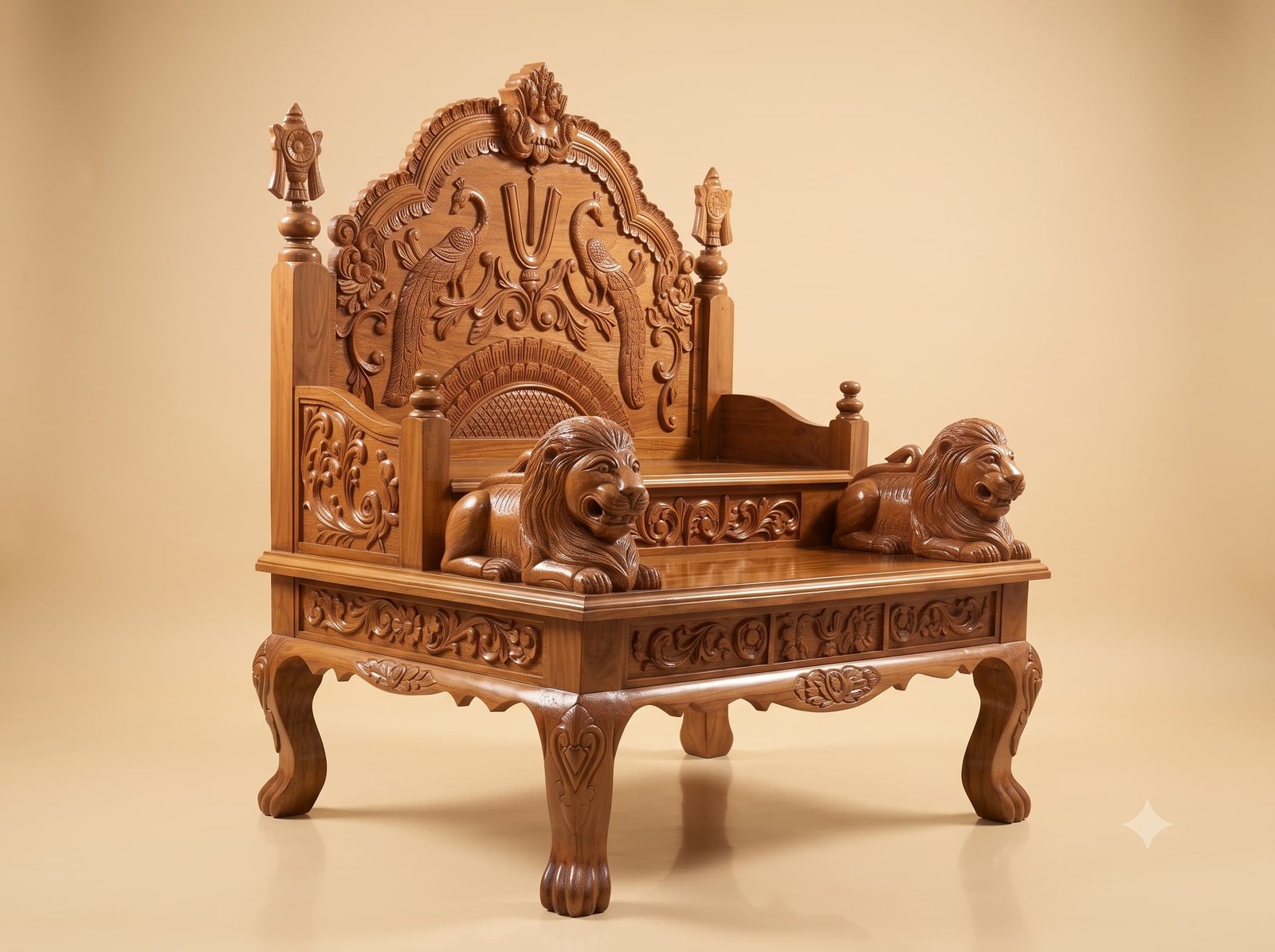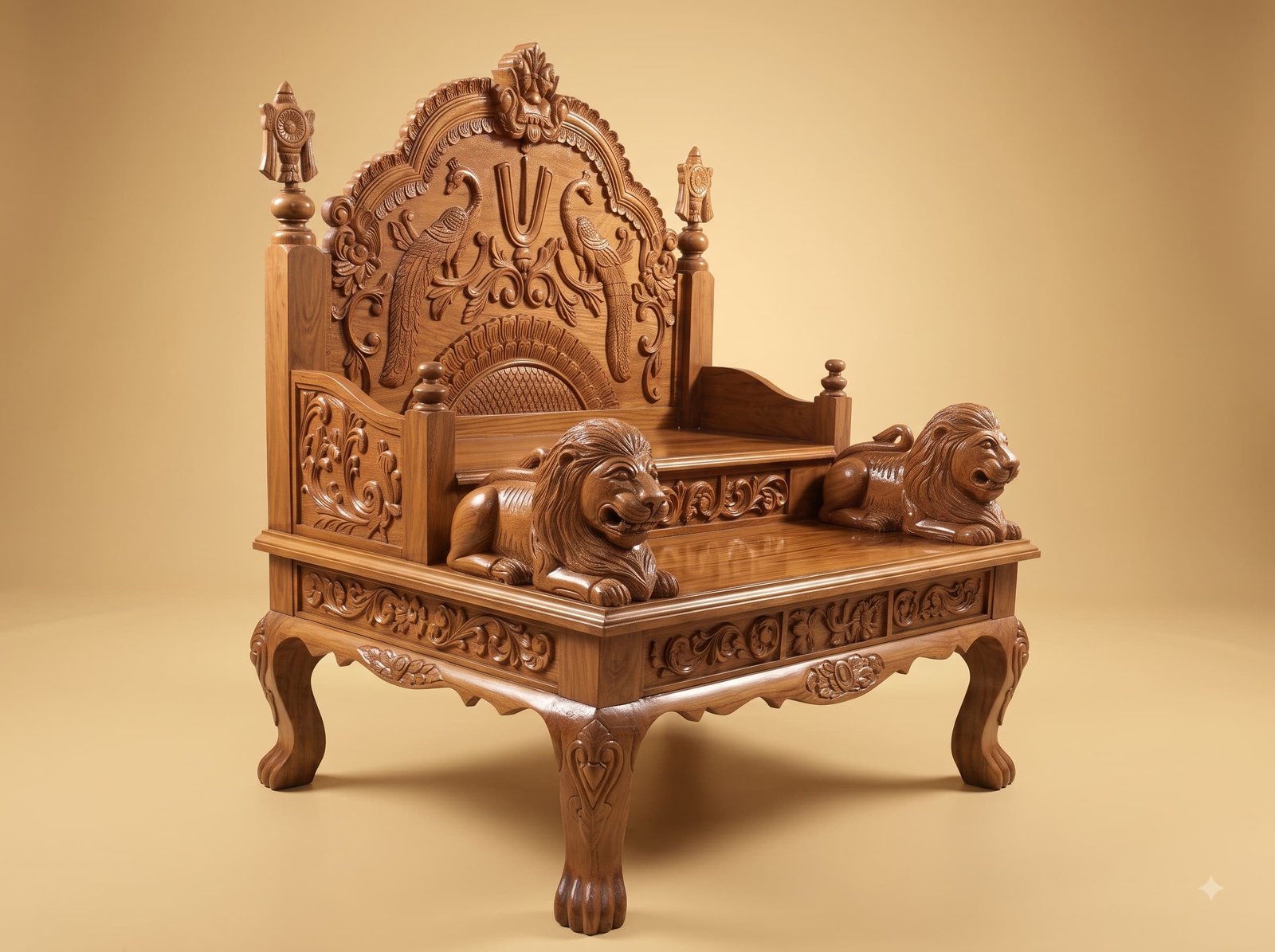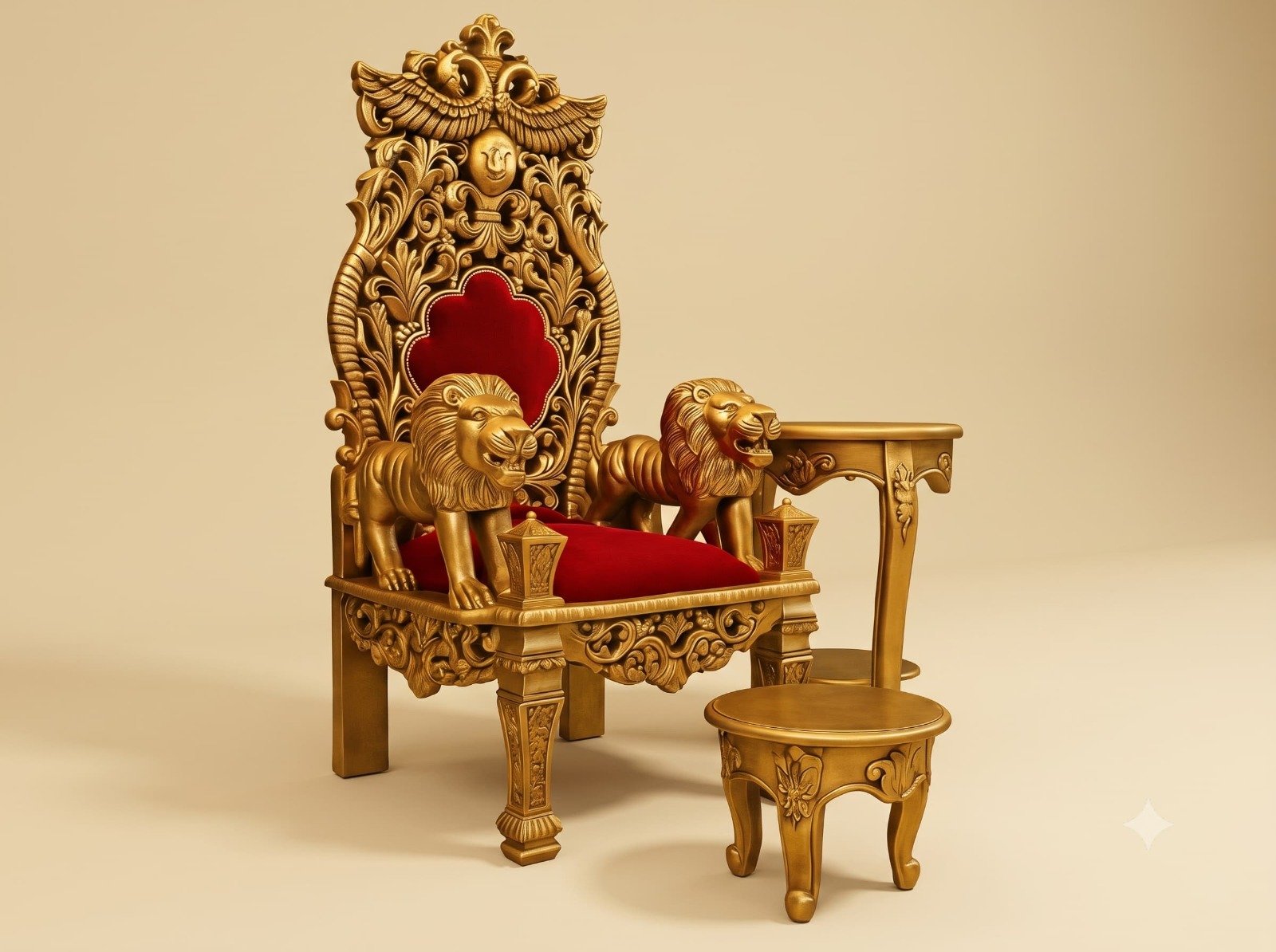
Gold leaf arrives in small squares, and a piece like this needs hundreds of them. Where they meet is the whole craft.
Each leaf is thinner than paper and light enough to be lost to a breath. It is picked up, carried, and laid onto the prepared surface, and it must overlap its neighbour by a hair - not butt against it. A butted join leaves a hairline of the ground colour showing through, and once the piece is finished that line reads as a scratch across the gold. Overlap too far and the double thickness sits proud and catches light differently.
On carving, this is harder again, because the surface is not a plane. Every leaf has to be pressed down into the hollows and around the ridges of the foliage without tearing, using a soft brush rather than fingers.
Afterwards comes faulting-in: the gilder goes over the whole piece looking for the small gaps that always appear in undercuts and inside corners, and patches each one with a torn fragment of leaf. It is slow, unglamorous checking work, and it is the difference between gold that looks continuous and gold that looks applied.
 Ask Price On WhatsApp