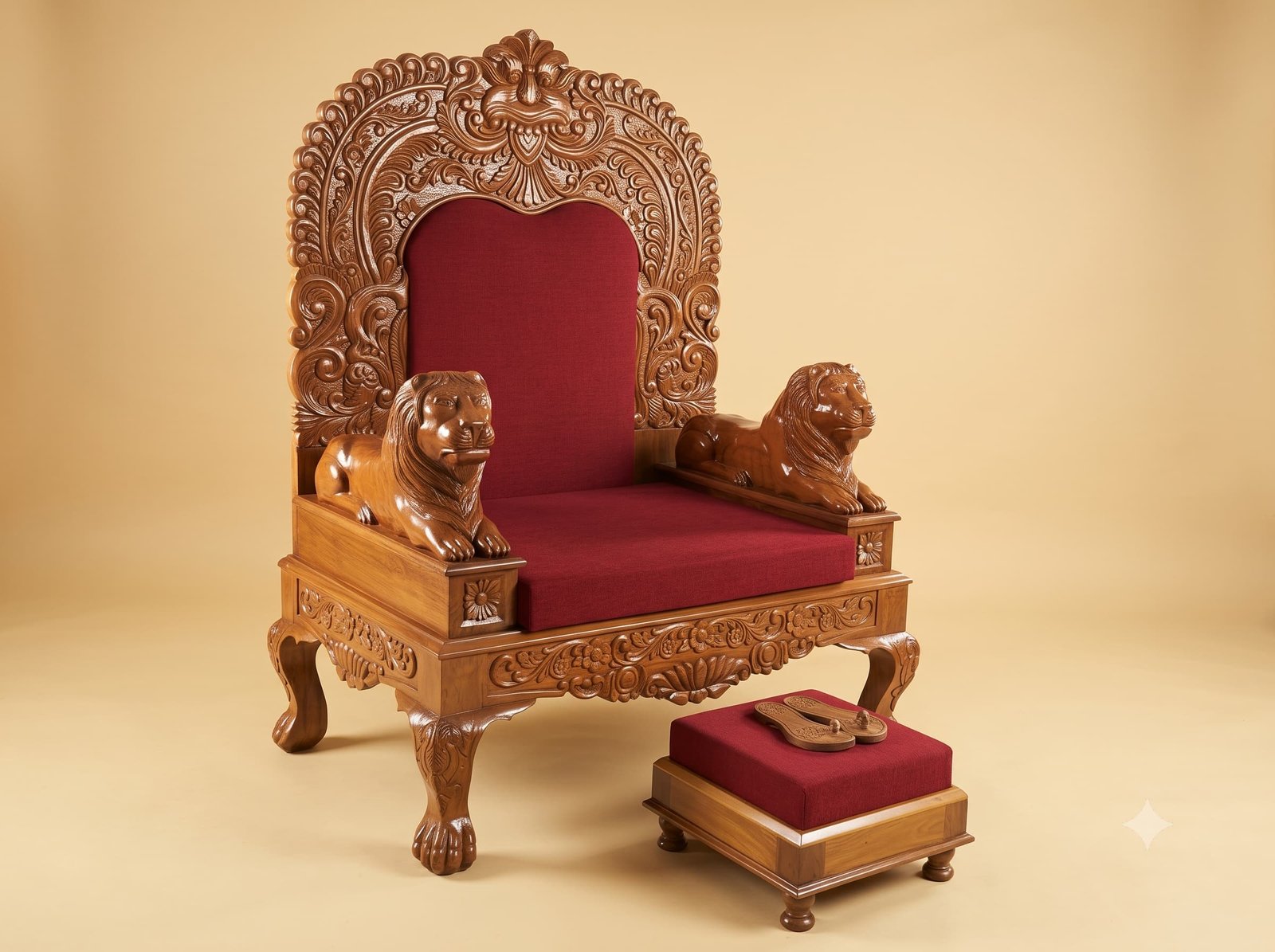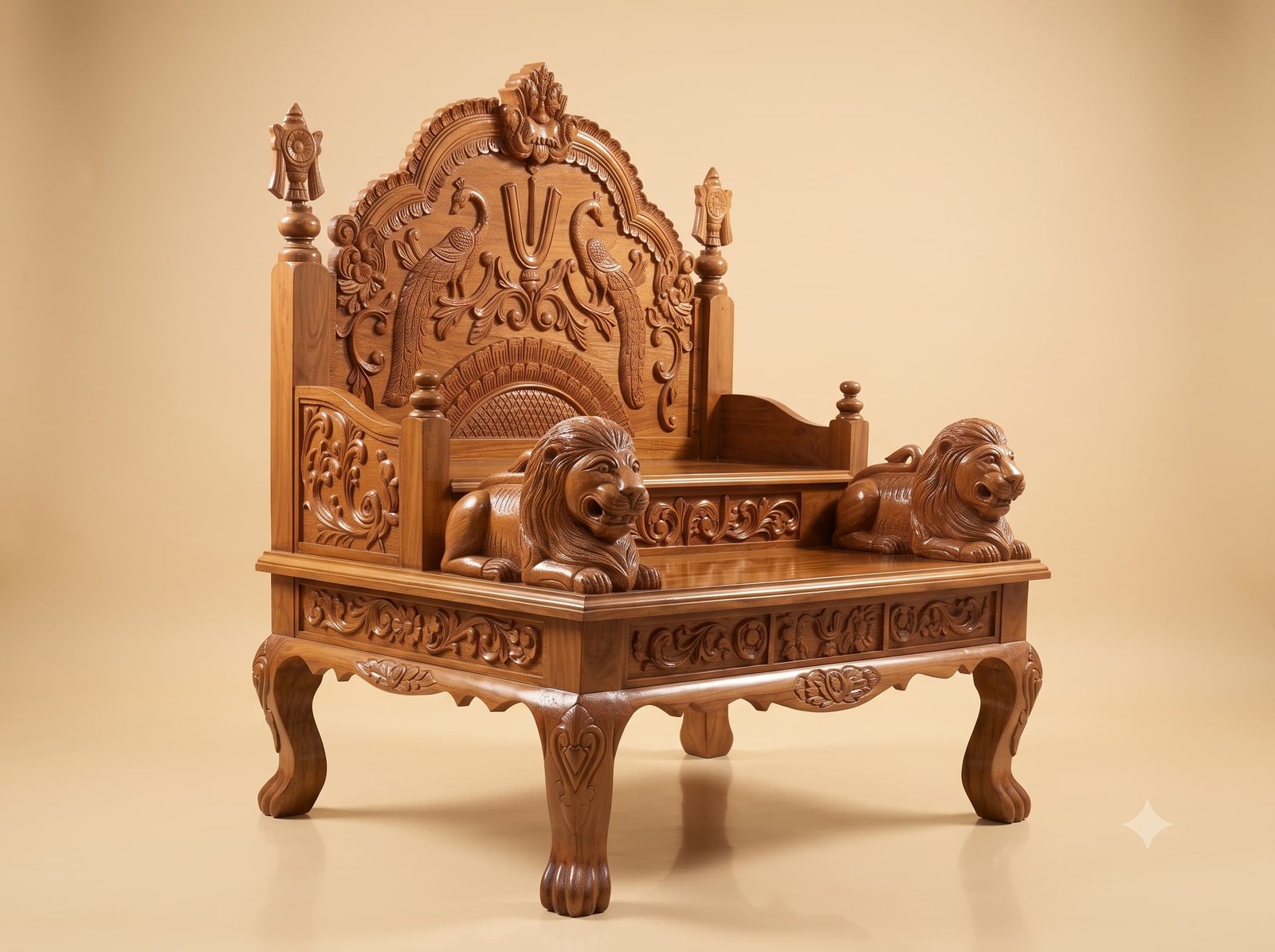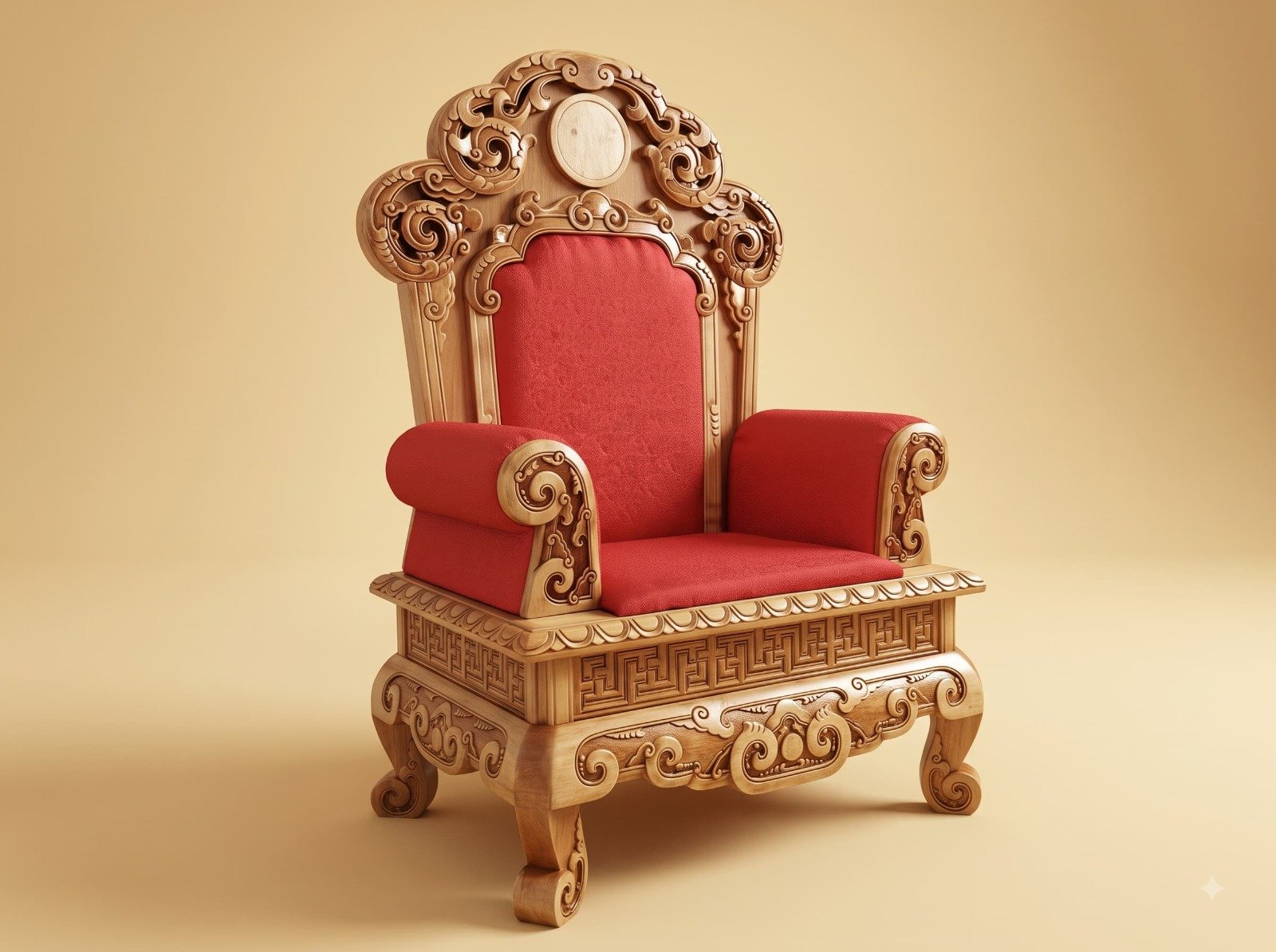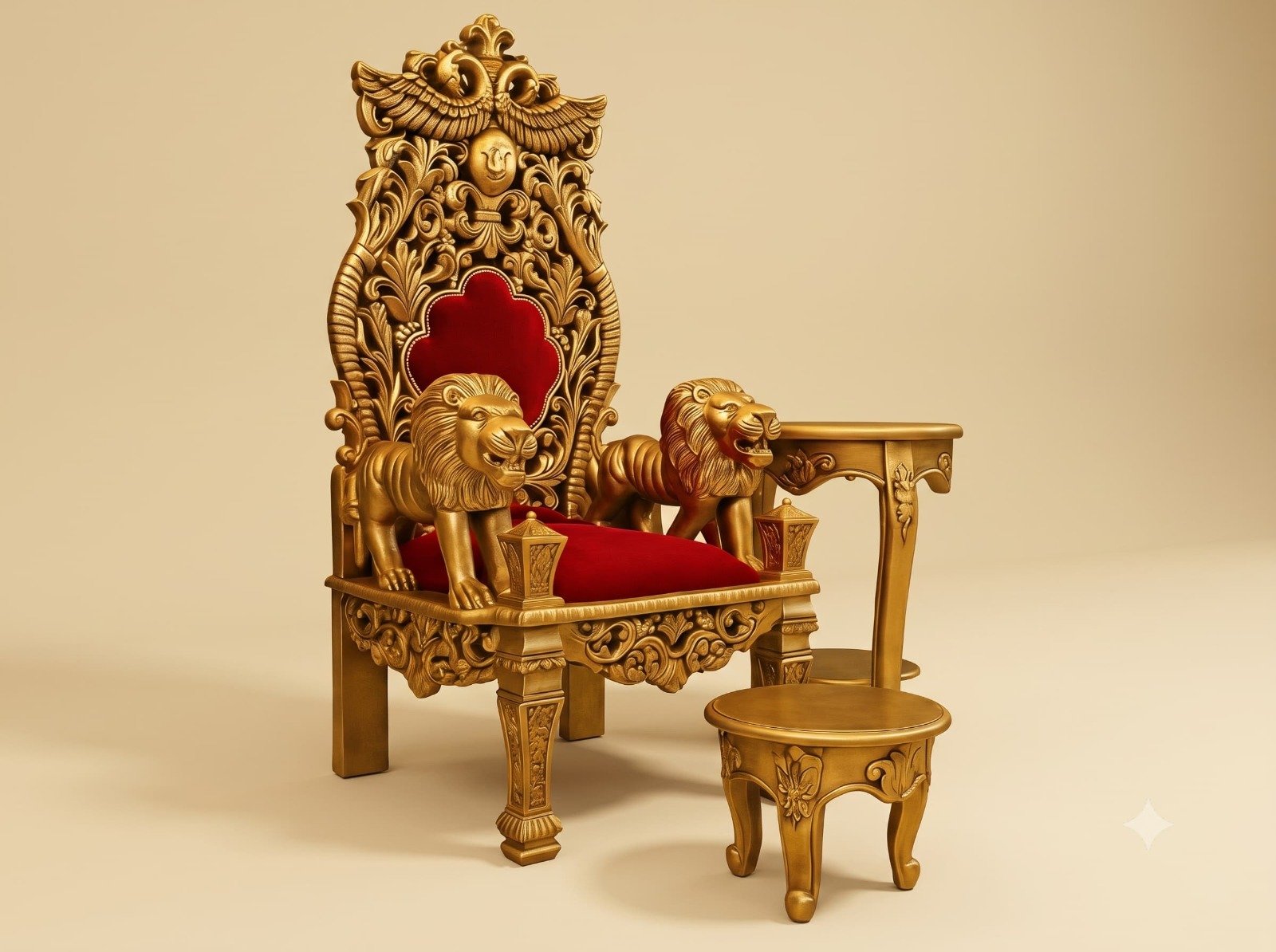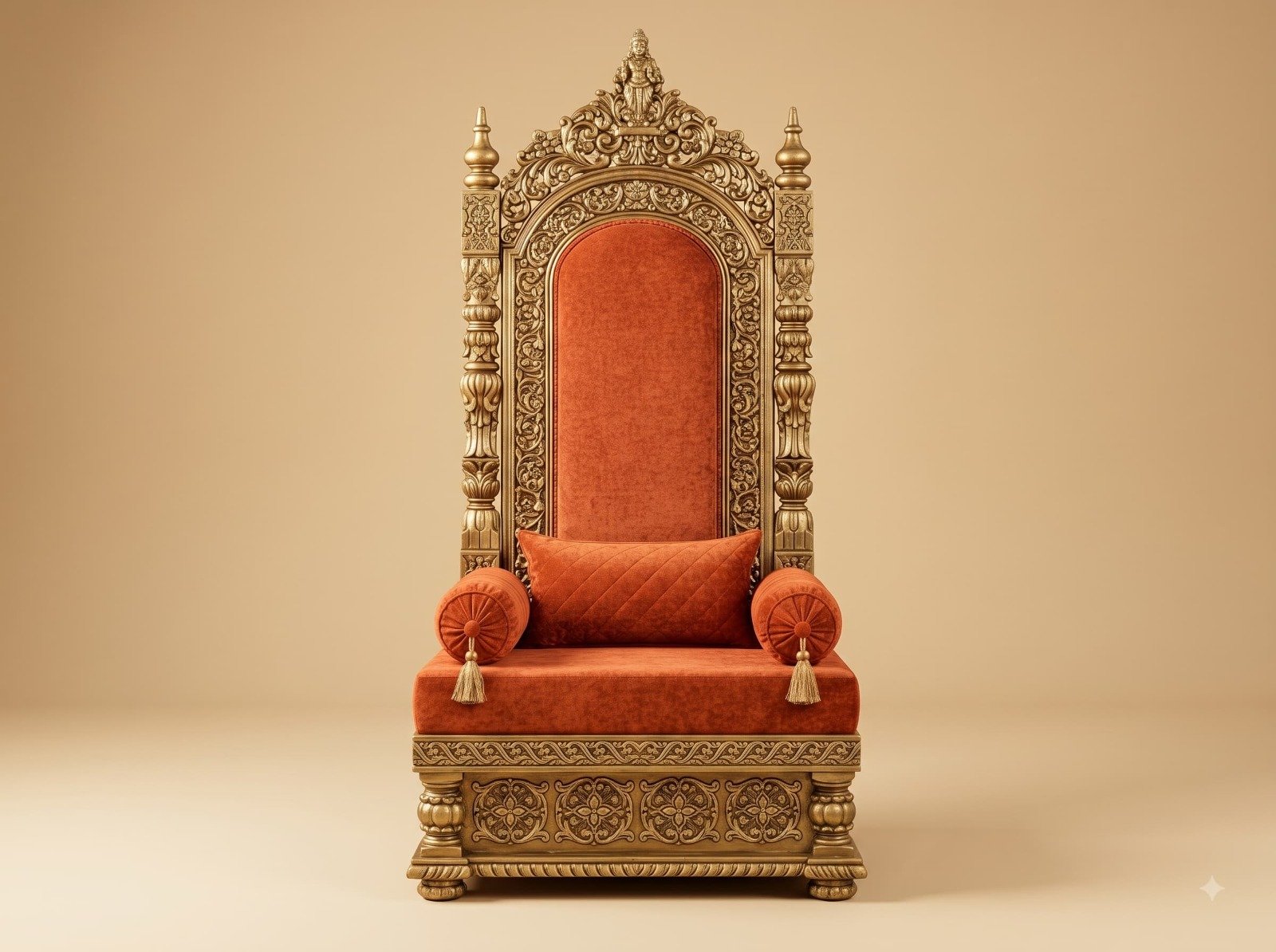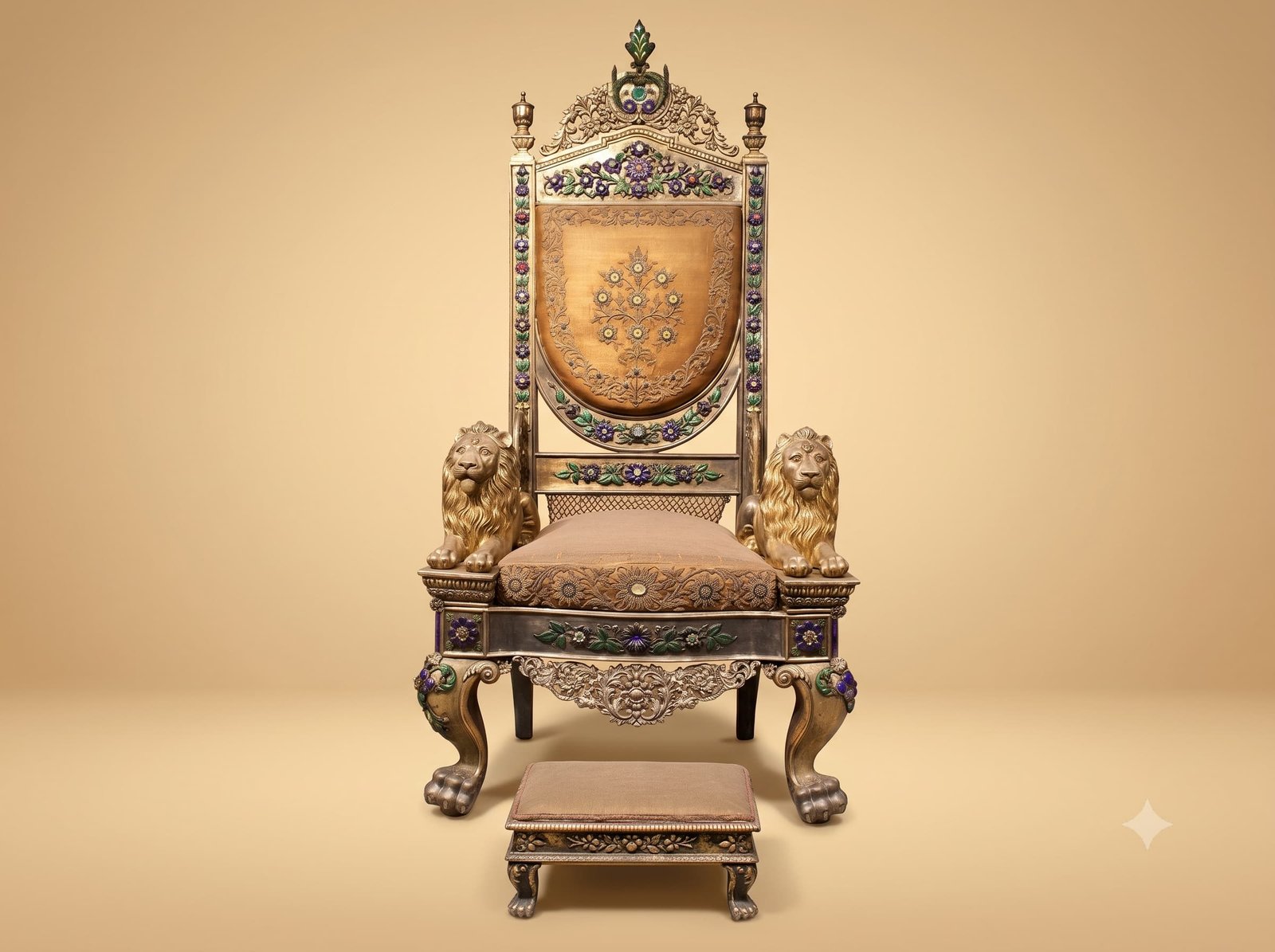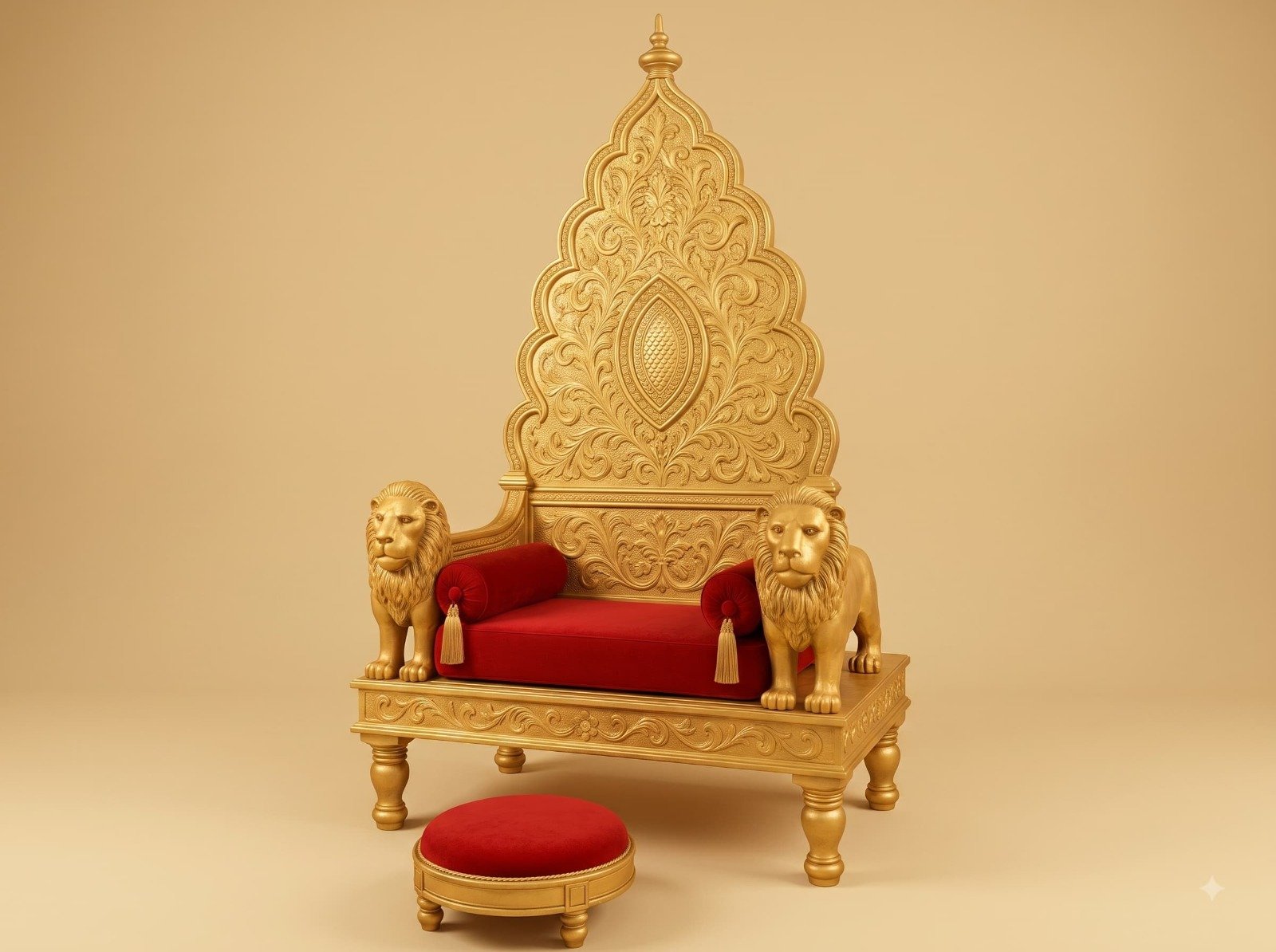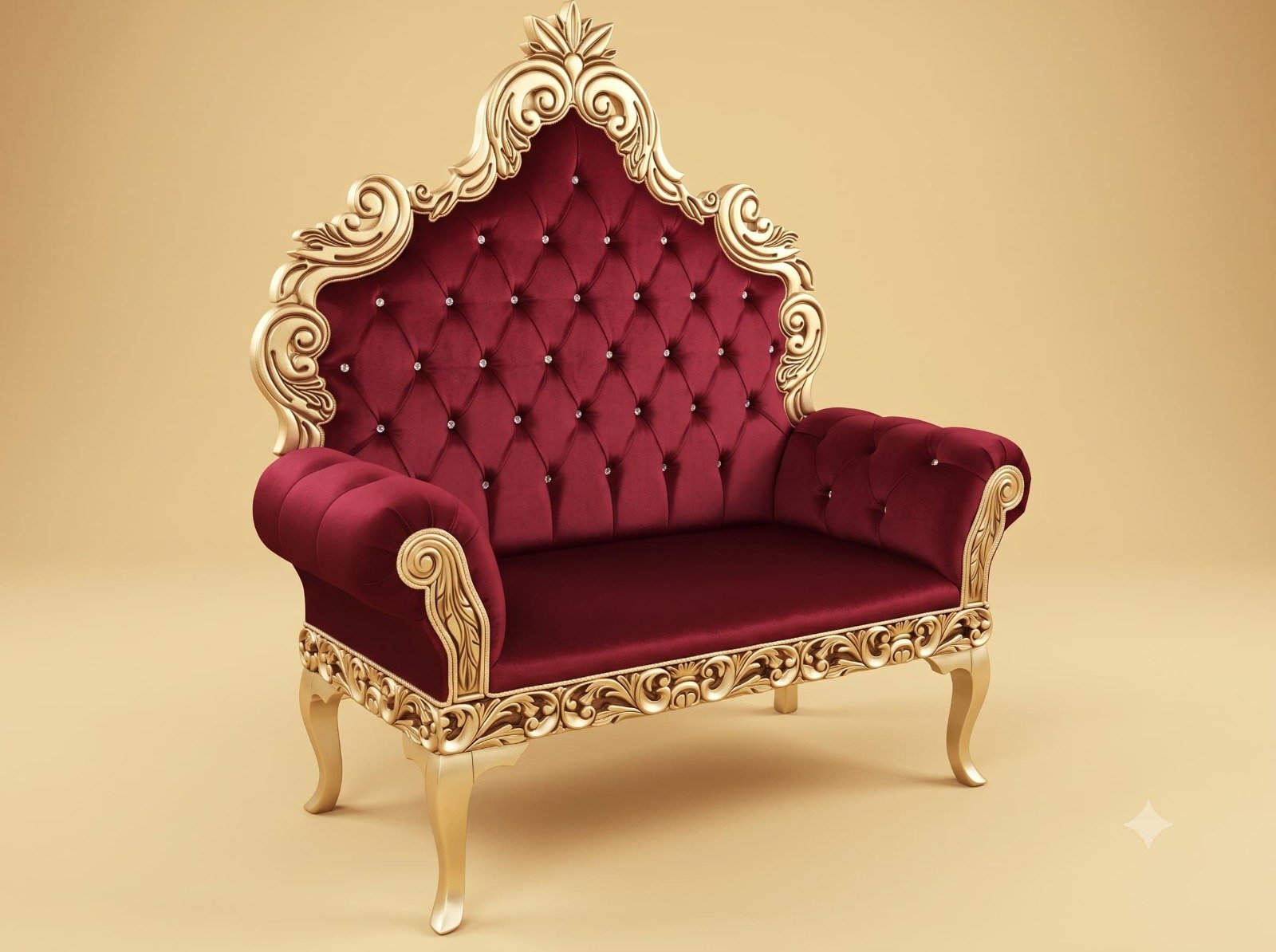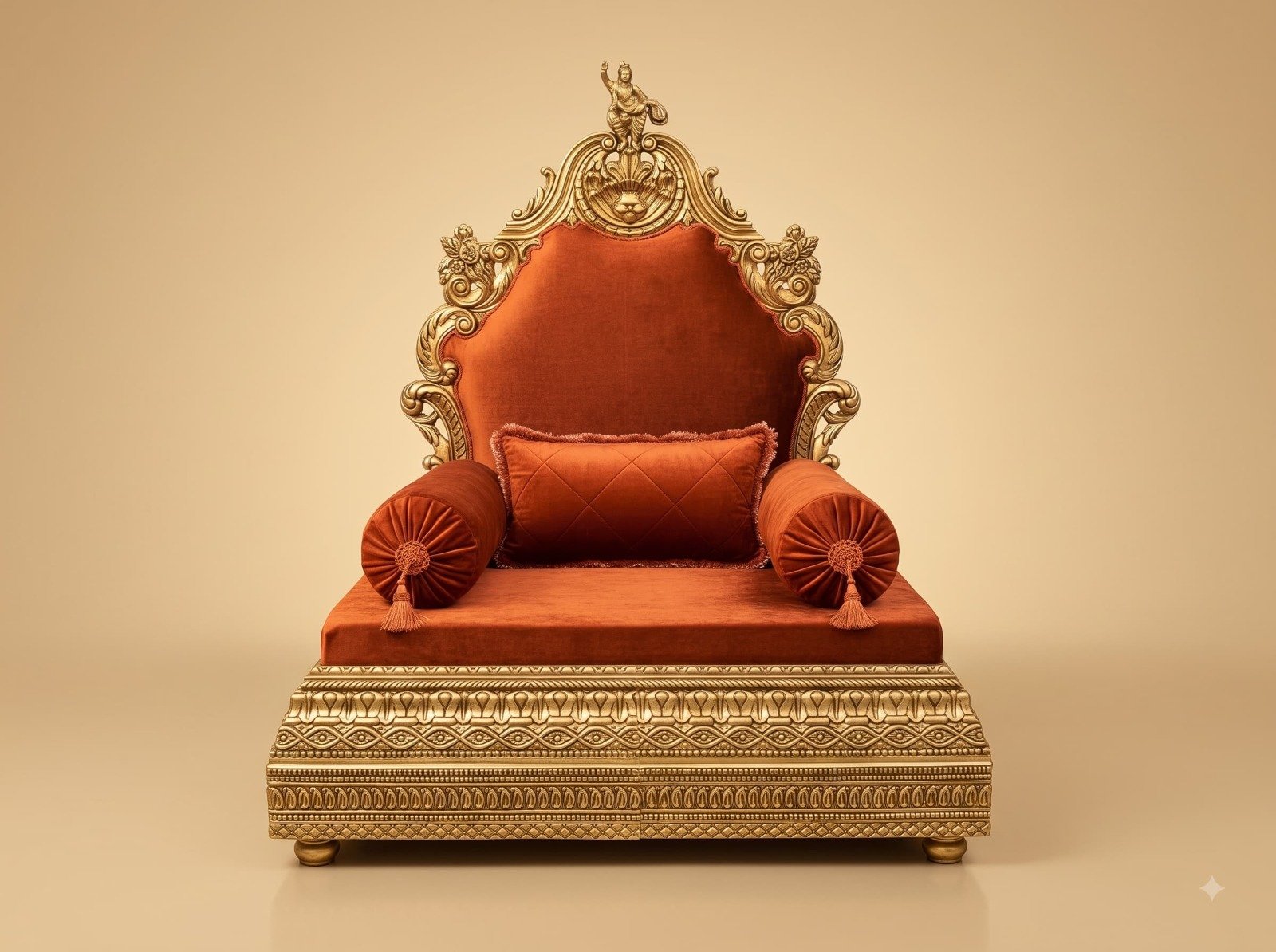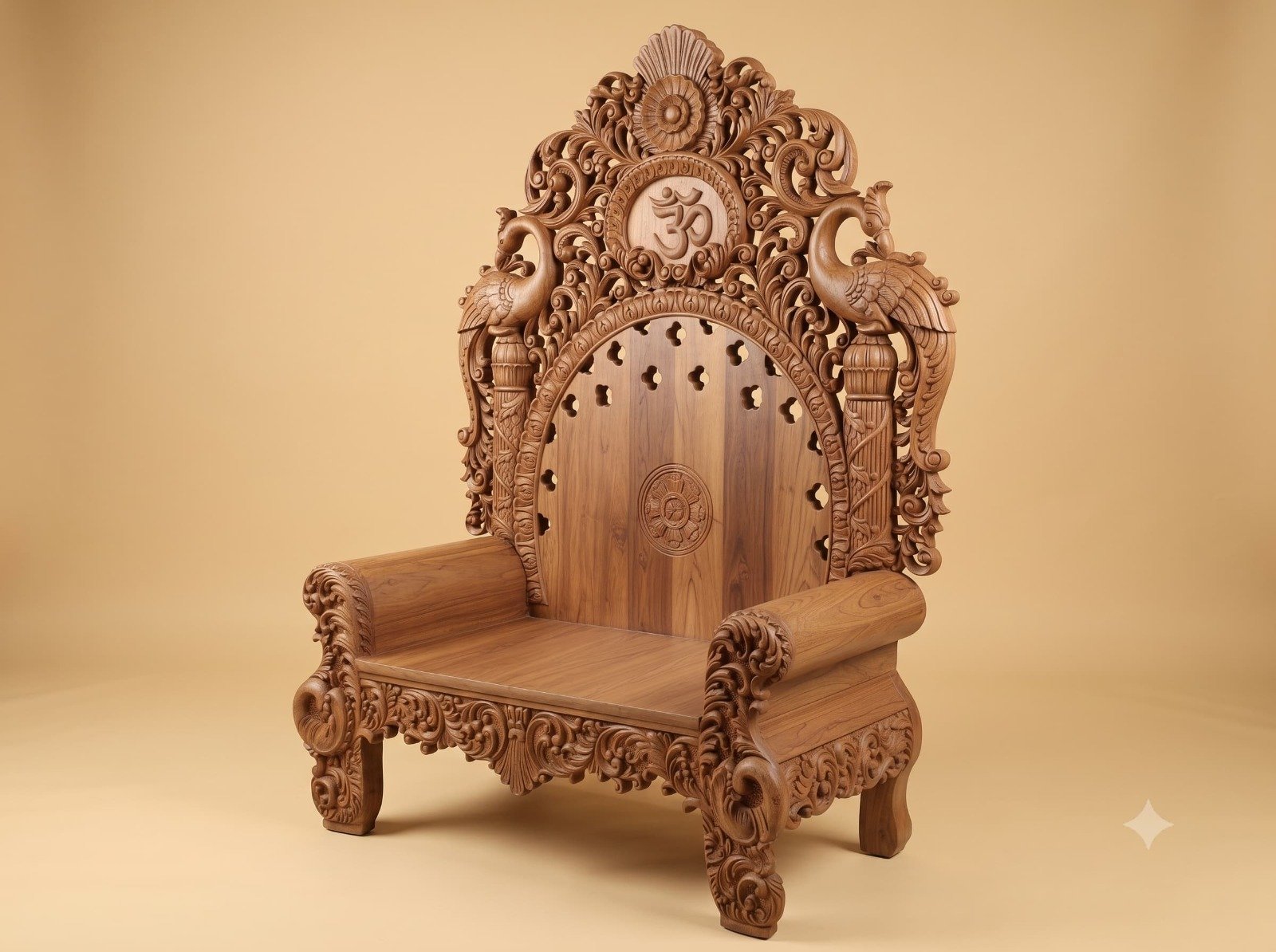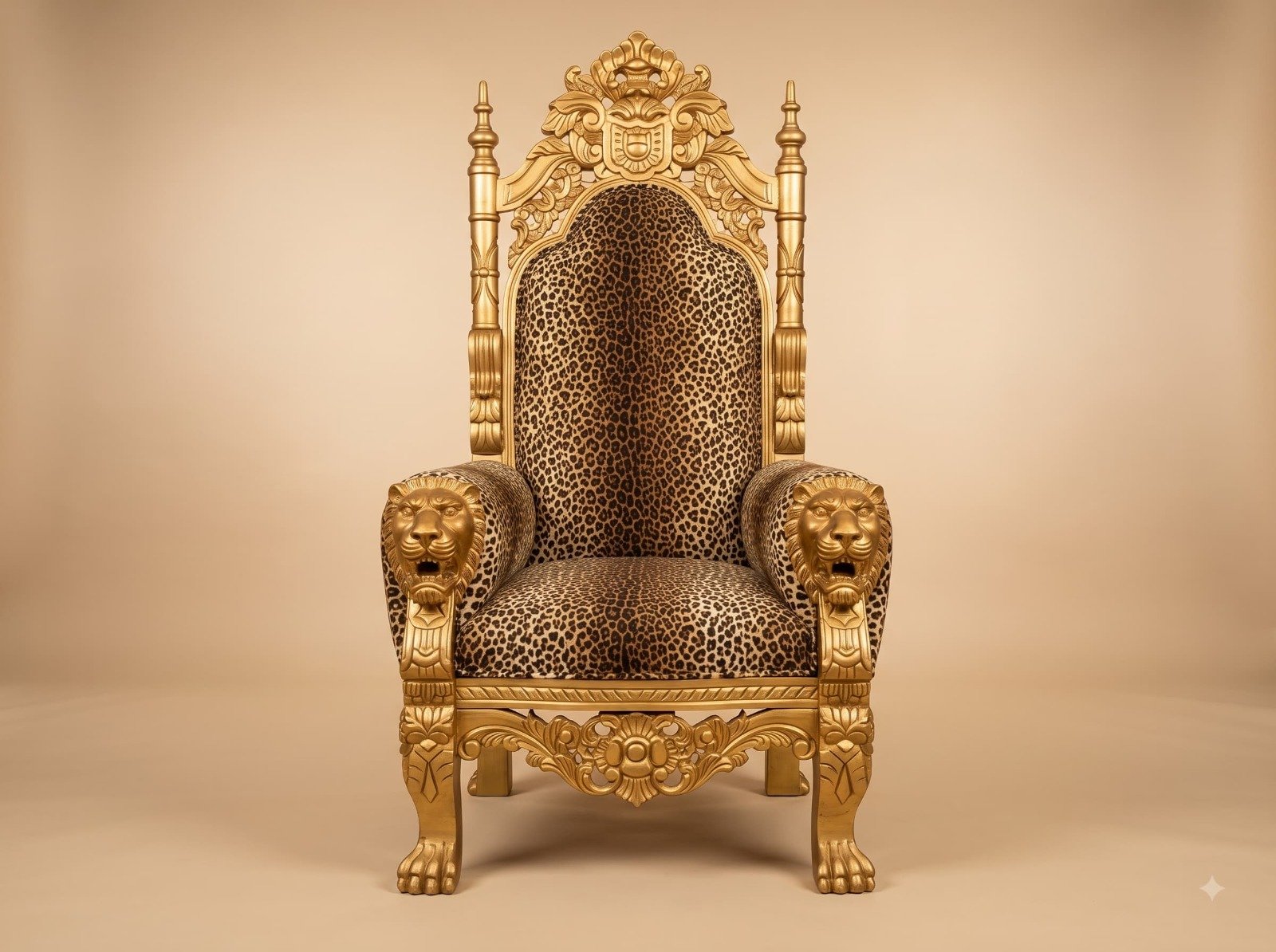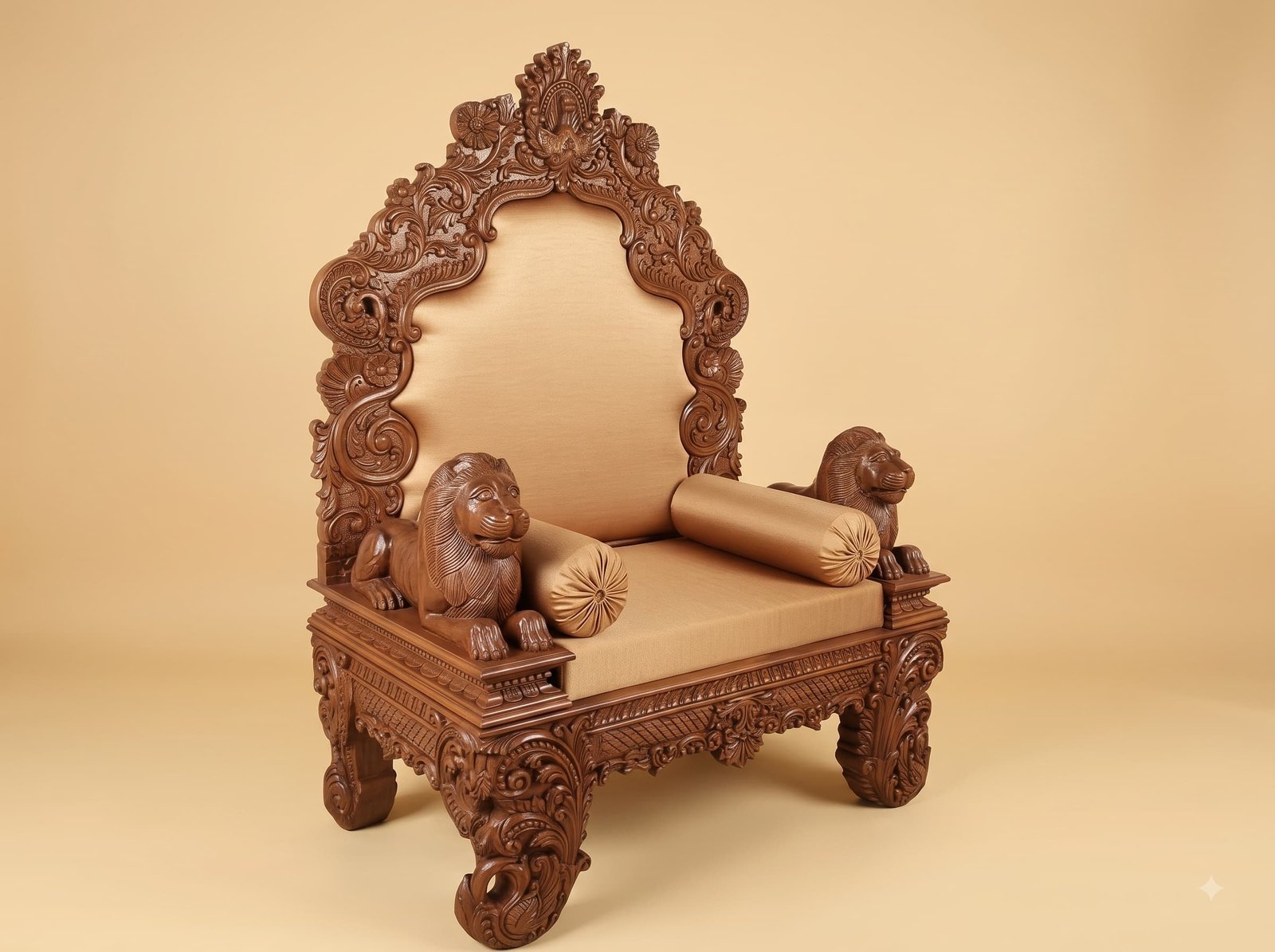
An arch this tall and this wide is never one piece of wood, and the interesting question is not how it is joined but where.
It cannot be cut from a single board, because a curve sawn out of a flat plank runs across the grain at the top - and short grain in a piece that stands over a metre high is a break waiting to happen. So the arch is built from several segments, each with its grain running along its own part of the curve, jointed to its neighbours.
That leaves the joints to deal with. A joint on a plain surface will always show eventually, however fine it is, because the two pieces either side of it will not weather at exactly the same rate. So the joints are not put where the design is quiet. They are deliberately placed where the carving is busiest - inside a cluster of leaves, behind a scroll, under the turn of a stem - so that once the carving is cut, the line of the joint runs into a shadow that was going to be there anyway.
It means the segmentation is planned before the ornament is drawn, not after. Set out the carving first and the joints land wherever they land, and half of them land somewhere flat.
 Ask Price On WhatsApp