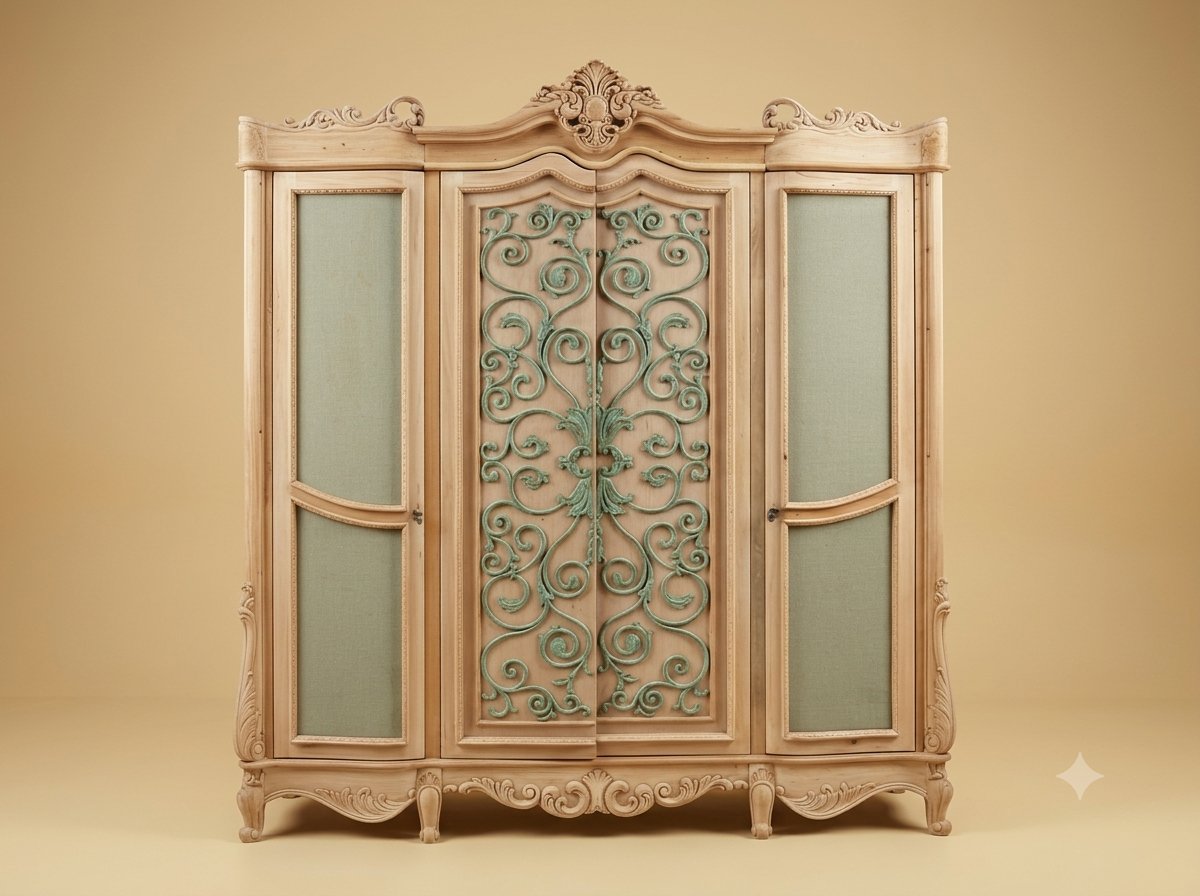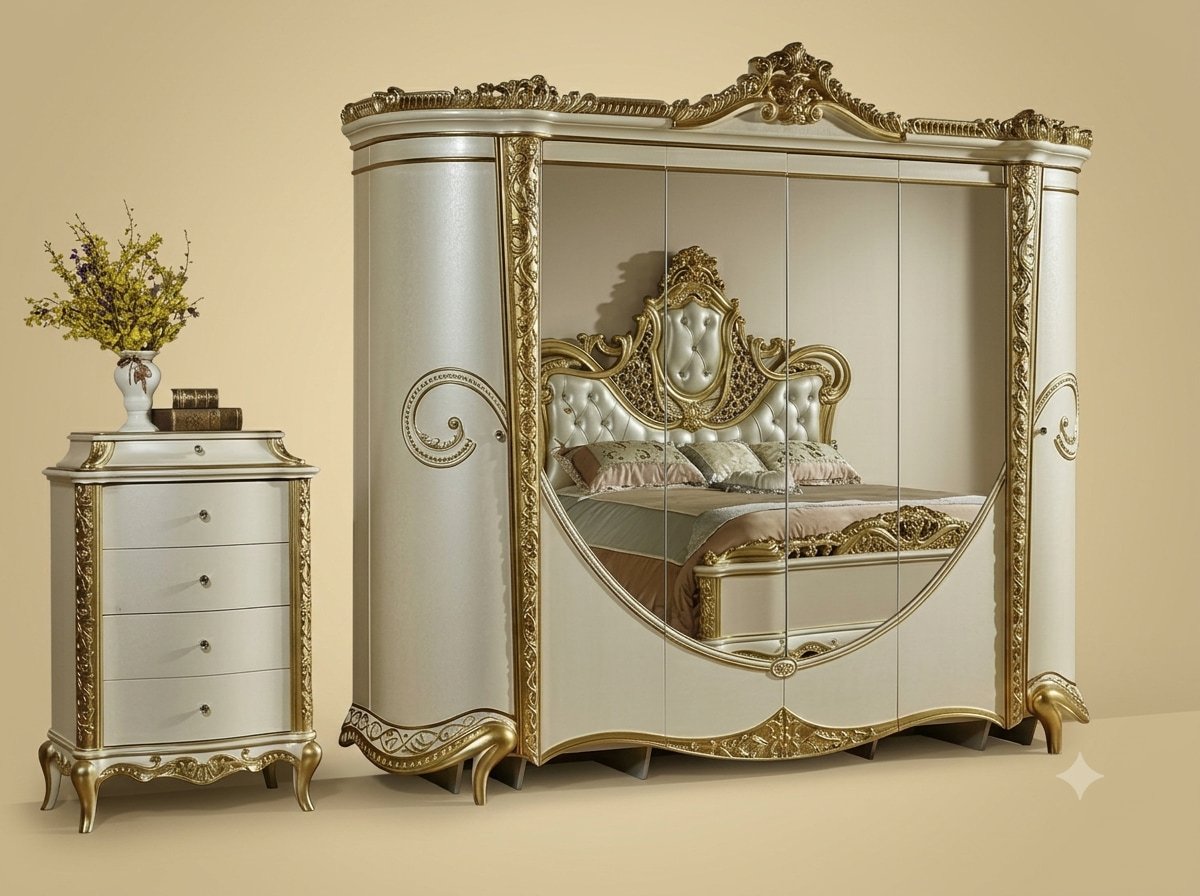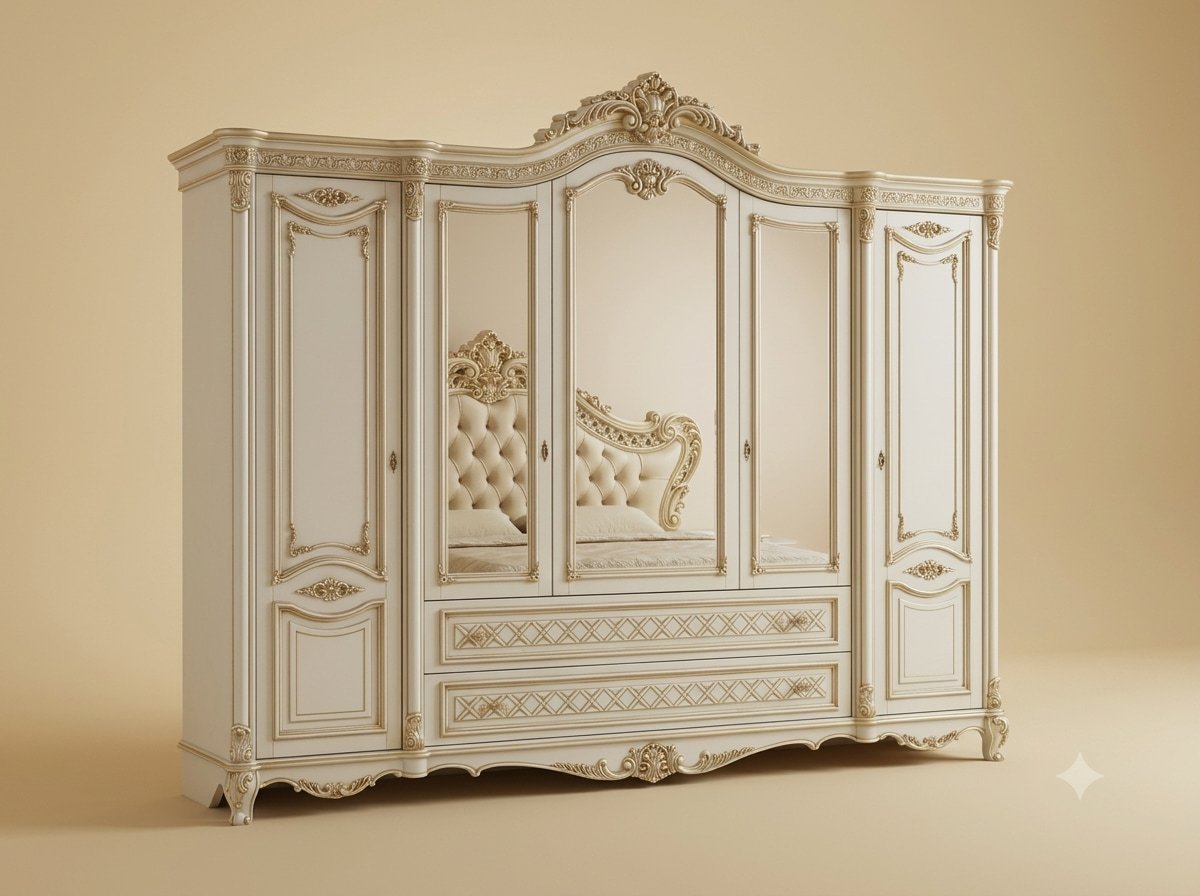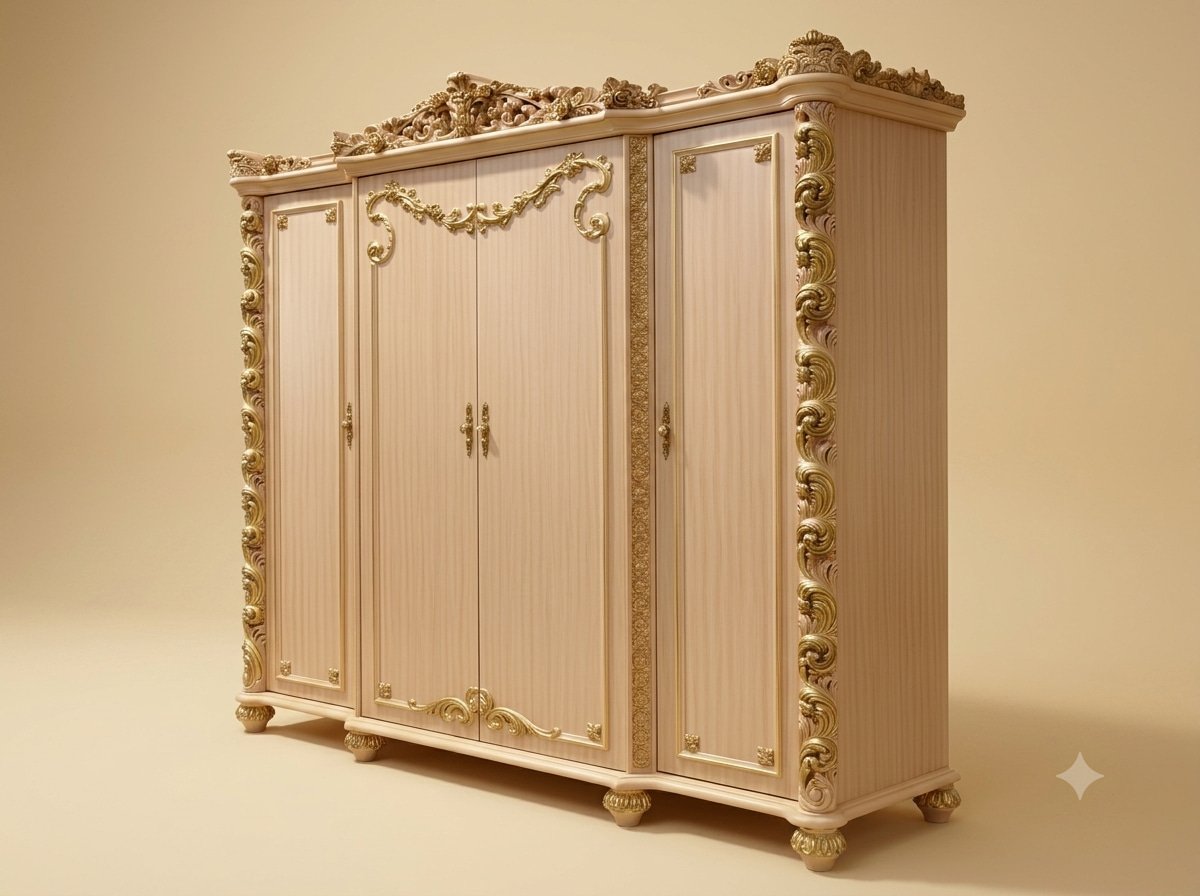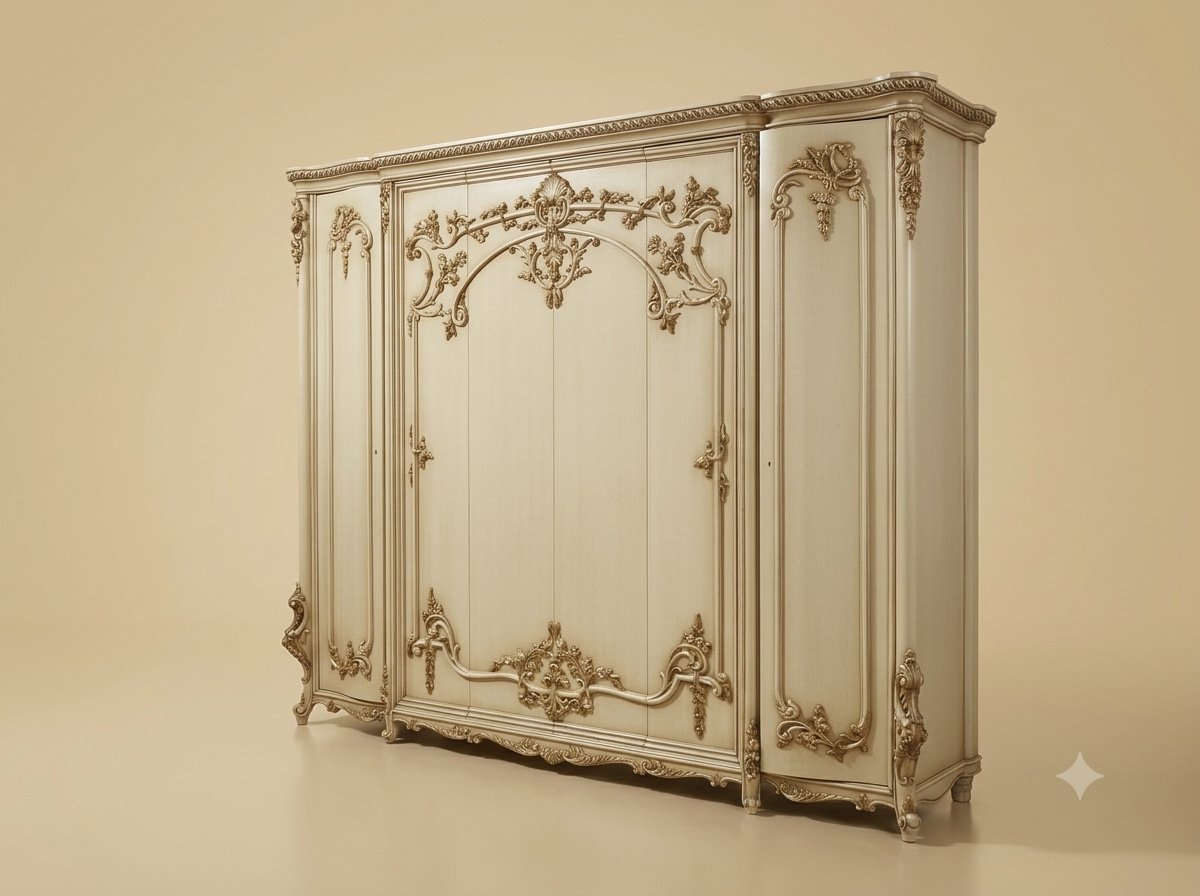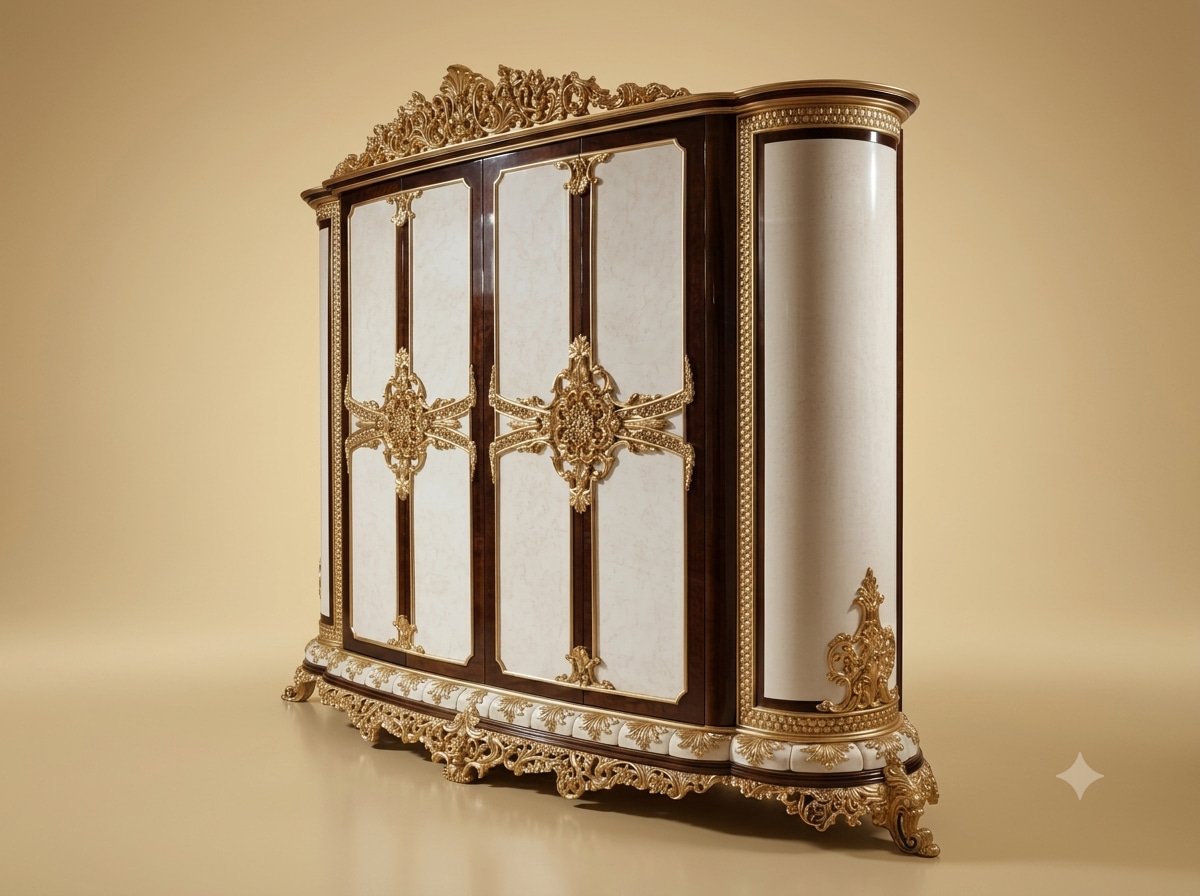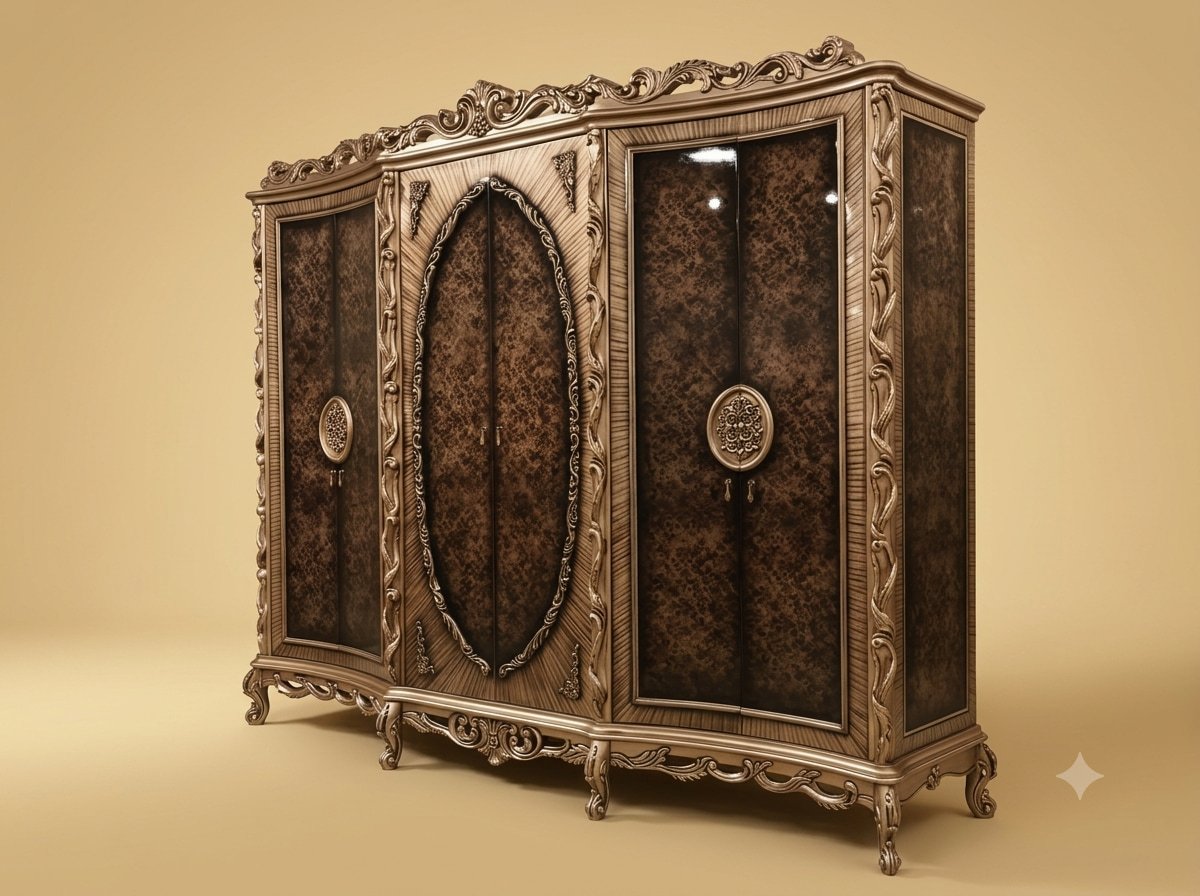
An oval split down the middle by a door gap is the least forgiving shape in furniture.
The eye follows a curve continuously, and it is extremely good at detecting where a curve changes rate. An arch can be a little out at its crown and survive; a circle can be slightly egg-shaped and nobody minds. An oval crossing a vertical joint has its widest point at exactly the place the joint runs through, and if the two halves disagree by even a fraction the curve visibly kinks as it crosses.
Carving the two halves separately, on two doors, to the same drawing, will not work. Two hands, two boards, two days - the halves will differ.
So our master Indian artisans carve the oval as one whole. A single board wide enough to take the complete shape is prepared, the entire oval is set out and carved on it as one continuous piece of work, and only then is the board sawn down its centre line. Each half is then let into its door.
The two halves are not matched. They are the same oval, cut in two. That is why the curve runs through the joint without a break.
 Ask Price On WhatsApp