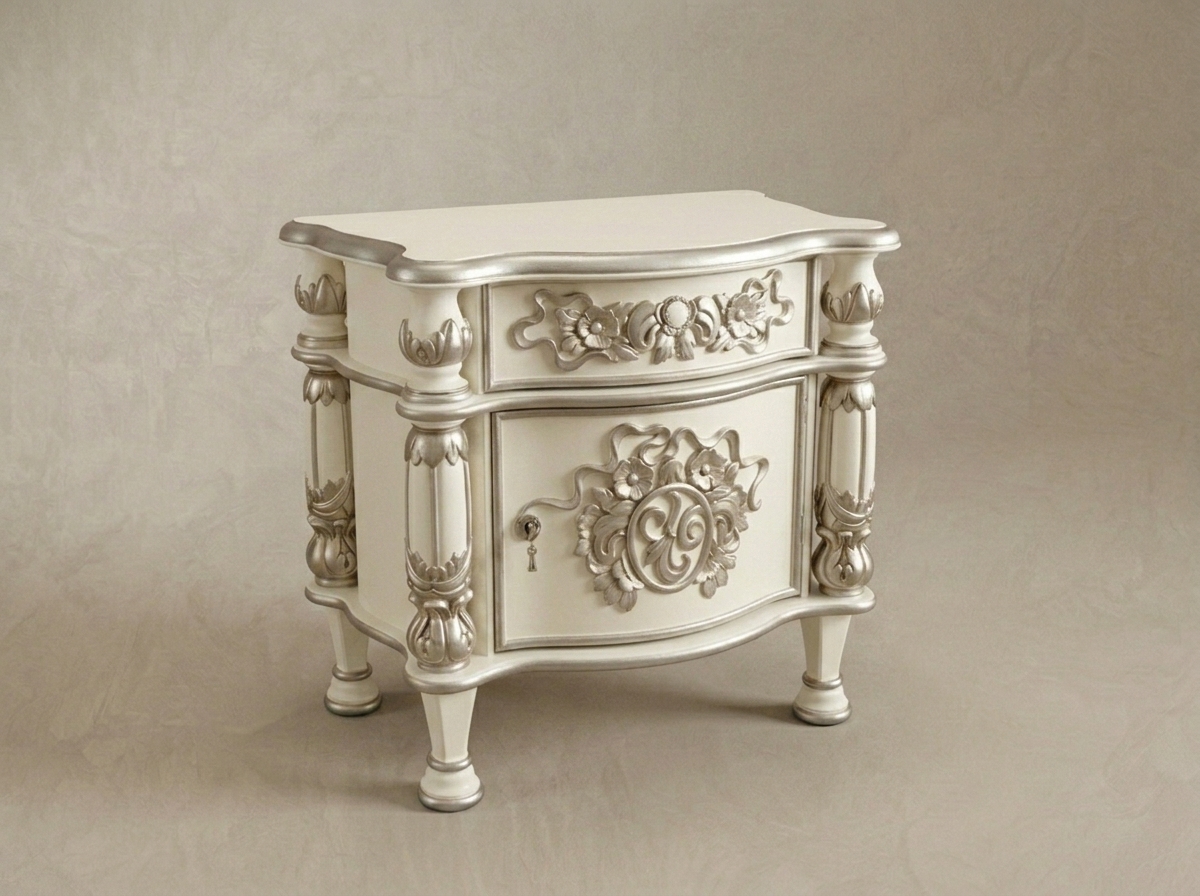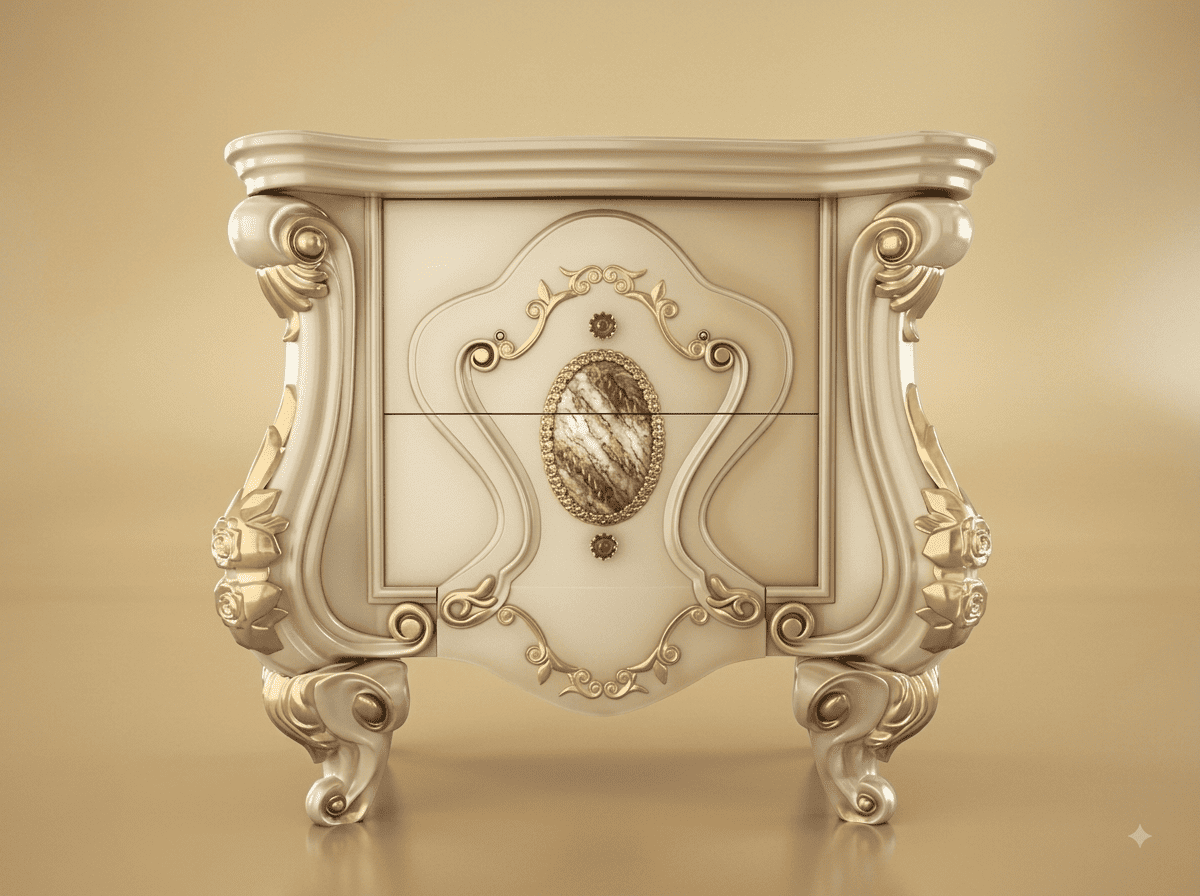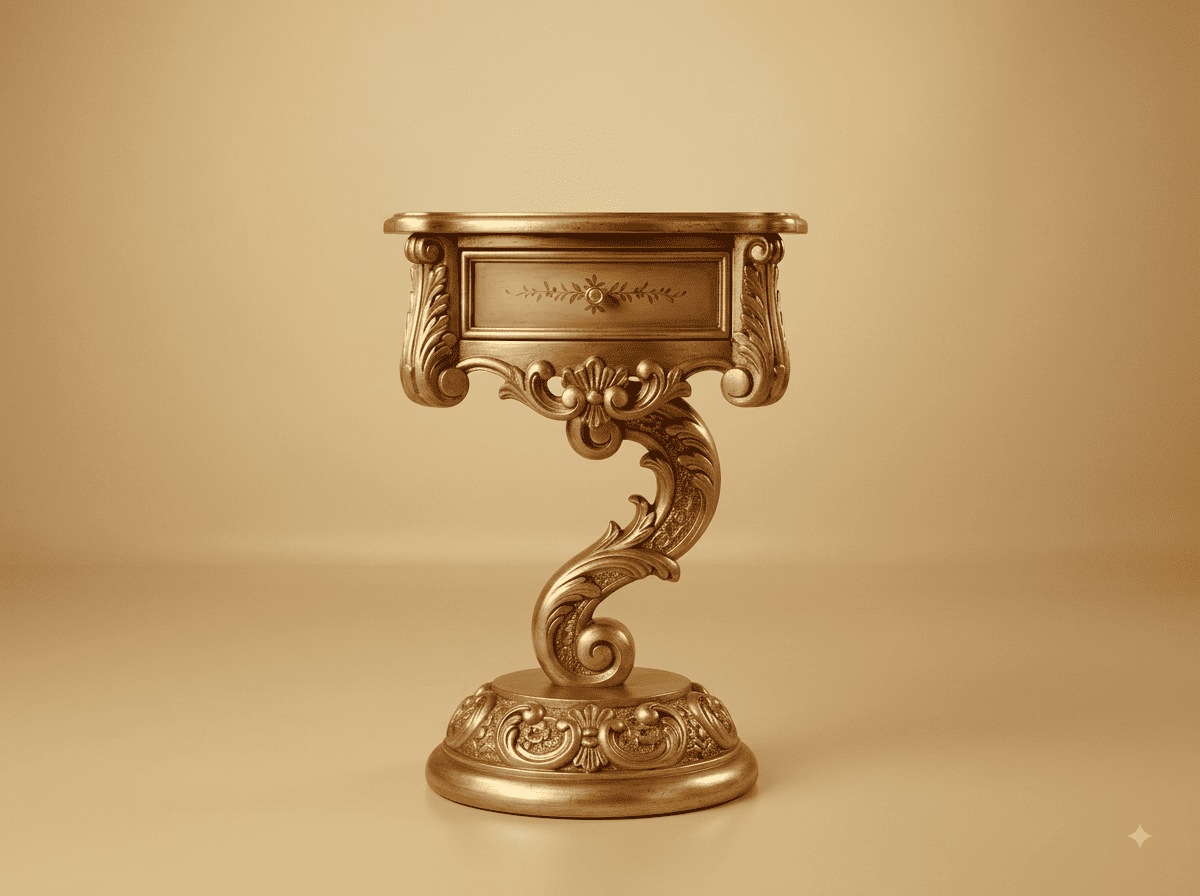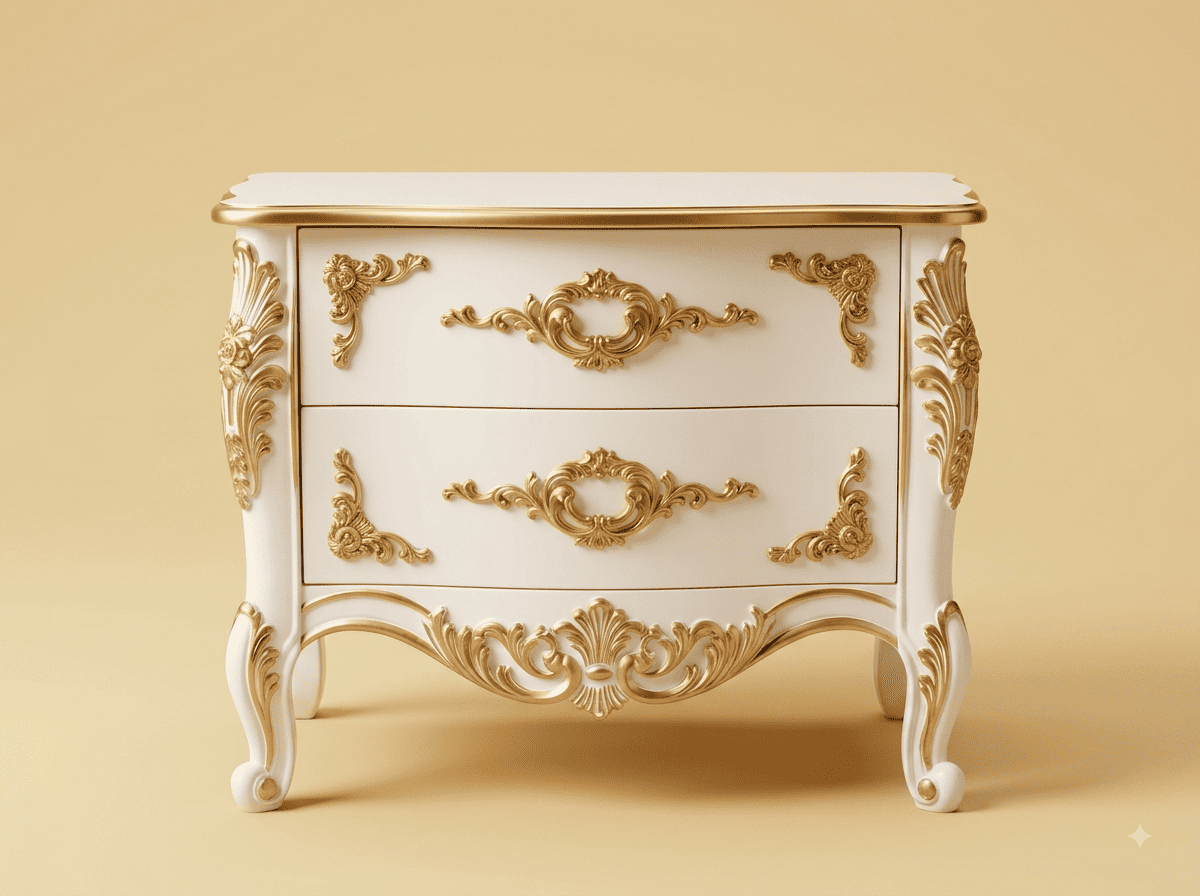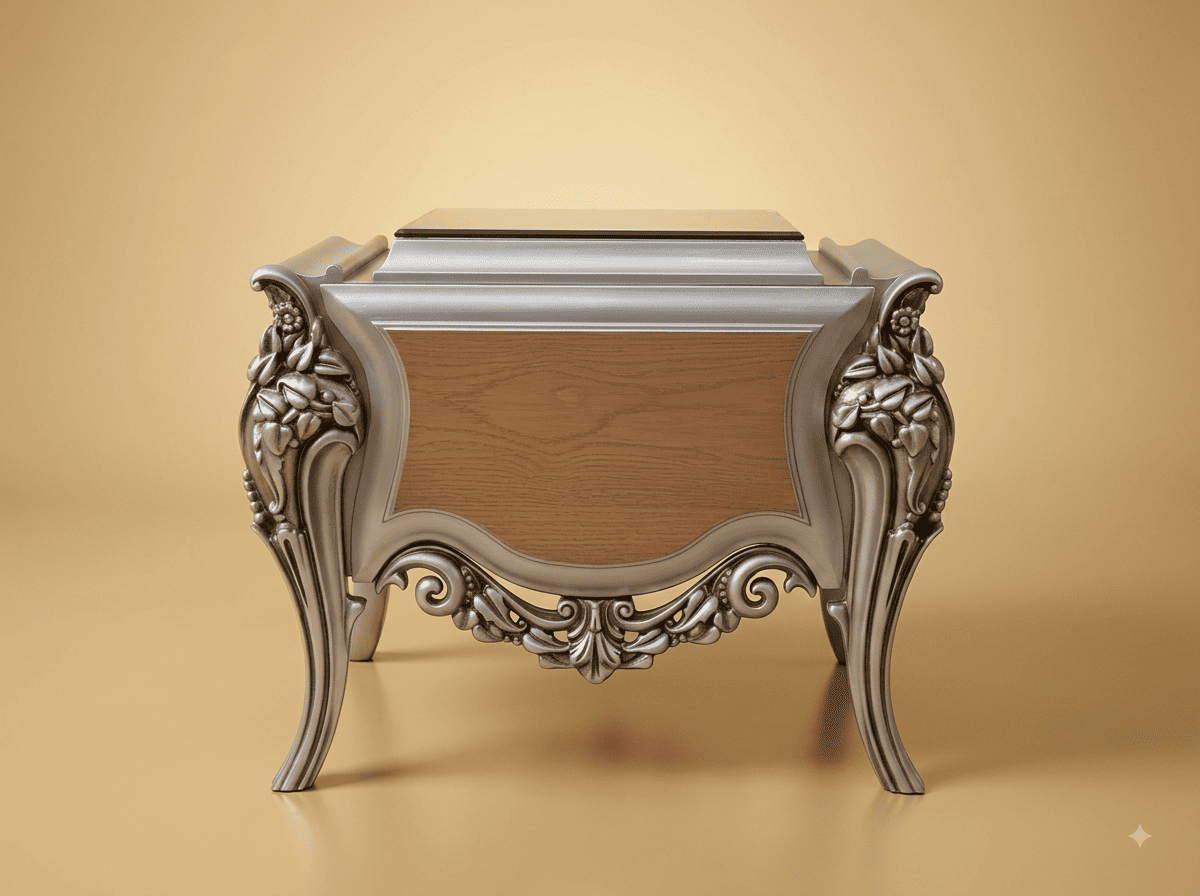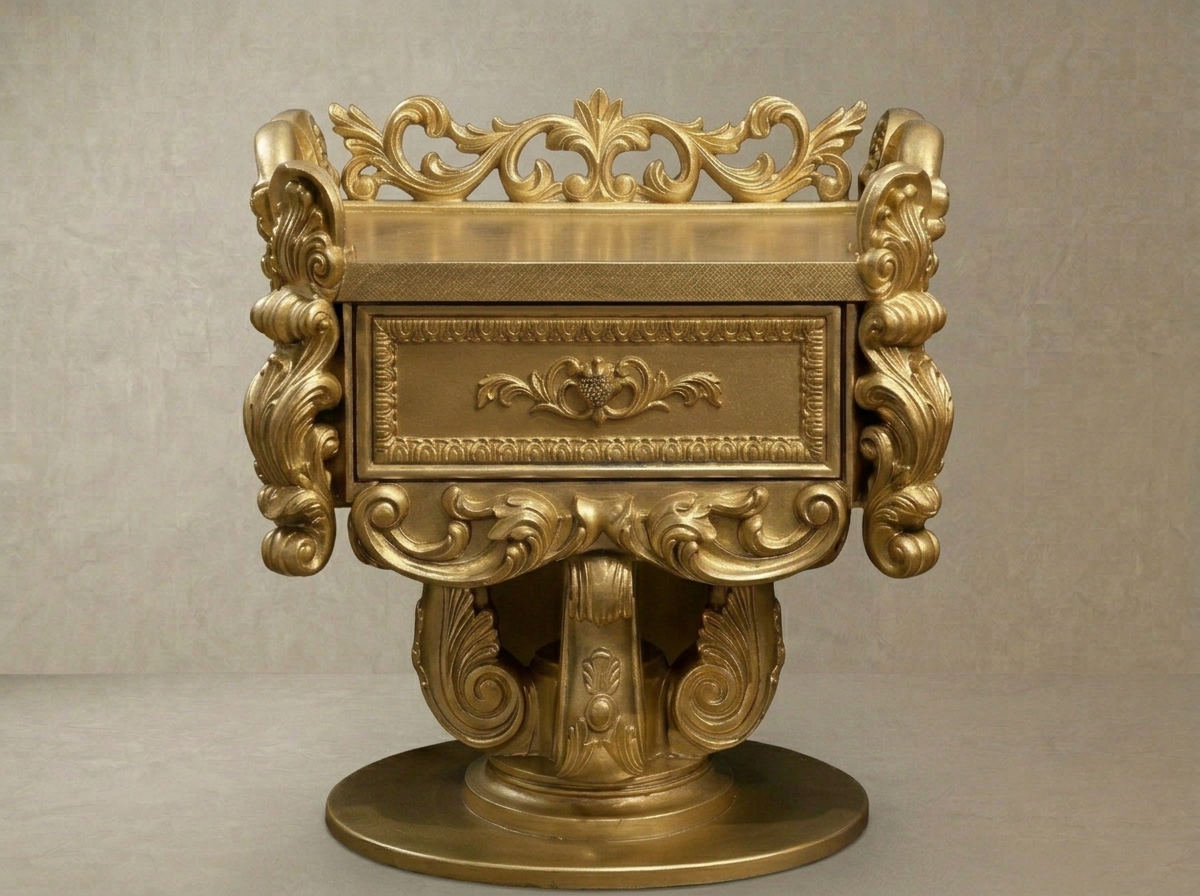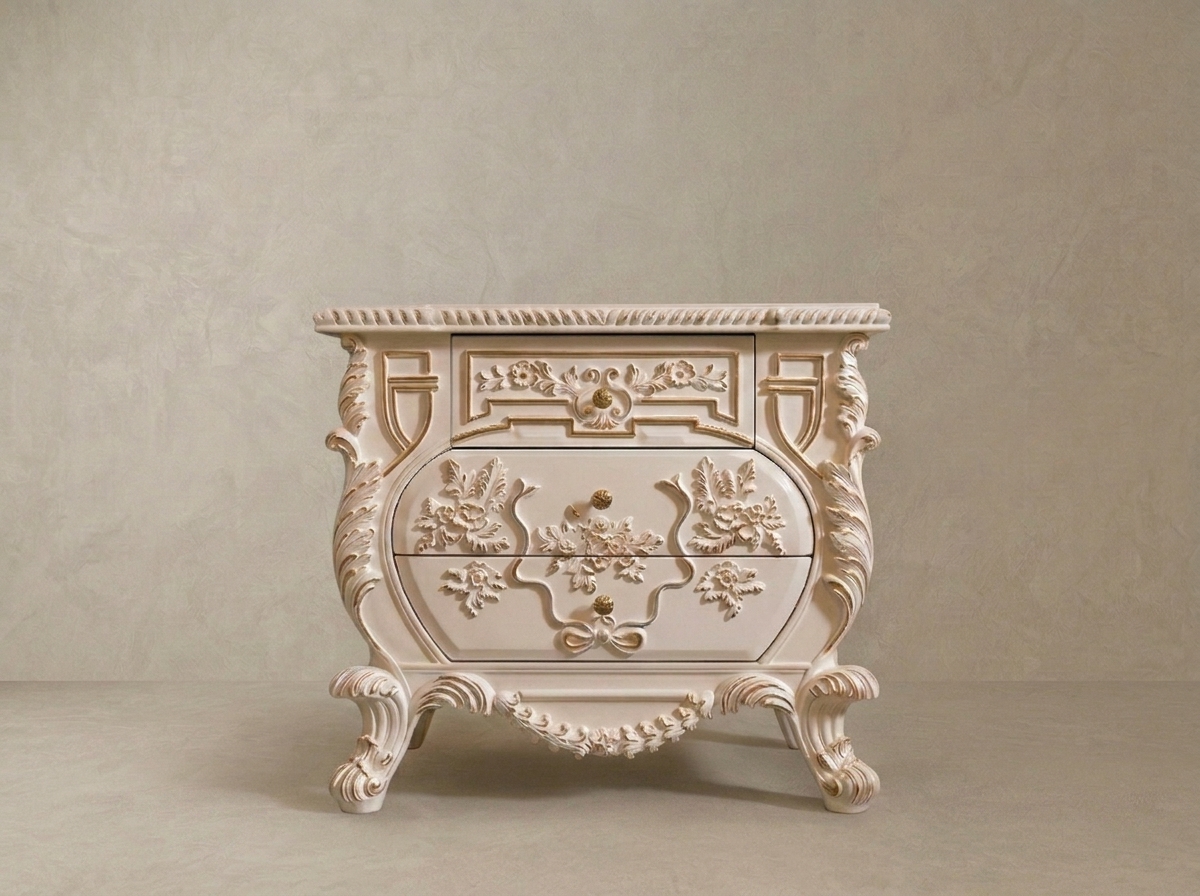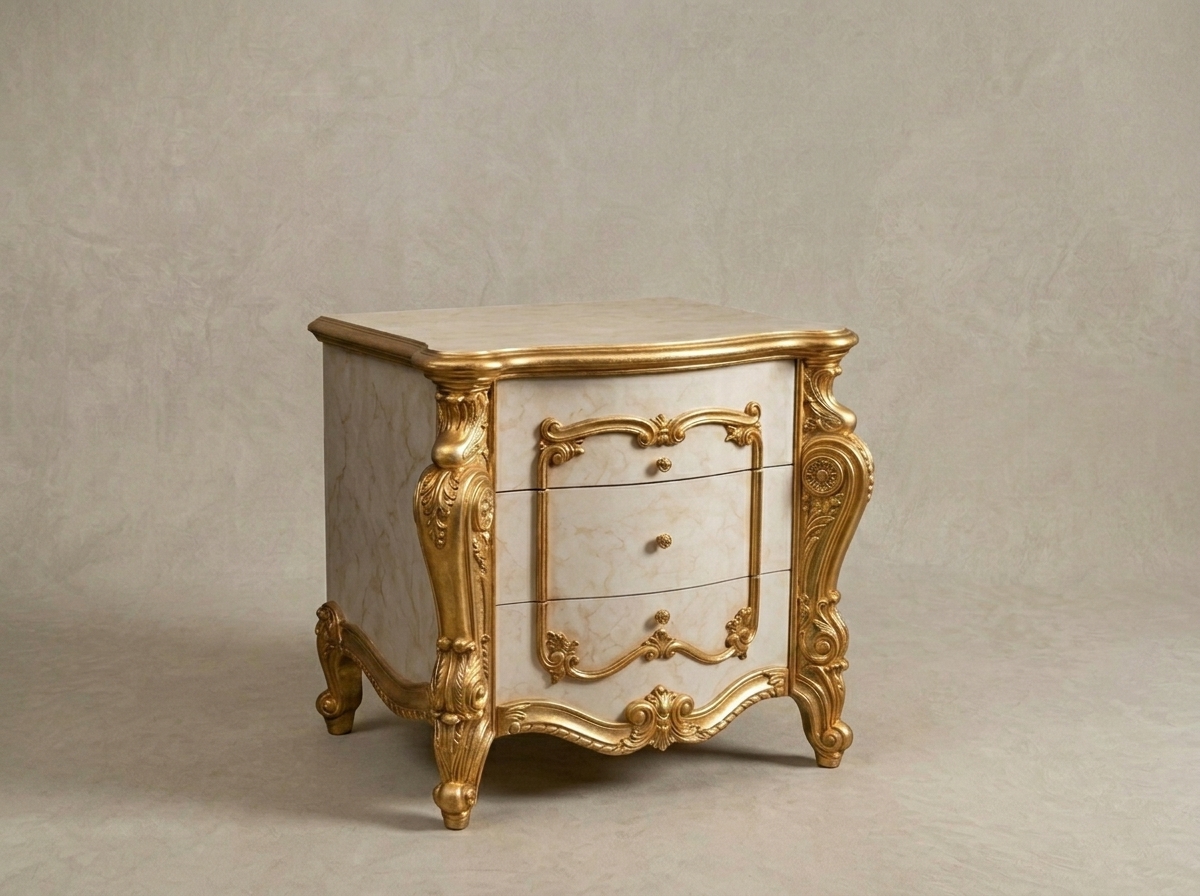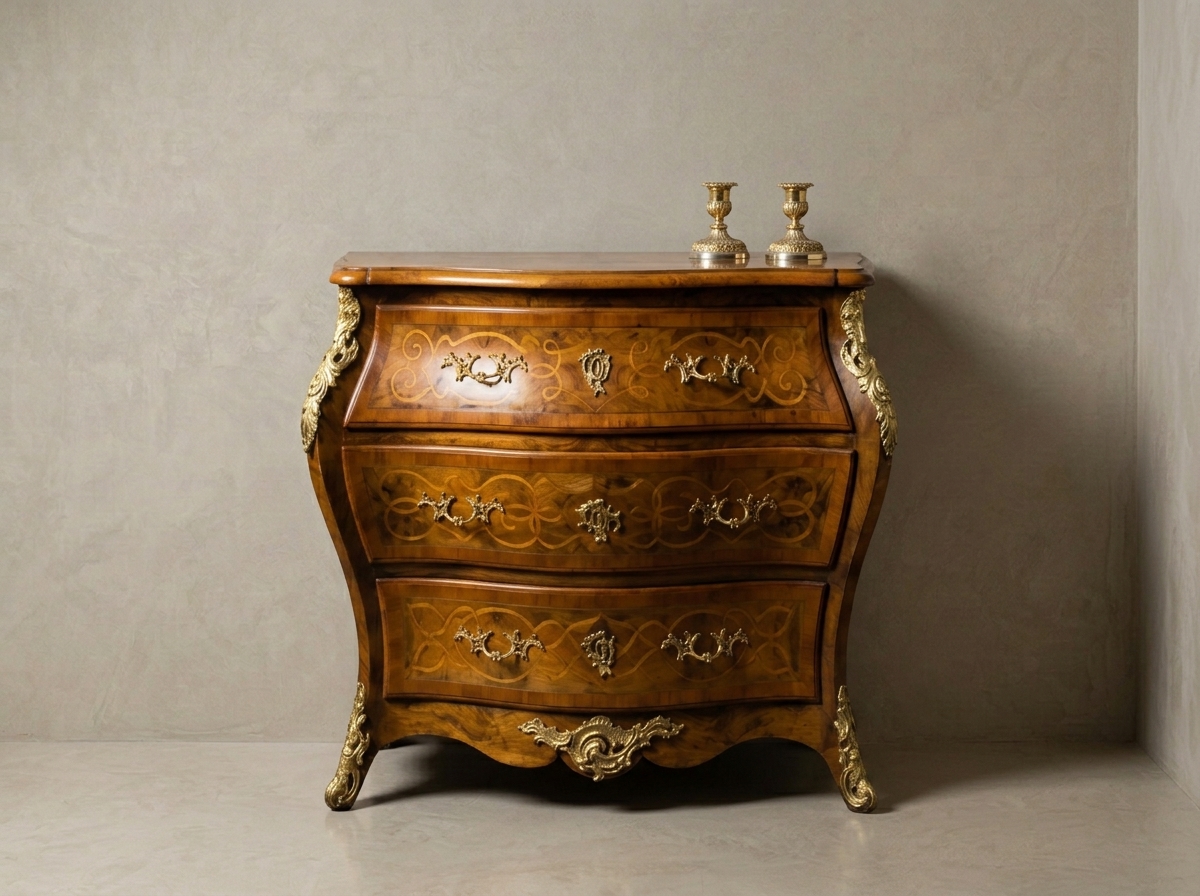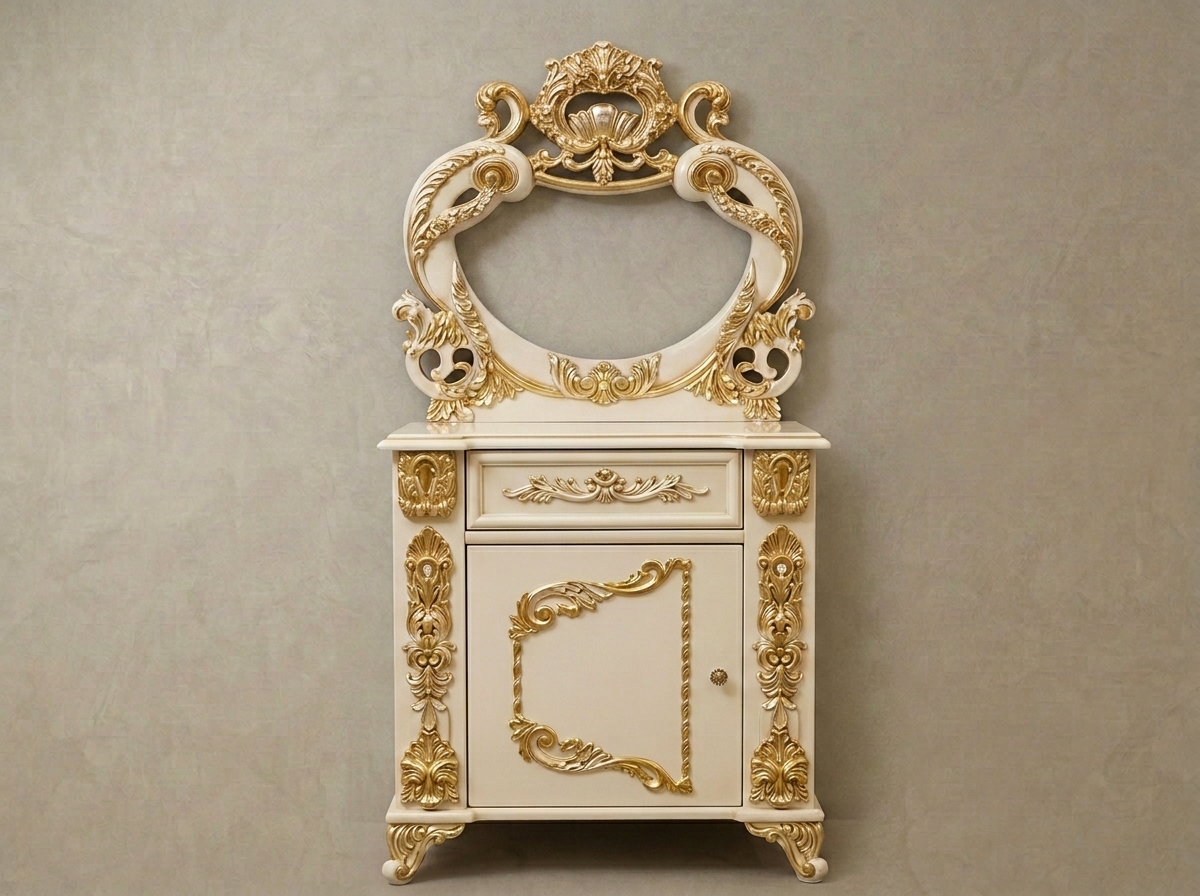
The cupboard door on this table is hung on the carved pilaster beside it, not on the carcass behind it, and that is the reason no hinge is visible anywhere on the piece.
A door hung in the ordinary way needs its hinges fixed to the carcass edge, and the knuckle of each hinge stands out in the gap between door and case. On a plain cabinet nobody minds. On a piece where every visible edge is carved and gilded, a row of brass knuckles interrupting that line is the one thing the eye goes to.
So the pilaster is built as a structural member, not as an applied decoration - jointed into the carcass top and bottom, thick enough to carry a hinge screw at full depth - and the door is hung from it. The carved foliate drop that runs down the pilaster face then sits directly over the hinge line and covers it.
It means the pilaster has to be made and fitted before the door can be hung, and its position has to be right within a hair, because the door gap is set from it.
What you see is a carved front with a door in it and nothing else.
 Ask Price On WhatsApp