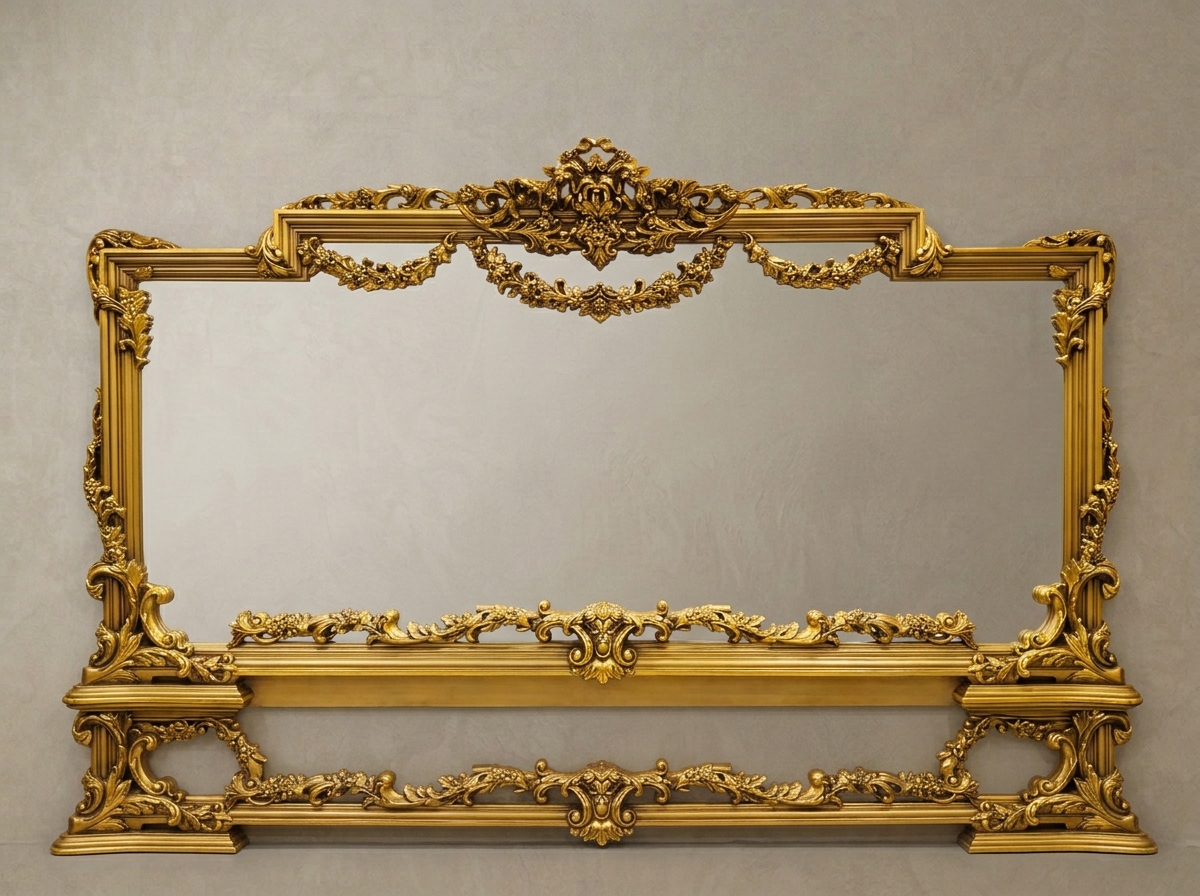
The shelf on this mirror is designed to be loaded, and that decides both how it is fixed and how deep it is.
Fixing first. A shelf screwed to the bottom rail of a frame is a shelf held by screws in end grain, and once anything heavy sits on it, it begins to droop at the middle. So this one is jointed into the two frame stiles at its ends - housed into solid timber - and carried on carved brackets that are structural rather than decorative. The load goes into the sides of the frame, which are the strongest members it has.
Depth second, and this is the part people do not expect. A shelf projecting below a mirror throws a shadow upward onto the glass when the room is lit from above, and a deep shelf throws a deep one - a dark band across the bottom of the reflection.
So the depth is set generously enough to hold what a mantel shelf holds, and no deeper. Past that point every extra millimetre costs reflection.
The moulding on the shelf's front edge is also kept shallow for the same reason.
 Ask Price On WhatsApp