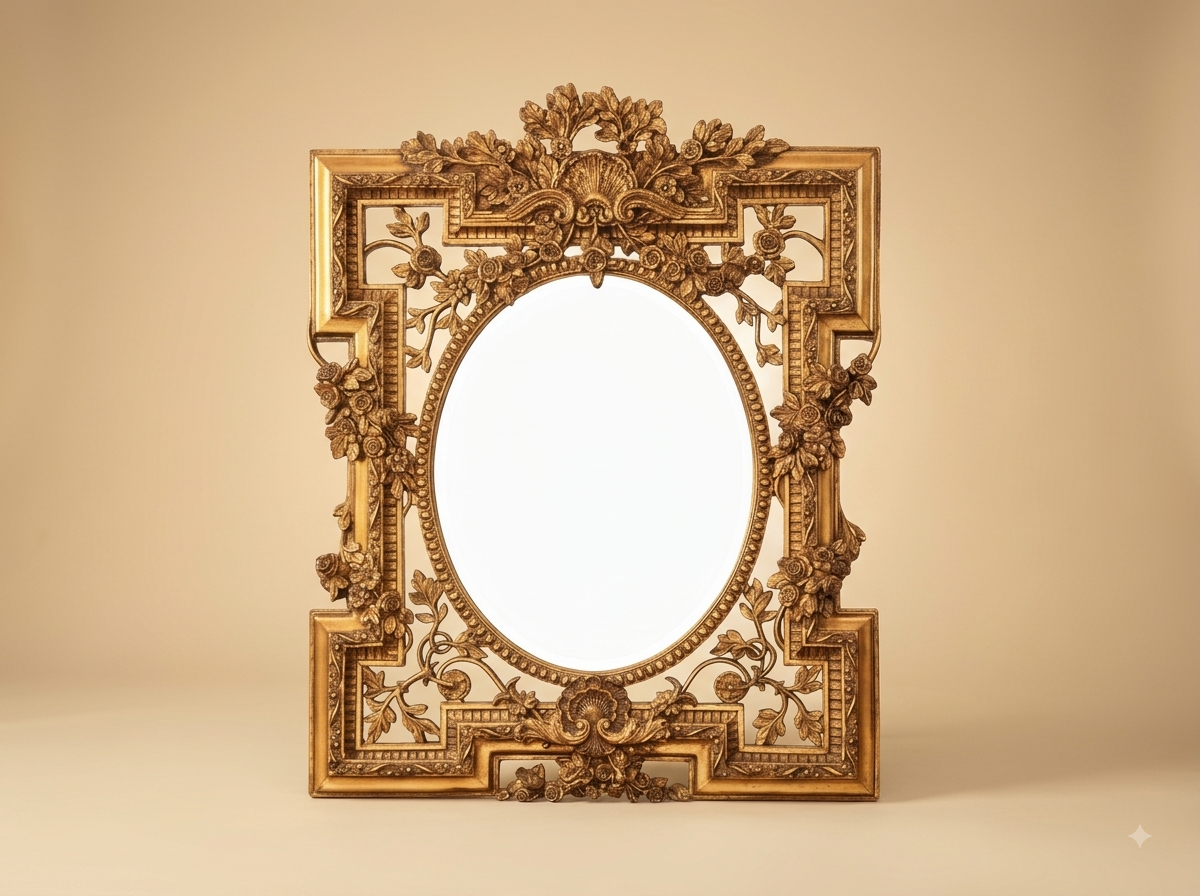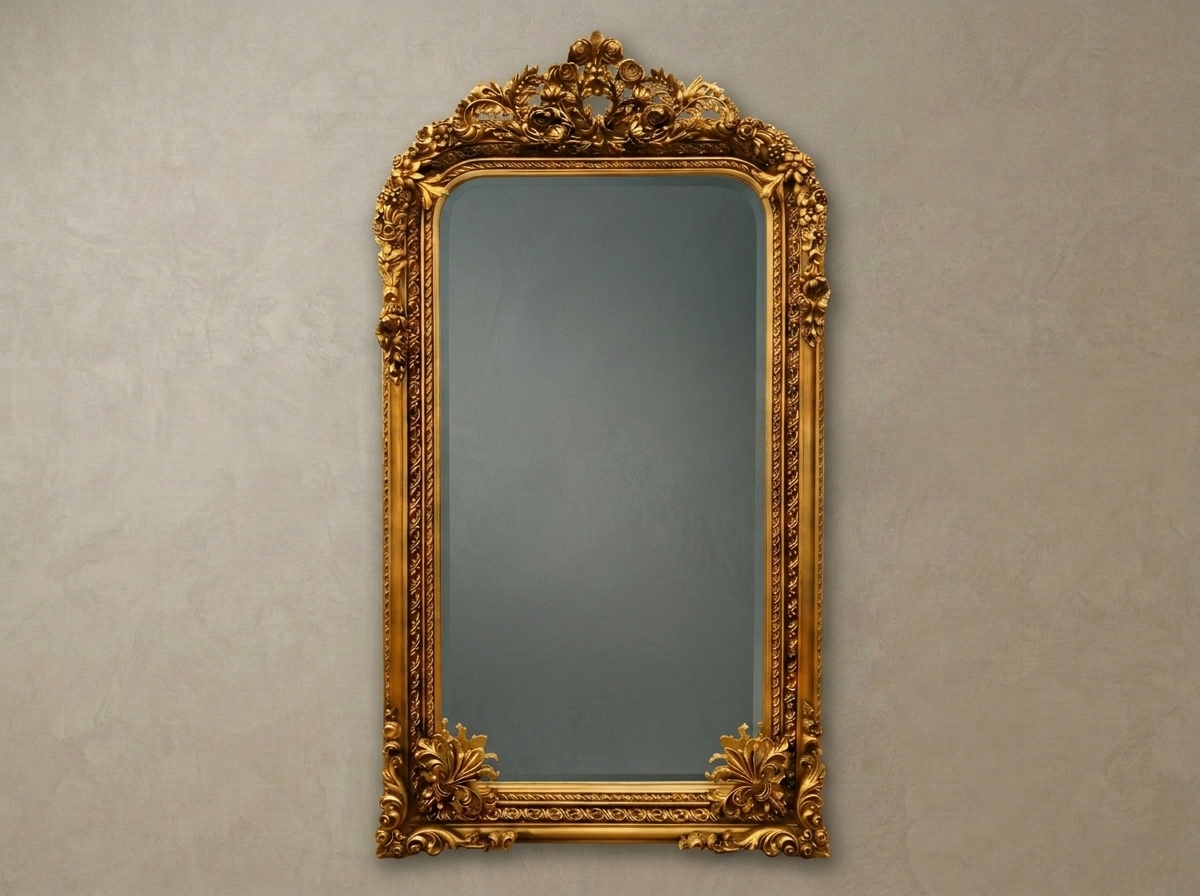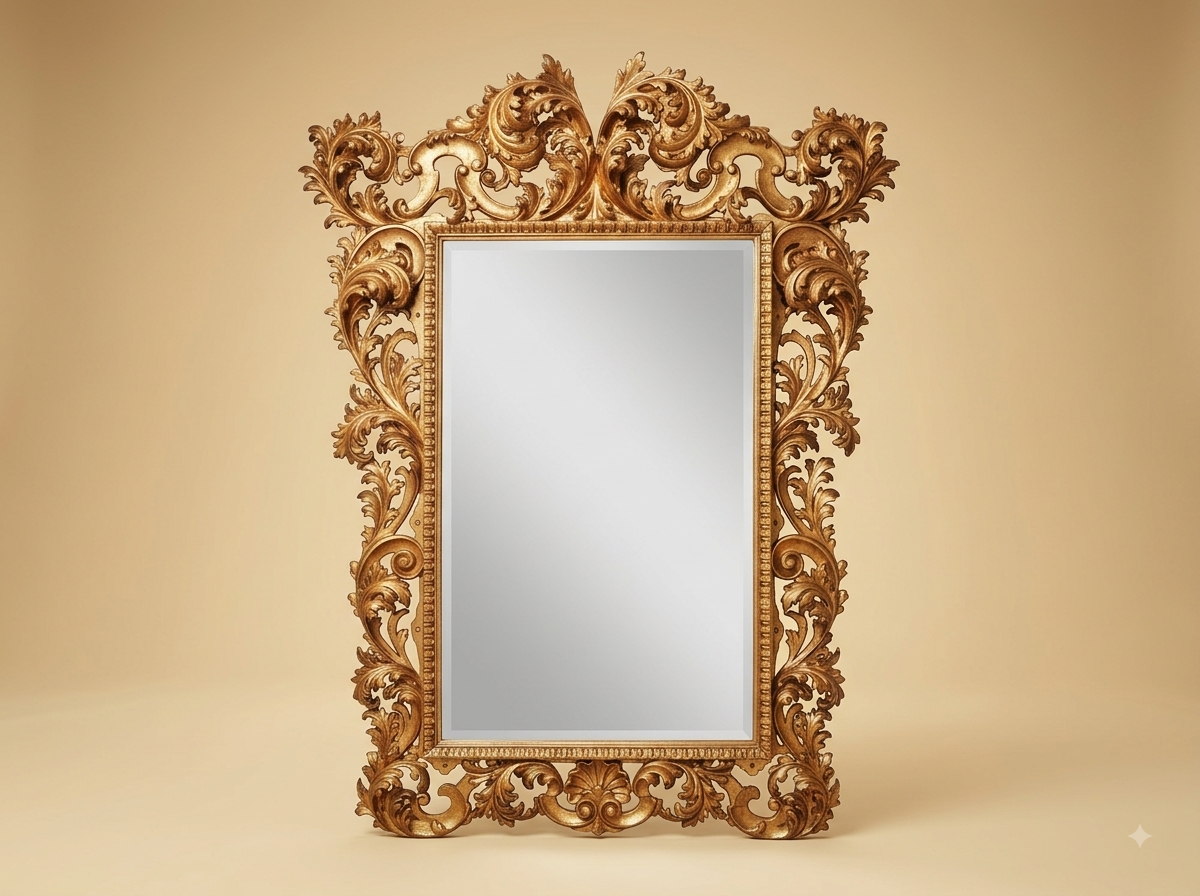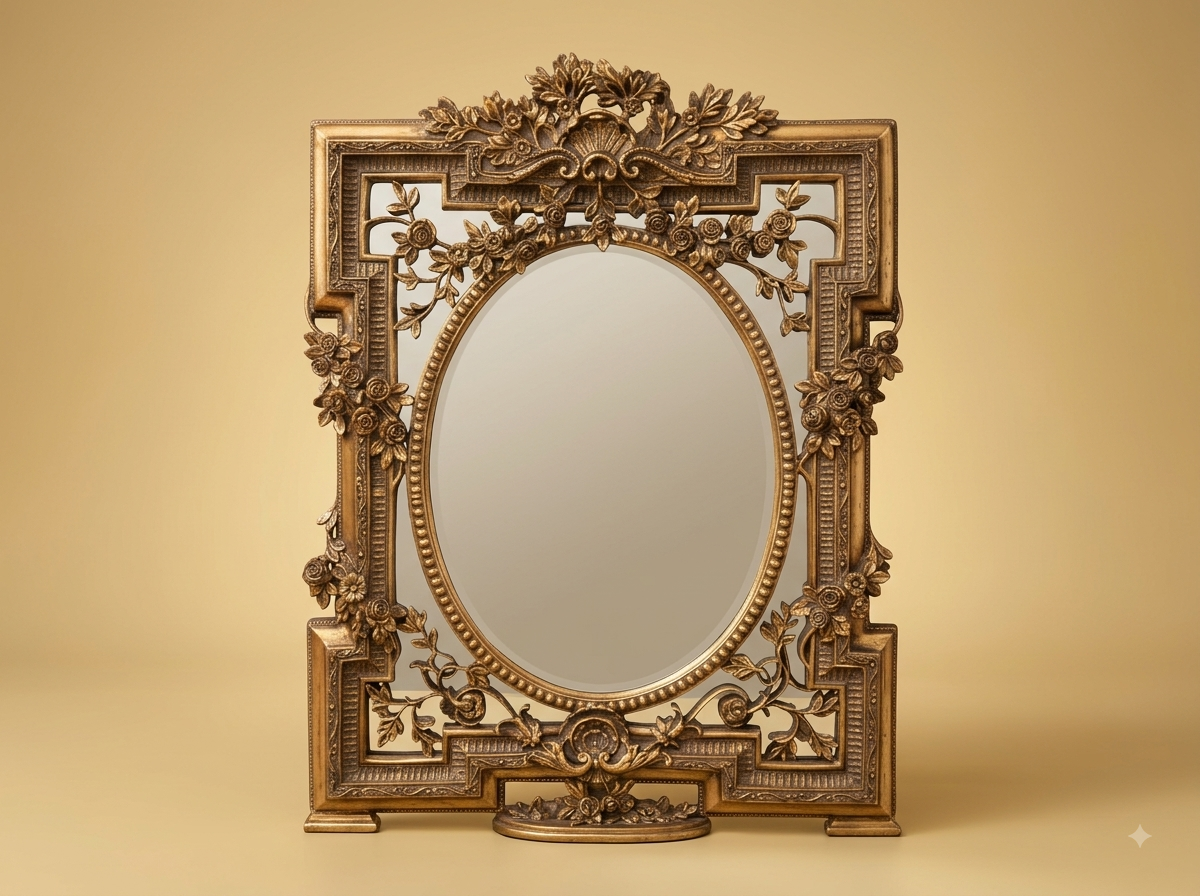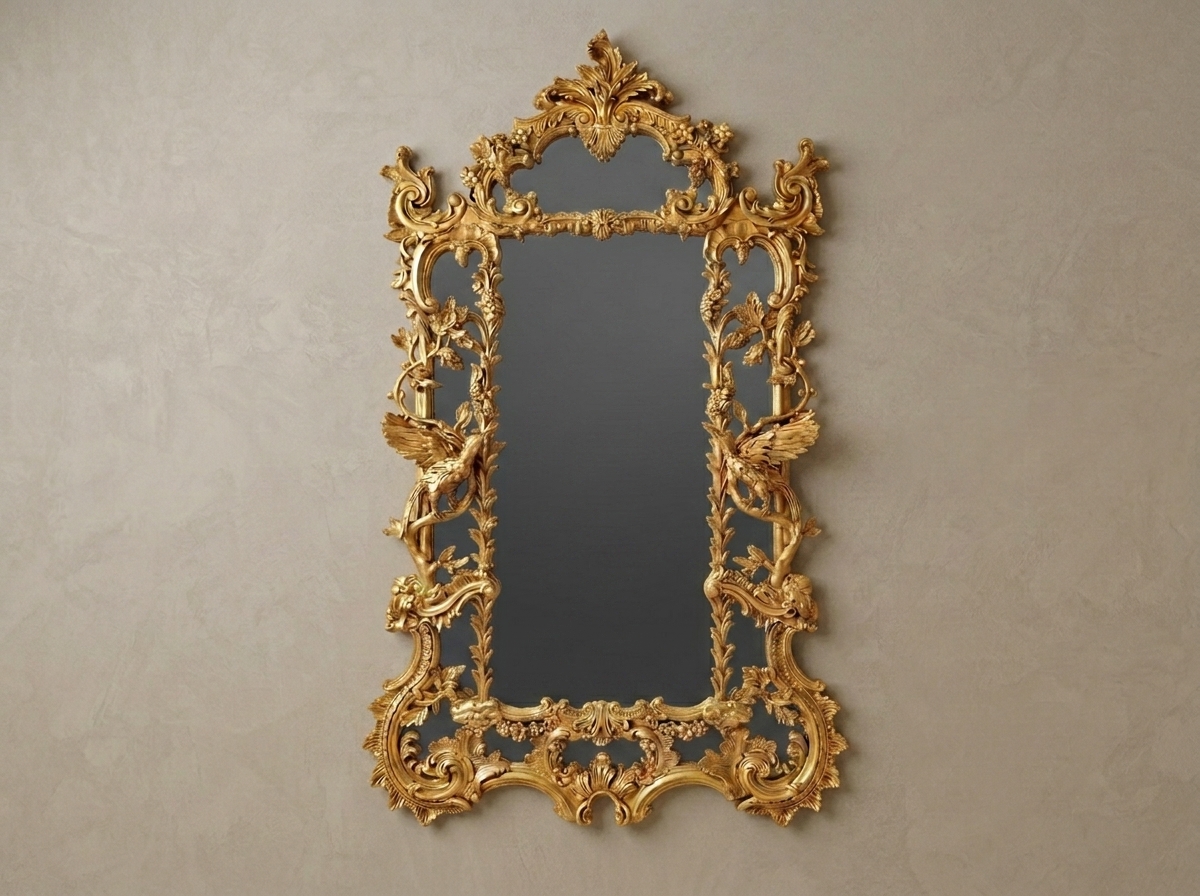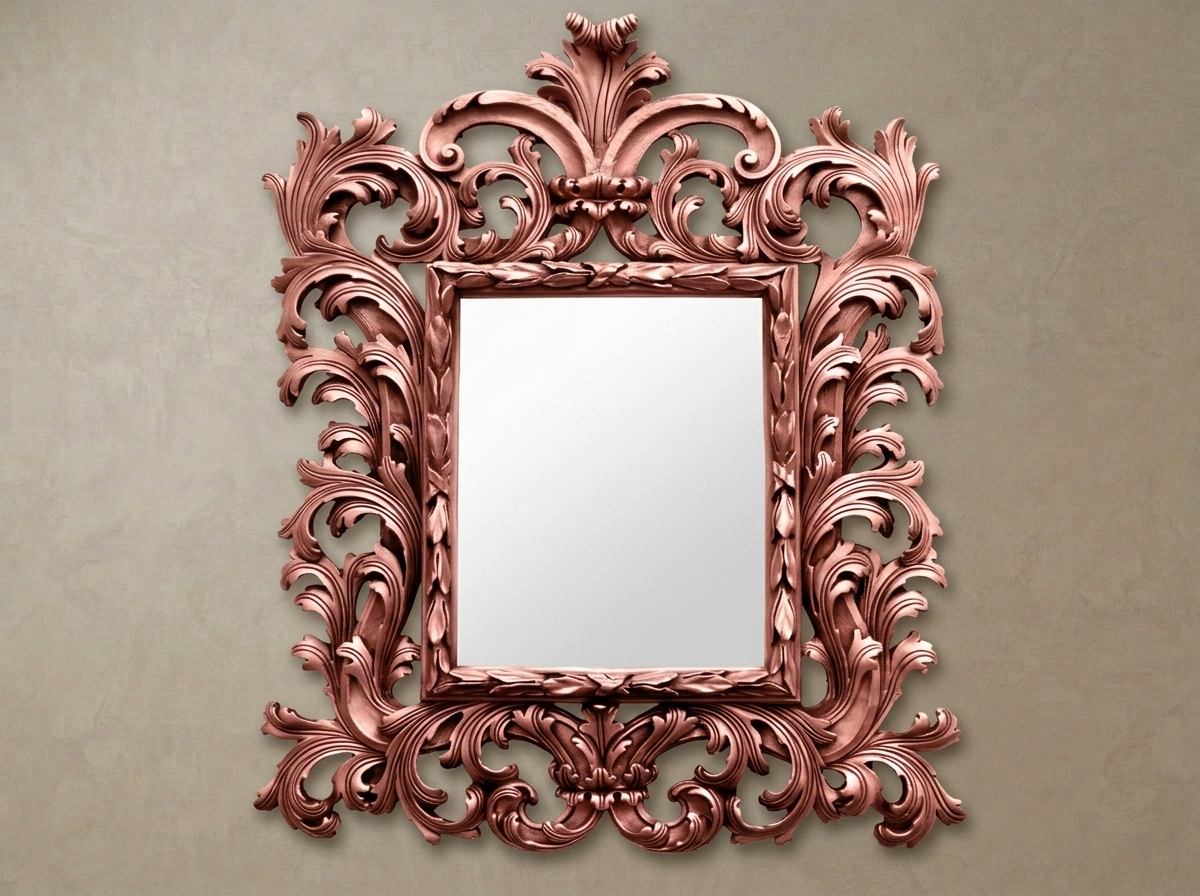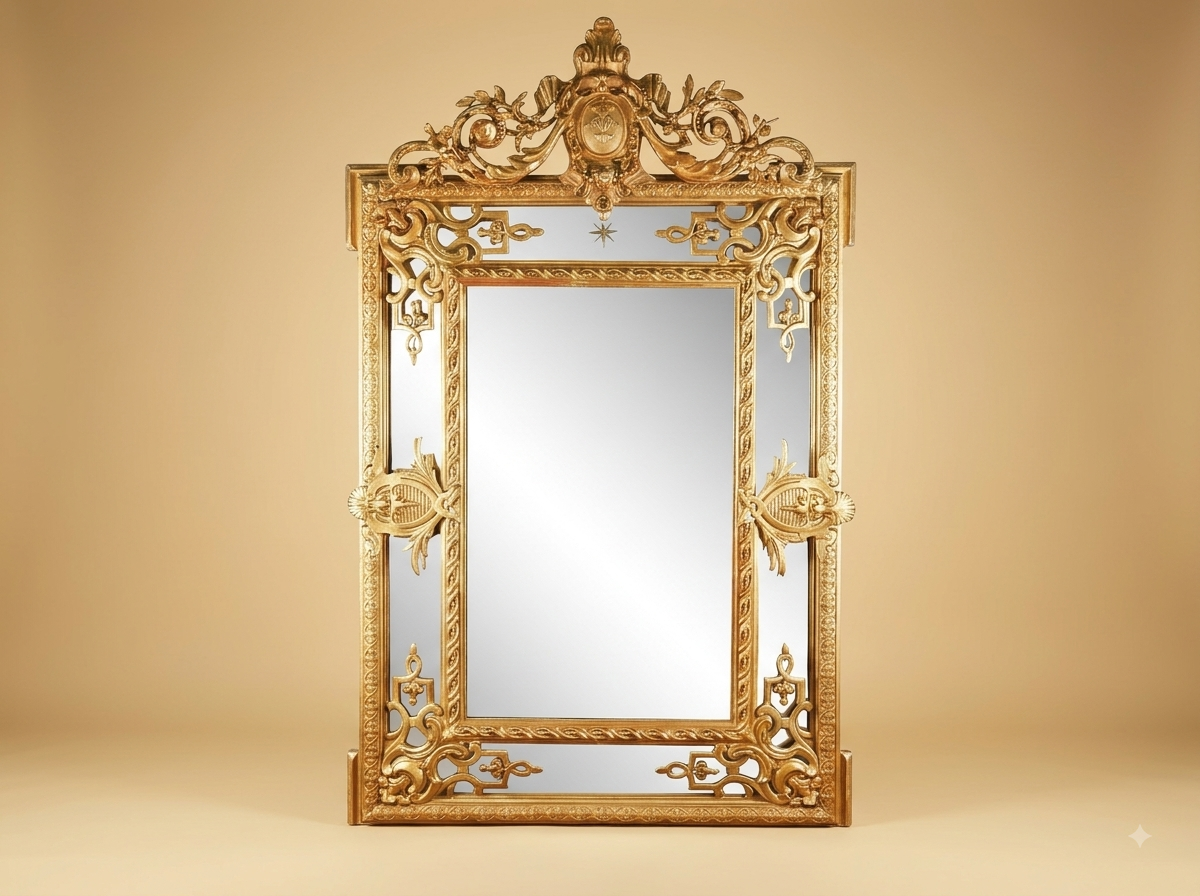
A mirror made from several plates has one obvious risk: three reflections of the same person, slightly out of step with each other.
The fix is depth. Our artisans set the margin plates a small distance further back than the central plate, so the two sit in different planes. Stand in front of the mirror and your reflection appears once, in the middle, where you expect it. The margins are angled away from you and what they return instead is the light and colour of the room behind - a soft bright border rather than a set of competing portraits.
That recess is set out on the frame drawing before any glass is ordered, because the depth of the rebate and the thickness of the carved bars that cover the joins have to agree with each other. Get it wrong by a few millimetres and either the ornament stands off the surface or the margins come forward and the doubling returns.
It is why this design has survived three centuries and why it still has to be drawn carefully every single time.
 Ask Price On WhatsApp