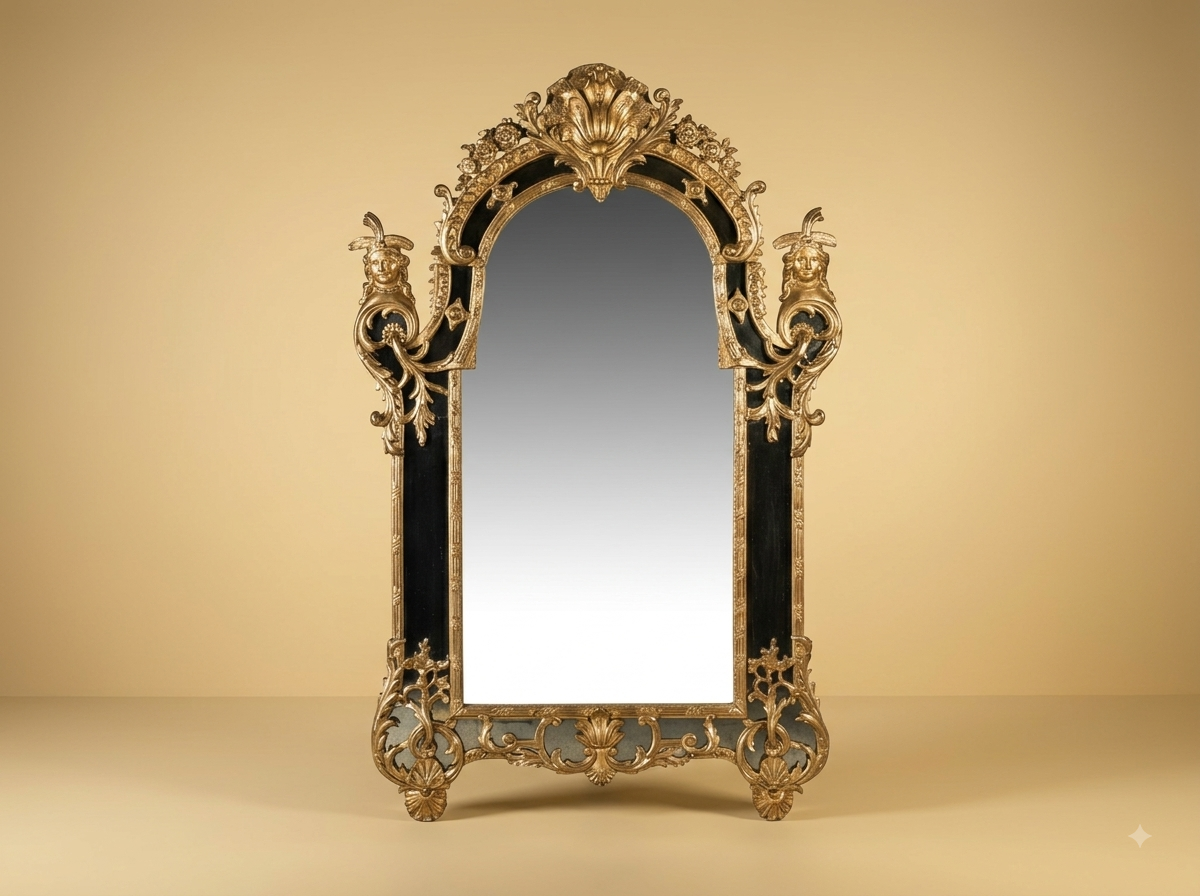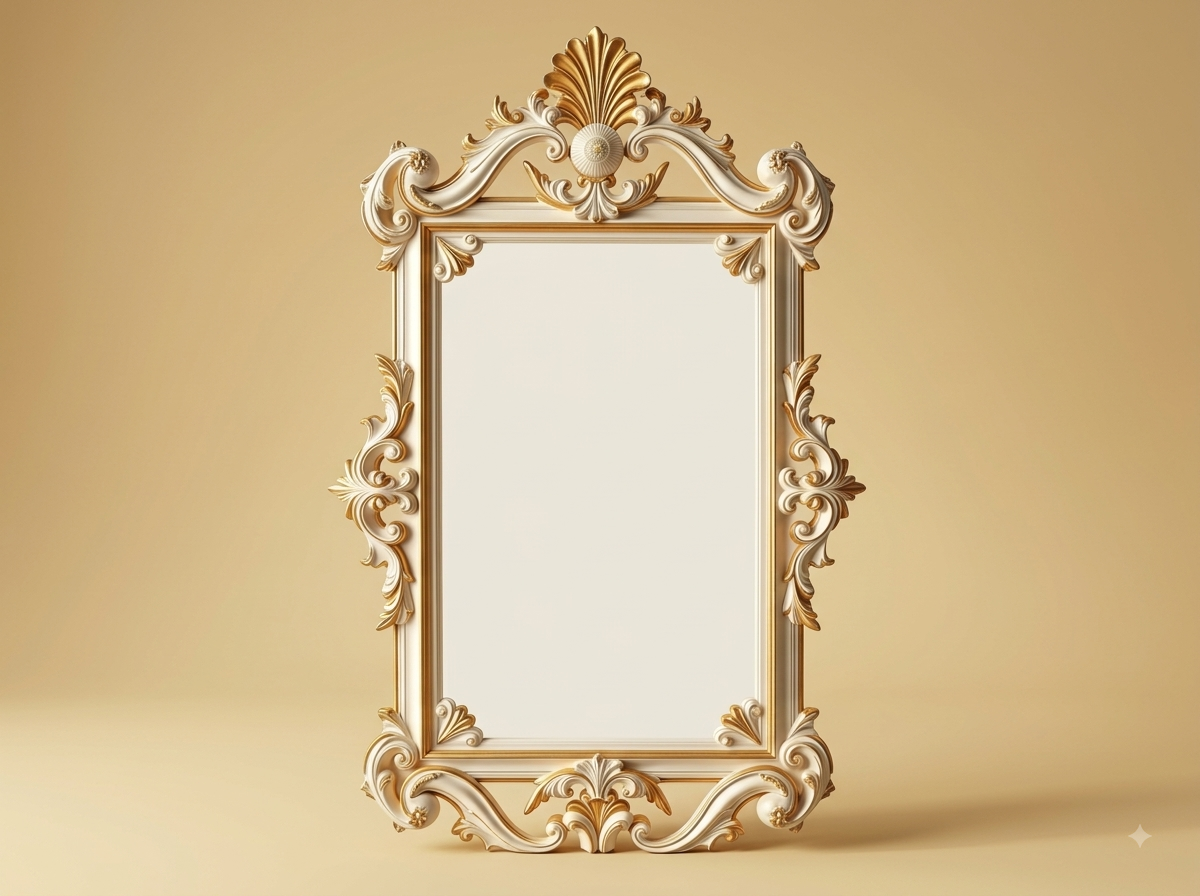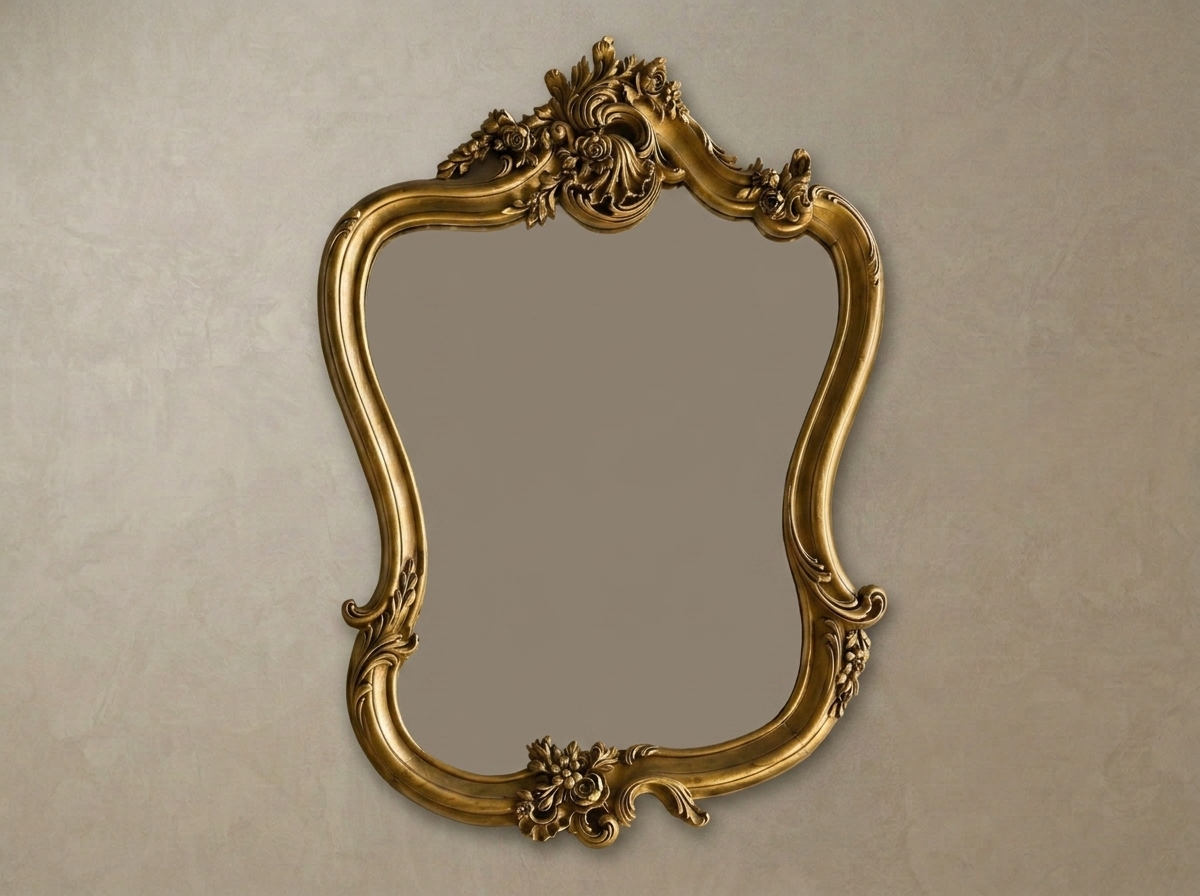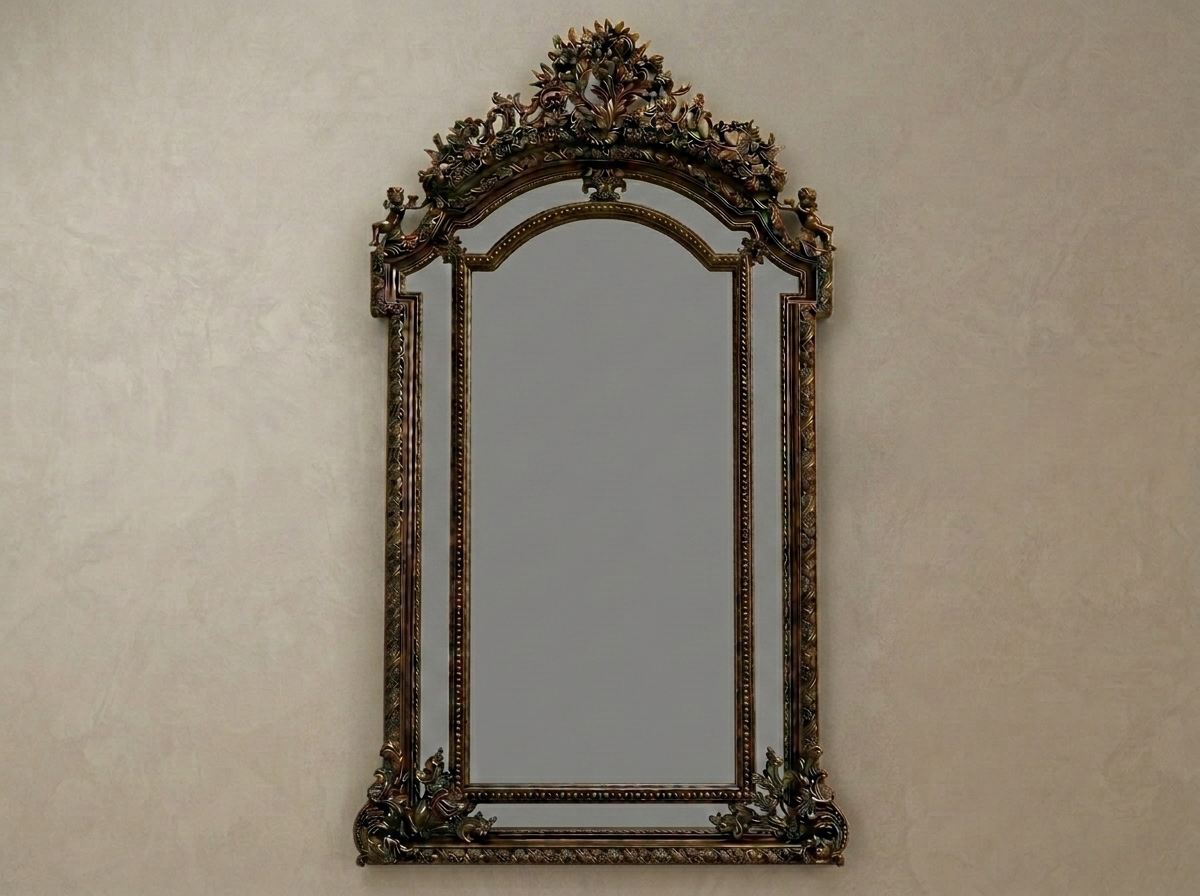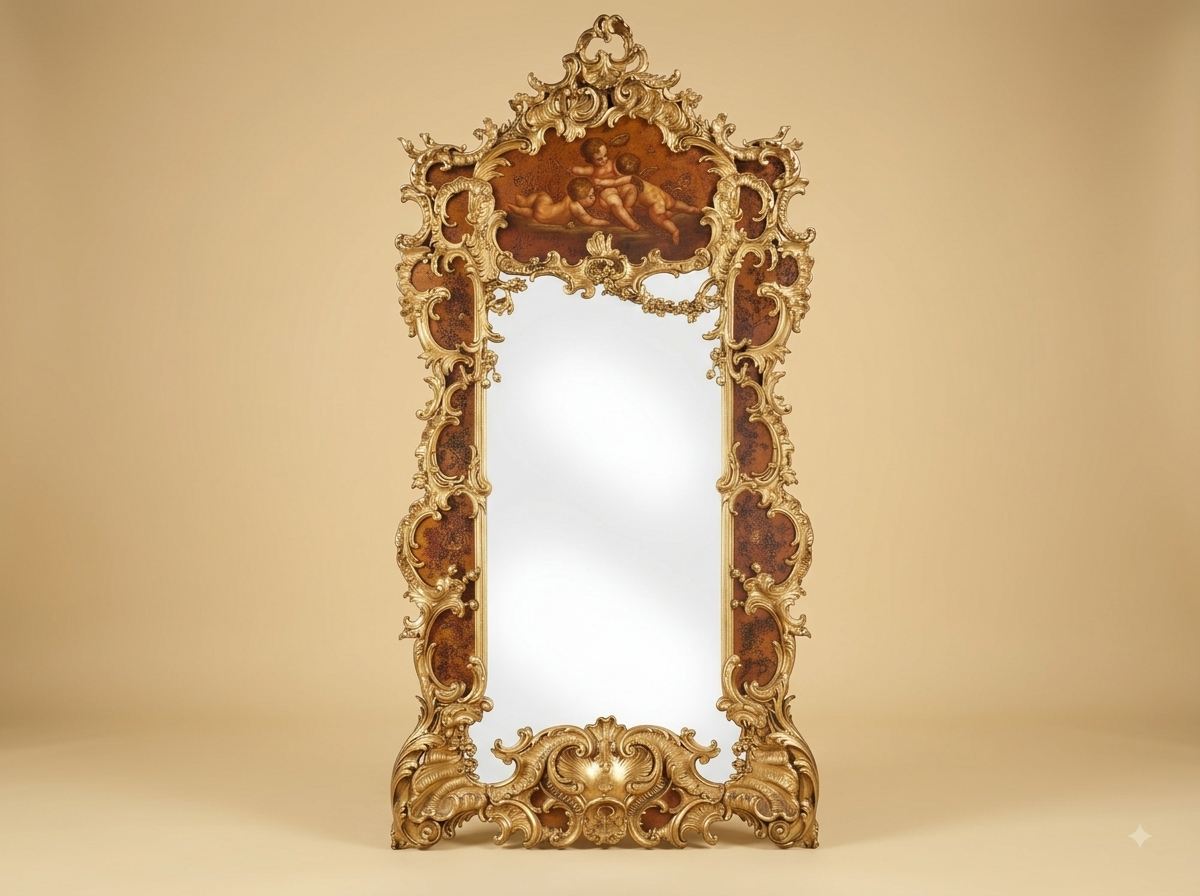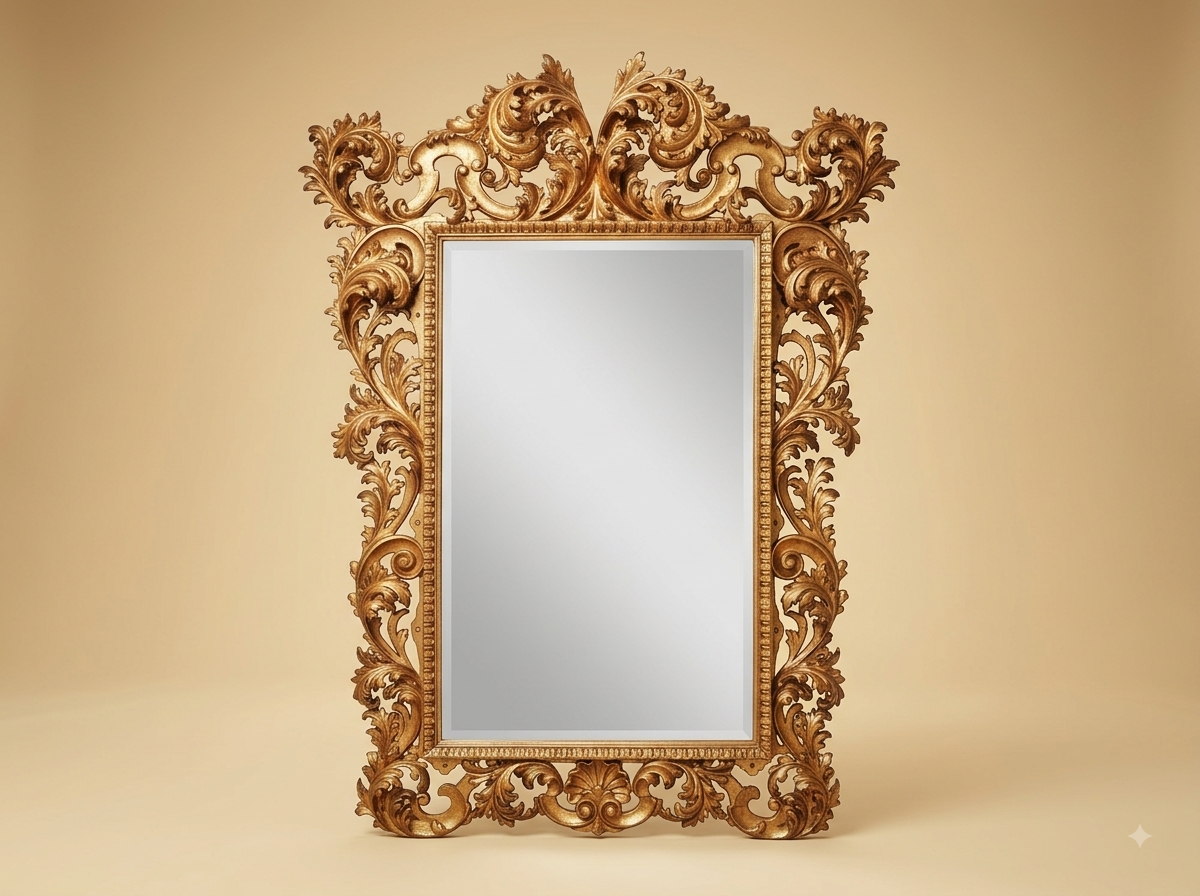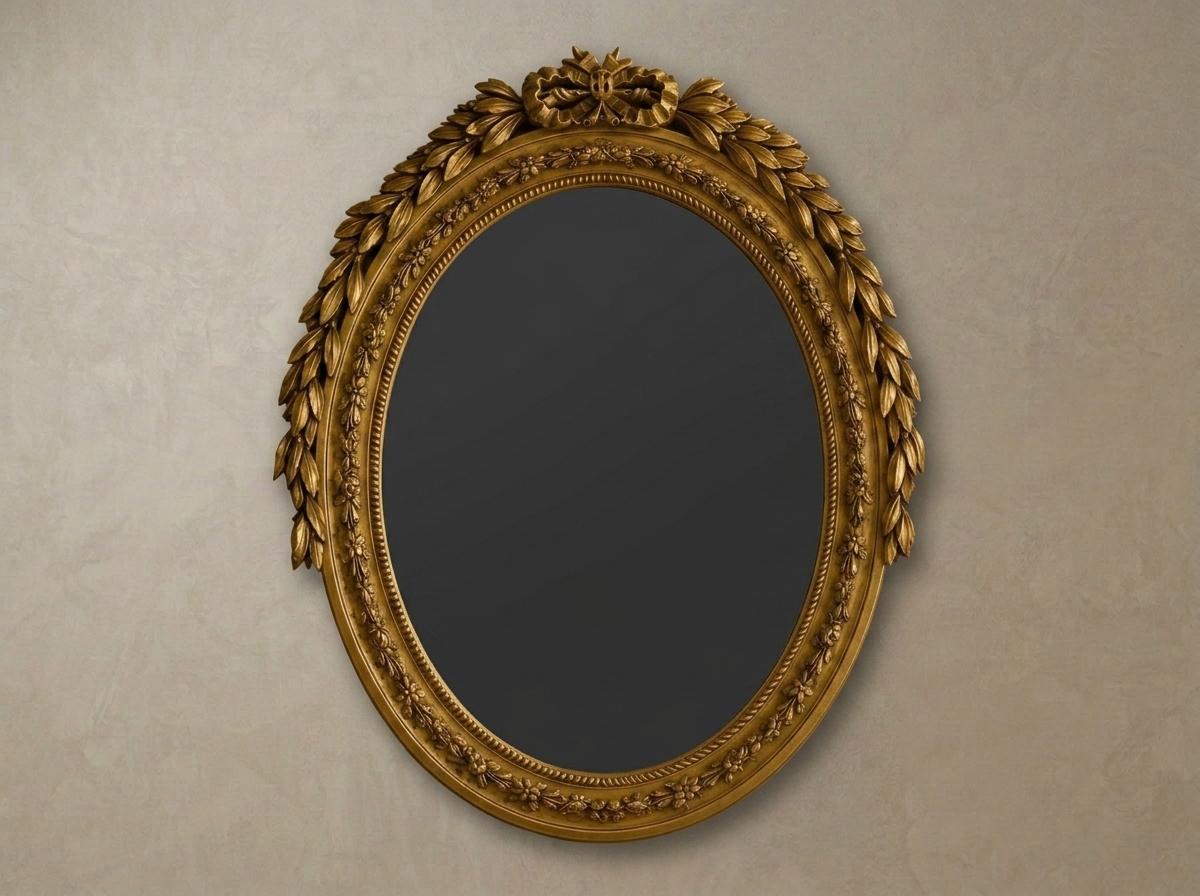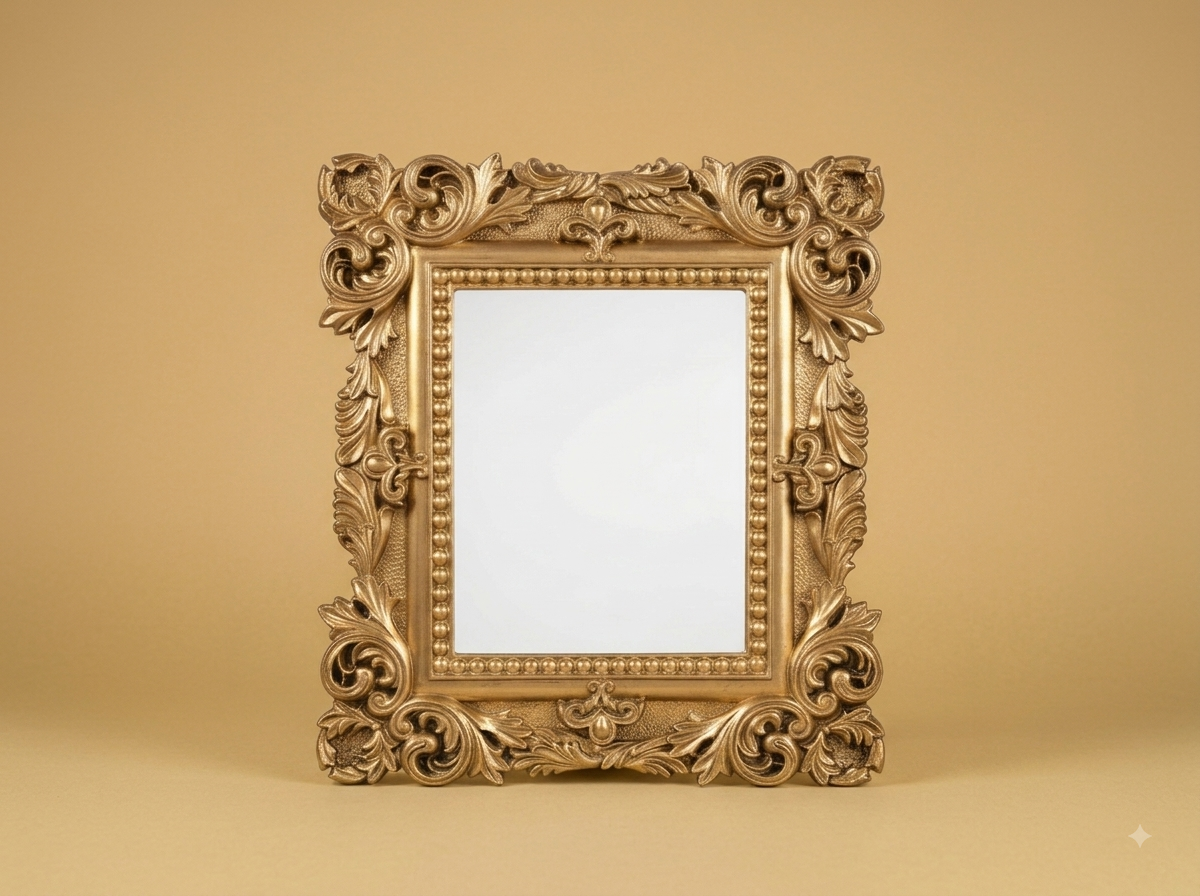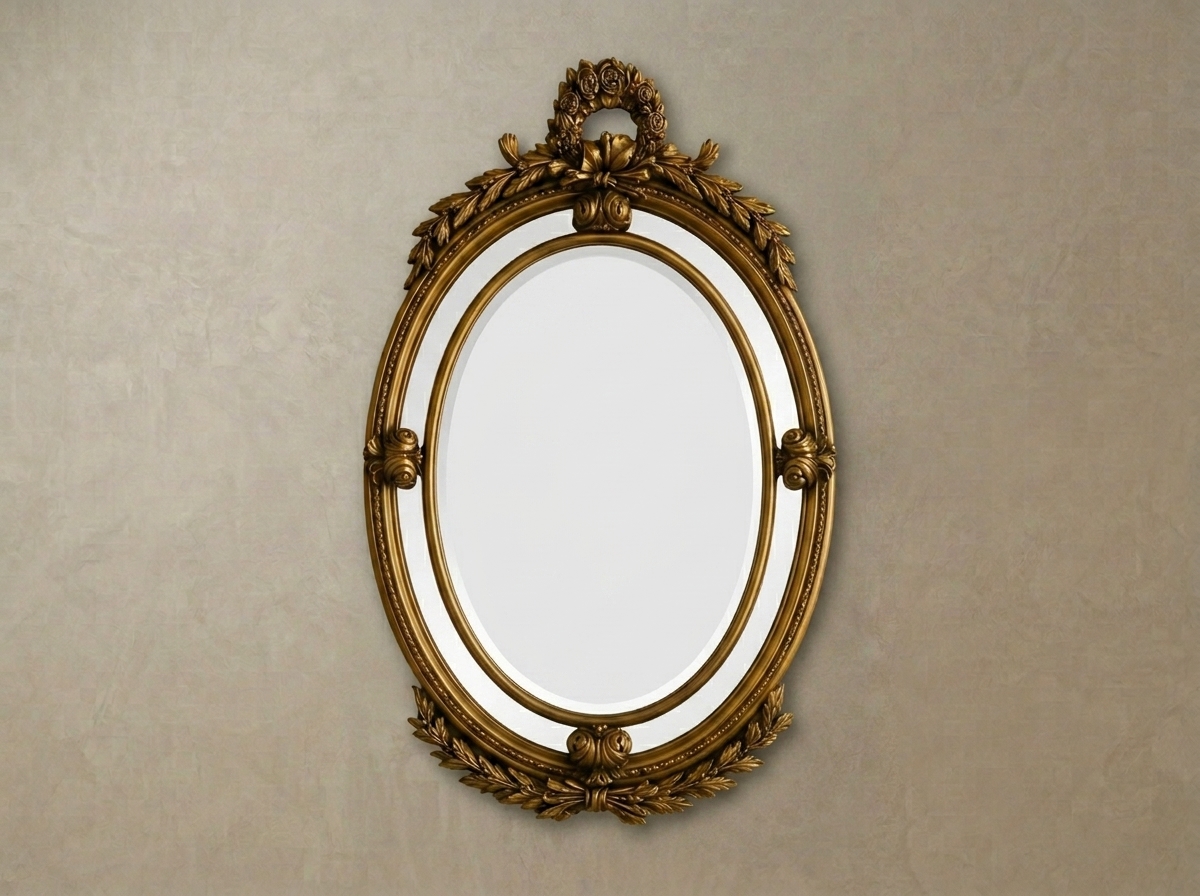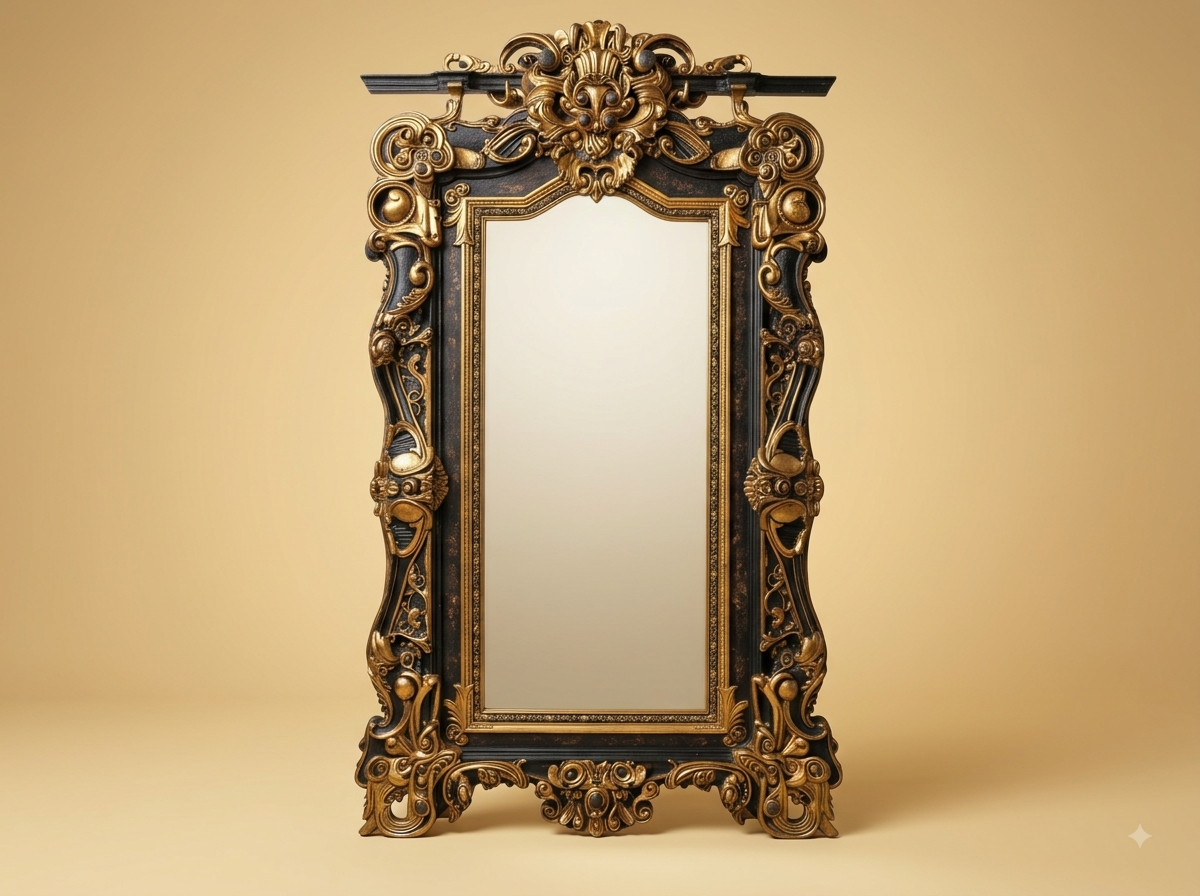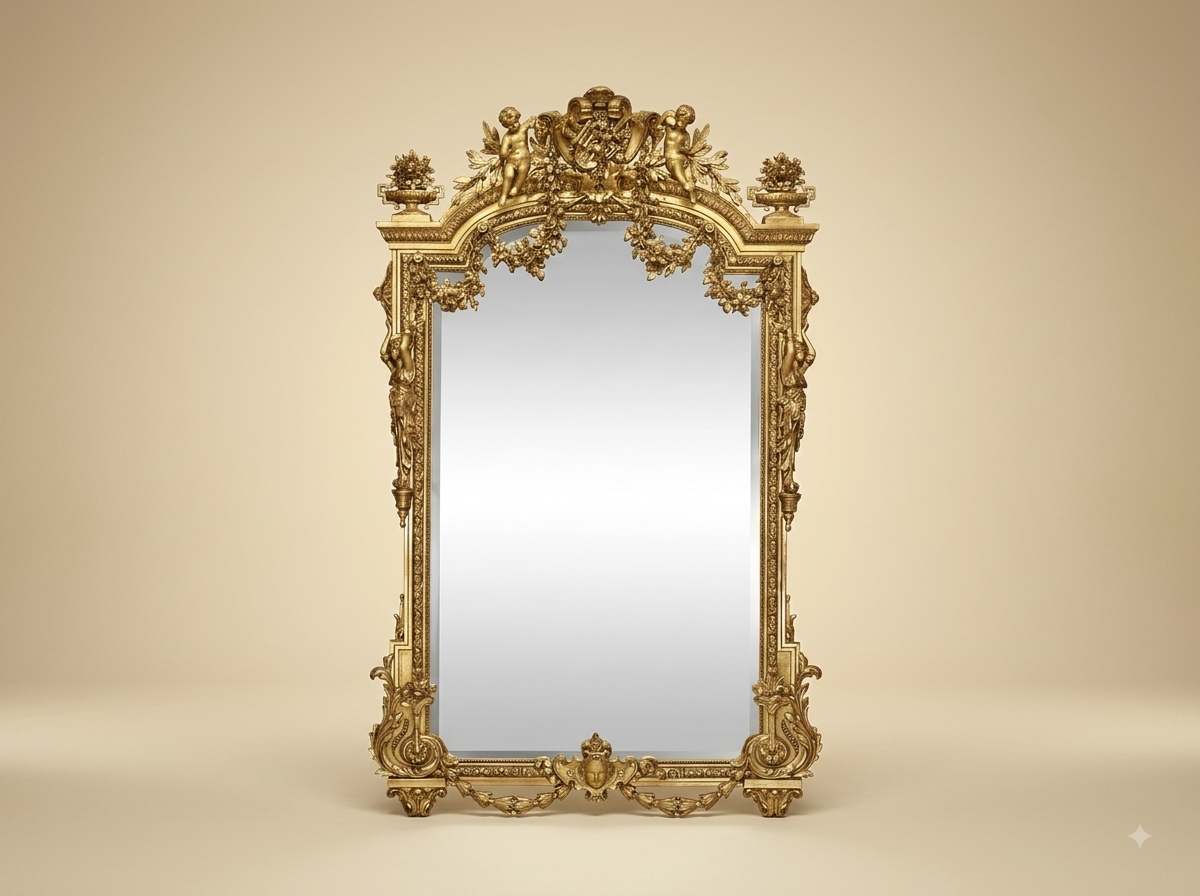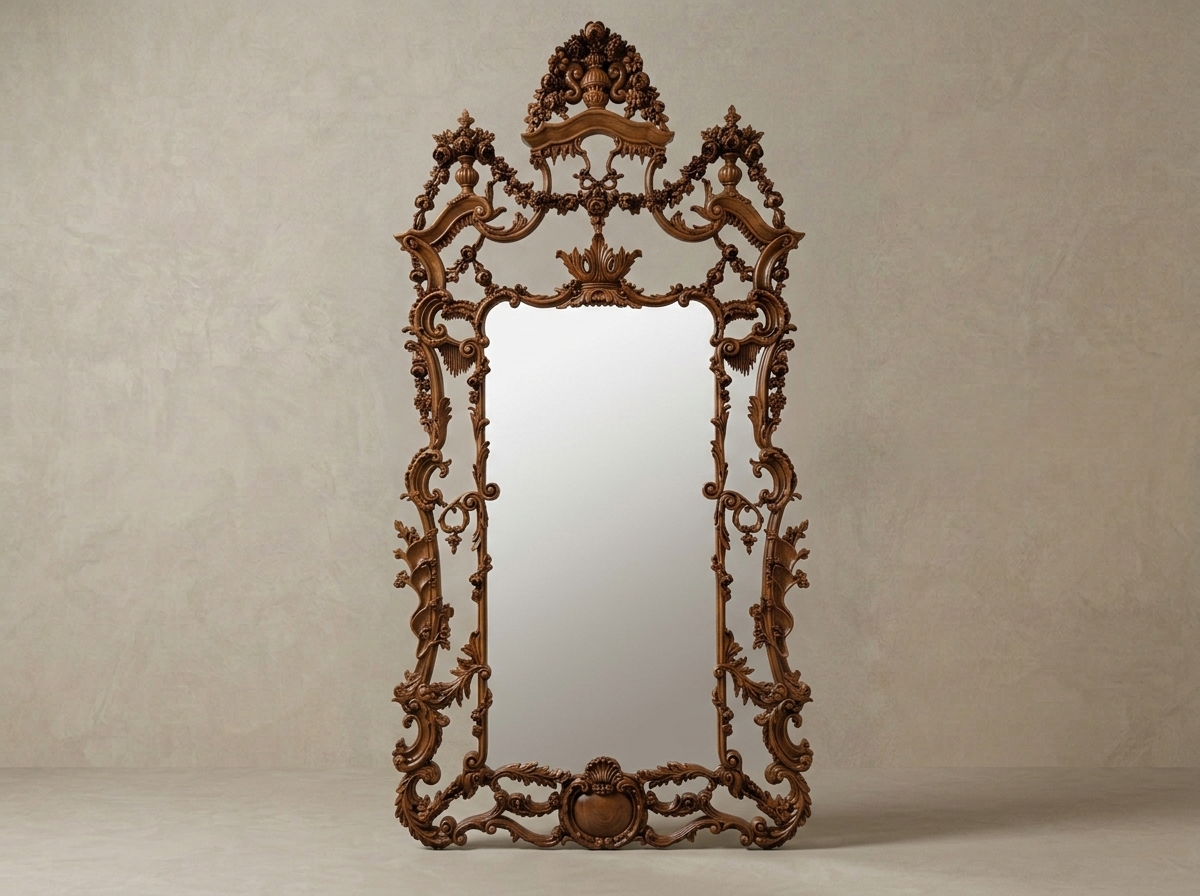
Carving that will be gilded and carving that will be left bare are not the same job, and the difference is in how forgiving the surface is.
Under gilding, a small tear in the grain disappears. The prepared ground fills it, the gold covers it, and nobody ever knows. Carvers working towards a gilded finish can take a cut that runs slightly against the grain if the shape demands it.
On a piece left natural under a clear finish, that same tear stays visible for the life of the mirror - and worse, the clear finish soaks in more deeply where the fibres are torn, so the patch darkens and announces itself.
So every cut on this frame is taken with the grain rather than into it, which means the carver has to keep changing the direction he works from as the scroll turns - approaching the same leaf from three or four sides across the course of carving it, and re-sharpening constantly, because a dull edge tears where a sharp one severs.
It is slower. It is the only way the finished surface can be left with nothing on it but oil.
 Ask Price On WhatsApp