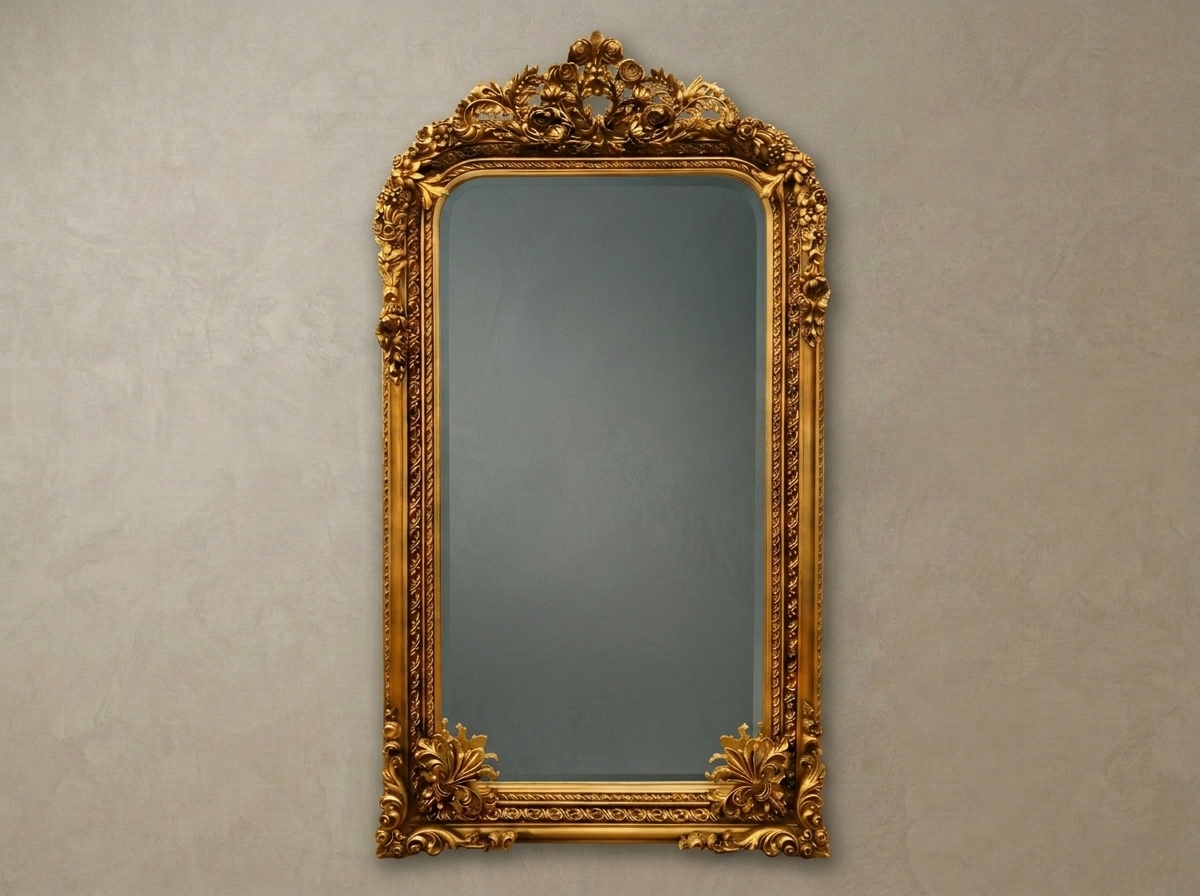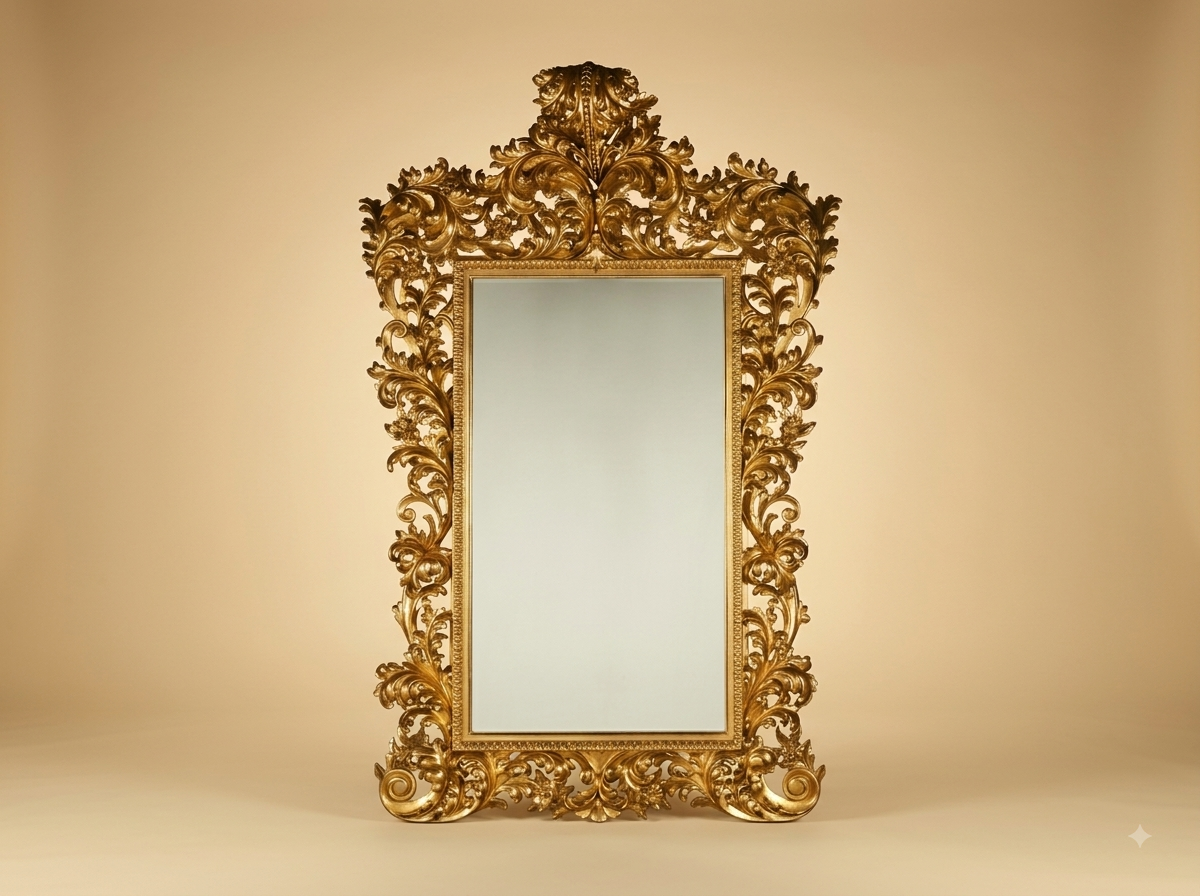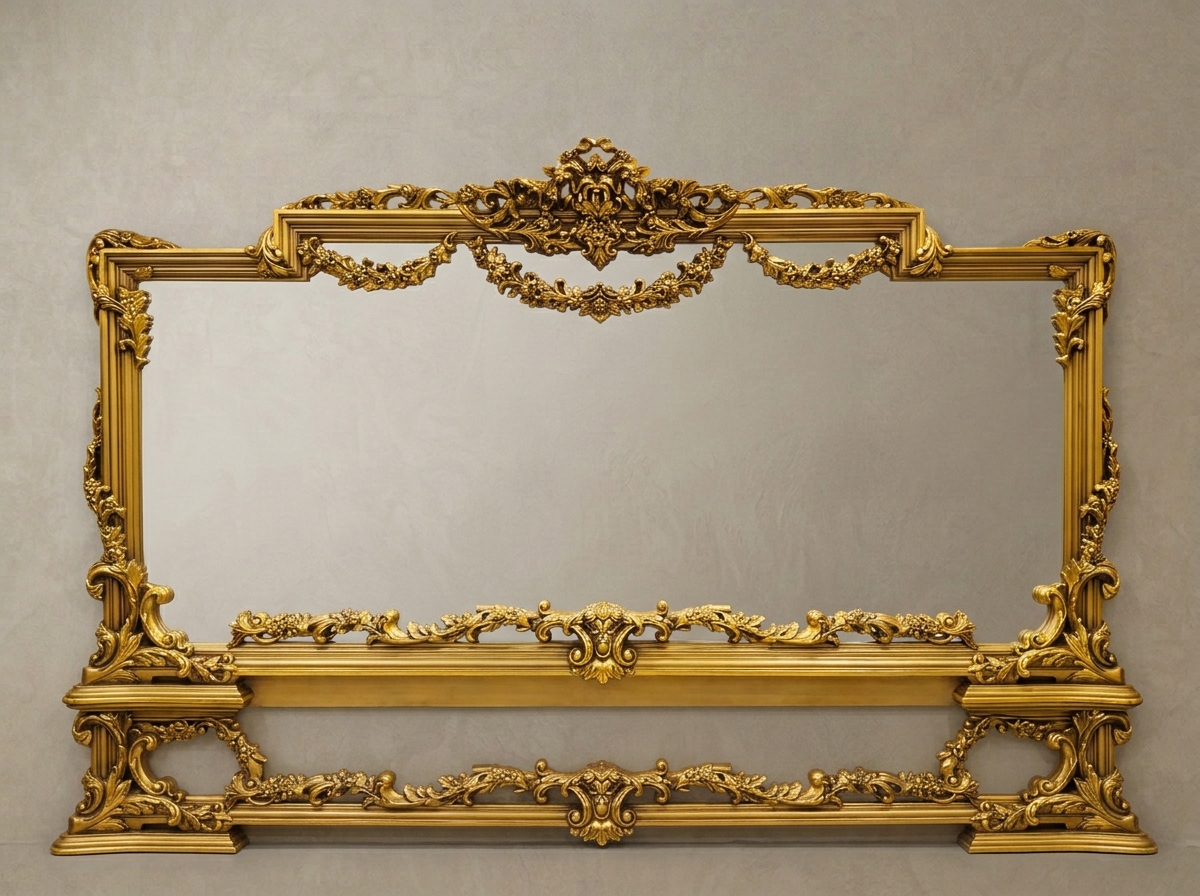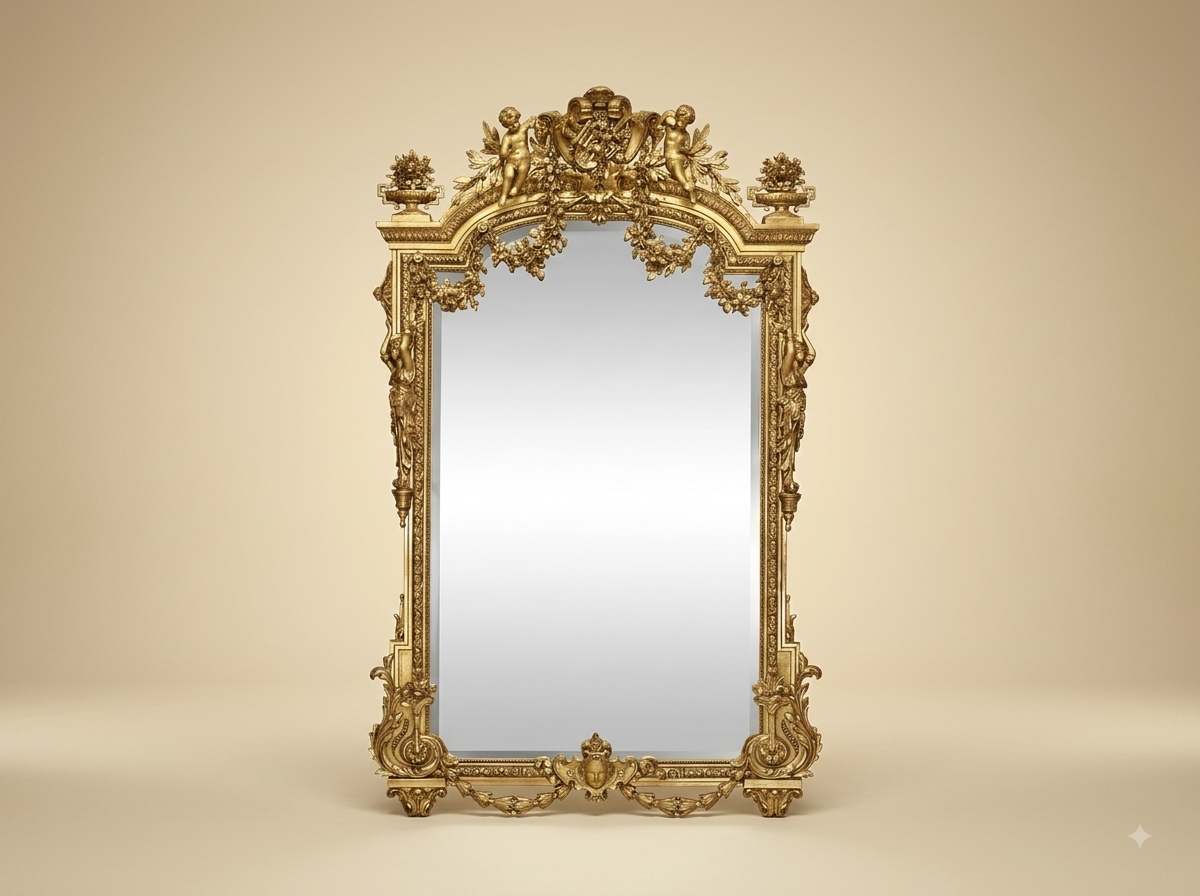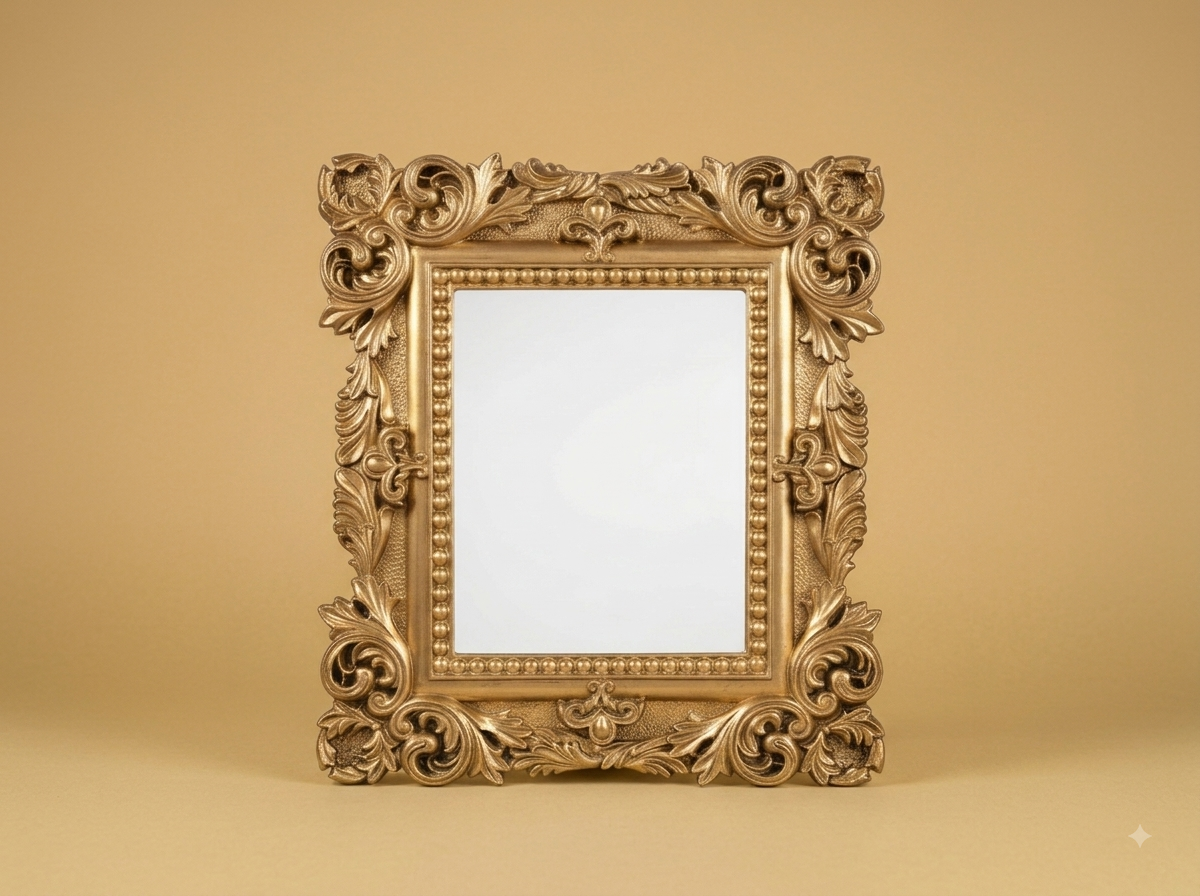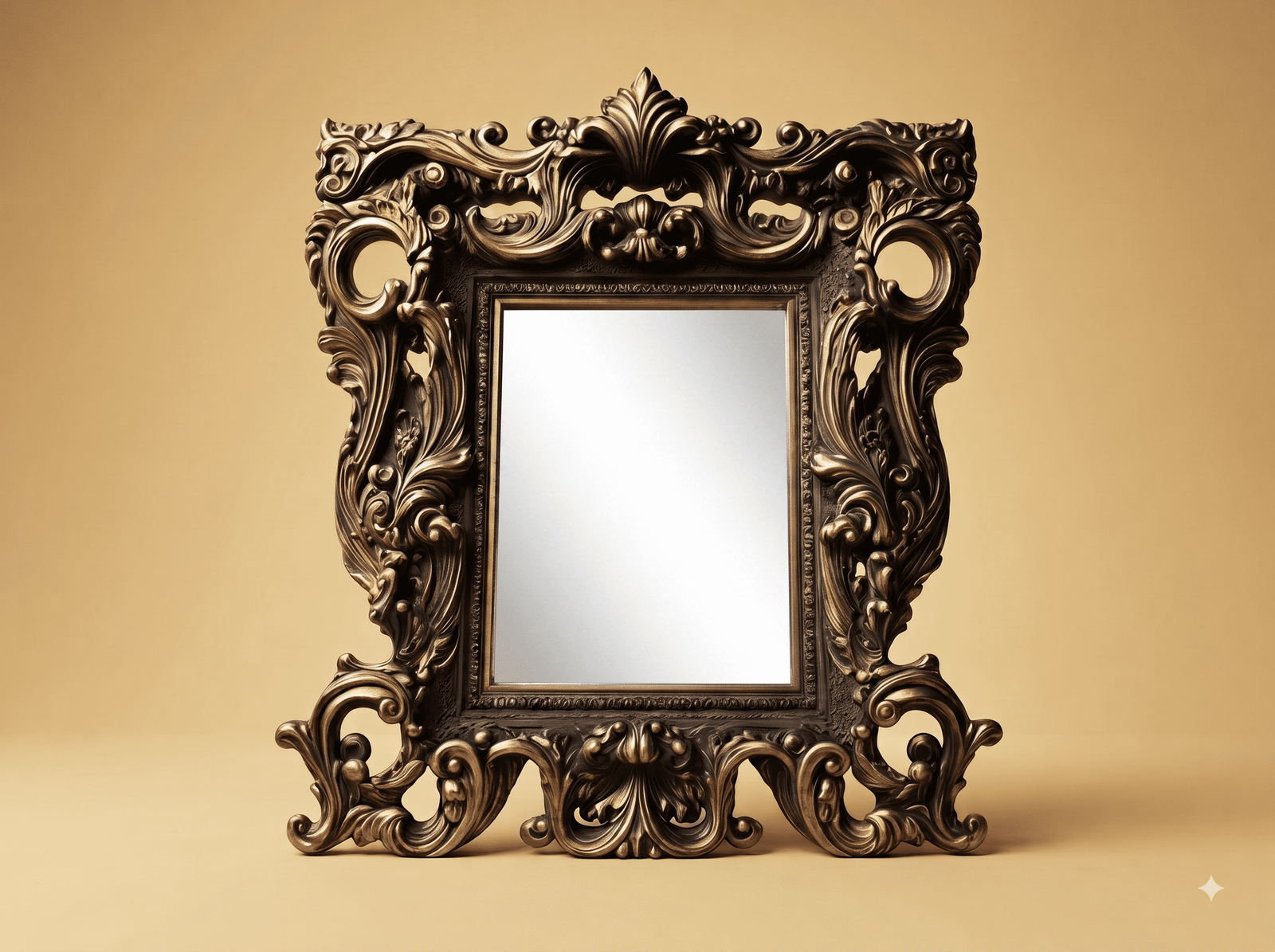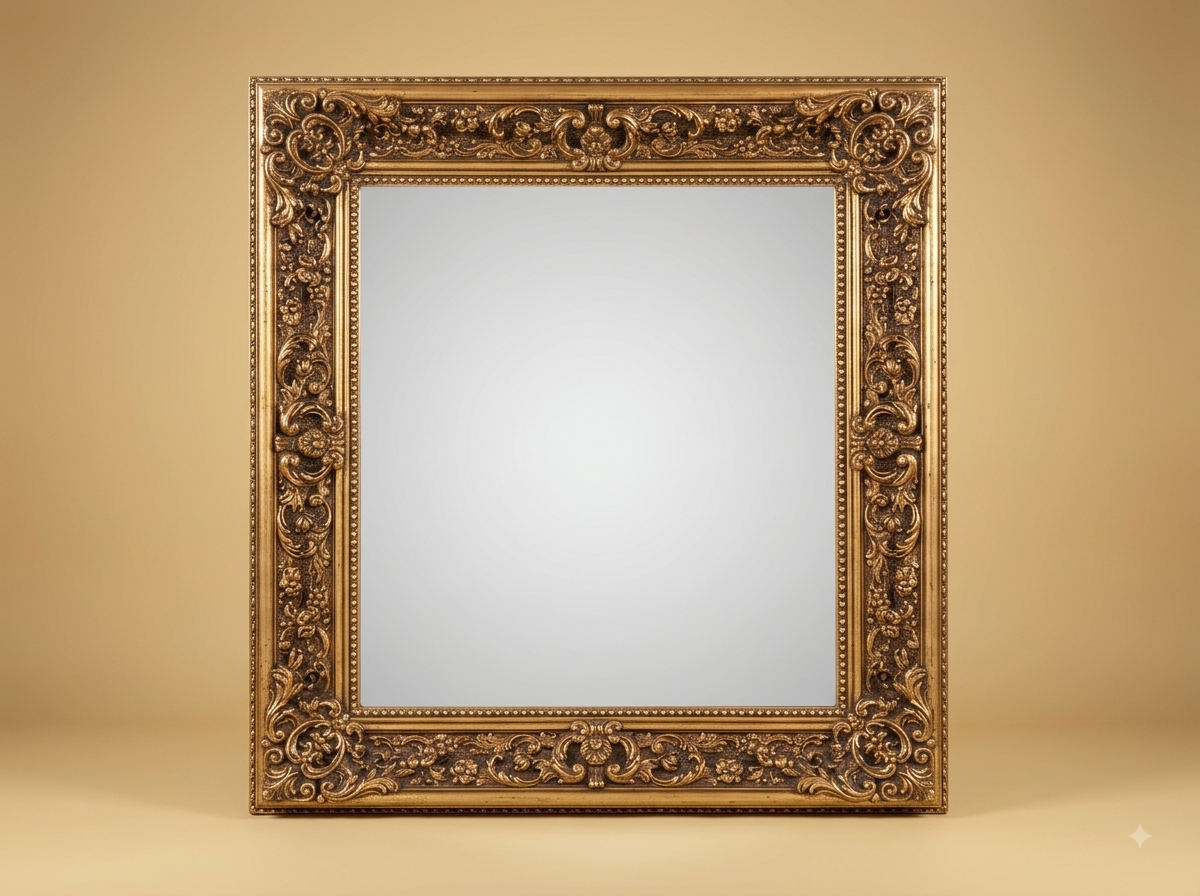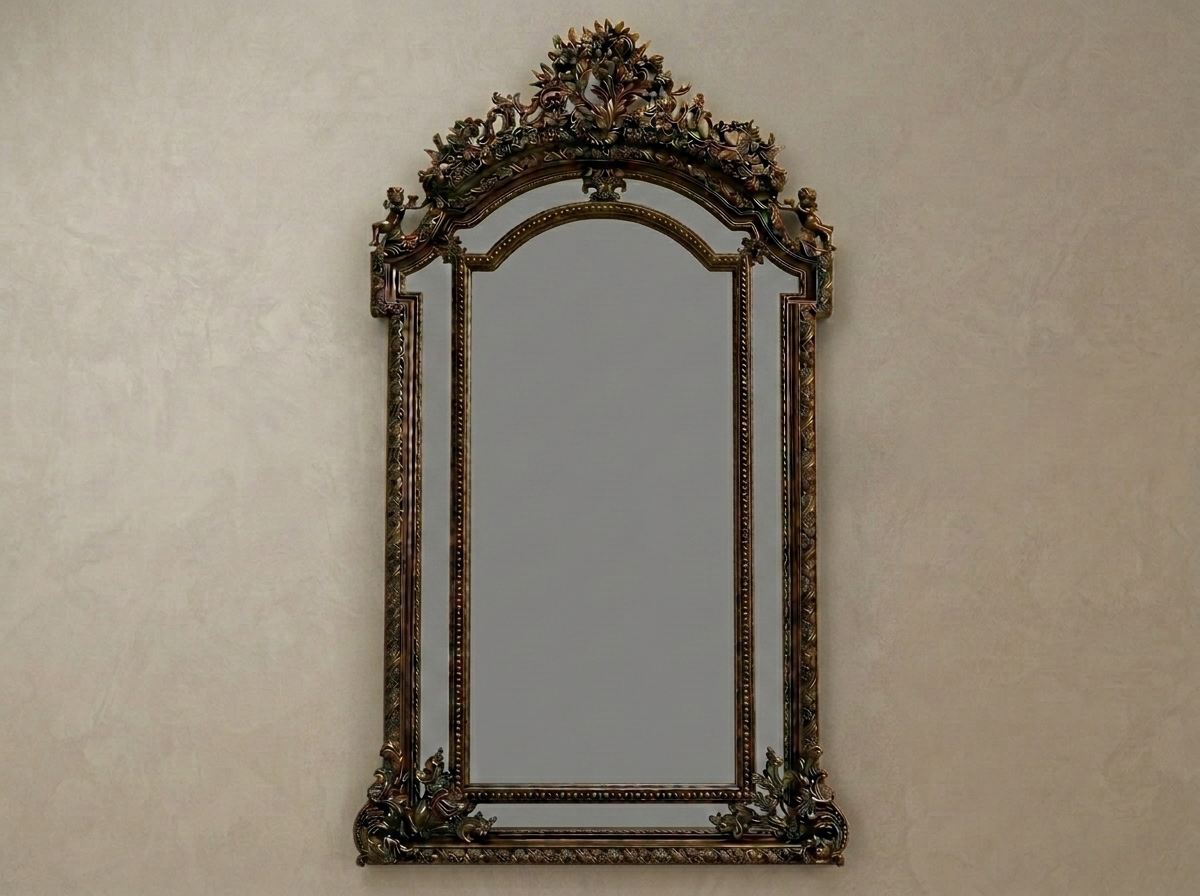
A mirrored border sounds like a simple addition. In practice it is the hardest part of the mirror to make look right, because it is made of four separate strips that have to behave as one frame.
Each strip is a long, narrow piece of glass. Where two meet at a corner, there is a join - and a join between two mirrors is visible in a way that a join between two pieces of timber is not, because each plate reflects at its own edge.
So the joins are hidden rather than minimised. The carved bars that divide the border from the centre plate are continued across the corners, and every strip is cut so that its ends fall underneath a bar. The eye sees carved crossings where the border turns, and the glass joins sit beneath them.
The strips are also set at exactly the same depth as the centre plate. Even a slight step between them would catch light along its whole length and read as a shadow - so all the rebates are worked to one depth across the frame, and the plates are bedded rather than simply dropped in.
Done properly, the border reads as a single ring of mirror around the middle.
 Ask Price On WhatsApp