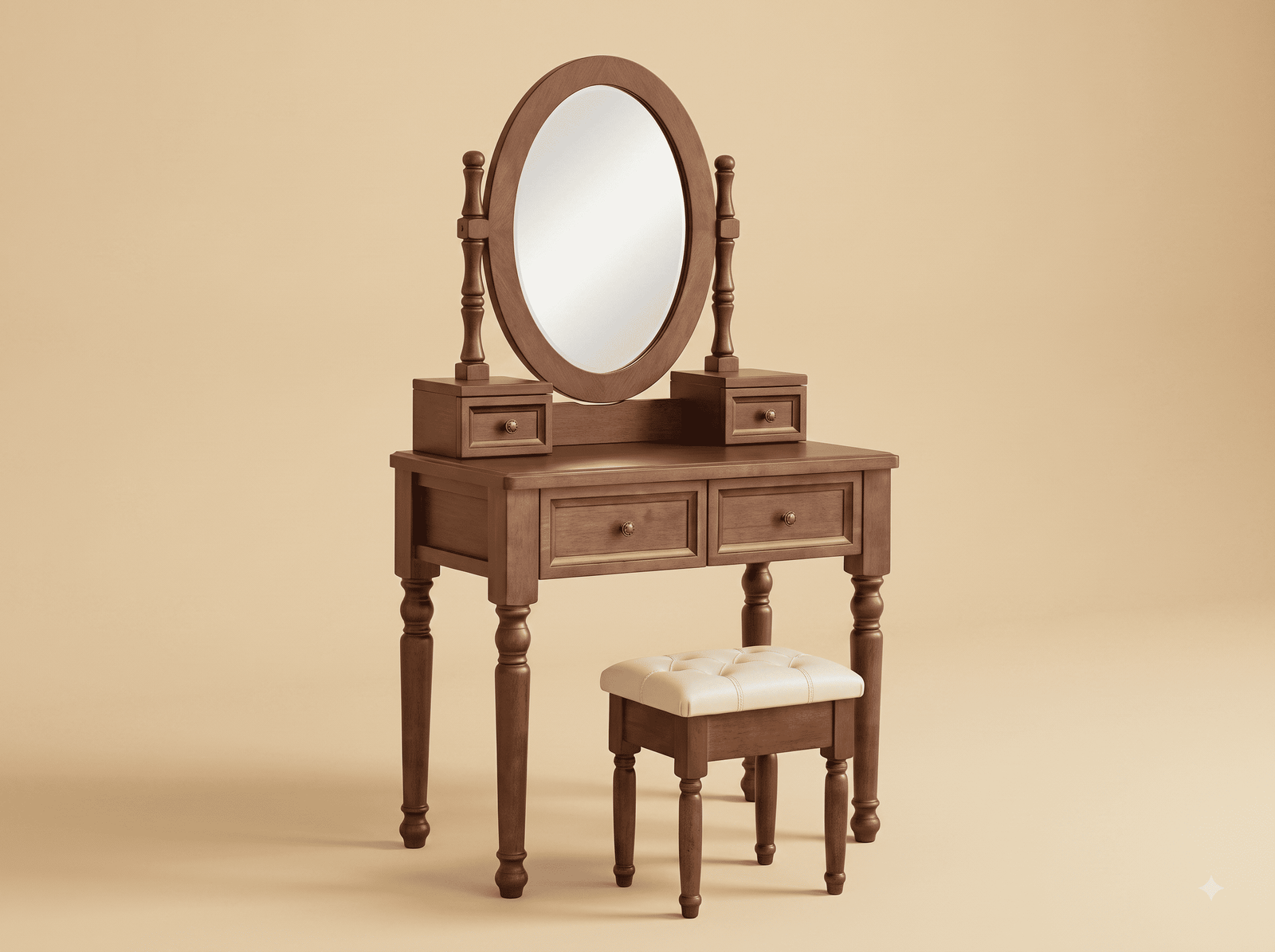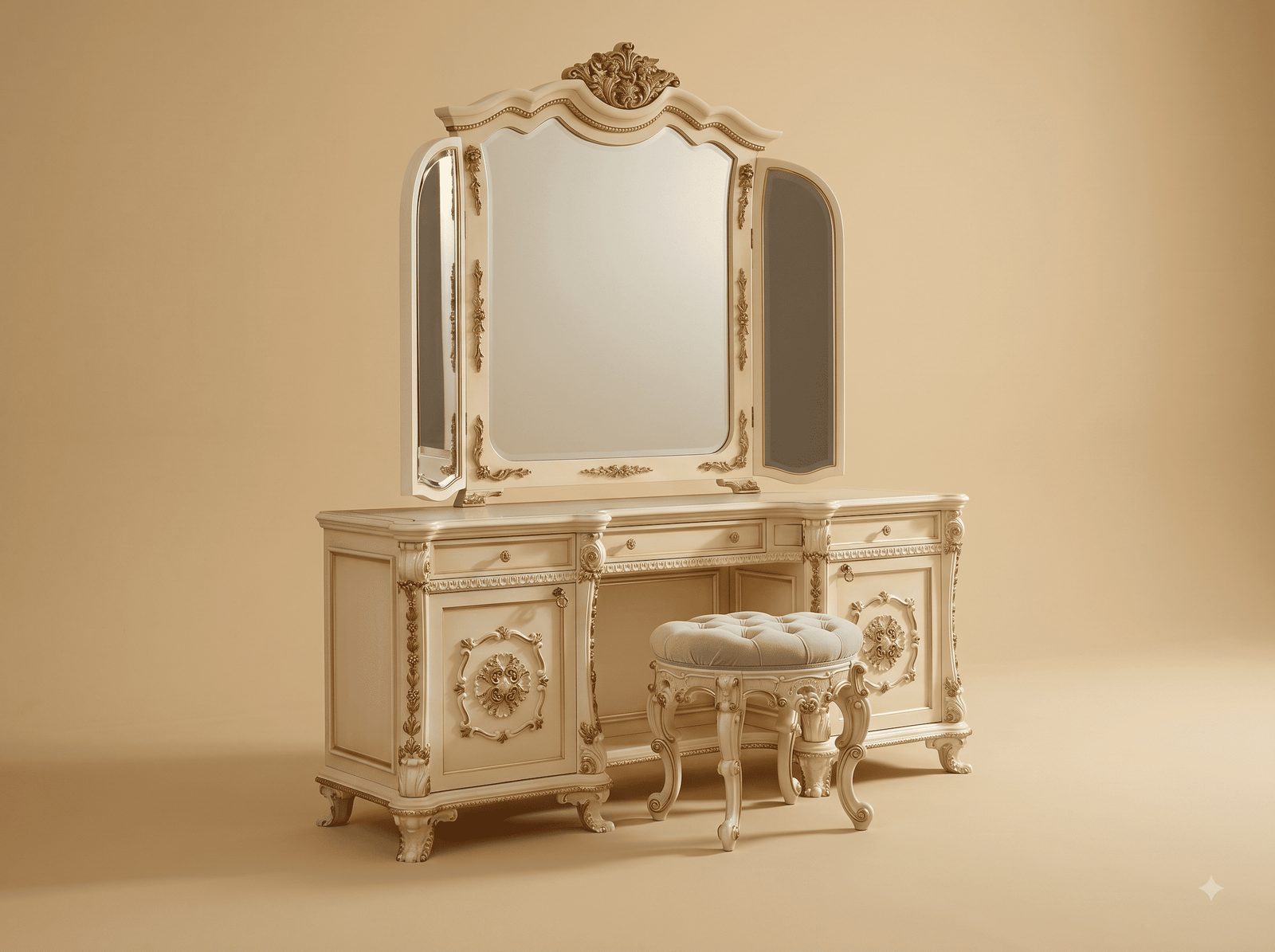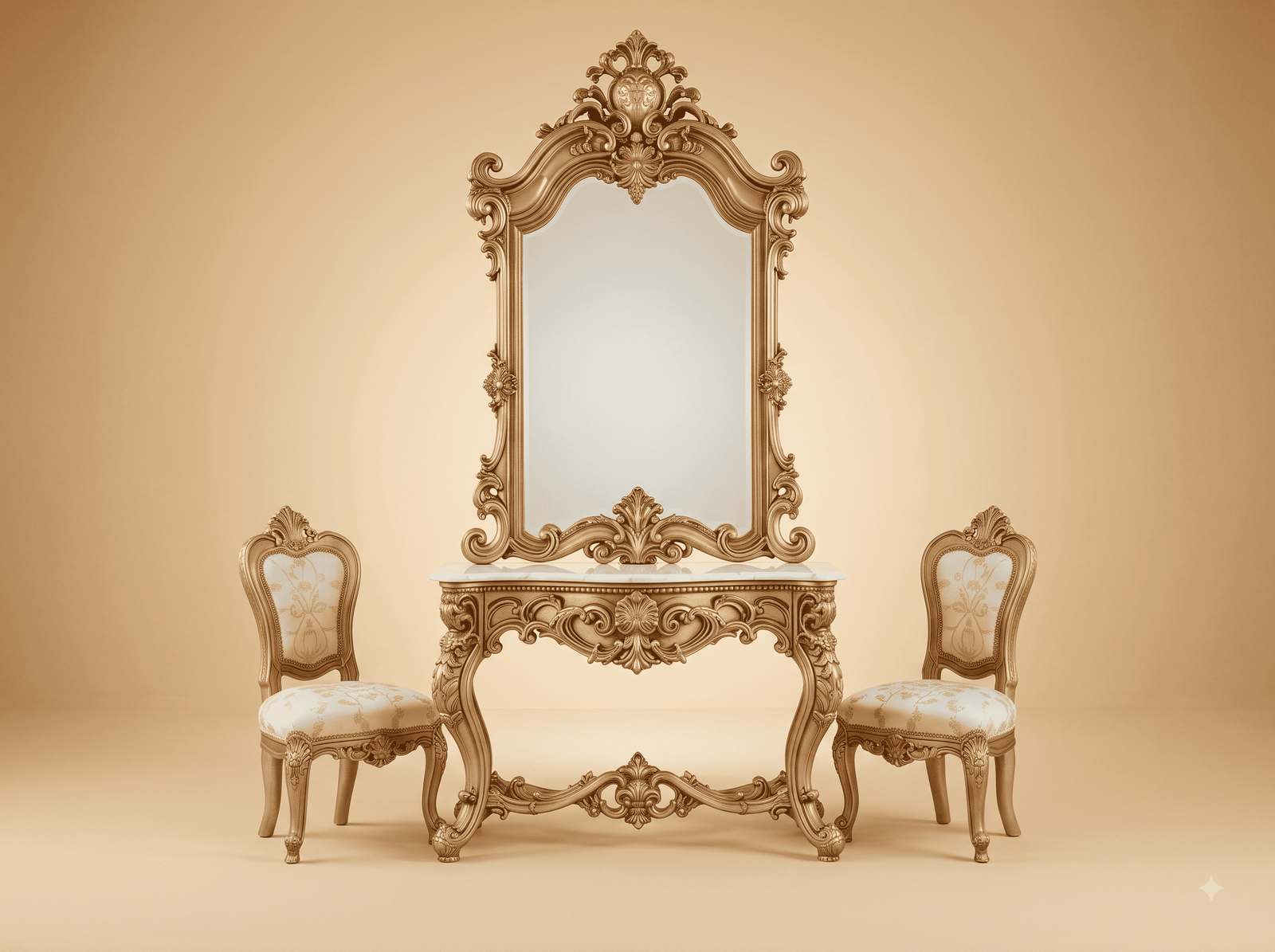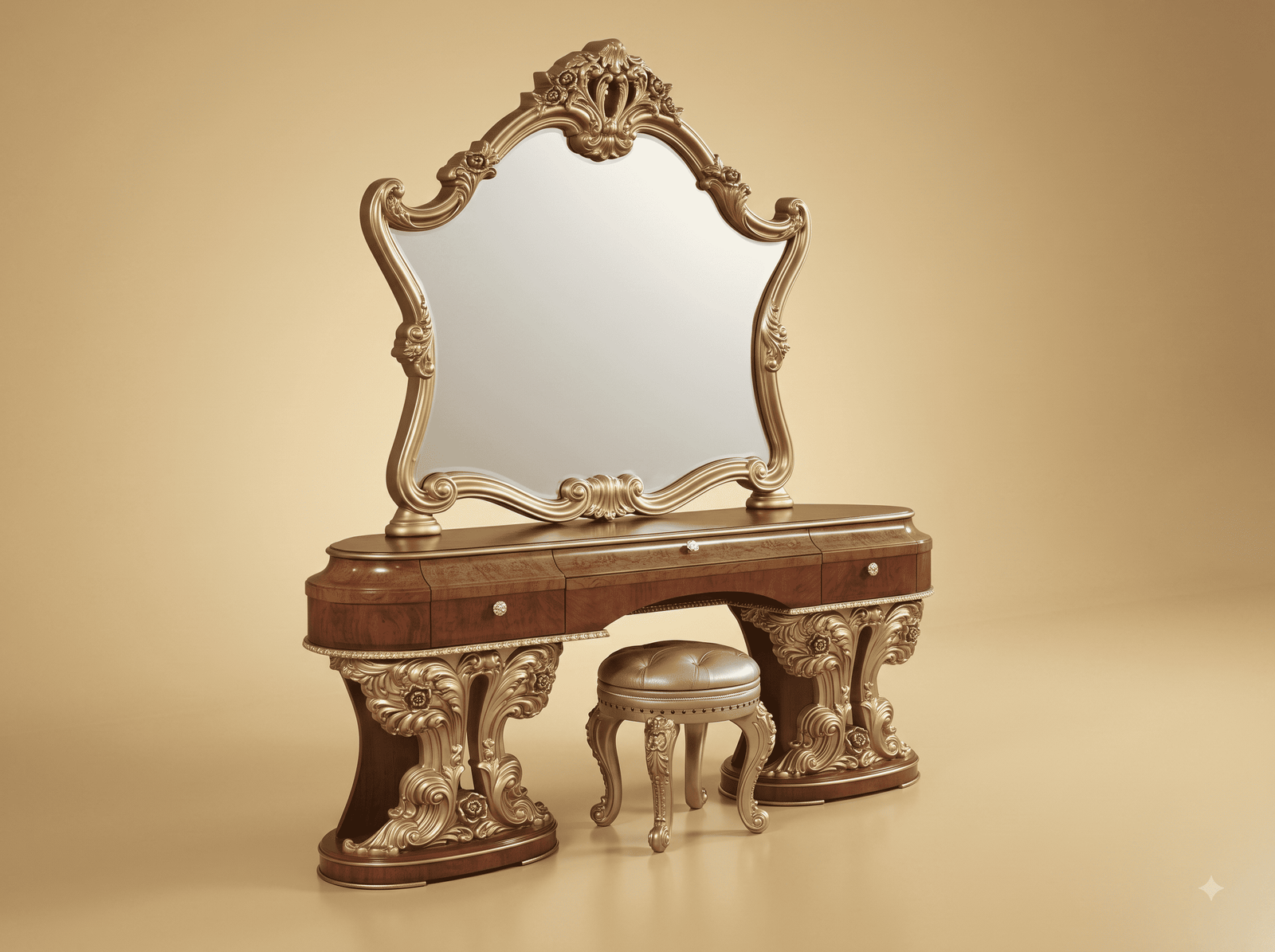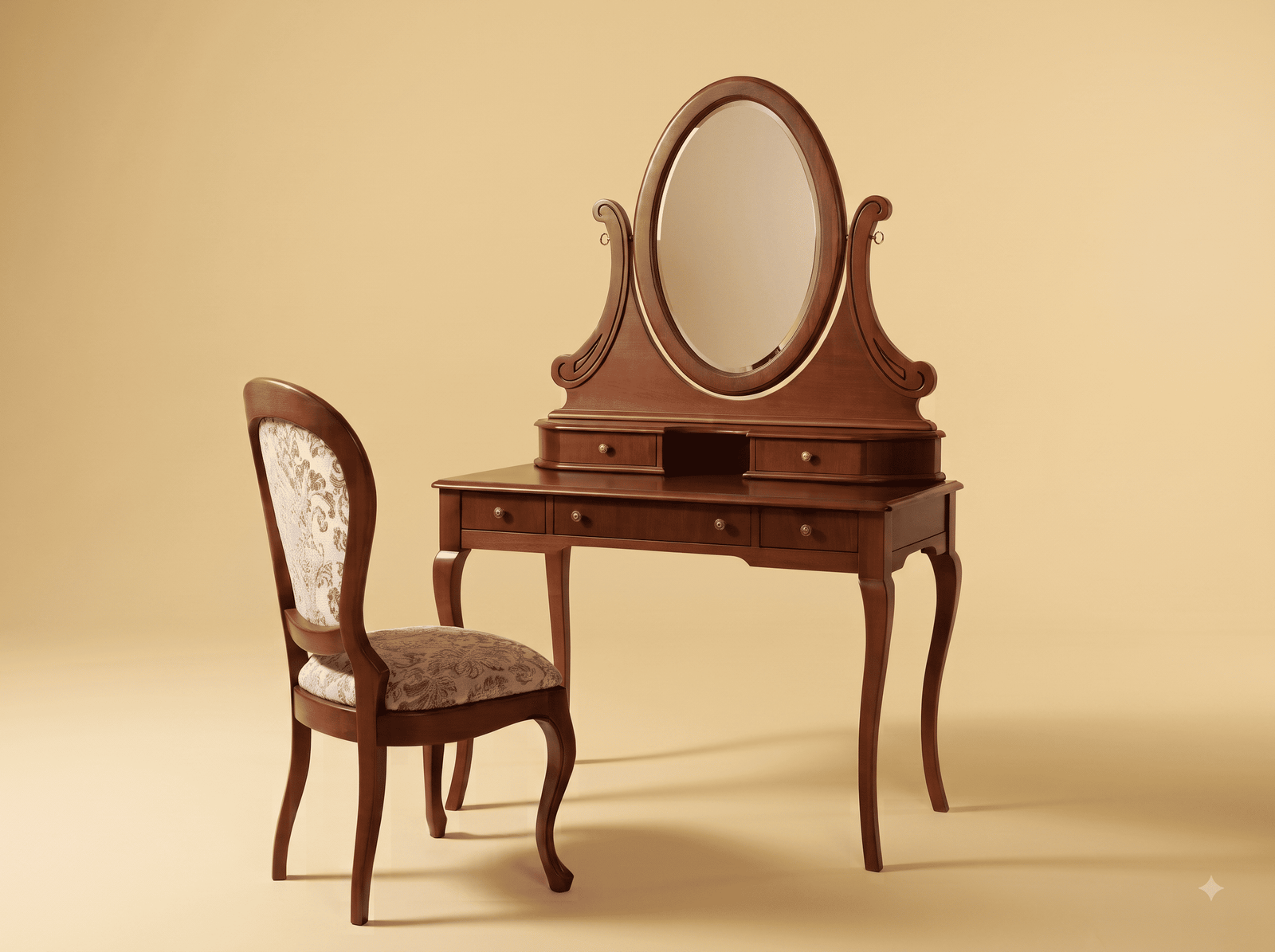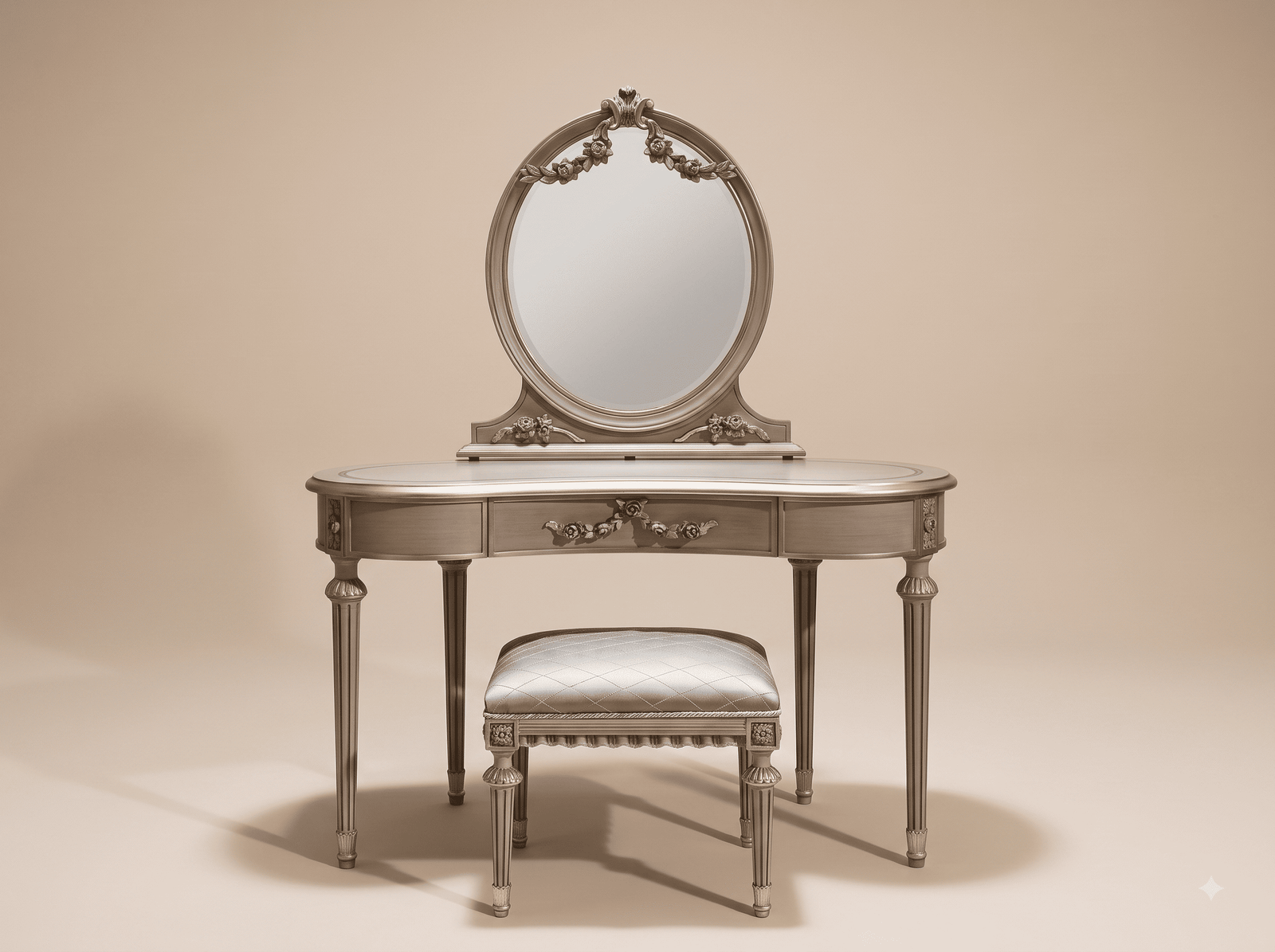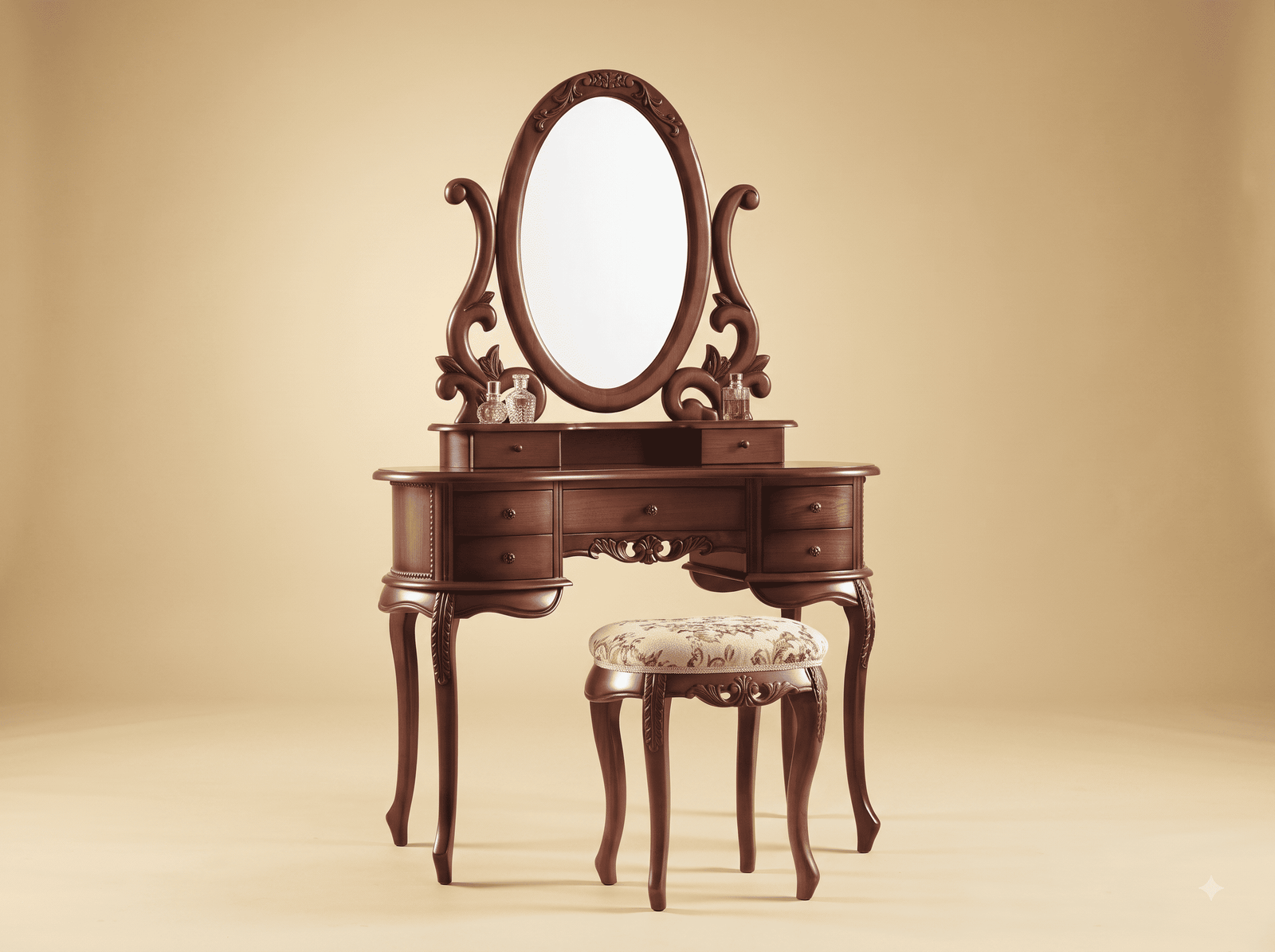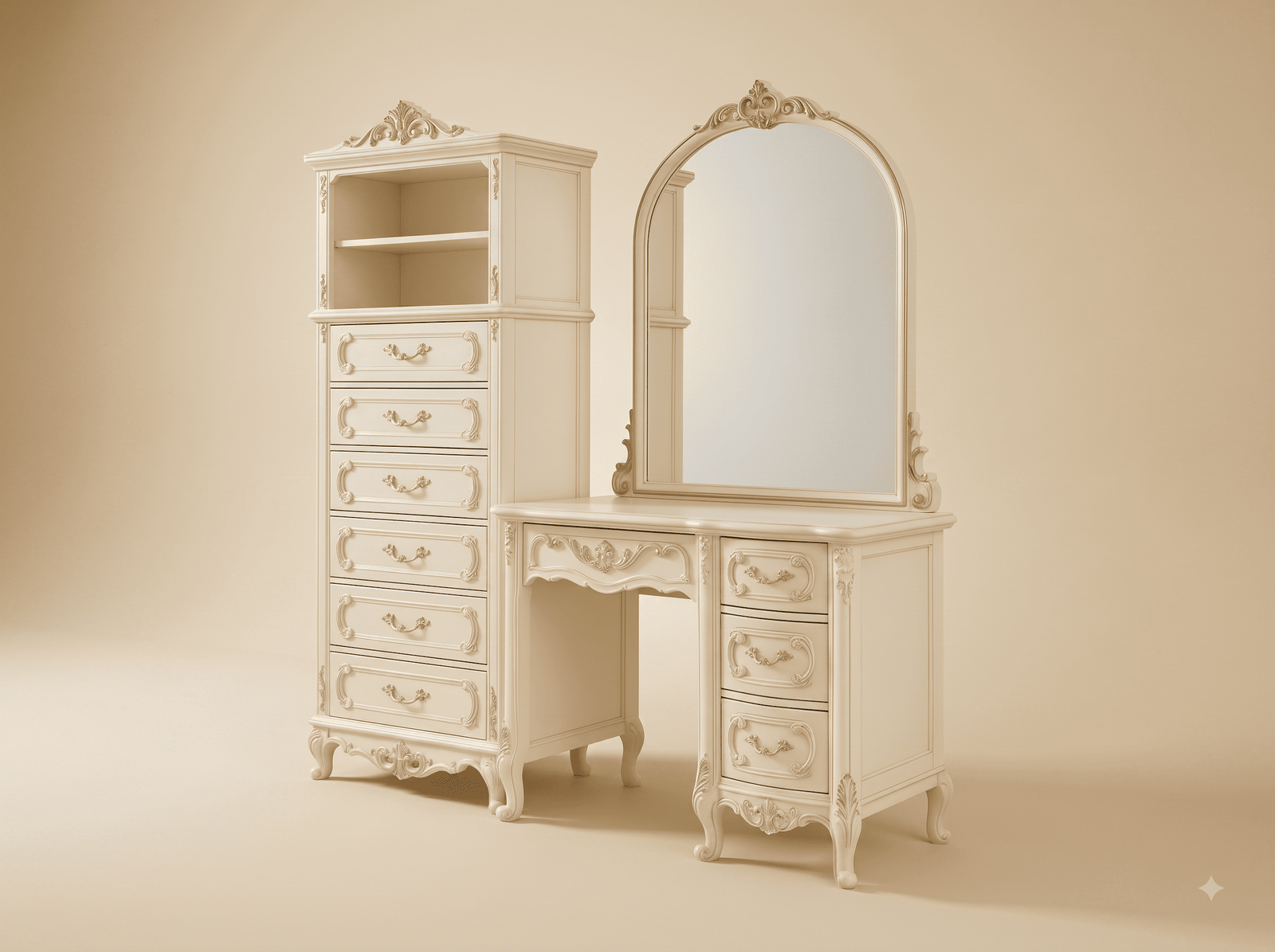
An asymmetric piece of furniture is harder to design than a symmetrical one, because symmetry does the balancing for you. Put a pedestal at each end and the piece is settled before you start. Put one at a single end and the whole thing leans - visually, if not physically.
Cabinetmakers have been solving this since the single-pedestal writing table appeared, and the answer is never to fight the asymmetry but to give the light side something to hold the line with.
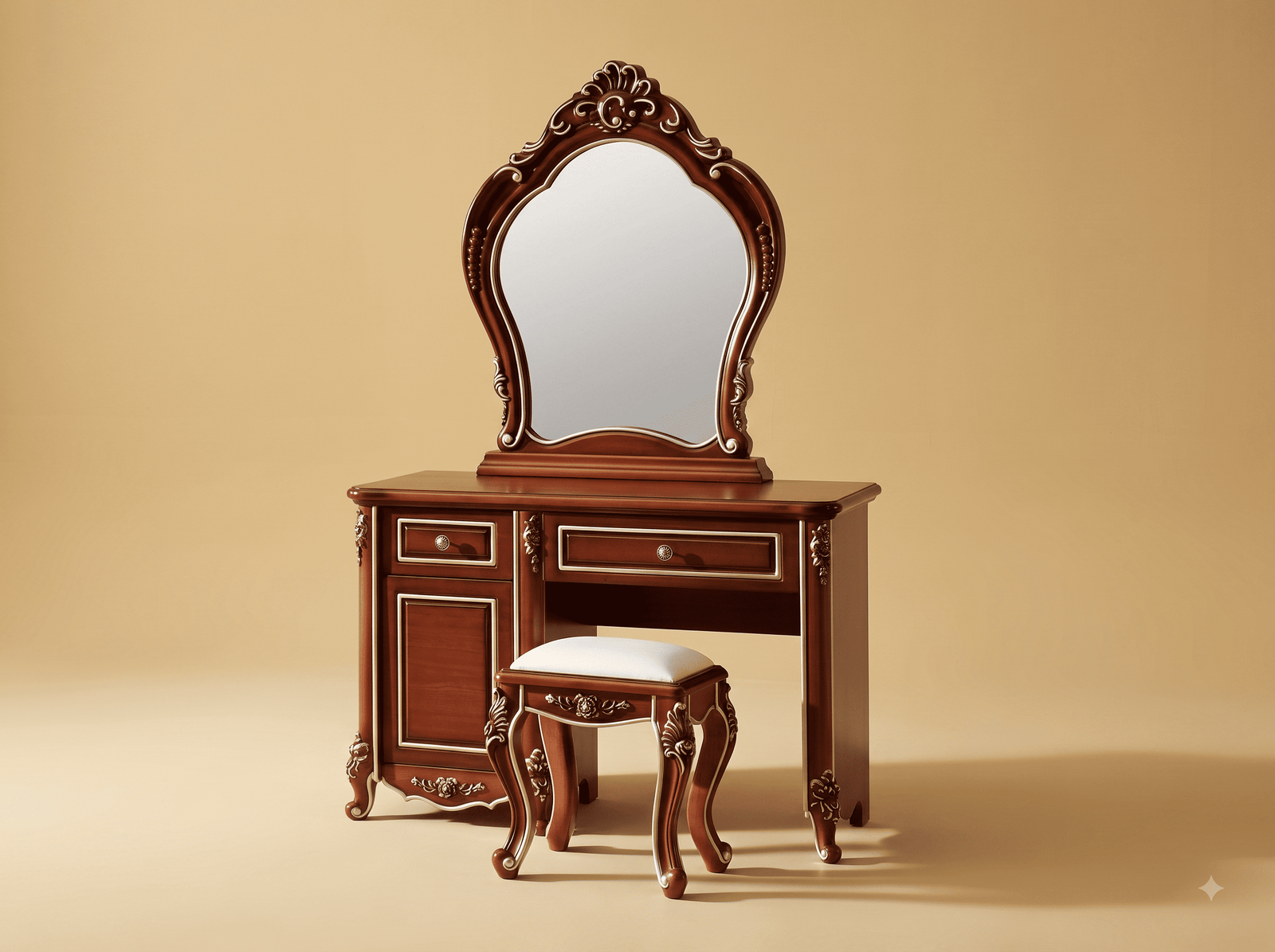
Here it does three things at once. The frieze drawer continues across the open side at exactly the height of the pedestal's top drawer, so the eye reads one unbroken horizontal band across the whole table. The single leg is turned plain and kept slim, so it reads as support rather than as a failed attempt at a second pedestal. And the mirror is centred on the table rather than on the pedestal, which pulls the visual weight back toward the middle.
Remove any one of those and the piece tips. Keep all three and an asymmetric table sits as calmly as a symmetrical one - which is exactly the effect a well-made single-pedestal vanity should have, and the reason the form has lasted.
 Ask Price On WhatsApp