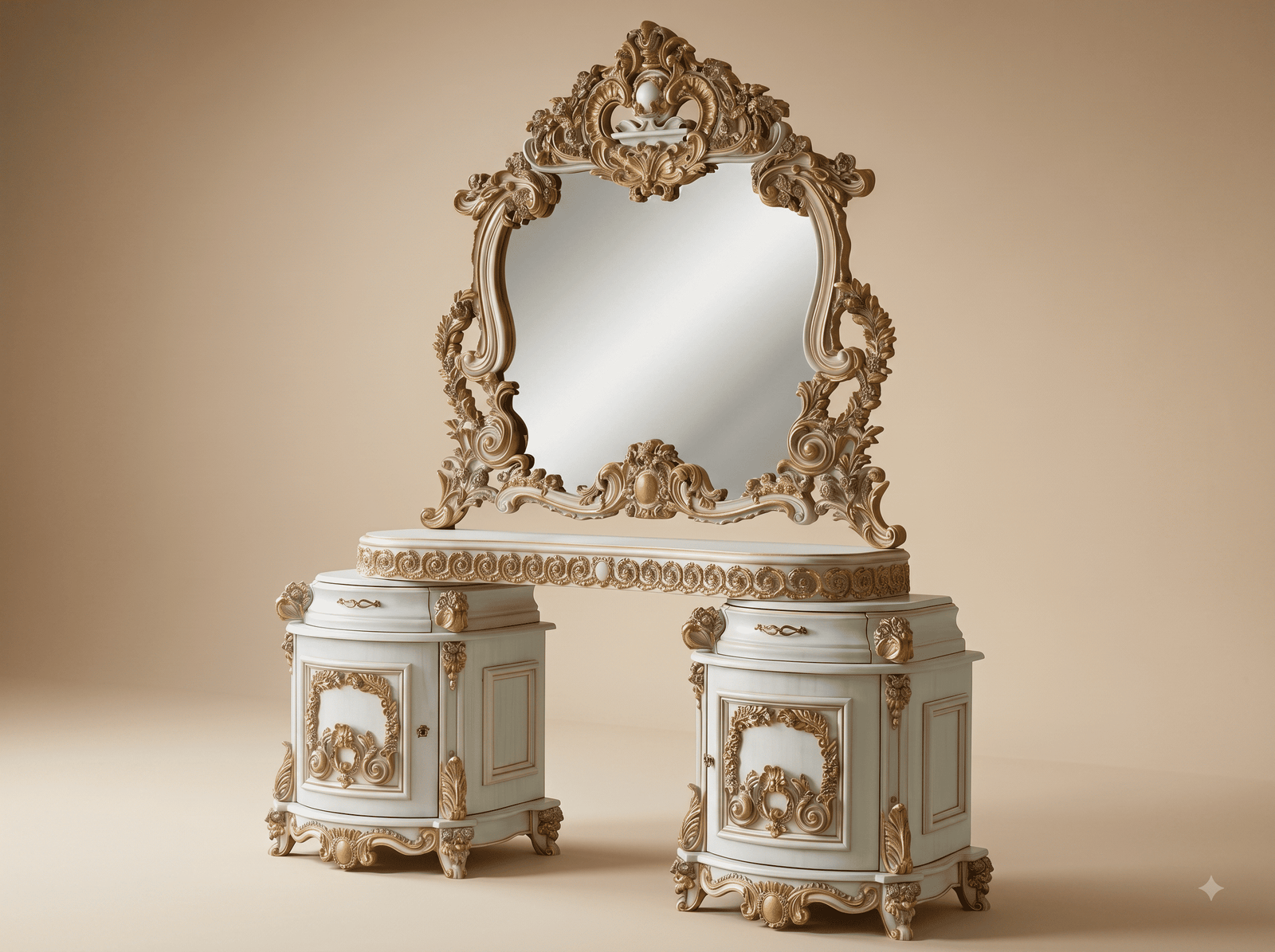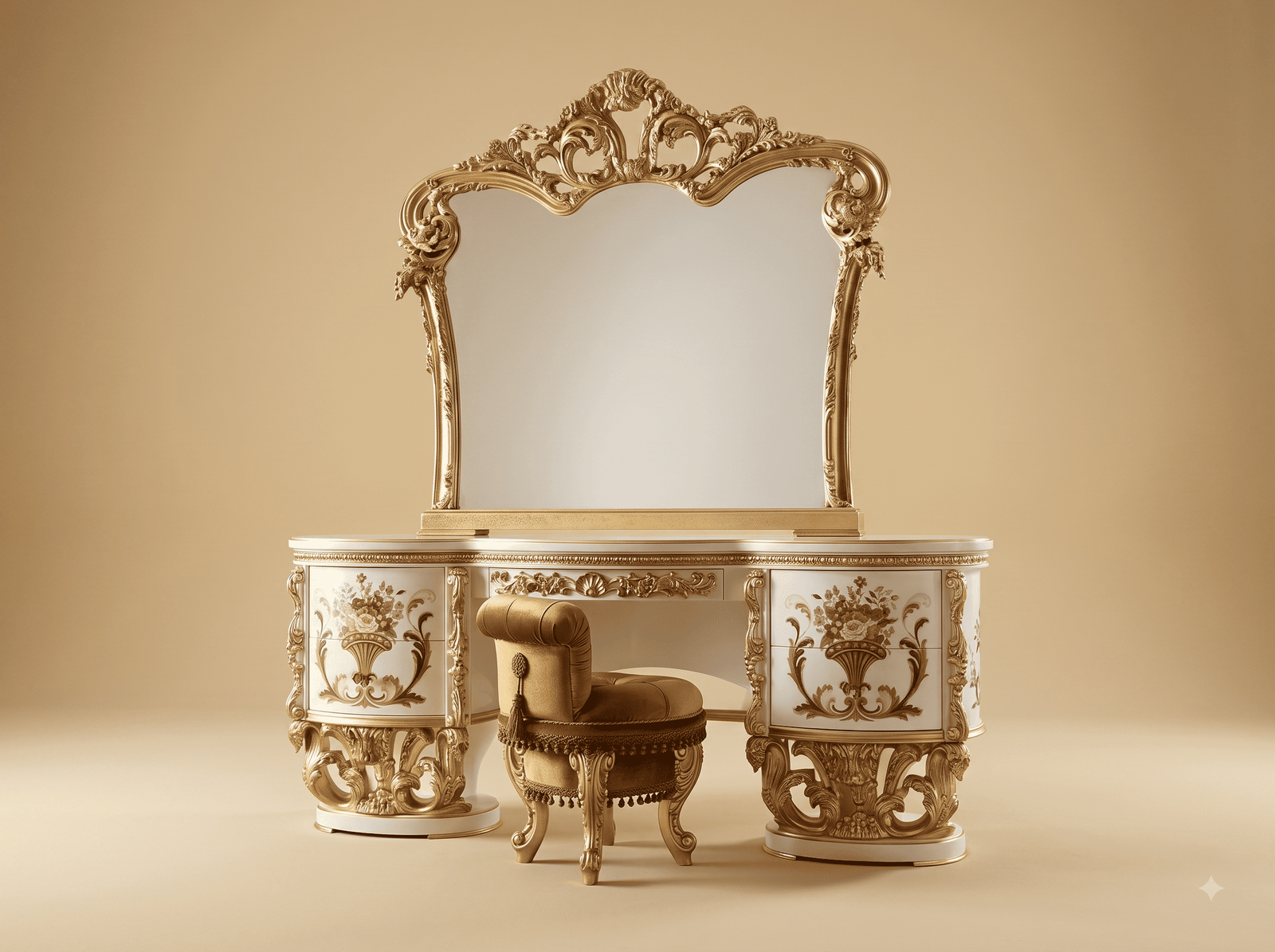
The basket of flowers carved on each door is one of the oldest set pieces in European furniture, and it survives because it is a test. Every element in it sits at a different depth - the basket weave at the back, the stems rising from it, the blooms standing clear at the front, some facing you and some turned away.
A carver cannot cheat that. The whole composition has to be planned in layers before any wood is removed, because the deepest point of the panel is fixed by the thickness of the door and everything else has to be arranged above it. Take the ground too low early and there is no depth left for the flowers that should stand highest.
So the work goes backwards. The lowest layer - the shadowed spaces behind the stems - is established first, then the basket, then the foliage, and only at the end the front blooms that carry the most detail. Petals are undercut last of all, when there is nothing left to damage them against.
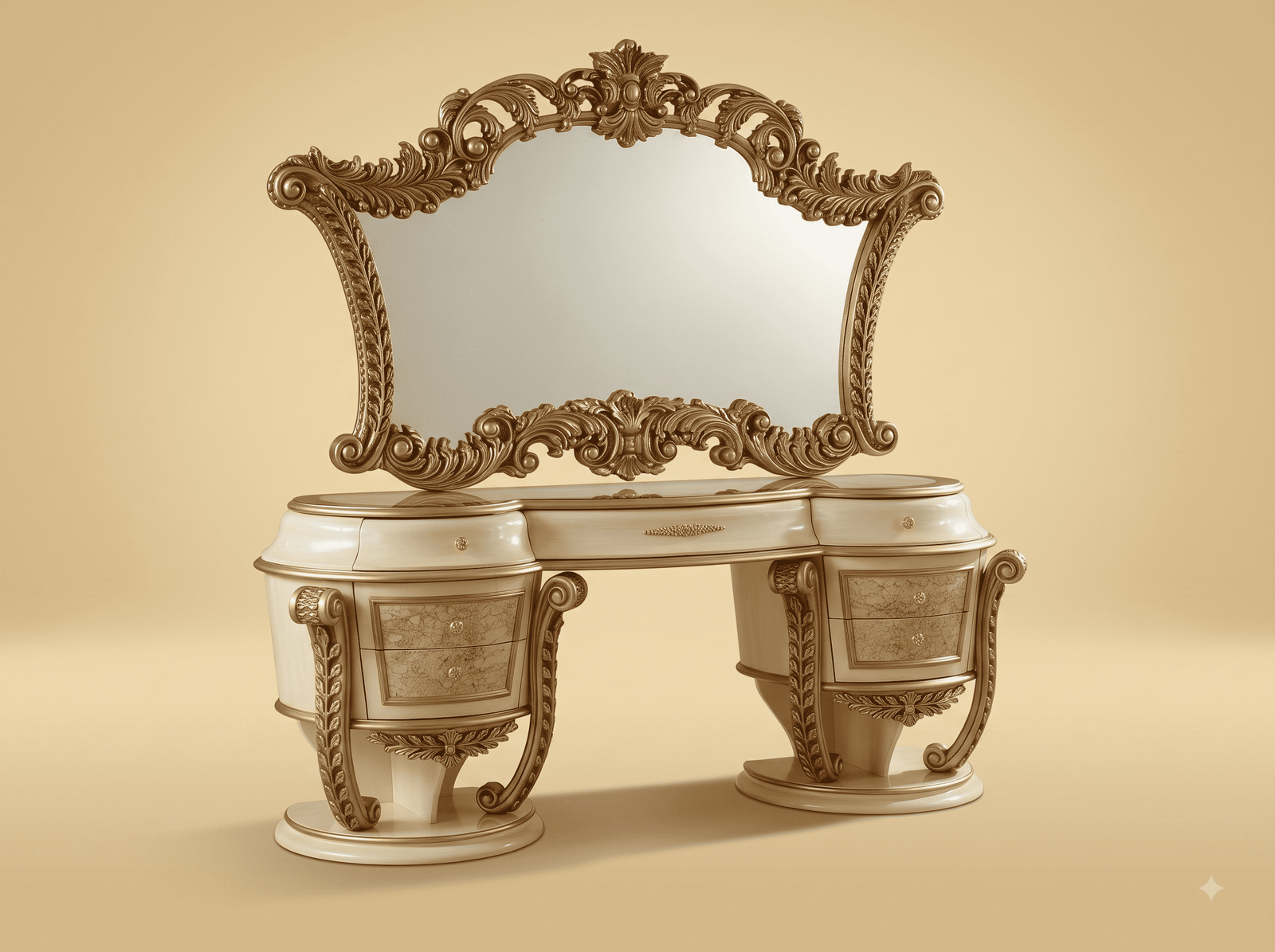
Gilding then does something particular to this motif. Gold has no colour variation to distinguish one flower from another, so all the separation has to come from the depth the carver established. If the layering is right, the basket reads clearly in solid gold. If it is not, it becomes a bright blur - and there is nowhere to hide.
 Ask Price On WhatsApp