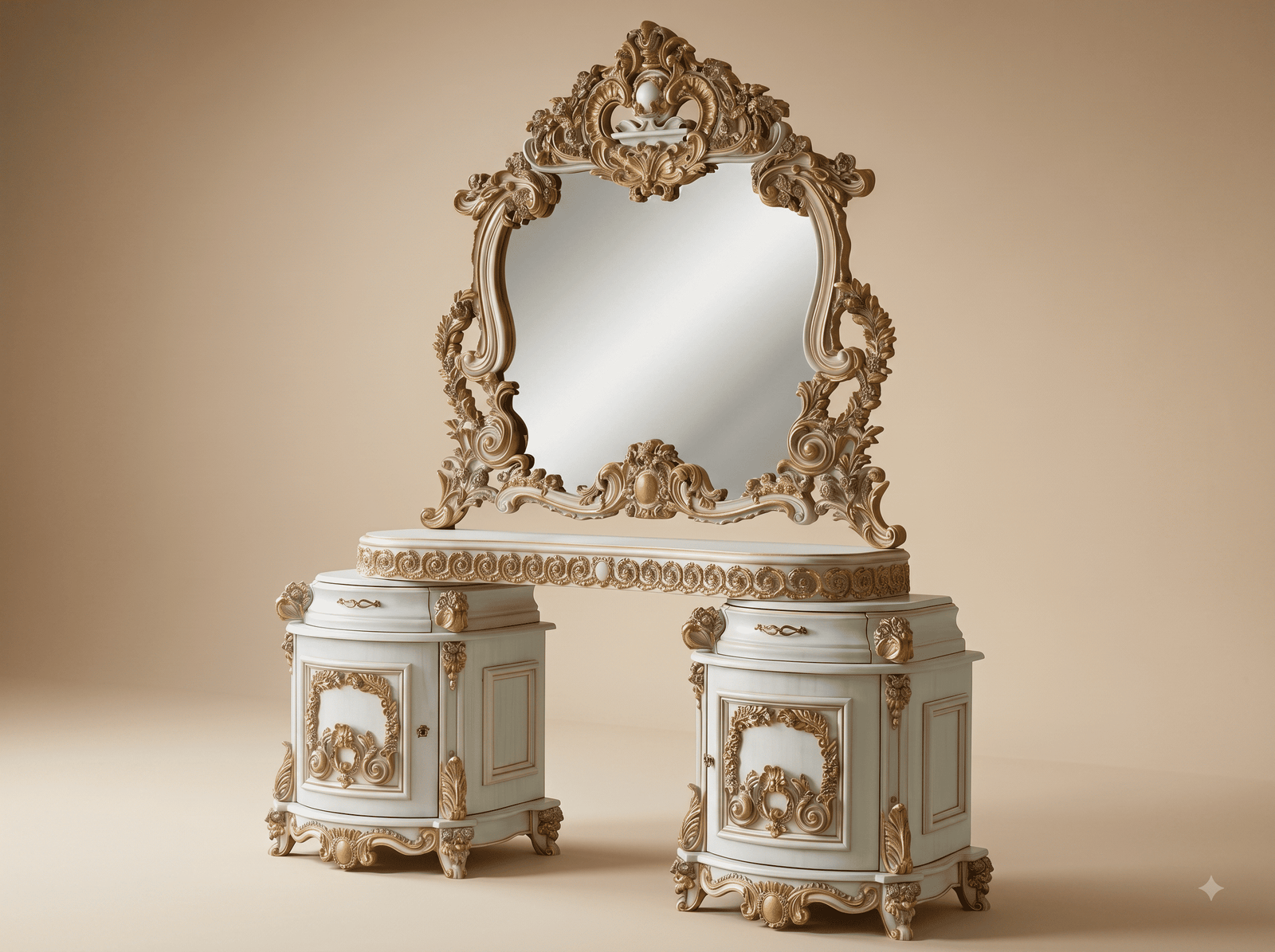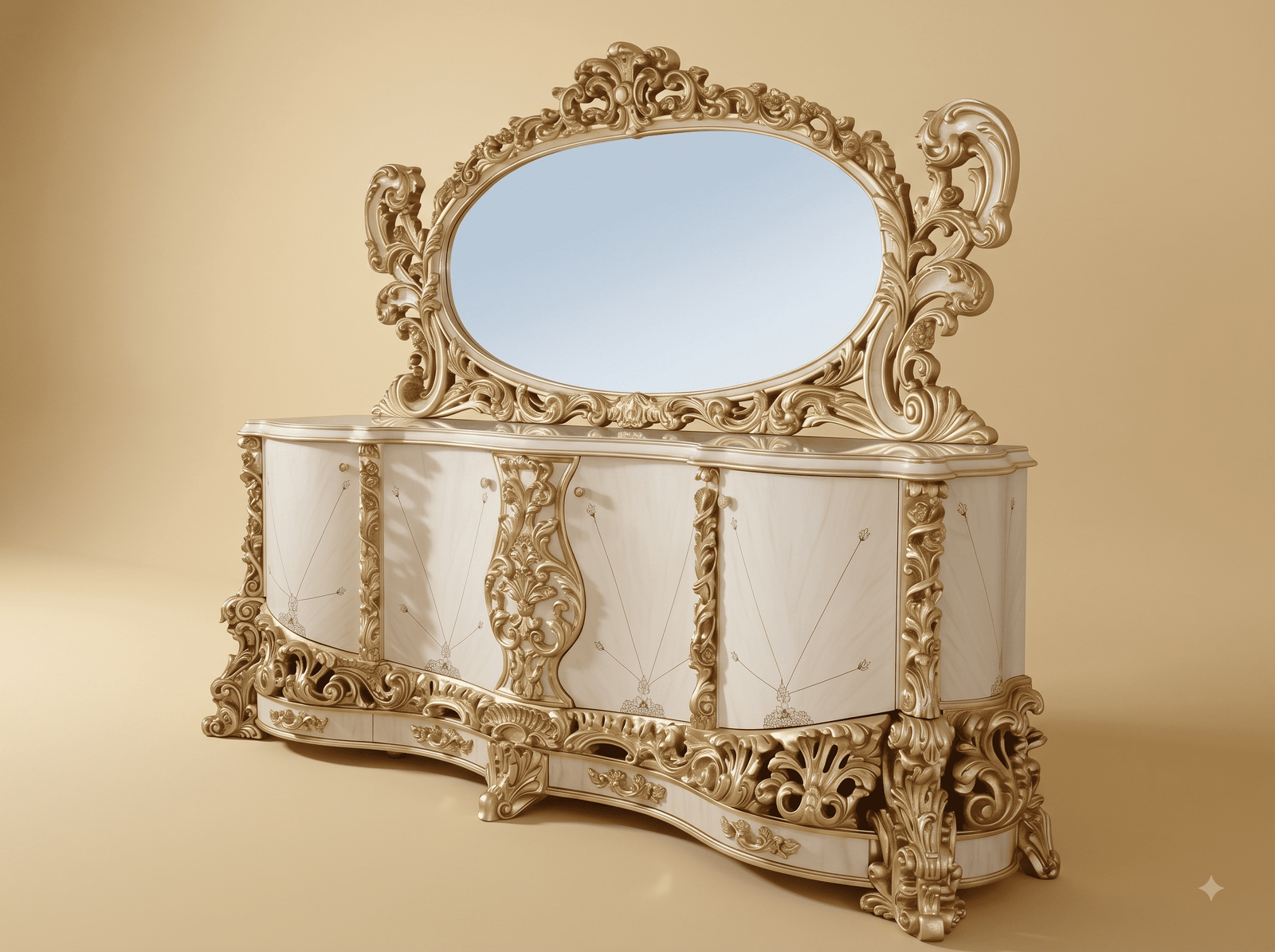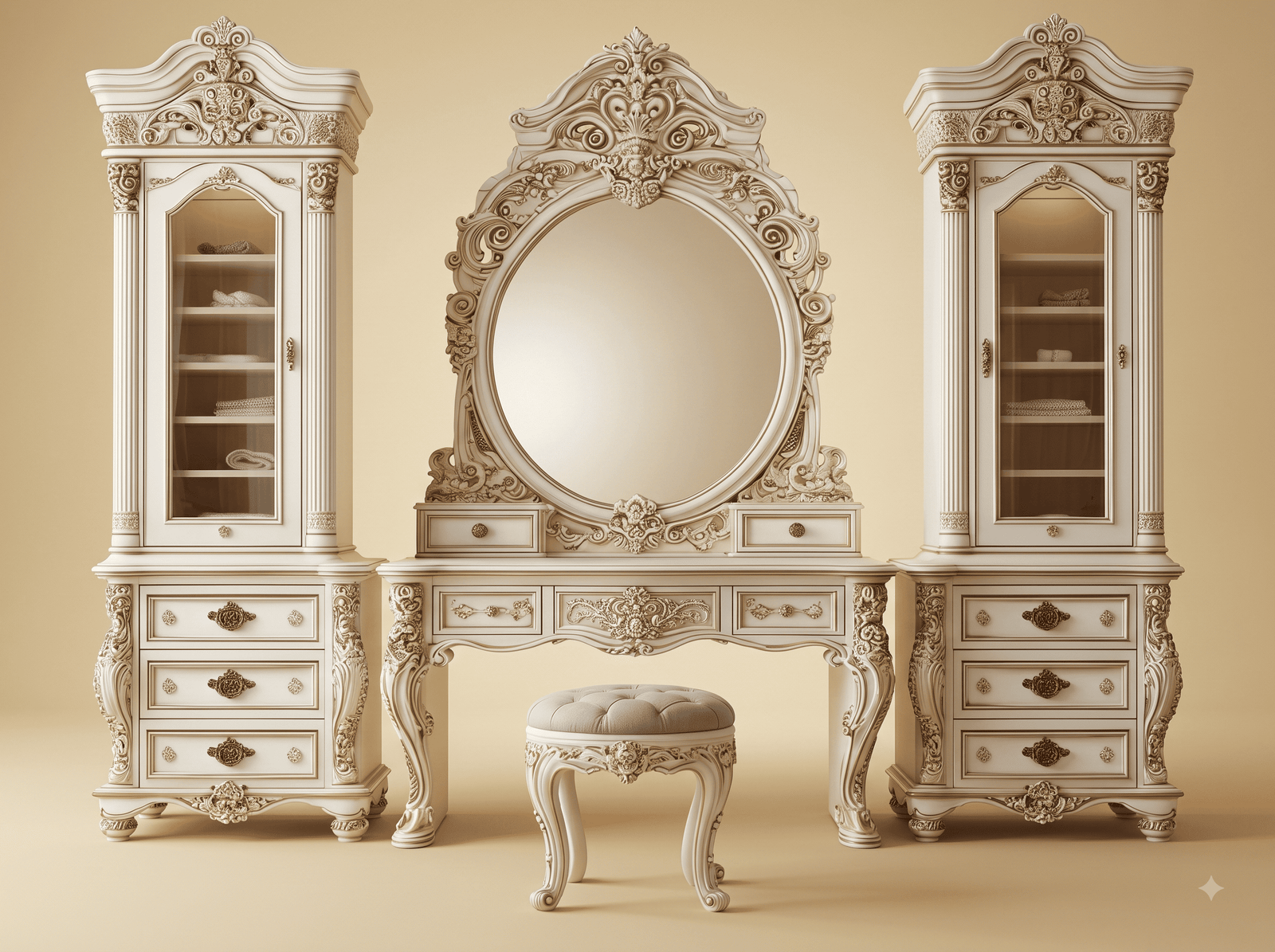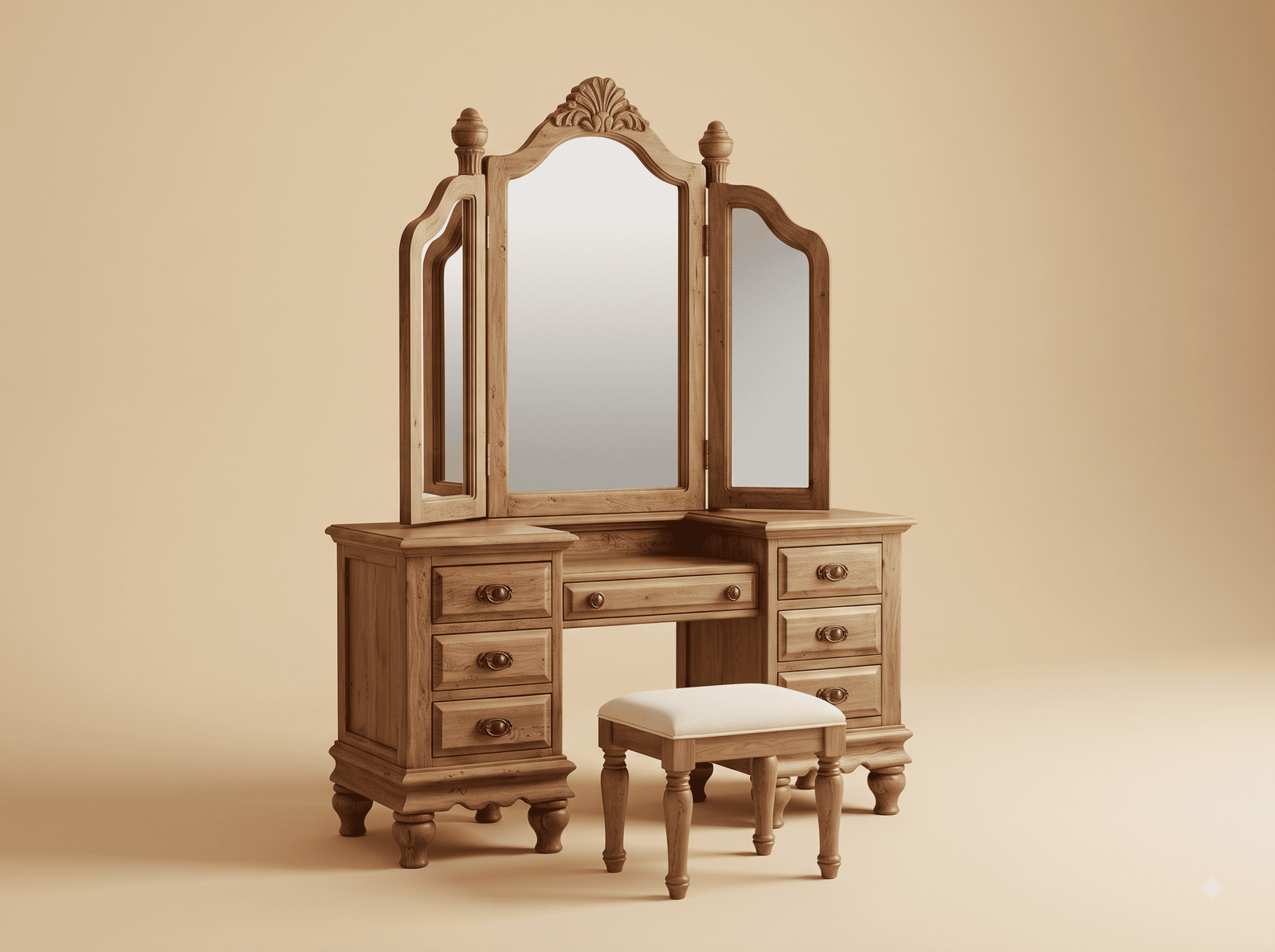
A stretcher between the legs of a table is one of those details that people read as decoration and that started as pure engineering. A table with four legs and no box above them is a parallelogram waiting to happen - push it sideways and it racks. Joining the legs low down with a rail triangulates the structure and stops it.
Early tables used a plain H or X of timber. Once the problem was solved, carvers began treating the stretcher as a place to show off, because it sits at eye level when you are seated and it is one of the few parts of a table you look at directly.
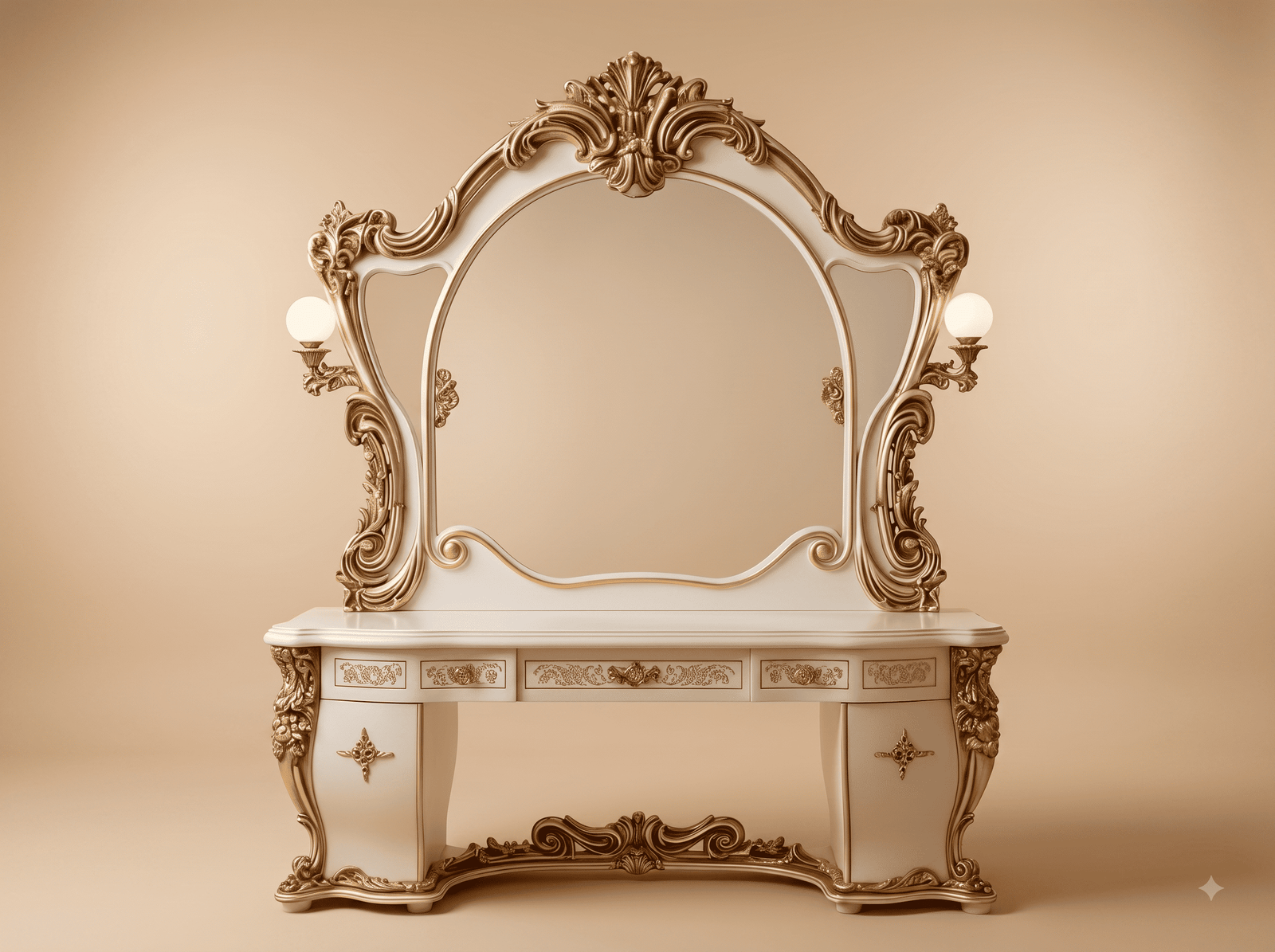
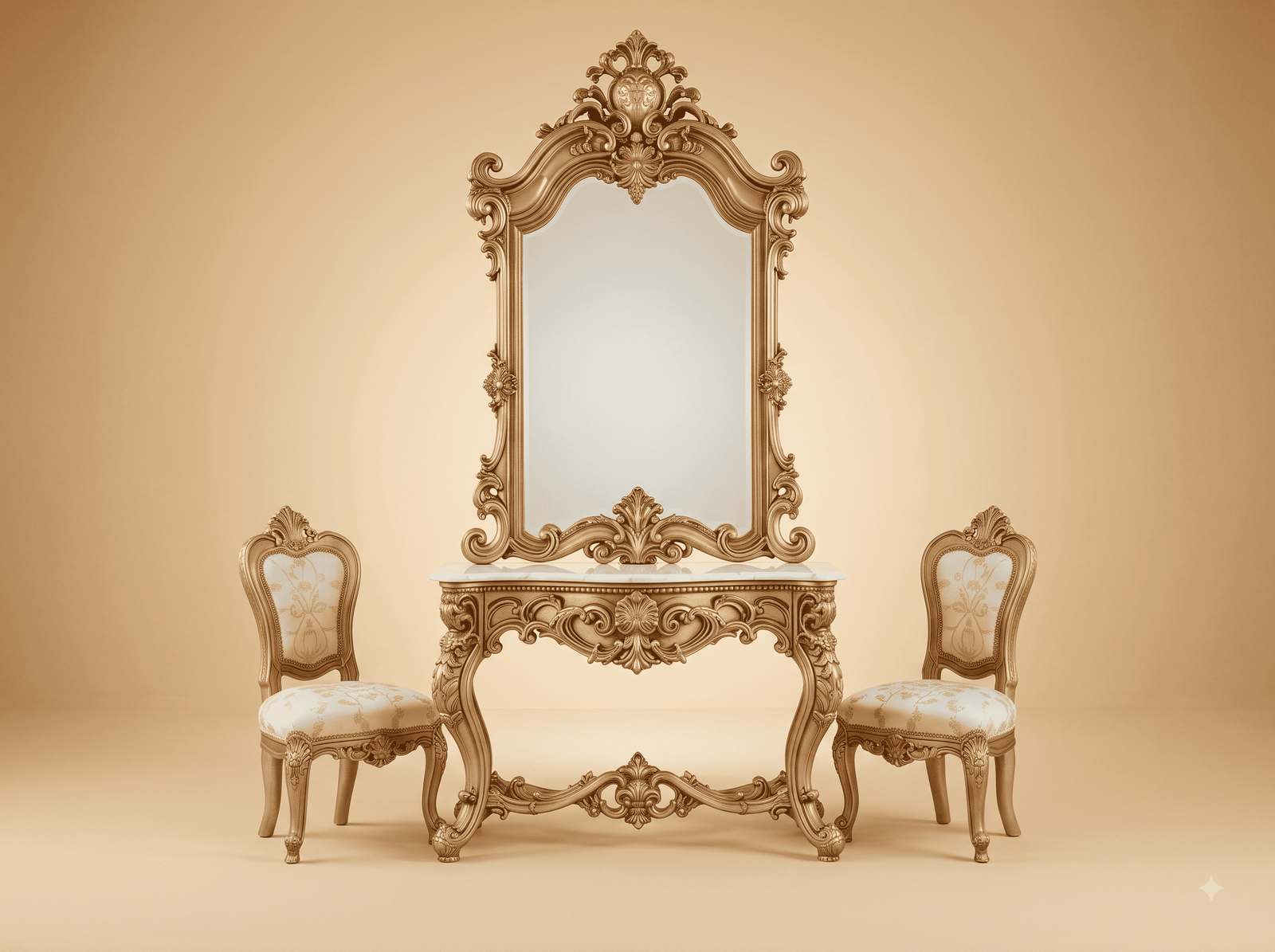
The shaped serpentine stretcher on this piece, meeting at a carved finial in the centre, is both things at once - it locks the legs and it gives the space under the table something to resolve into. Our master Indian artisans cut it from stock deep enough that the curves do not create short grain at the turns, which is where a shaped stretcher fails if it is made from thin material.
 Ask Price On WhatsApp