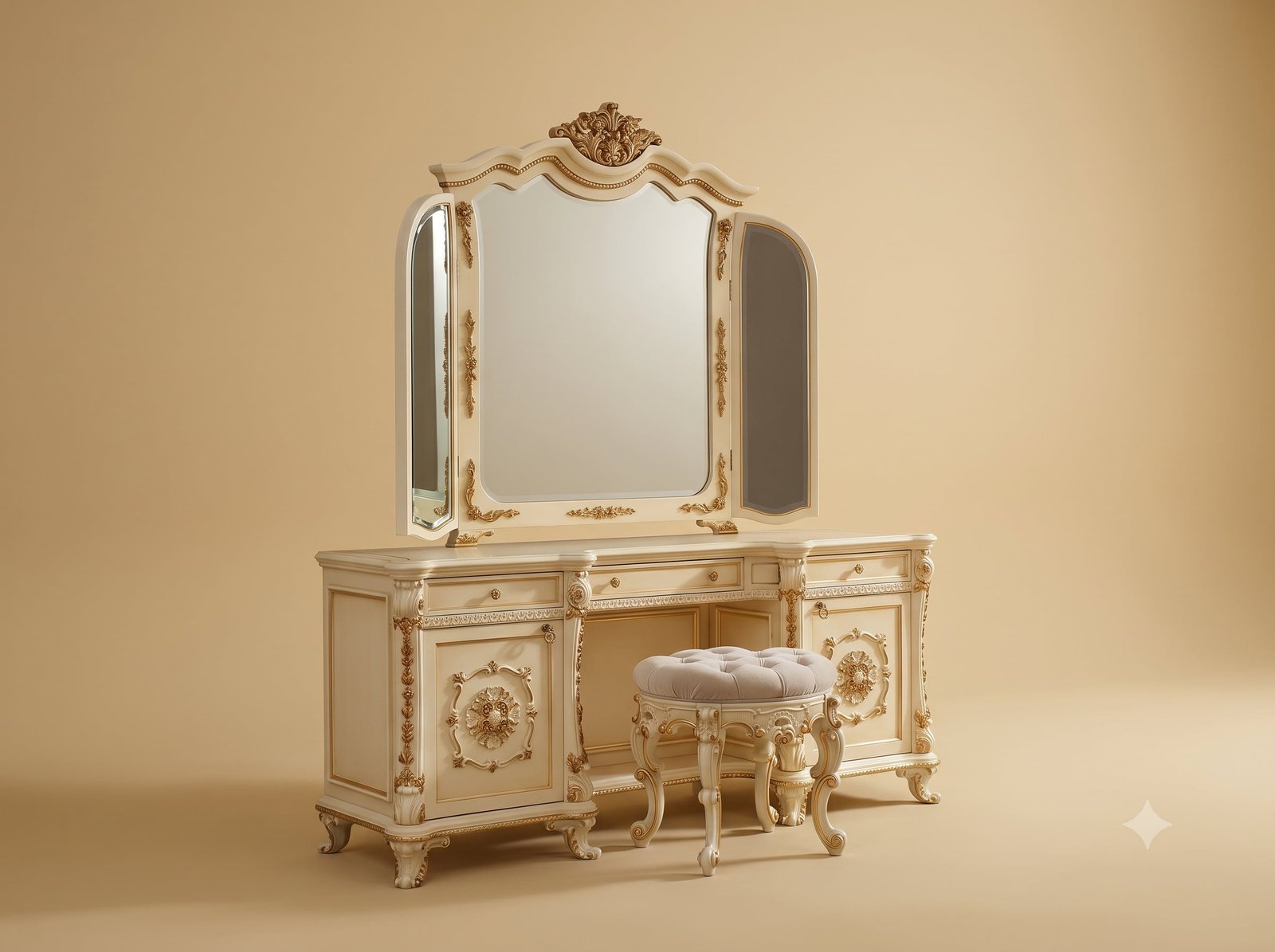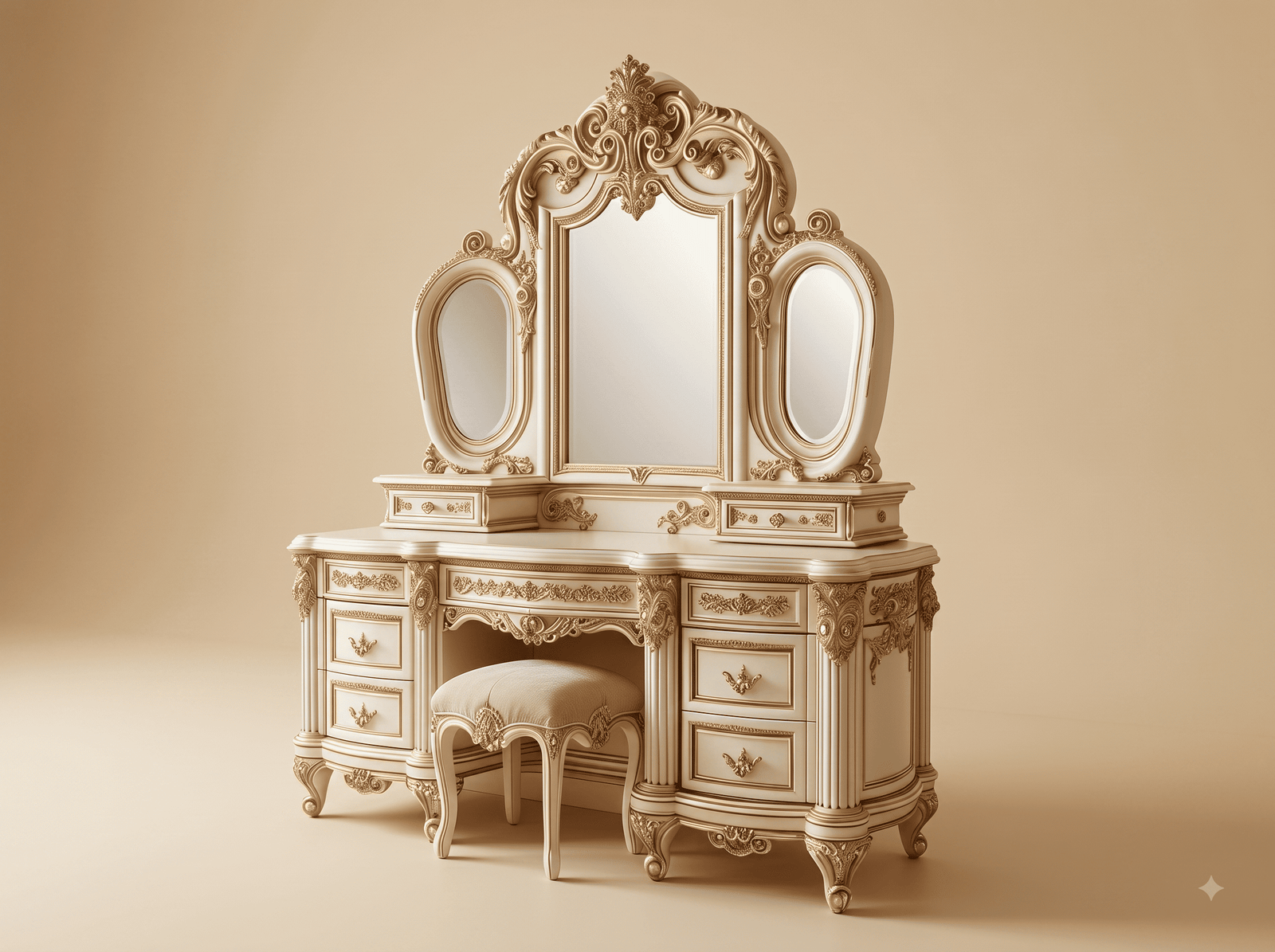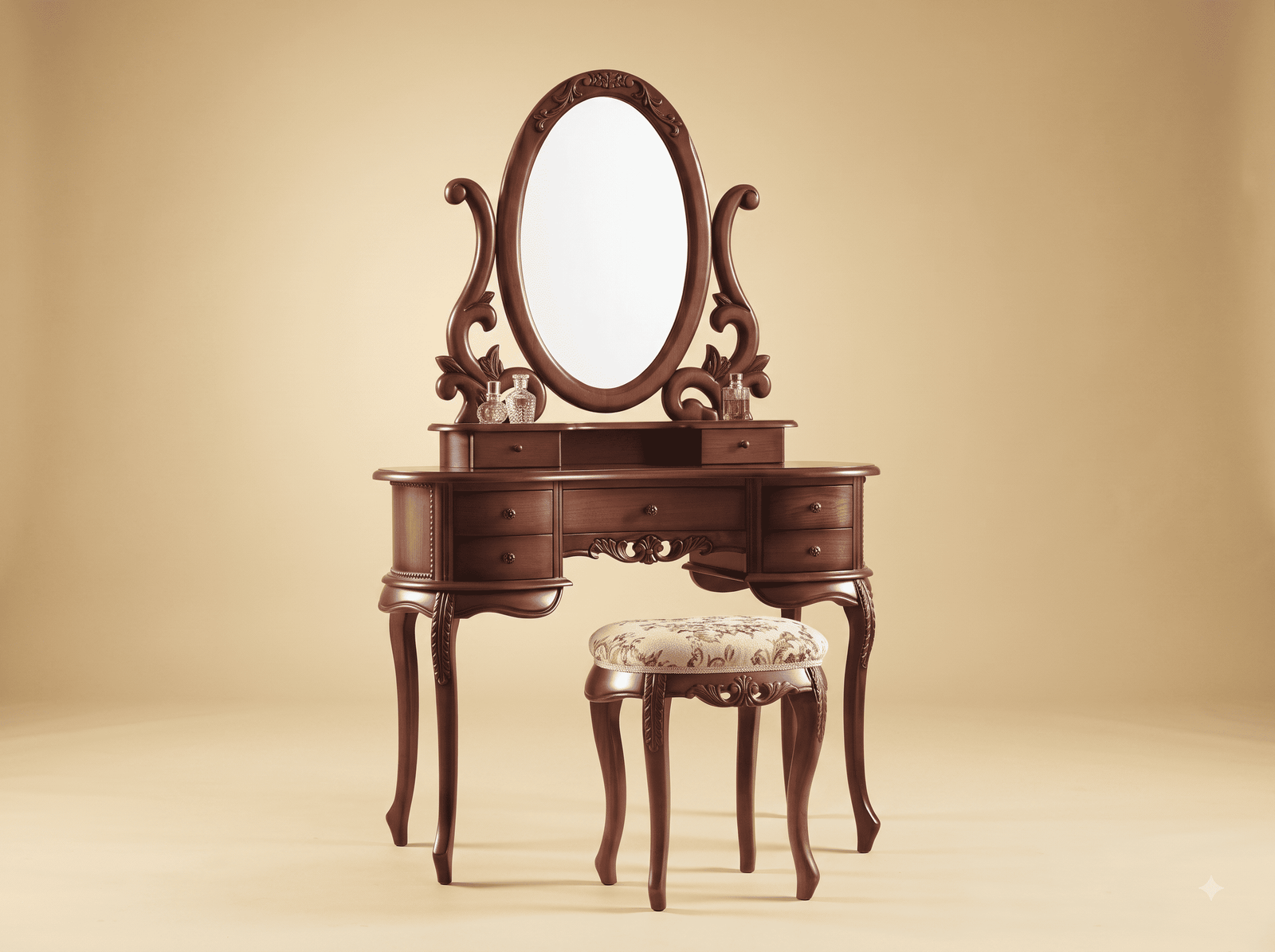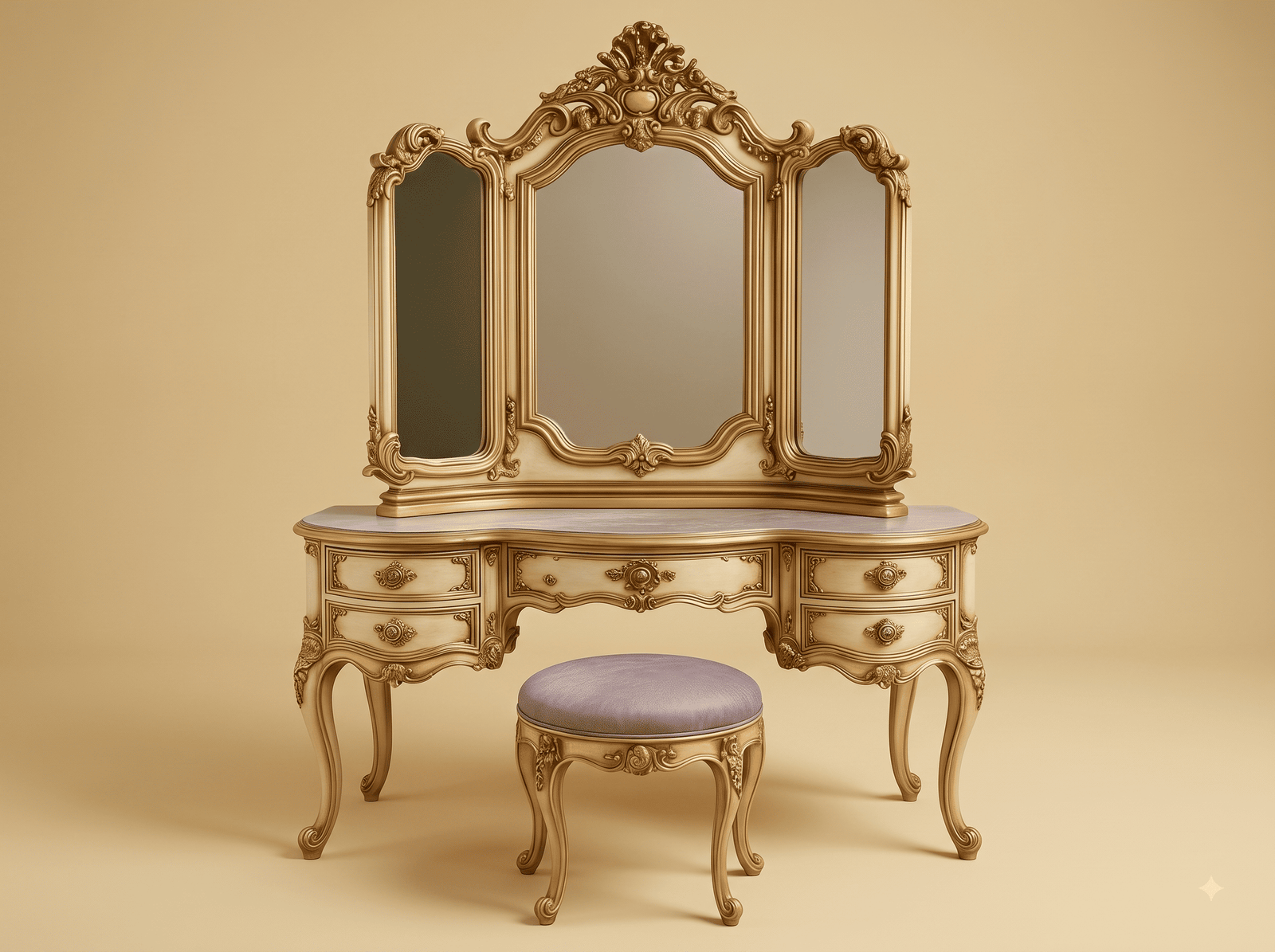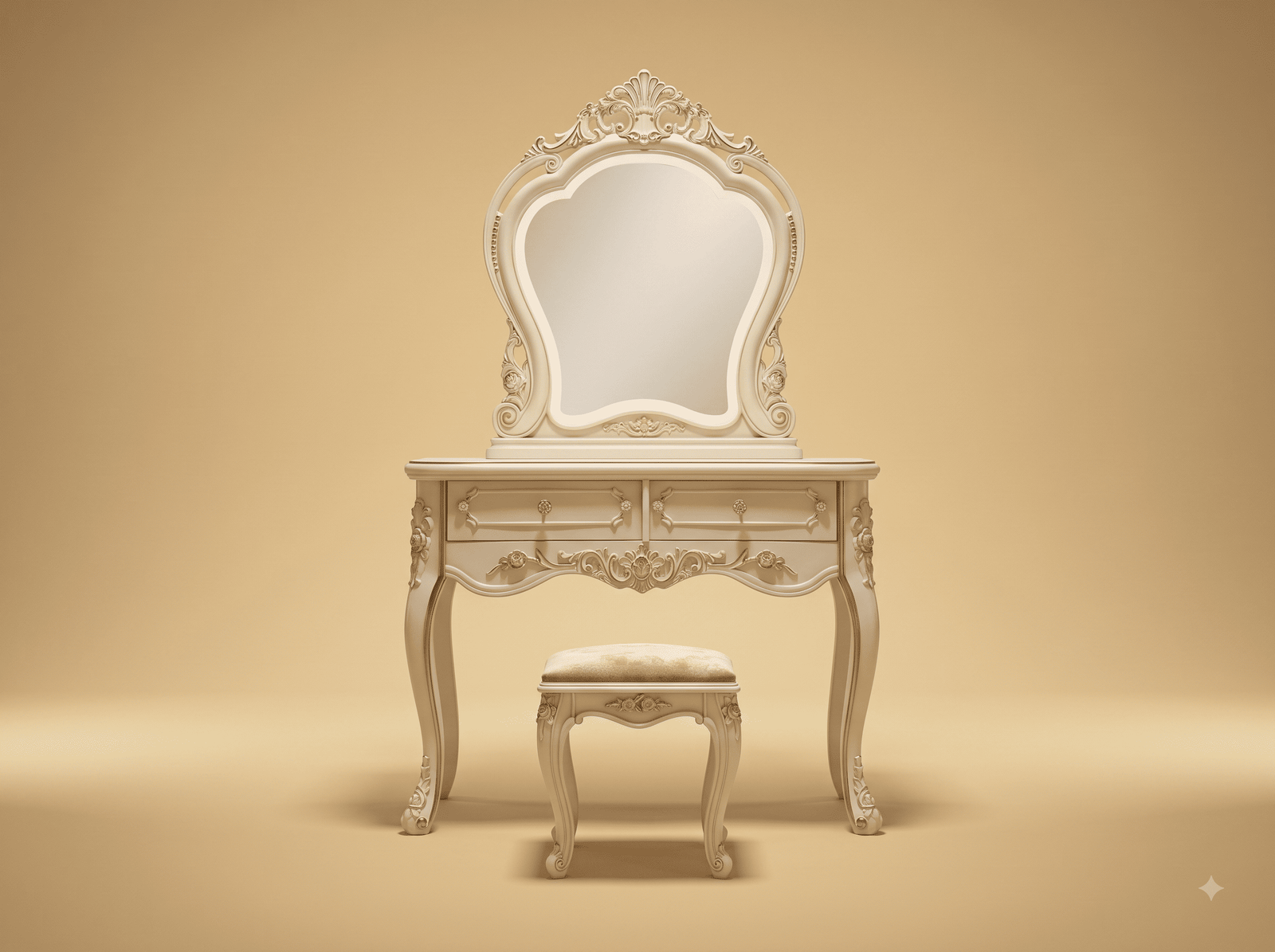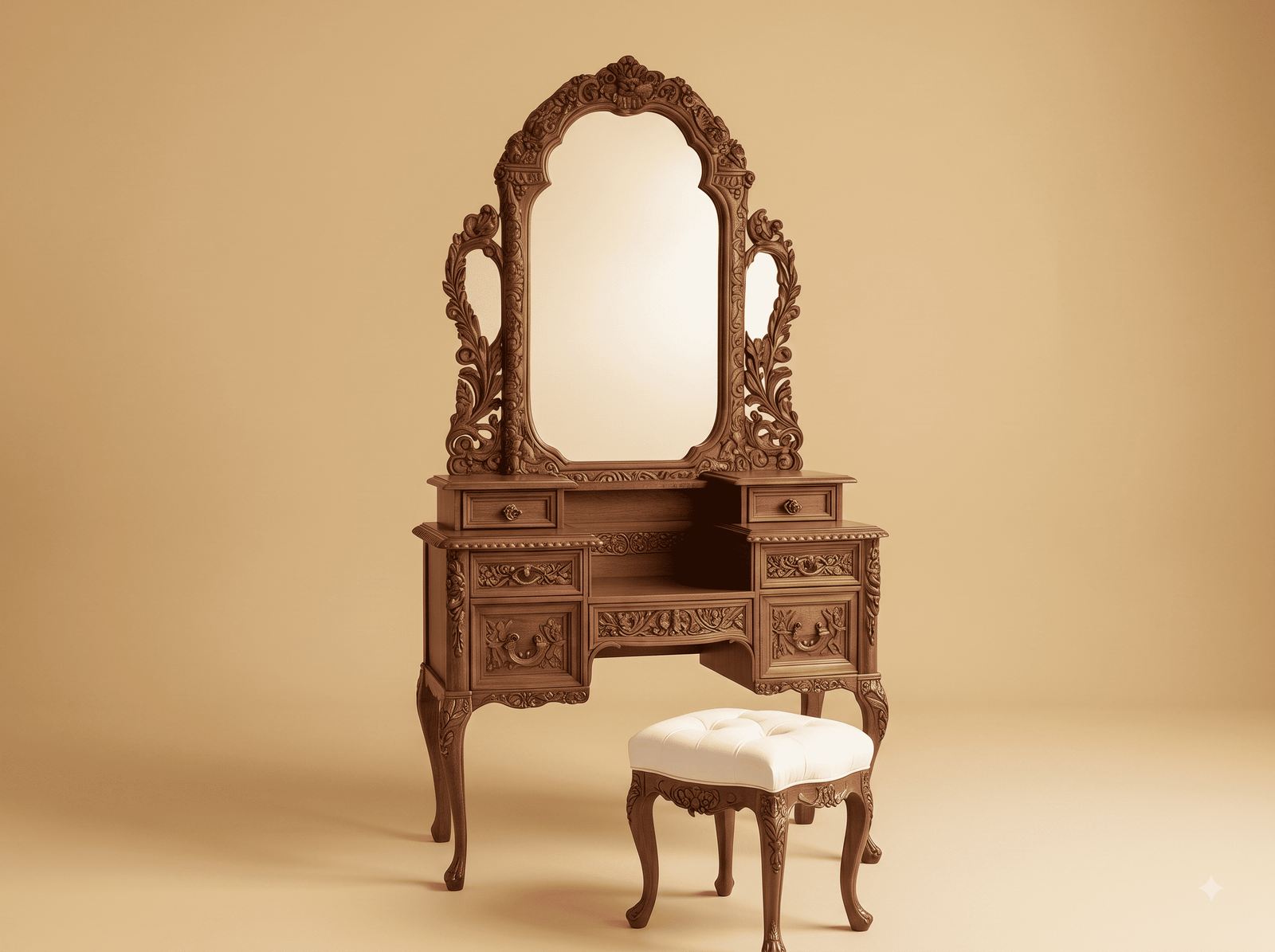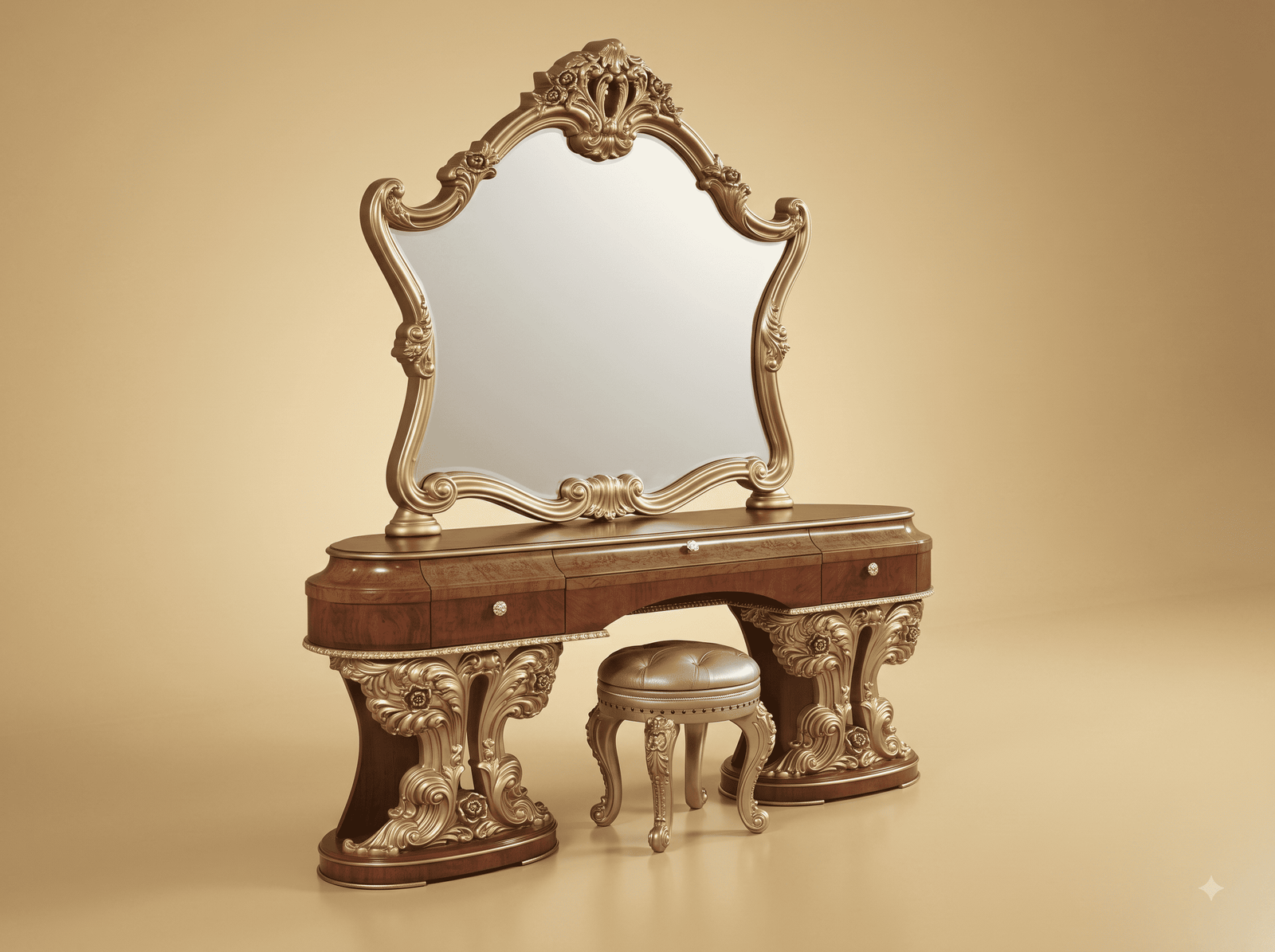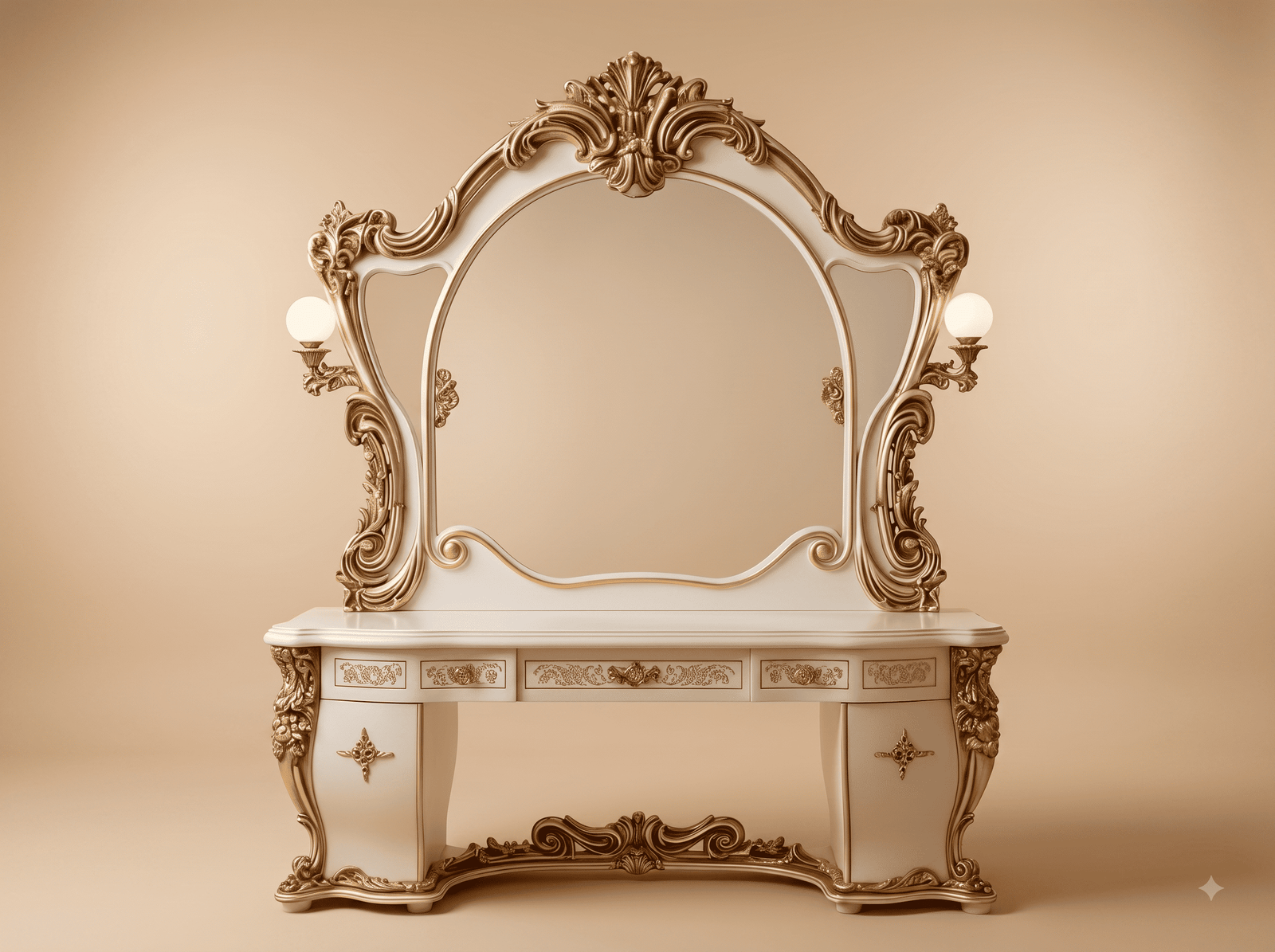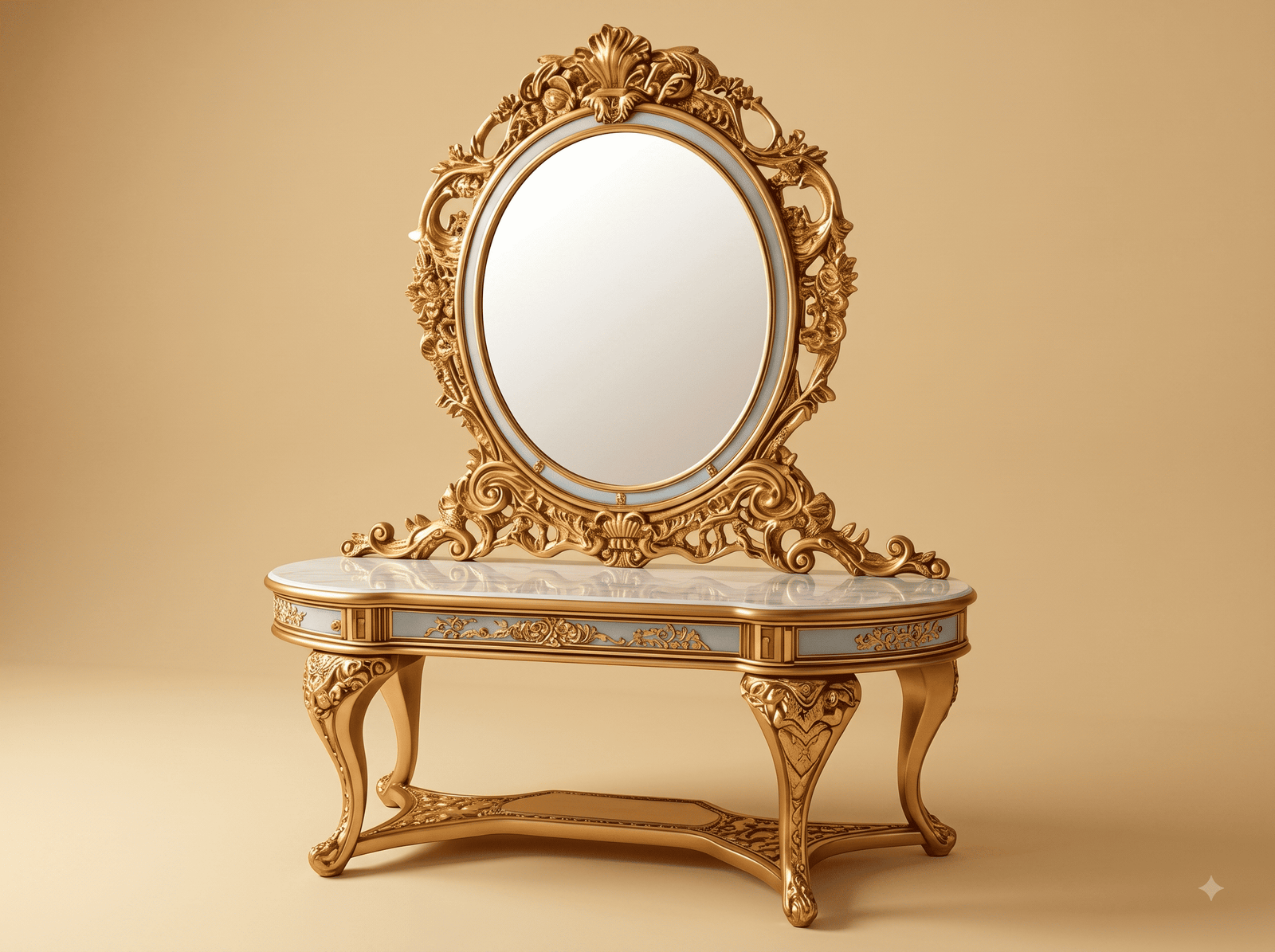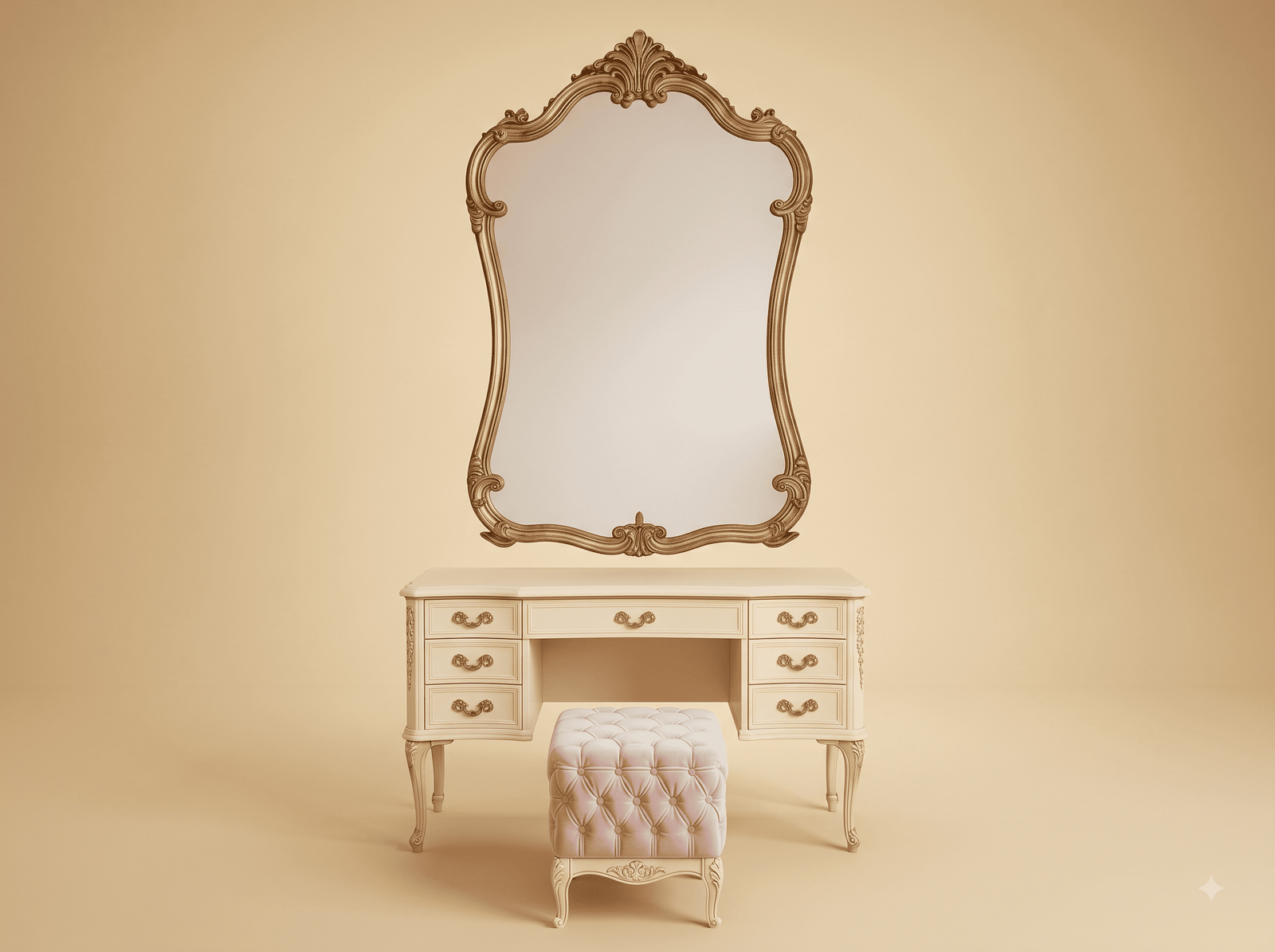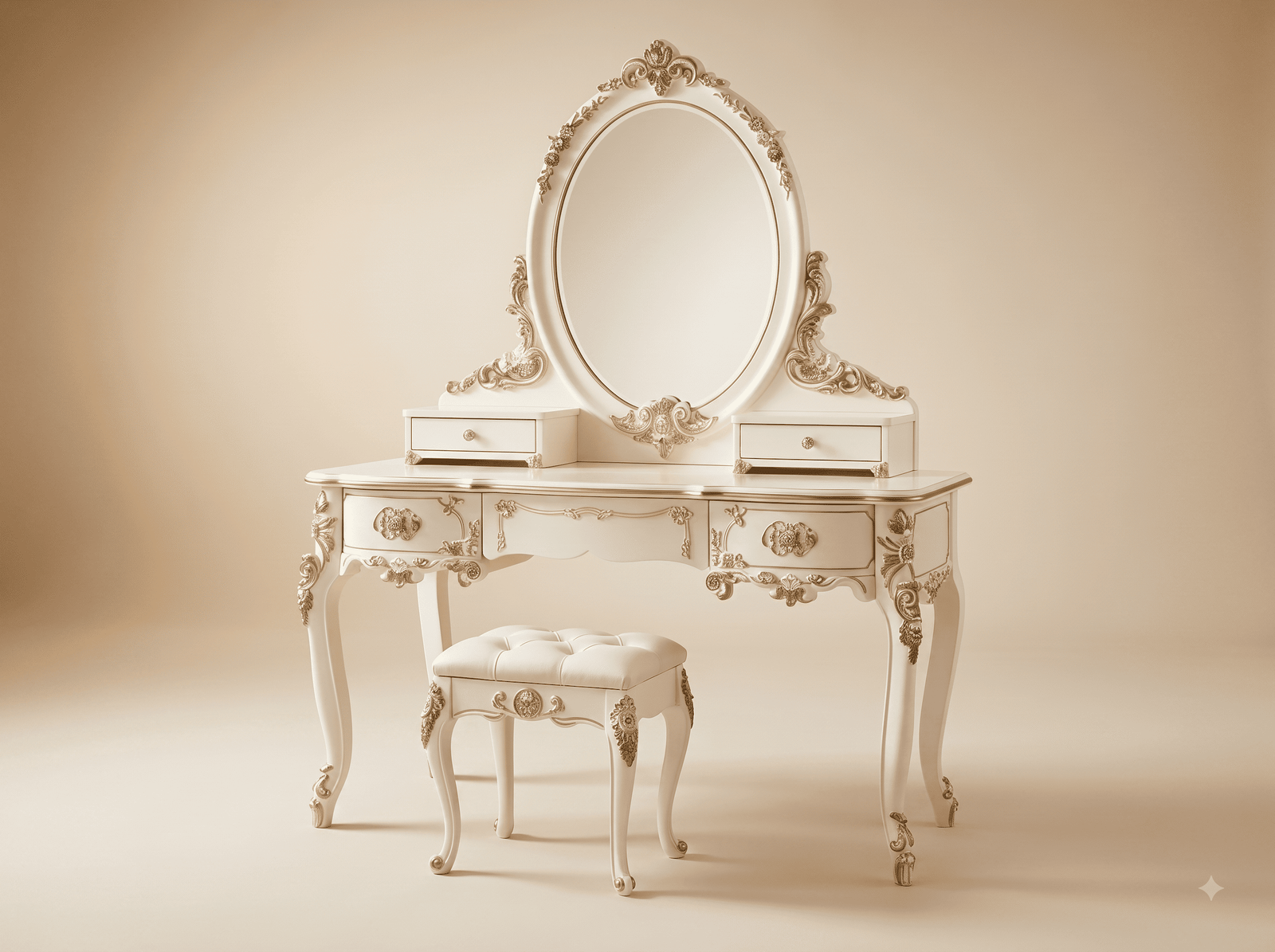
Look where the frieze meets the top of each leg. A carved scroll flows out of the corner of the table and down onto the leg, and there is no visible break between them - the ornament crosses from one component to the other as if the whole thing were carved from a single piece.
It is not, and it cannot be. A cabriole leg is cut from a thick block; the frieze is a separate rail; they meet at a joint. But if the carving simply stopped at that joint, the eye would read the leg as bolted on, and the flowing line that defines this style would break at exactly the point where it matters most.
The solution is a knee bracket - a small shaped piece glued into the angle between the two before any carving begins. Once it is in place and the glue has cured, the carver treats the leg, the bracket and the frieze corner as one surface and cuts the scroll straight across all three.
The grain of the bracket has to be chosen to run with the flow of the carving, not with the frieze, or the chisel will tear as it crosses the joint. And the carving is done after assembly, on a table already standing - which means the carver is working on a piece that cannot be turned or clamped freely, at an awkward height, with every cut permanent.
It is a small detail that quietly decides whether the whole table looks made or assembled.
 Ask Price On WhatsApp