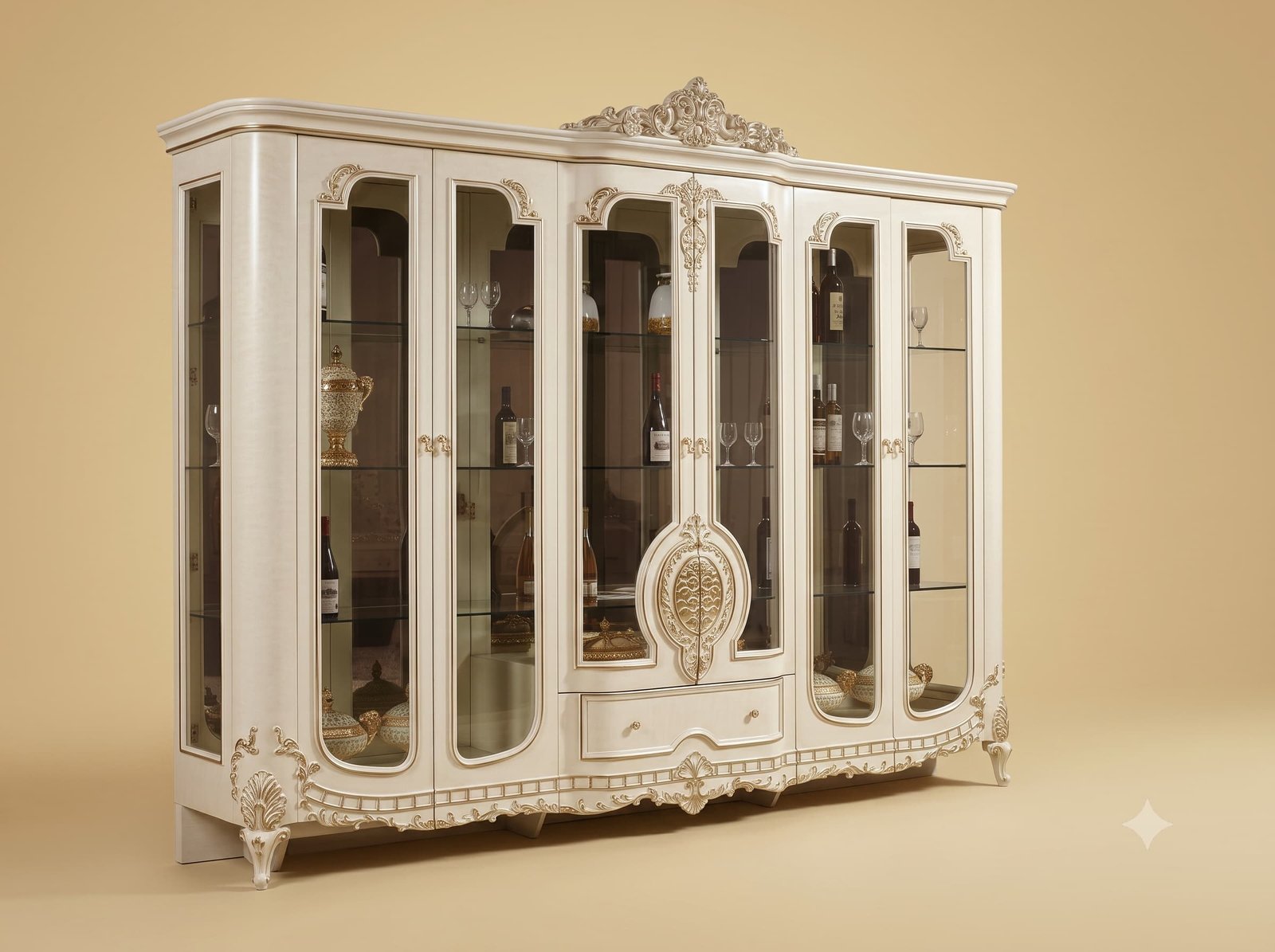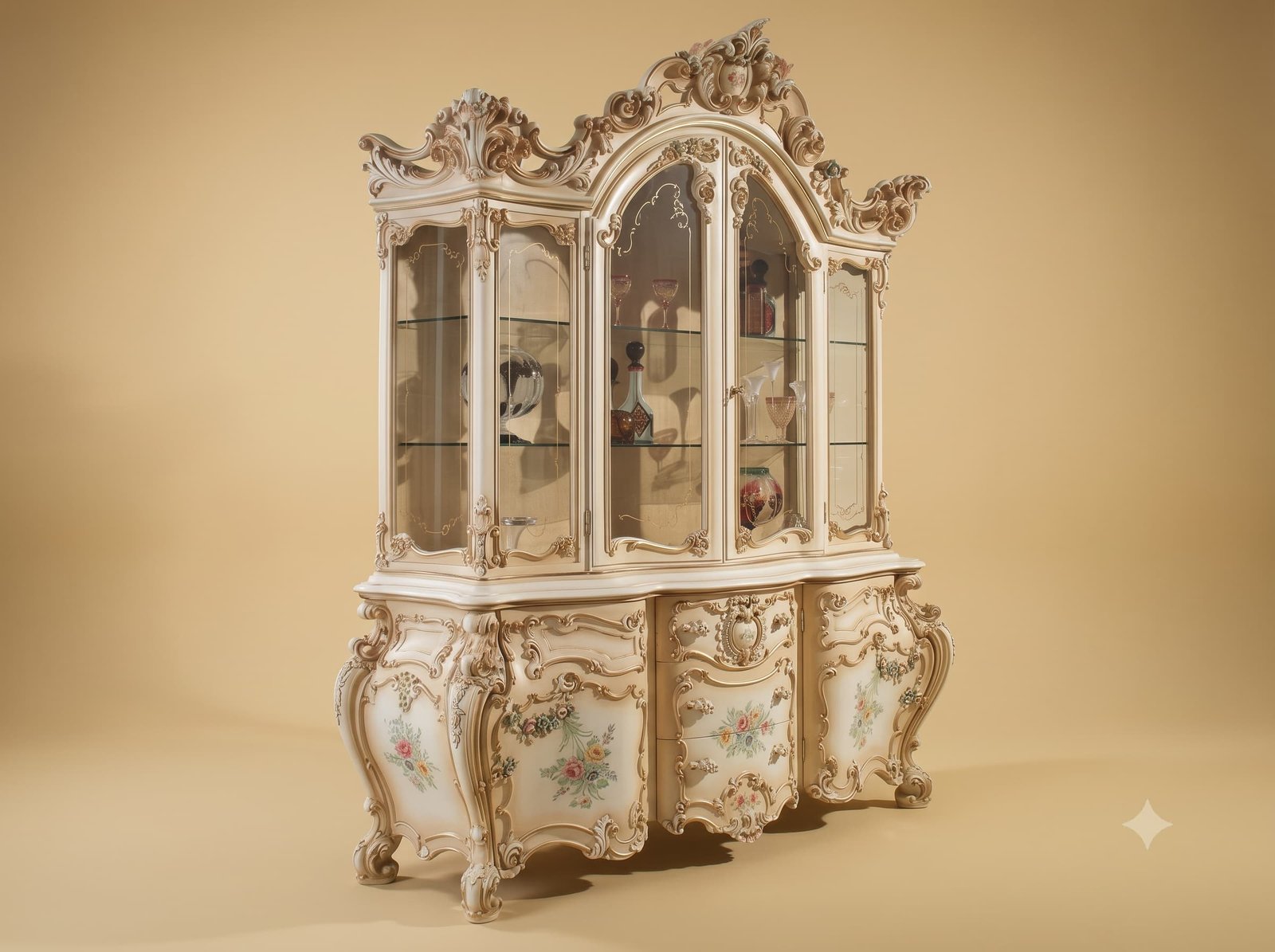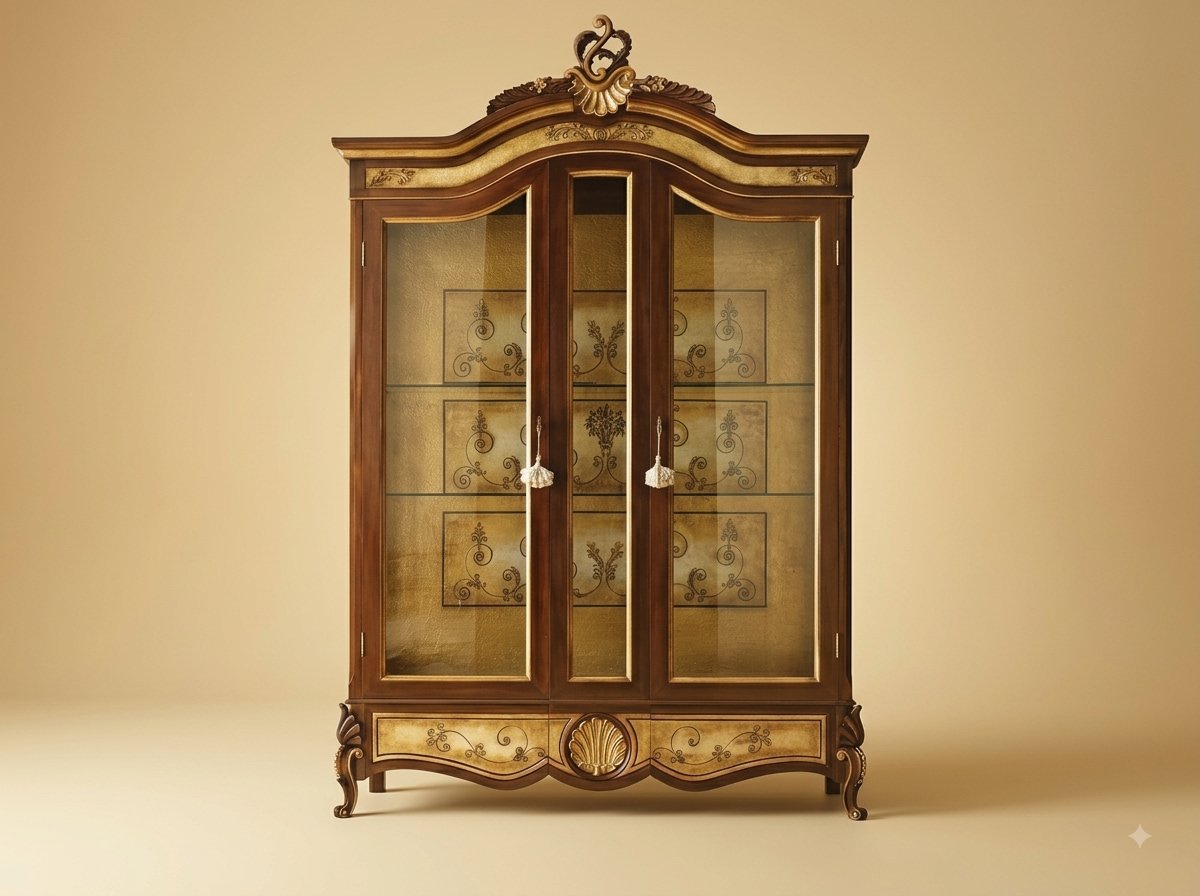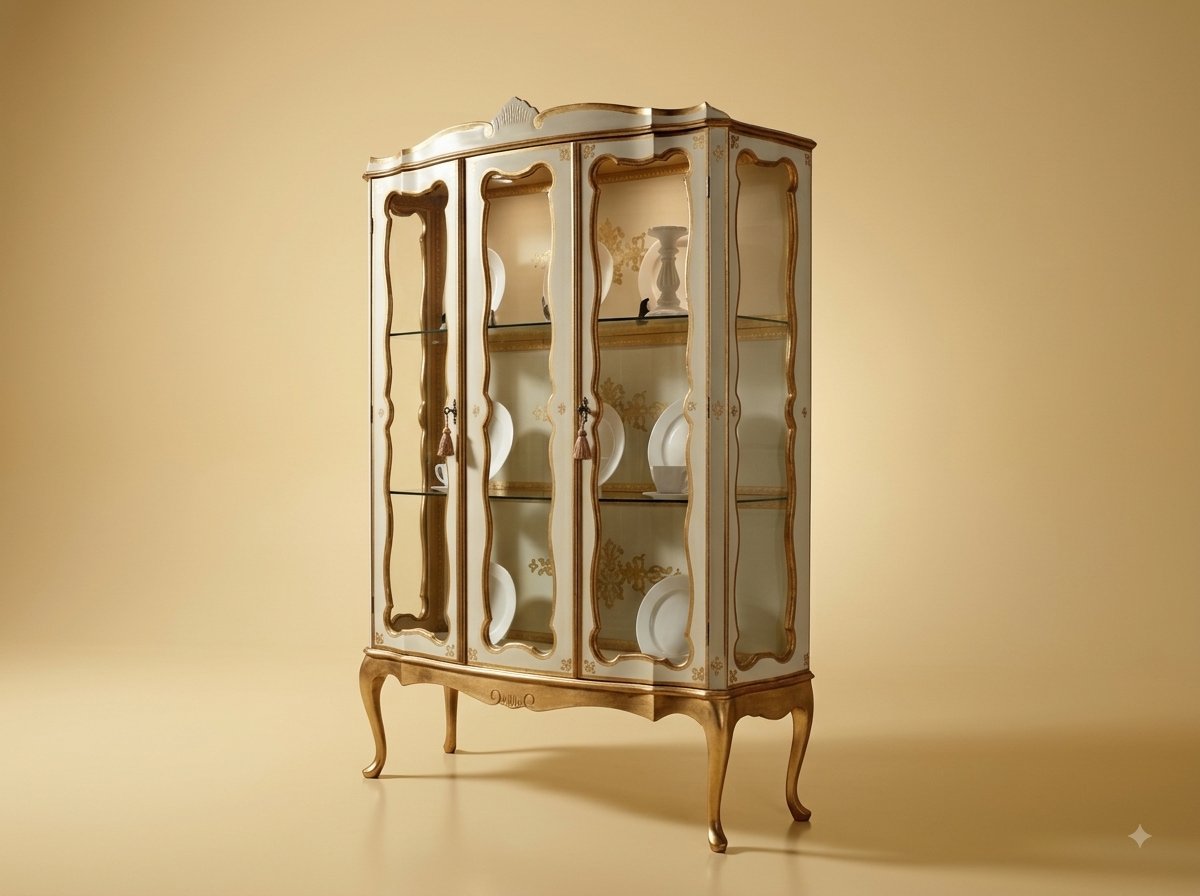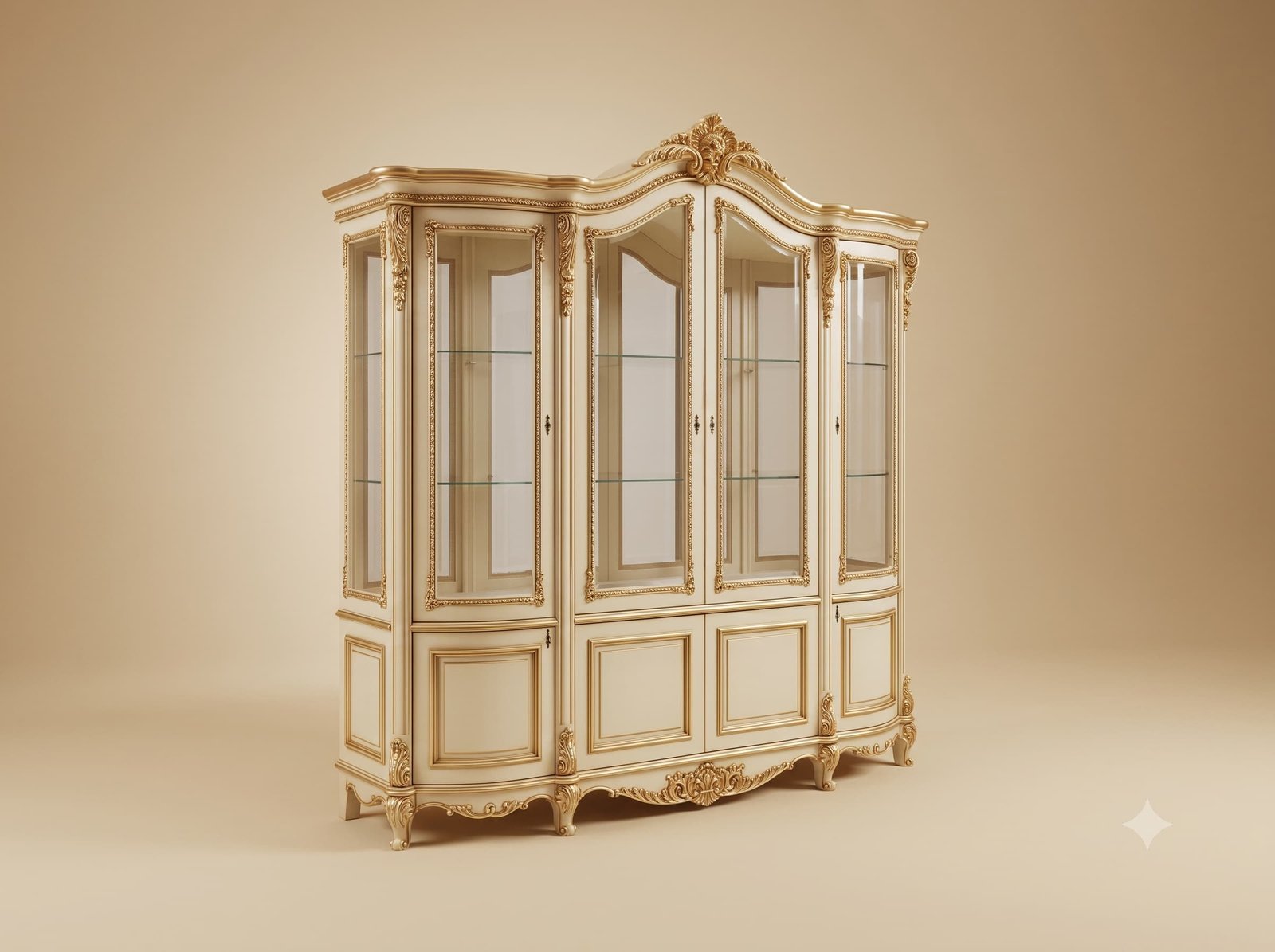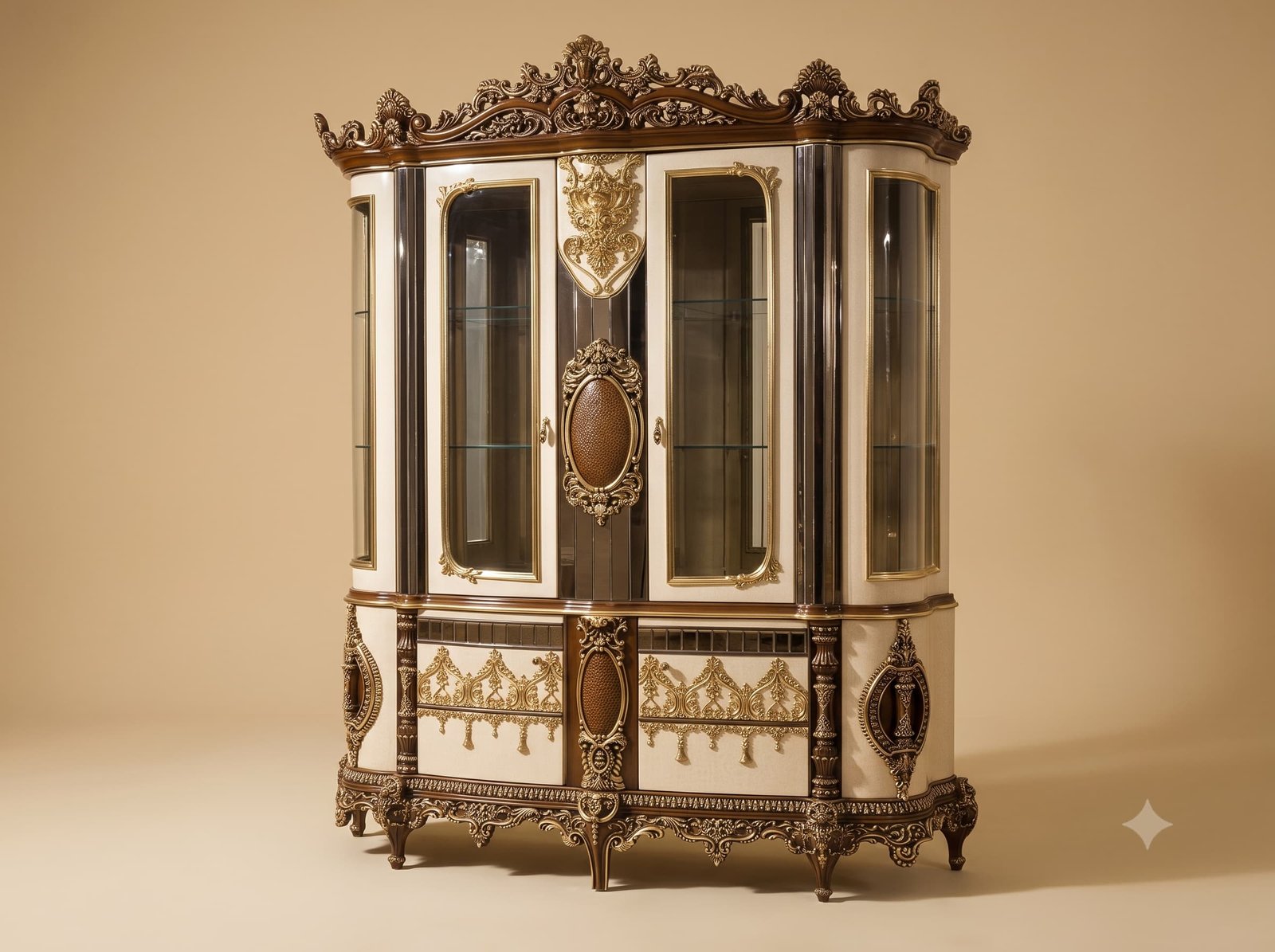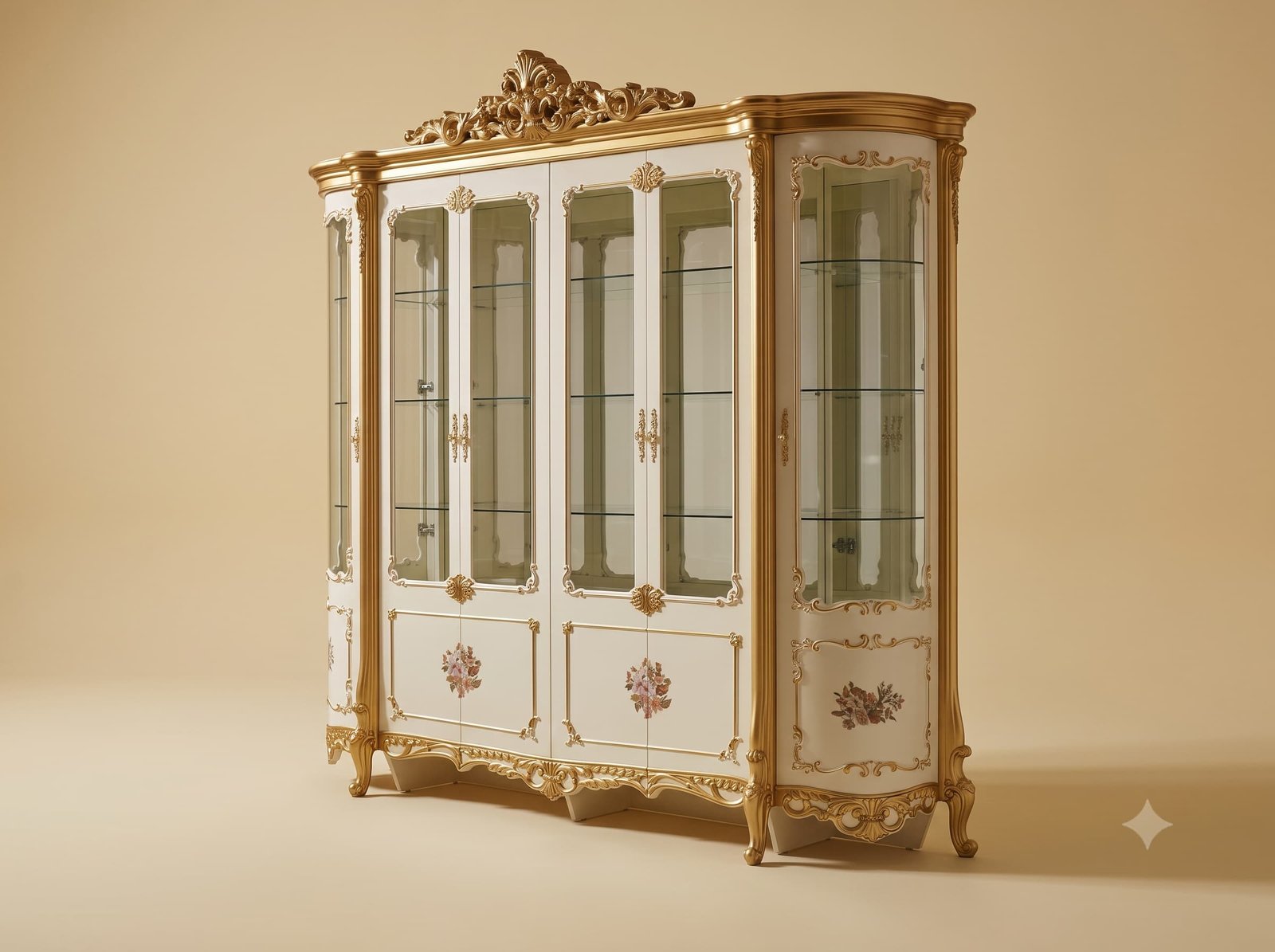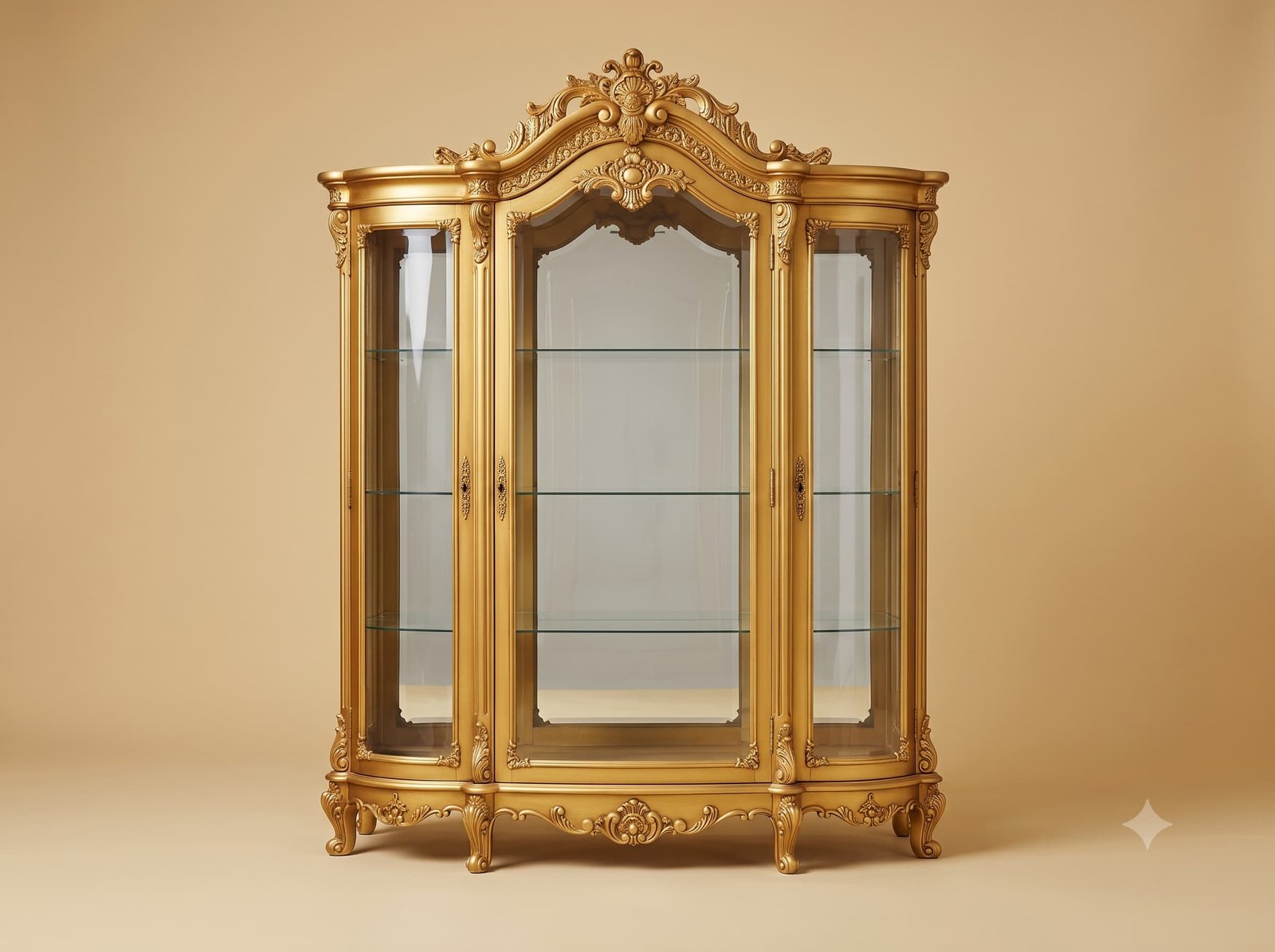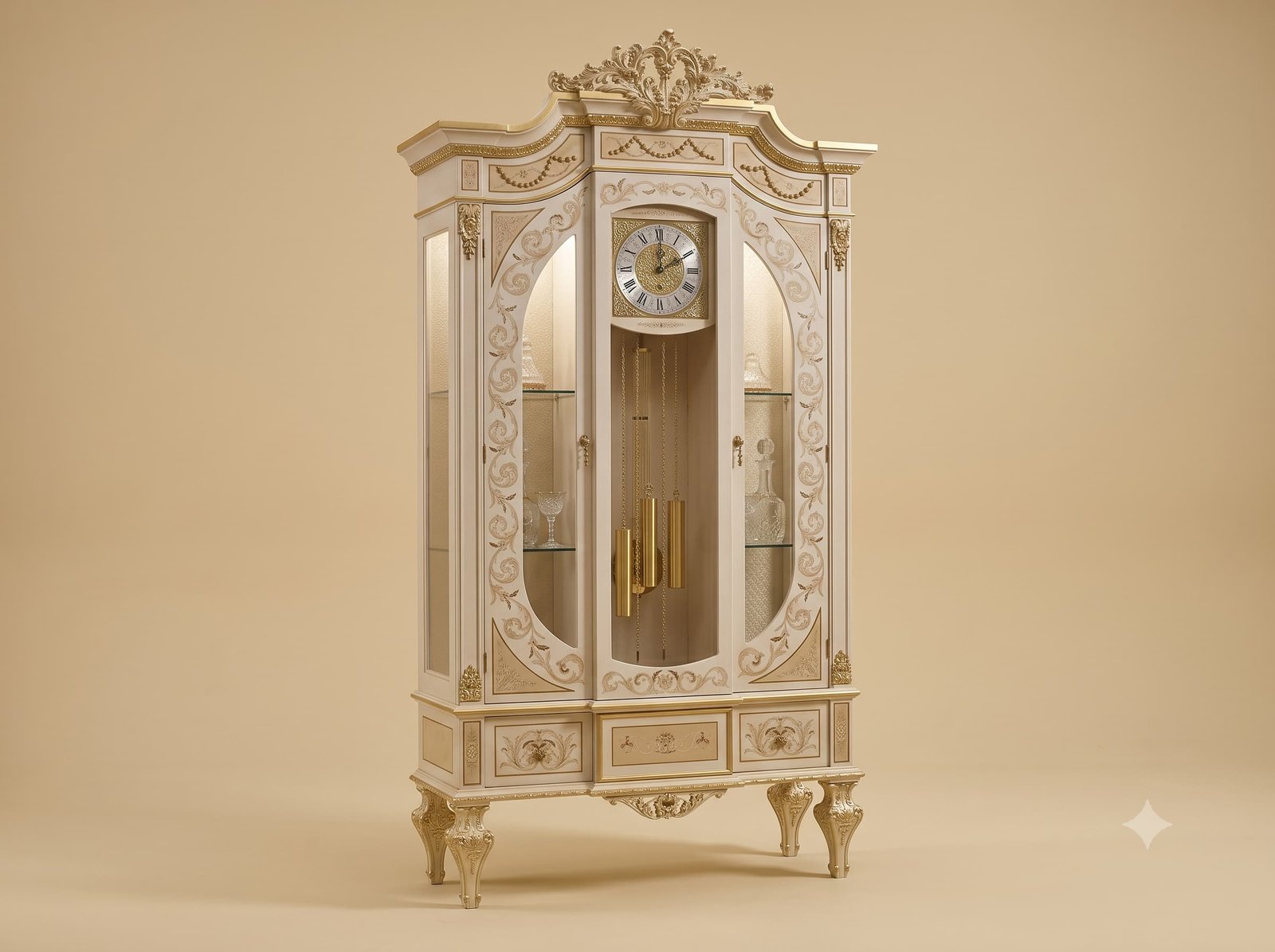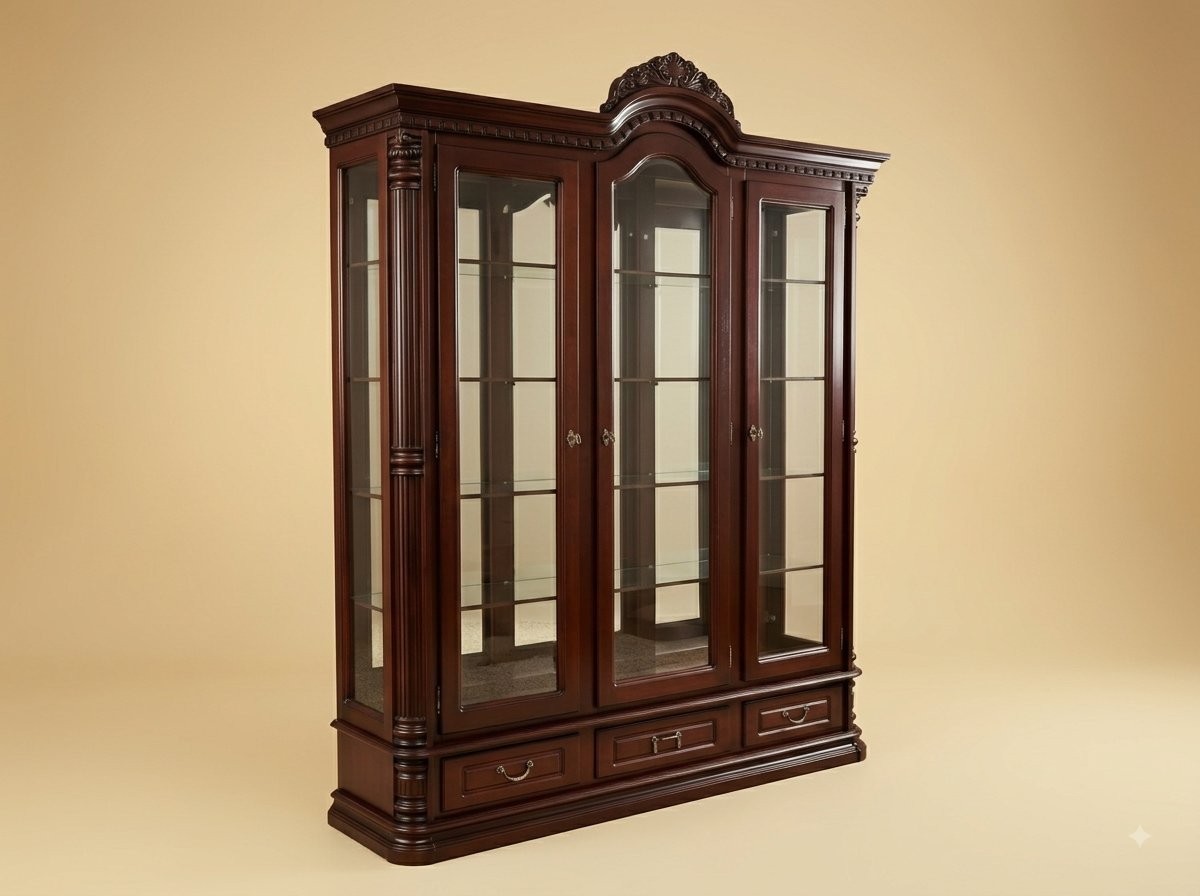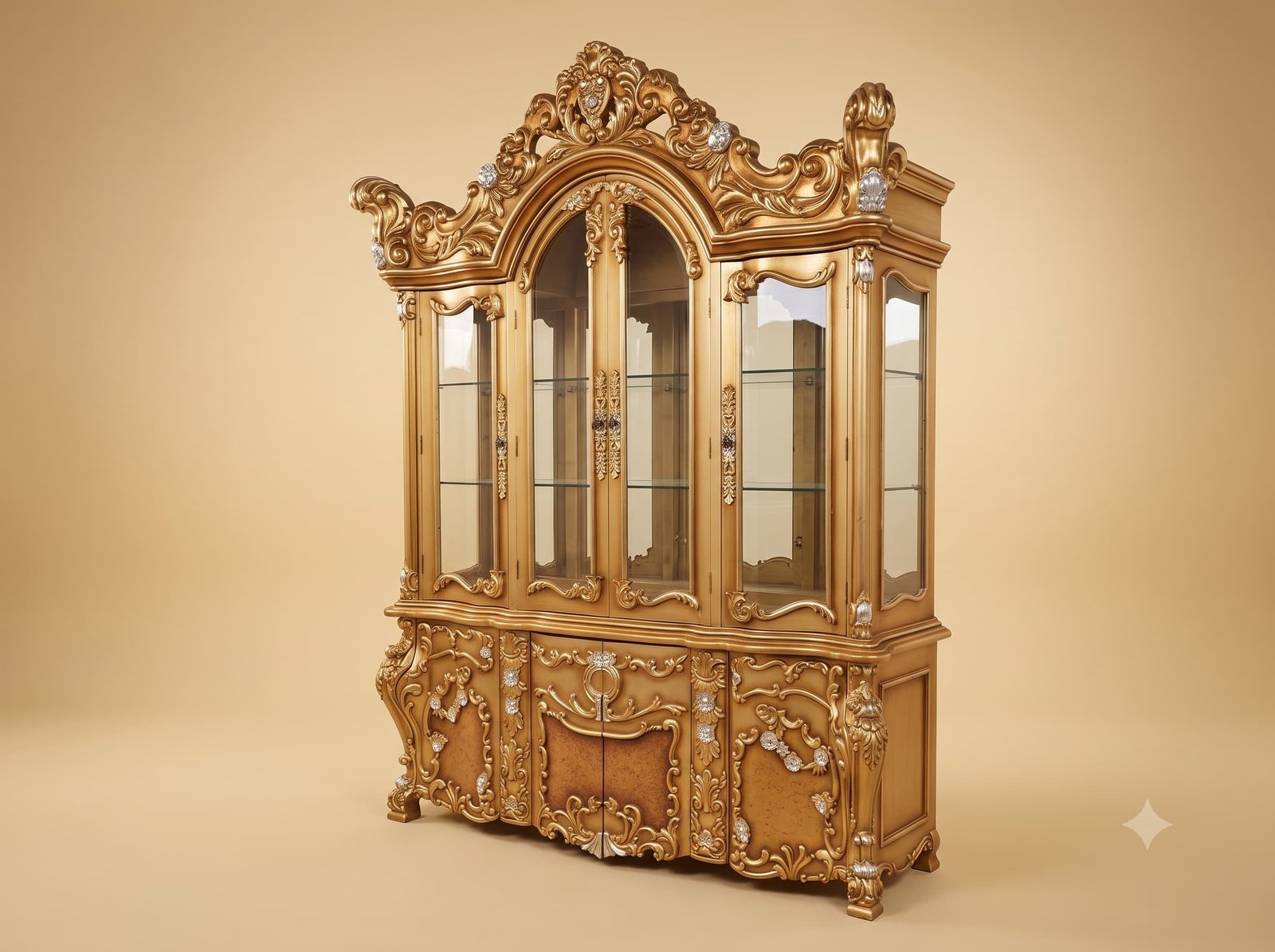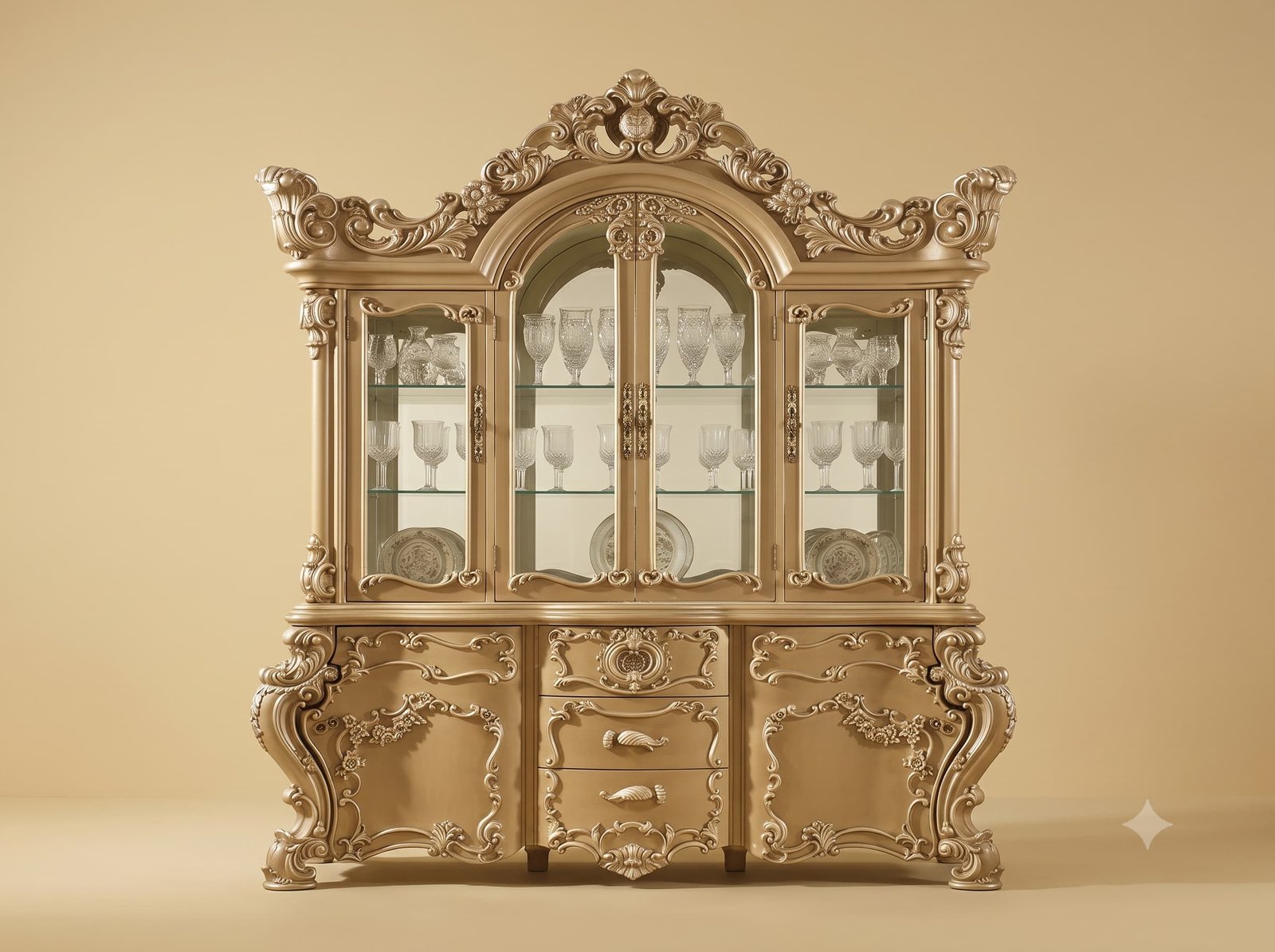
The arch over the centre bay looks like one curved piece of timber. It is not, and it could never be.
Cut an arch from a single wide board and the grain runs straight while the arch curves away from it. At the crown, where the curve is at its flattest and the grain is crossing it, you are left with short grain - a section of wood only a few fibres long between one edge and the other. Short grain has almost no strength. It survives the workshop and then fails at the first knock in the house.
So the arch here is built up from segments. Each segment is cut so that the grain runs along its own portion of the curve, and the segments are jointed to each other with the joints falling where the arch is strongest, never at the crown. Once assembled, the whole ring is worked as a single member - moulded, then carved - so the segments disappear into the profile.
The carving is set out last, and it is set out from the crown outwards in both directions, so the shell at the top of the arch sits exactly on the centre line.
 Ask Price On WhatsApp