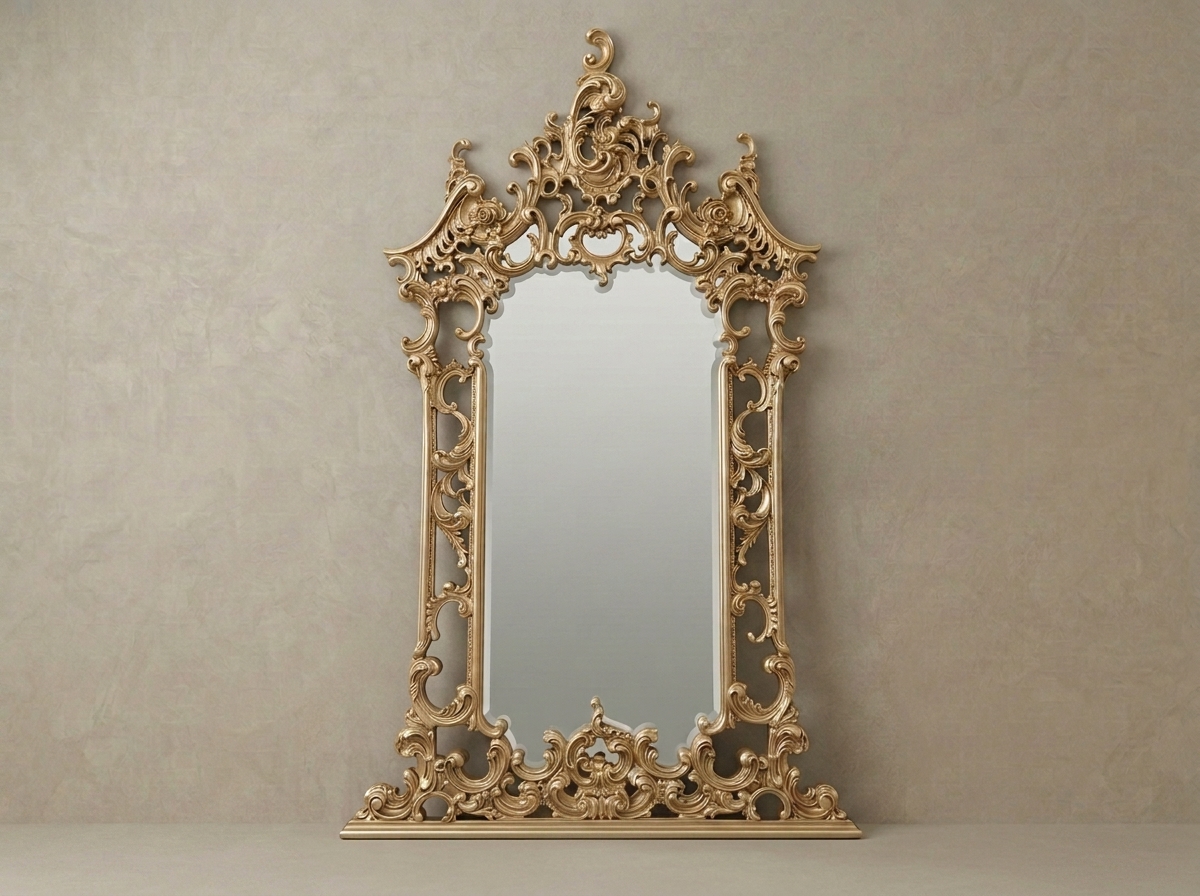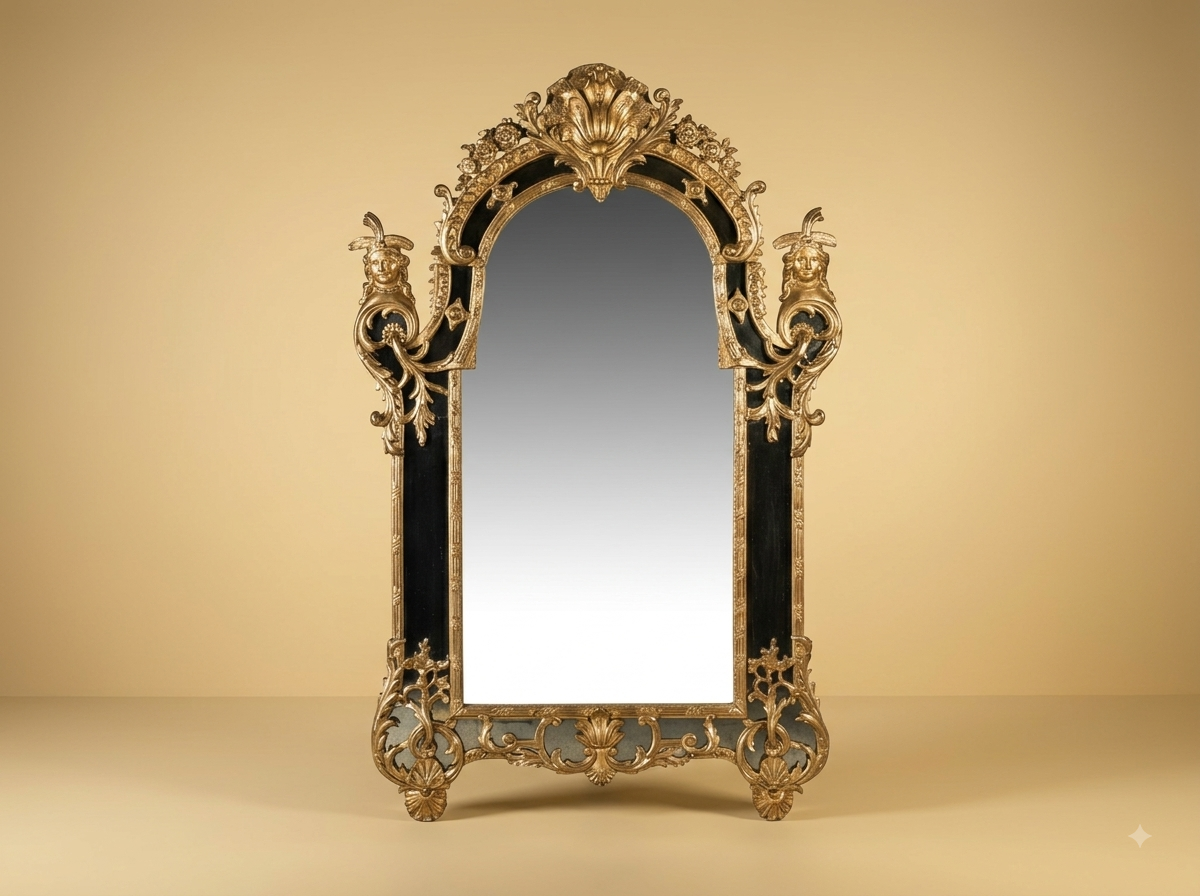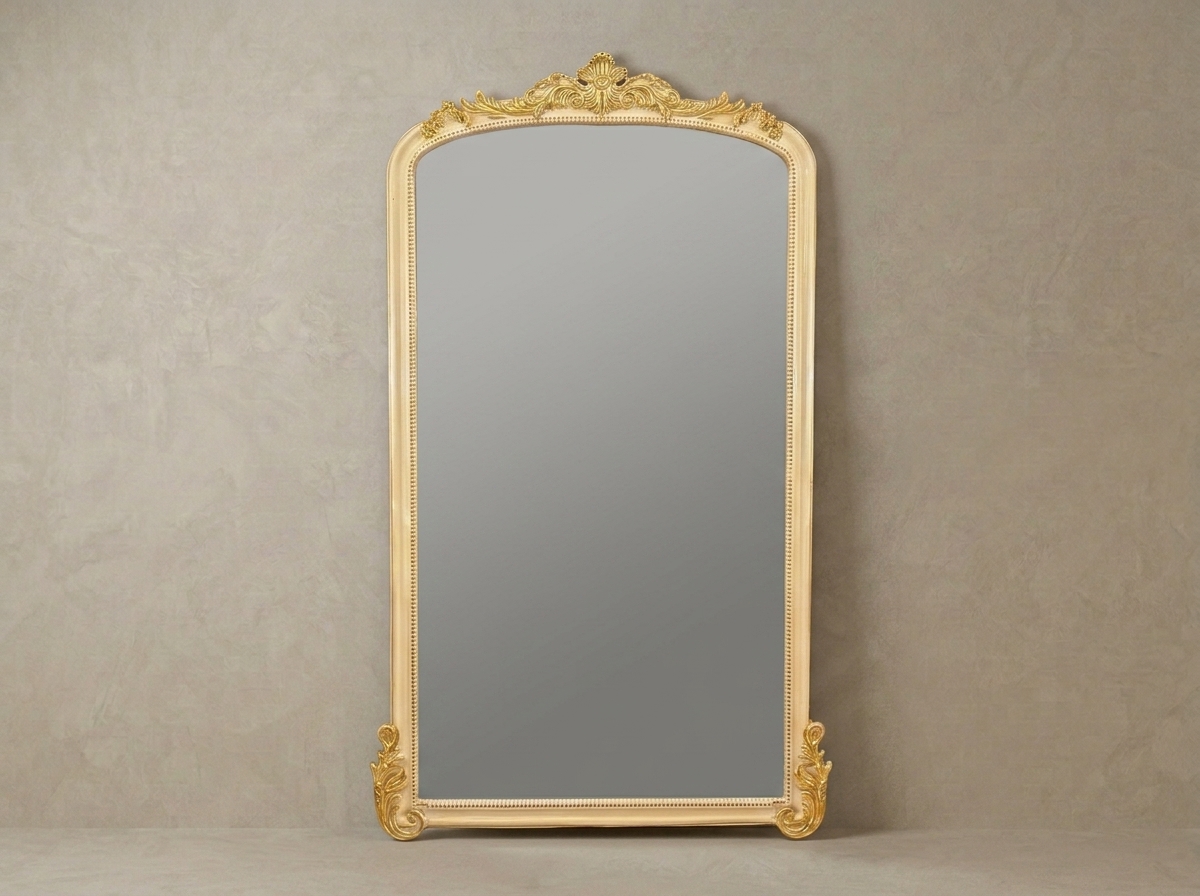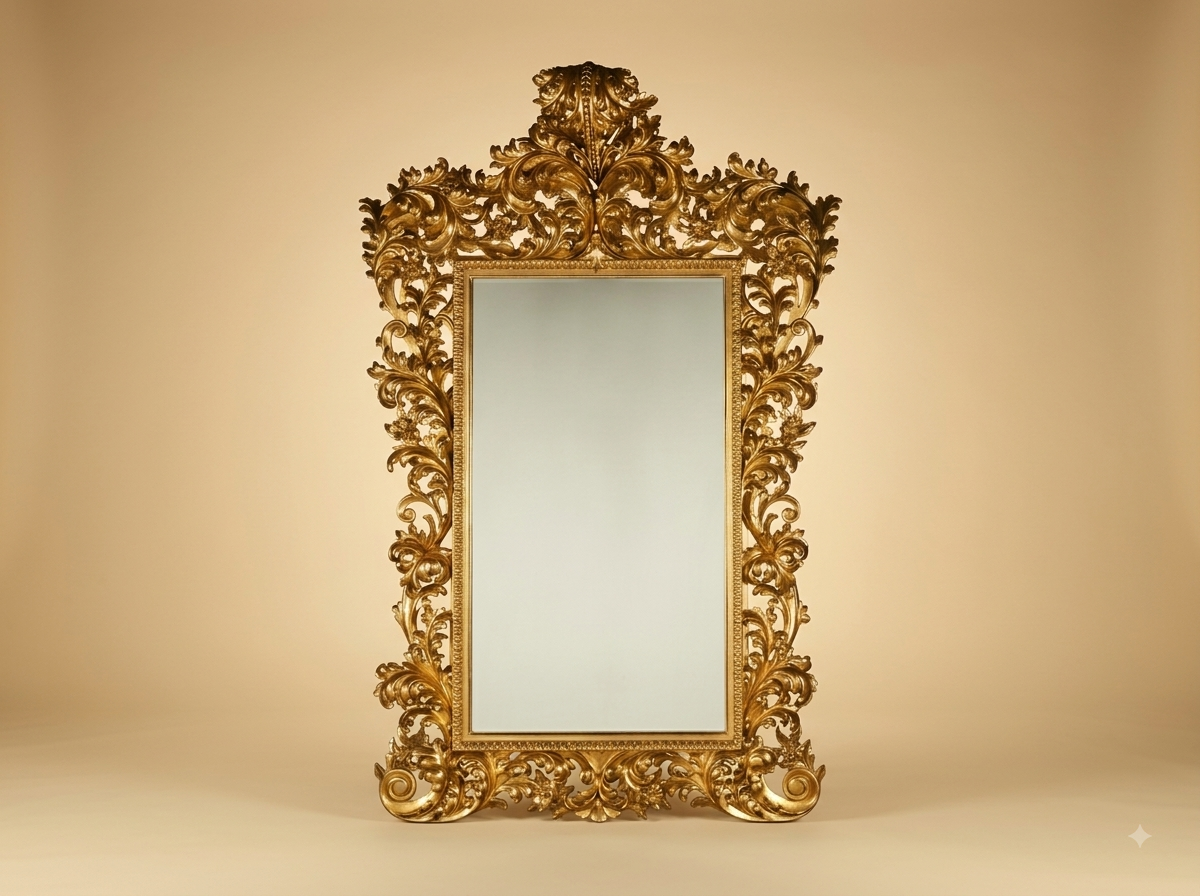
A bevel is a piece of optics as much as decoration, and its width has to be chosen rather than defaulted to.
Grinding an angle around the edge of a plate turns that edge into a prism. Light passing through it bends, so the bevel shows a faint spectrum and reads brighter than the flat of the mirror - which is the whole reason it is done. It also stops being a true reflection: anything falling on the bevel is thrown slightly out of line with the image beside it.
So the width is a balance. Too narrow and the effect disappears, and the expense of grinding an oval bevel is wasted. Too wide and a meaningful band around the reflection is no longer usable, which matters on a mirror people actually look into rather than merely at.
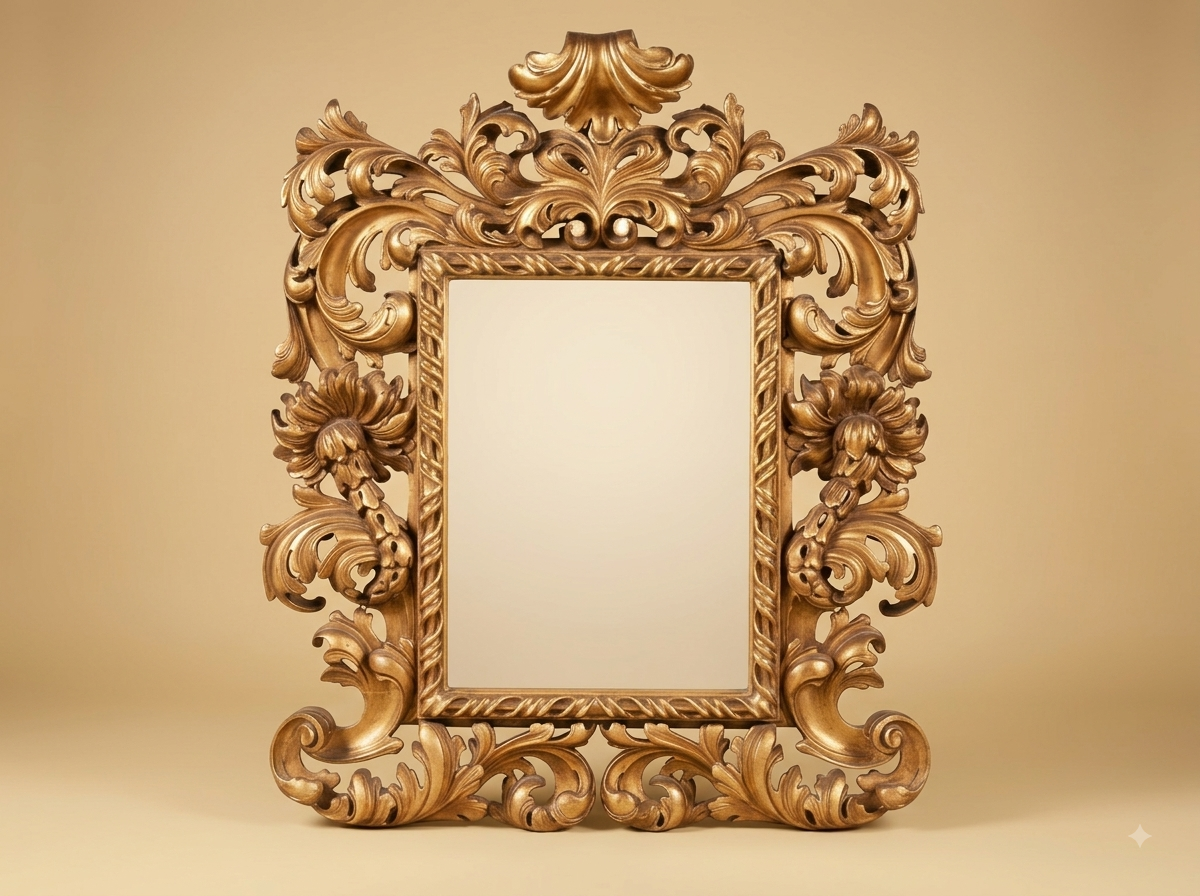
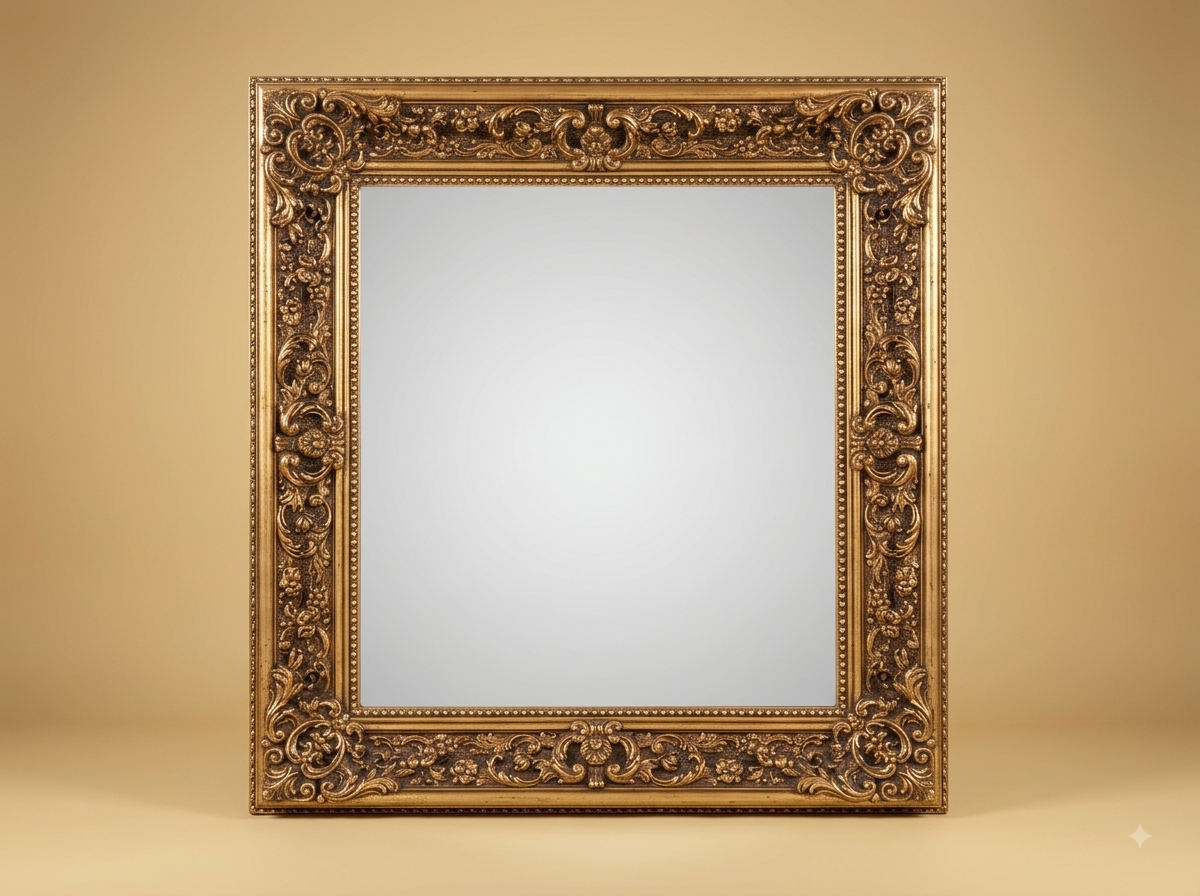
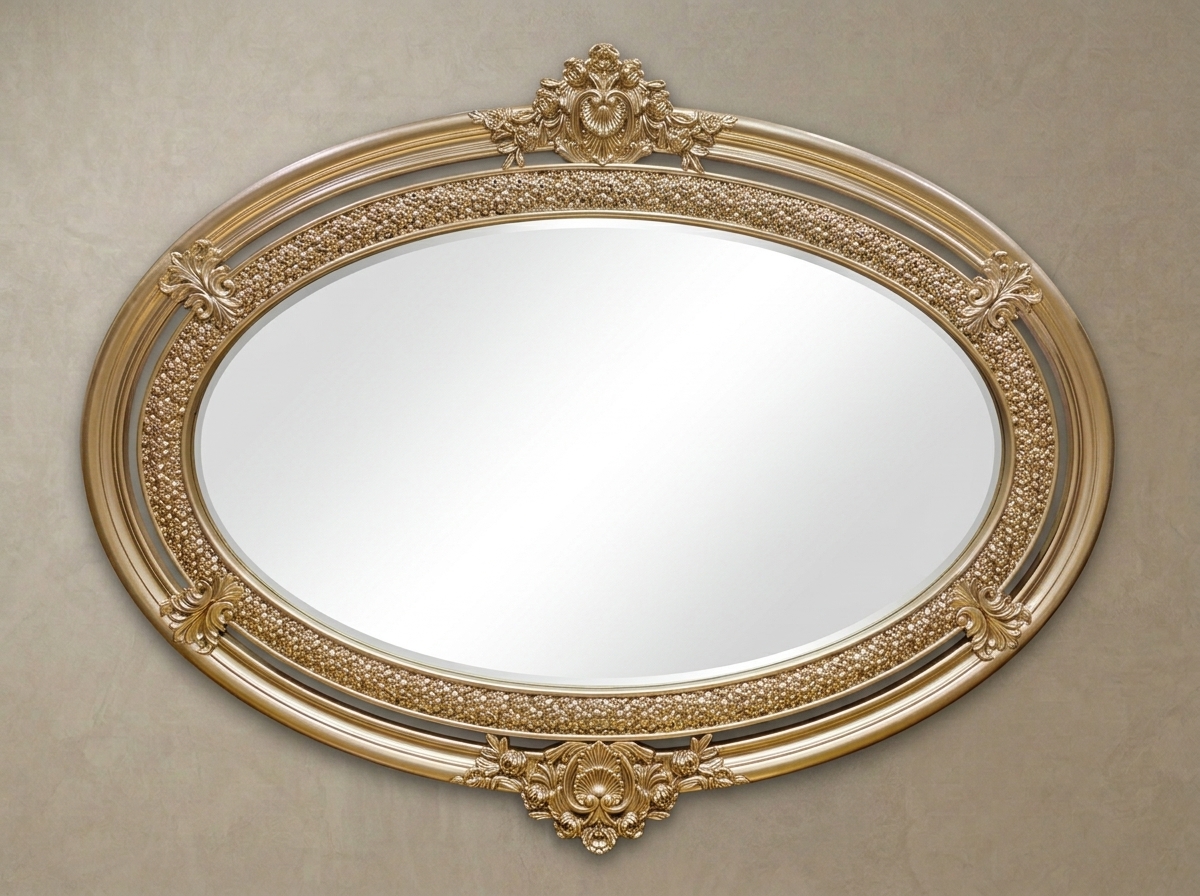
We set it against the frame instead of against the glass. The bevel is proportioned to the inner carved ring next to it, so the two read as related widths - the bright band and the flowered band answering one another - and the flat of the mirror stays generous.
On an oval it is ground following the ellipse, so the band stays even where the curve tightens at the ends.
 Ask Price On WhatsApp