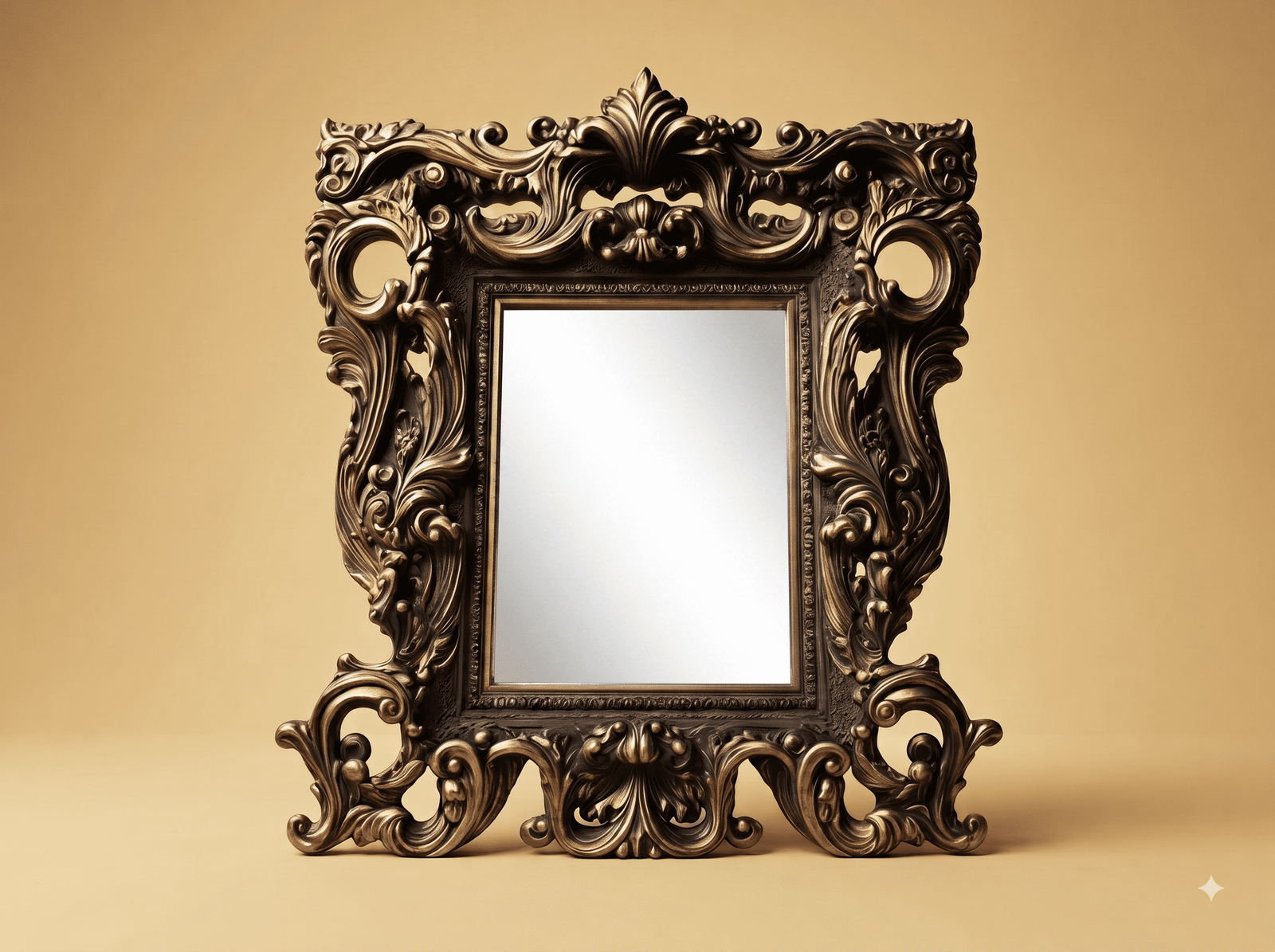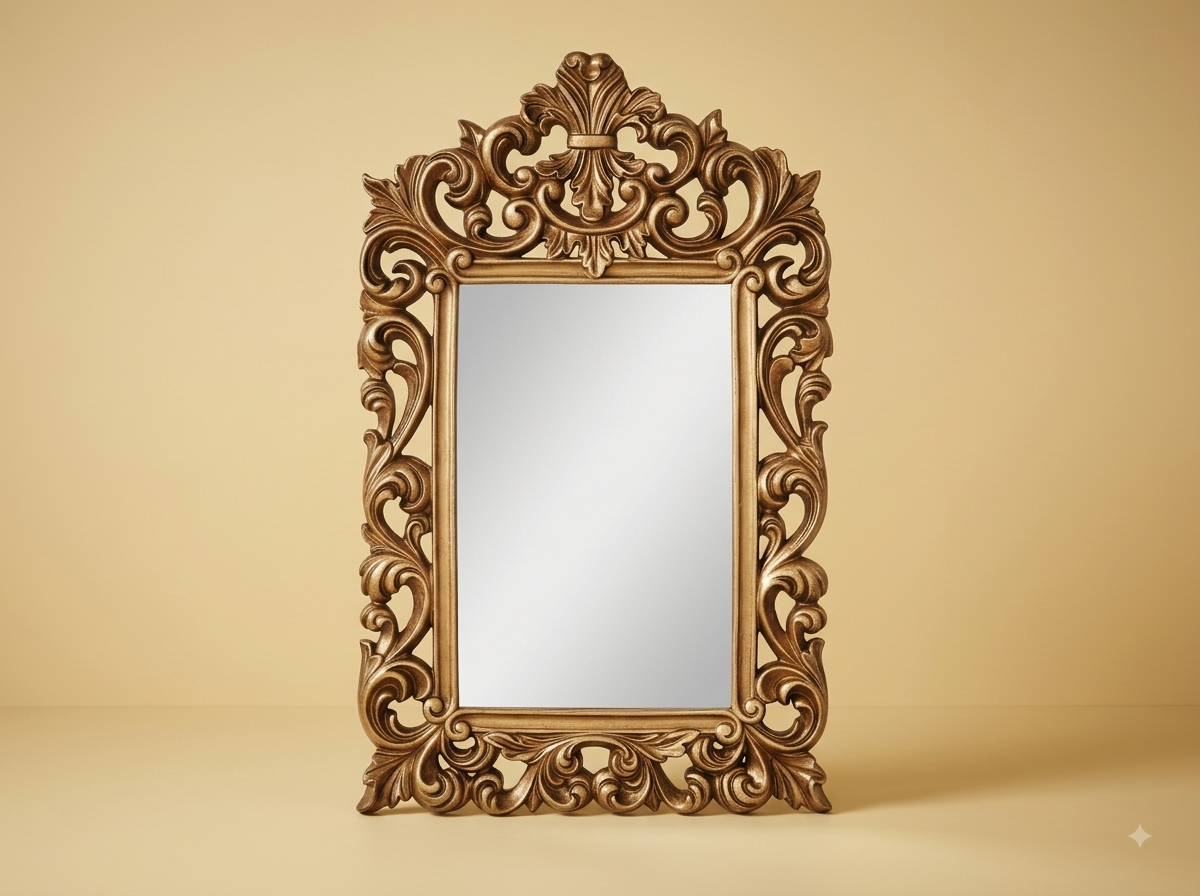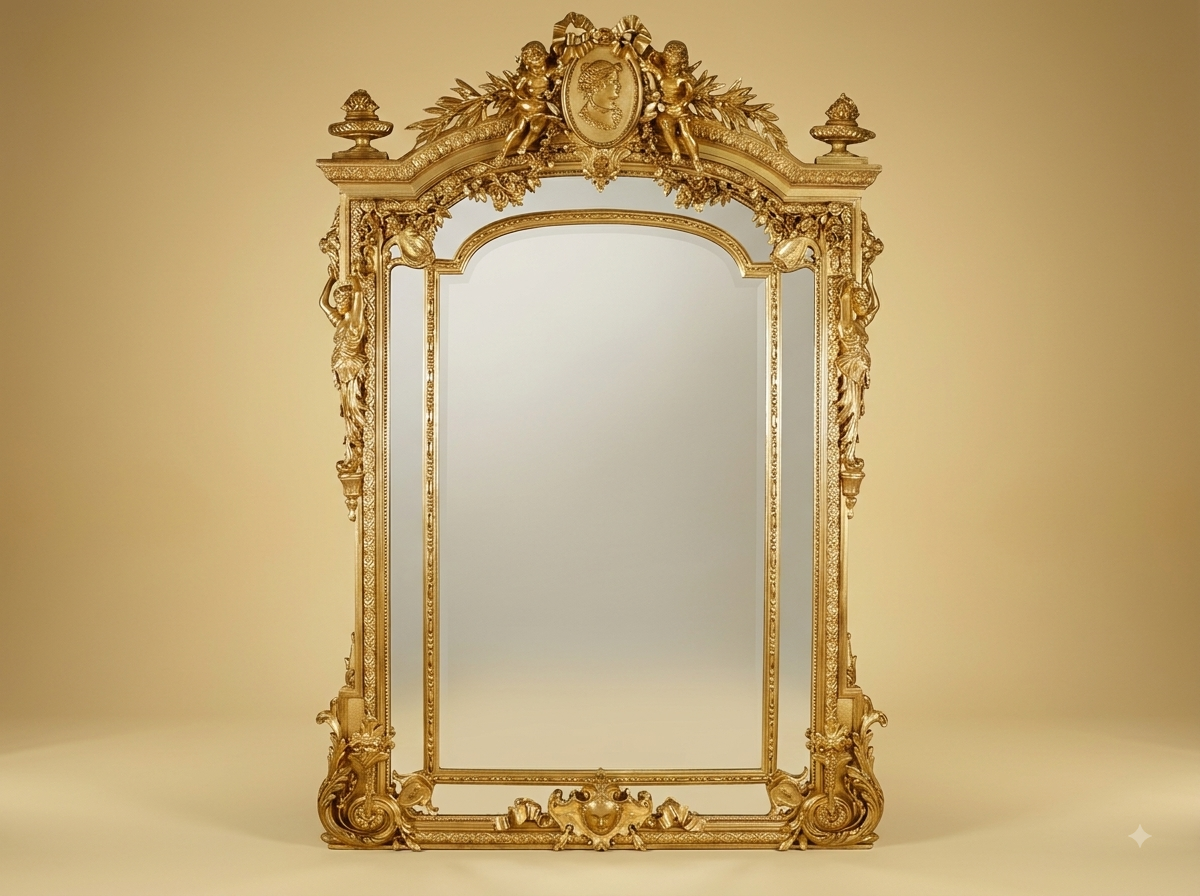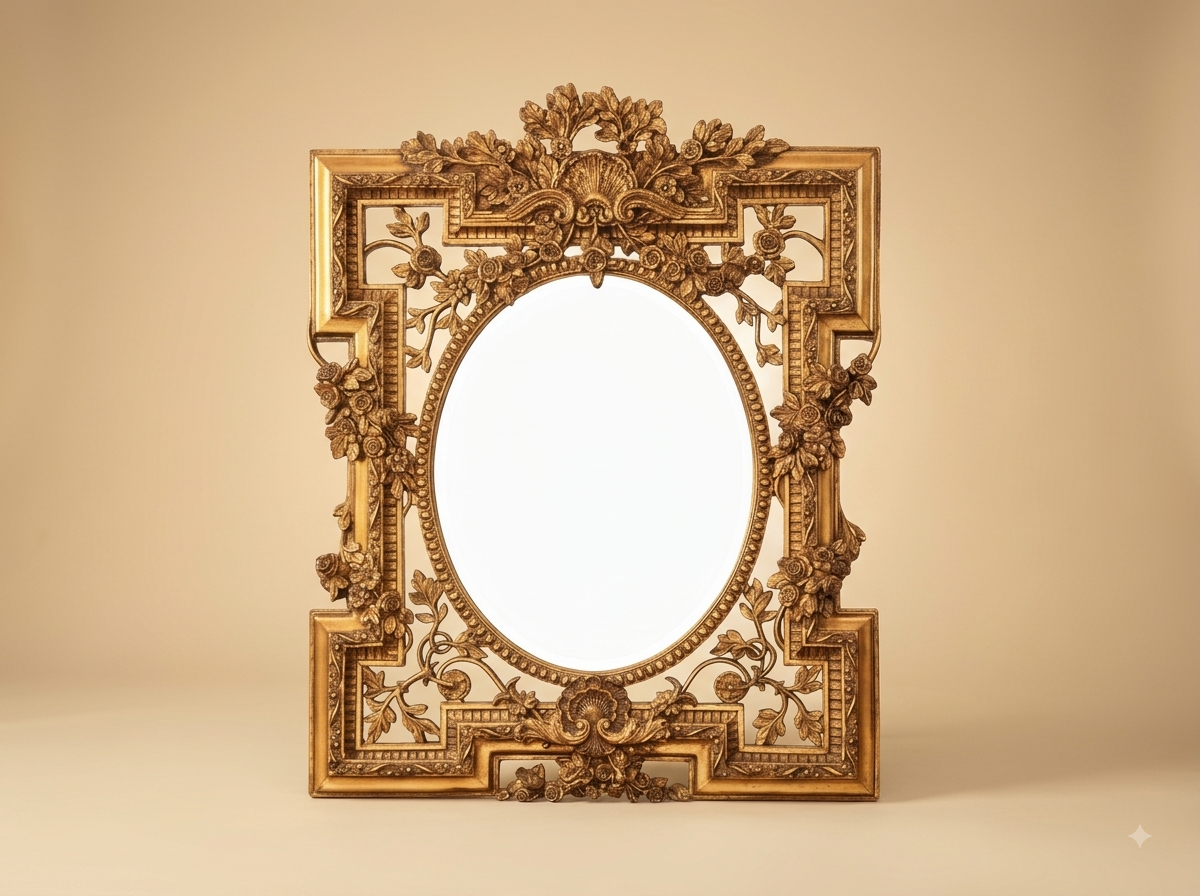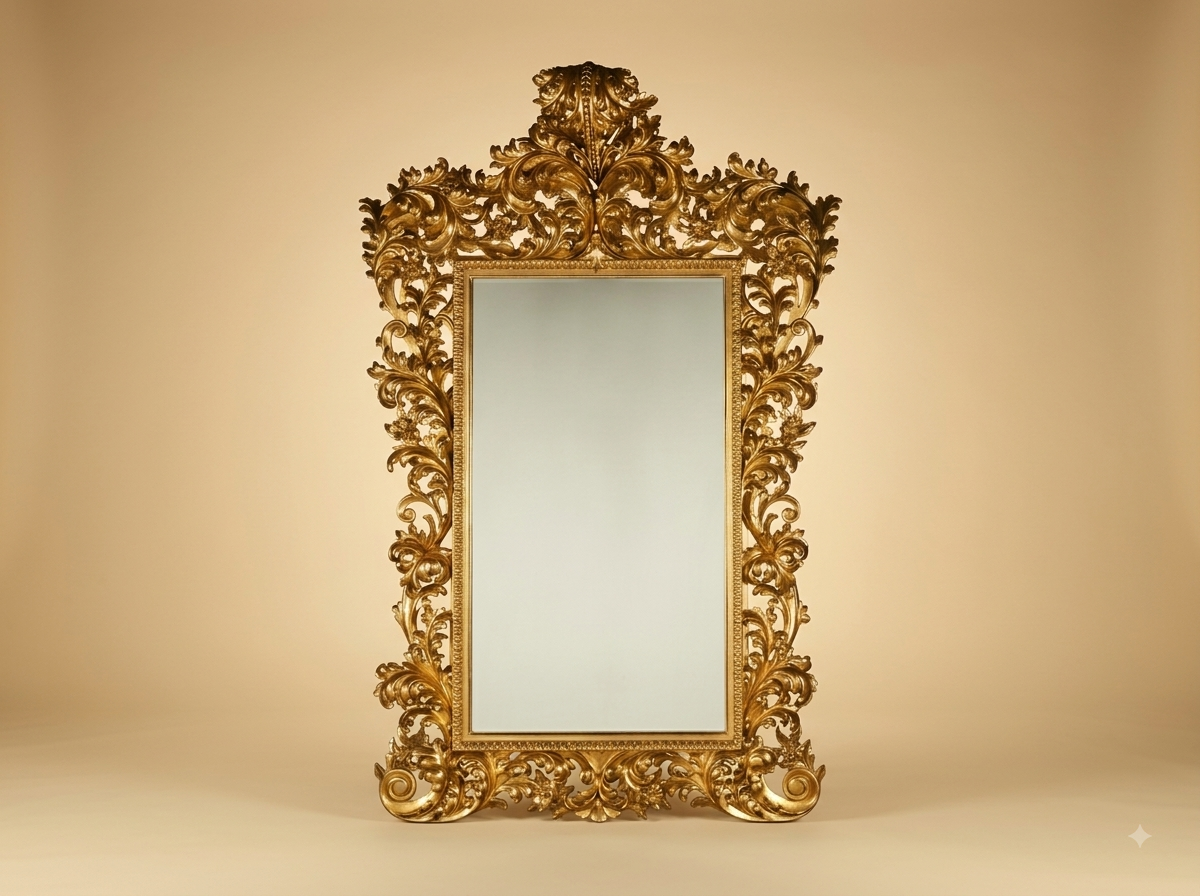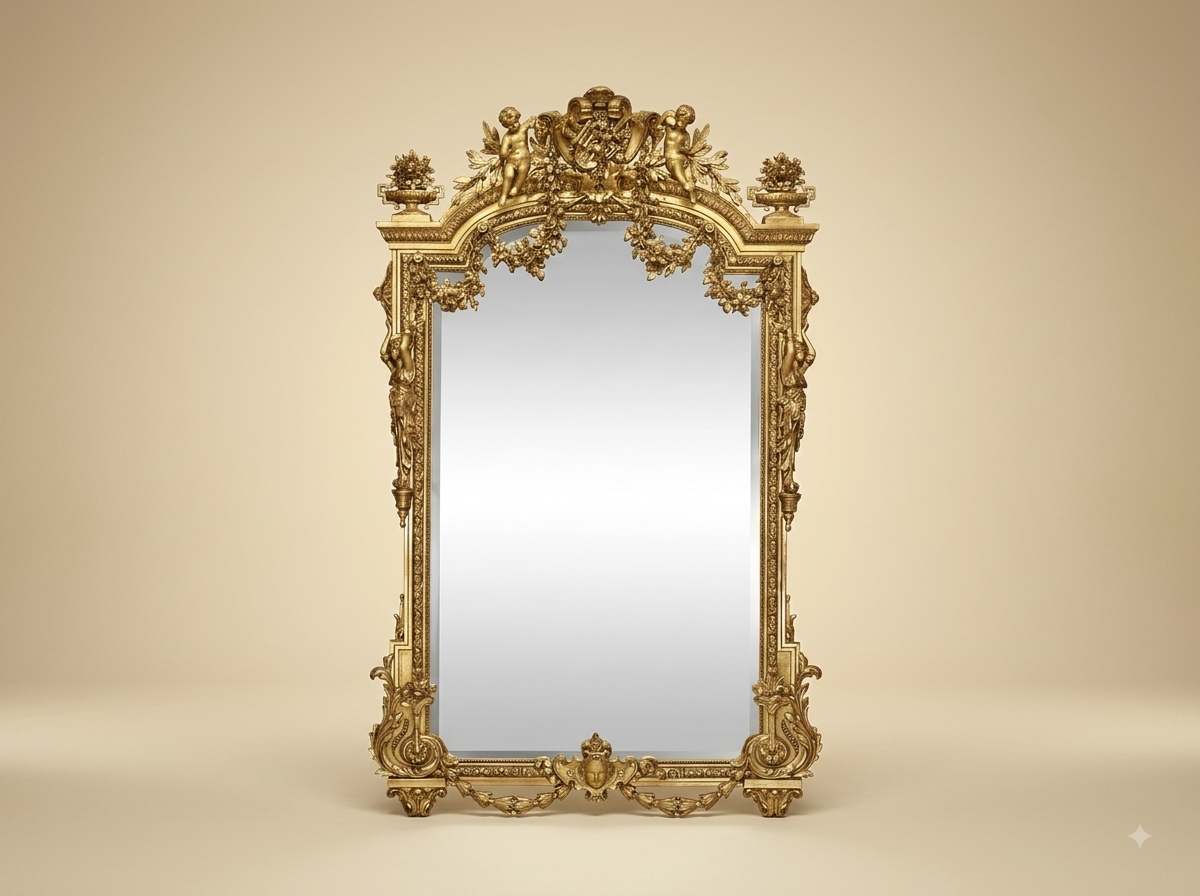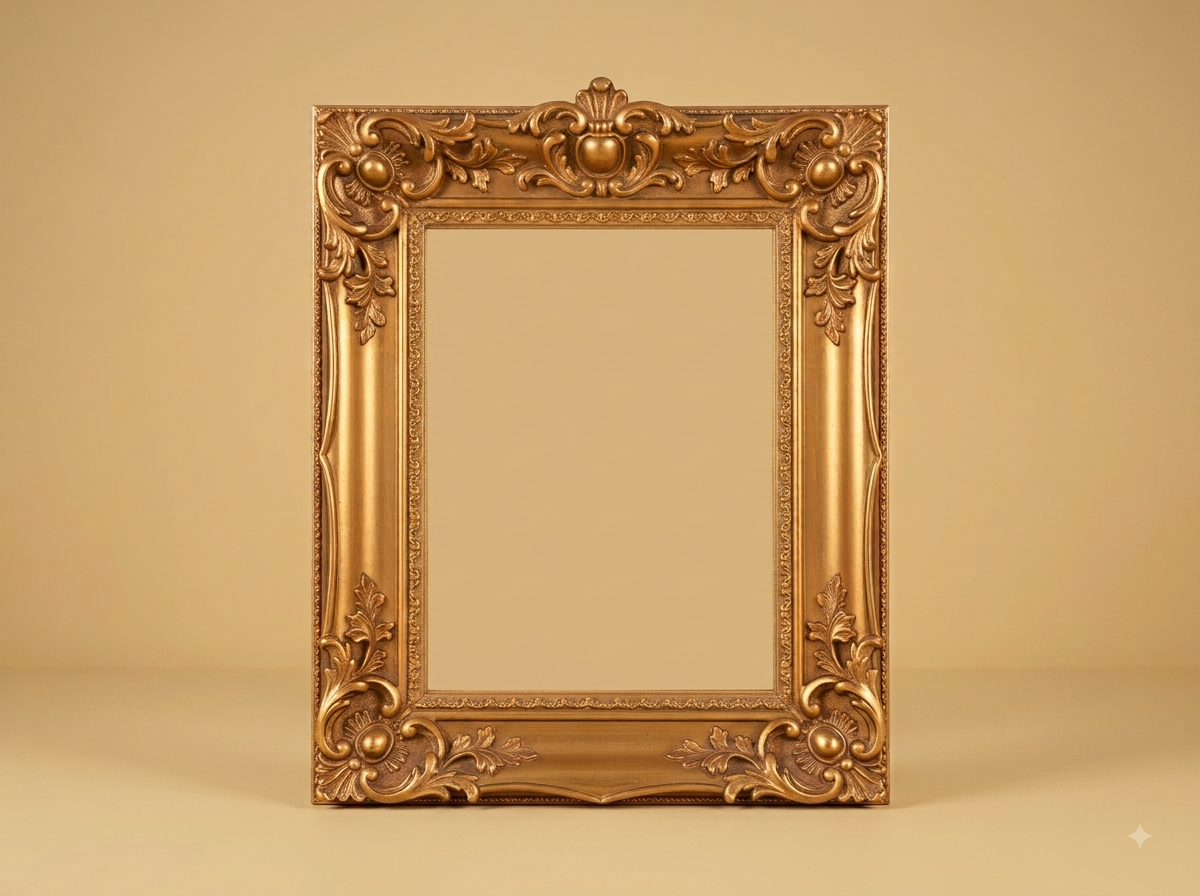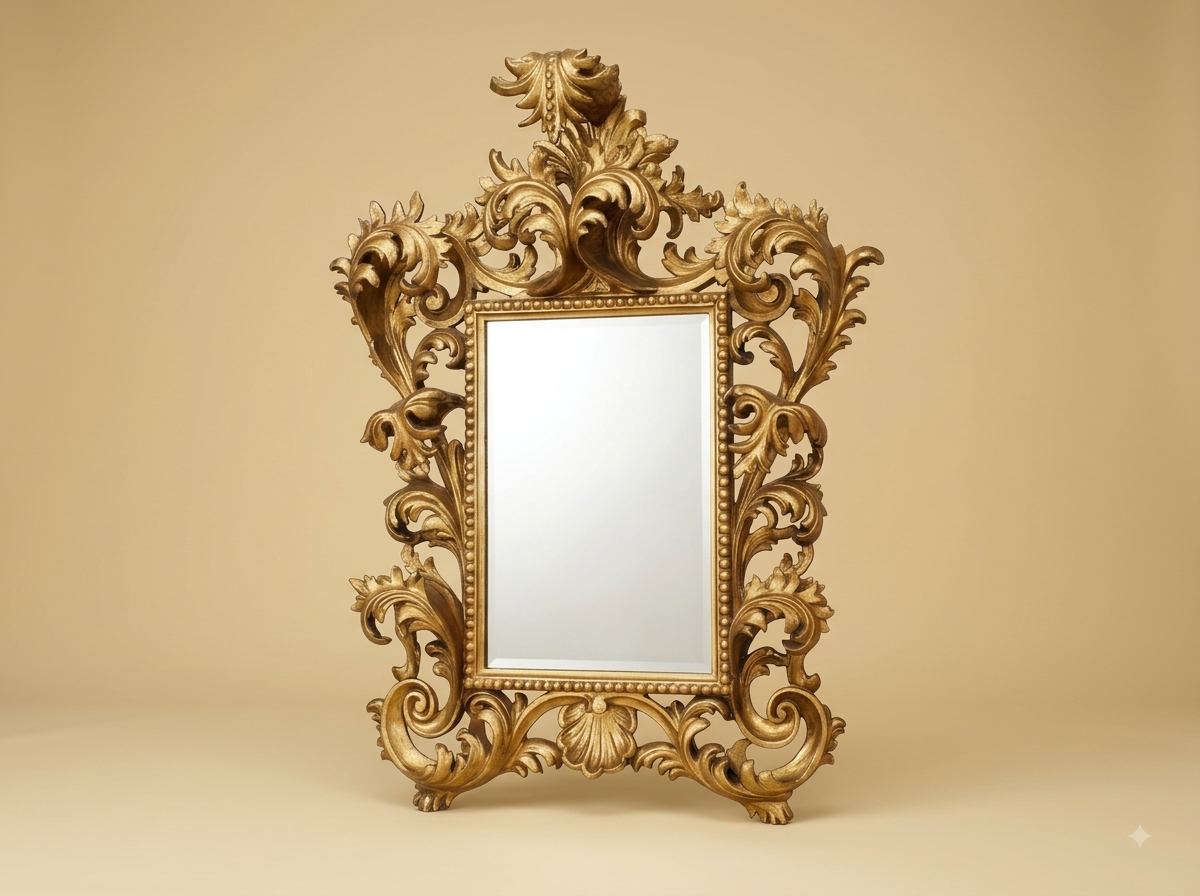
A table mirror is used by someone sitting down, and that single fact sets the angle it leans at.
Stand a mirror perfectly upright on a dressing table and a seated person is looking into it from below - the reflection shows the ceiling behind them and cuts off at the chin. The instinct is to prop it, but a propped mirror slides.
So the rake is built in. The two rear scrolls of the carving are extended backwards past the frame line, forming two more contact points behind the front feet, and they are cut fractionally longer - which tips the whole frame back by a set amount.
That amount is worked out from a seated eye height at an ordinary table height, so the mirror is already looking at the person who will use it.
The rear feet are also the reason it does not rock. Four points spread front and back give the mirror a real footprint, and because they are part of the scrollwork, none of that structure is visible as legs - what you see is carving that happens to reach the surface.
 Ask Price On WhatsApp