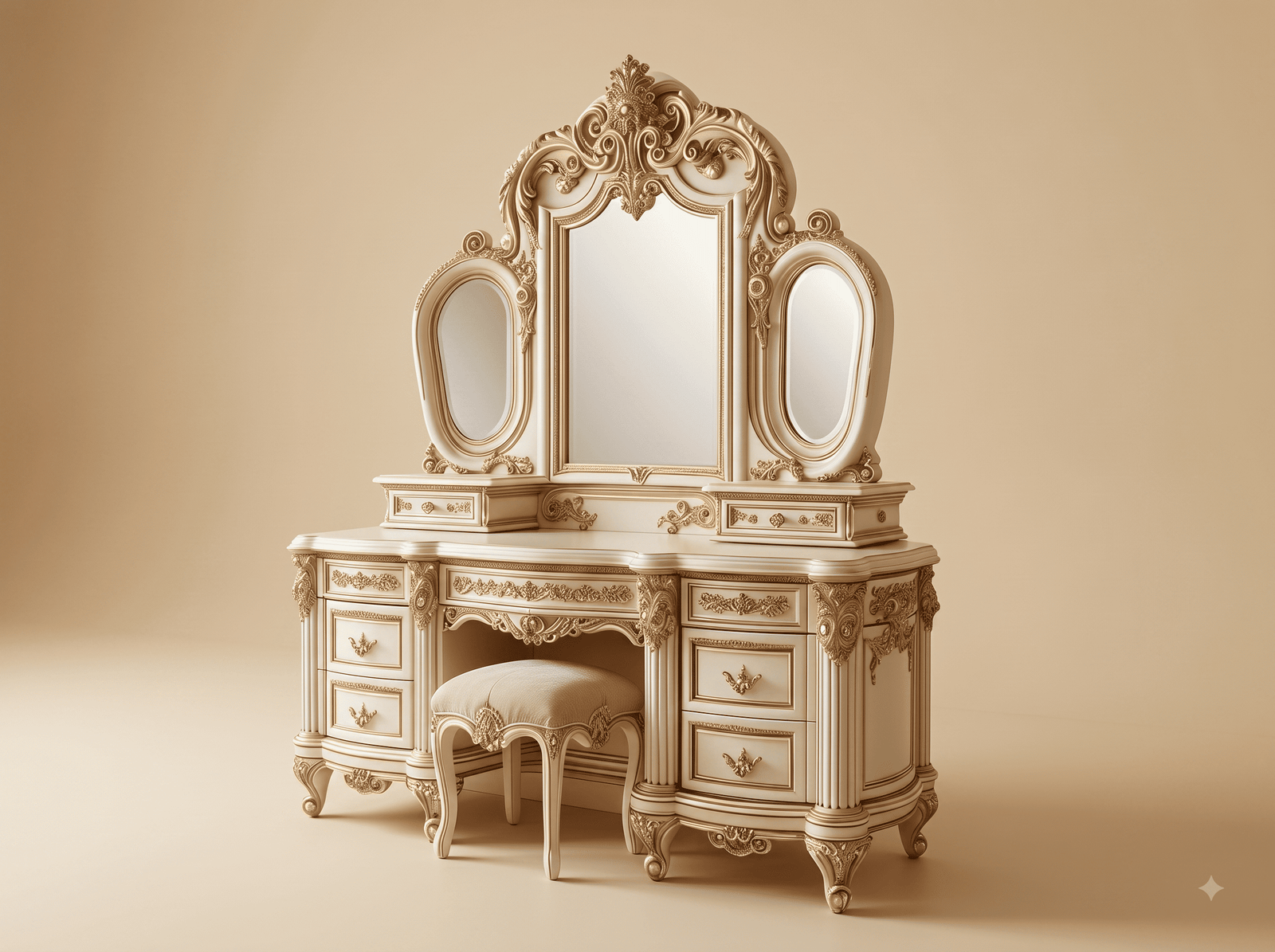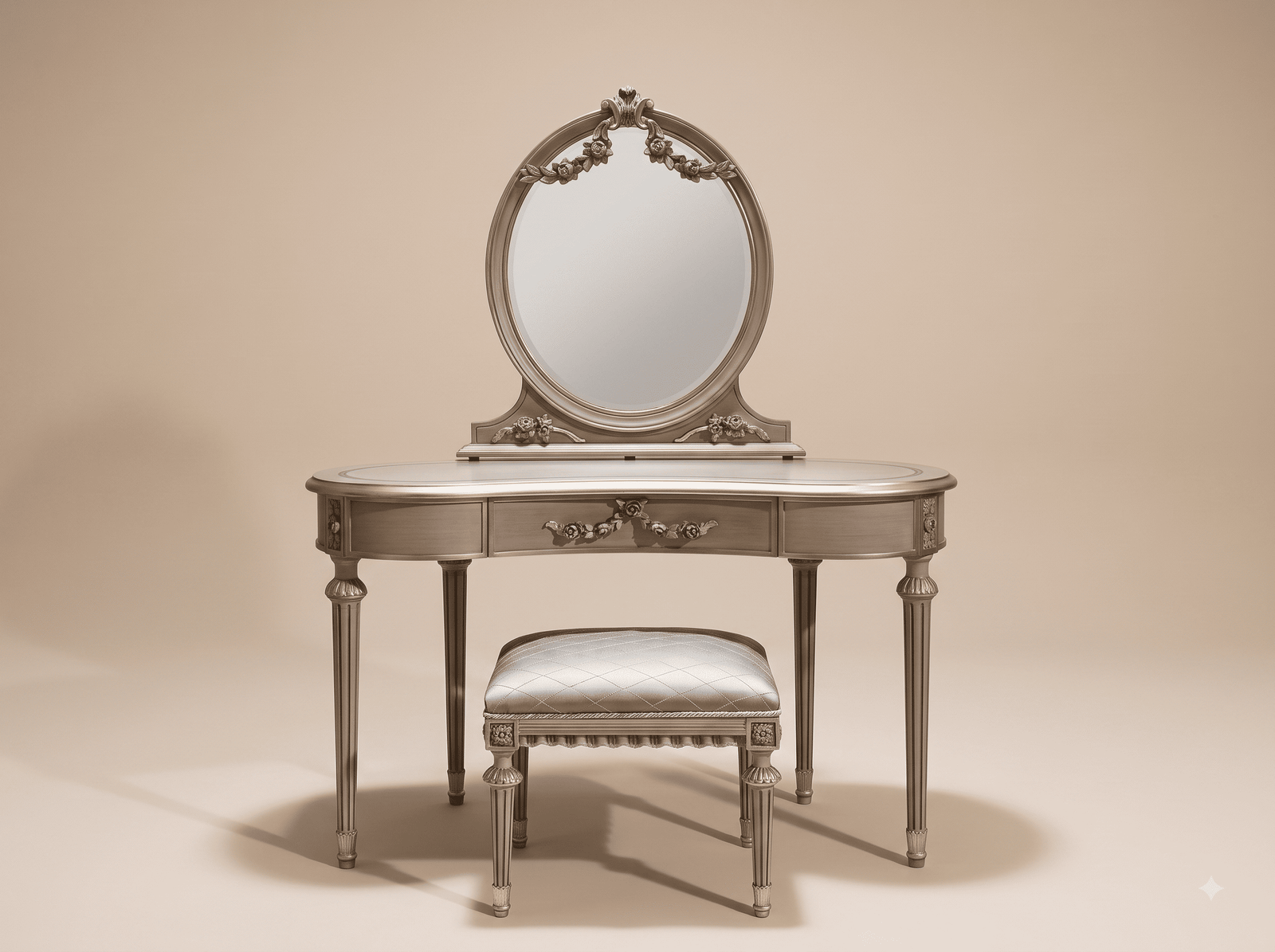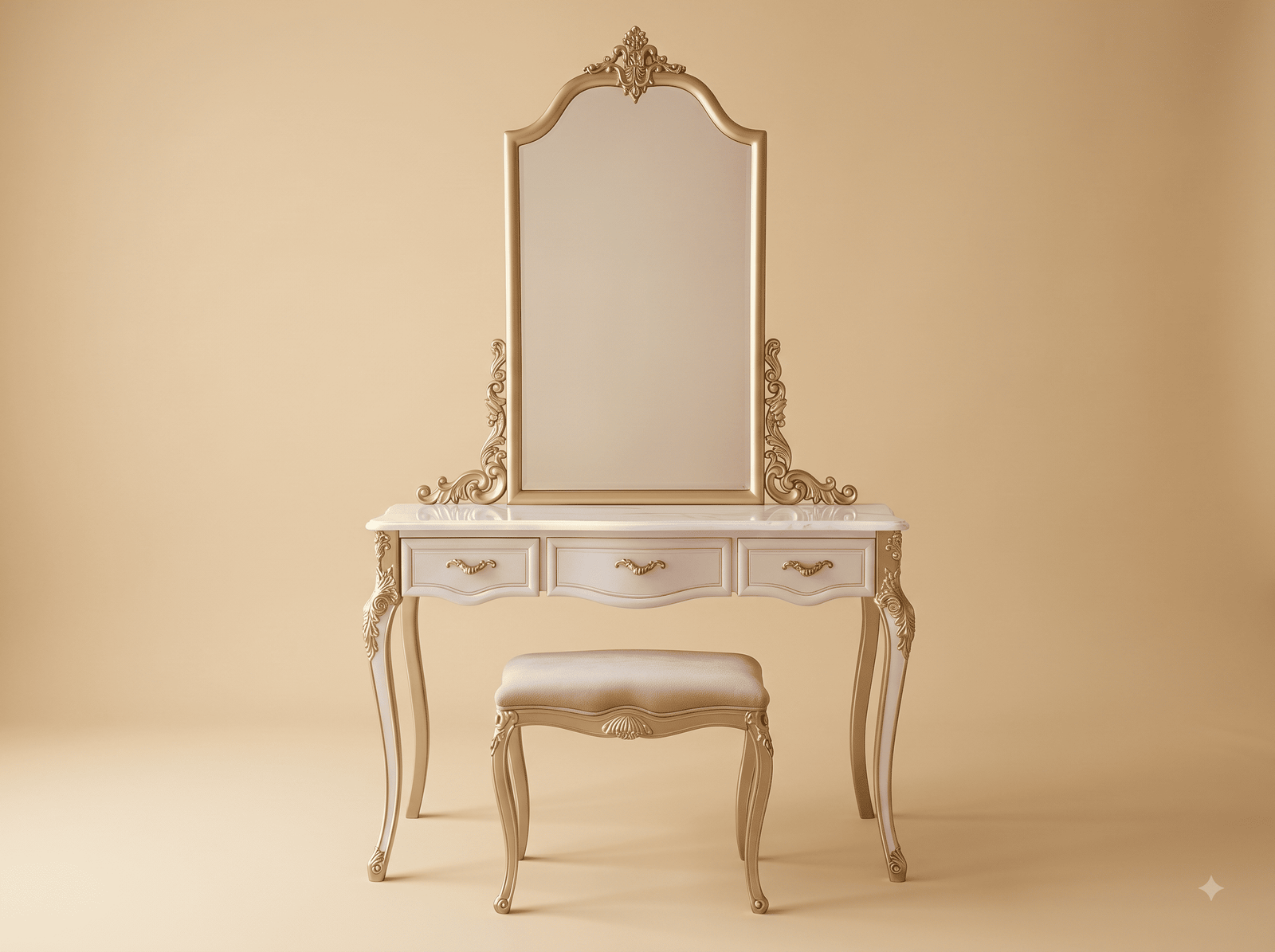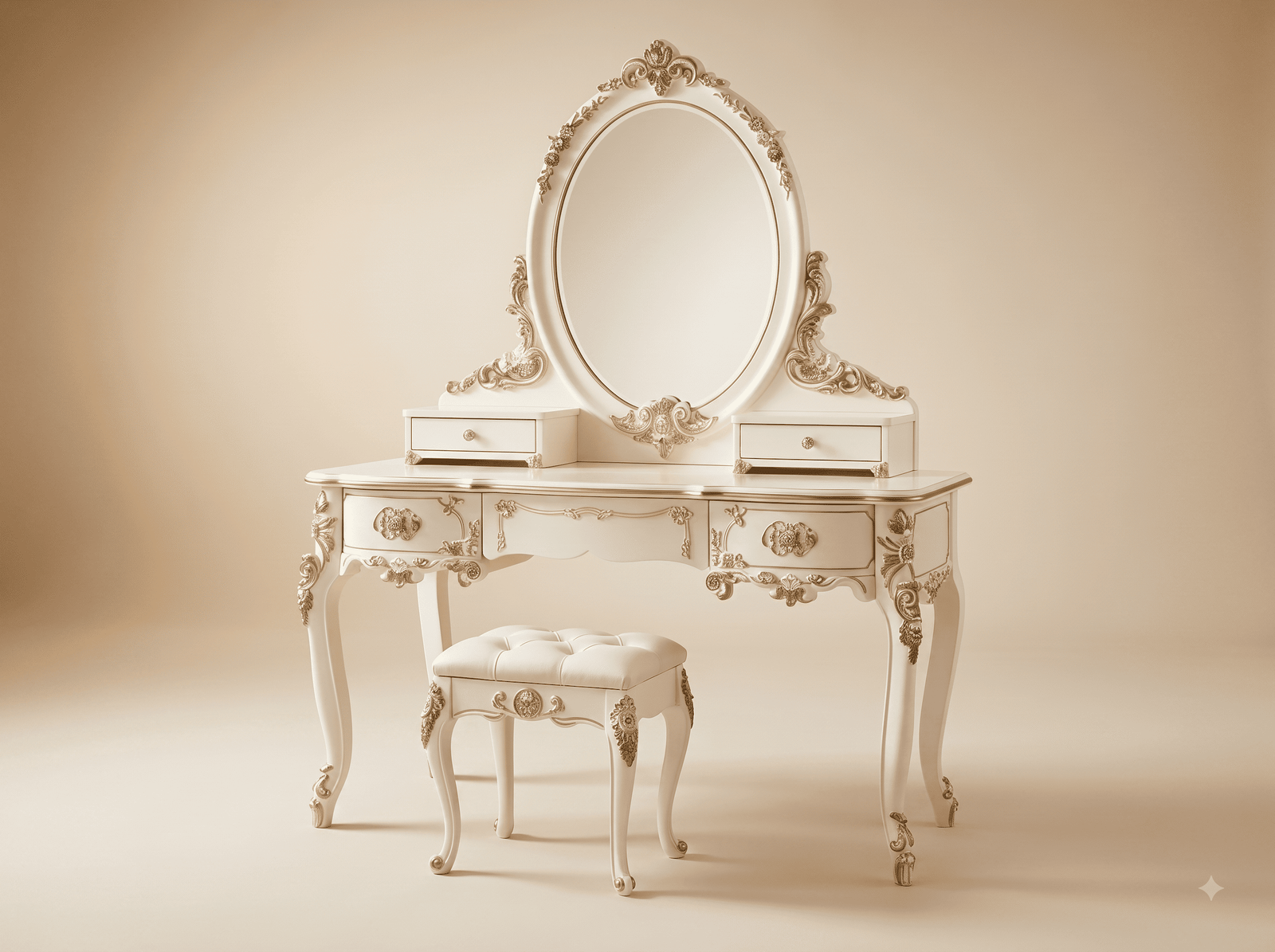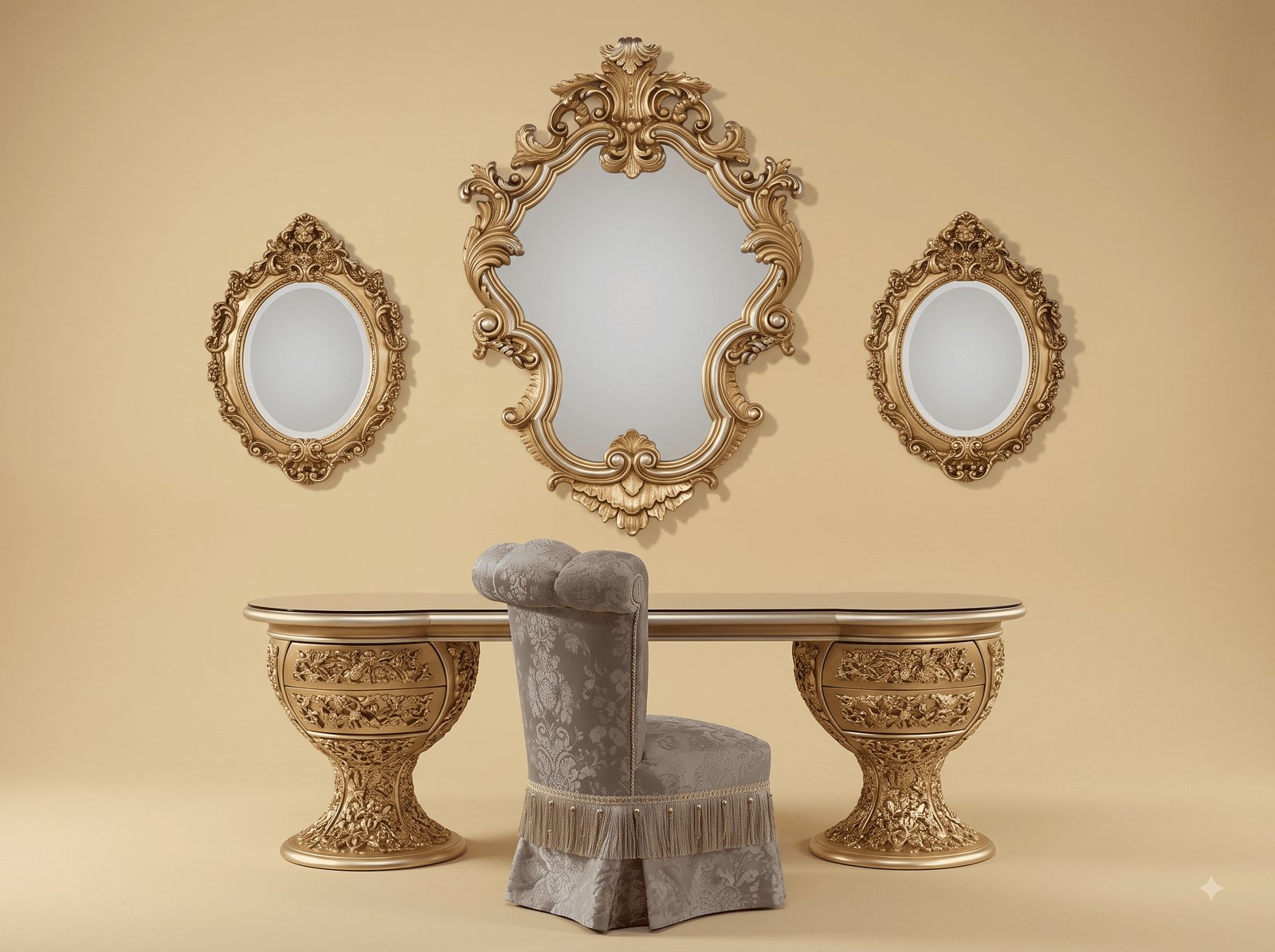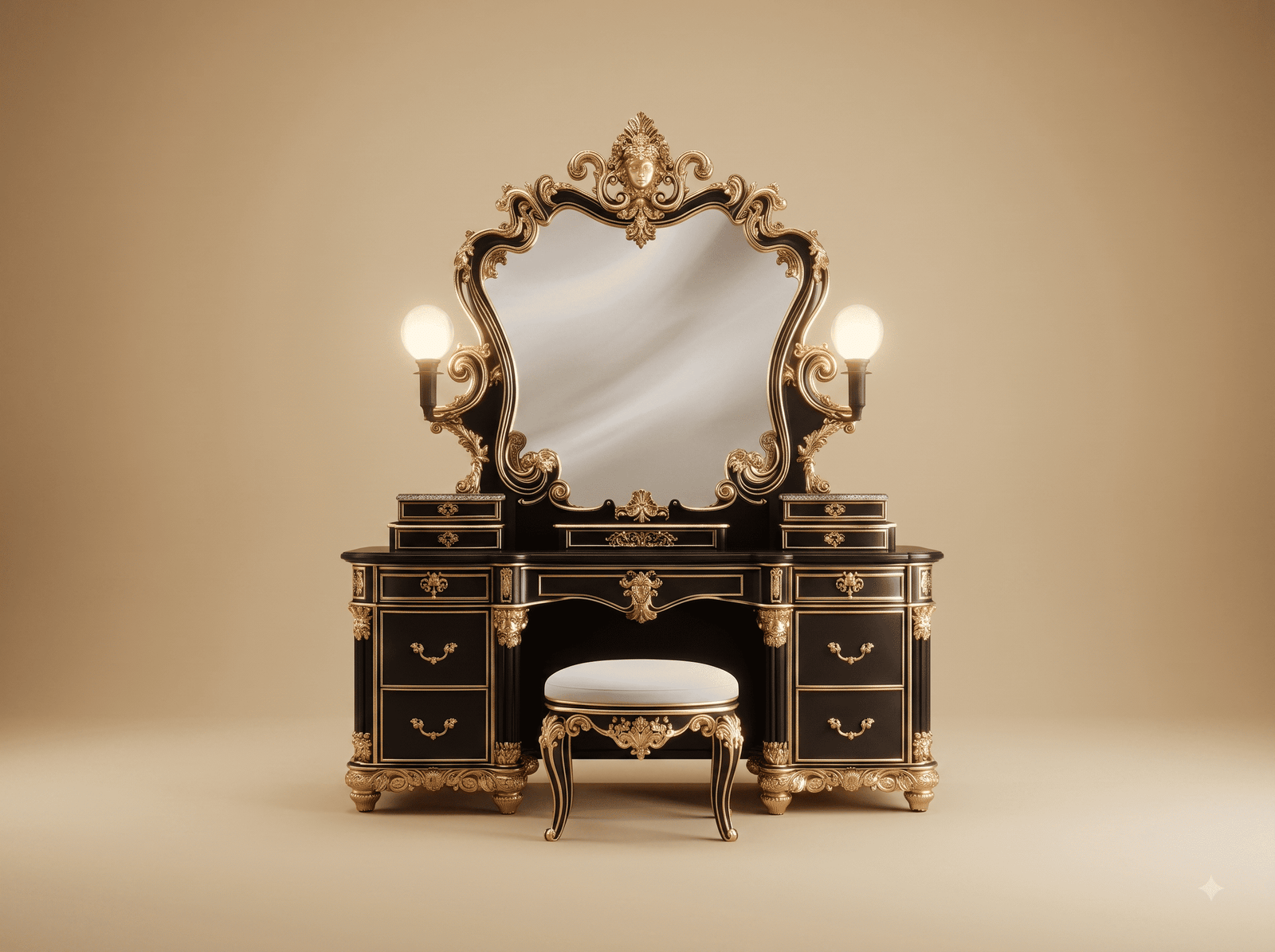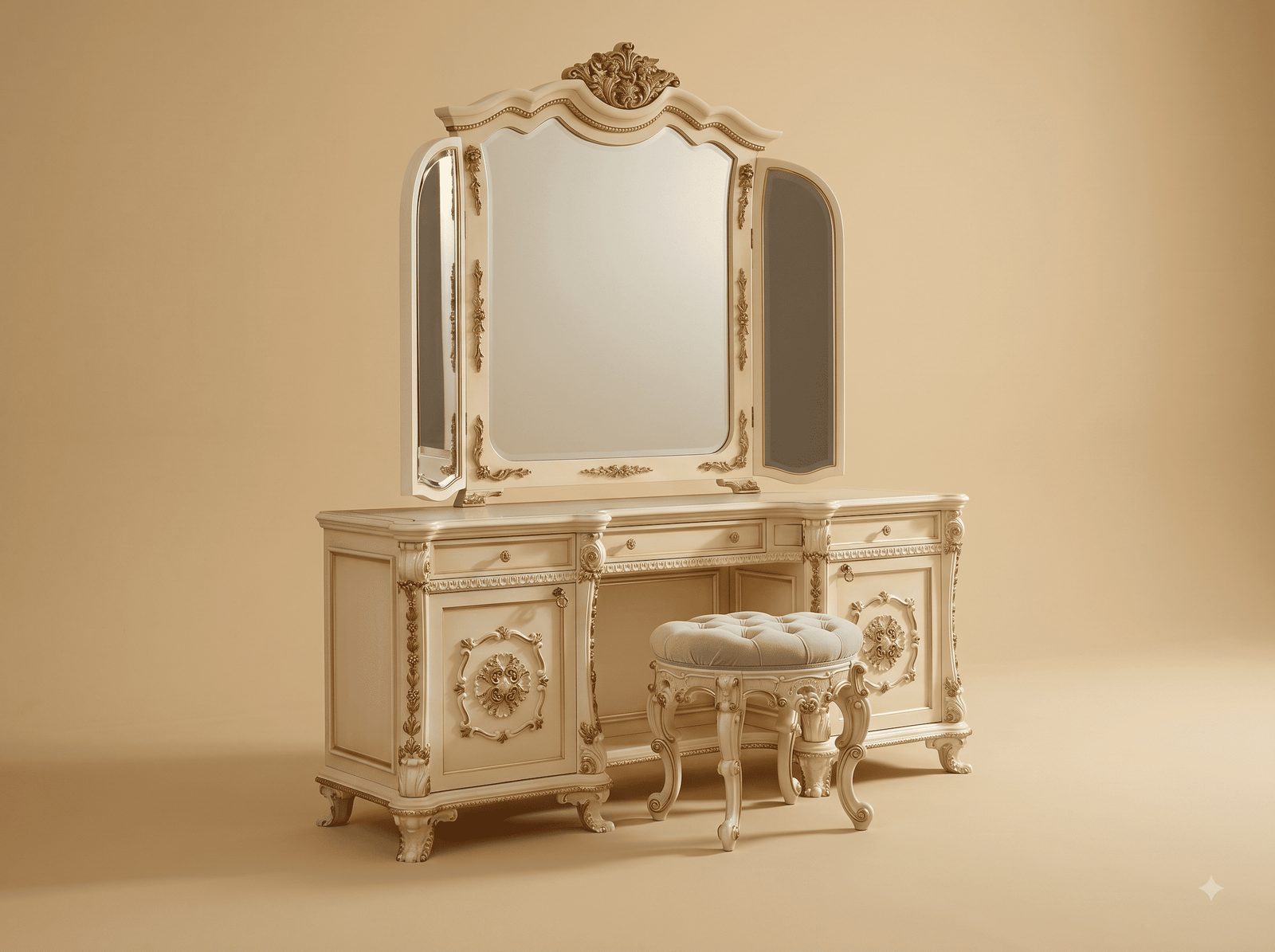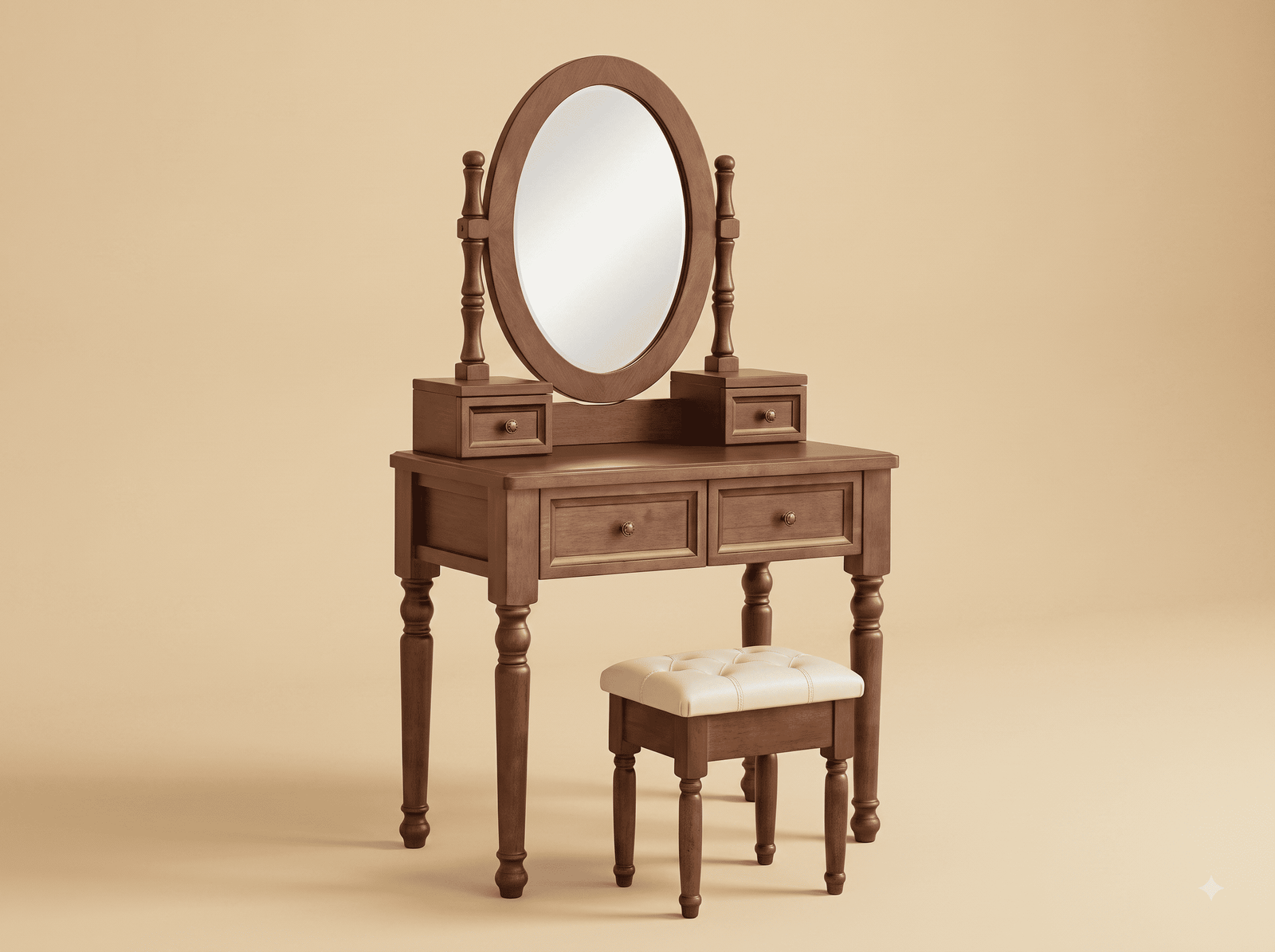
A clear finish is the hardest one to work under, because it removes every place a maker could hide.
Paint forgives. It covers a board that came from a duller part of the log, it fills a hairline at a joint, it makes two components cut from different stock look identical. Take the colour away and all of that is on show at arm's length, in daylight, forever.
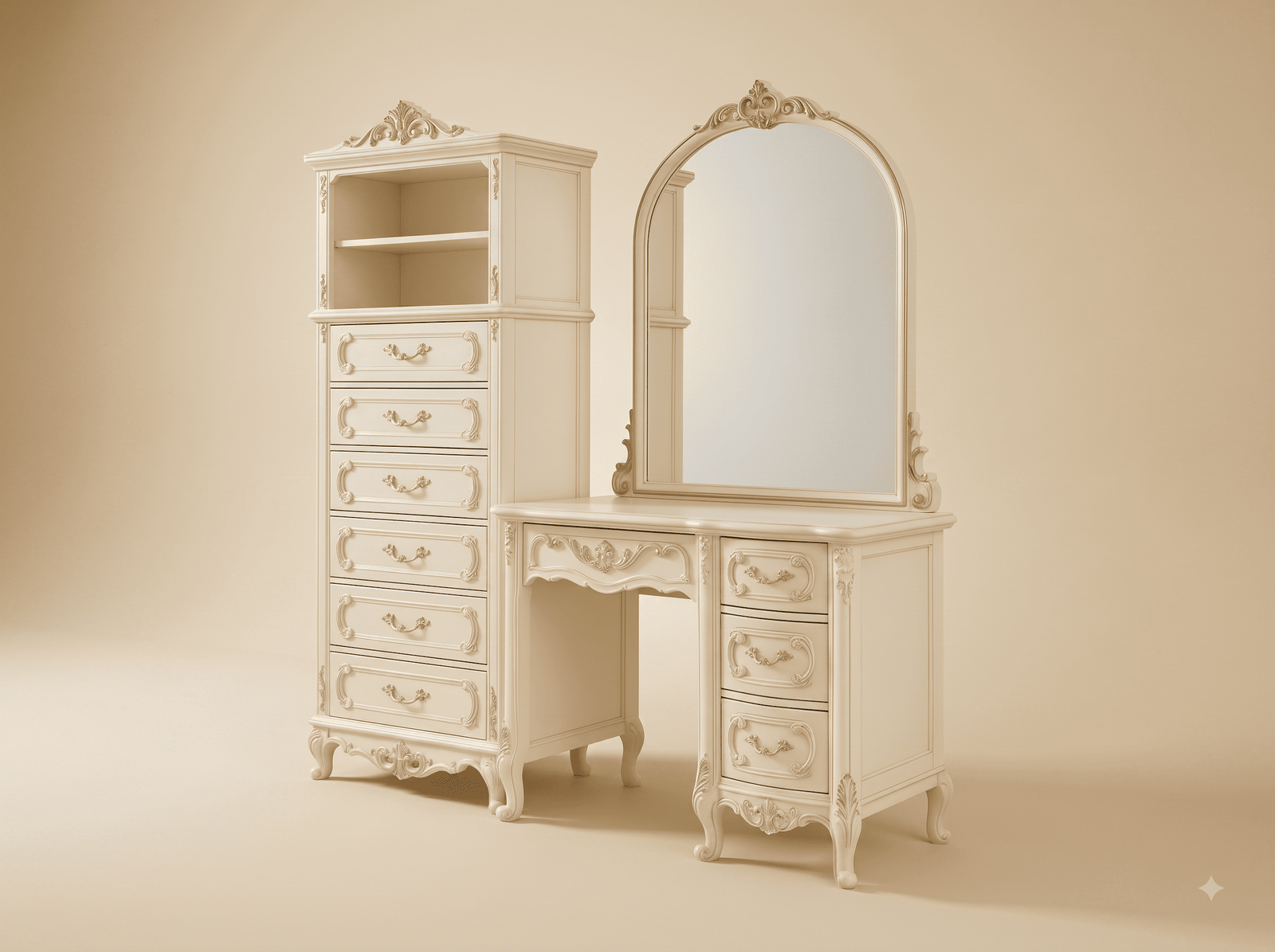
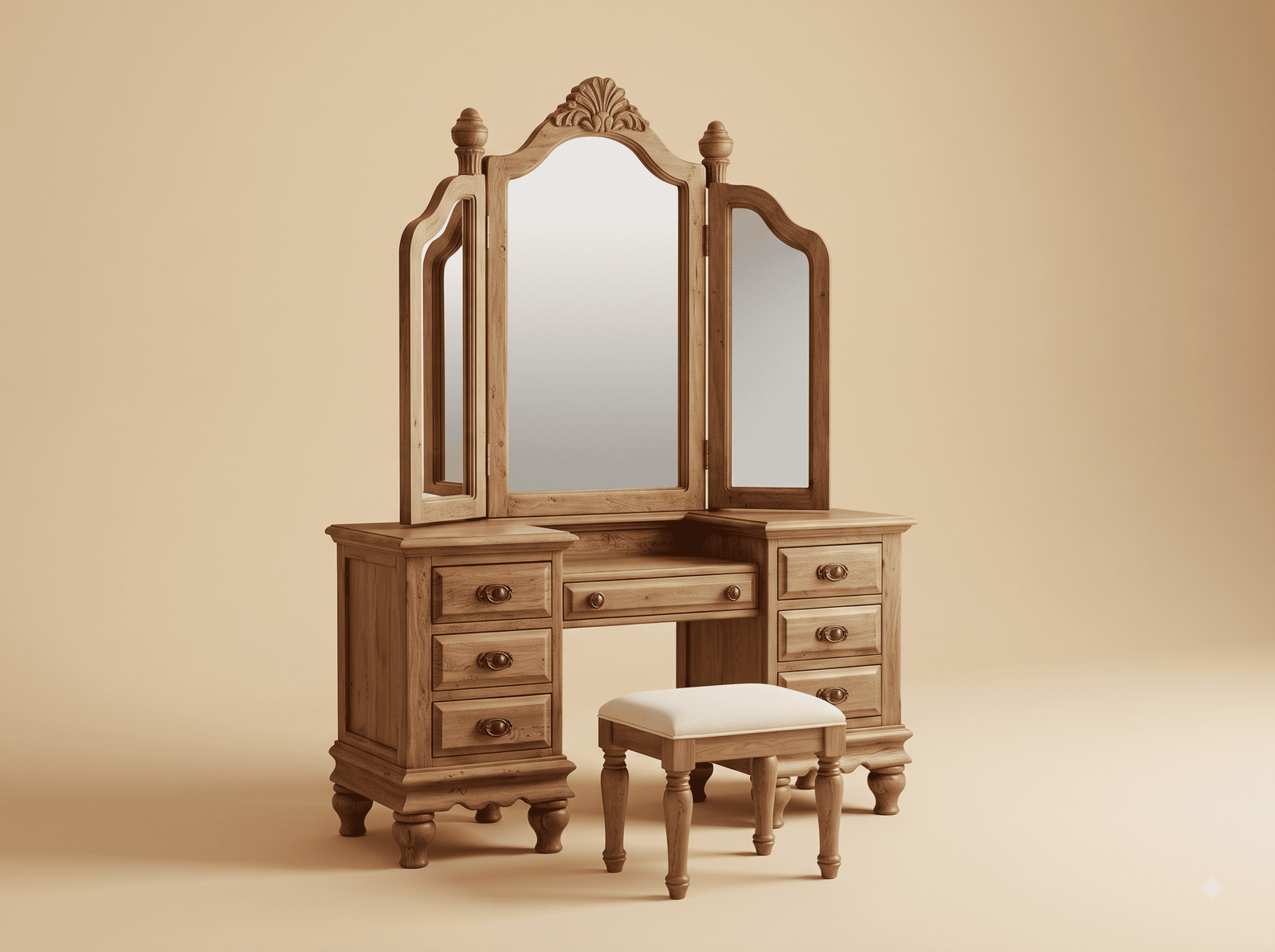
So a natural piece has to be decided at the timber stack rather than at the finishing bench. For a vanity like this one, our craftsmen set out the boards for all seven drawer fronts together and arrange them before cutting - looking at how the figure runs, matching the fronts within each pedestal so the grain steps down the stack in a related rhythm, and keeping the centre drawer's figure calm because it sits at eye level between the two.
The top is chosen last and separately. It is the widest single surface on the piece and the one you look down at every day, so it wants a board with even, quiet figure rather than a dramatic one that would fight the drawers below it.
None of this shows as a feature. It shows as a piece that simply looks right, and it is the difference between solid wood furniture and furniture that happens to be made of wood.
 Ask Price On WhatsApp