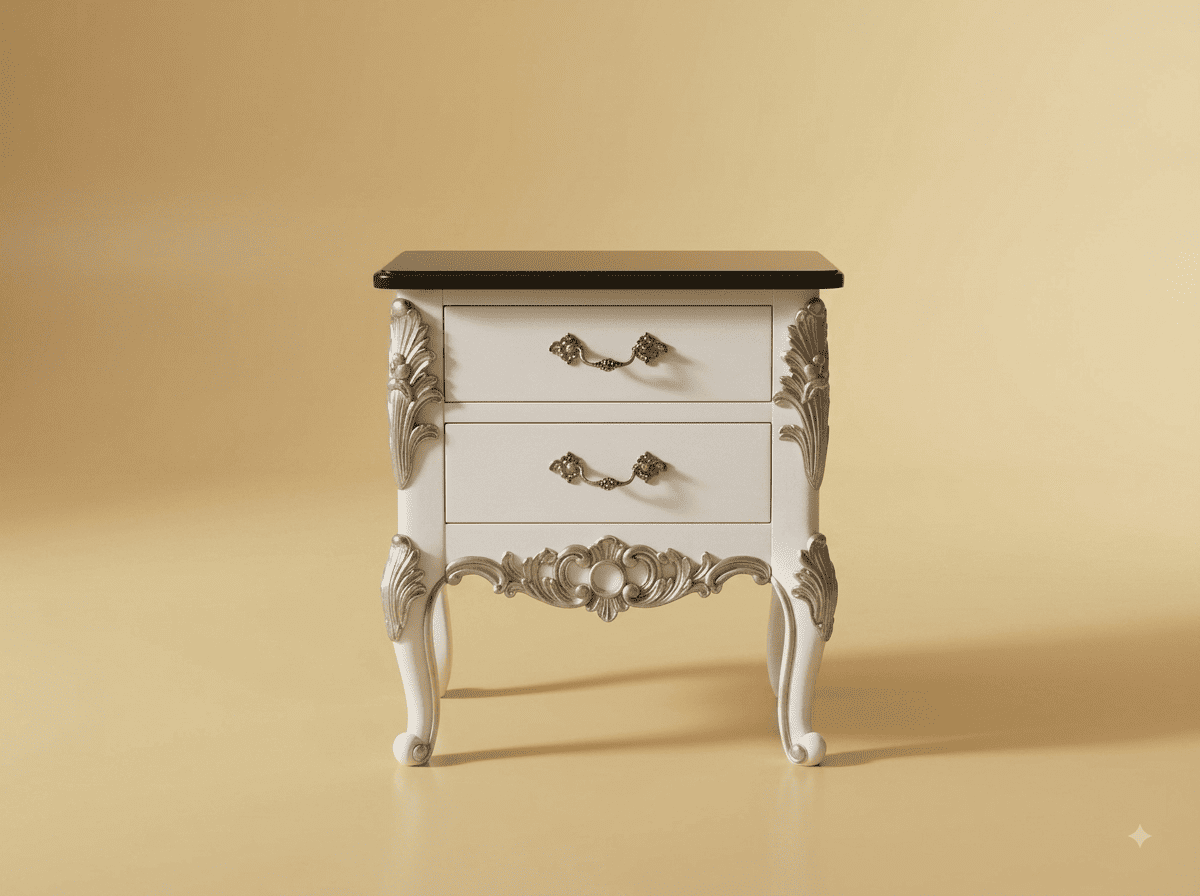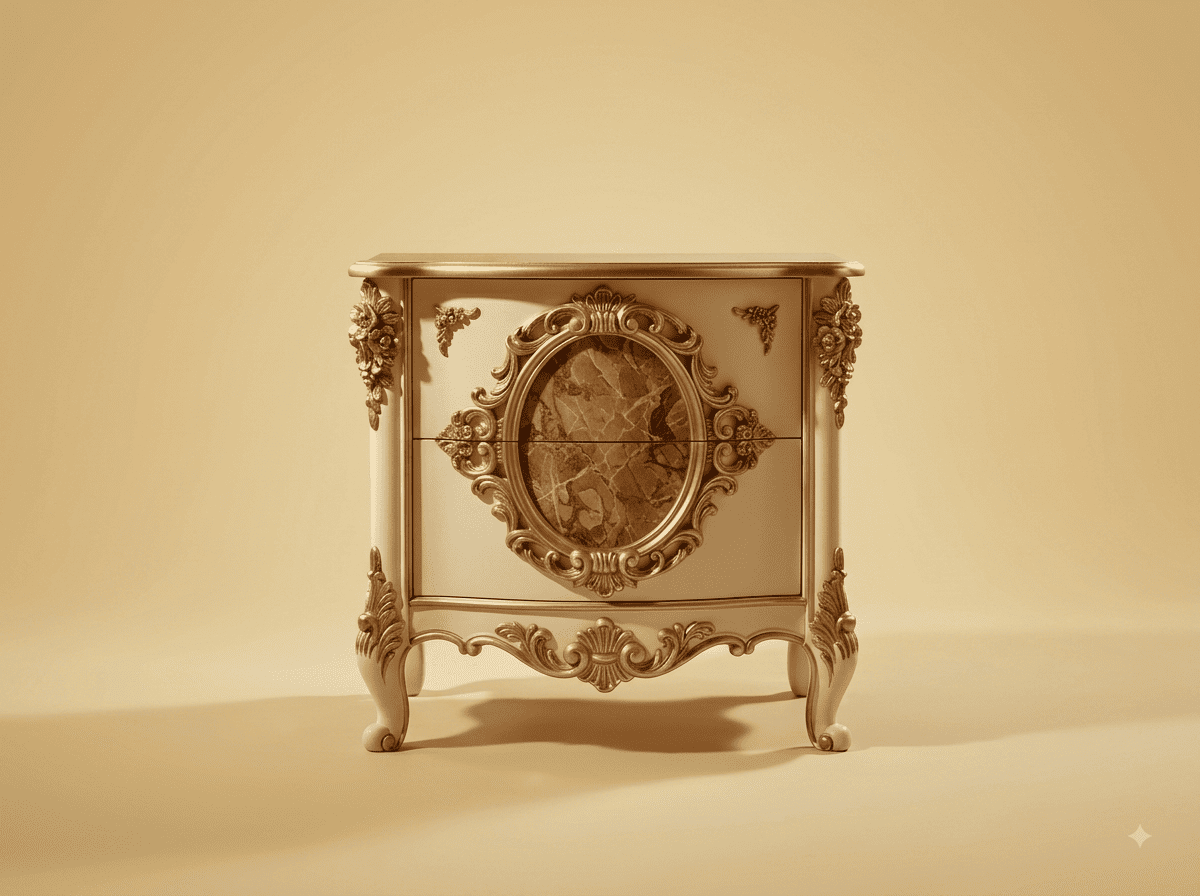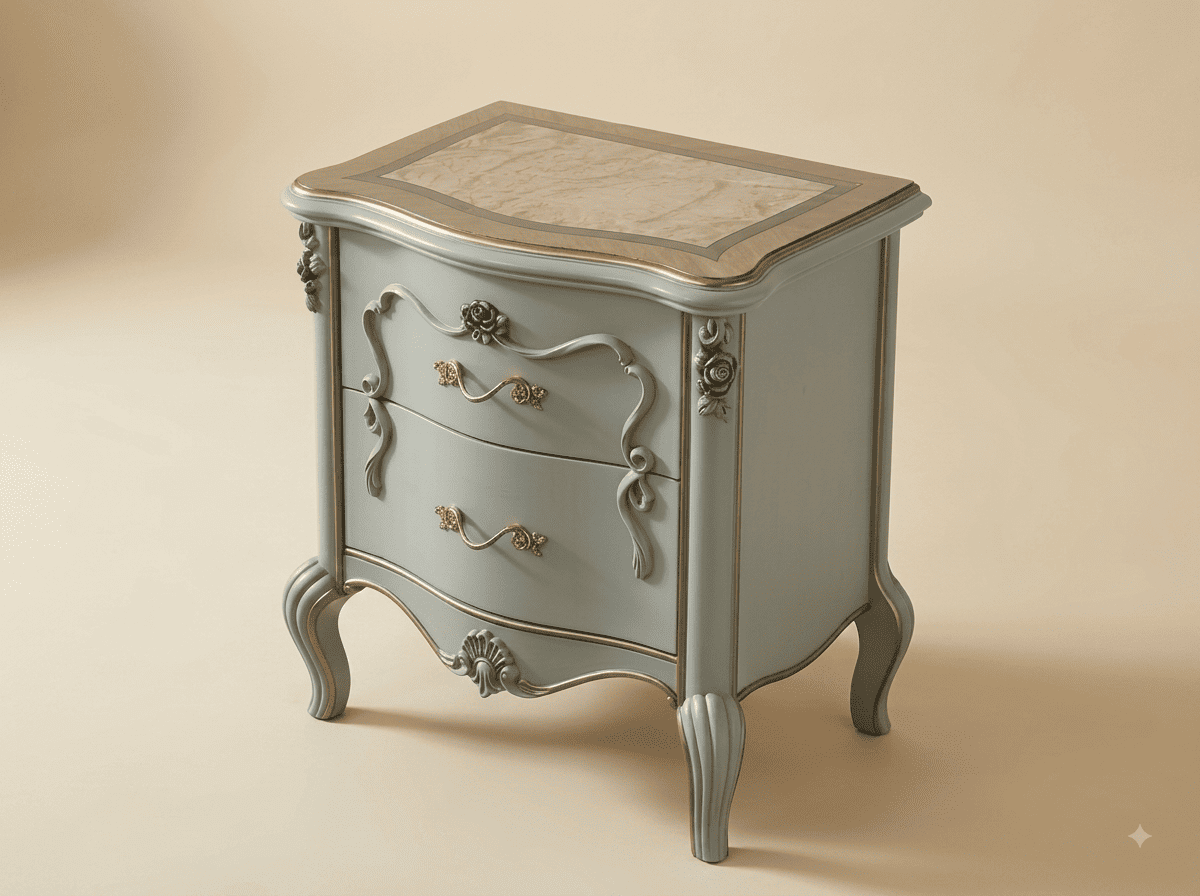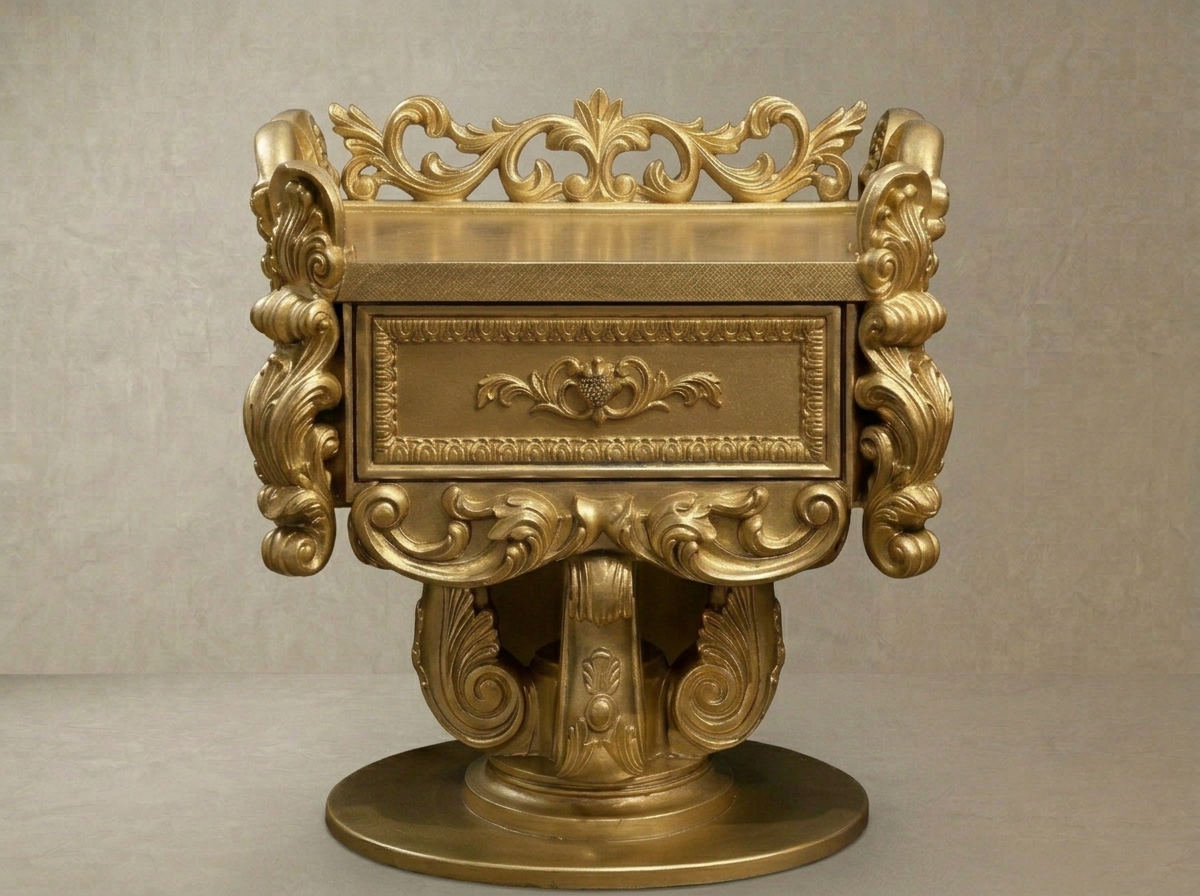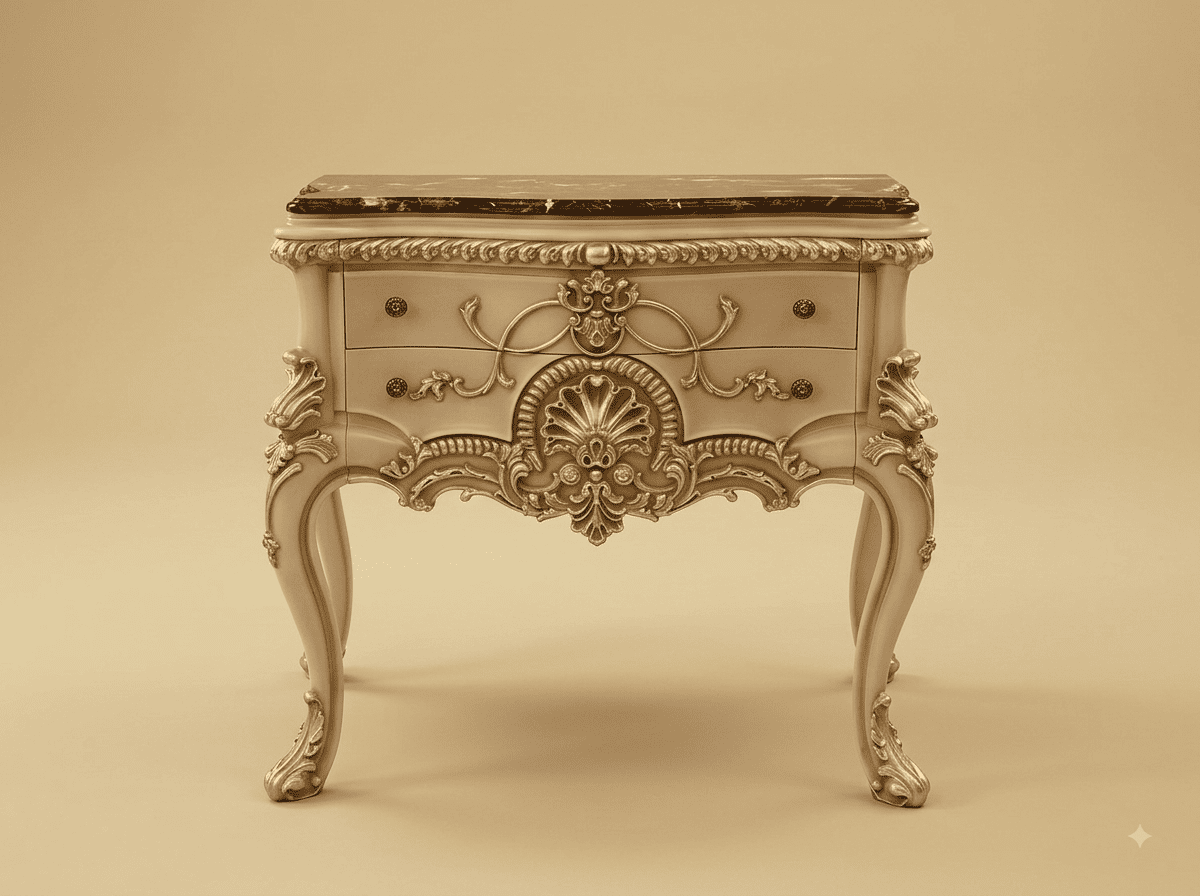
Look at where the carved shell on the apron ends. Its upper leaves stop just short of the lower drawer, and the drawer front is shaped to receive them - so from a step away the ornament reads as one continuous piece of carving running from the fixed apron up onto a drawer that opens.
Making that work is a matter of a very small gap, decided very deliberately.
The drawer has to open. Which means the carving on the fixed apron cannot actually touch the carving on the moving front, and the two have to be separated by enough clearance that the drawer never catches - including in humid months when everything is at its tightest.
But clearance is visible. Too much and the eye sees a gap, the illusion breaks, and the shell looks like it has been cut in half. So the gap has to be as small as it can be and no smaller.
Our carvers set that distance by working both parts together in the assembled case, with the drawer fitted, and then shaping the meeting edges so they overlap visually while standing clear physically. The leaf tips on the apron are carved to lean slightly forward, which puts them in front of the drawer line rather than beside it - so the shadow closes the gap that the timber cannot.
It is the same trick a good picture frame uses, and it is invisible when it works.
 Ask Price On WhatsApp