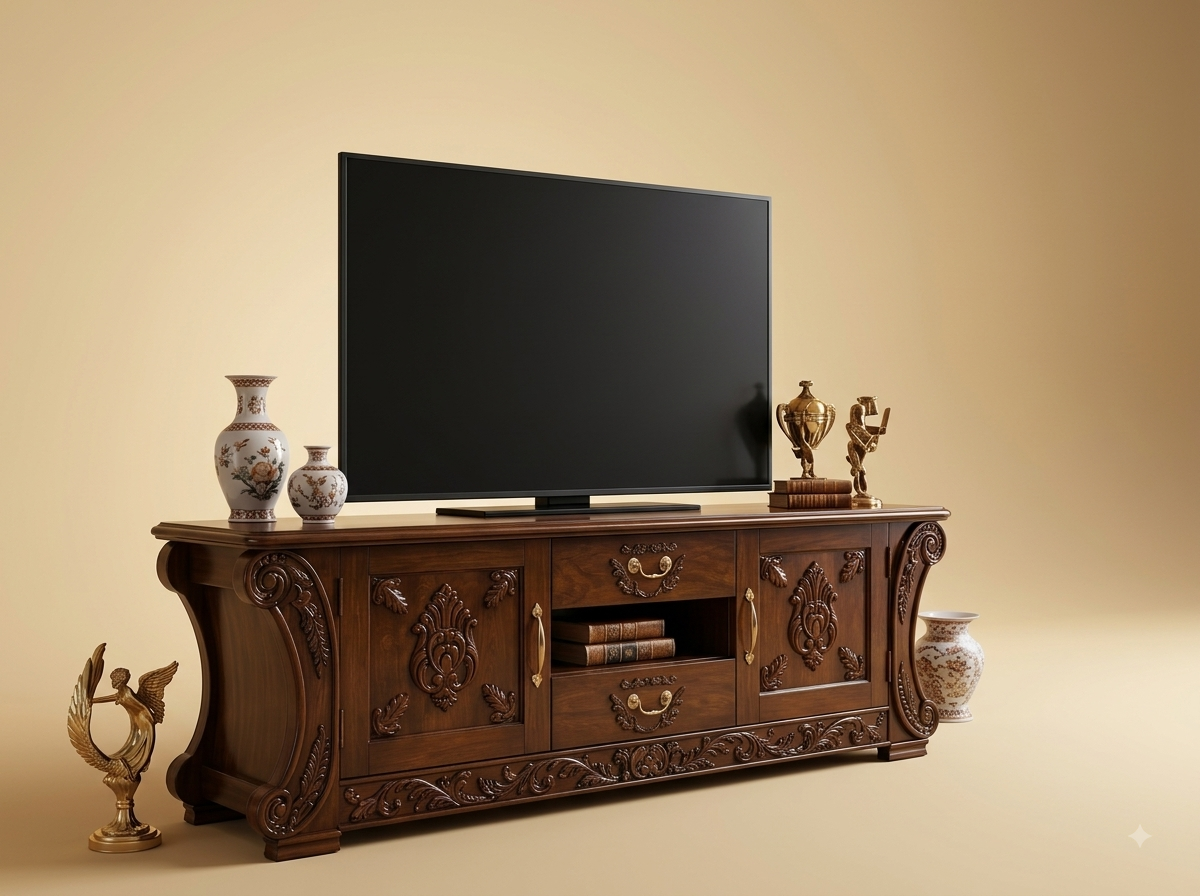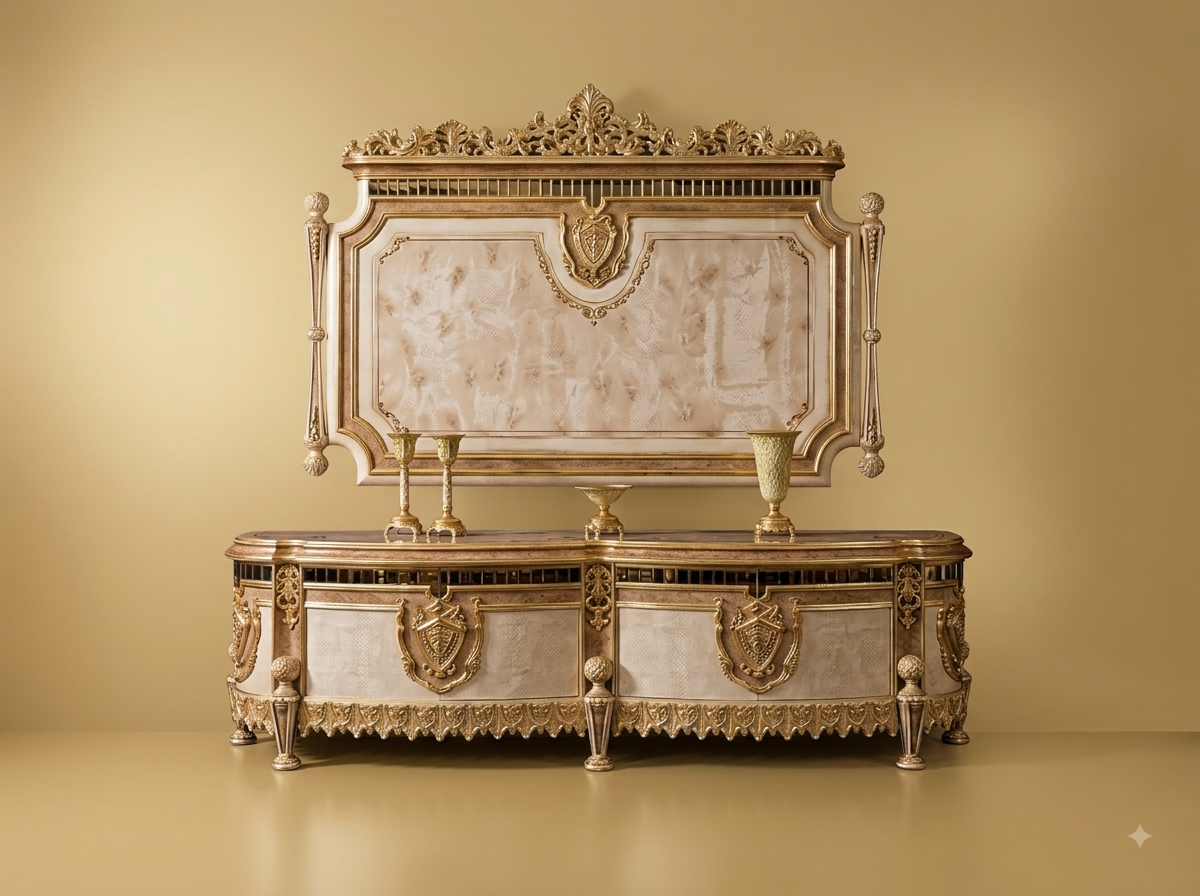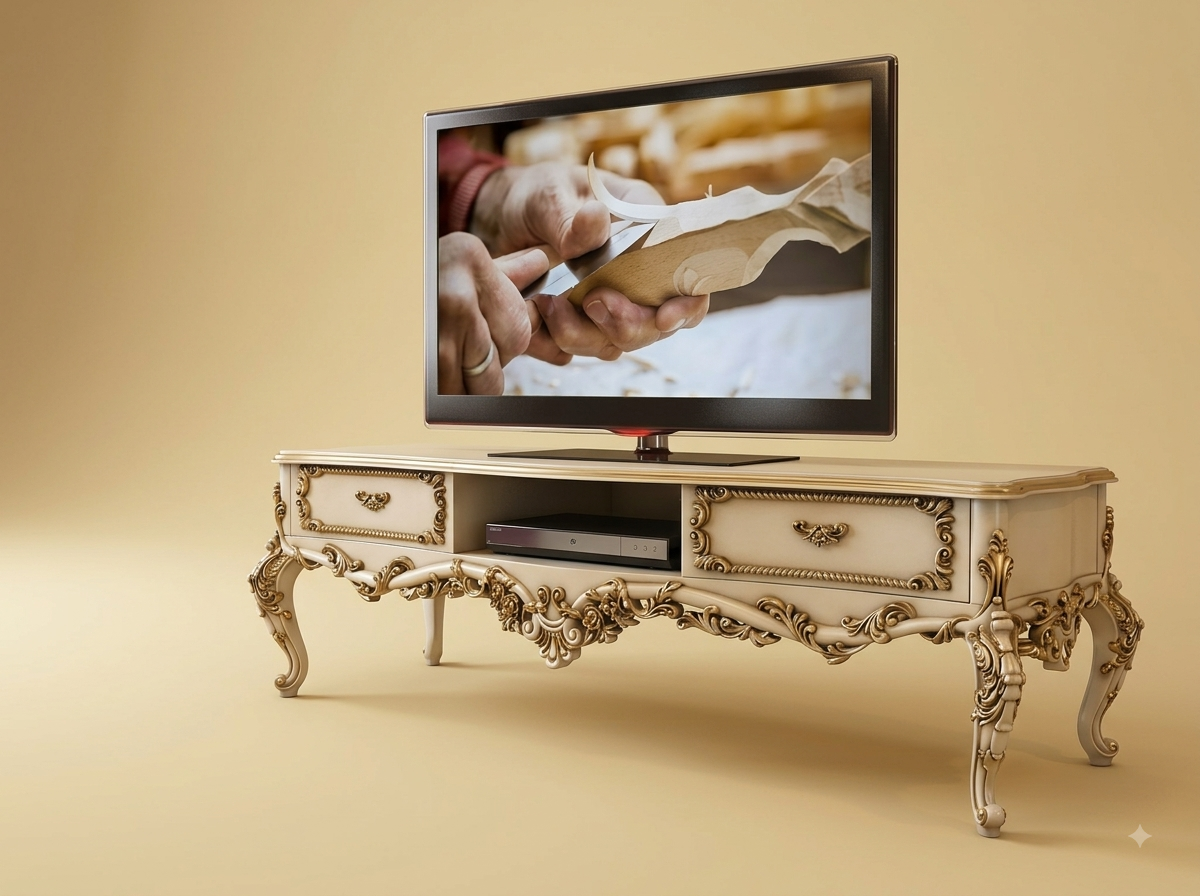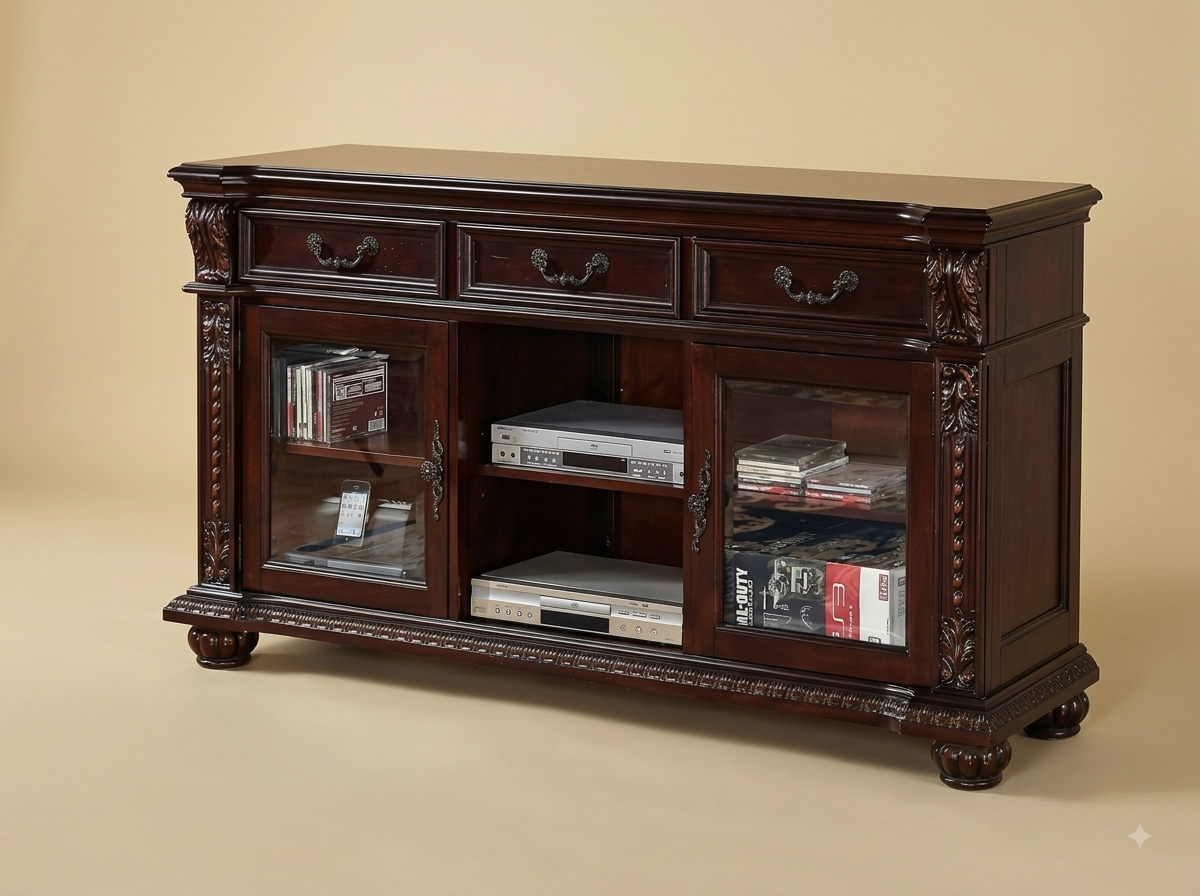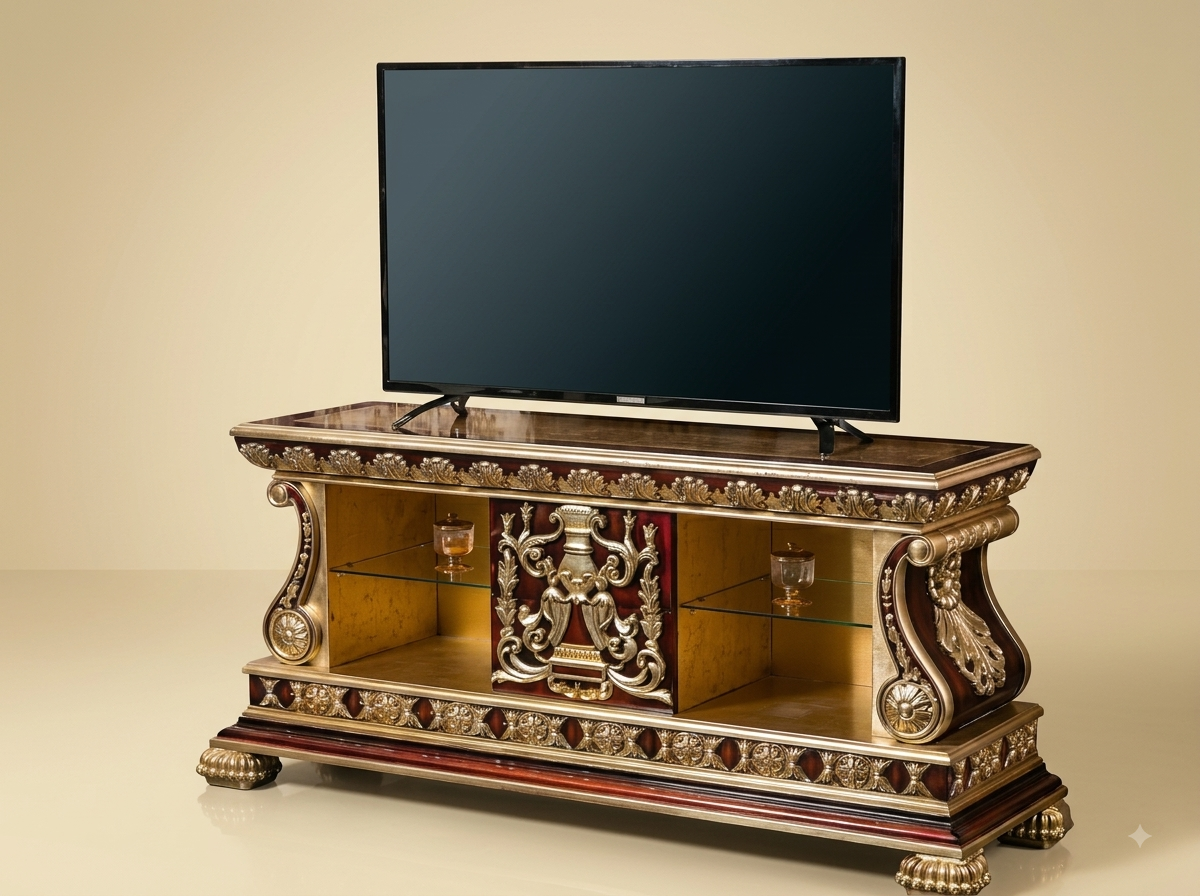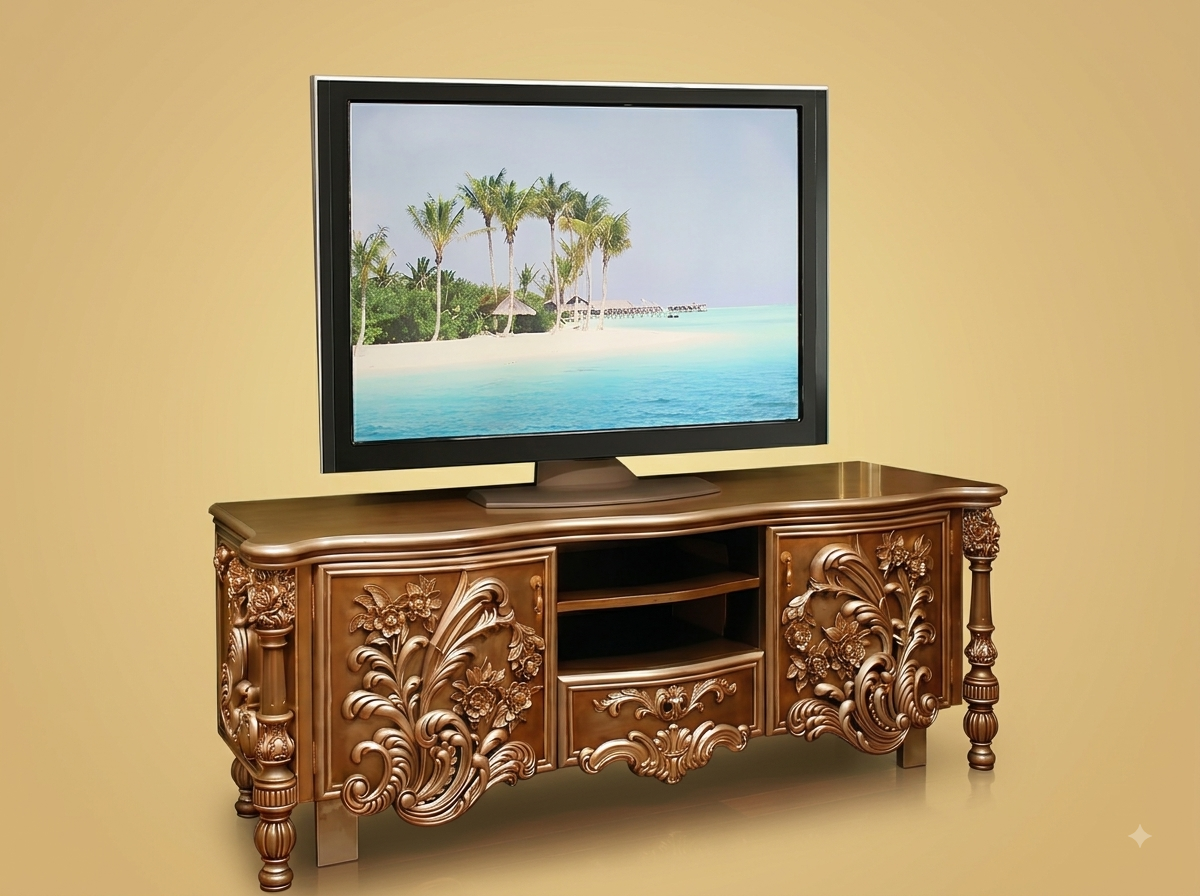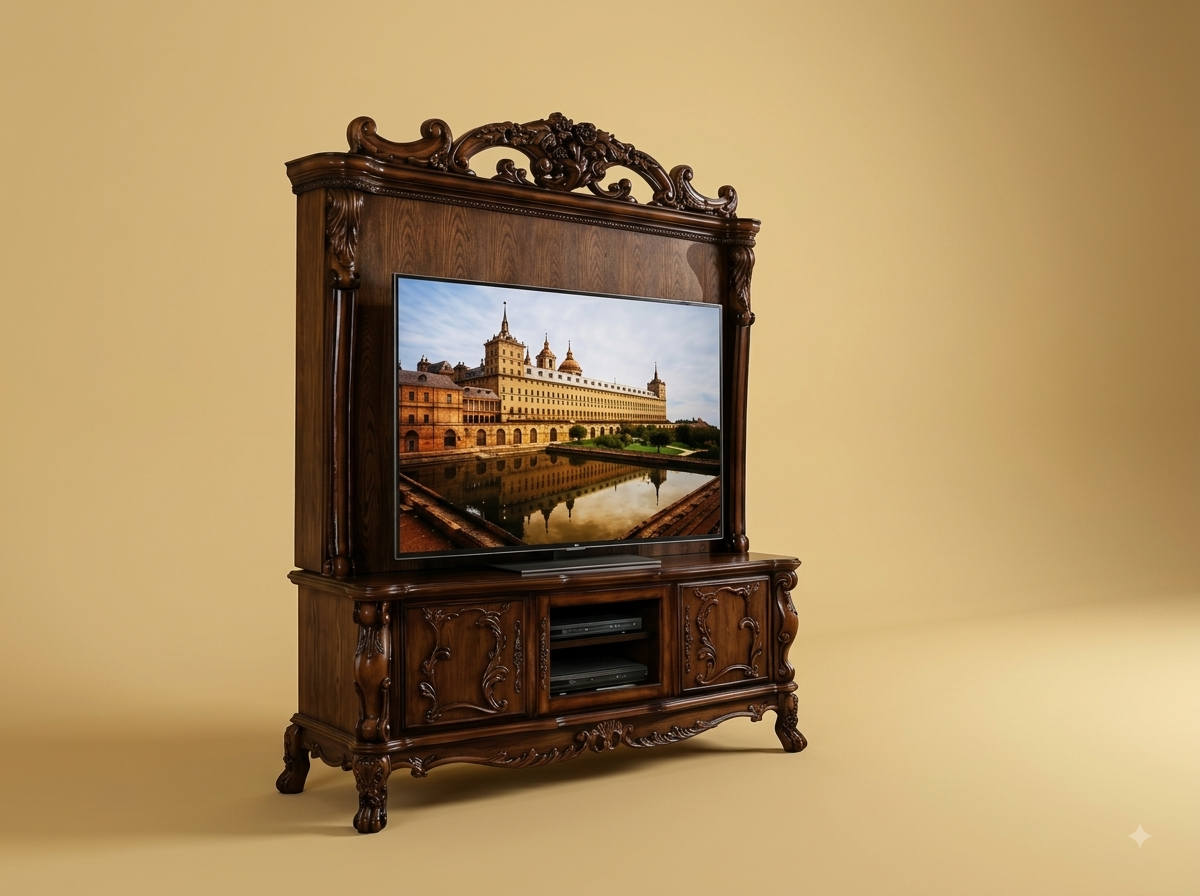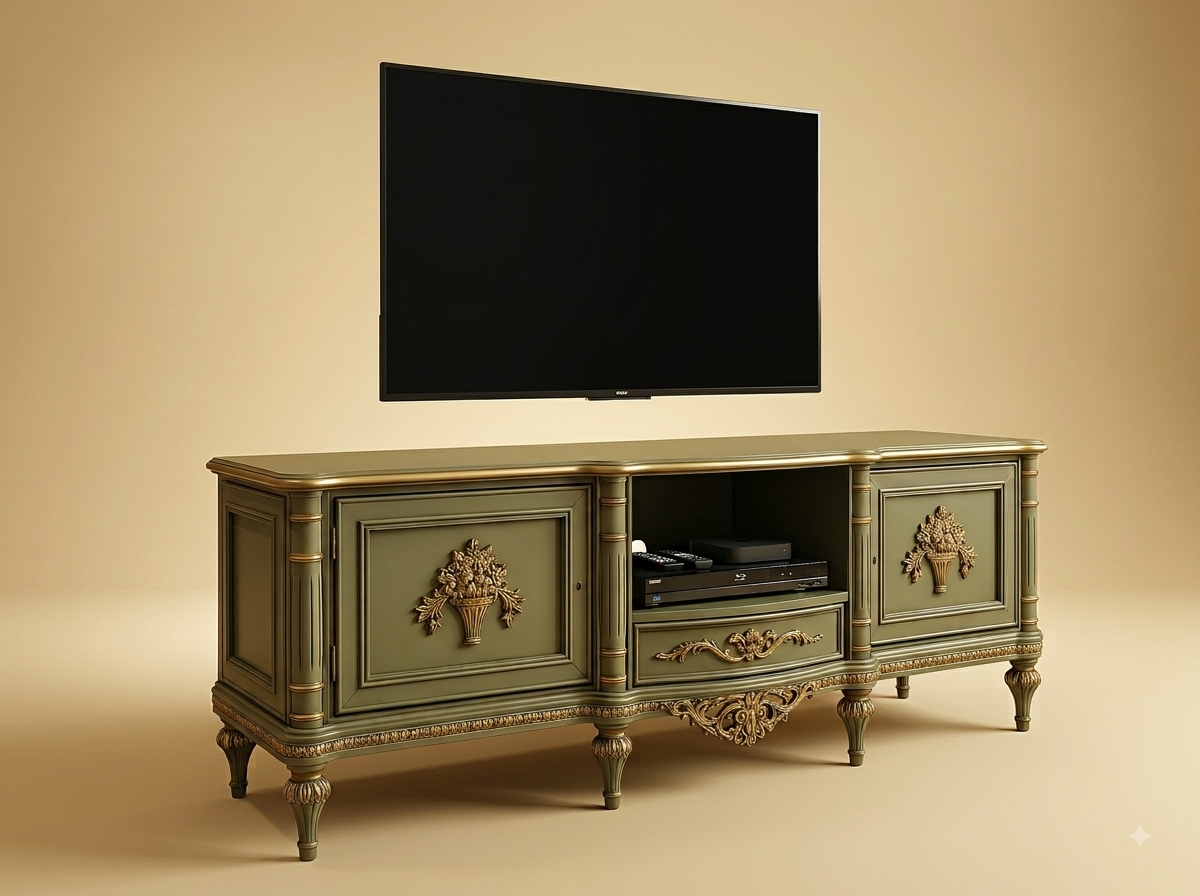
The legs on this cabinet are turned, tapered and fluted - and they are also the reason the piece will still be standing straight in thirty years.
A long, low cabinet on short legs is a structure that wants to rack, meaning the rectangle it forms in plan slowly becomes a parallelogram every time it is pushed across a floor. The usual answer is a stretcher between the legs, which is ugly under a television and gets kicked.
So our artisans do it differently. Each leg is turned with a square block at its head, and that block is jointed into the carcass corner on two faces rather than one, top and side, which triangulates the joint. The apron rail is then tenoned through into the same block. Three members meeting in one solid block cannot rack without the timber itself failing.
It is why the legs are turned from the same stock as the block rather than being dowelled on afterwards - the common shortcut, and the reason so many low cabinets develop a lean.
 Ask Price On WhatsApp