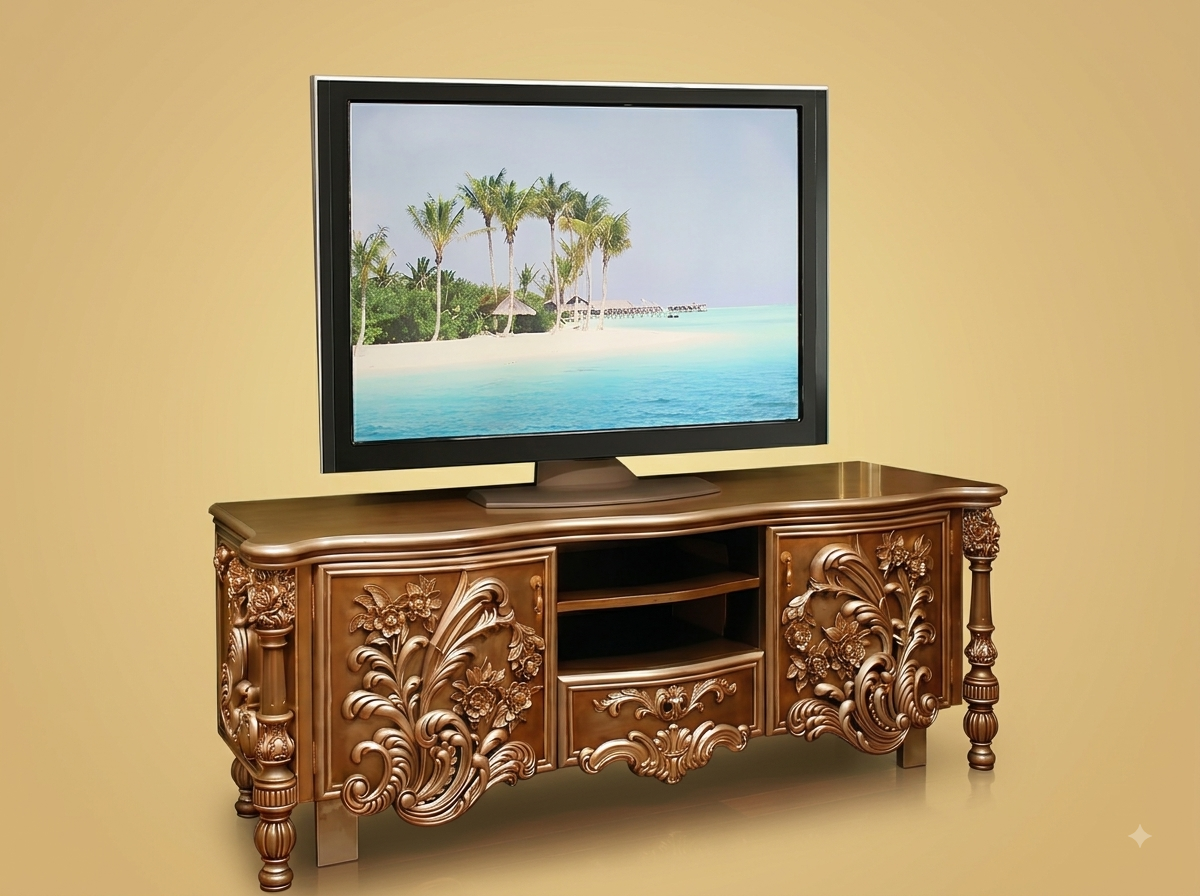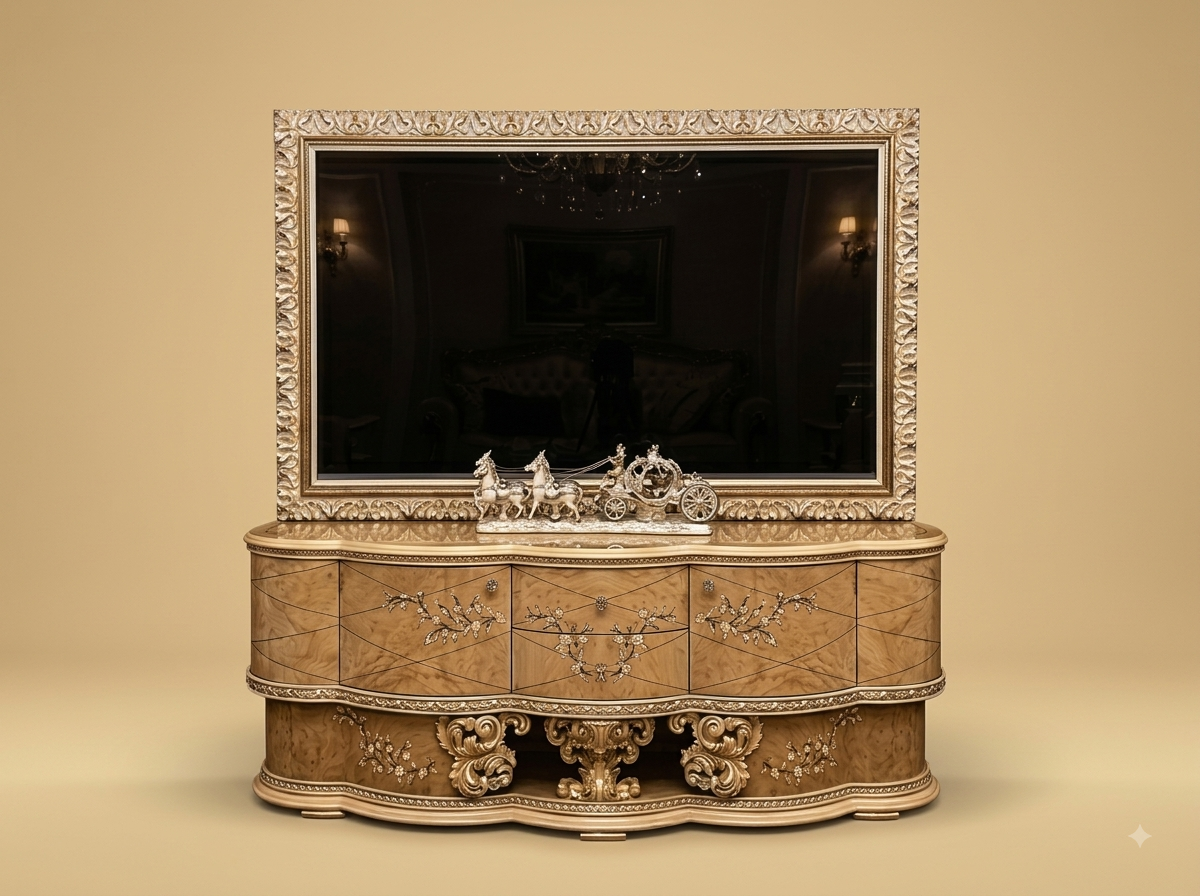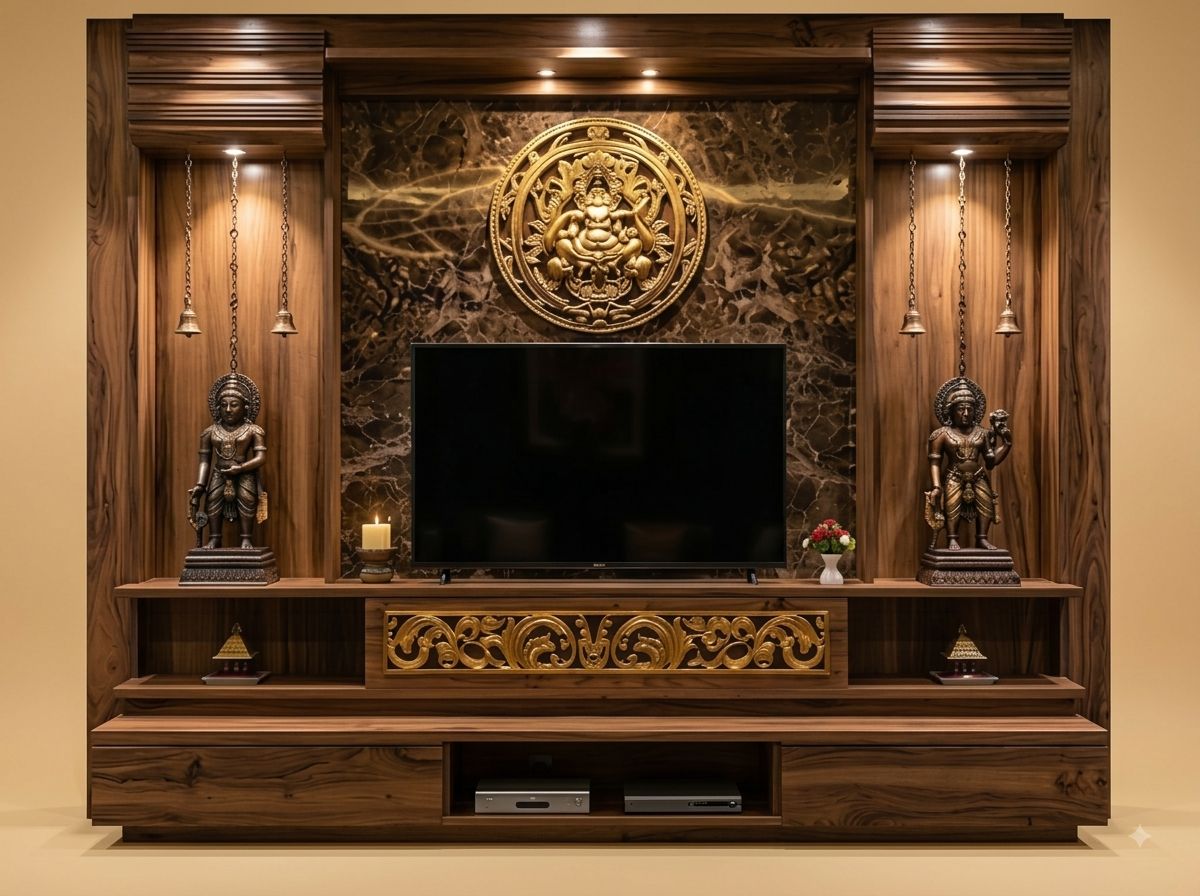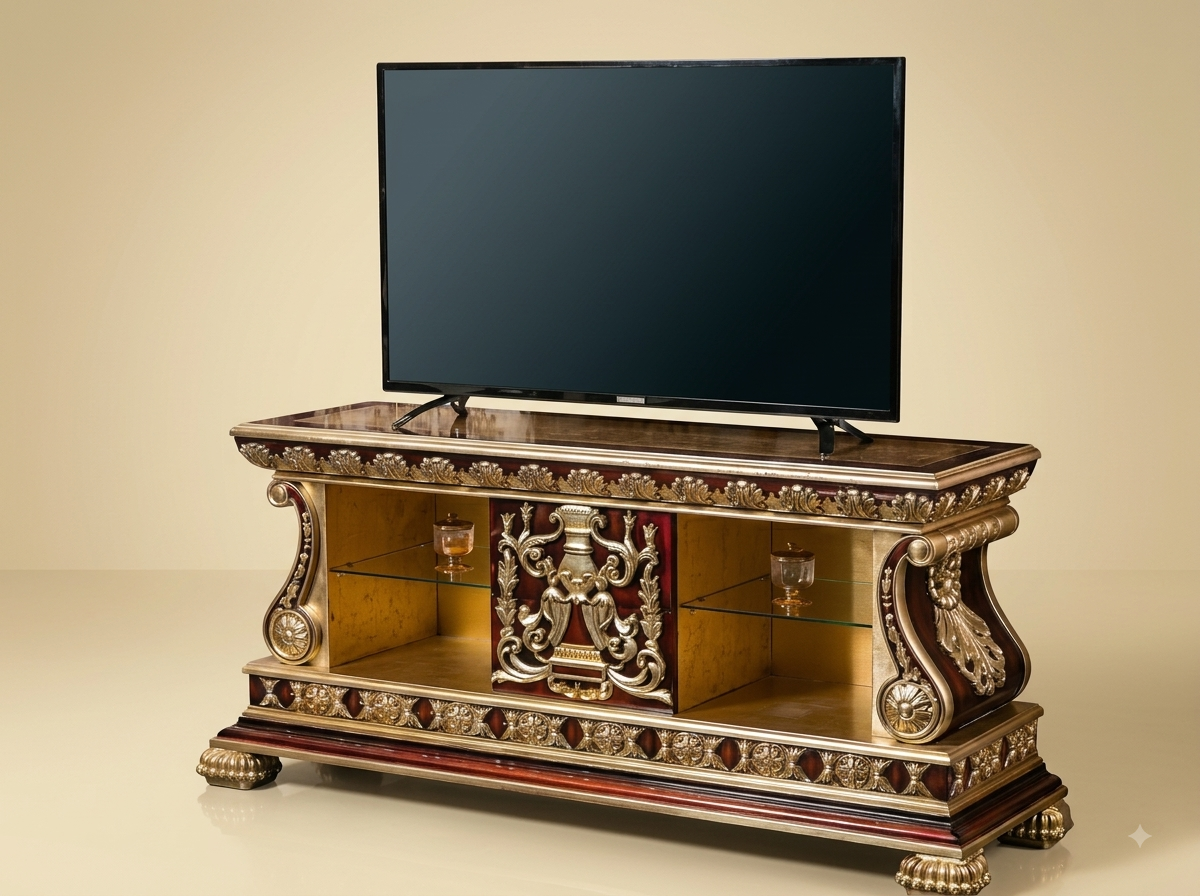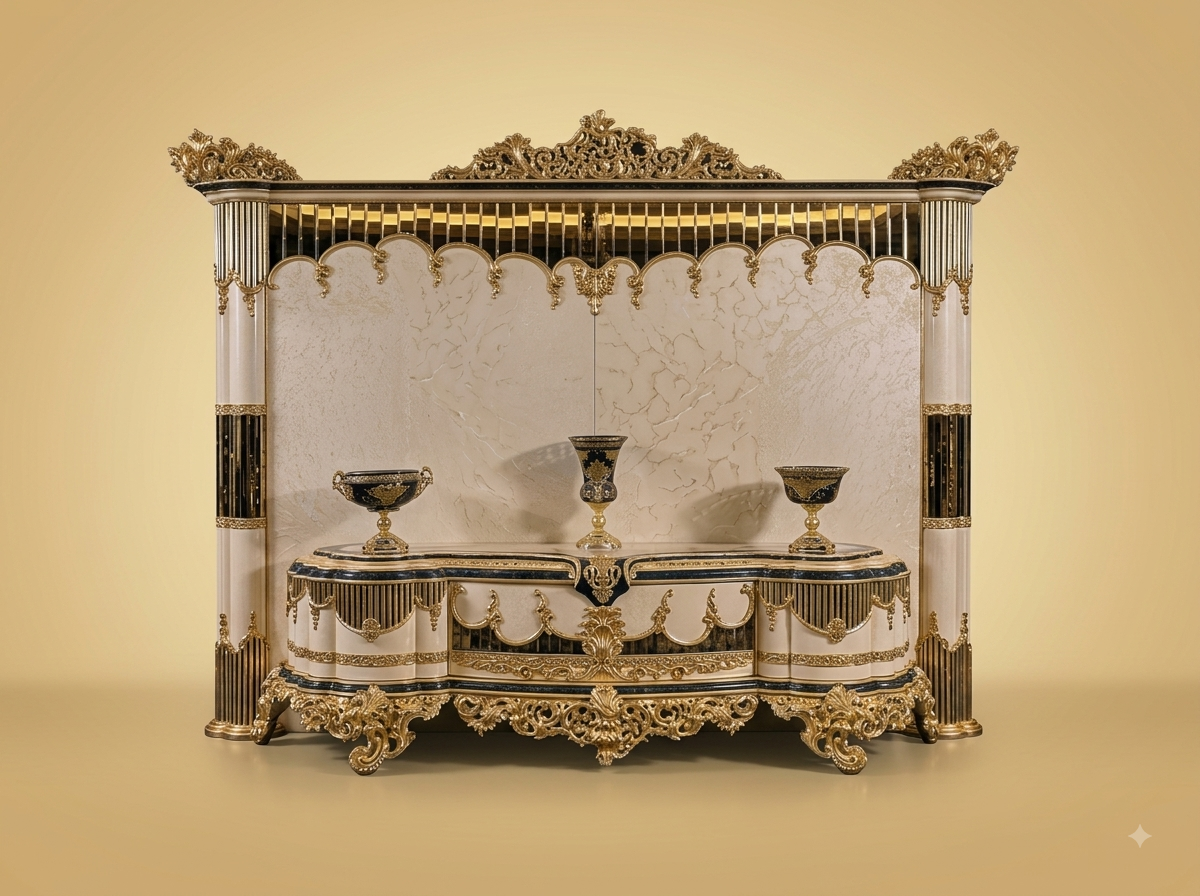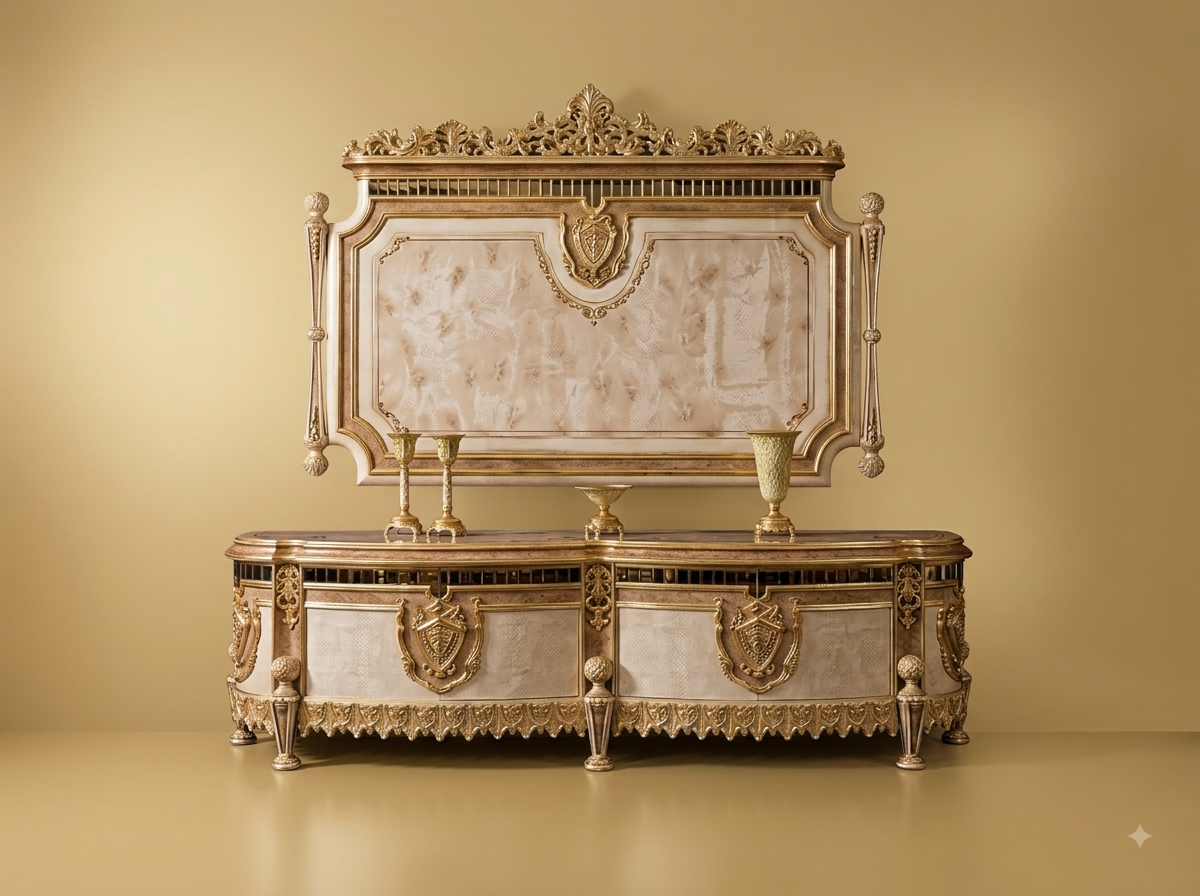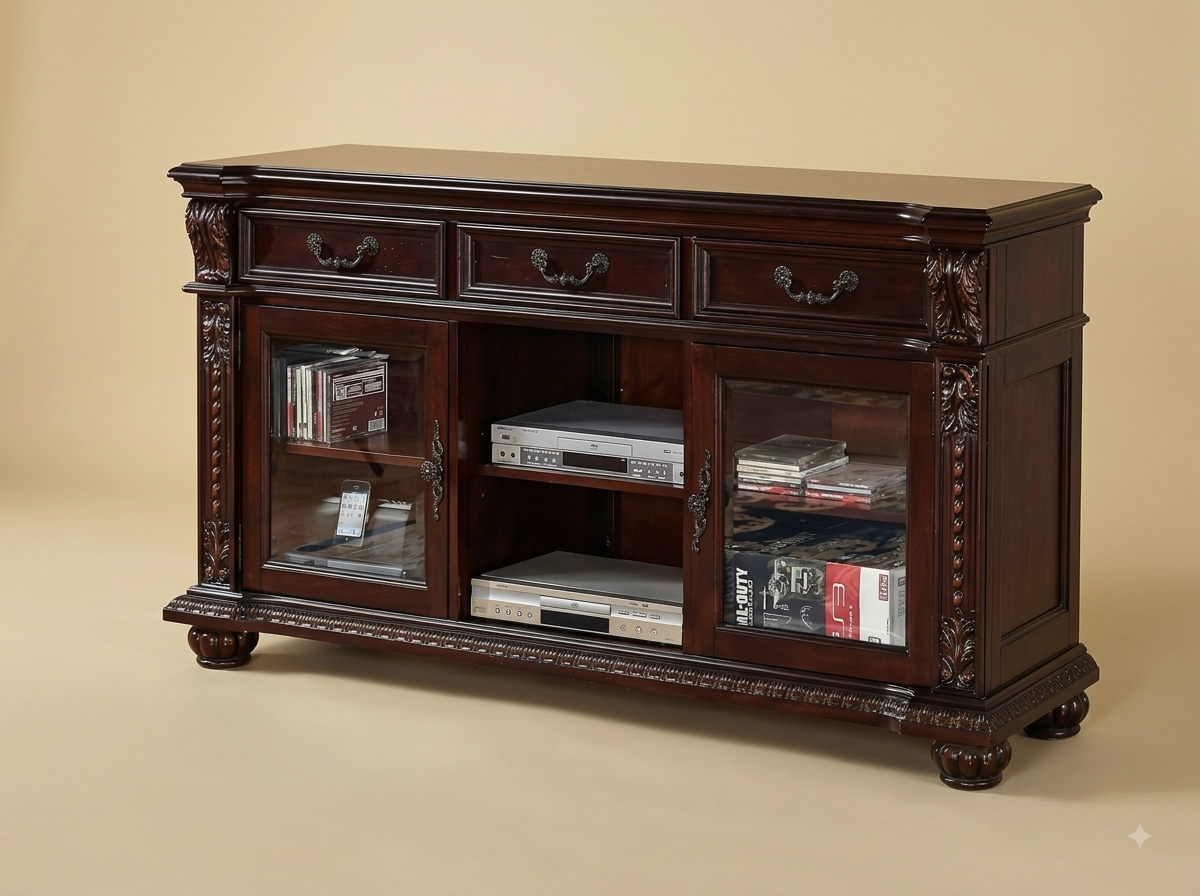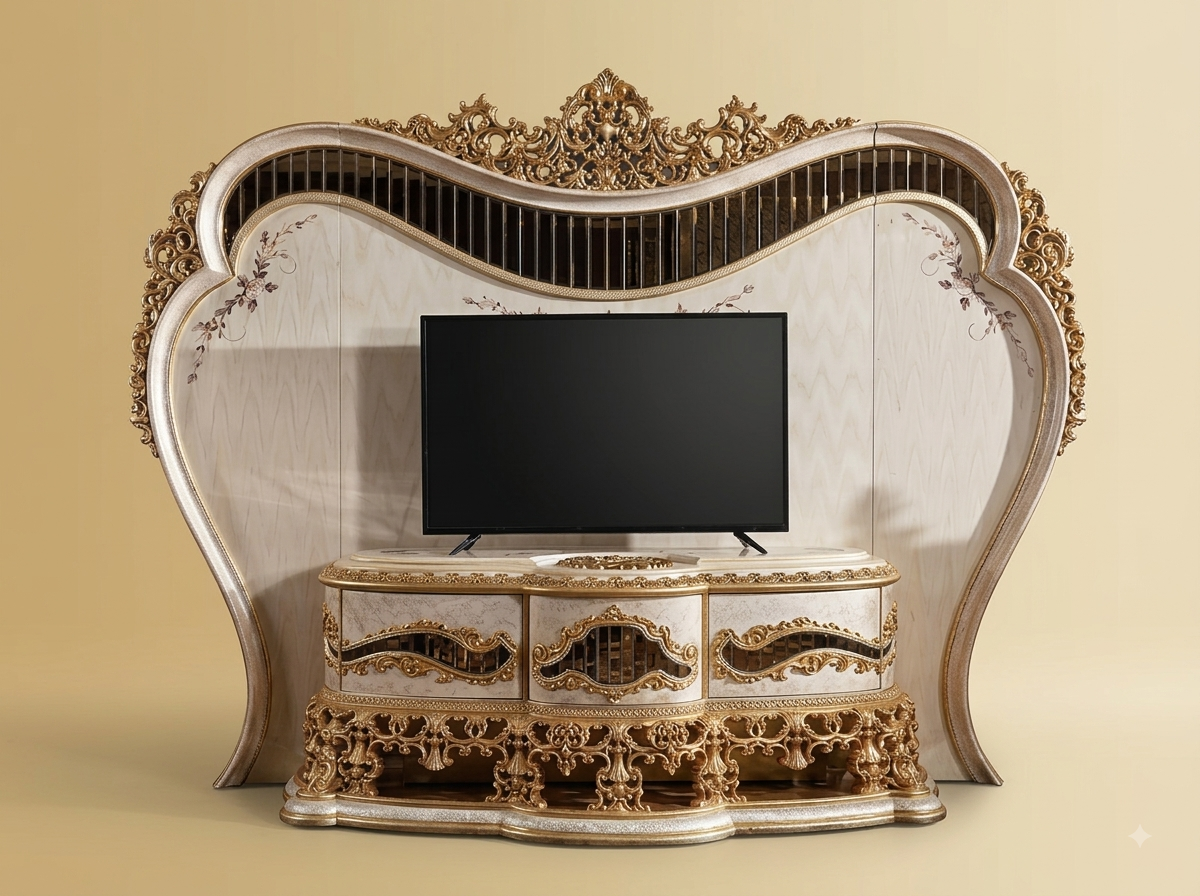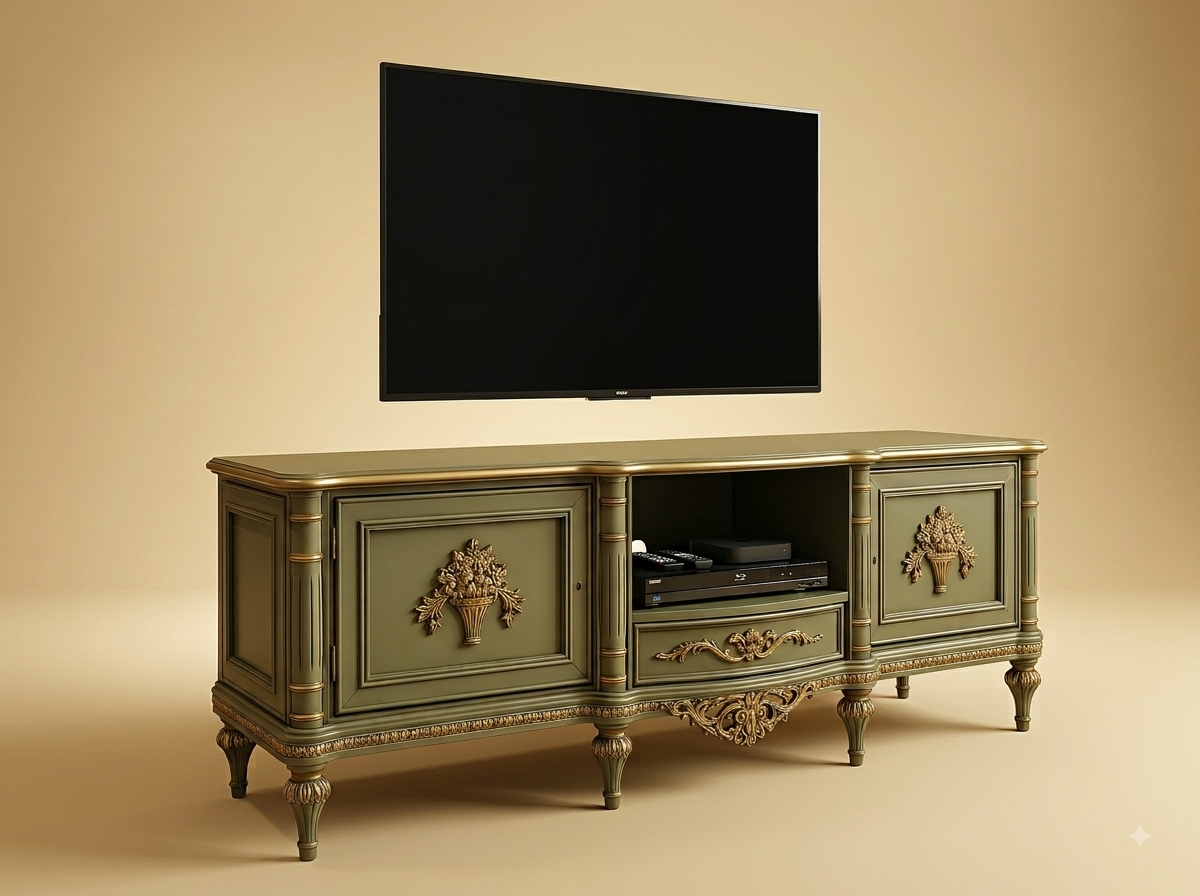
On a natural-finished piece the carver has nowhere to hide, and the scrolled ends are where that shows.
Paint and gilding forgive a great deal. A slightly torn fibre, a shallow gouge mark left in a hollow, a join that is a hair proud - all of it disappears under an opaque finish. Under a clear polish, every one of those things is visible at arm's length, and worse, the polish makes them darker than the surrounding wood.
So the sequence changes. On a natural piece our artisans finish each cut with the tool rather than with abrasive, because a scraped or sanded surface takes polish differently from a cut one and the difference shows as a dull patch. The scroll ends are worked in long strokes following the curve, always cutting with the grain even where that means turning the workpiece rather than the tool.
Then the grain is matched. The two scroll ends are cut from the same board, one at each end of it, so their figure runs in the same direction and at the same scale - which is why they read as a pair rather than as two separate ends that happen to be the same shape.
 Ask Price On WhatsApp