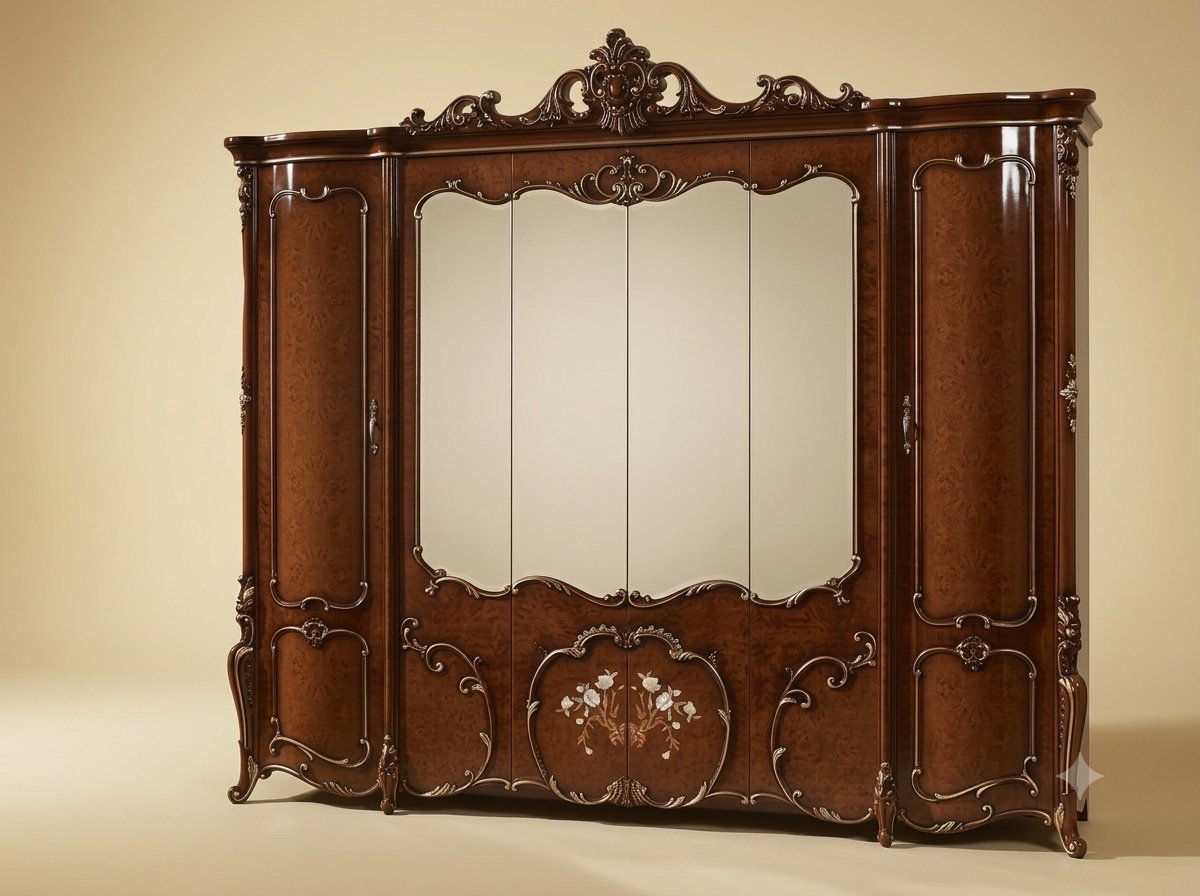
A mirror that spans two doors is two mirrors, and the joint between them is where the work shows.
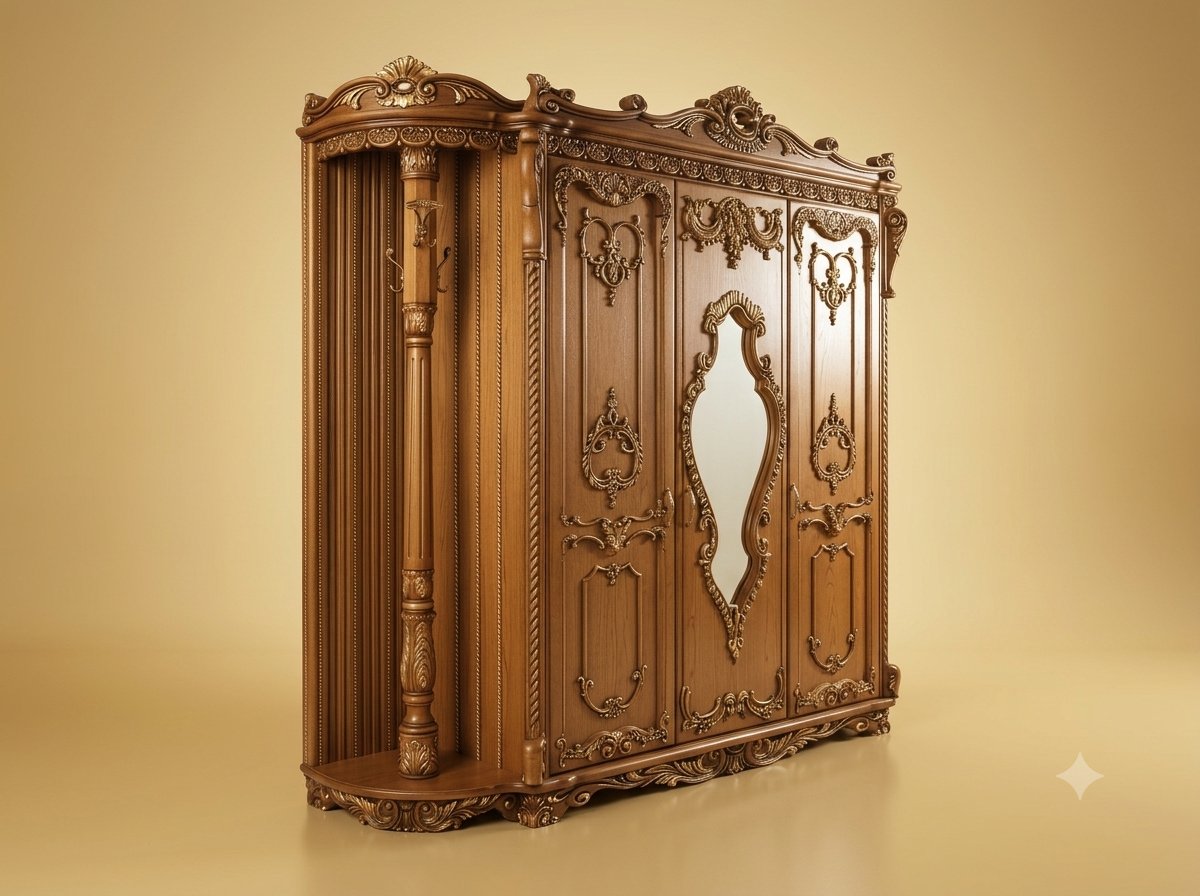
The obvious approach is to order two plates to the two shapes. It is also the approach that produces a visible mismatch, because no two sheets of mirror glass are quite identical - silvering varies a little in tone, and float glass carries a faint green cast that differs from batch to batch. Set two such plates side by side at arm's length in a bedroom and the eye finds it immediately, even though nobody could tell you what is wrong.
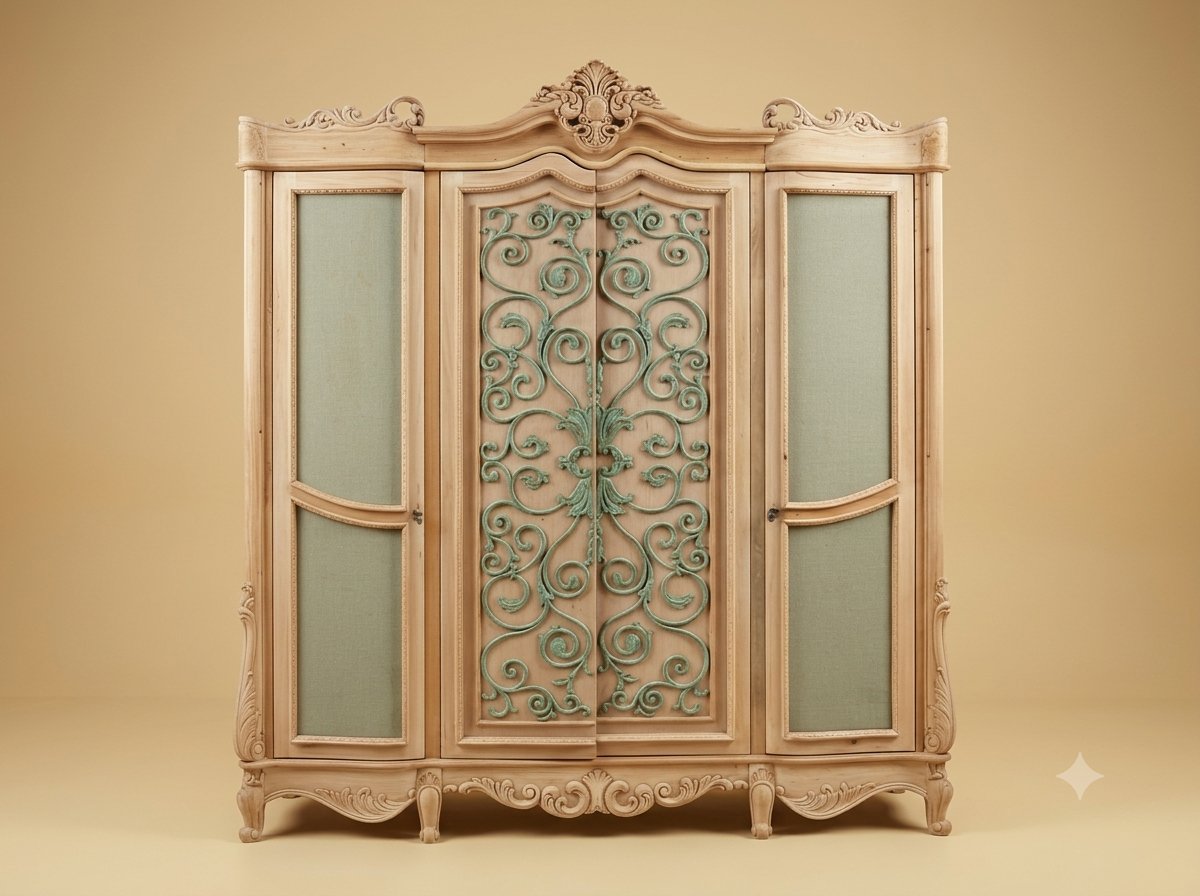
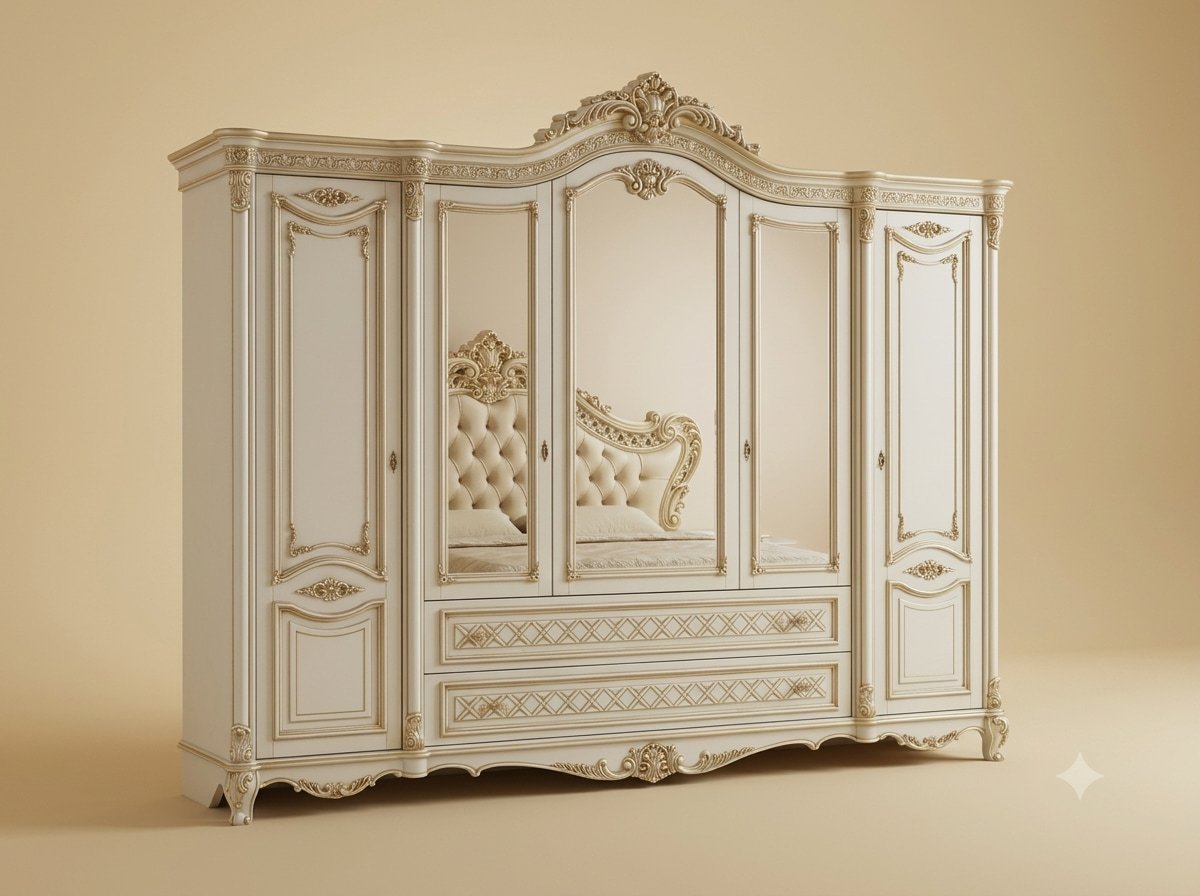
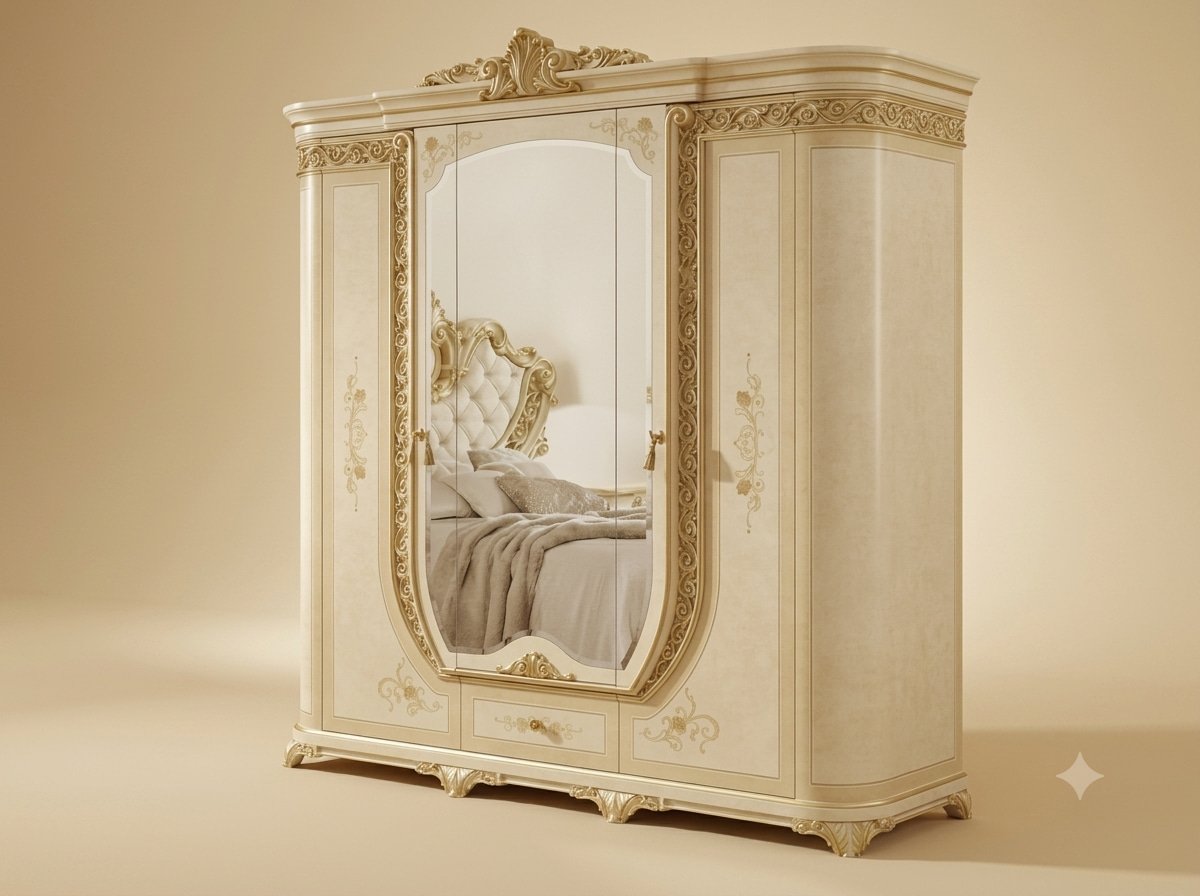
So our master Indian artisans cut both halves from one sheet, splitting it exactly on what will be the centre line of the arch. Whatever tint and whatever silvering that sheet has, both doors now have the same. The two halves are then edge-polished so that when the doors close, the joint reads as a single fine line rather than as a gap between two pieces.
The arched frame is carved afterwards, in place, with the doors hung and closed - so the curve is true across the joint rather than nearly true.
 Ask Price On WhatsApp