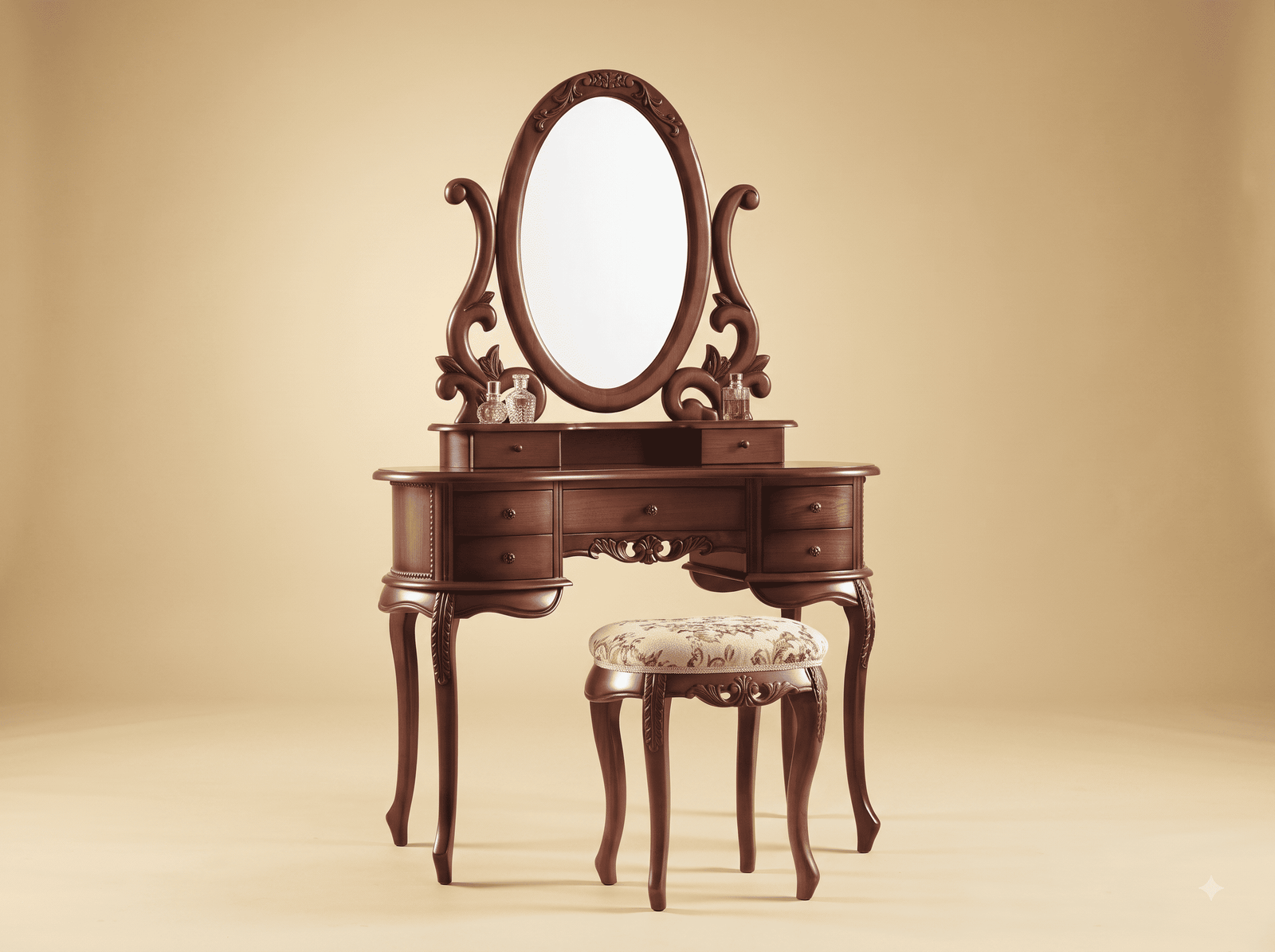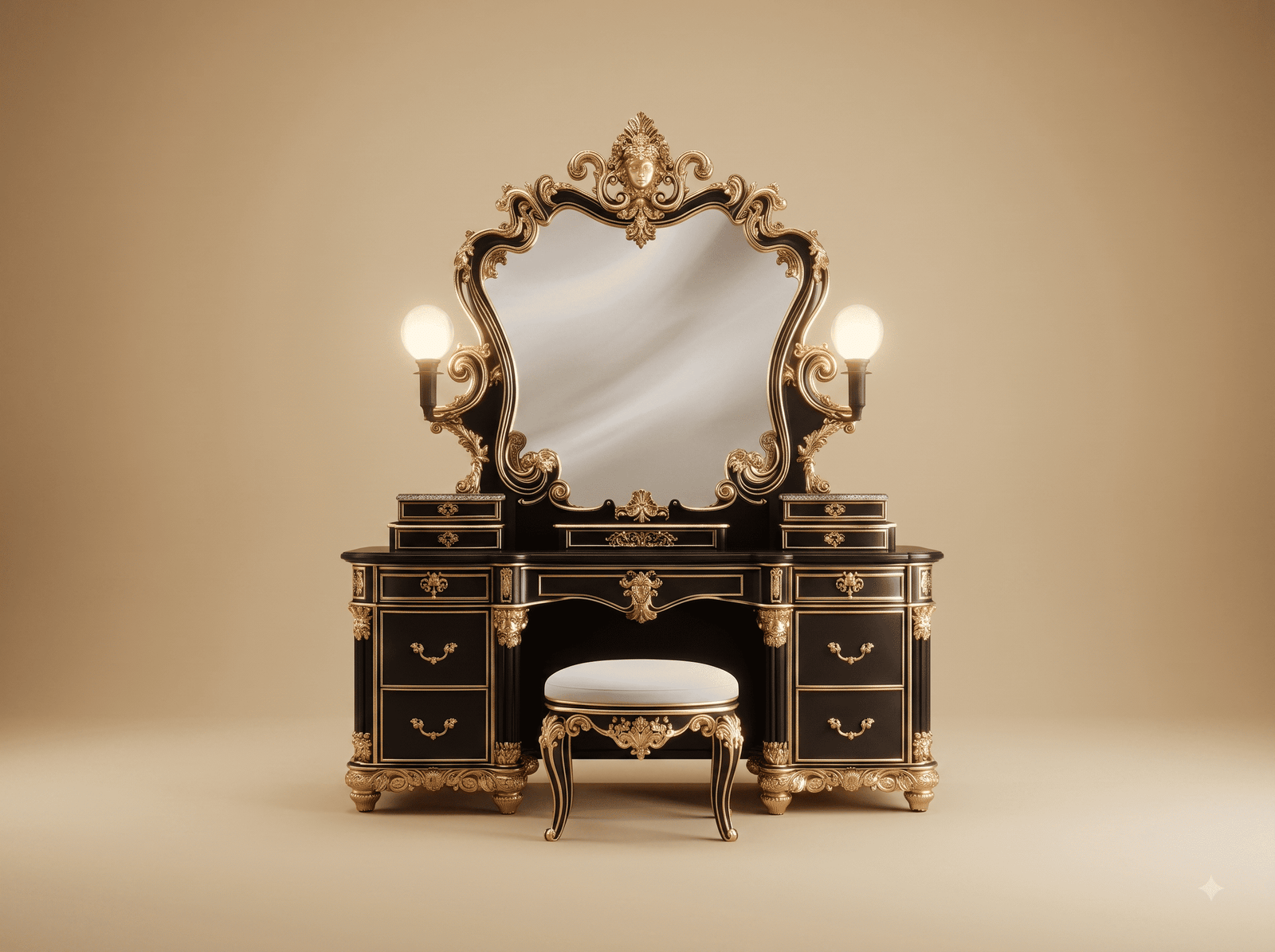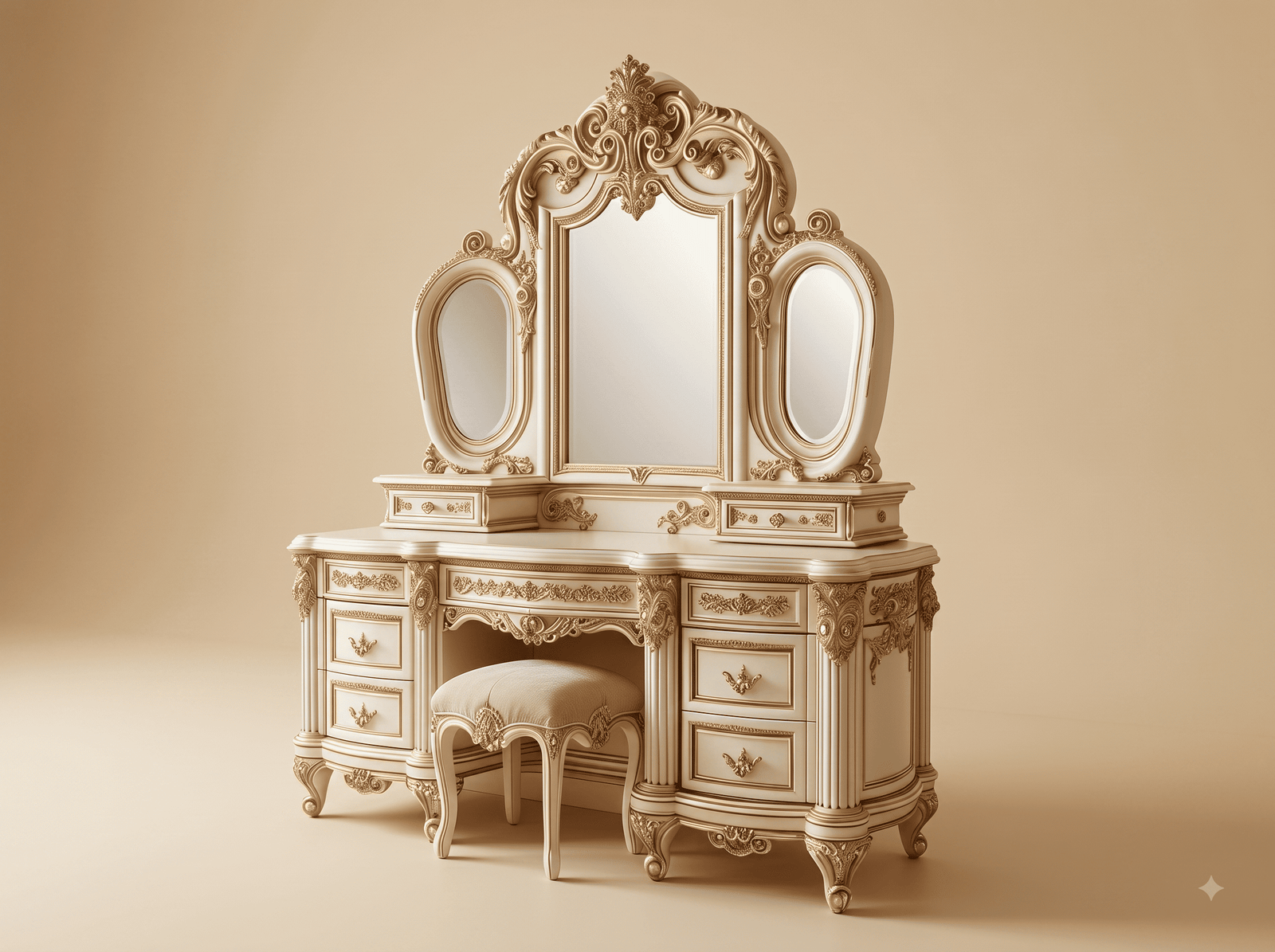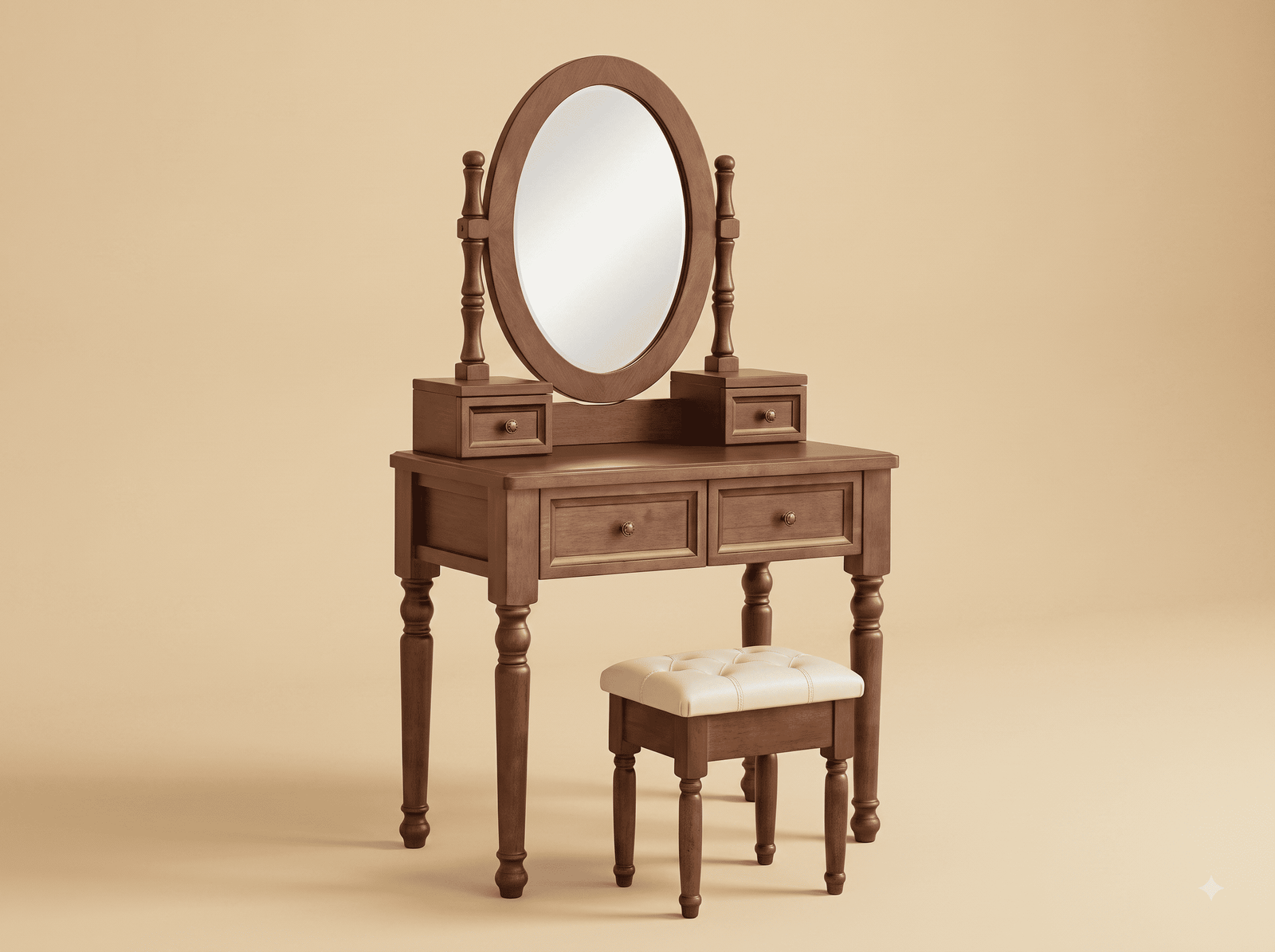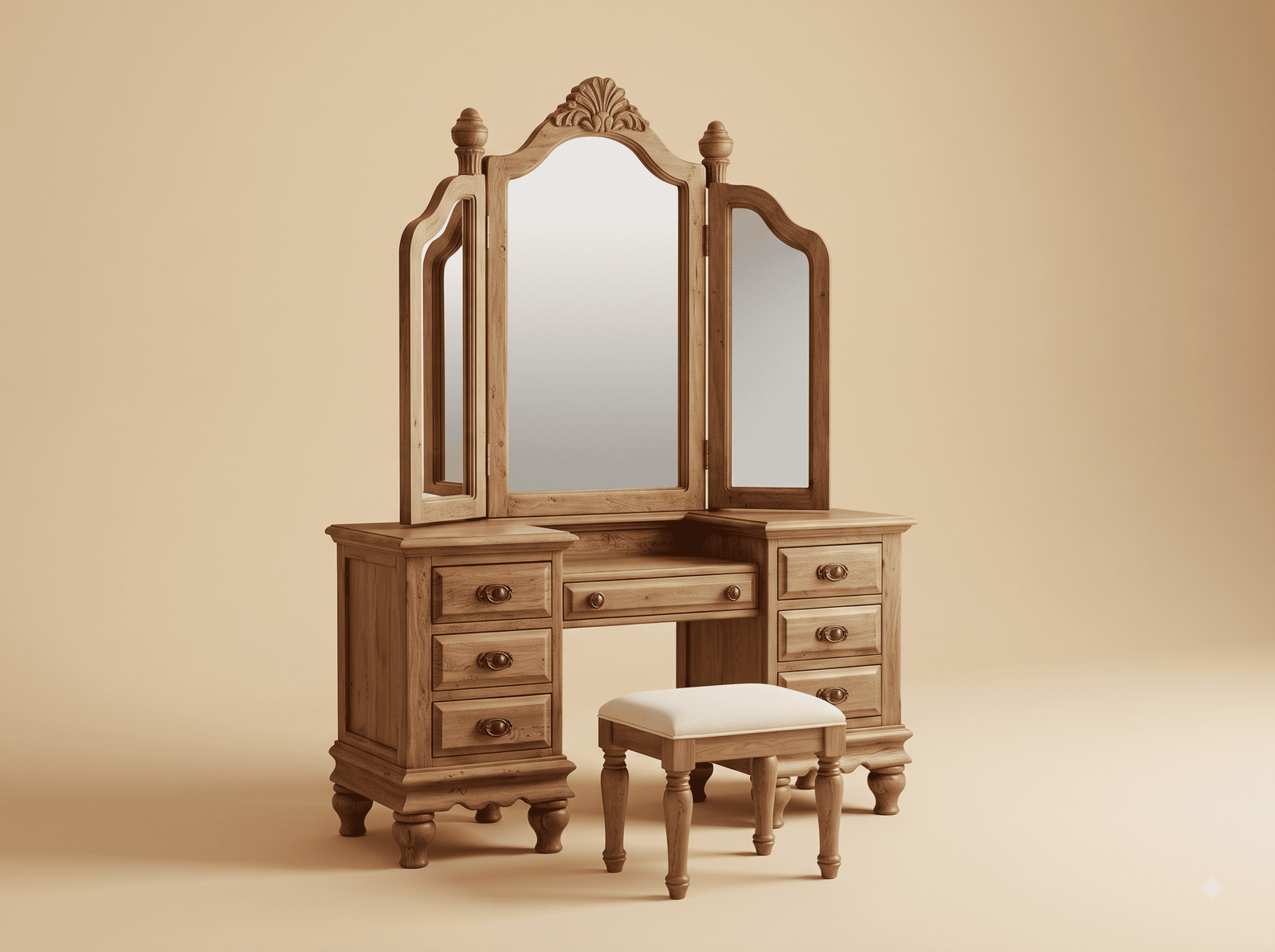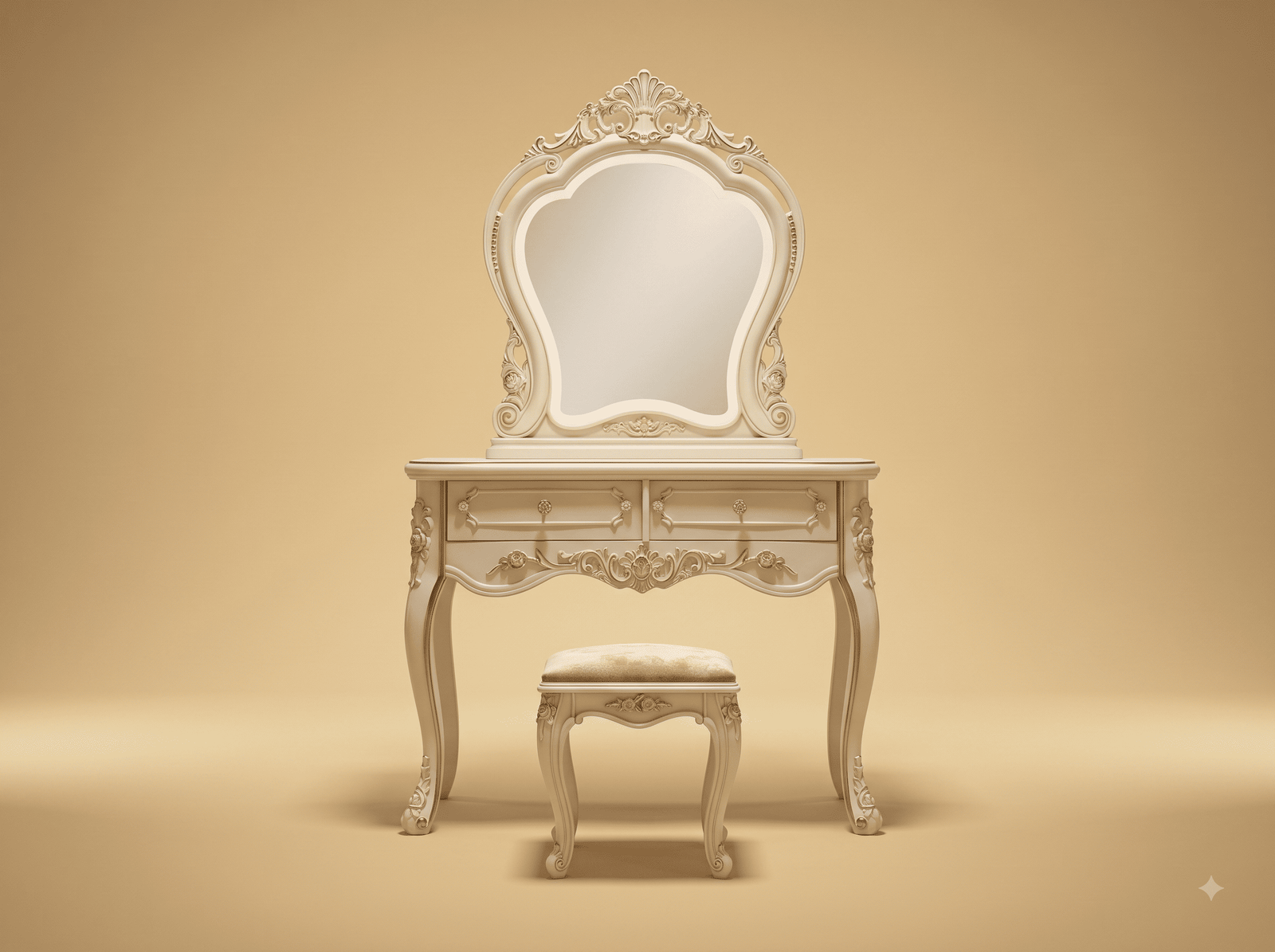
Compact furniture has a long history of being treated as lesser furniture, and it rarely deserves it. When space was tight in older Indian homes, the answer was not to make a cheaper piece but to make a more carefully proportioned one, because every centimetre had to earn its place and every mistake in scale was visible from the doorway.
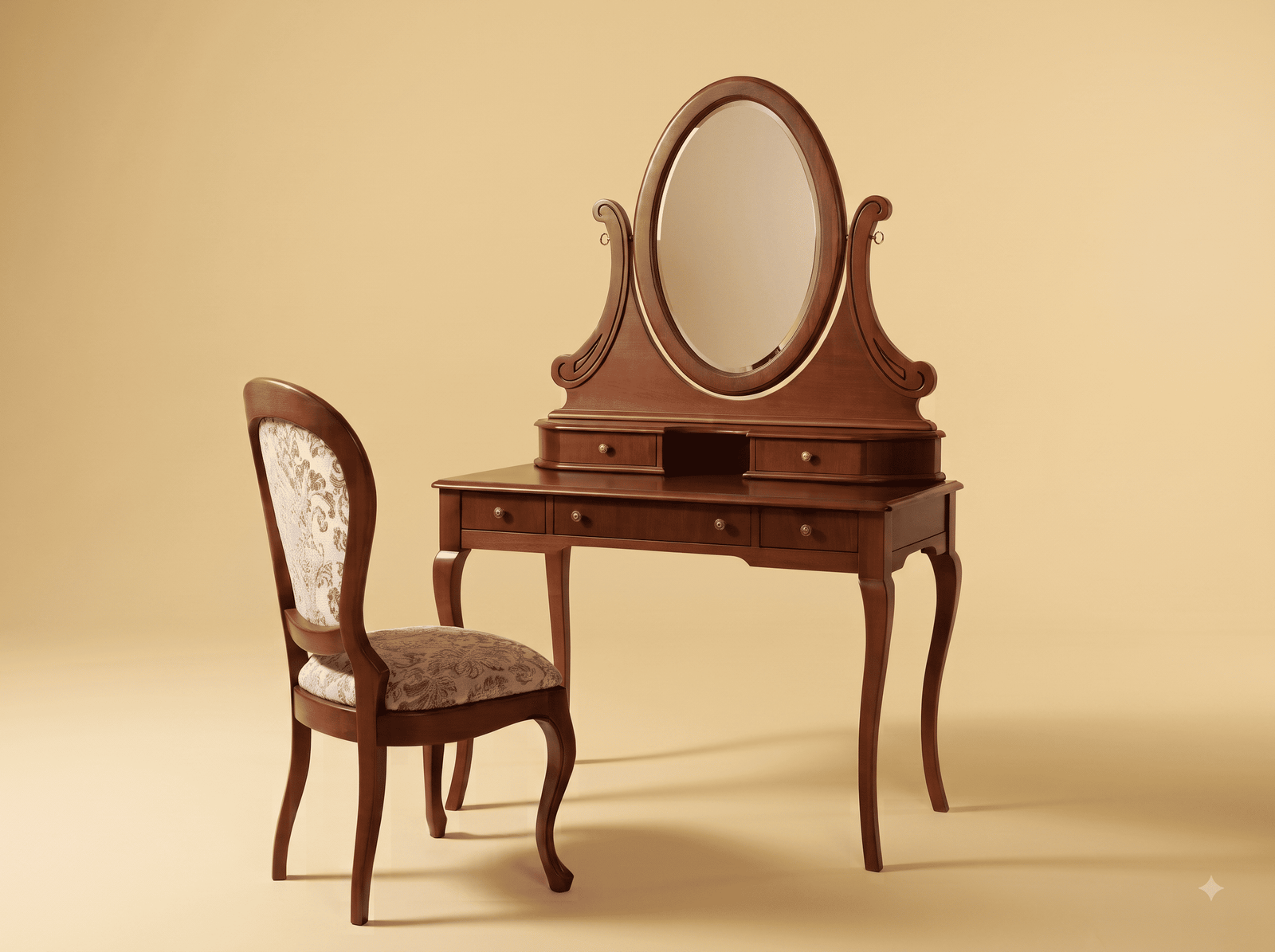
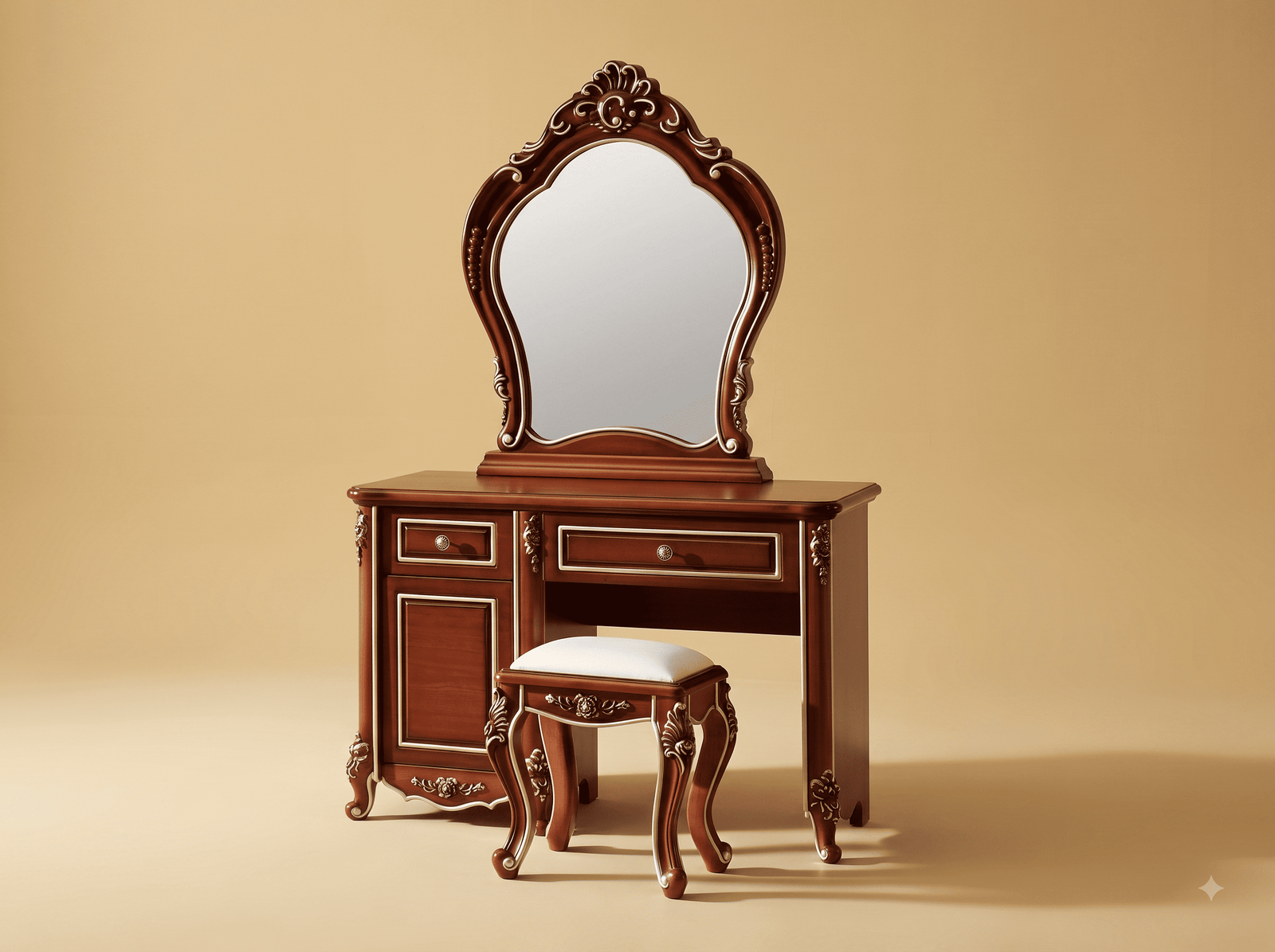
That thinking sits behind this dressing table. The waisted arch on the mirror is the clearest example. A plain rectangle at this size would look stubby, and a tall oval would float away from the table. Pulling the frame in at the waist and letting it open again at the crown gives the eye a line to follow upward, so a narrow piece reads as tall and composed rather than as something that has been cut down.
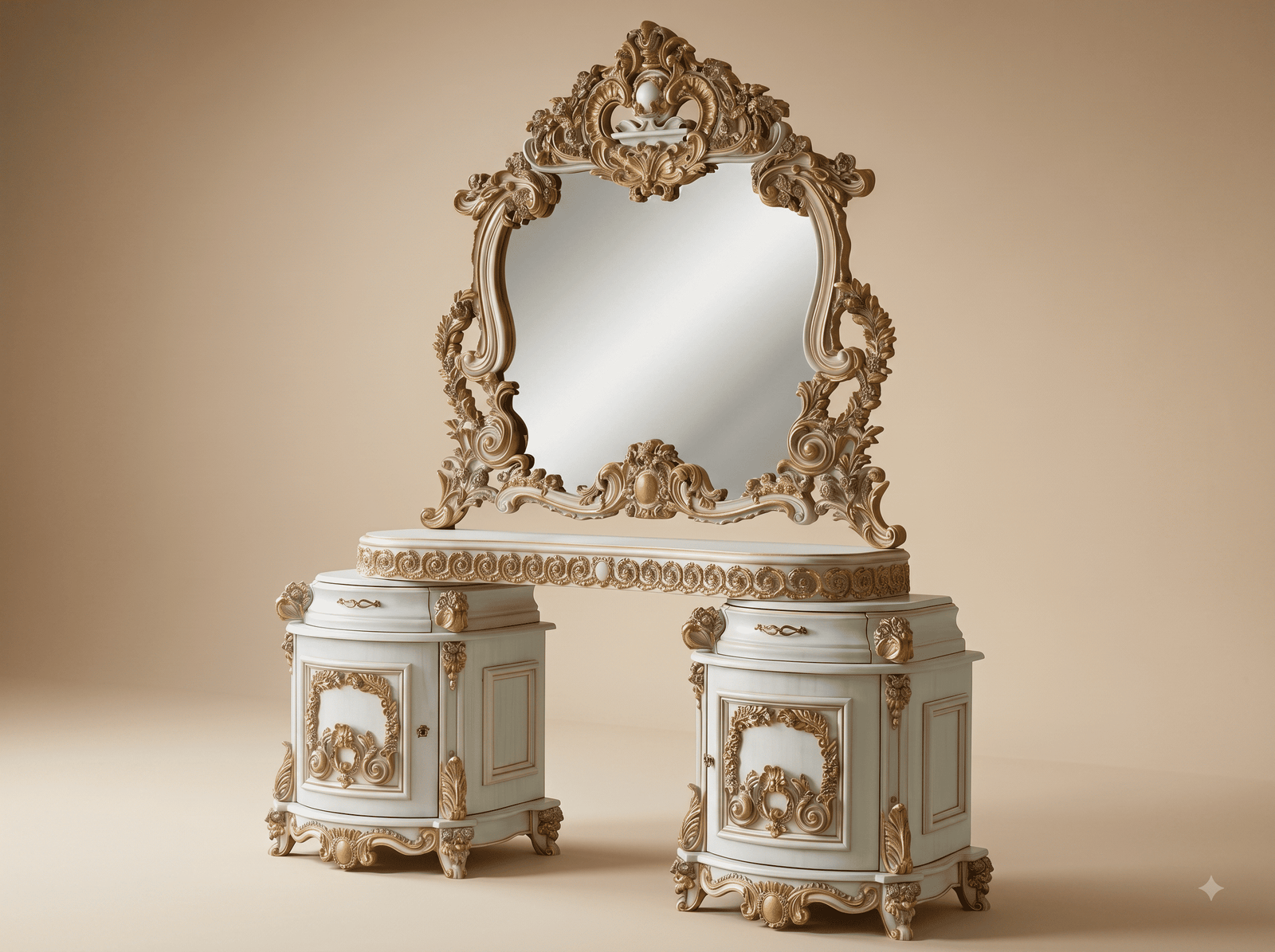
Our carvers work the crest and the side scrolls by hand with chisels ground for the depth of each cut, testing the shape against the mirror opening as it develops rather than working to a template. The scrolls are pierced right through, which is slower and less forgiving than relief carving, and it is what stops the frame looking solid and heavy at close range.
 Ask Price On WhatsApp