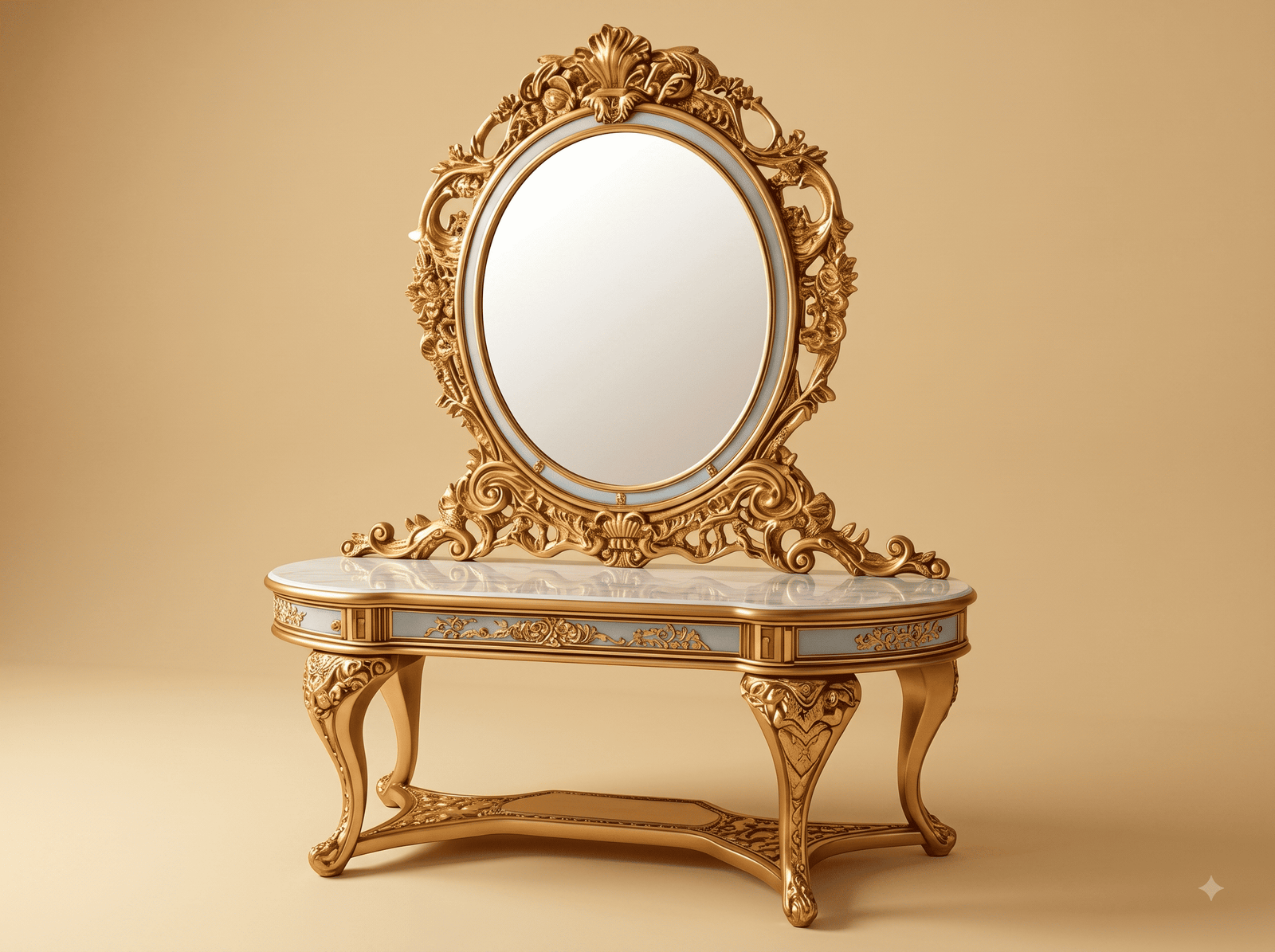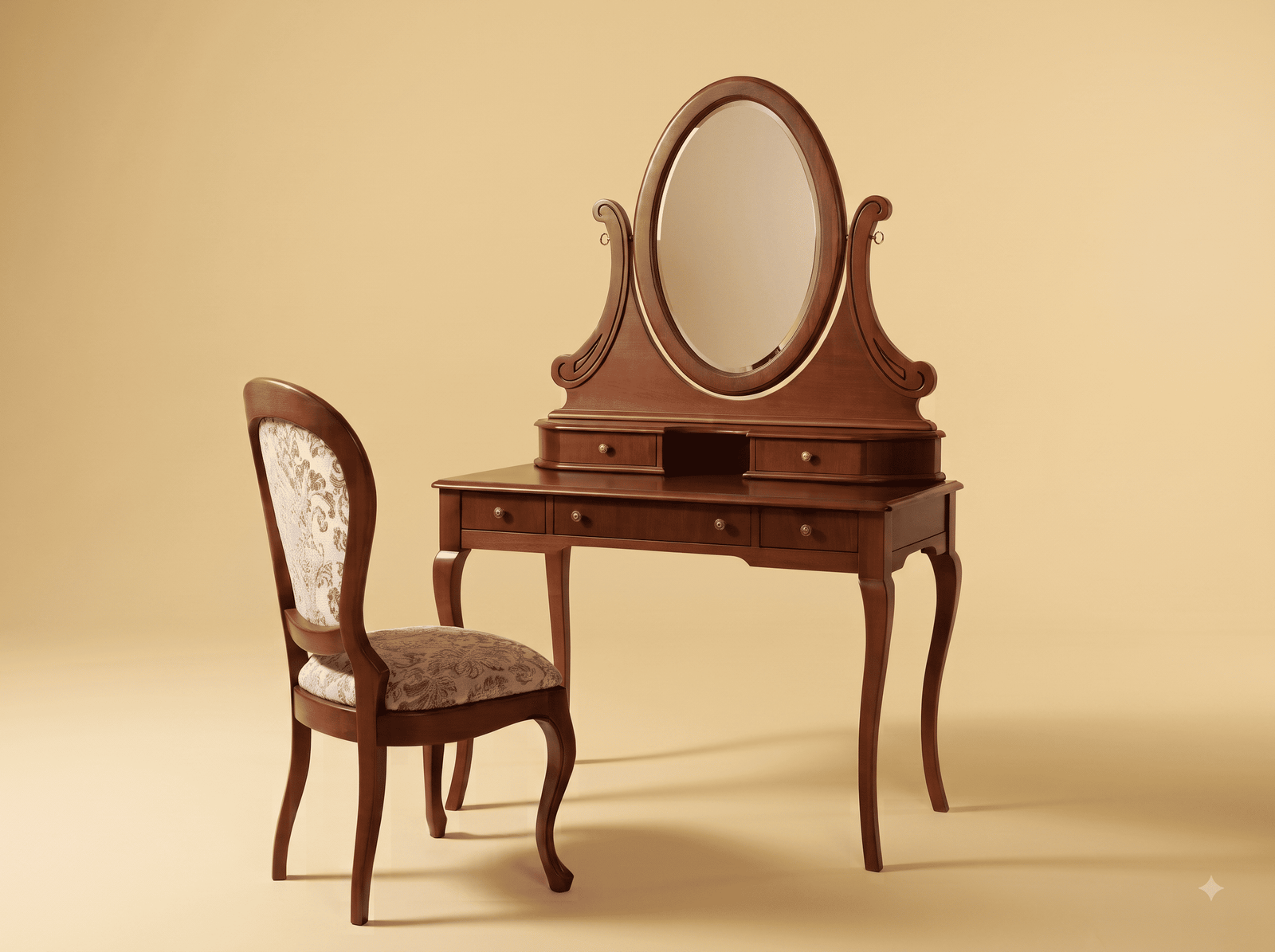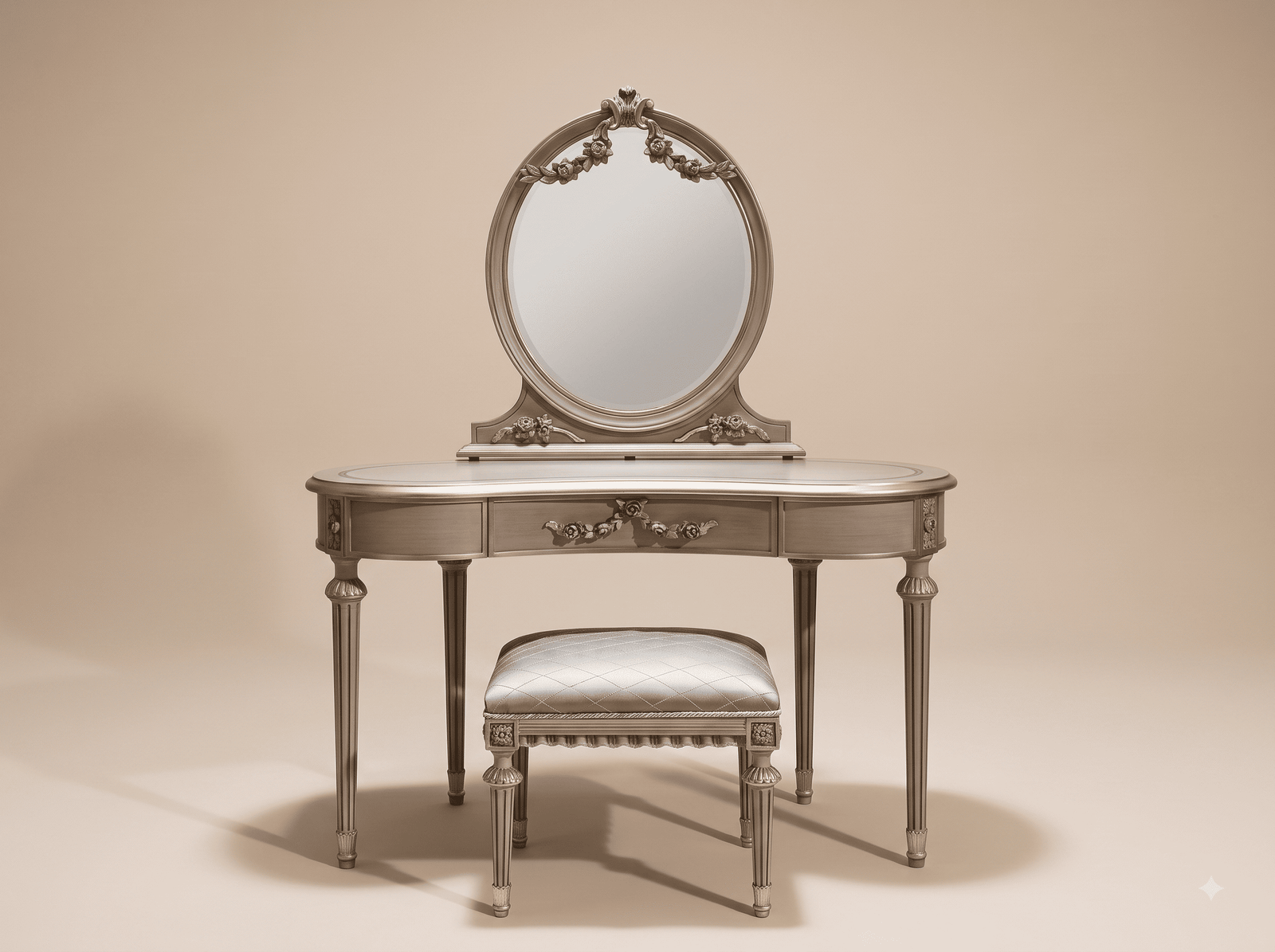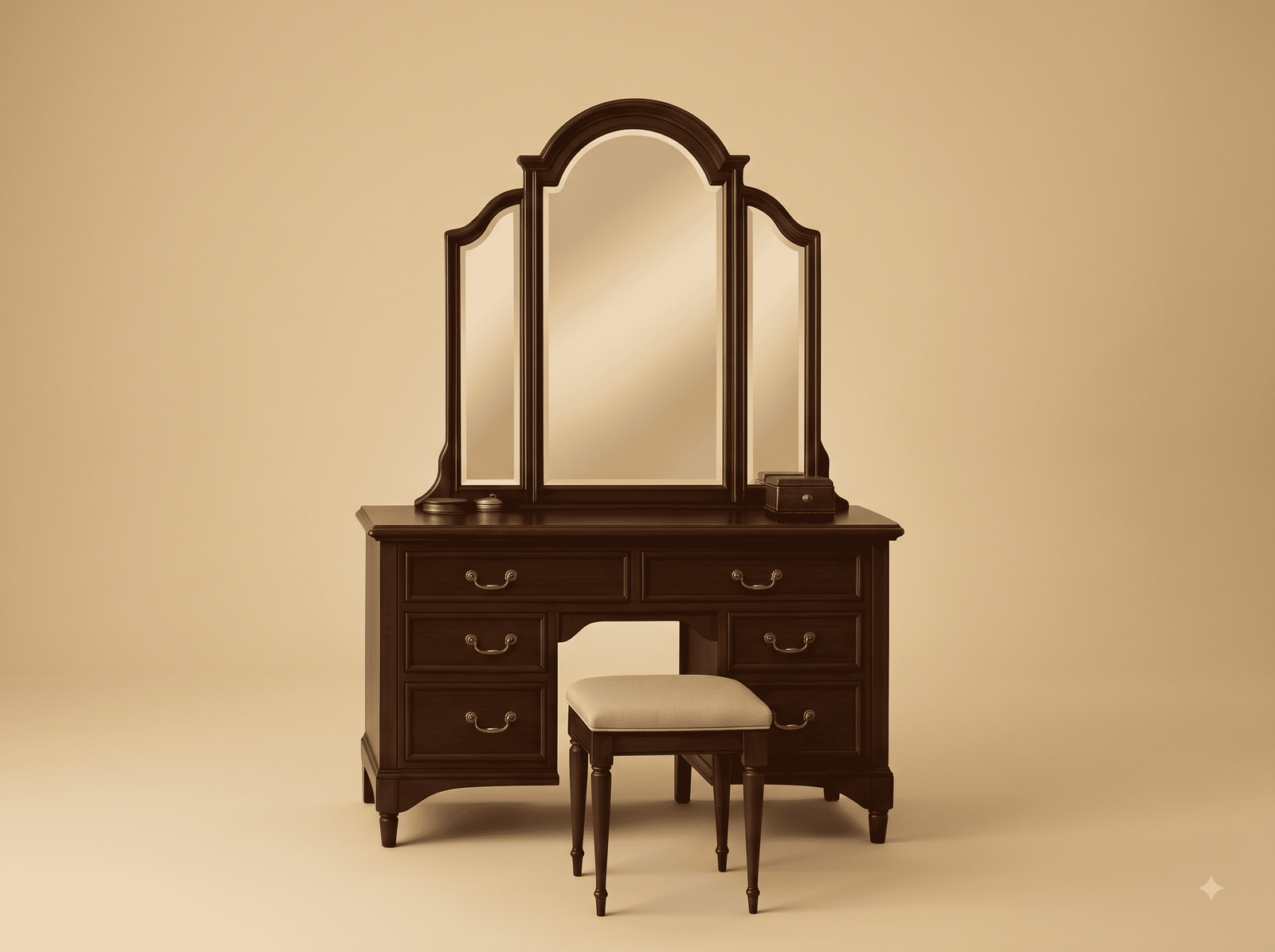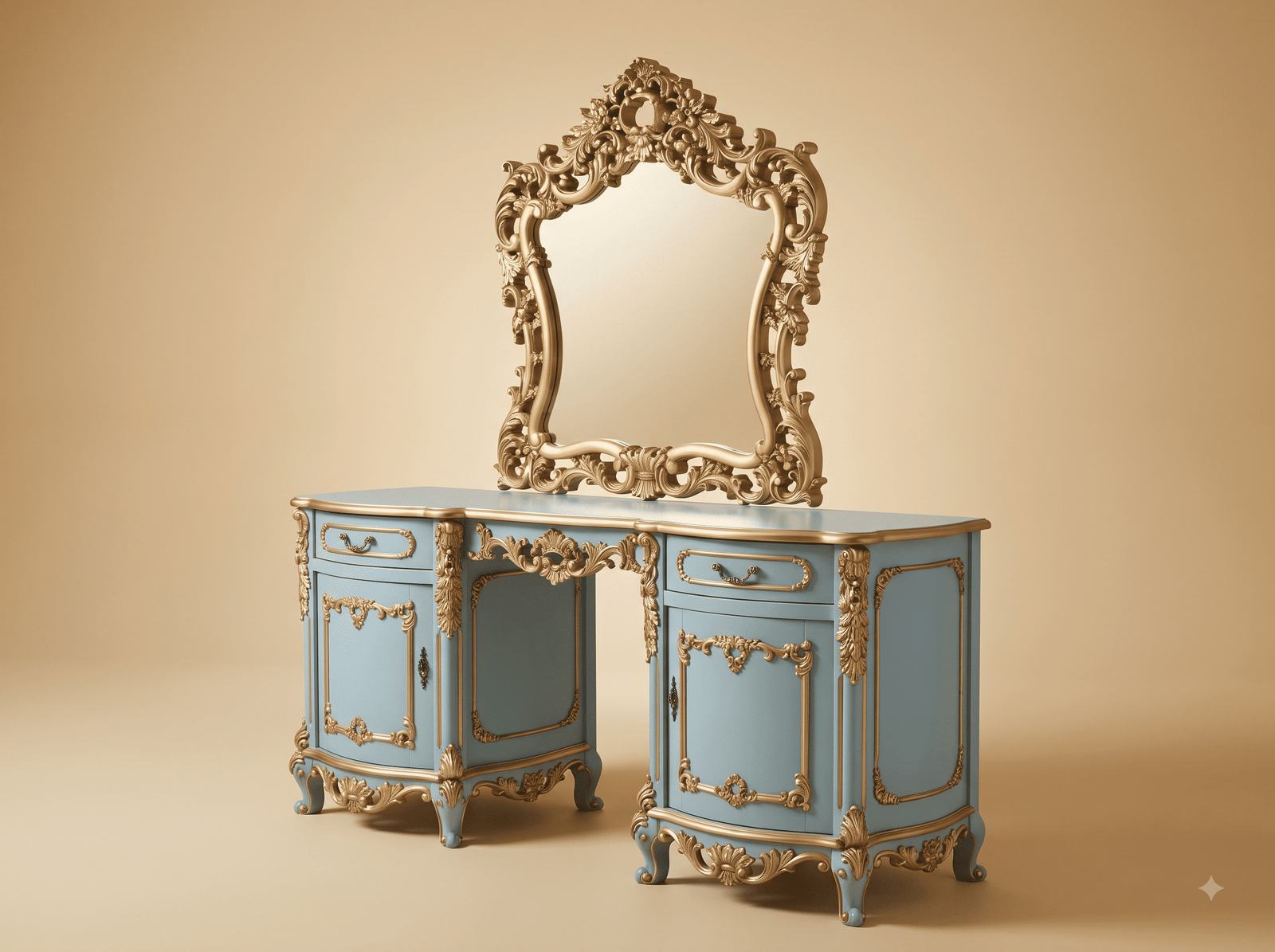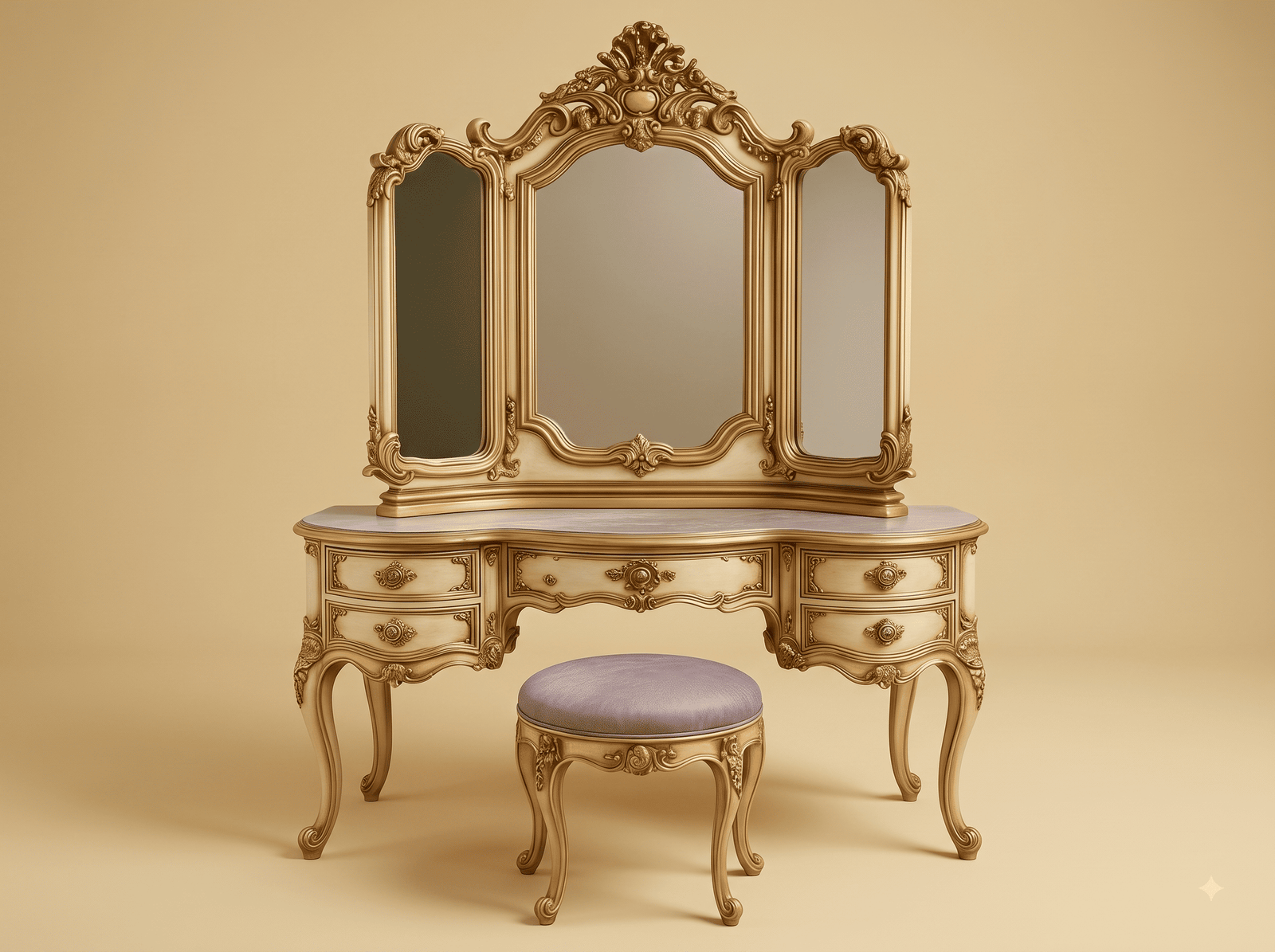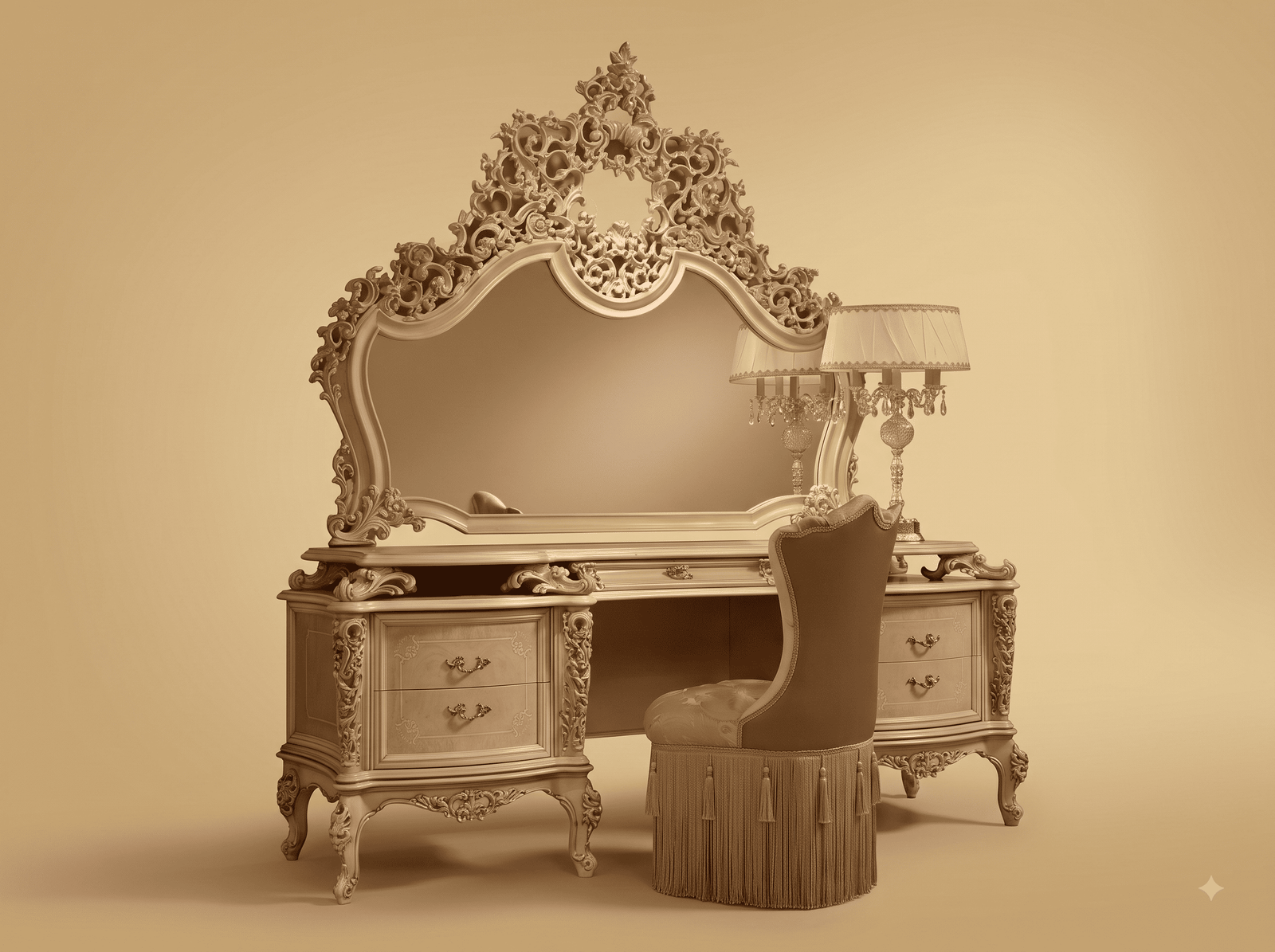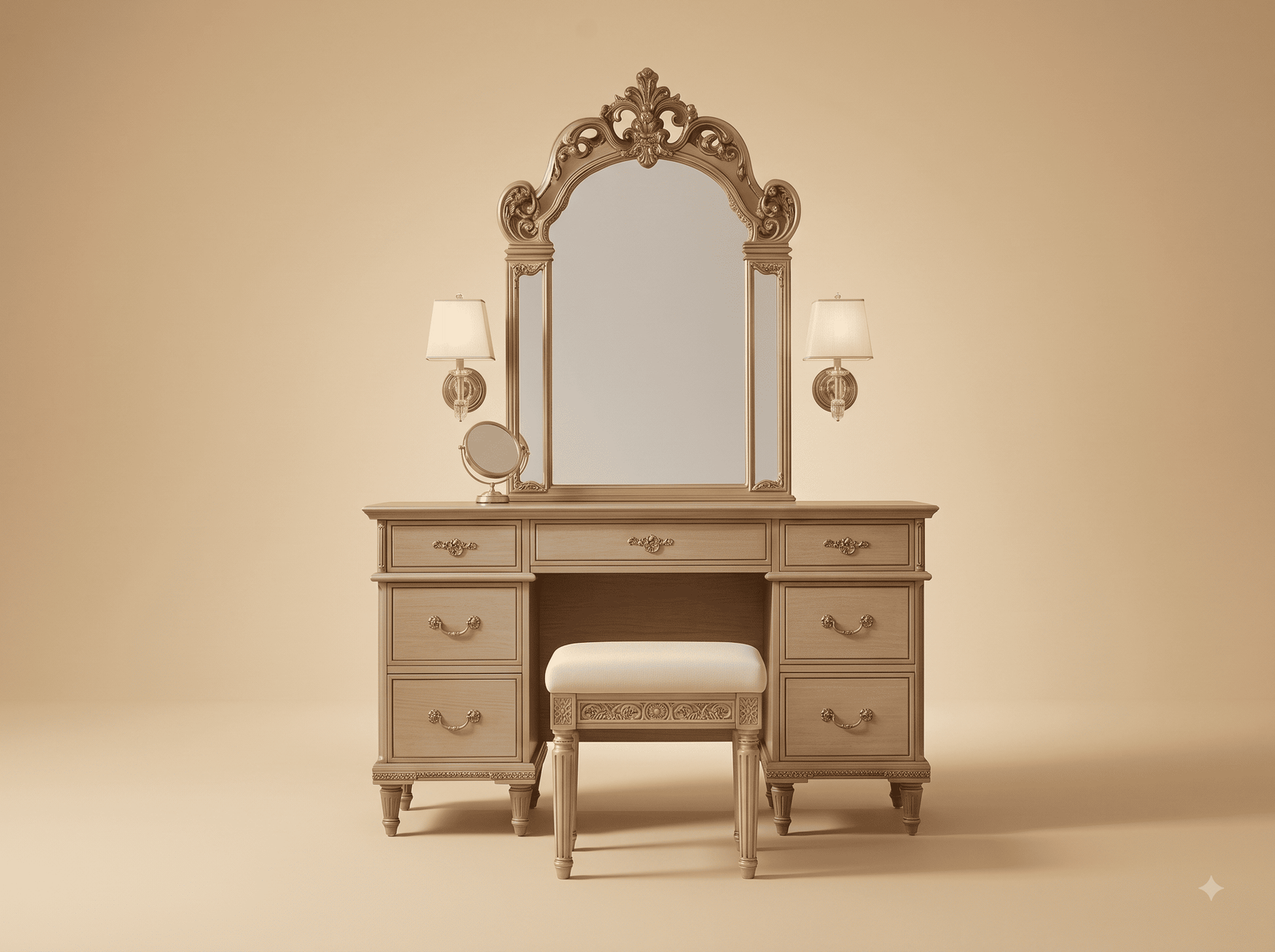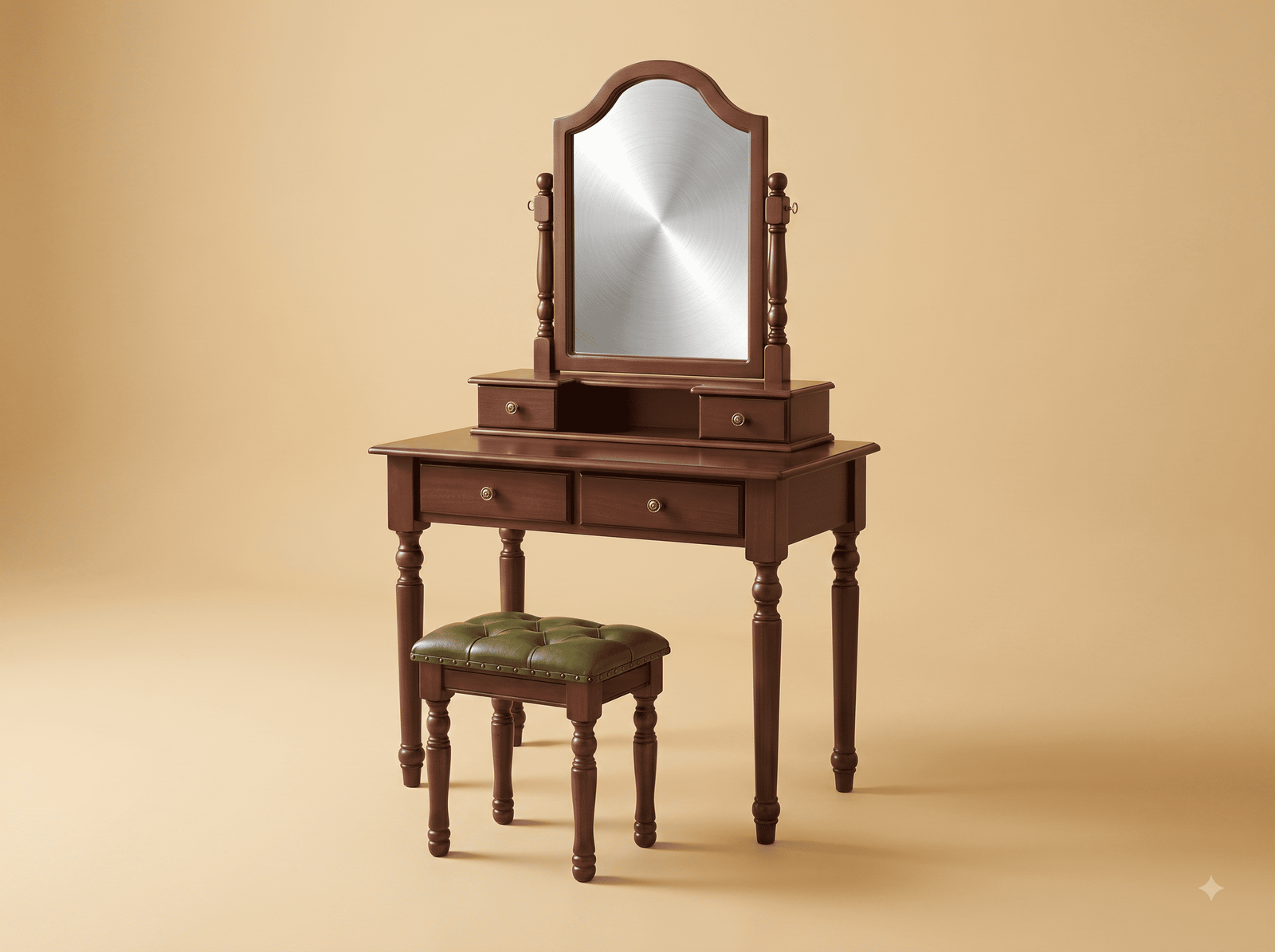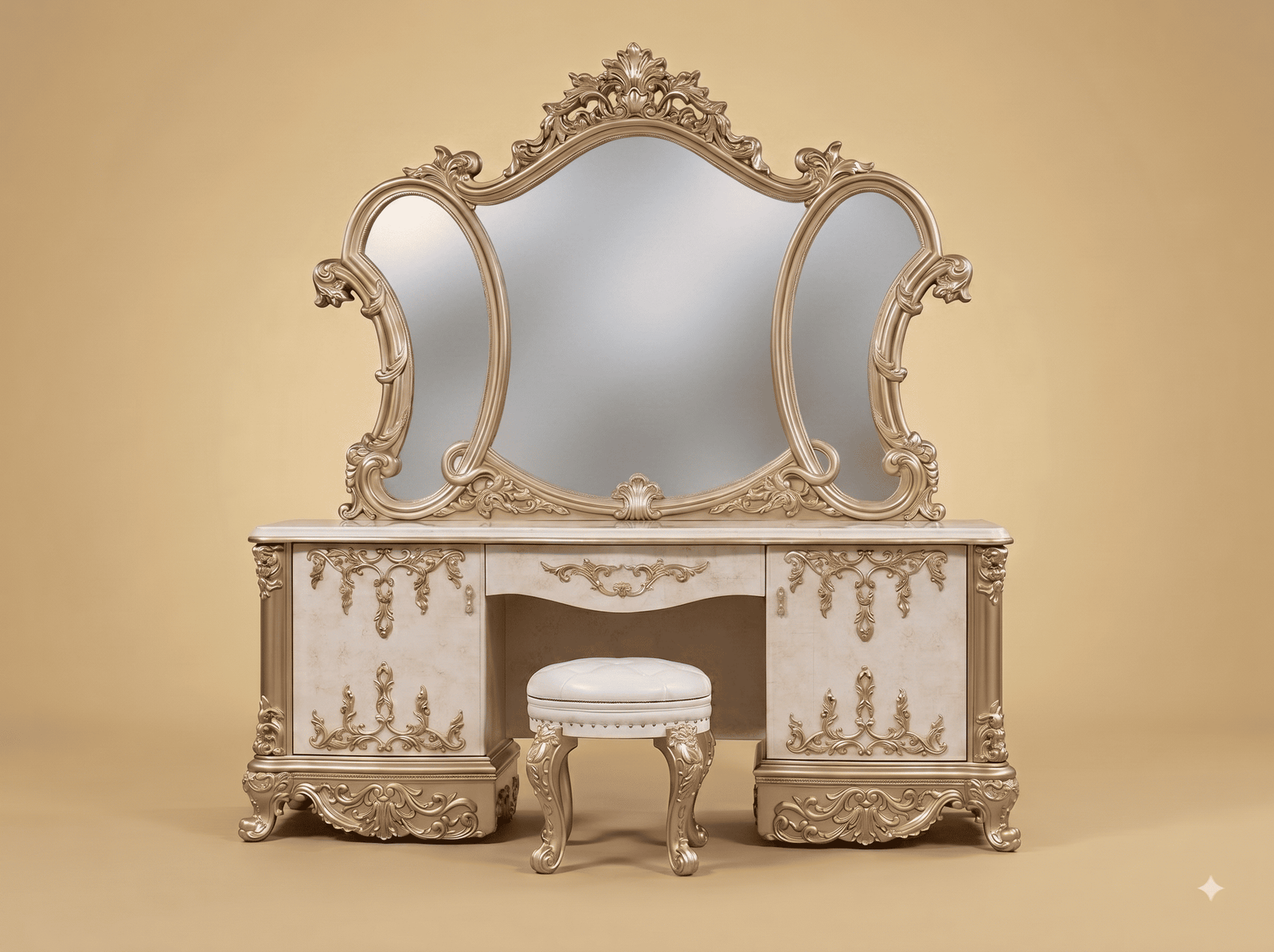
Baroque carving was never meant to be looked at in flat light. It was designed for rooms lit by candles and low lamps, where a raised rose or a curling scroll throws a moving shadow and the whole surface seems to shift as you cross the room. Take that same carving into an evenly lit modern bedroom and something is lost - it flattens, and detail that took days to cut disappears into a single pale mass.
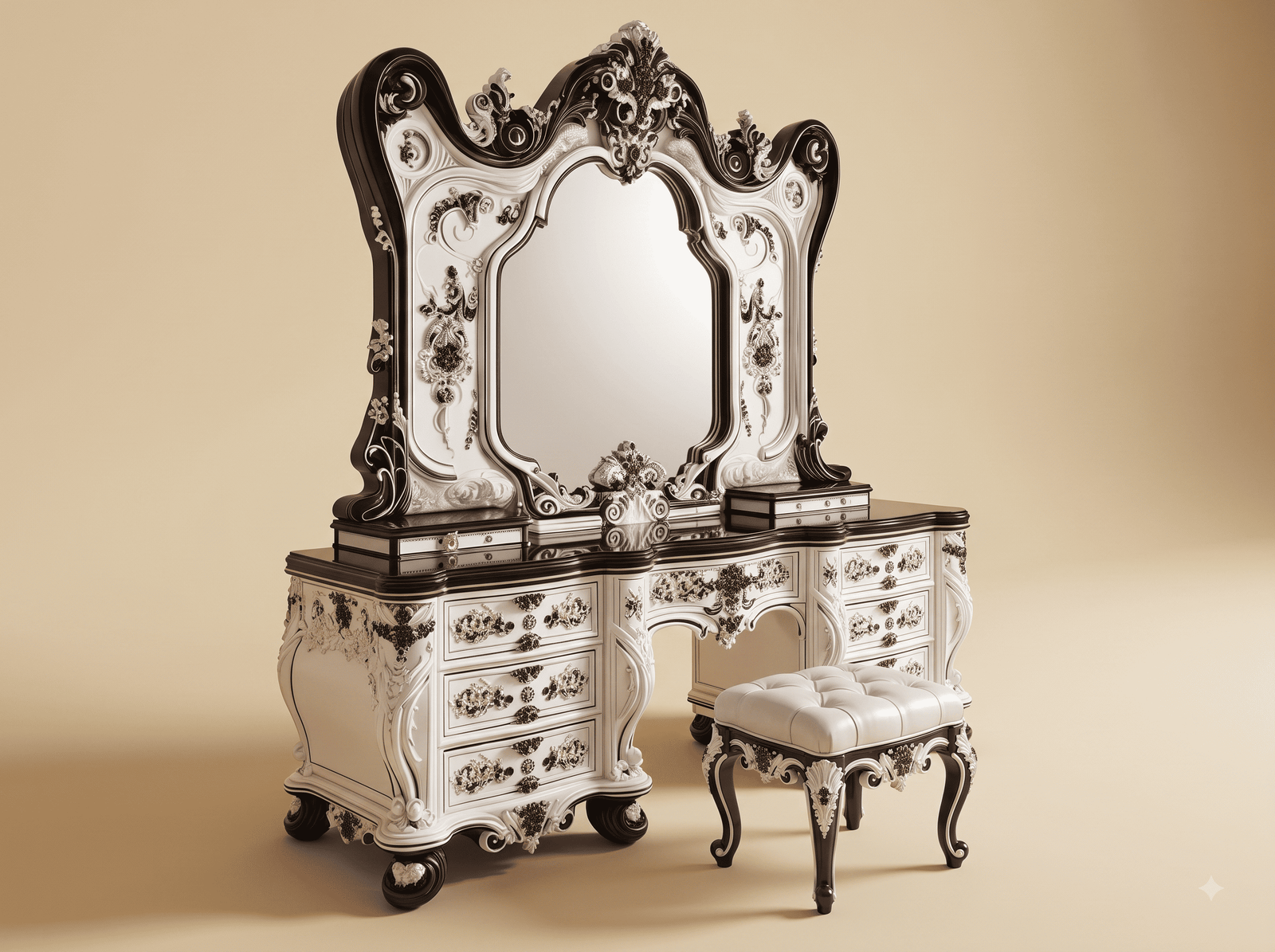
The two-tone finish on this vanity is the answer to that problem. Outlining the piece in ebonised black gives every white carved panel a hard boundary, and the eye reads depth from the boundary even when the light is doing nothing to help. The dark tops perform the same trick horizontally, separating the mirror from the pedestals.
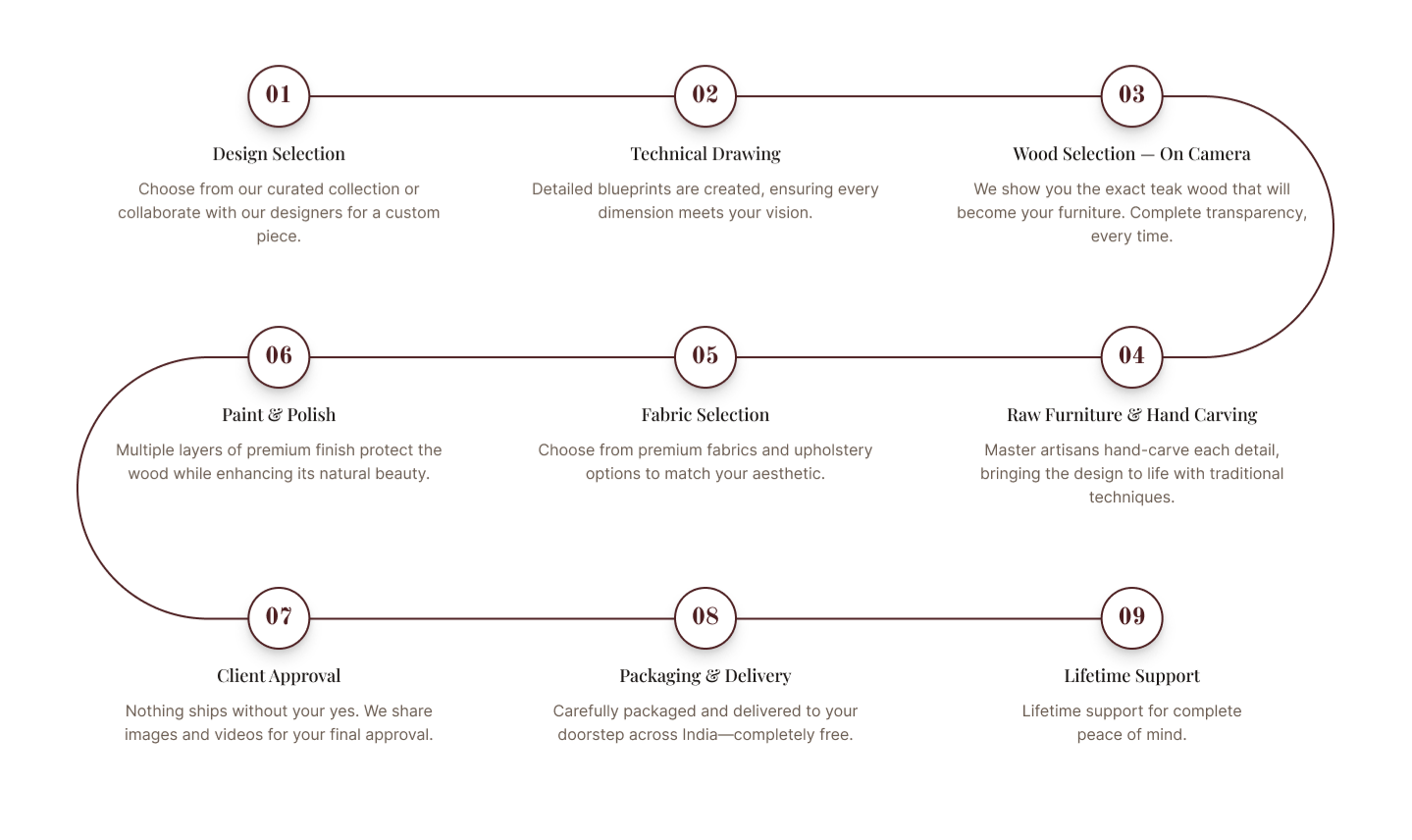
Building it is a sequence, not a paint job. The carving is completed first and sealed, the white is built up in thin layers so it settles into the ground of the carving without filling the fine cuts, and the ebonised edges are worked last by hand, following the profile line rather than masked off. Each stage has to cure fully before the next begins.
 Ask Price On WhatsApp