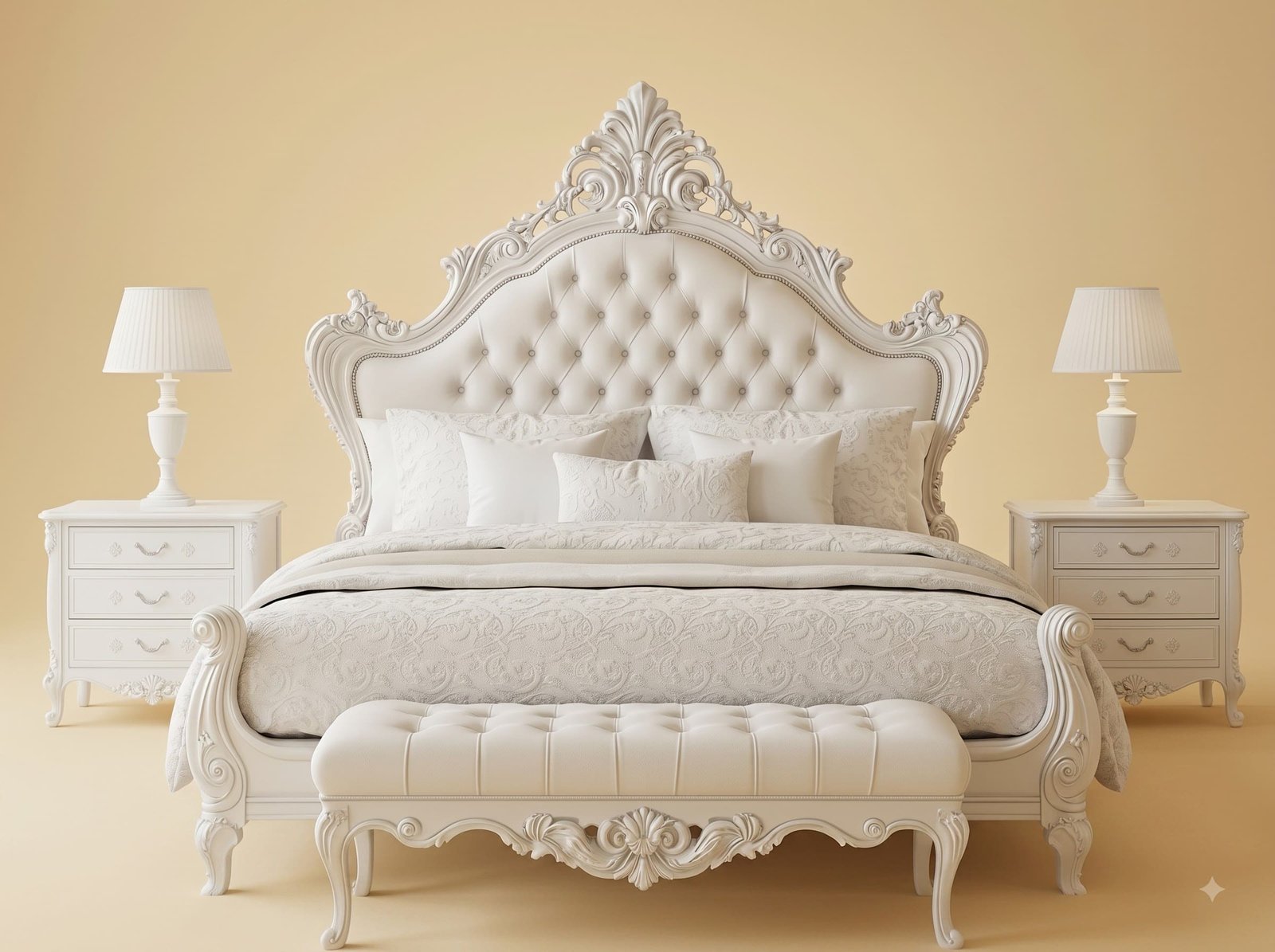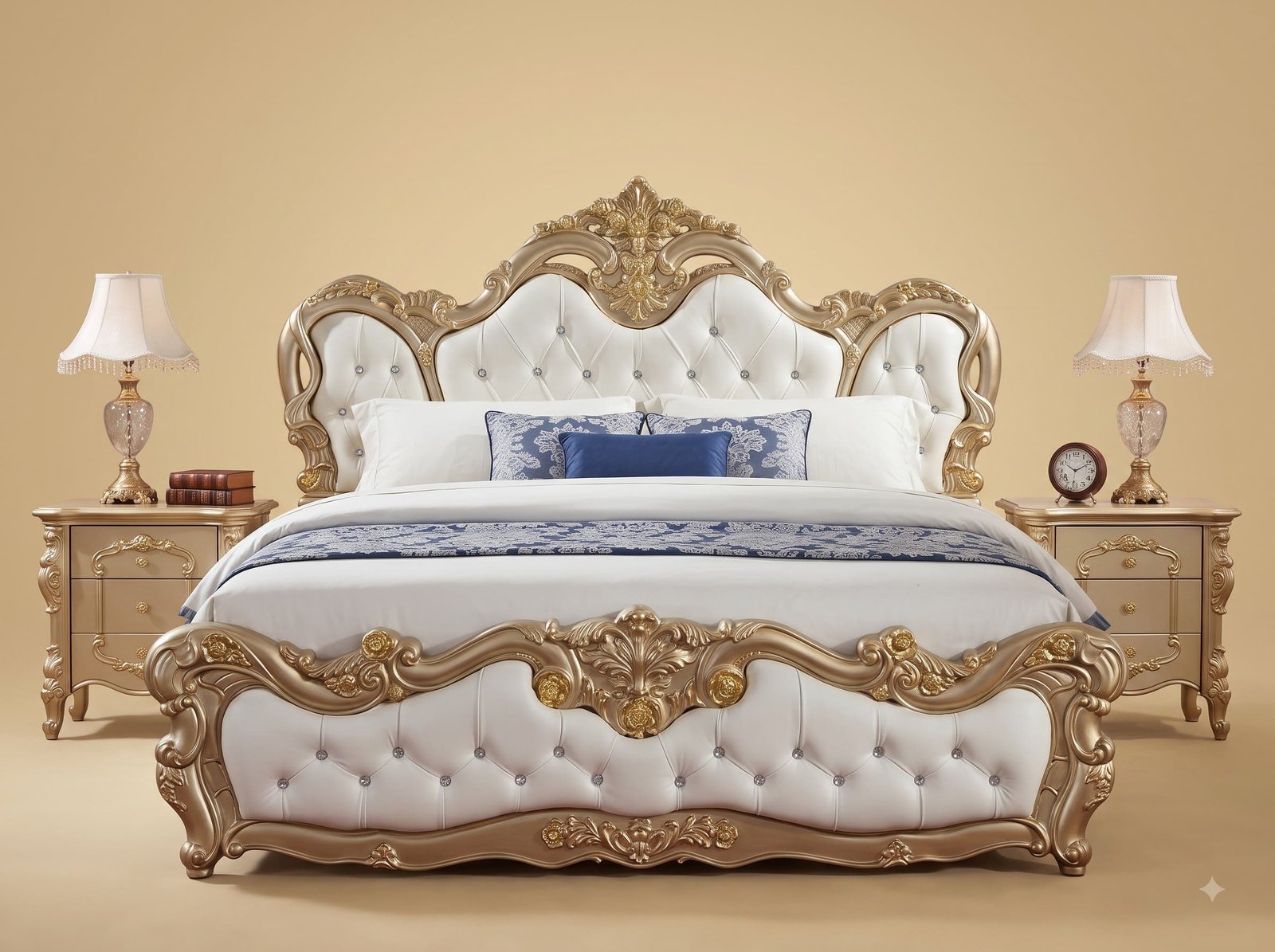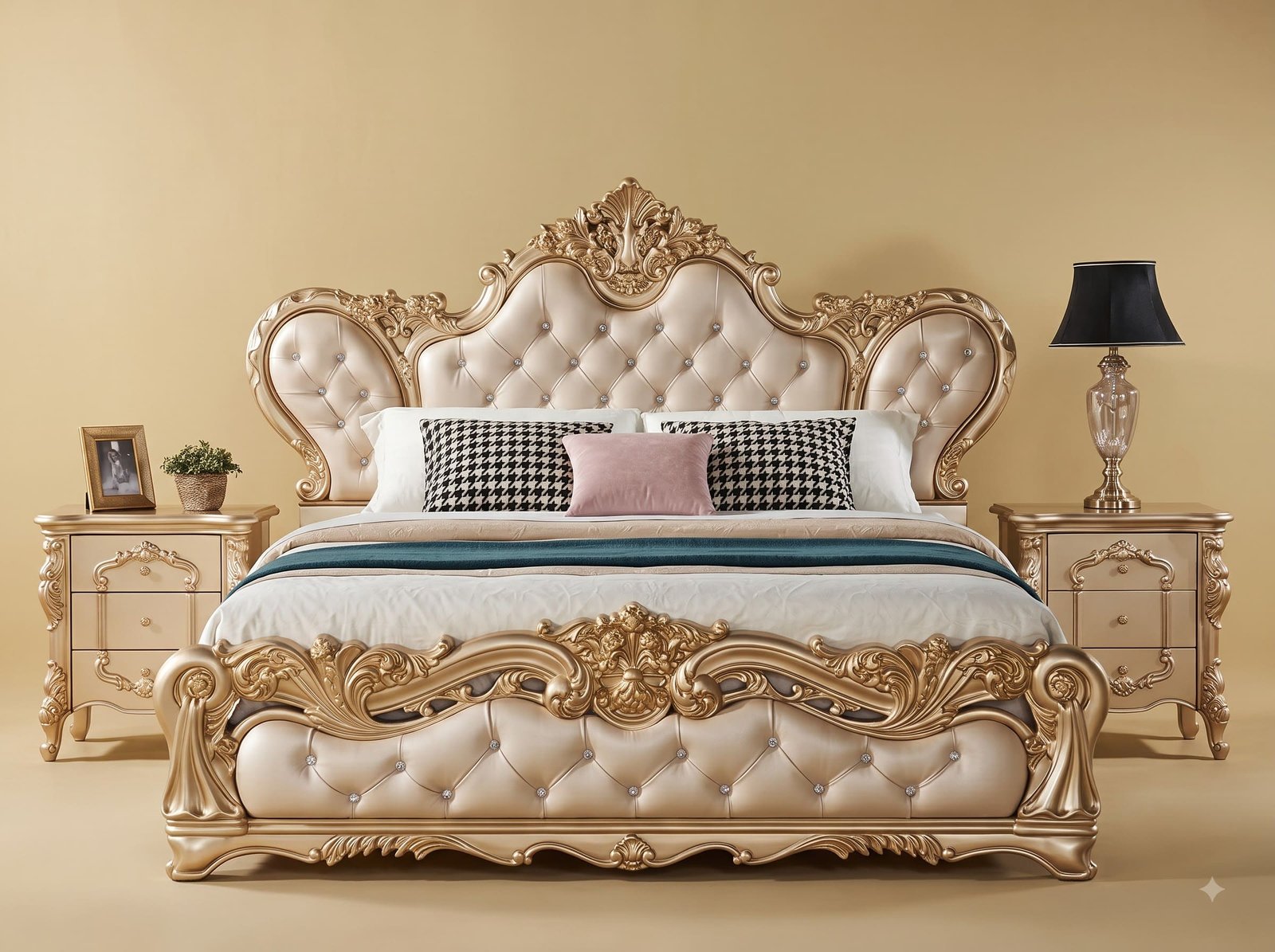
The story of the winged headboard
Wings on a headboard began as a draught shield, not a decoration. In unheated stone houses the sides of a bed were the coldest place to sleep, and upholsterers extended the head panel outward and forward to trap warm air around the pillows. The same logic produced the wing chair, and the two forms developed side by side in the same workshops.
When the shape reached India it lost its thermal purpose and kept its proportions. In a climate where the enemy was heat rather than cold, the wings became a way of giving a bed presence across a wide wall, and Indian workshops widened them further than their European sources ever had. Wall-to-wall bedroom arrangements in havelis and hotel suites are where the form settled.
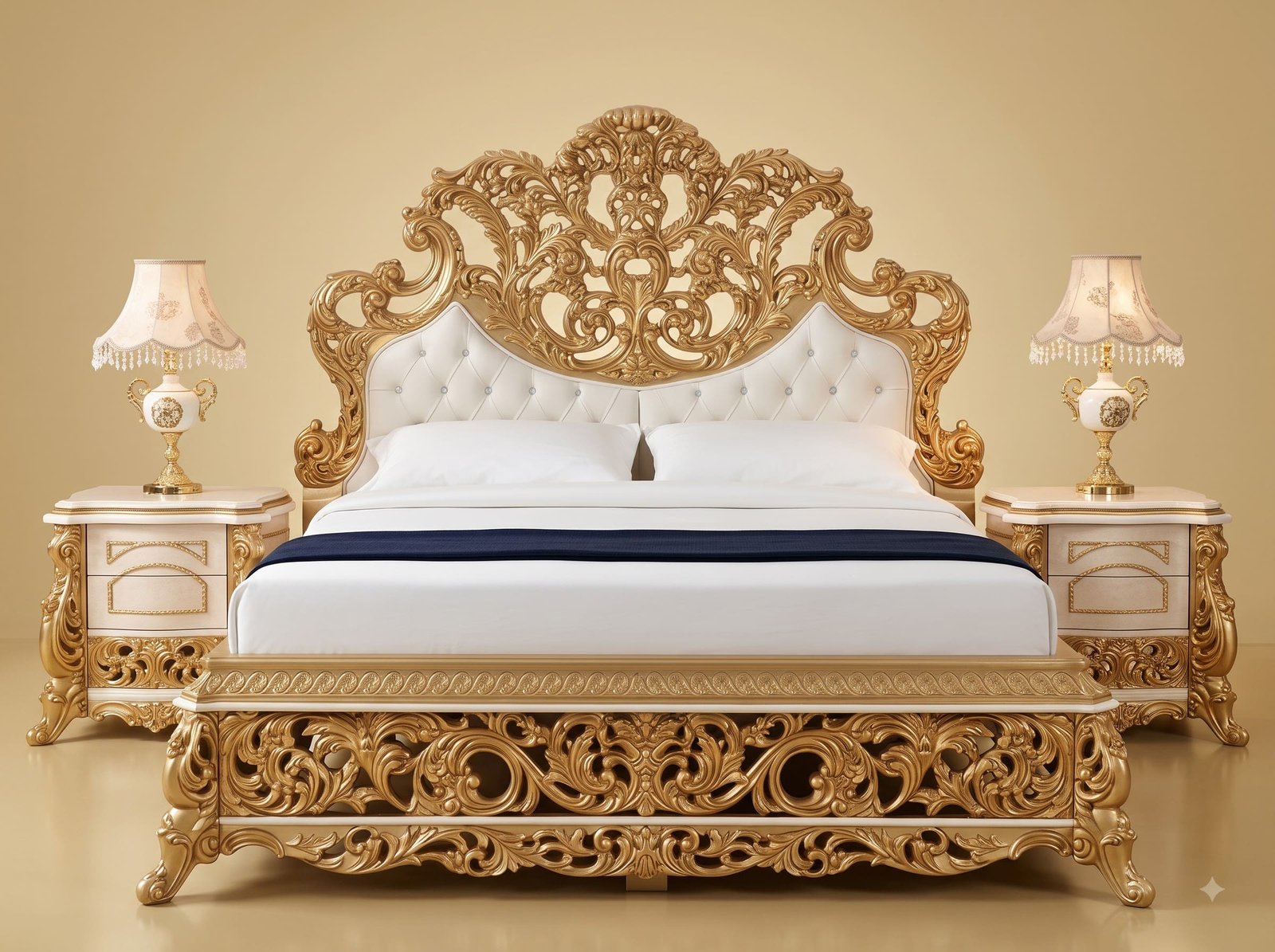
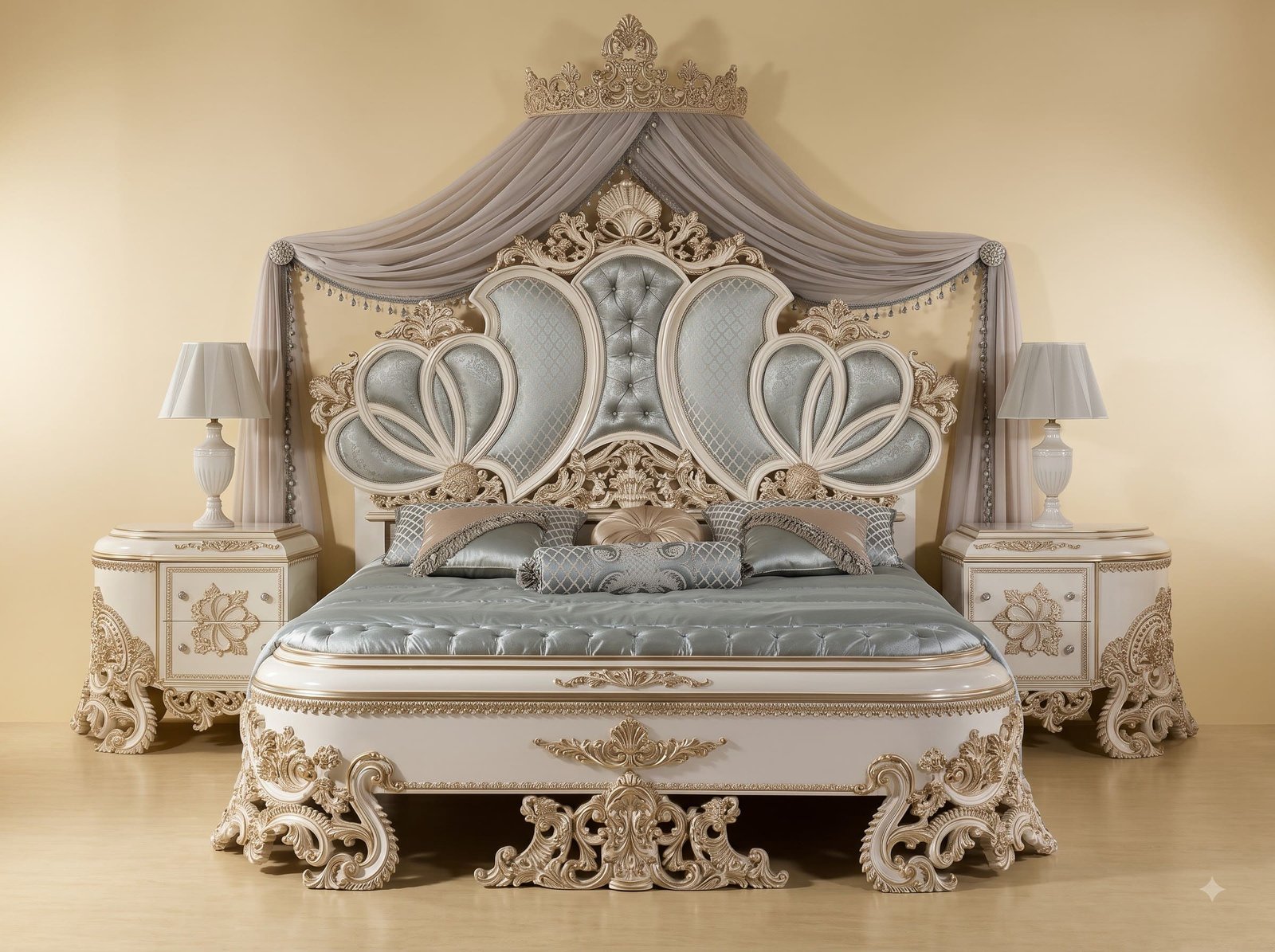
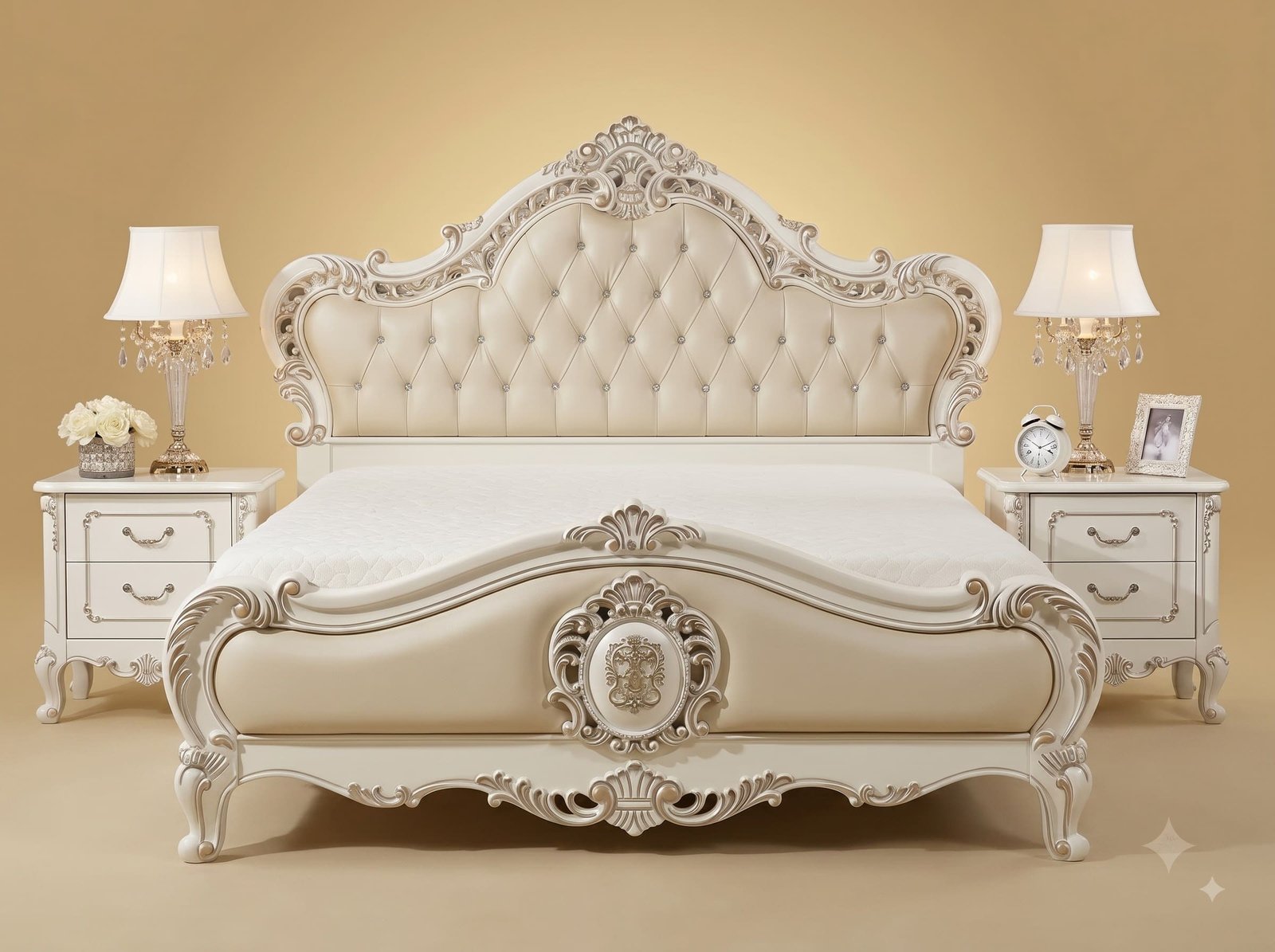
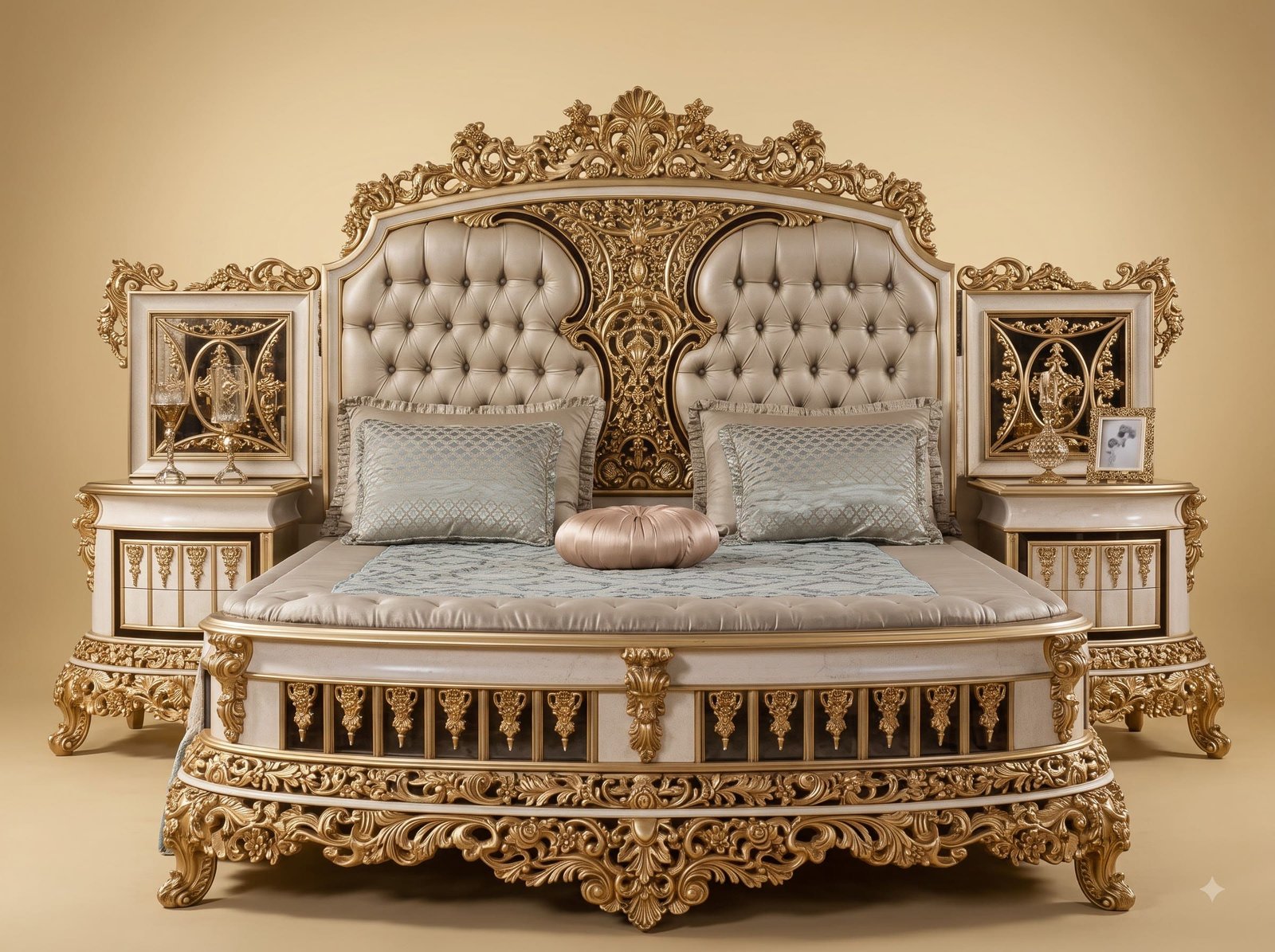
Our artisans build the wings as part of the headboard structure rather than bolting them on, which is why the carved frame runs continuously across all three panels without a visible seam. Each tufted panel is upholstered separately and then set into that frame. Handcrafted Indian luxury shows up in exactly this kind of decision, where the harder method is chosen because the easy one shows.
 Ask Price On WhatsApp