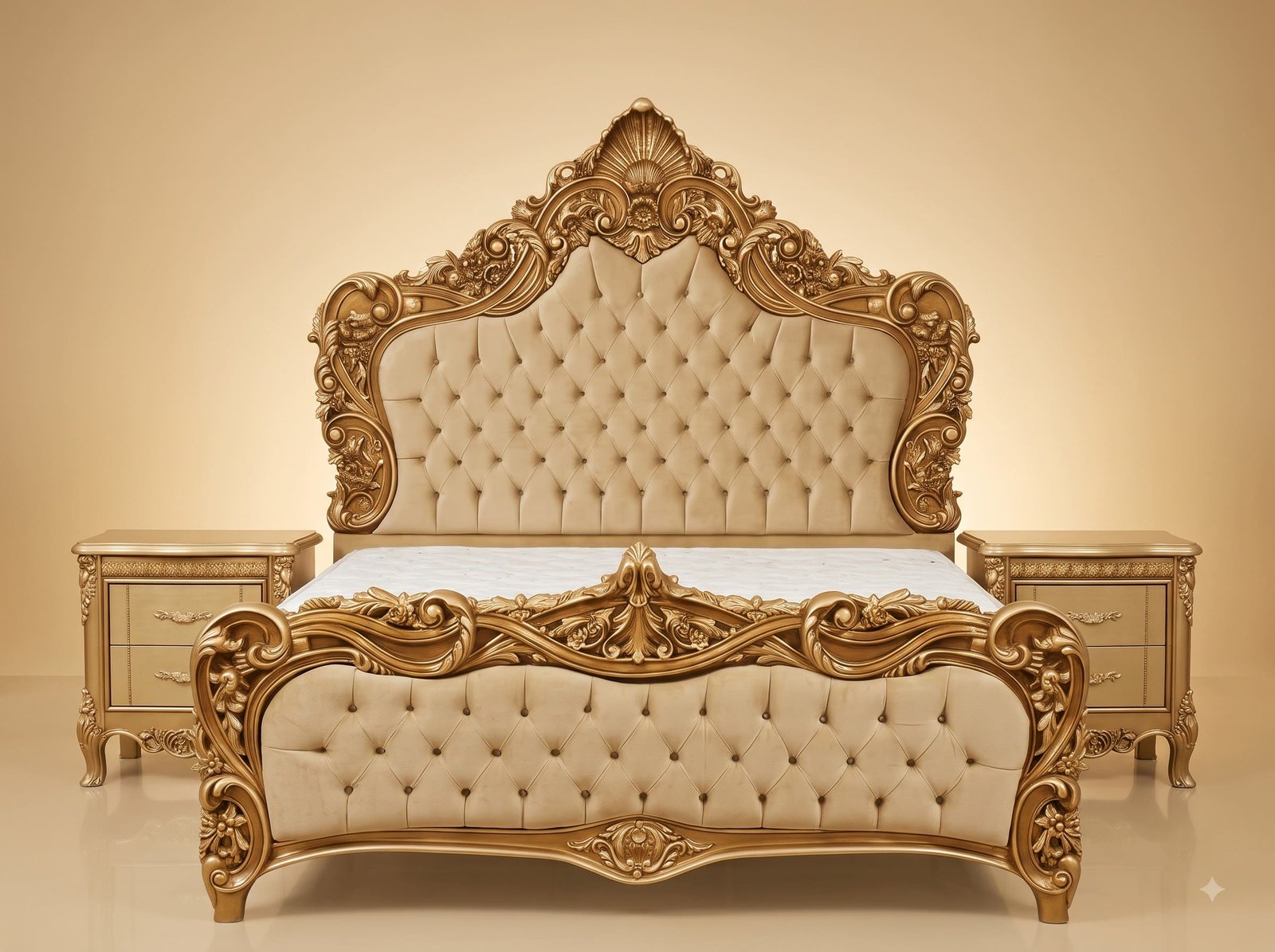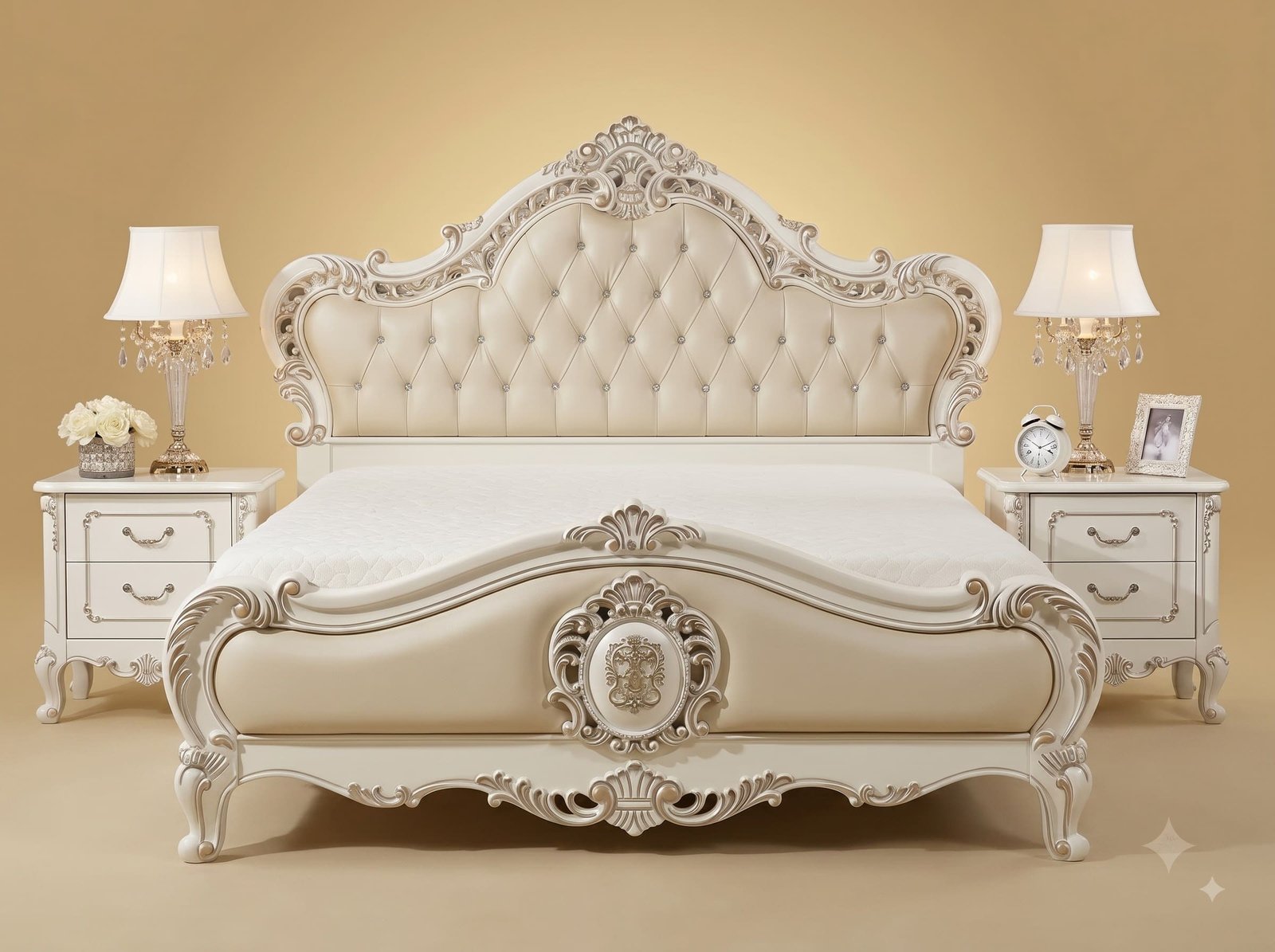
The story of how high a bed should be
Beds have moved up and down for centuries, and always for reasons that had nothing to do with sleep. Medieval and early modern beds sat high because the floor was cold, damp and occupied by animals and servants, and because a trundle bed had to slide underneath. Height was safety and status, and steps beside a bed were an ordinary piece of furniture.
Then the twentieth century pushed beds down. Central heating, clean floors and modernist taste produced the low platform bed, and mattresses grew thicker at the same time, which quietly raised the sleeping surface back up again. The result is that published frame heights stopped meaning much: two identical frames with different mattresses can differ by a foot.
Our artisans work from the finished height instead. We ask what mattress you are using and what height you want to sit at, and we set the rail position and leg height so the top of the mattress lands there. It is an unglamorous calculation done before any carving begins, and it is the difference between a bed you can live with and a beautiful one you climb into.
 Ask Price On WhatsApp