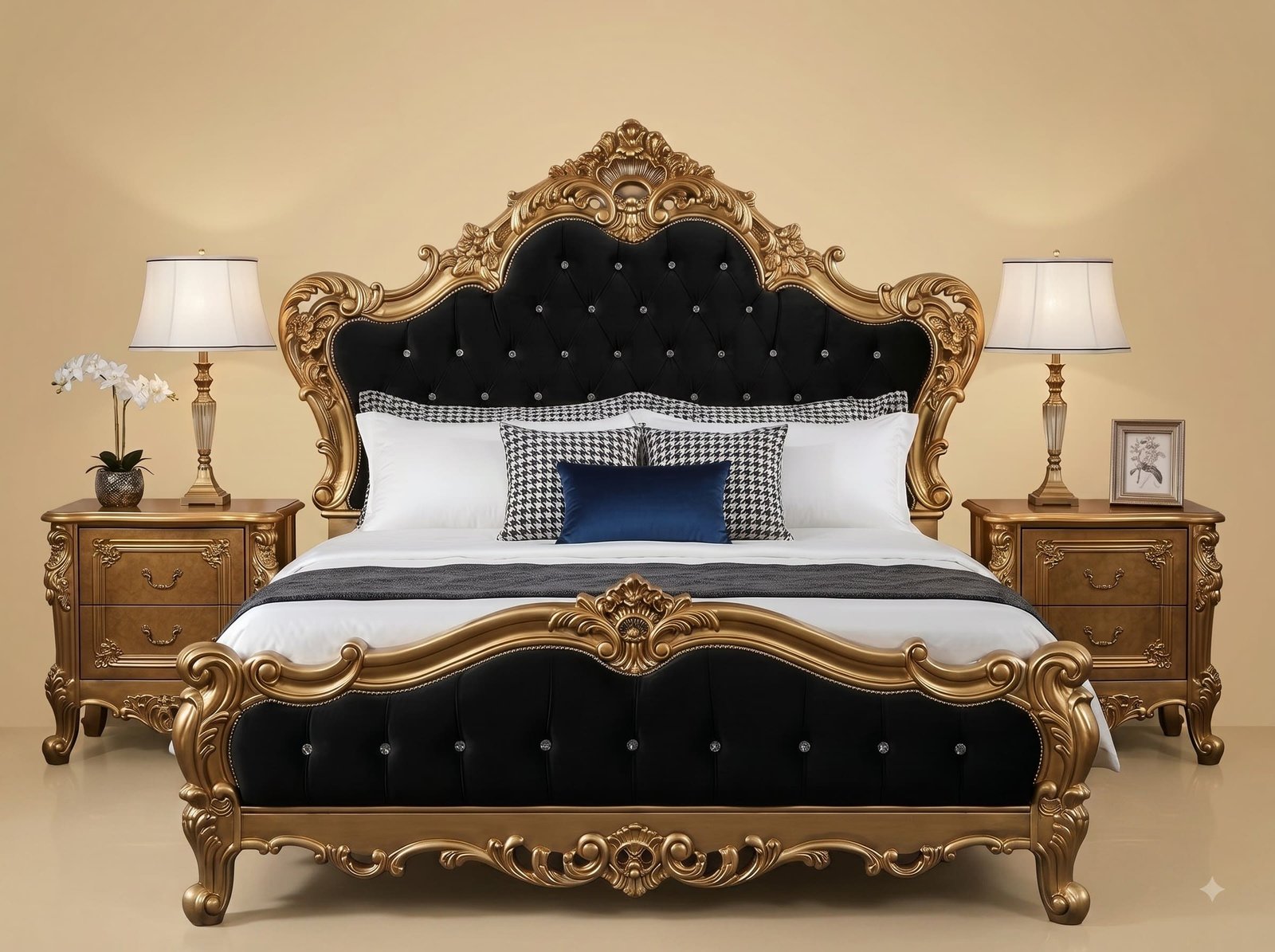
The story of black and gold in Indian interiors
Black was historically an expensive colour to hold in furniture, not a cheap one. Stable black dyes and lacquers were difficult to produce, prone to browning in sunlight, and the pairing of a true black ground with gilding became a marker of court workshops from Japan to Europe. Indian craftsmen encountered it through lacquered imports arriving on the same trade routes that carried teak outward.
What made the combination endure is optical rather than symbolic. Gold needs a dark neighbour to read as metal. Against white it looks yellow; against black it looks like gold. Every gilder knows this, and it is why so much historic gilded work sits on a dark bole or a dark ground.
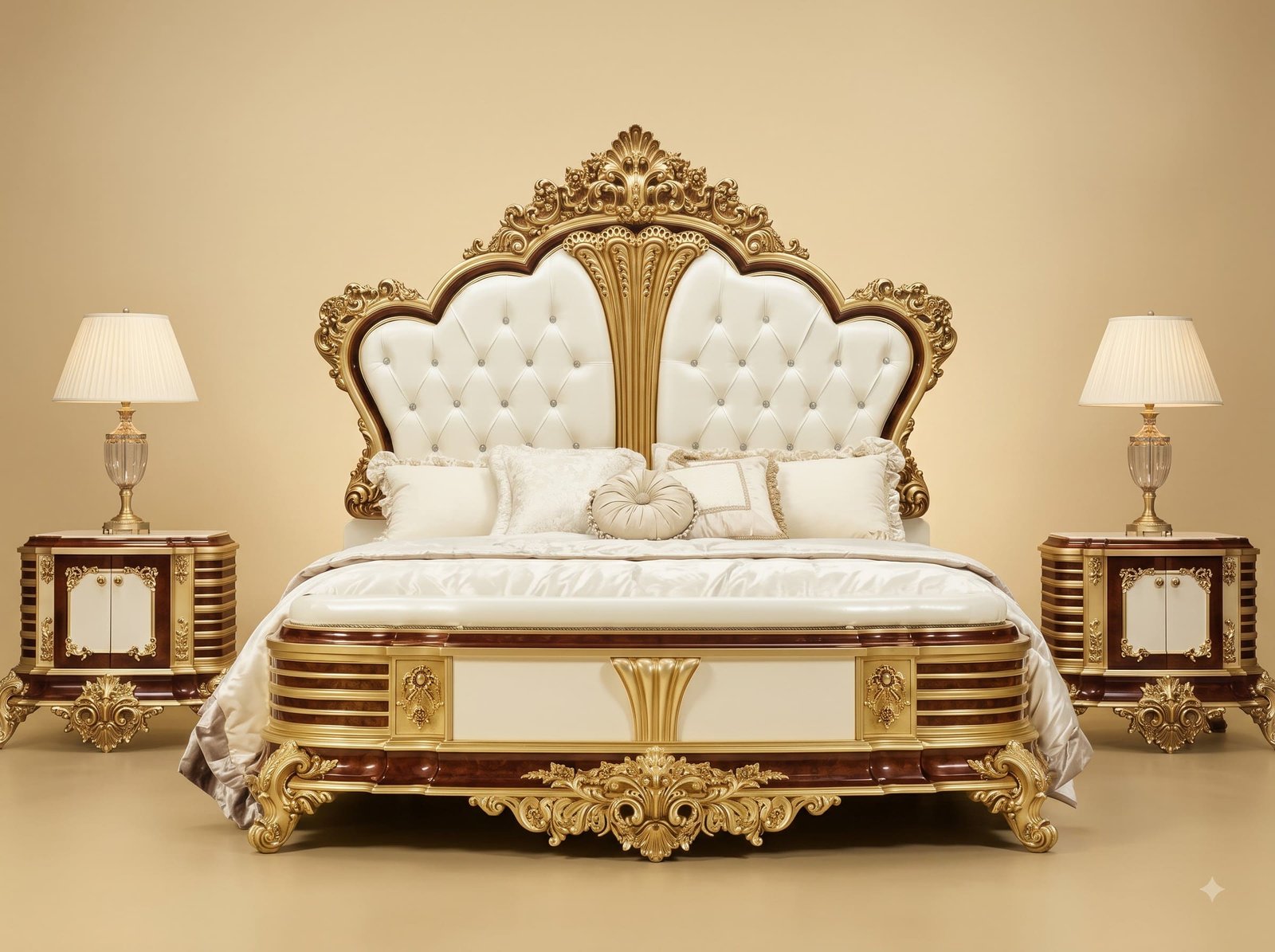
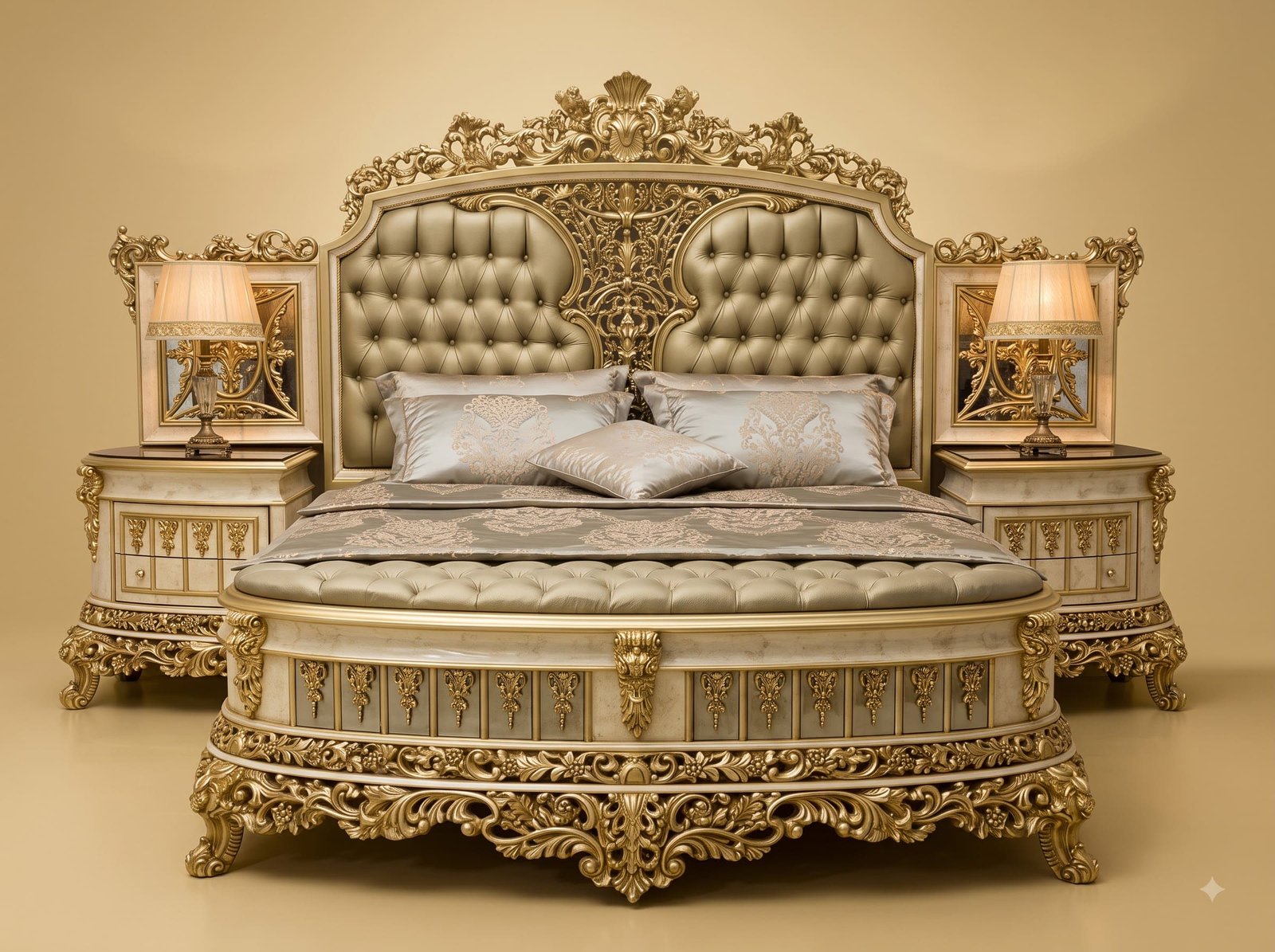
Our artisans build this bed on the same principle. The carving is cut deep in solid teak so the gold catches light along the ridges and drops into shadow in the hollows, and the black panels sit adjacent to give that gold something to argue with. Handcrafted Indian luxury of this kind is designed for how a room is actually lit, at night, by lamps, from the side.
 Ask Price On WhatsApp