The story of damask
Damask takes its name from Damascus, the trading city through which the technique reached the Mediterranean, though the weave itself came out of China. The pattern is not printed or embroidered; it is created by the weave alone, with the warp and weft alternating dominance so the motif appears as a change in the way light reflects off the cloth. Turn a damask panel in the light and the pattern reverses.
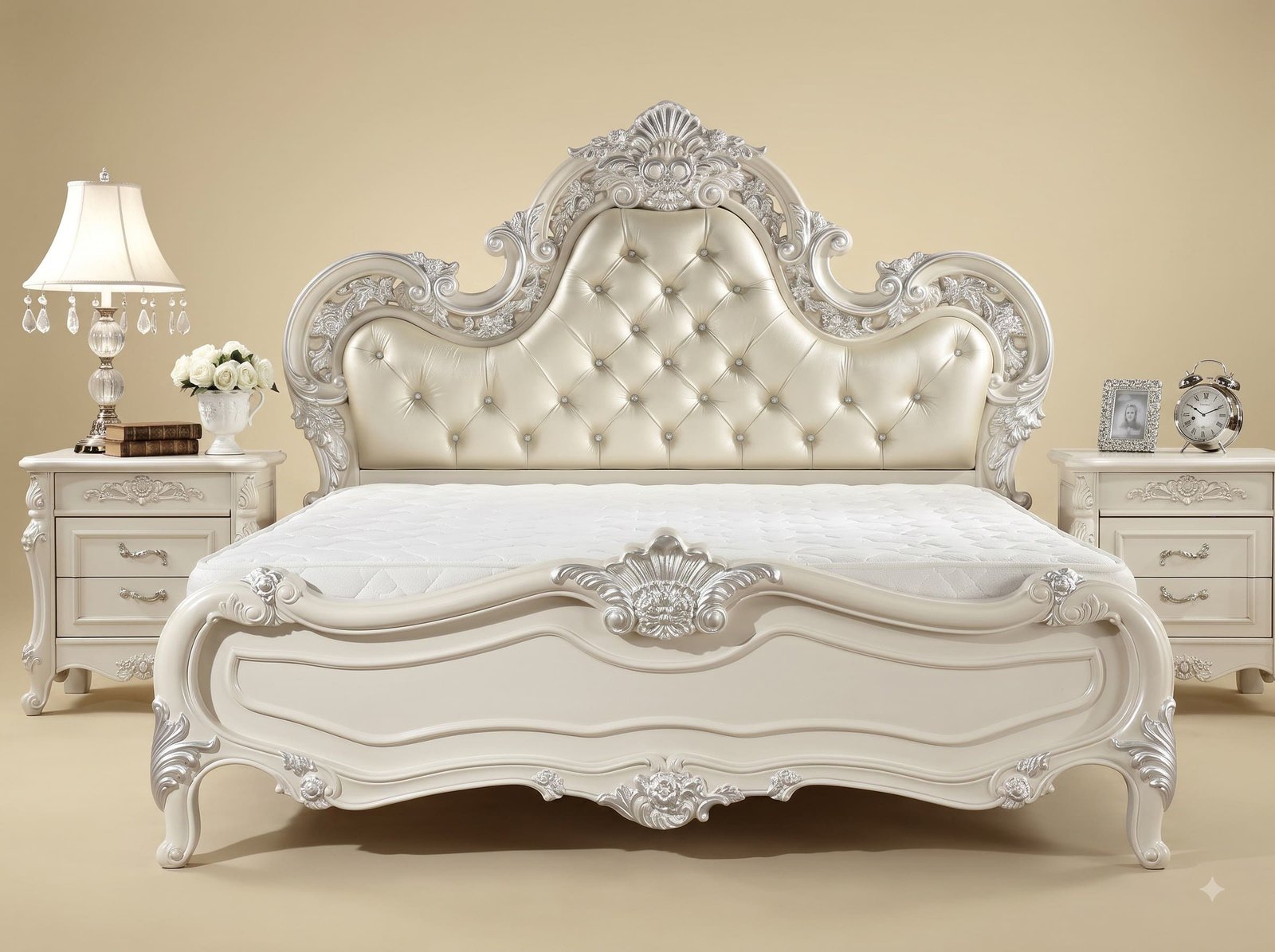
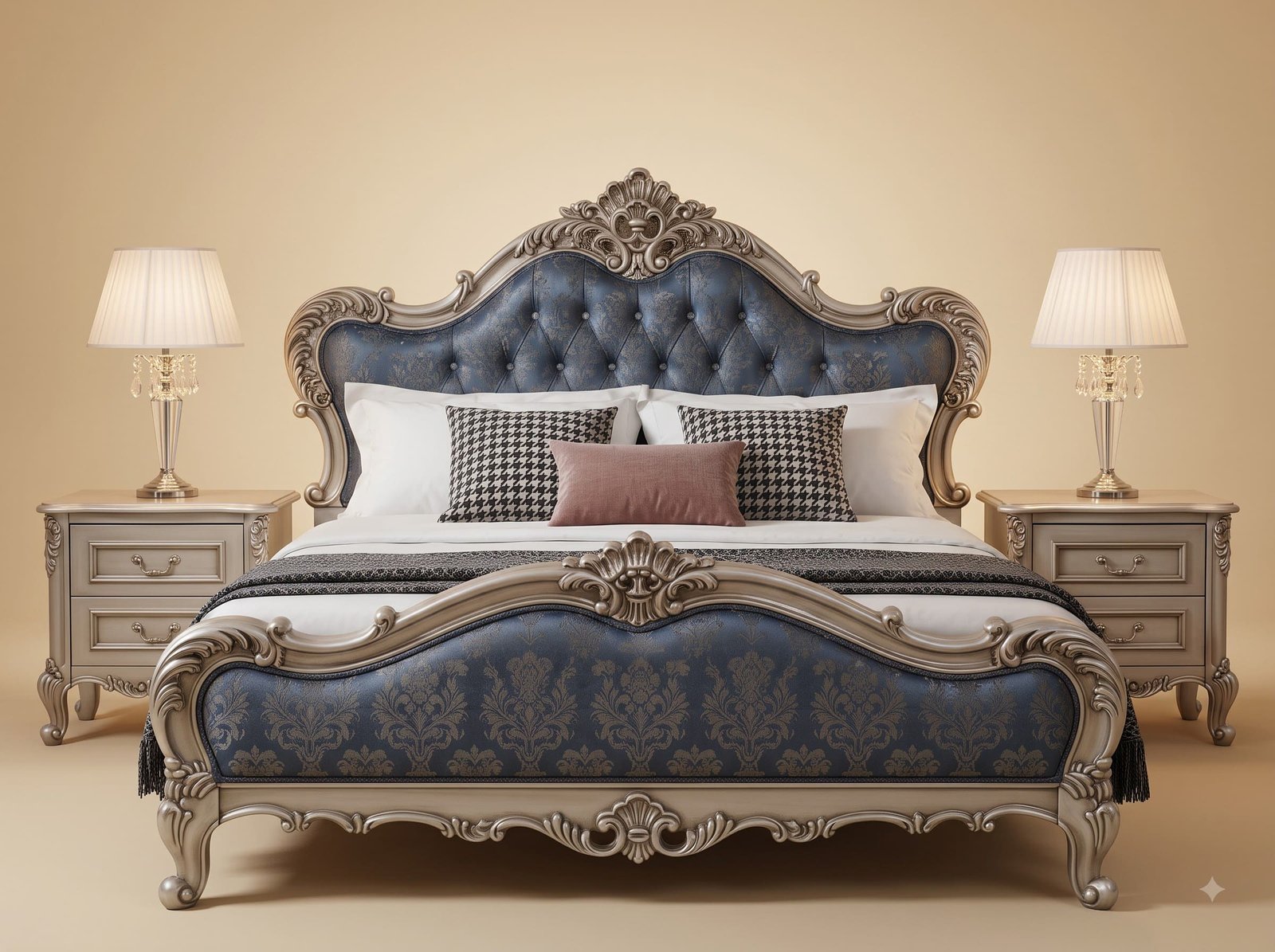
That reflective quality is why damask has been a furnishing fabric for a thousand years and why it belongs next to a metallic finish. Both surfaces work by reflection rather than by colour, so a silver-finished frame and a damask panel behave the same way as the light in the room changes through the day.
Indian workshops know the fabric intimately through brocade and jamawar traditions where woven motifs on a shifting ground are standard, not exotic. Our artisans set the buttoning on this headboard by working out from the centre of the motif rather than from the centre of the panel, which is a small distinction that decides whether the pattern looks placed or looks cut. Handcrafted Indian luxury is full of decisions like this one.
 Ask Price On WhatsApp