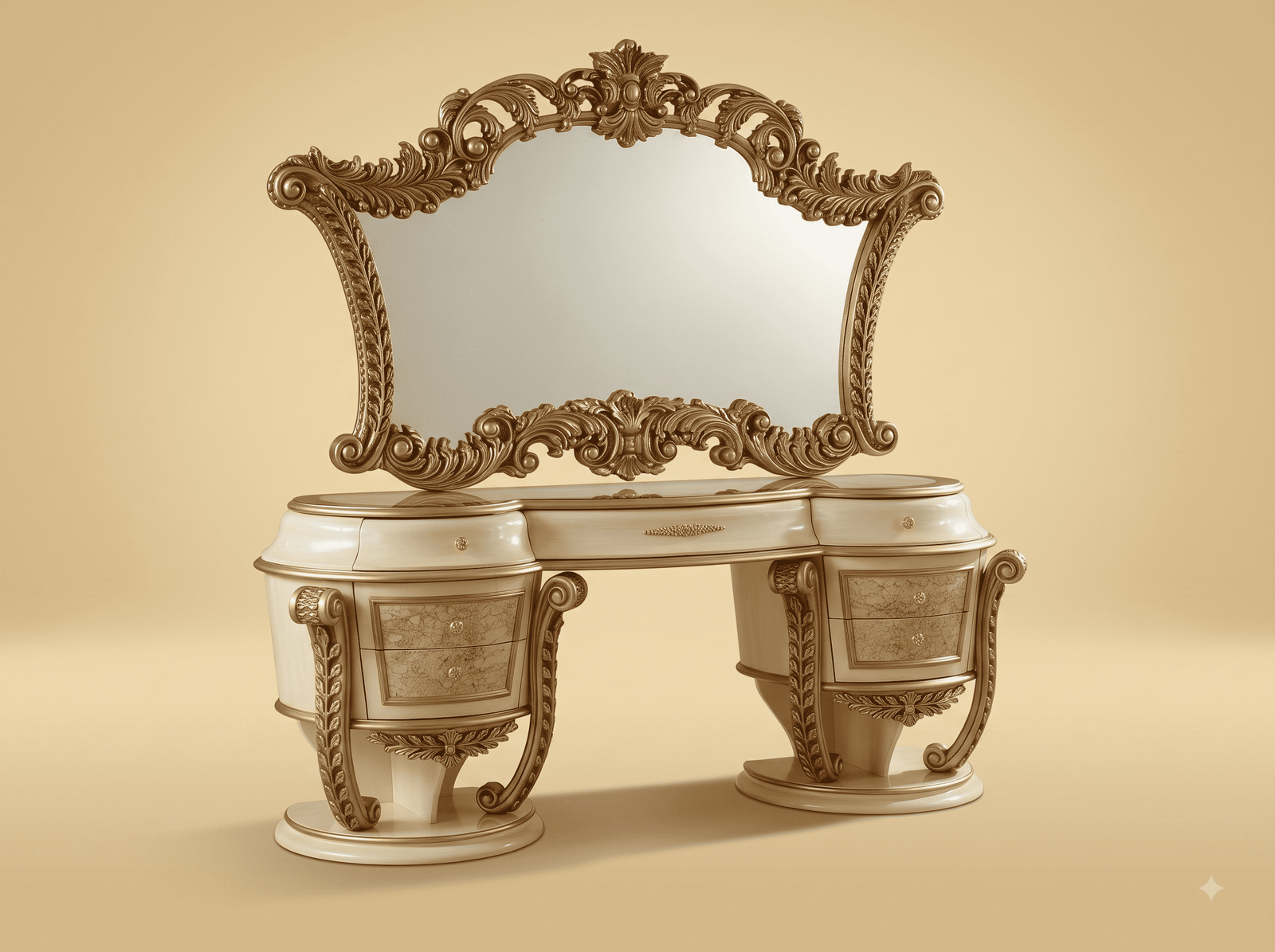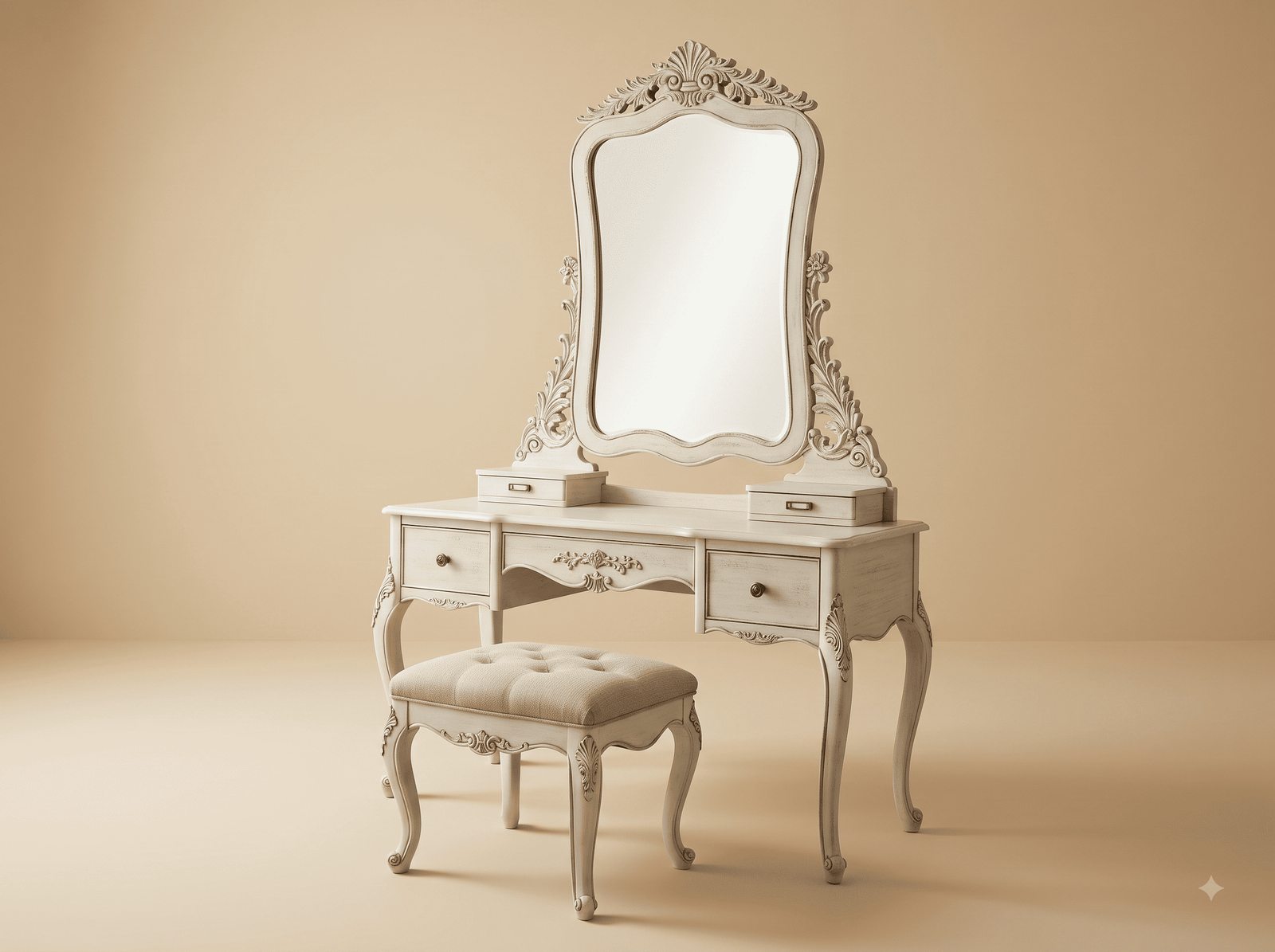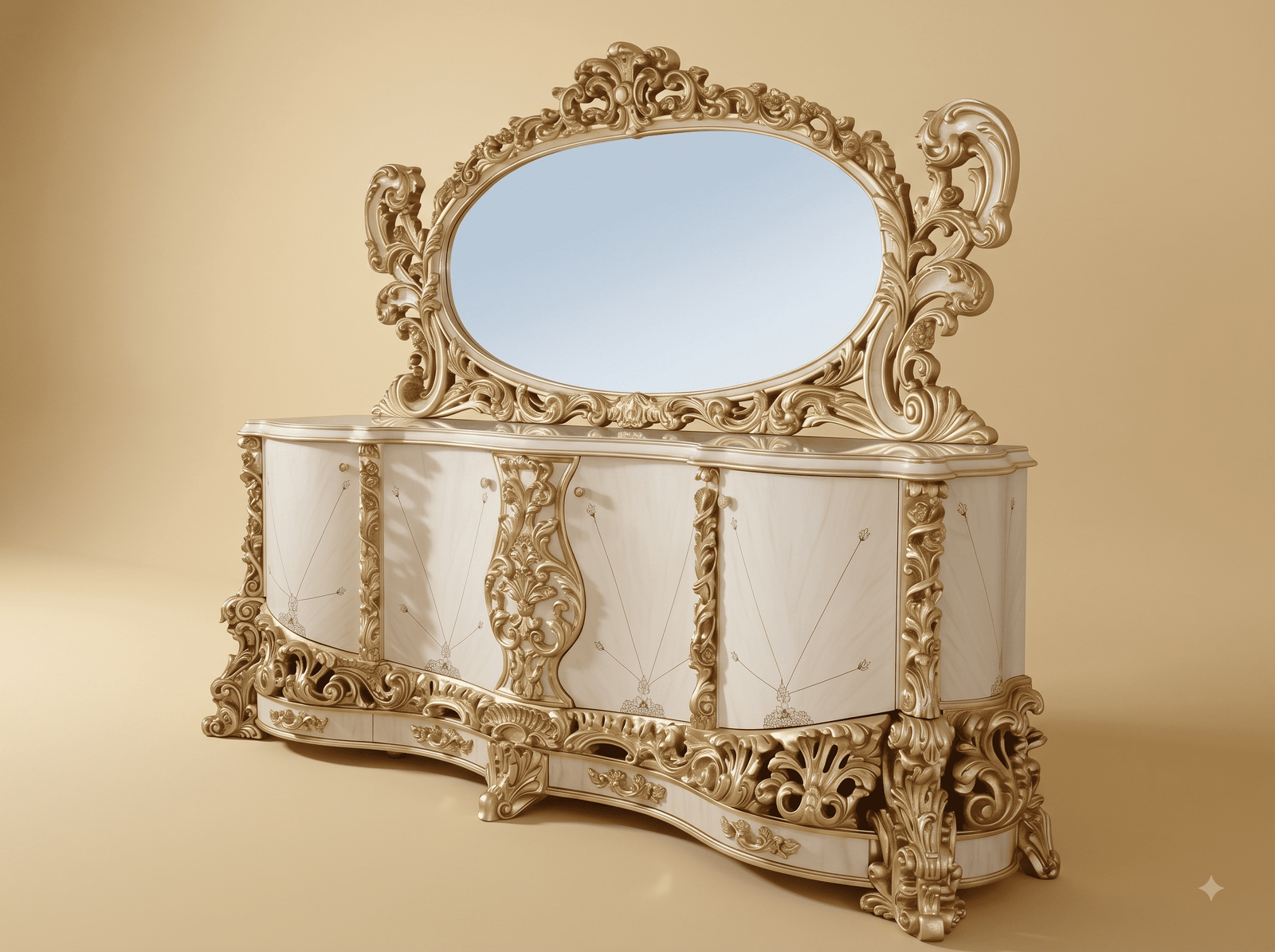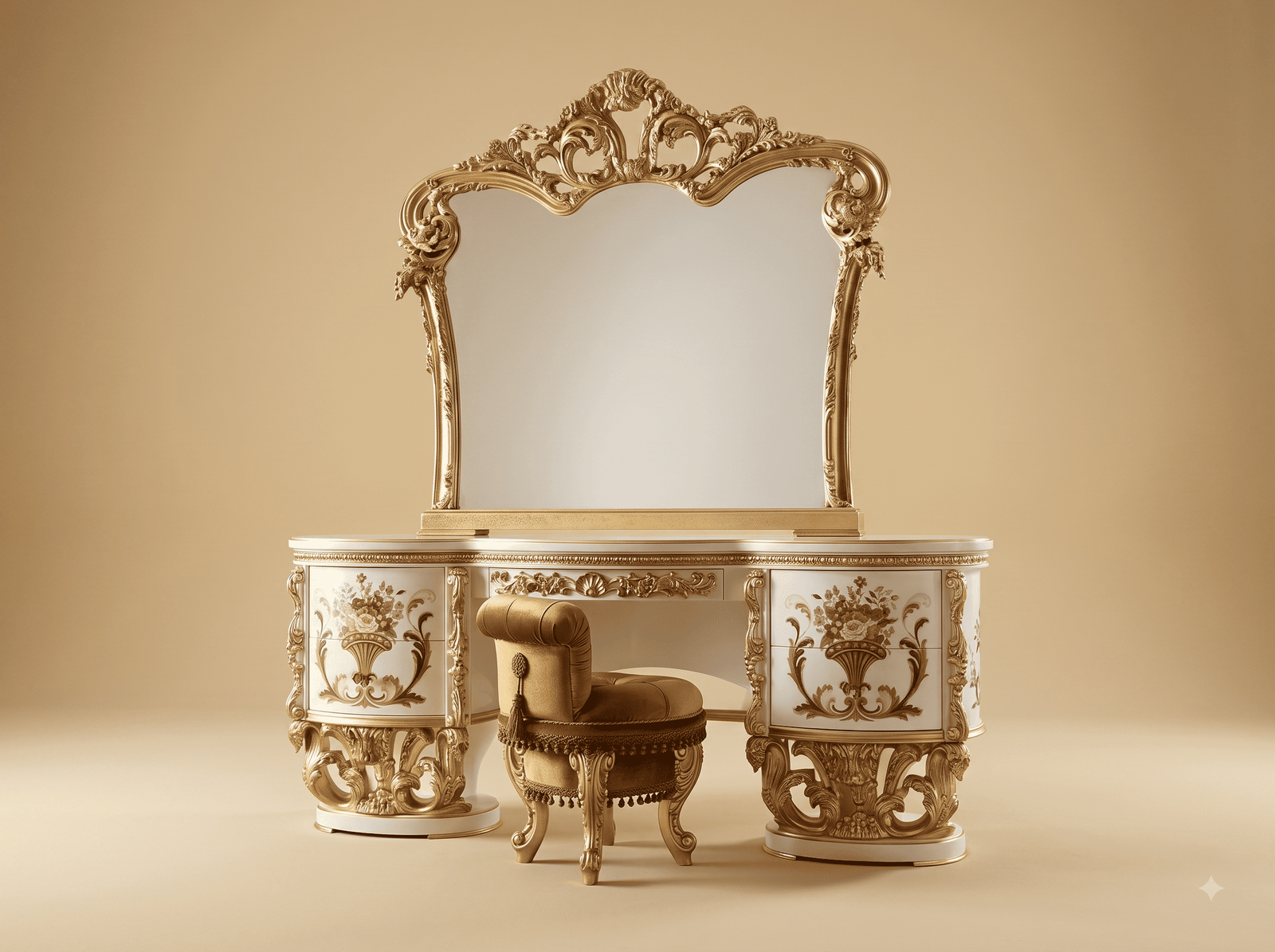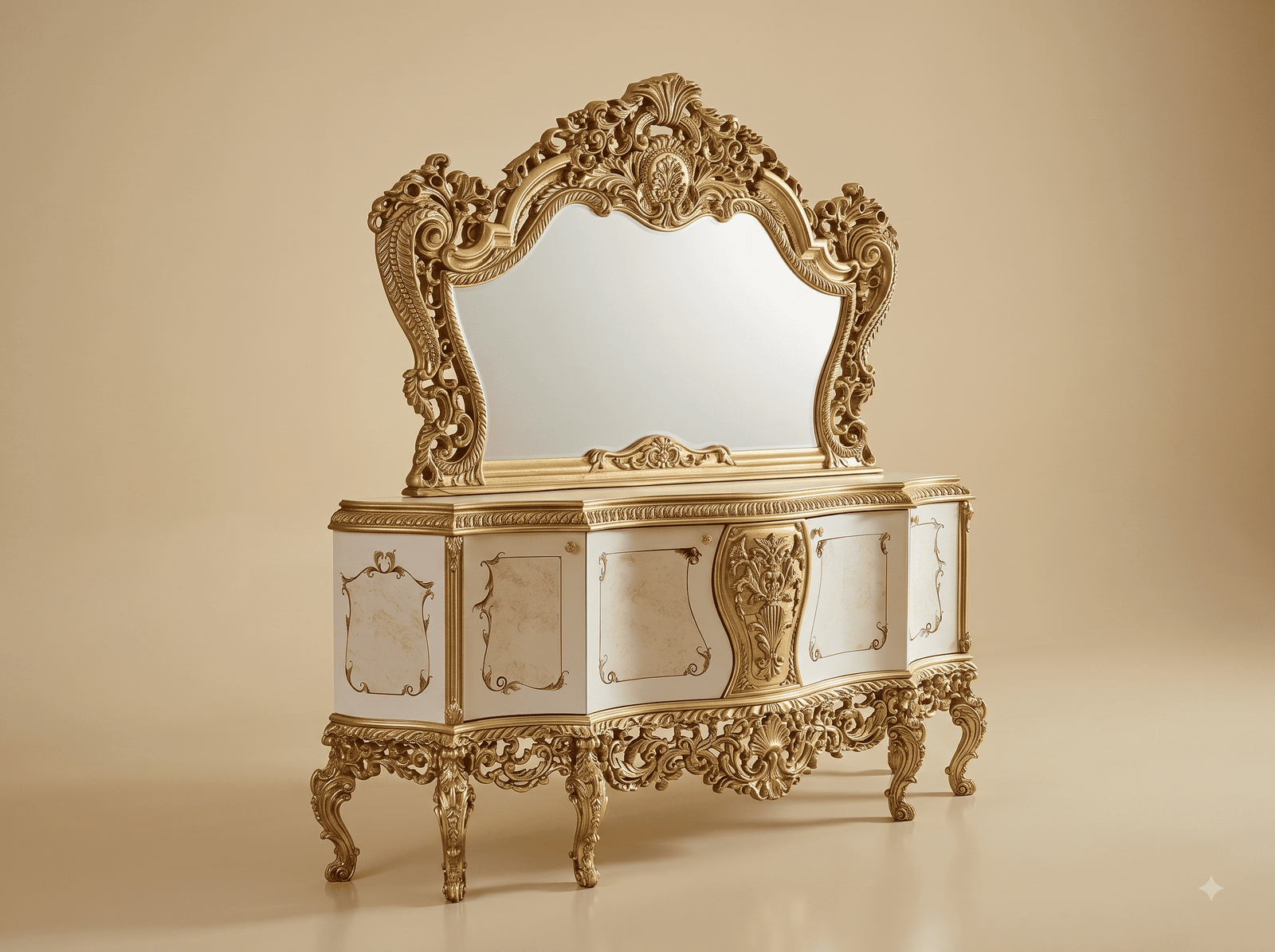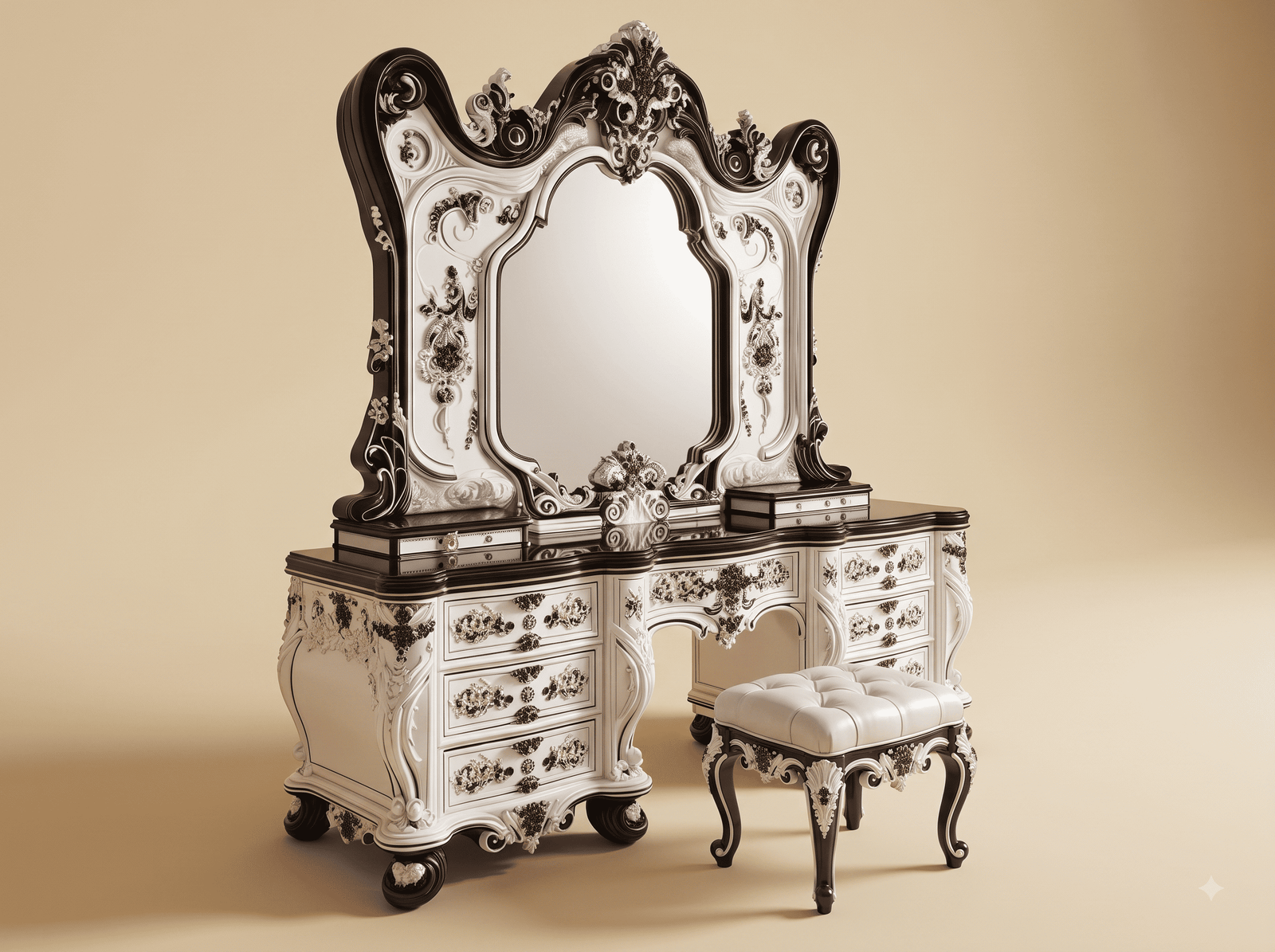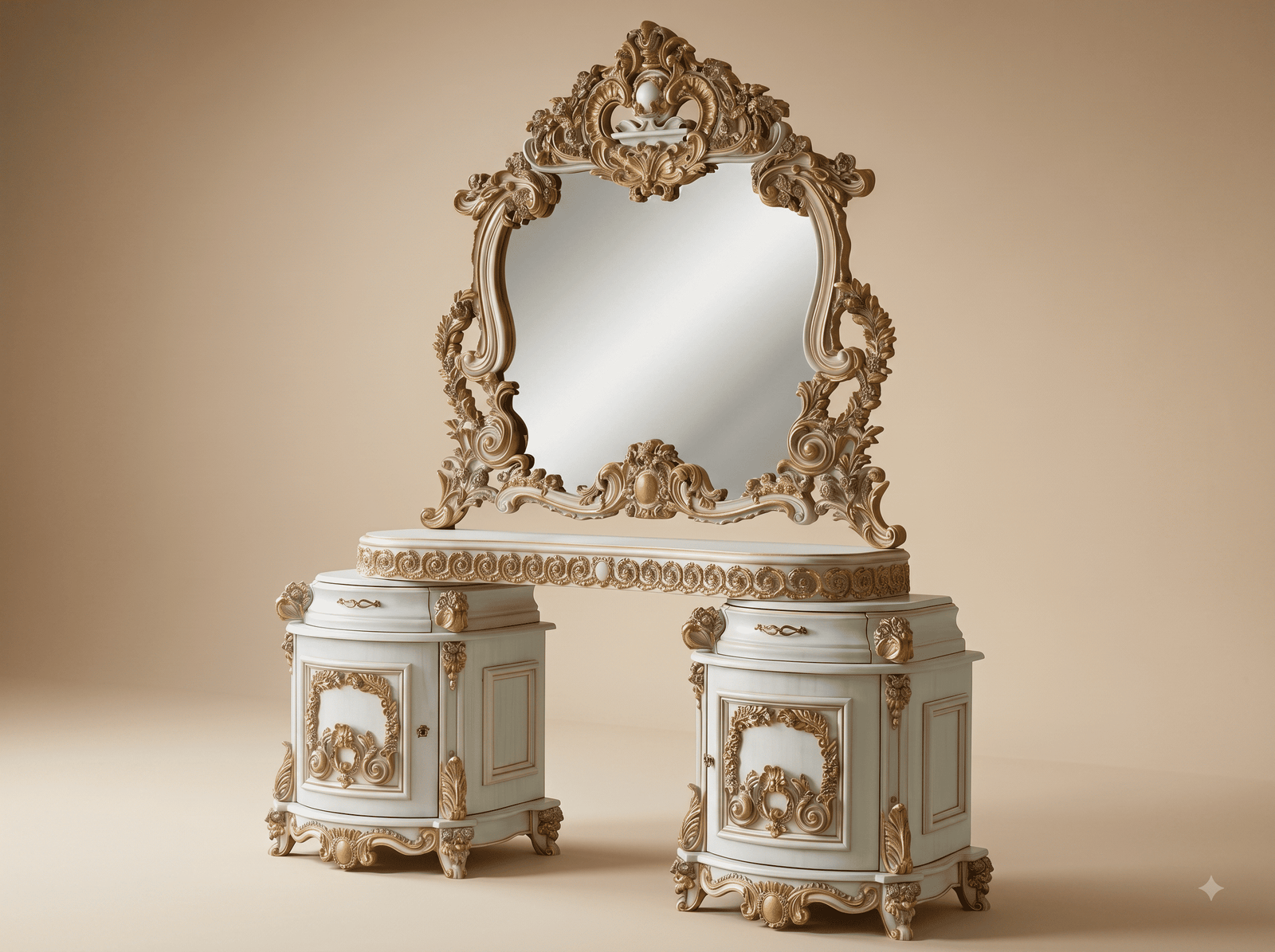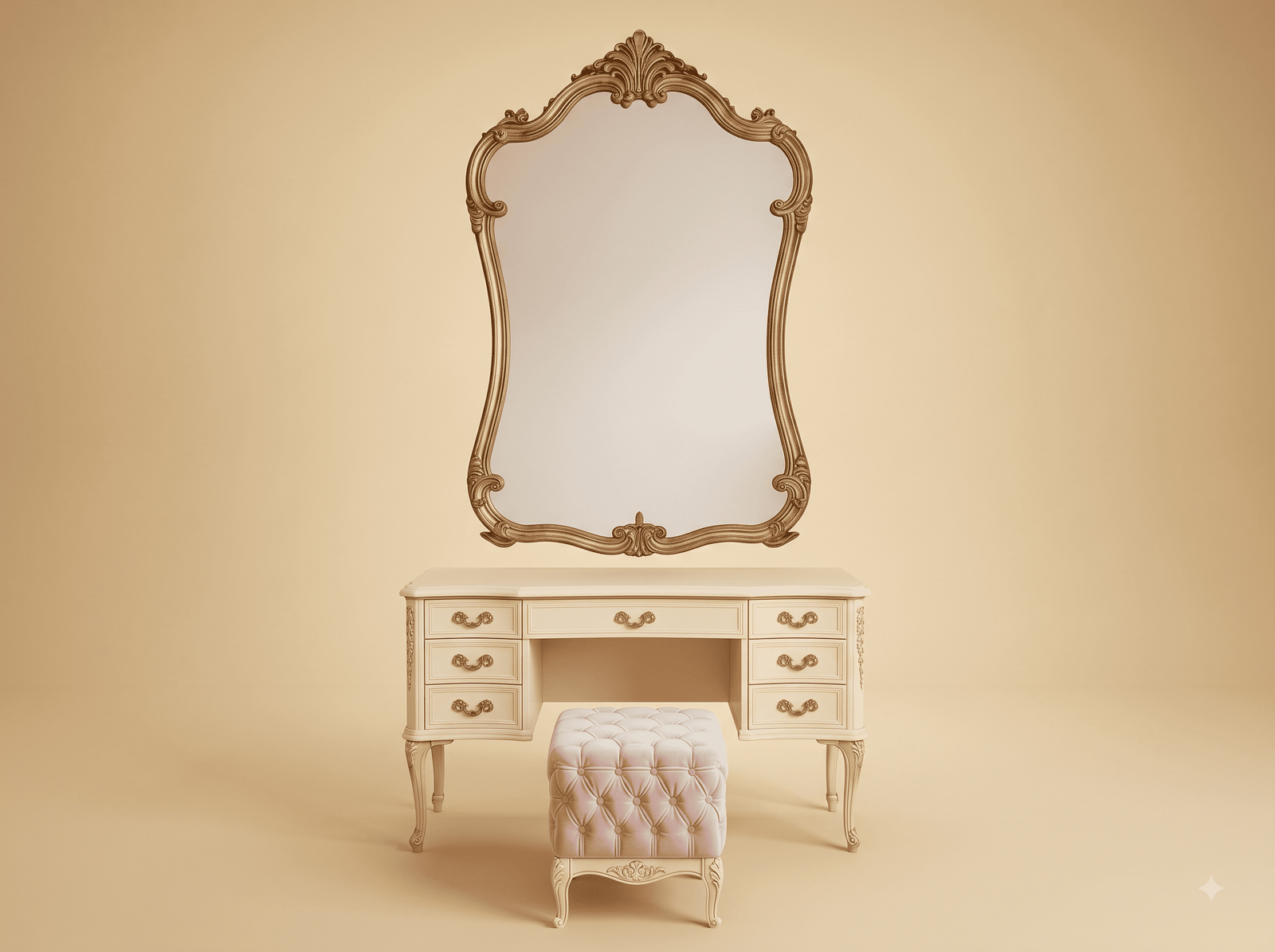
The mirror frame here has no straight sections at all. Follow it with your eye from the crest: it curves out, pulls in at the waist, swells again at the hip and closes at the base, and the curvature is changing continuously the entire way round.
That is a difficult thing to make, and the difficulty is not the shape - it is the moulding running along it. A moulded frame has a profile: a bead, a hollow, a fillet, repeated identically along its whole length. On a straight frame that profile is worked in one pass. On a frame whose curvature never stops changing, the tool meets the wood at a different angle at every point, and the same cut that leaves a crisp bead on a gentle curve will bite or skip where the curve tightens.
So the profile is worked by hand around the shape, in short overlapping sections, with the carver constantly checking the bead against the section already finished. Where the curve reverses at the waist, the grain direction flips relative to the tool, and the cut has to be taken from the opposite direction to stop the fibres tearing.
The test is simple and unforgiving. Sight along the finished frame and the bead should run as one continuous line, with no thickening, no flat and no wobble - all the way around a shape that never repeats itself.
 Ask Price On WhatsApp