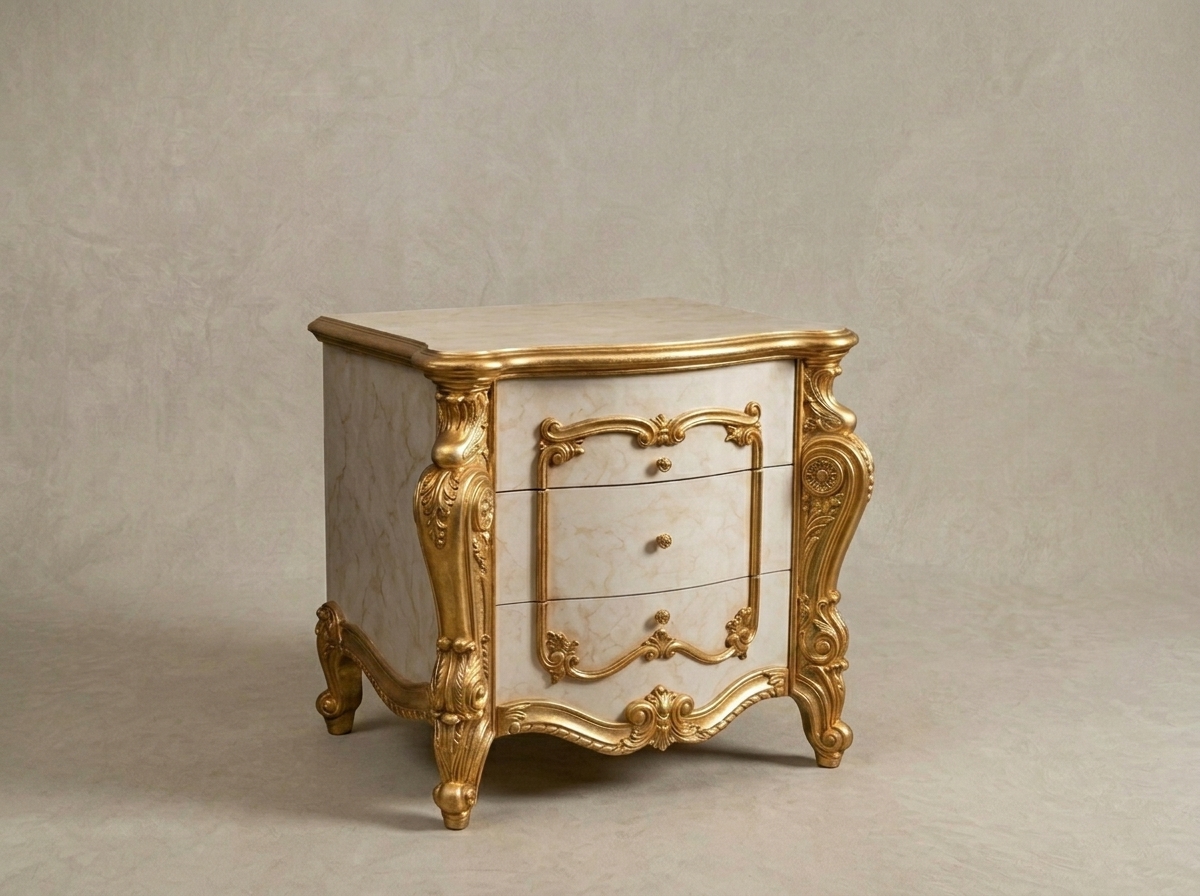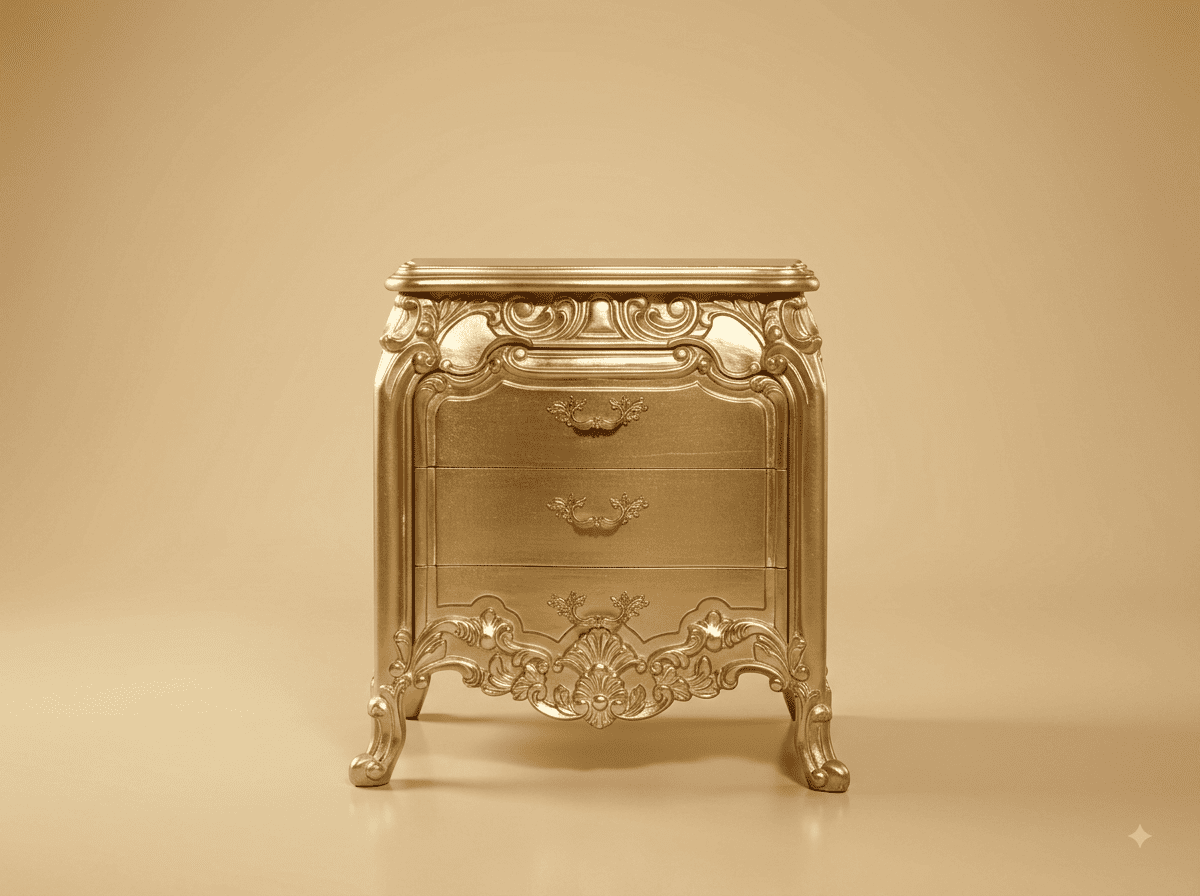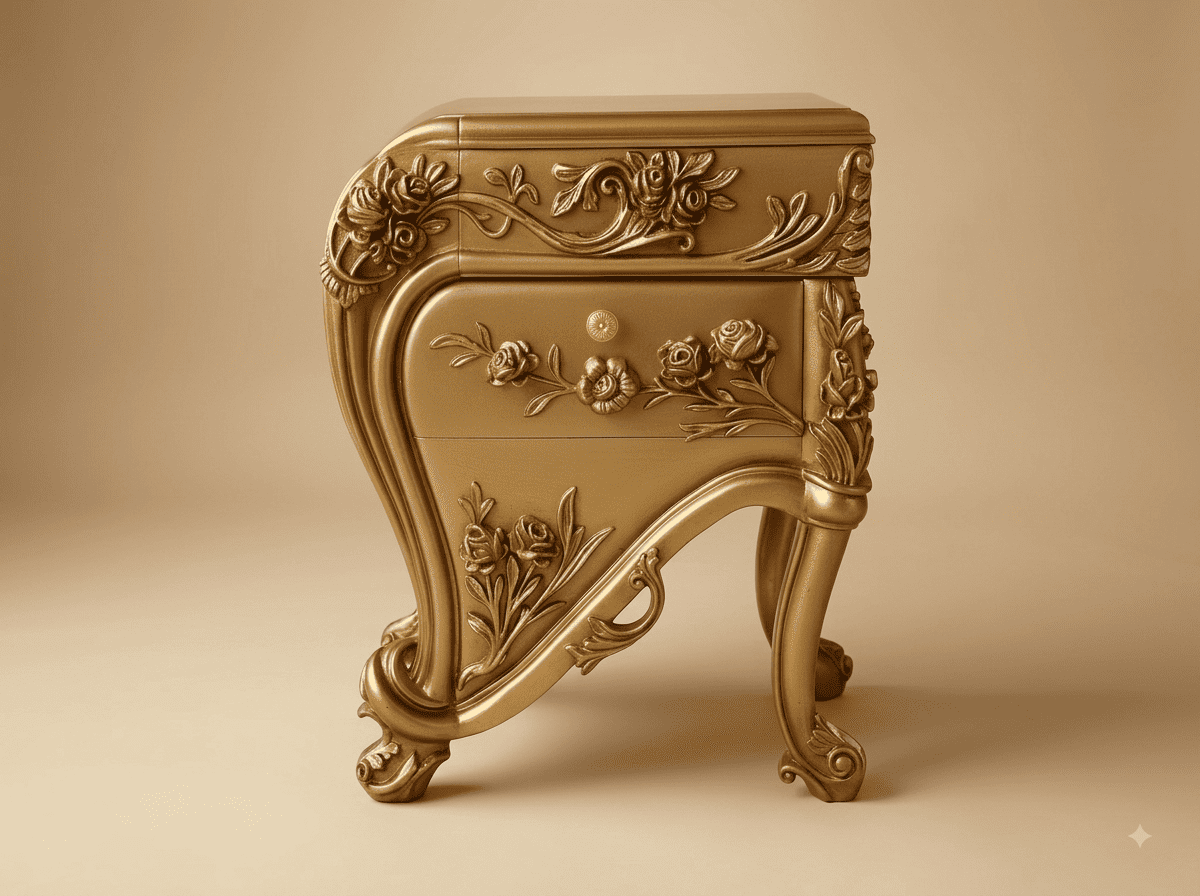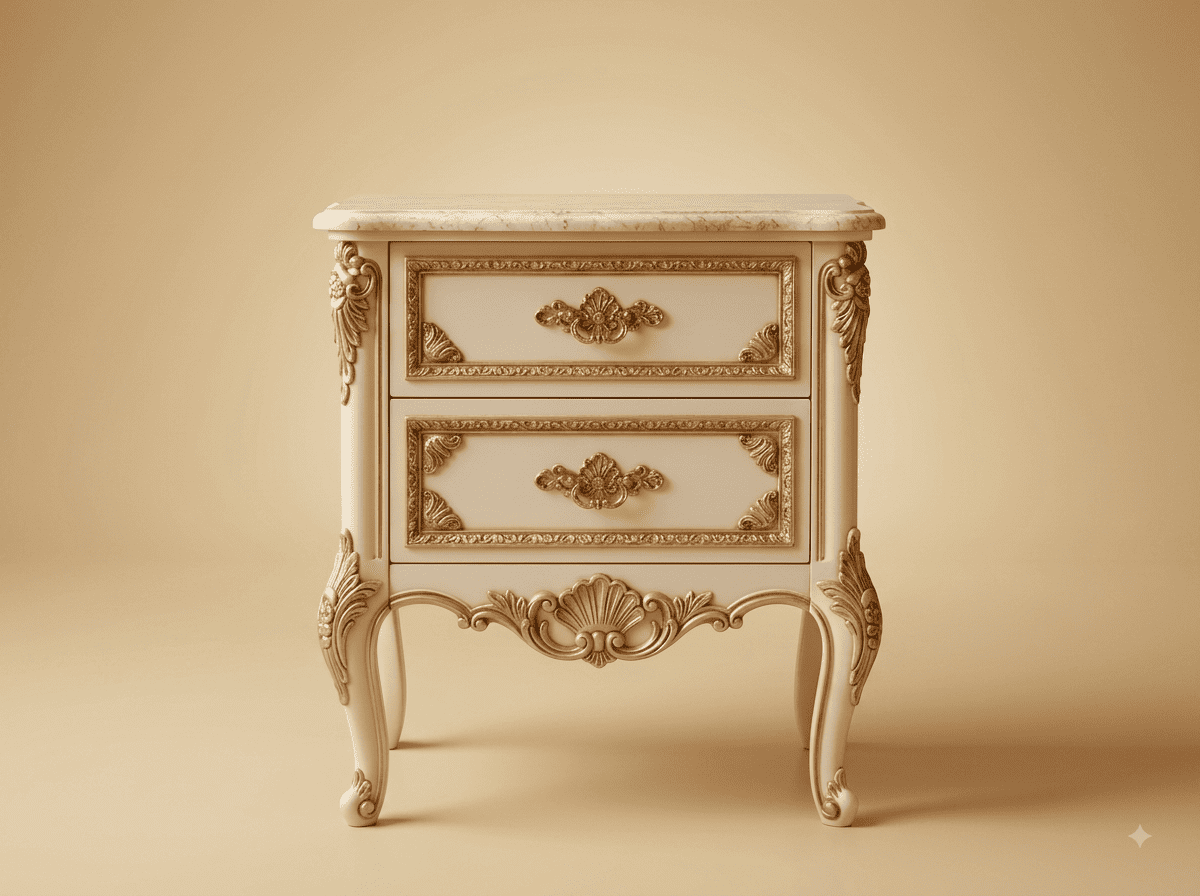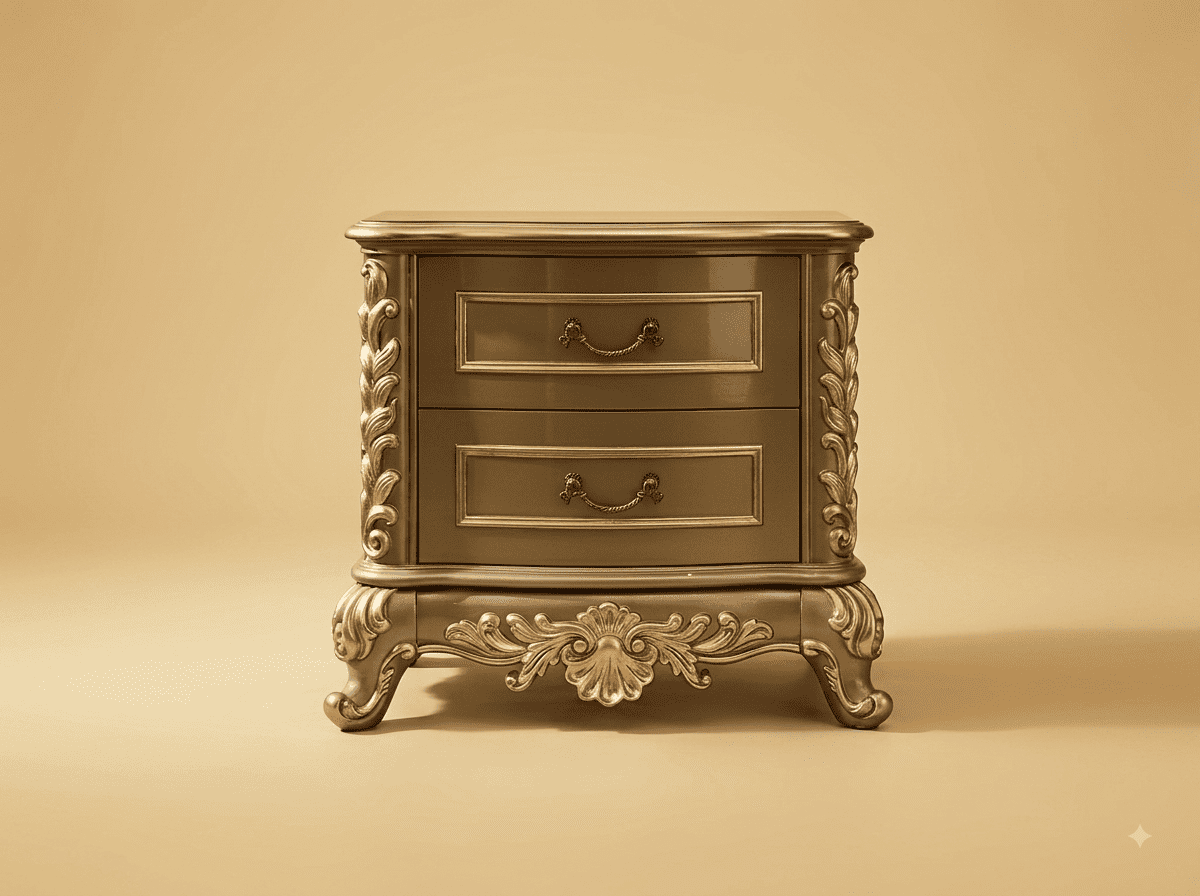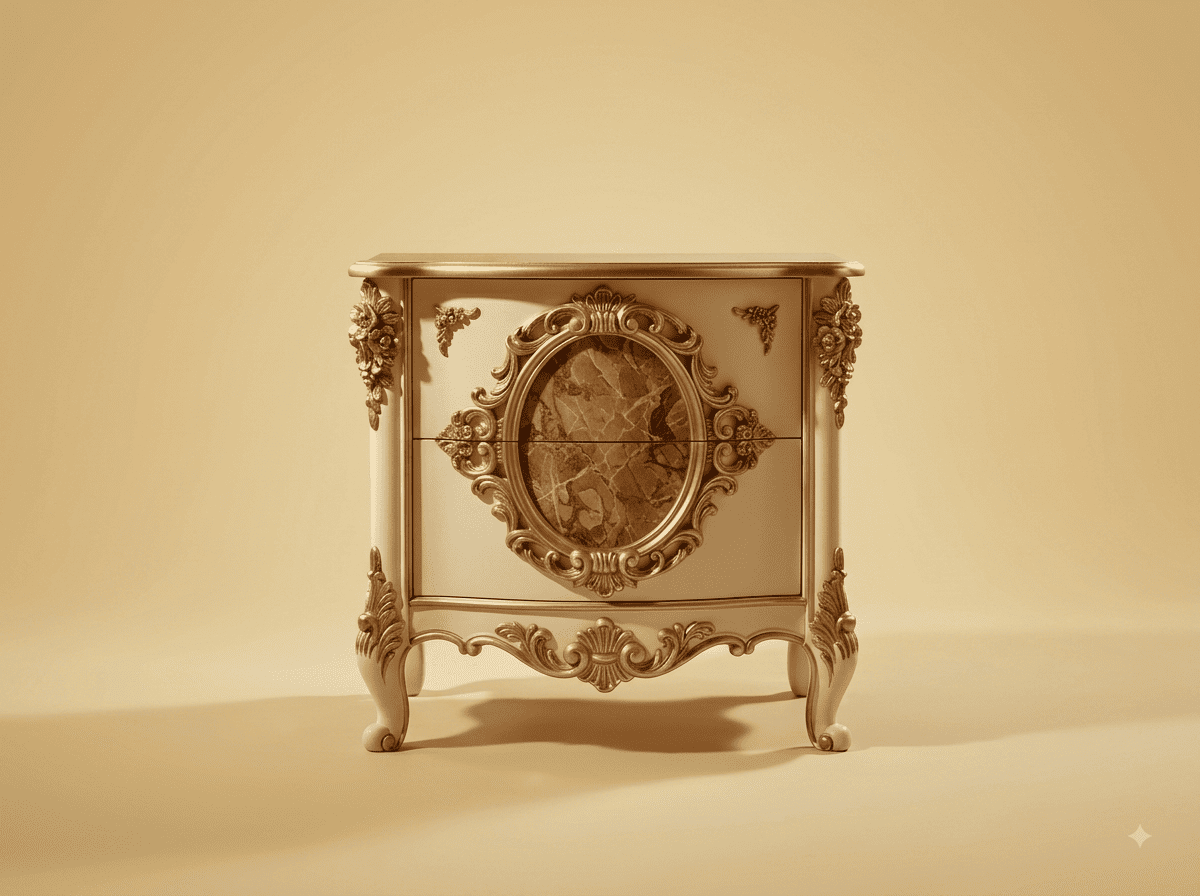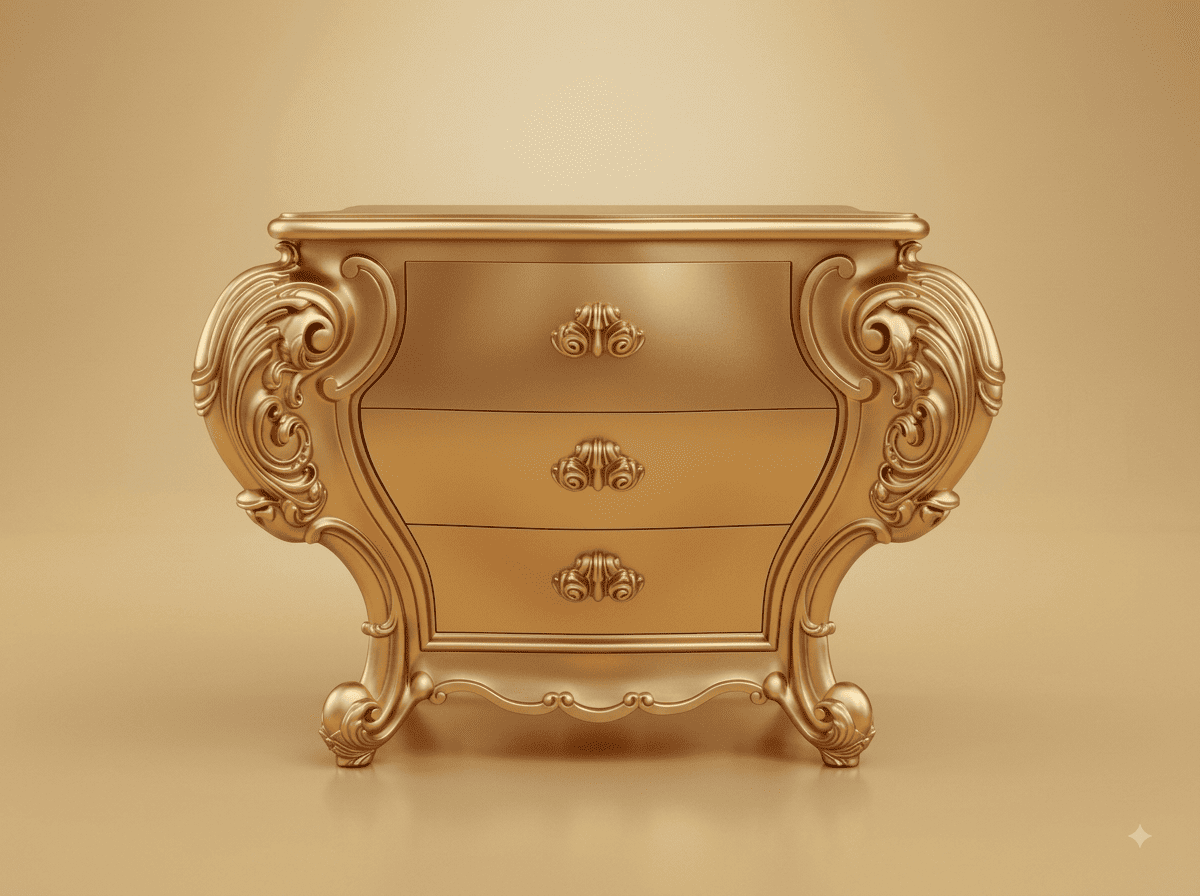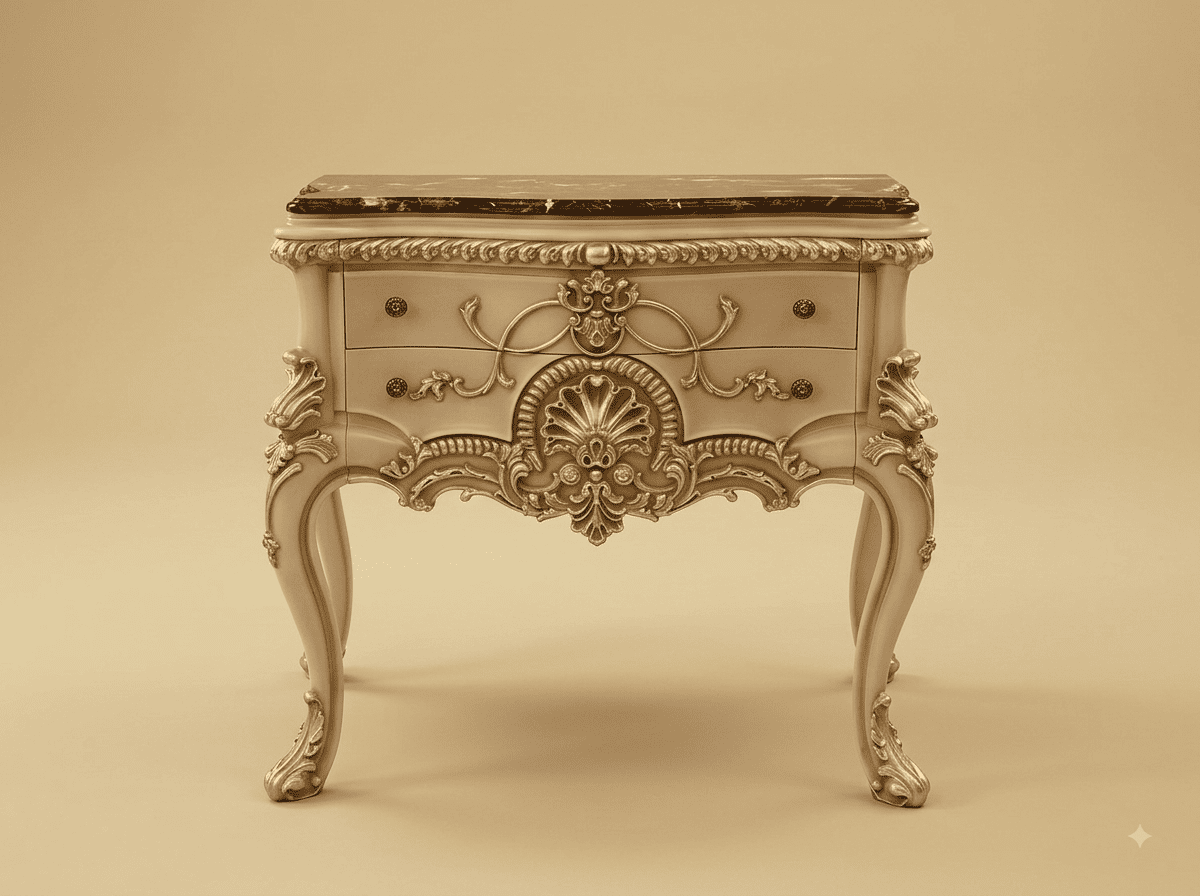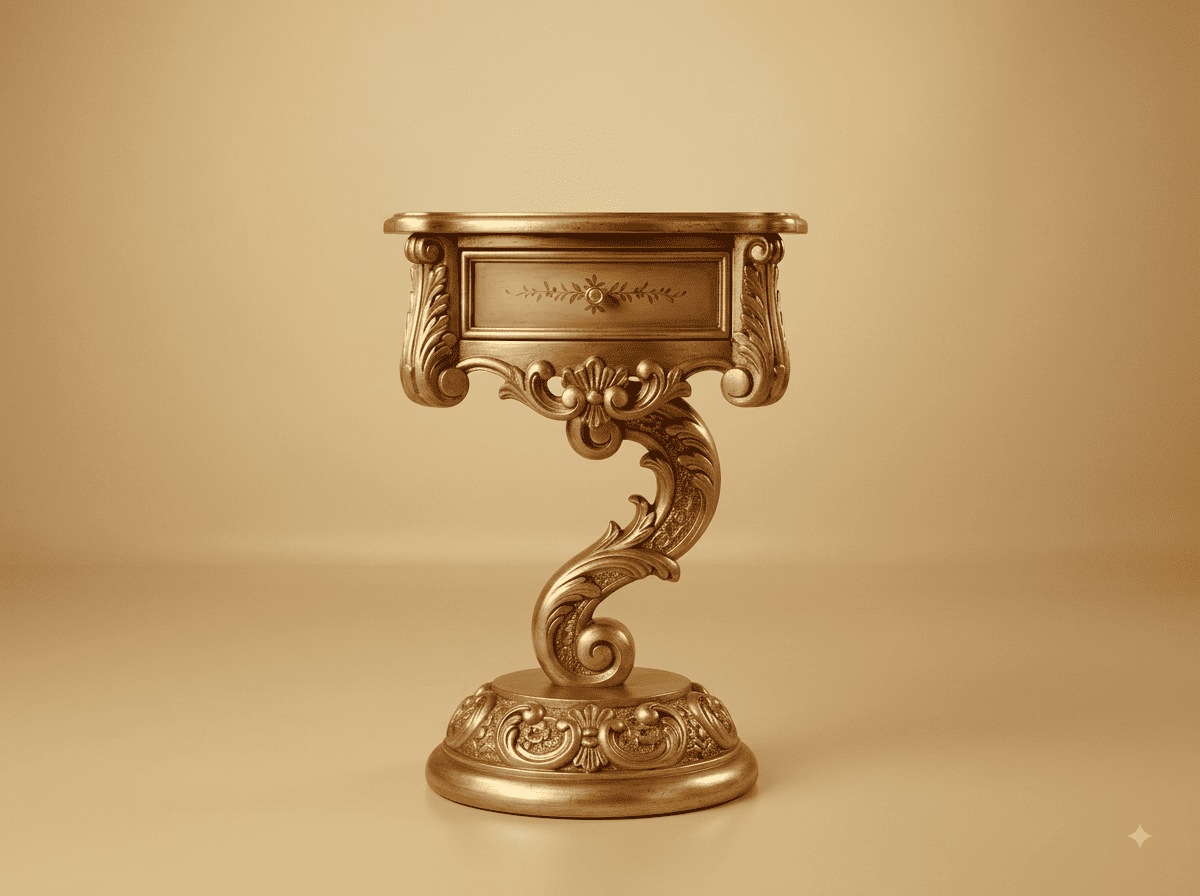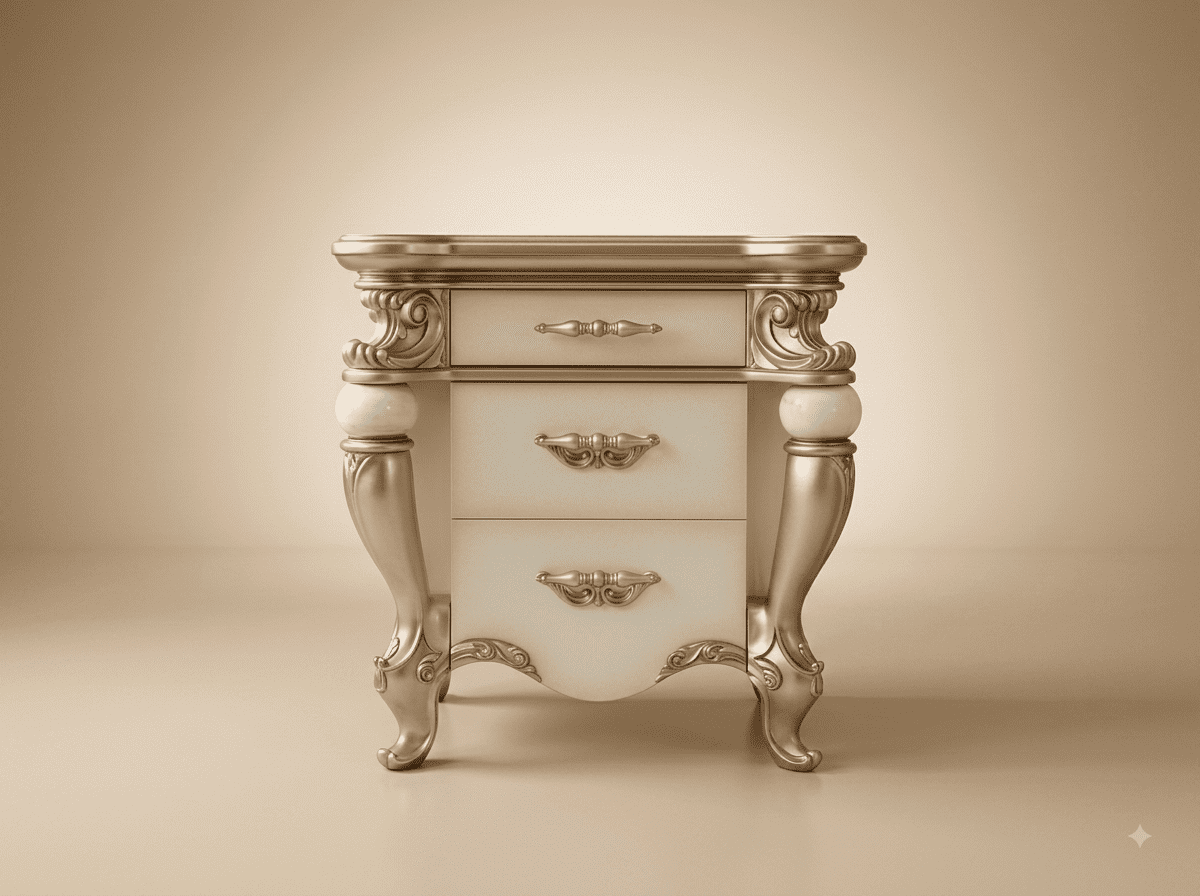
Look closely at a front leg and you will see two different crafts meeting on one piece of wood.
The bulb near the top is turned - spun on a lathe, perfectly round, its curve cut by a tool held against a rotating blank. Everything below it is carved - a cabriole that bends forward, sweeps out and finishes in a scroll, a shape no lathe can produce because it is not symmetrical about any axis.
Combining the two on a single member is a sequencing problem. The turning has to happen first, while the blank is still square-ended and can be mounted between centres. The moment any carving begins, the leg loses the true axis a lathe needs and can never go back on one.
So our craftsmen turn the bulb and the collar above it on all four legs first, working from stock cut long deliberately, then take them off the lathe and carve the cabriole below. The turned portion has to be positioned exactly the same distance from the top on every leg, because four bulbs at four different heights would be visible instantly across the front of the table.
The carved scroll capital above is added last, worked across the joint where the leg meets the case - so the eye reads a single flowing member from the top of the table to the floor, when in truth it is a turning, a carving and a joint.
 Ask Price On WhatsApp