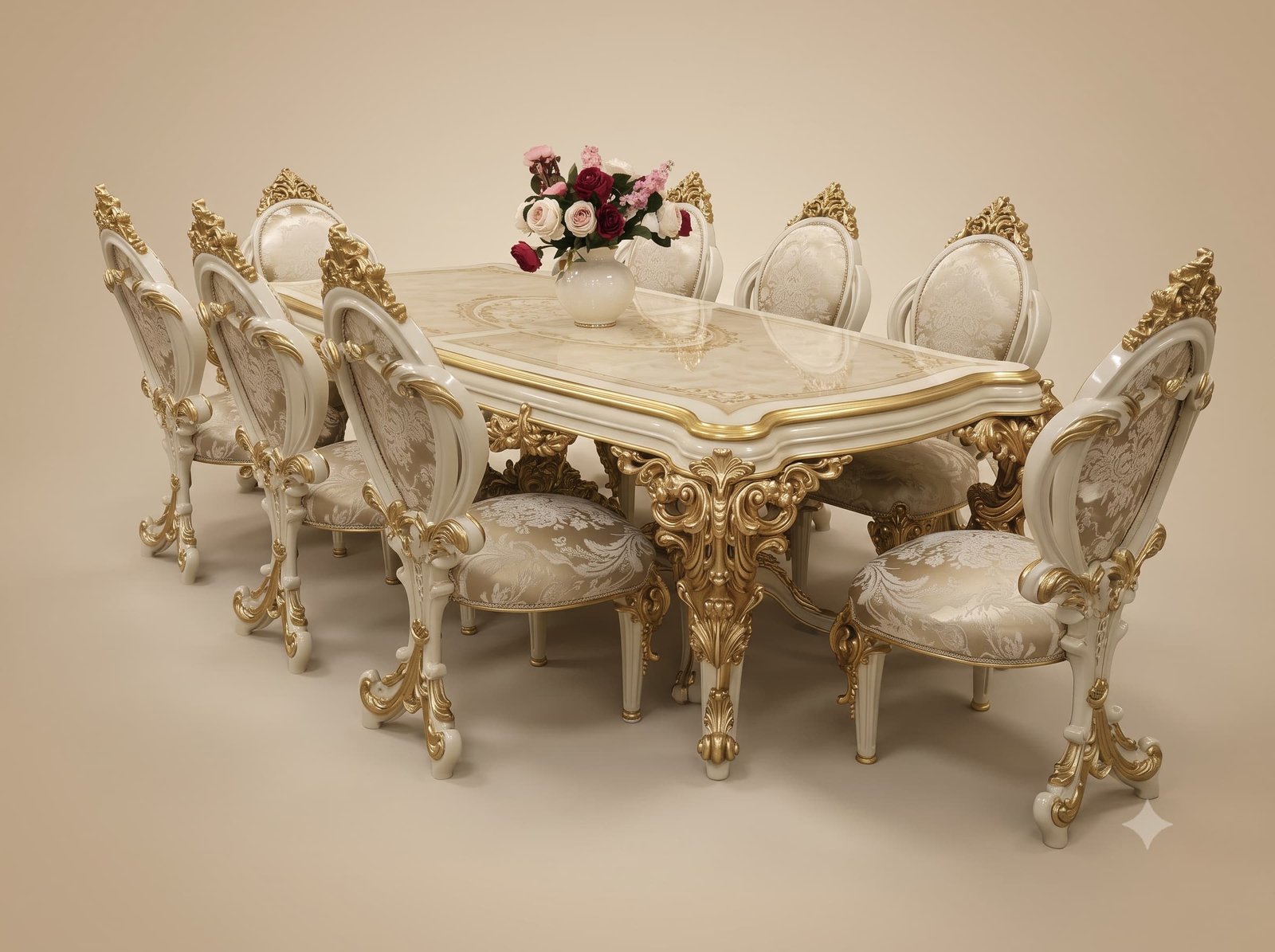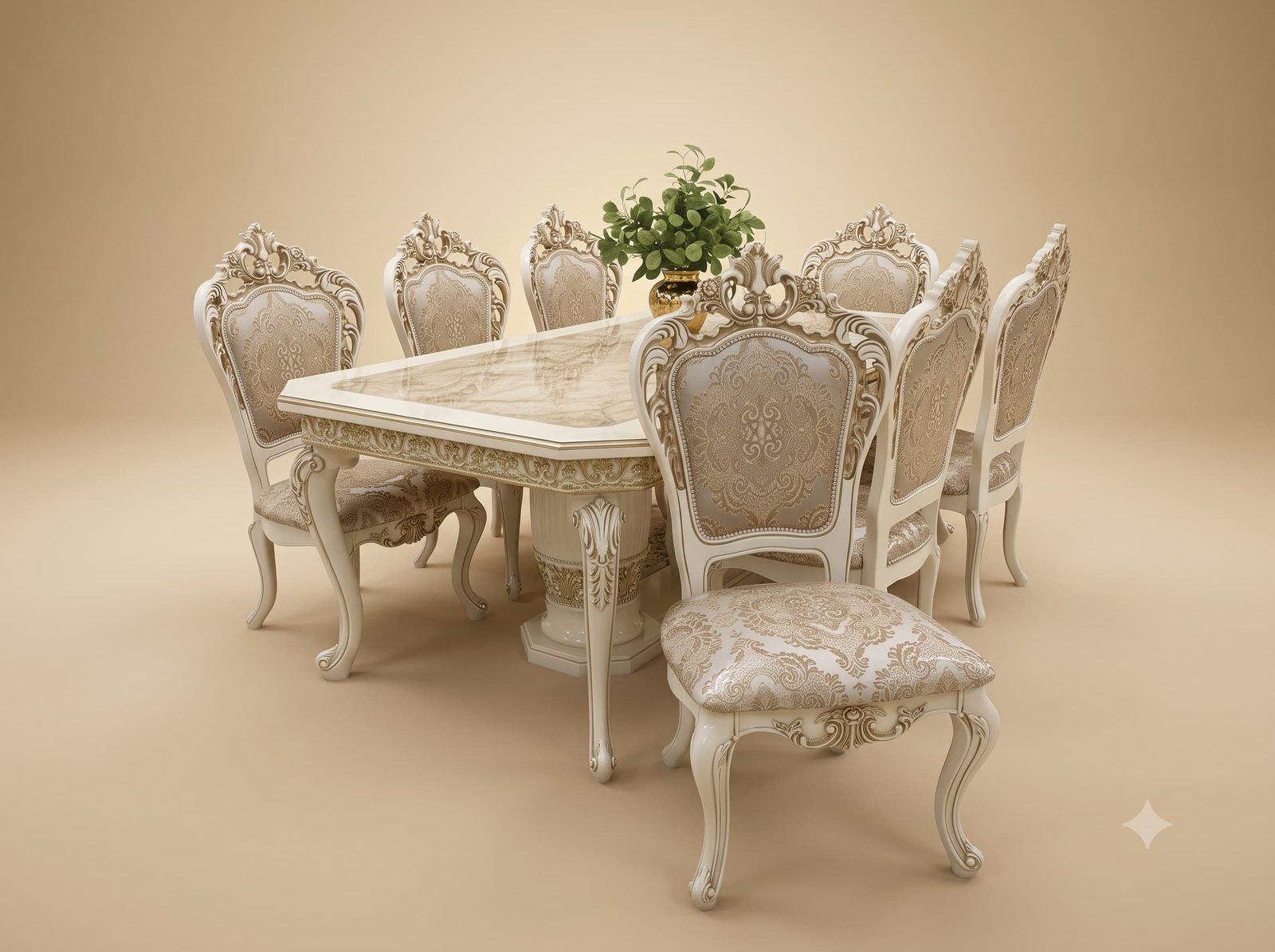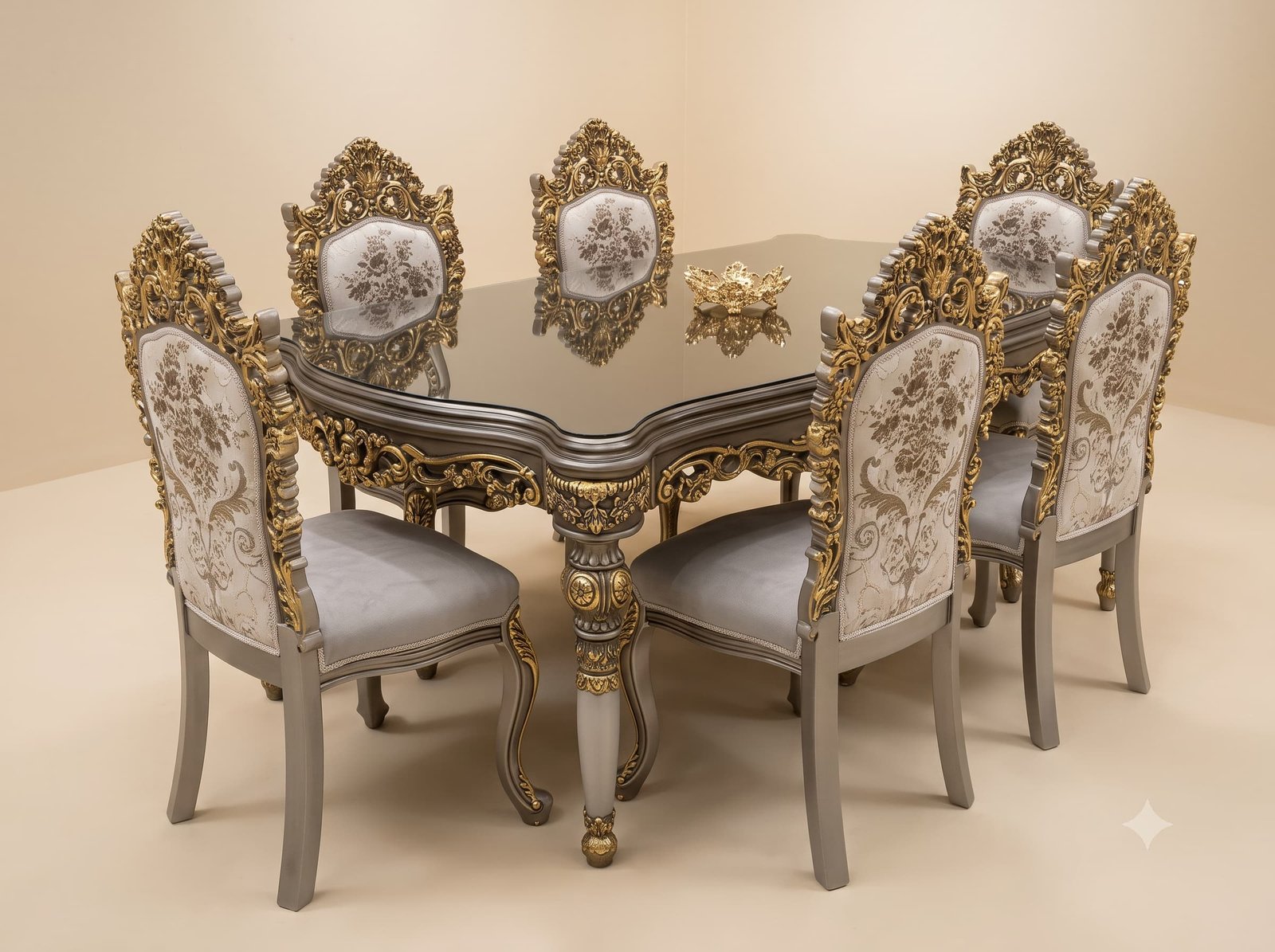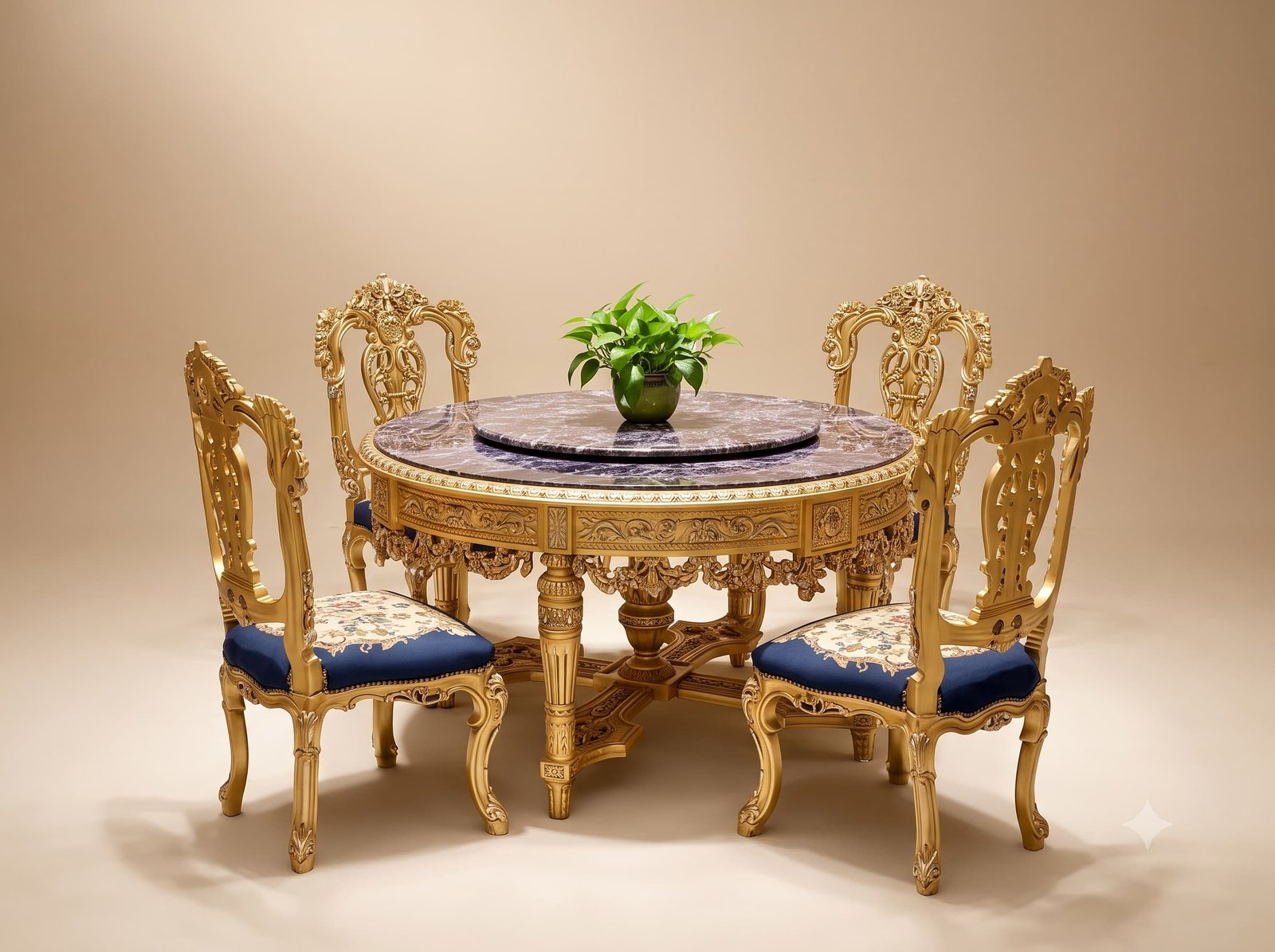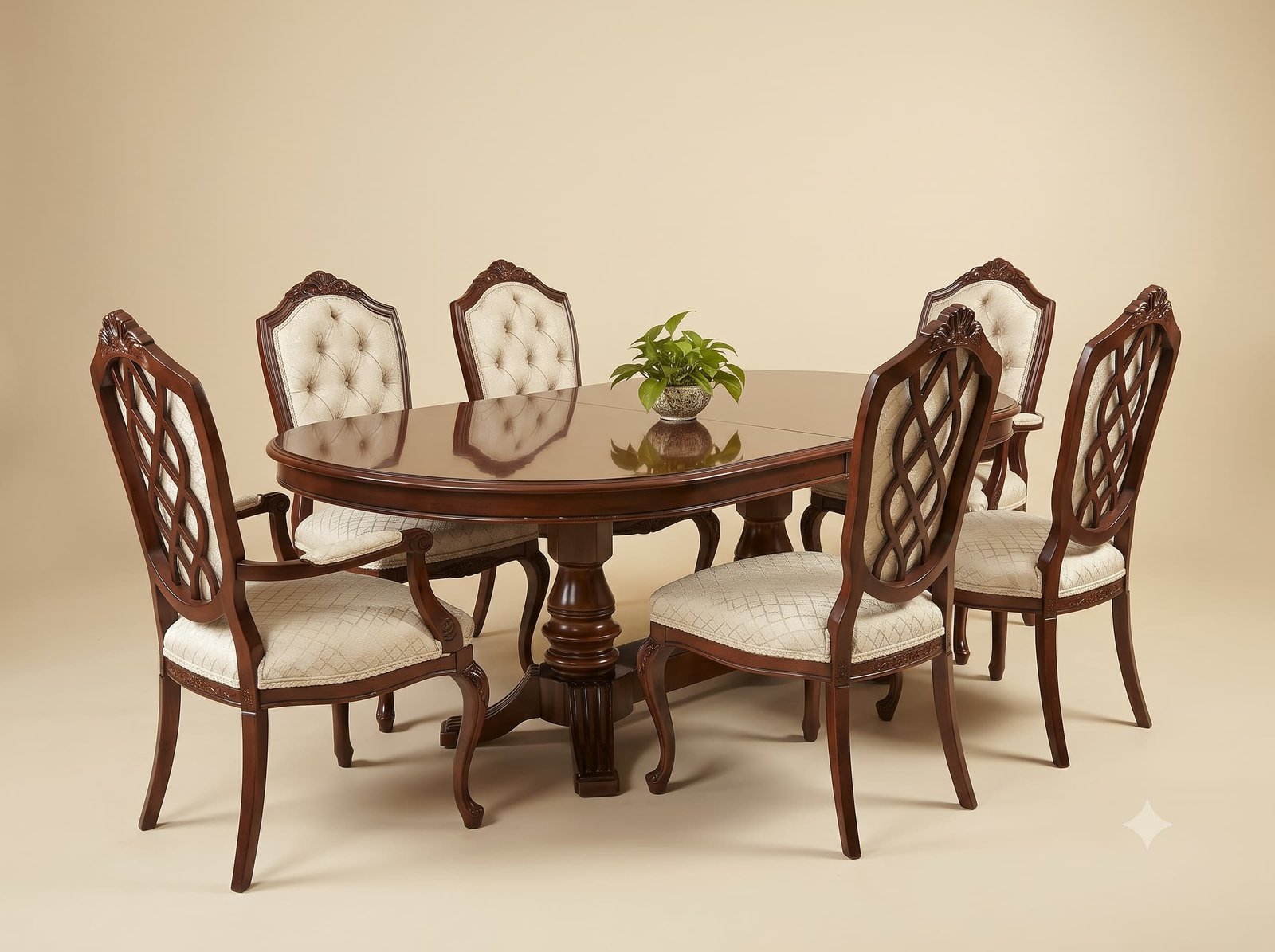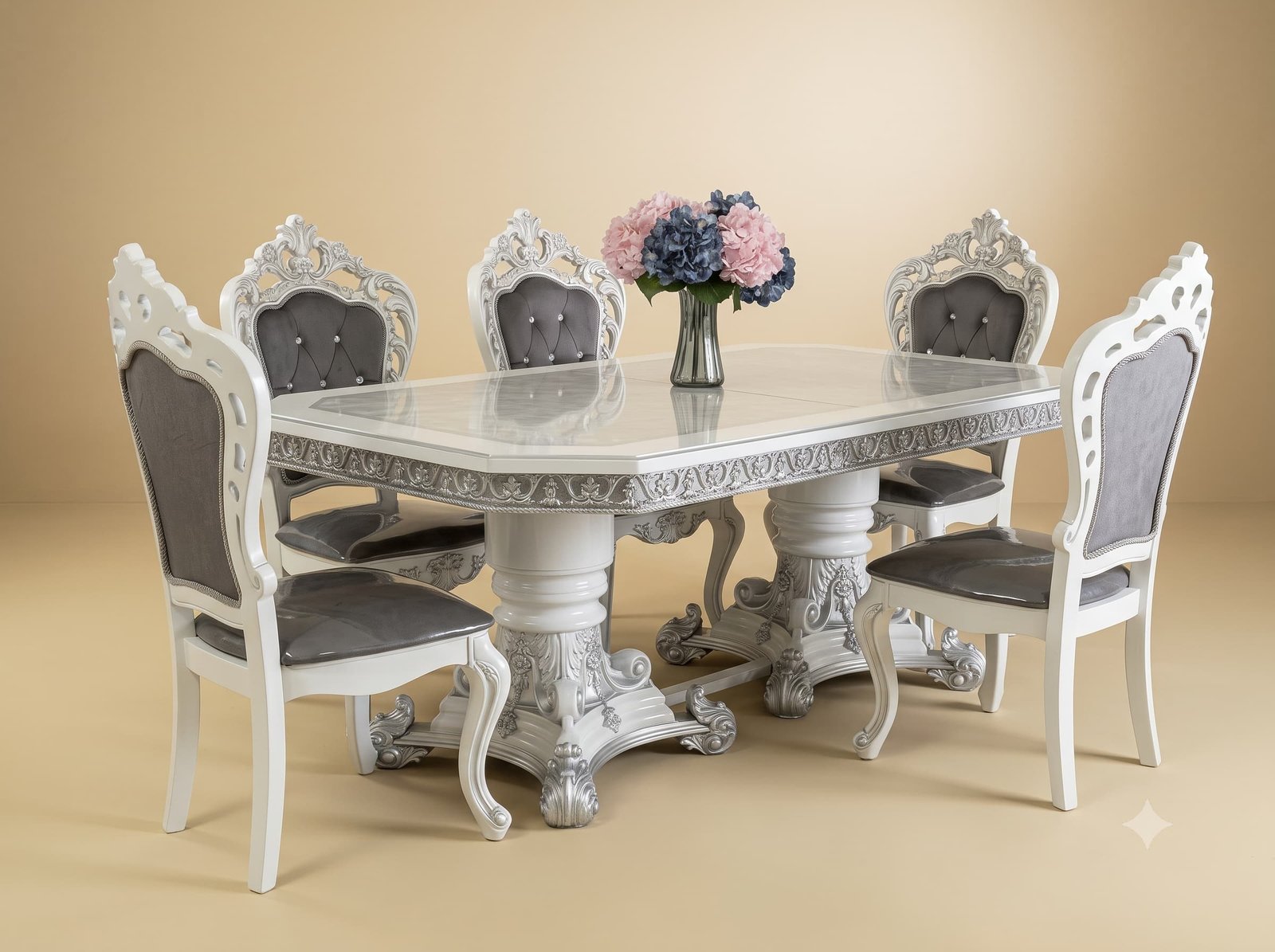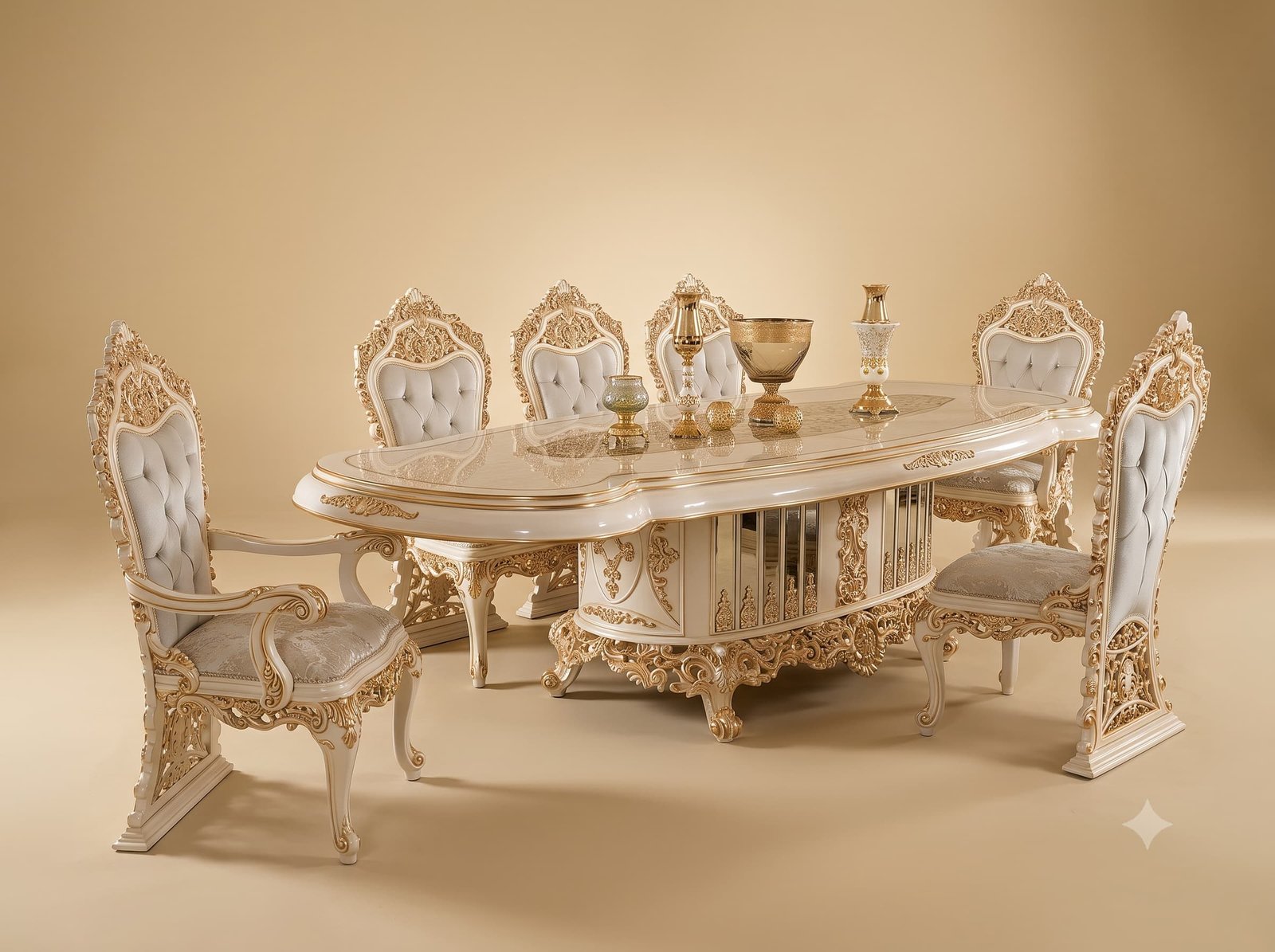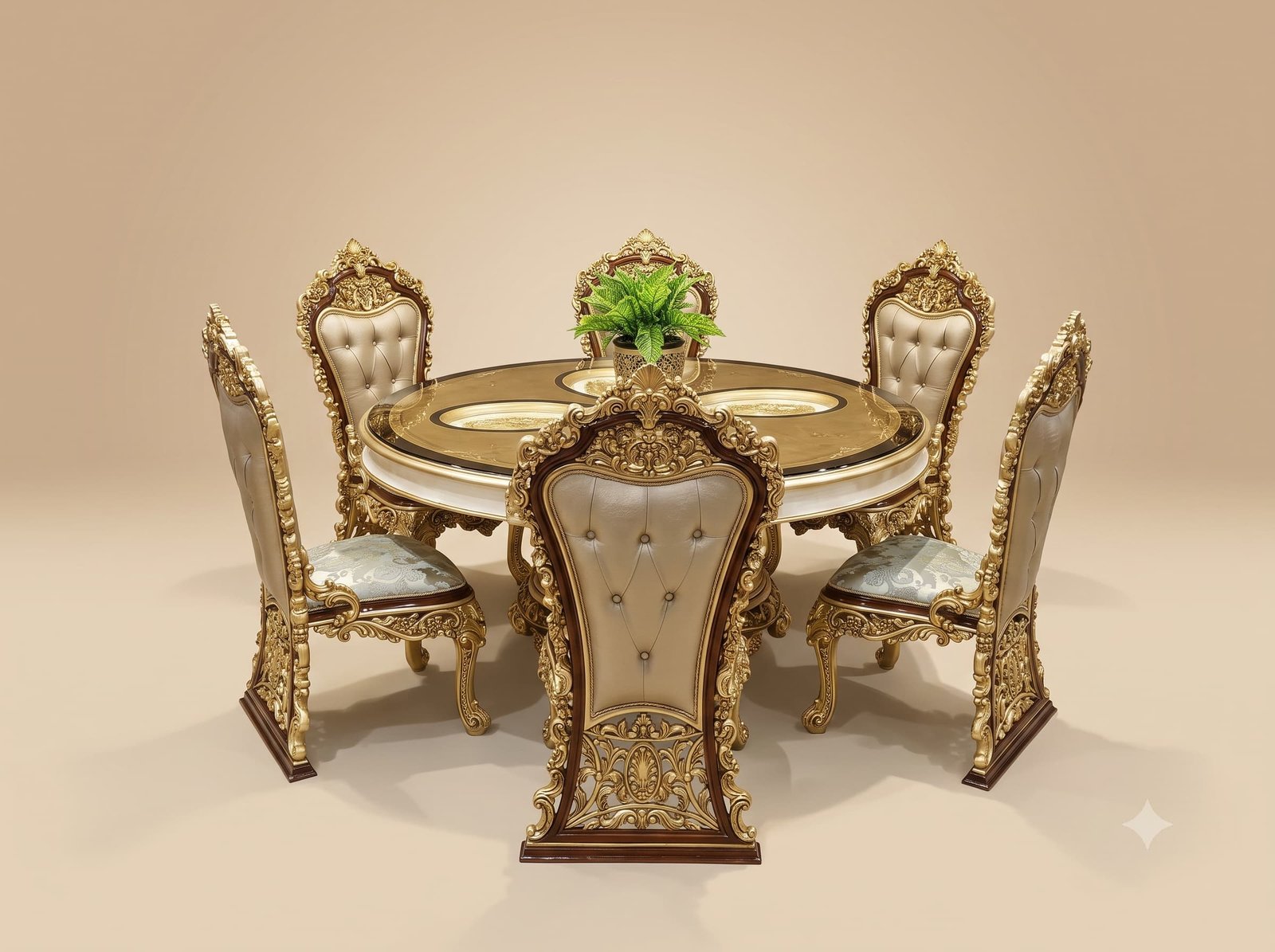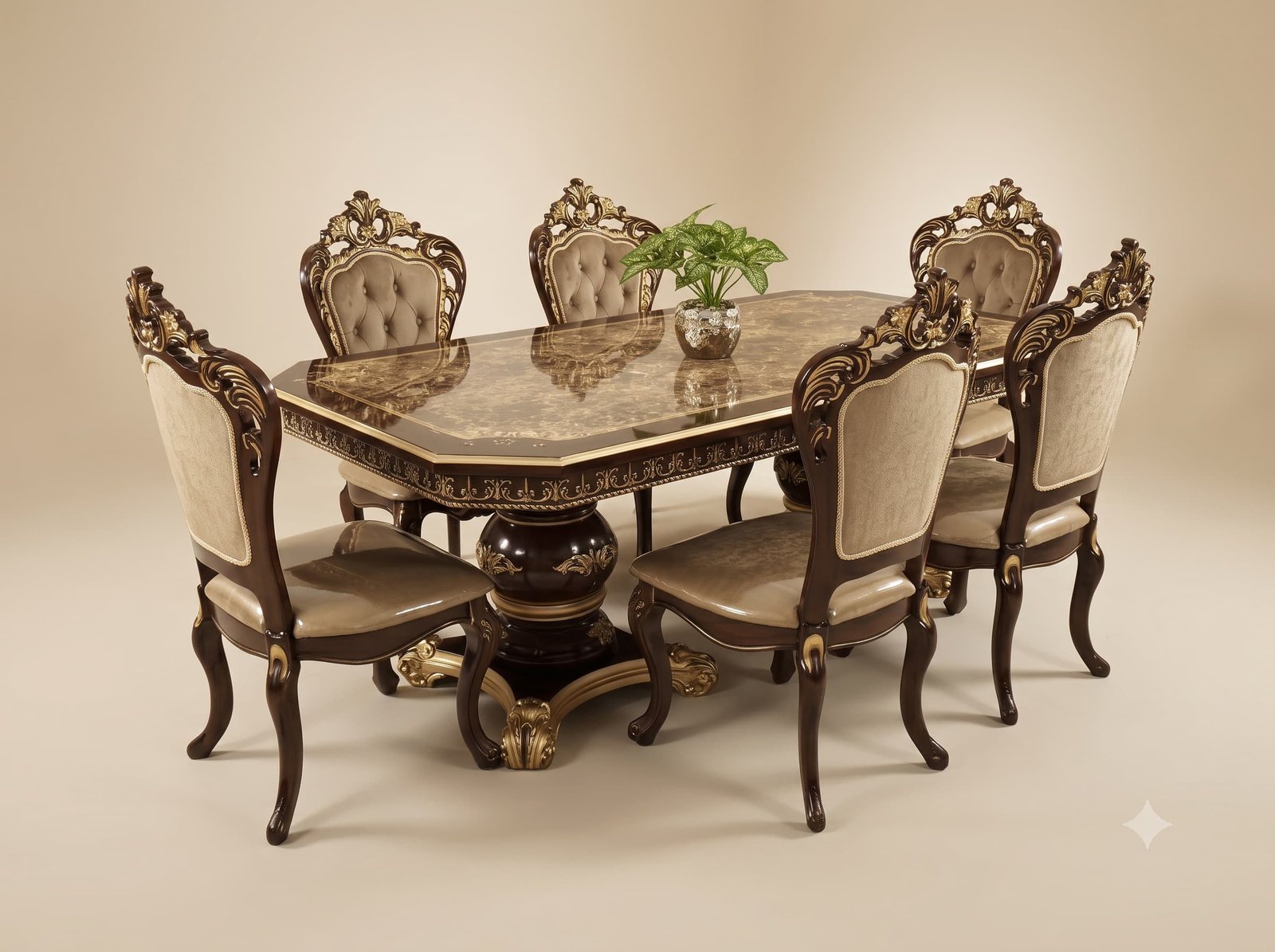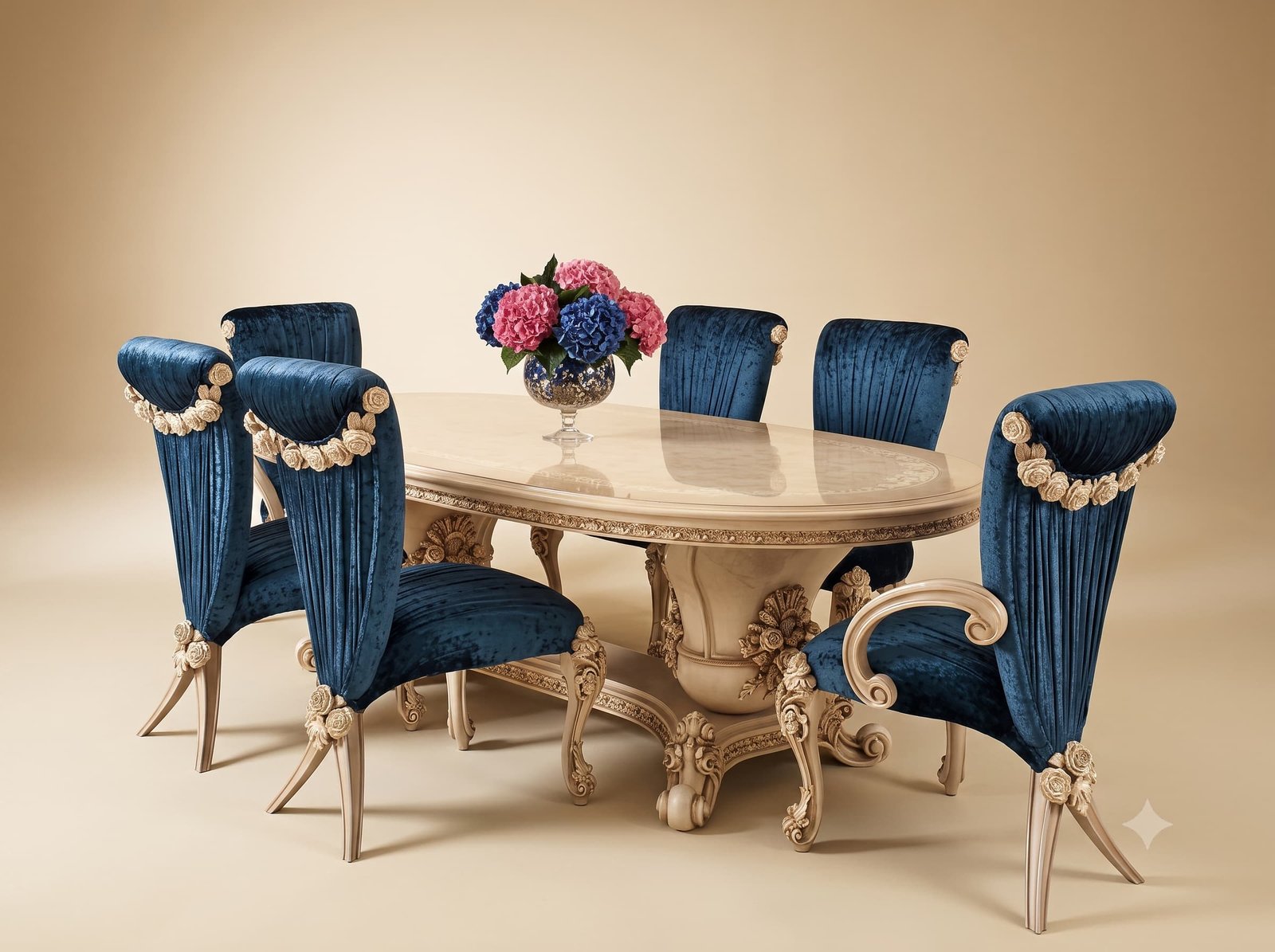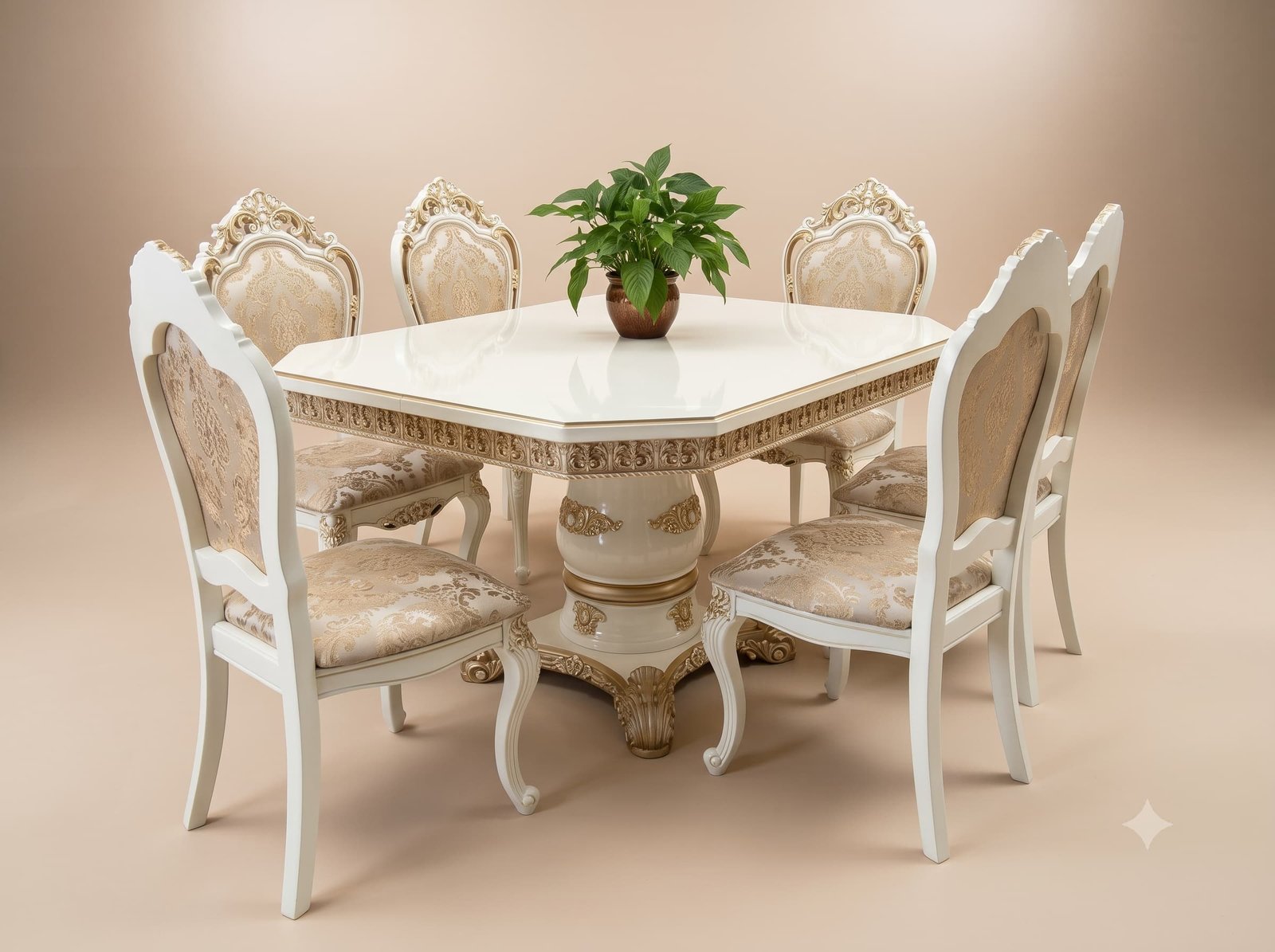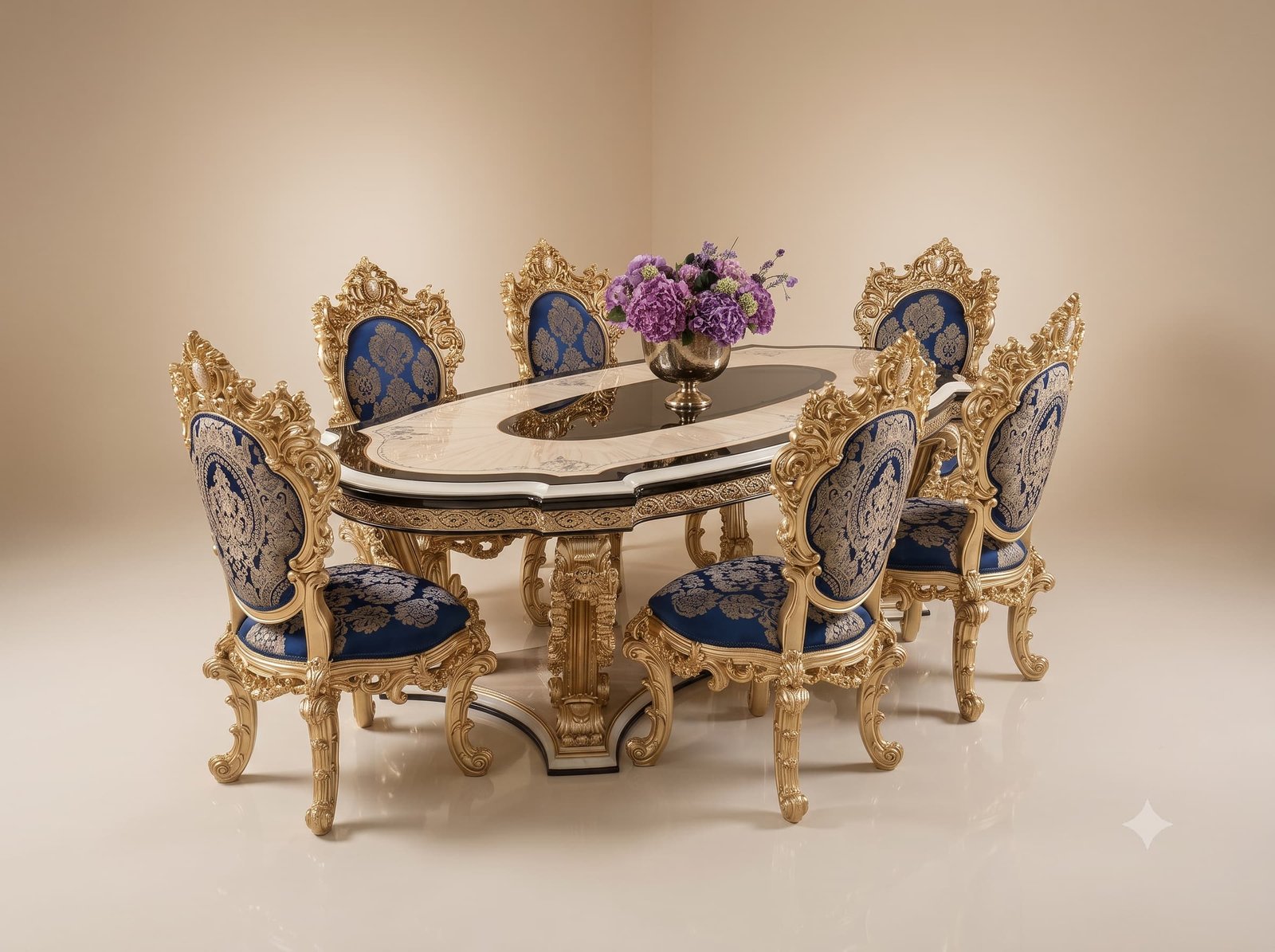
A large medallion damask has one motif per repeat, and where that motif lands is the whole job.
On the chair back it is straightforward - the medallion is centred on the panel, vertically and horizontally, and every chair is cut to the same registration so all six show the medallion in the same place. That much any upholsterer would do.
The seat is where it gets interesting. Centre the medallion on the seat and it looks perfect on an empty chair and disappears the moment anyone sits down, because a seated person covers the back two-thirds of the seat. What actually shows, in a room full of people, is the front strip of the seat and the corners.
So we set the seat motif forward of centre. Not so far that an empty chair looks wrong - the eye is forgiving of a motif slightly forward on a seat, because that is where it is expected to be seen - but far enough that the pattern is still visible when the chair is occupied.
The difference is a couple of inches on a cutting layout. It is the difference between a dining room that looks upholstered when it is empty and one that looks upholstered when it is full, which is the state it is actually bought for.
 Ask Price On WhatsApp